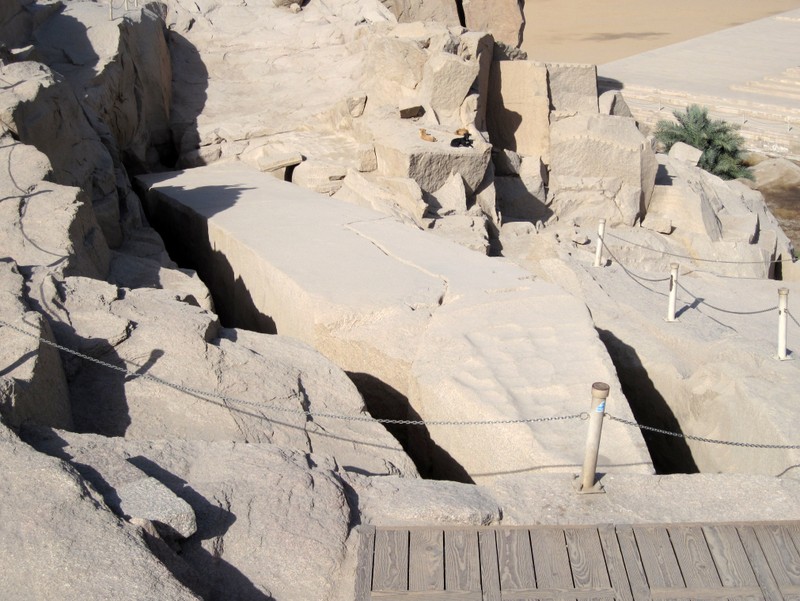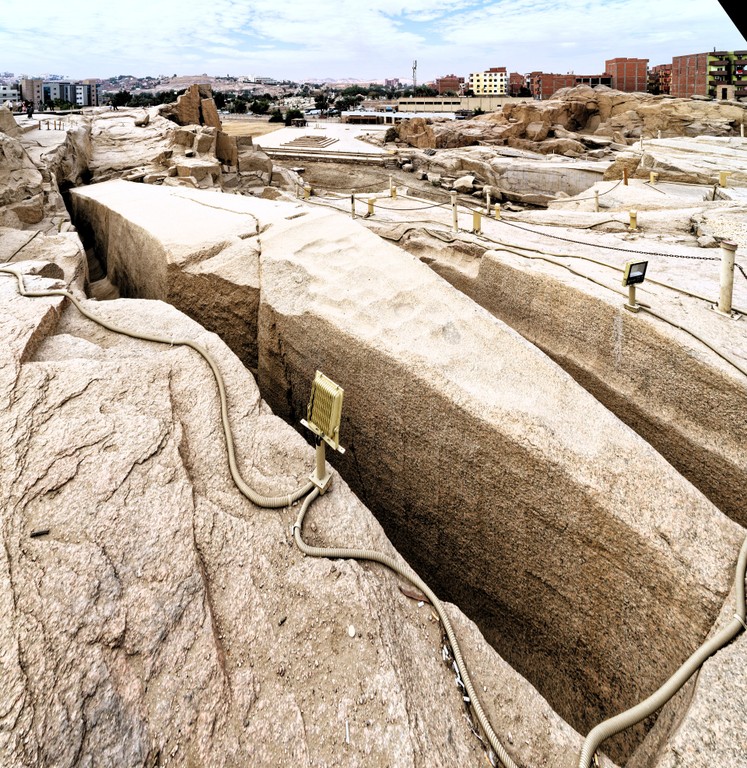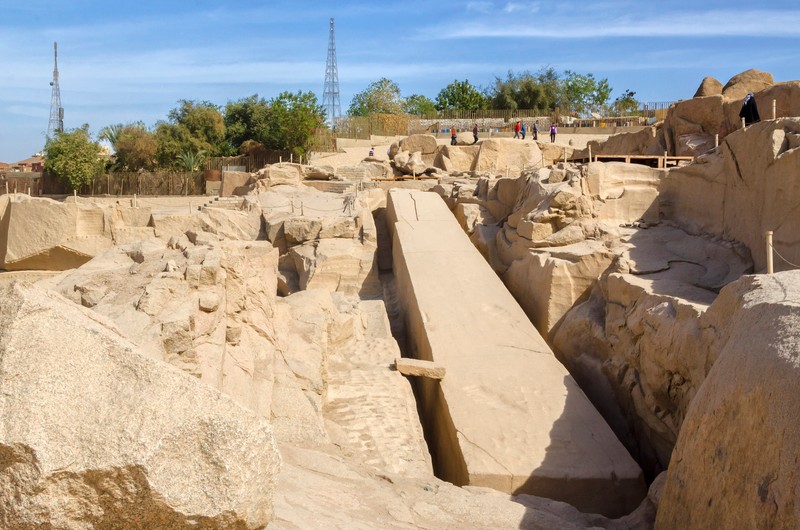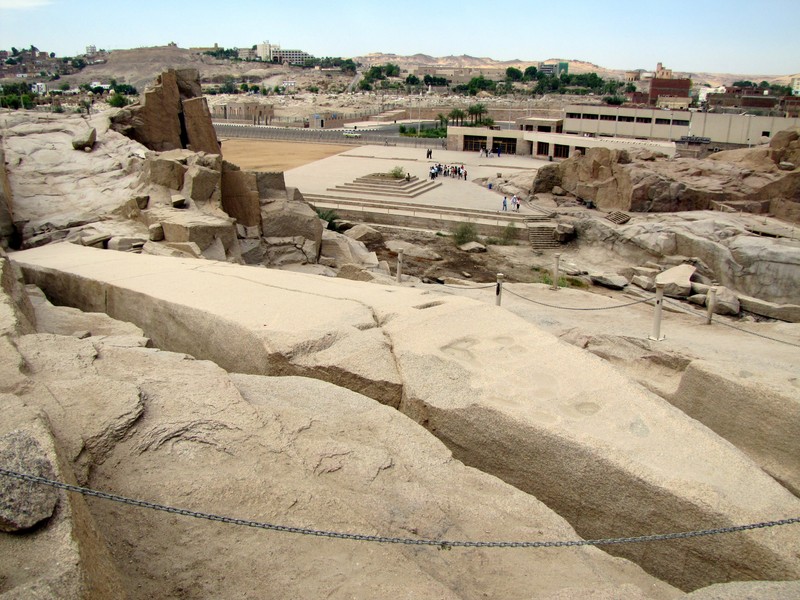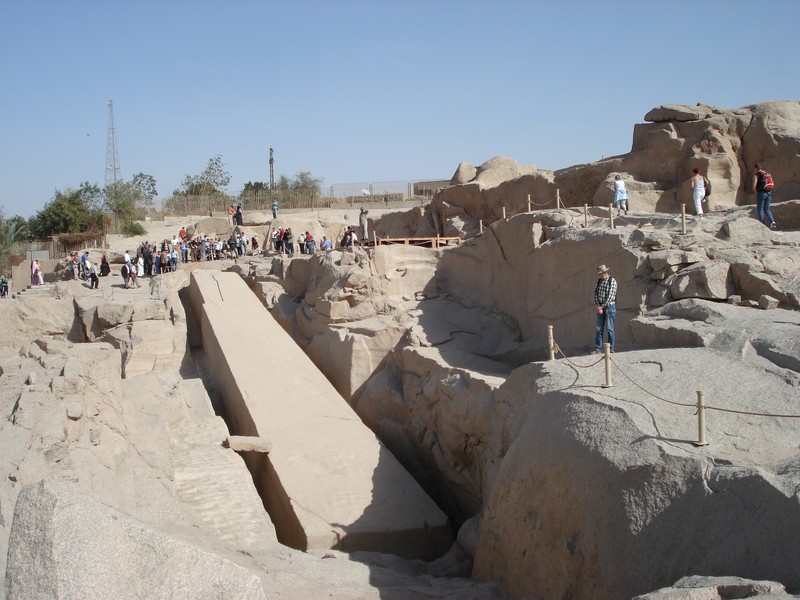

The Unfinished Obelisk in Aswan is one of the most remarkable archaeological remains of ancient Egypt. This enormous granite monument was abandoned in its quarry before it could be separated from the bedrock. Its unfinished state preserves traces of the work and offers a rare insight into how Egyptian craftsmen extracted and shaped stone for temples, statues and obelisks.
History of the obelisk
The project is traditionally associated with the reign of Queen Hatshepsut in the 15th century BC. The obelisk may have been intended for the Temple of Amun at Karnak, although its exact destination and patron have not been conclusively established.
Work stopped when deep cracks appeared in the granite. Such flaws made it unsafe to continue carving a single monumental shaft. The abandoned block remained in the quarry and was gradually covered in places by sand and rock debris. It was cleared in the early 20th century and became an important source of evidence about ancient stoneworking.
Dimensions and weight
The obelisk is approximately 42 metres long. If completed and erected, it would have surpassed most known ancient Egyptian obelisks in height. Its estimated finished weight is around 1,168 tonnes.
These dimensions reveal the ambition of Egyptian royal building projects. Craftsmen had to cut a huge monolith from solid granite, transport it over a considerable distance and raise it without breaking the stone.
How ancient Egyptians worked granite
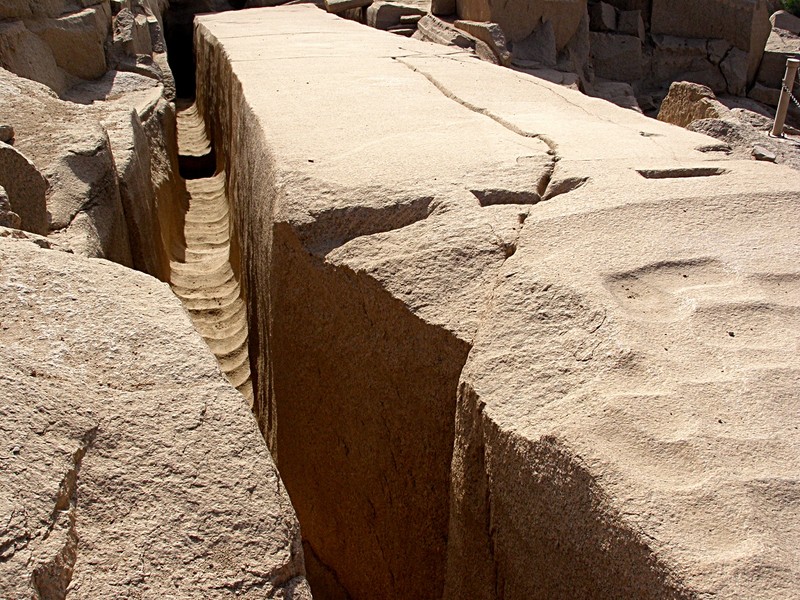
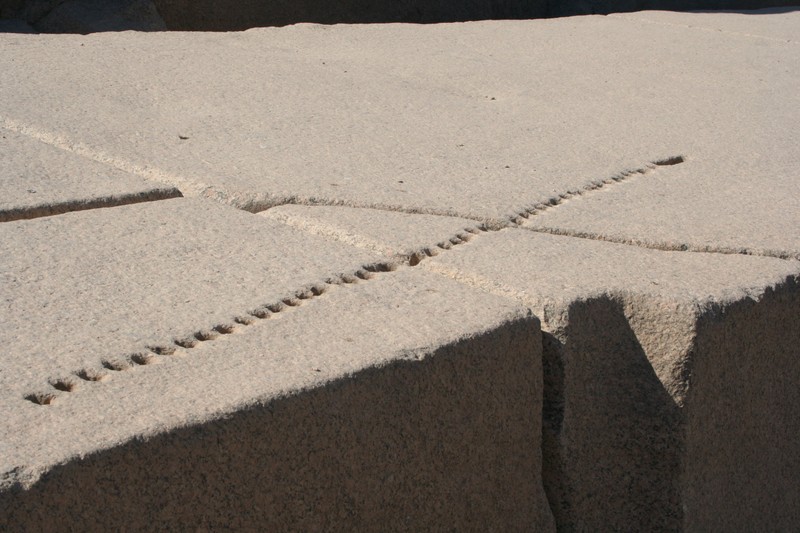
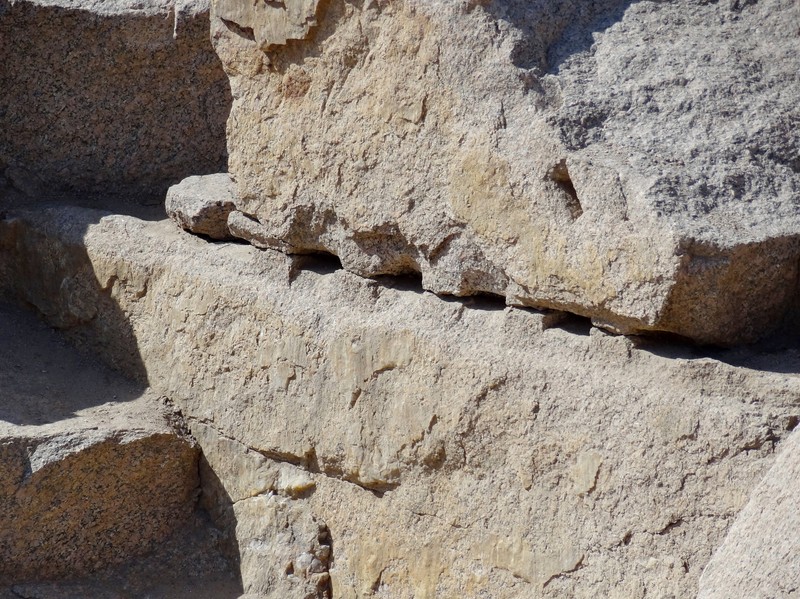
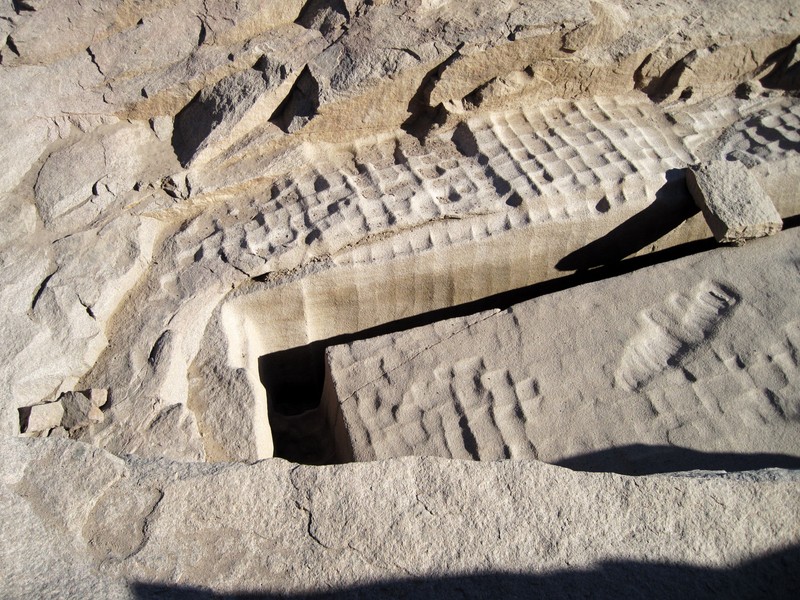
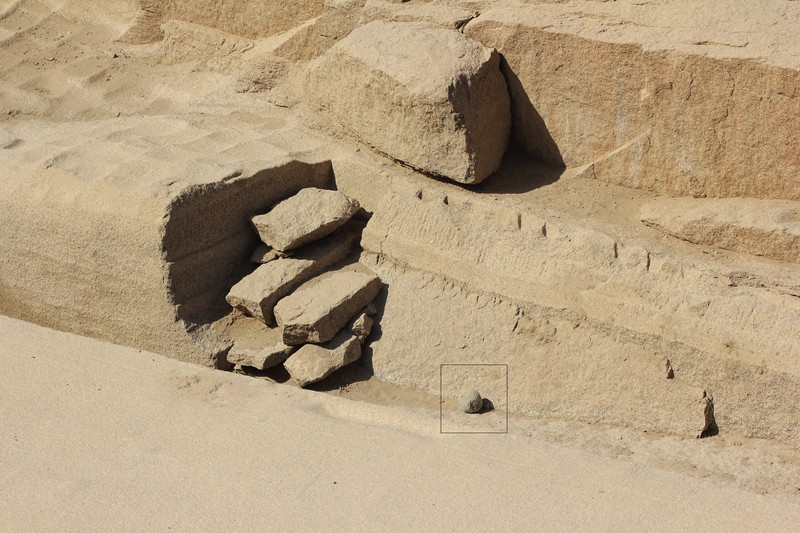
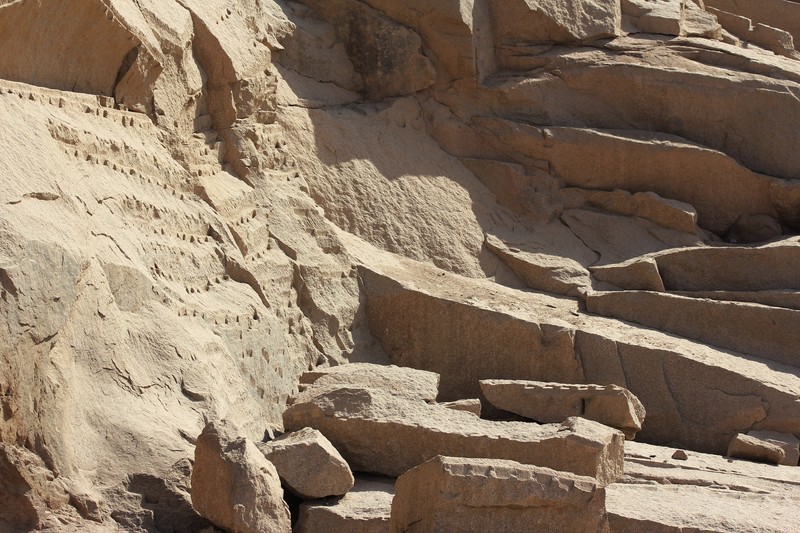
Aswan's quarries supplied granite for obelisks, sarcophagi, statues and temple architecture. Because granite is extremely hard, workers used stone pounders, including tools made from dolerite, to gradually break down the surrounding rock. They created channels around the intended monument and carefully shaped its sides.
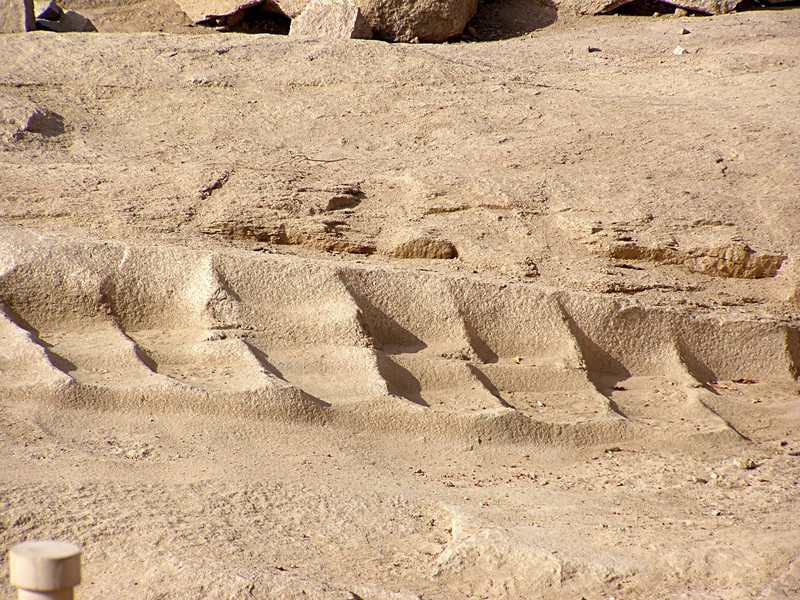
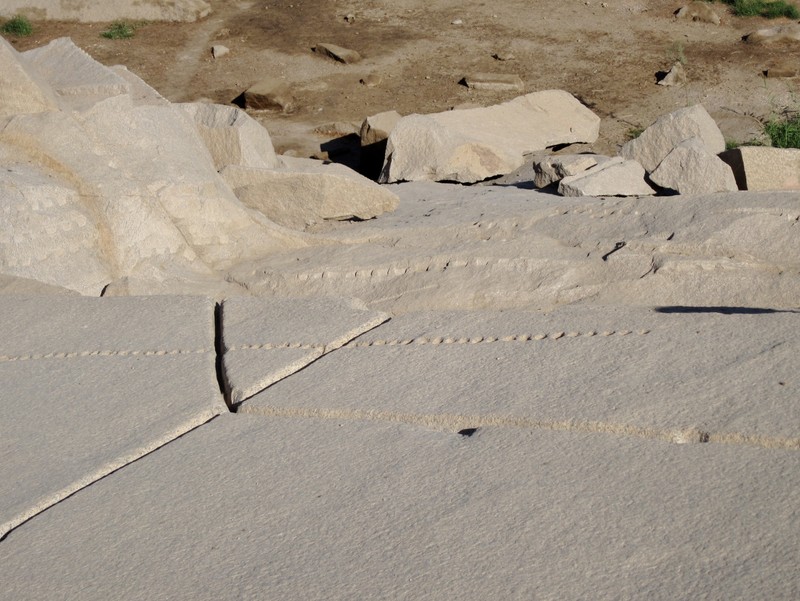
The marks around the unfinished obelisk help archaeologists study the sequence of quarrying operations. However, the precise reconstruction of every stage of the process remains a subject of research.
Why construction stopped
The main reason was the discovery of cracks in the granite. For a tall monolith, structural flaws could lead to breakage during extraction, transport or erection. Rather than risk losing the entire block, the workers abandoned it. The site illustrates the considerable risks involved in producing monuments from a single piece of stone.
What to see at the quarry
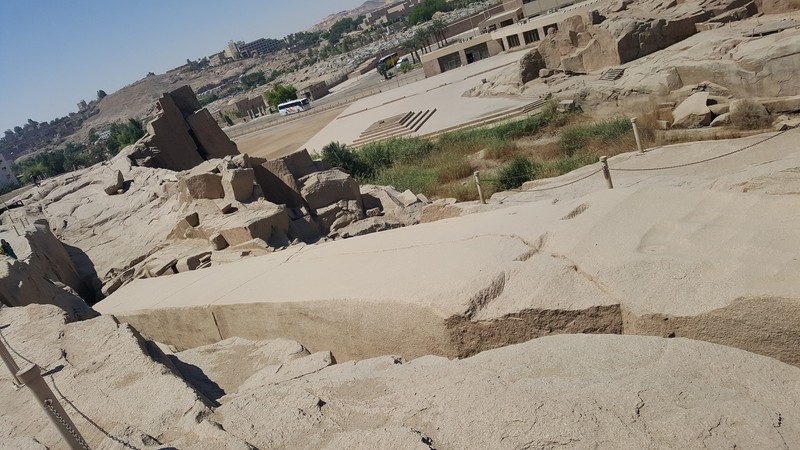
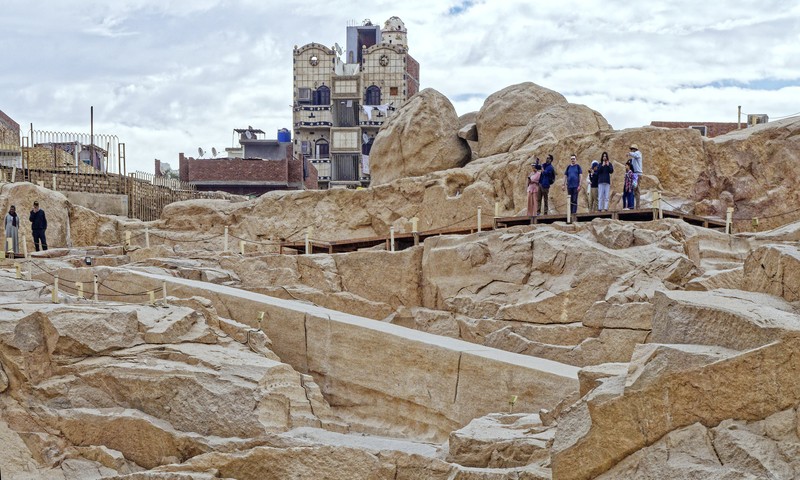
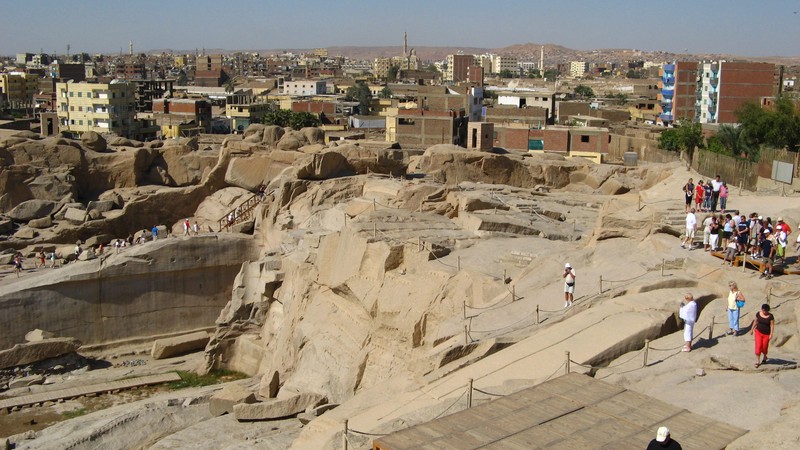
The main attraction is the long granite shaft lying in a hollow cut into the rock. Visitors can observe its massive surfaces and the unfinished sections where ancient workers shaped the stone. The obelisk remains partly attached to the bedrock.
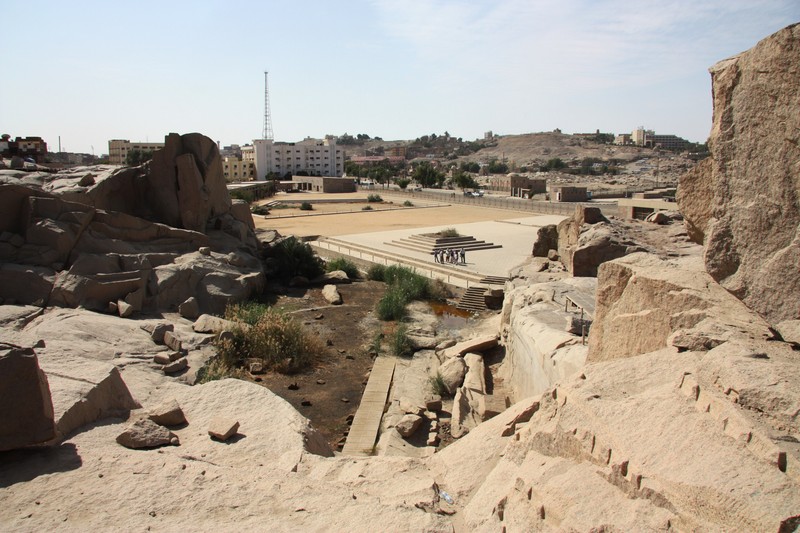
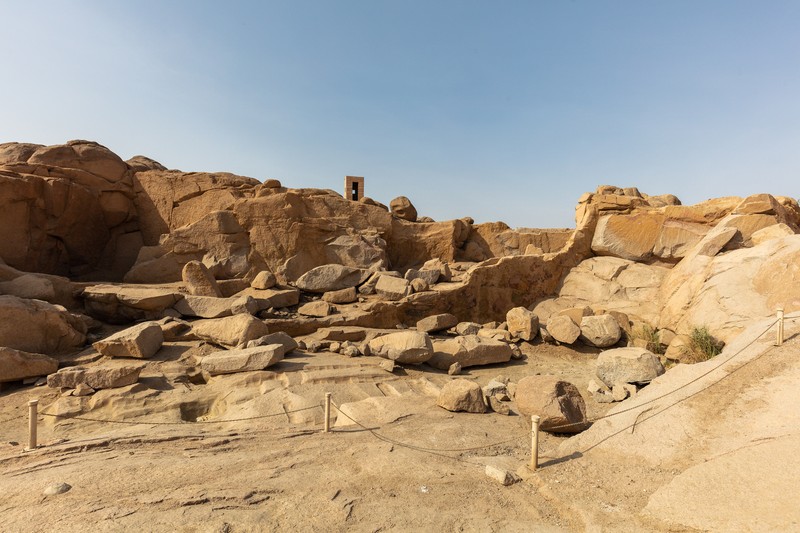
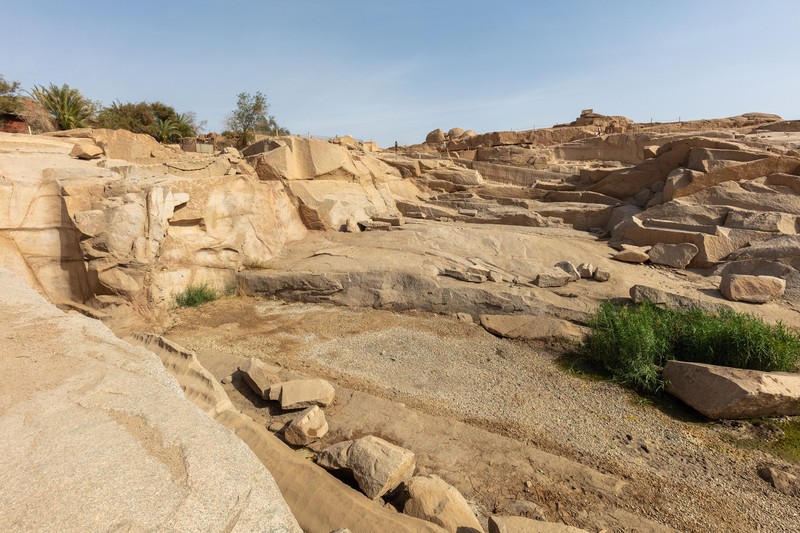
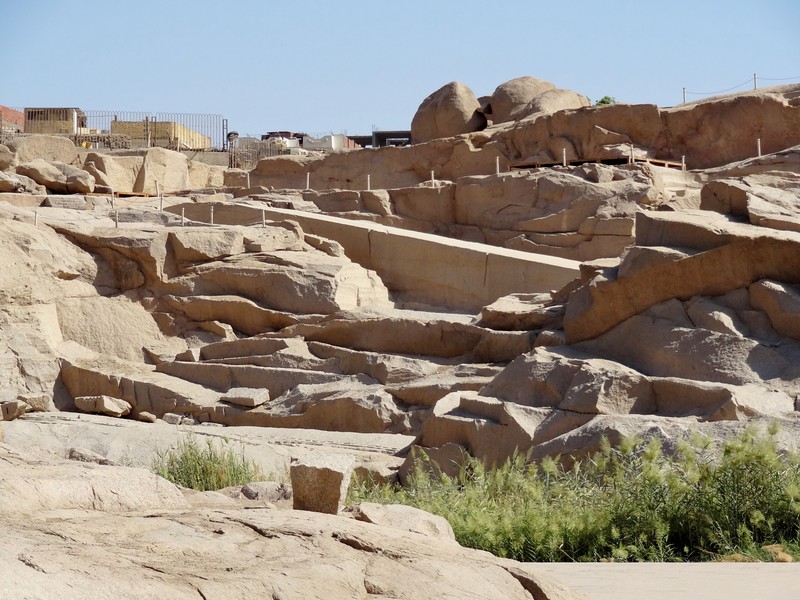
The surrounding quarry preserves uneven rock surfaces and traces of ancient extraction. Seeing the unfinished work makes it easier to imagine the difficult process behind the completed obelisks displayed at temples and public spaces around the world.
Archaeological significance
The monument is especially valuable because it remains in the place where it was carved. Many finished obelisks were moved, reused or damaged, while this abandoned piece offers direct evidence of ancient quarrying and stoneworking. The quarries also demonstrate Aswan's importance as a source of building materials for major Egyptian monuments.
Location and visiting tips
The Unfinished Obelisk is located in the ancient granite quarries of Aswan, on the eastern side of the Nile. Visitors can reach the site by taxi or as part of an organised tour. Check current opening hours and ticket prices before visiting, as details may change.
Most visitors spend around 30 minutes to an hour at the site. Shade is limited, so cooler hours are preferable. Wear comfortable shoes and bring drinking water, a hat and sun protection. The Unfinished Obelisk offers a rare opportunity to understand the skill, labour and risks behind the monumental architecture of ancient Egypt.
Gallery