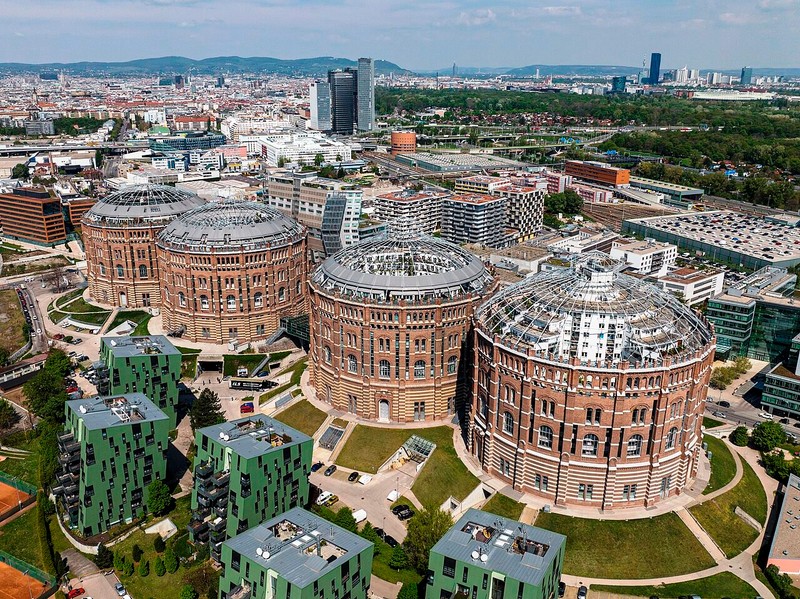
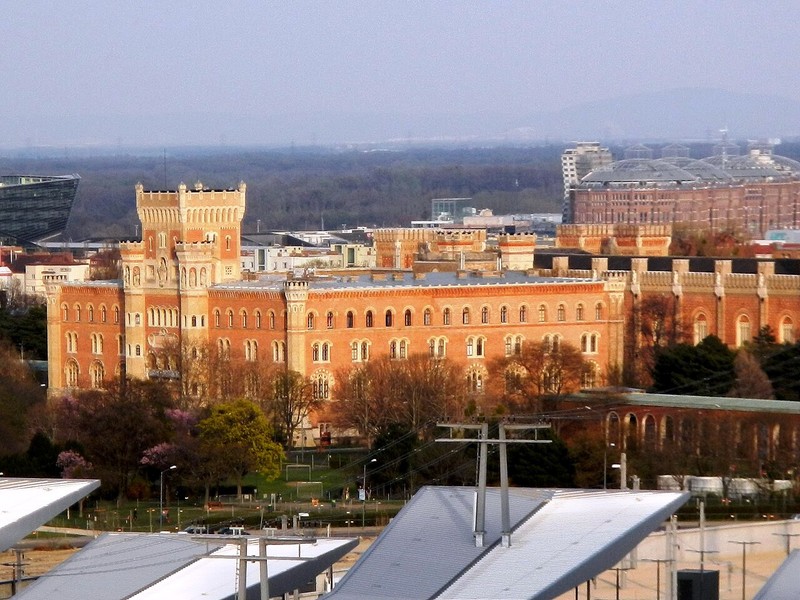
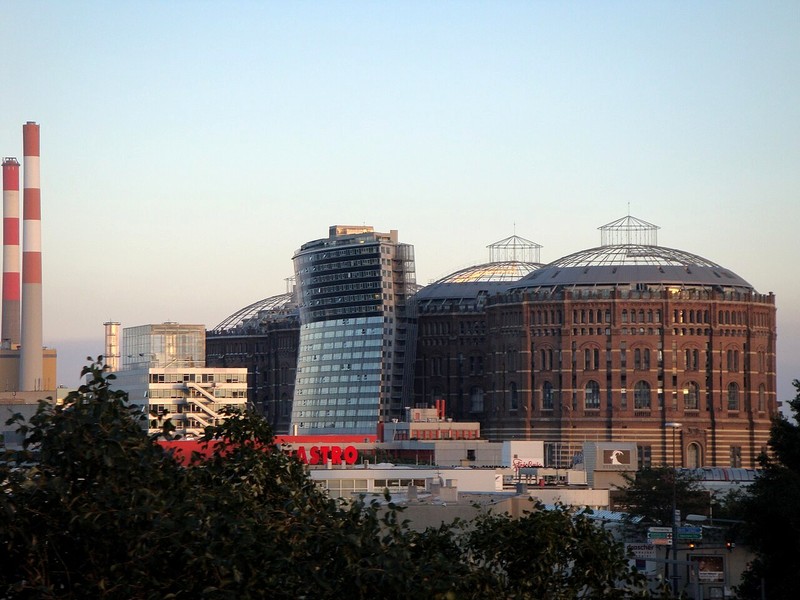
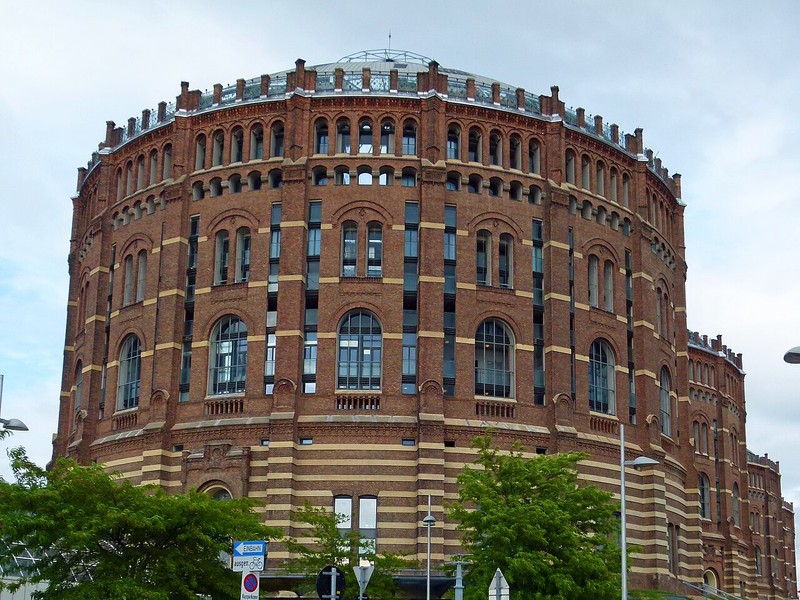
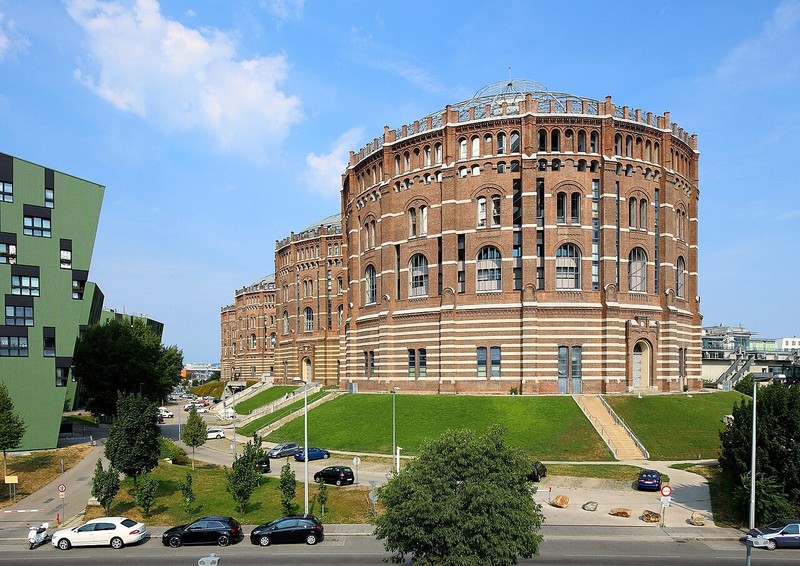
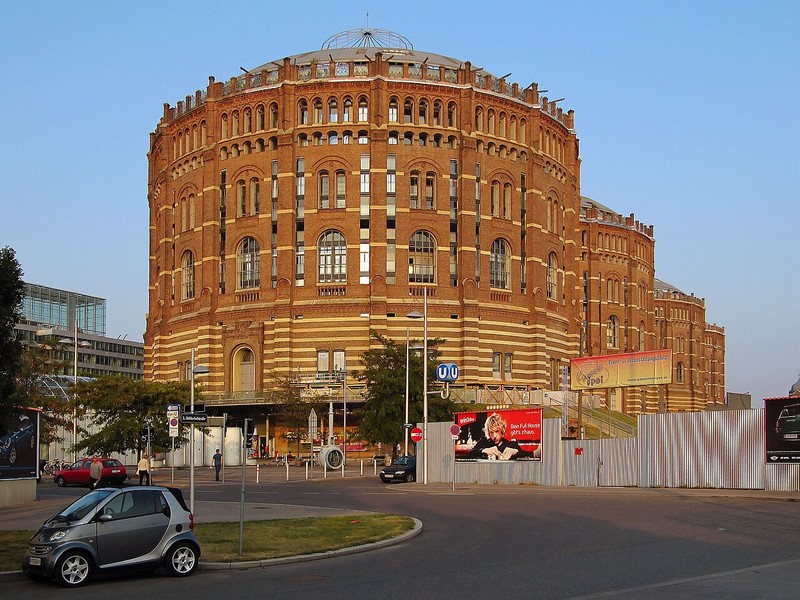
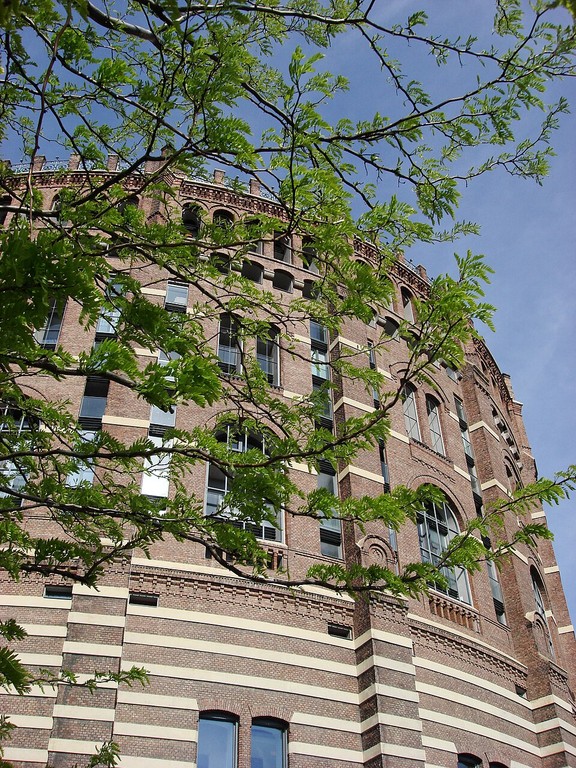
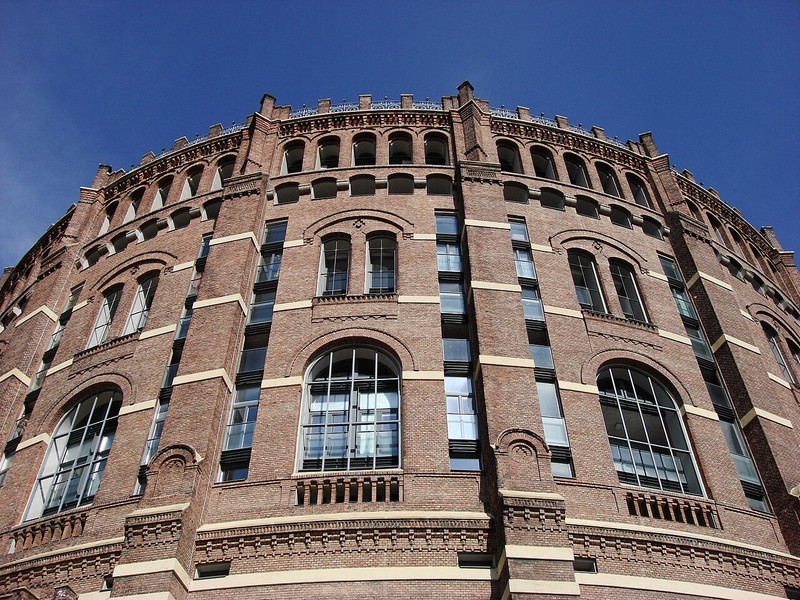
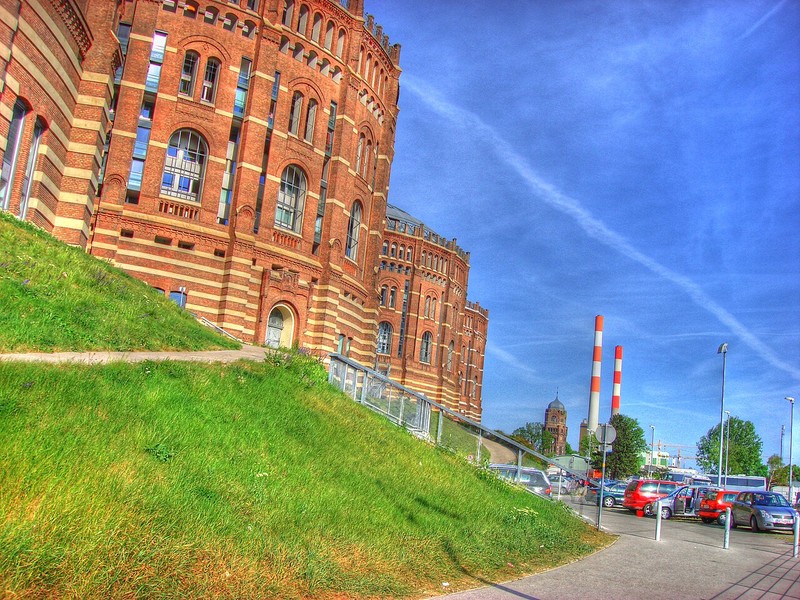
The Vienna Gasometers (Wiener Gasometer) are four historic gas holders in Simmering, a district in the southeast of Vienna. Built in the late 19th century to store town gas, they are now an unusual example of industrial heritage preservation. Behind the former brick shells are apartments, shops, restaurants, offices, student accommodation and cultural venues.
The complex is notable for combining historic industrial architecture with modern interiors. Instead of demolishing the structures, Vienna chose to preserve their historic exteriors and adapt them for new uses. Gasometer City therefore appeals both to architecture enthusiasts and to visitors interested in a different side of the Austrian capital.
History of the Vienna Gasometers
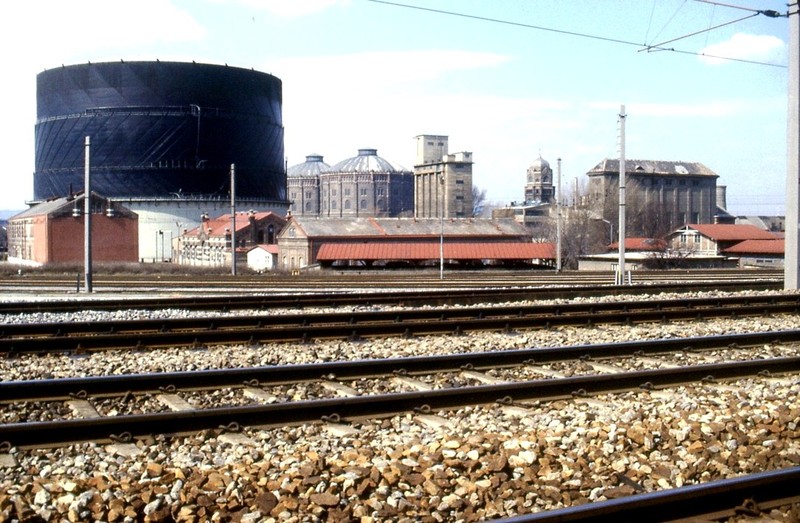
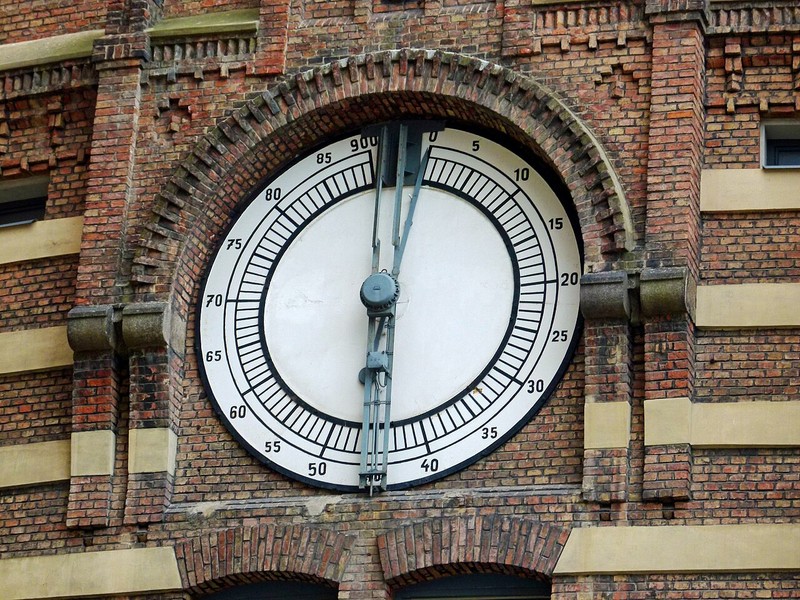
The four gas holders were built between 1896 and 1899 as part of the municipal gasworks in Simmering. They stored town gas before it entered the distribution network. Each holder had a capacity of about 90,000 cubic metres. At the time, gas was used for street lighting, heating and household needs.
The municipal gasworks were part of Vienna’s development and the city’s effort to provide its residents with energy independently. The British company Imperial Continental Gas Association (ICGA) had previously played an important role in supplying the city. Building its own facility allowed Vienna to develop public utilities under municipal control.
Between 1969 and 1978, Vienna gradually switched from town gas to natural gas. The old holders became obsolete and were finally decommissioned during the 1980s. Unlike many comparable industrial structures, the four Simmering Gasometers were preserved and placed under monument protection in 1981.
From industrial site to Gasometer City
After the gas holders stopped operating, the city needed to find a new purpose for the enormous buildings. Several ideas were considered, and in the 1990s a mixed-use urban district was selected as the preferred concept. The main redevelopment took place from 1999 to 2001. The first residents moved in during spring 2001, and the complex officially opened that autumn.
Four architectural teams were involved: Jean Nouvel designed Gasometer A, Coop Himmelb(l)au worked on Gasometer B, Manfred Wehdorn on Gasometer C, and Wilhelm Holzbauer on Gasometer D. Each architect developed a distinct solution, so the four buildings form a unified ensemble while differing in their internal layouts.
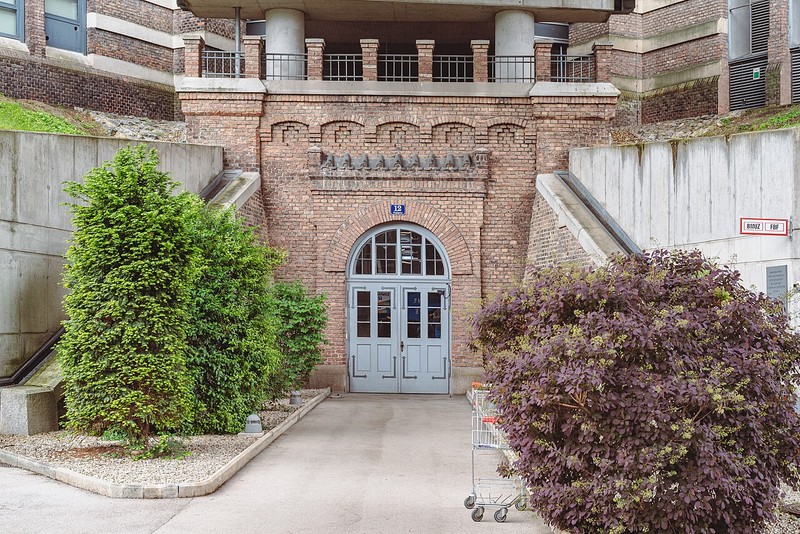
The central principle was to preserve the historic brick shells while adapting the interior spaces for contemporary needs. New structures, homes and public areas were inserted inside the old buildings. The project became an example of reusing industrial heritage instead of demolishing it and starting from scratch.
Architecture of the four gasometers
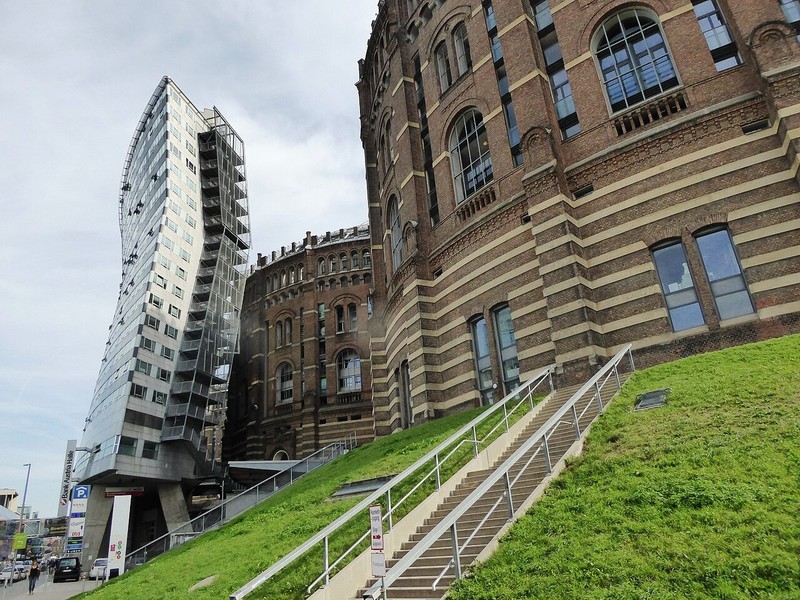
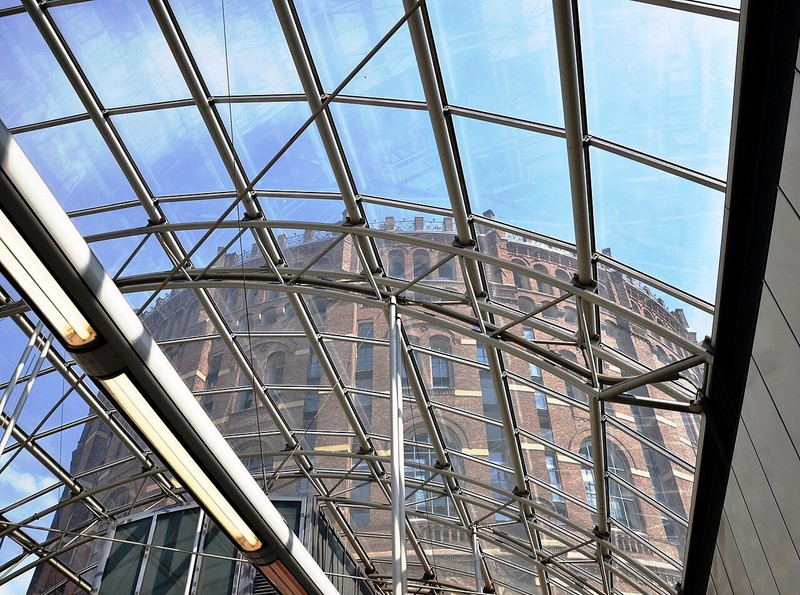
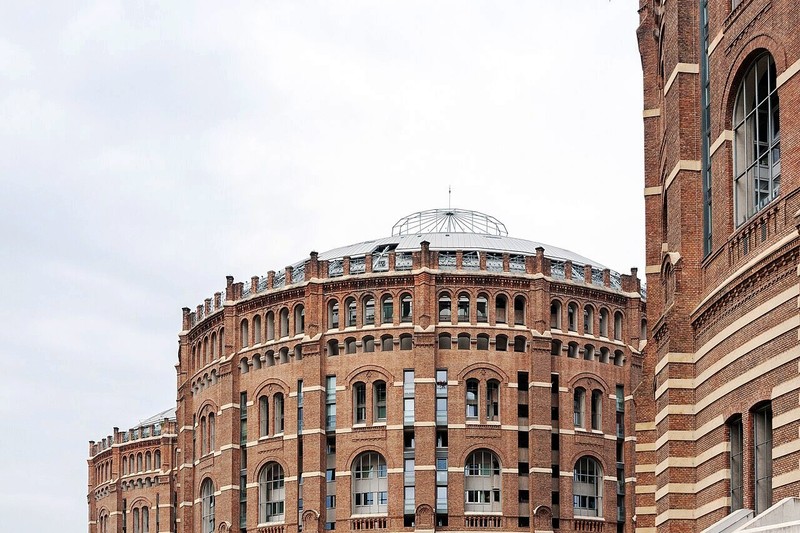
Each gasometer is a large cylindrical structure with an outer brick shell and a domed roof. The buildings are about 72.5 metres high, with an internal diameter of approximately 60–63 metres. Their distinctive silhouettes and red-brown brickwork give the complex a strong historic character.
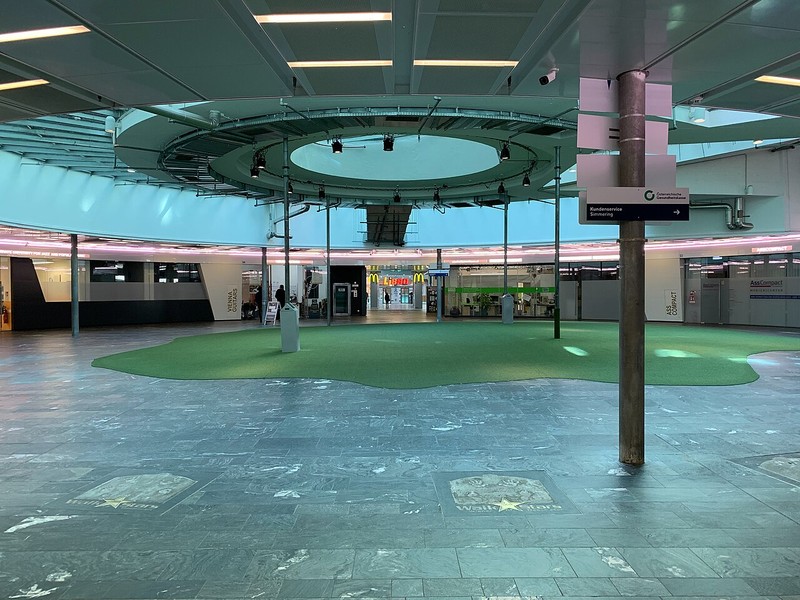
During redevelopment, the exterior walls were largely retained while the internal spaces were reorganised. Modern residential and public structures sit within the historic shell. The contrast between massive brickwork and newer glass, metal and concrete elements is one of the most interesting features of the complex.
The four gasometers differ in both design and function. The complex includes apartments, commercial premises, offices and public spaces. One building contains a large concert venue, while another houses parts of the Vienna City and Provincial Archives. This mix makes Gasometer City part of everyday urban life rather than simply a monument to the past.
What is inside
The gasometers form a mixed-use district combining housing, work, shopping and entertainment. The complex includes apartments, student accommodation, shops, cafés, restaurants and offices. There is also a cinema and venues for concerts and other events.
The concert hall in Gasometer B is known for music performances and large events. Depending on the programme, it hosts concerts, shows and other cultural activities. The capacity varies with the event setup, so visitors should check the organiser’s details for a specific performance.
The Gasometers are also an example of how former industrial space can be adapted for modern life. The historic structures retain their recognisable appearance while serving a contemporary residential district. However, not all interior areas are open to the public: apartments and some workspaces are private.
The Vienna Gasometers on screen
The complex gained additional recognition through cinema. In the James Bond film The Living Daylights (1987), the Gasometers were used as a striking industrial setting. Their monumental brick structures were well suited to the film’s dramatic atmosphere.
After industrial use ended, the gasometers also hosted exhibitions, music events and parties. Their spacious interiors and unusual architecture attracted event organisers, and the complex gradually became a recognisable Vienna landmark.
How to visit the Vienna Gasometers
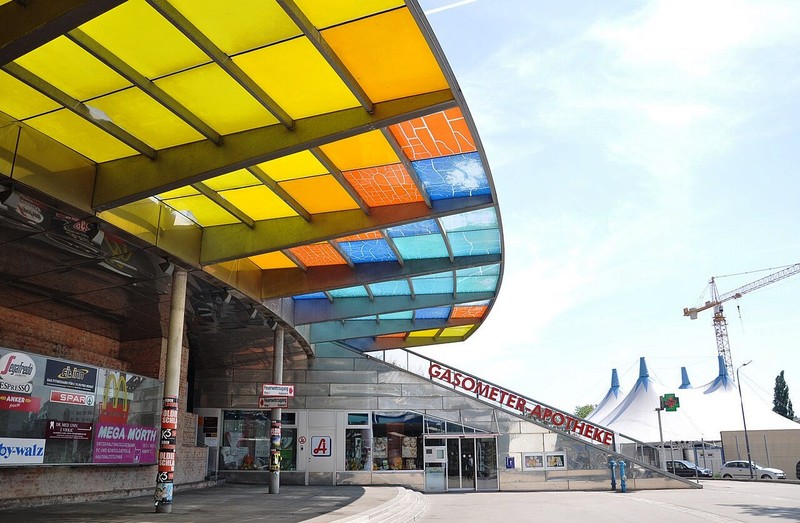
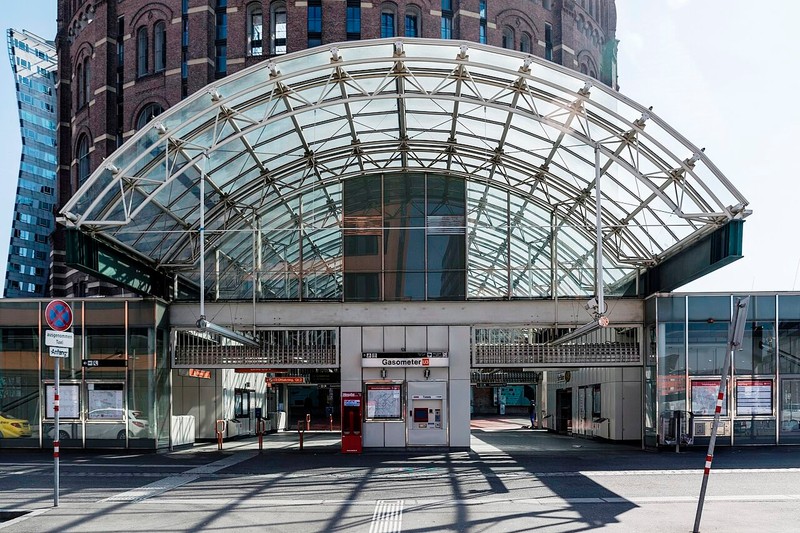
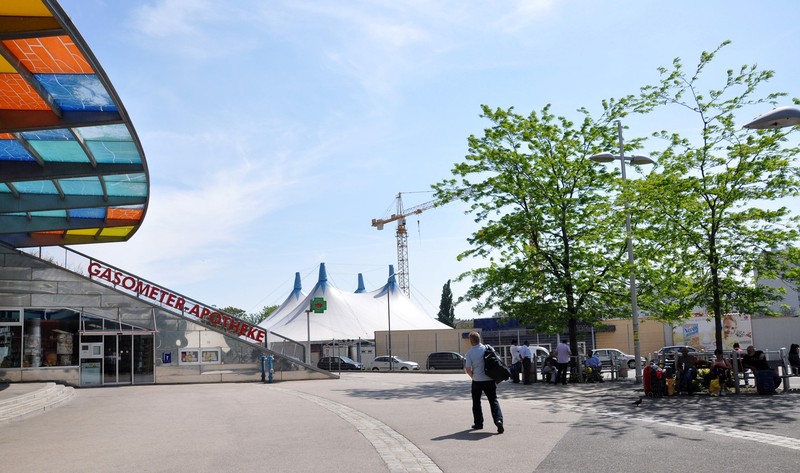
The Gasometers are located in Simmering, Vienna’s 11th district. The easiest way to get there is to take underground line U3 to Gasometer station. The station is next to the complex, so the buildings are only a short walk away.
You can view the exteriors while walking around the district. Shops and public areas can be entered according to the opening hours and rules of individual businesses. Apartments and restricted parts of the buildings are not open for general sightseeing. If you want to explore the interiors in more detail, check in advance whether guided tours or public events are available.
Before travelling, check the opening hours of the shops, cinema and concert venue, especially if you are visiting for a particular event. The Gasometers can be included in a walk through Vienna’s less touristy districts or visited for their distinctive architecture and industrial history.
Gallery