The Belvedere Palace Complex is one of Vienna’s best-known architectural ensembles, combining magnificent Baroque palaces, a historic garden, fountains, and internationally significant art collections. It consists of the Upper and Lower Belvedere, connected by a terraced garden with symmetrical paths, sculptures, and pools. The complex lies southeast of the historic centre of Austria’s capital.
Today, the Belvedere is famous not only for its architecture and gardens but also for its museum, home to Gustav Klimt’s celebrated painting The Kiss. Its collections present Austrian art from the Middle Ages to the present day.
History of the Palace Complex
In the early 18th century, Austrian commander and statesman Prince Eugene of Savoy decided to build a summer residence outside Vienna’s then city limits. In 1697, he purchased land south of Rennweg. The palace designs were entrusted to Johann Lukas von Hildebrandt, one of the leading architects of Austrian Baroque.
Construction of the Lower Belvedere began in 1712. Work on the Upper Palace started in 1717 and was completed in 1723. After Prince Eugene died in 1736, his estate eventually passed to the Habsburgs. Empress Maria Theresa decided to house the imperial picture gallery in the Upper Belvedere. It opened to the public in 1777, making the palace one of the early public museums in the world.
The Upper Belvedere and The Kiss
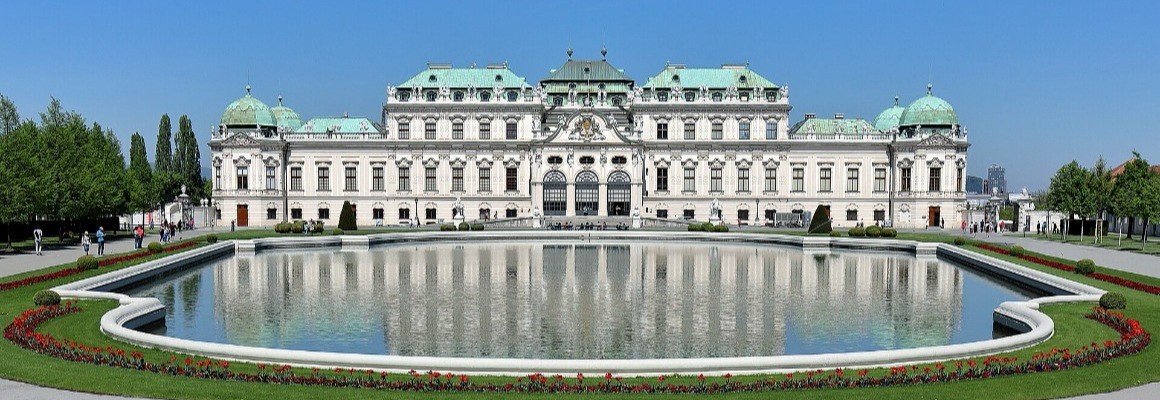
The Upper Belvedere stands on higher ground and is the most recognisable part of the complex. Its façades feature sculptural decoration, while the grand rooms display the richness of Baroque palace design. A large reflecting pool stands in front of the building, mirroring the palace façade.
The museum’s best-known artwork is Gustav Klimt’s The Kiss, painted in 1907–1908. It depicts an embracing couple surrounded by ornamental patterns and golden tones. The collection also includes other works by Klimt, Egon Schiele, Oskar Kokoschka, and many other artists.
The Lower Belvedere
The Lower Belvedere originally served as the residence of Prince Eugene of Savoy. Its interiors feel more intimate and feature elaborate decoration. Historic rooms include the Marble Gallery, the Golden Cabinet, and the Hall of Grotesques. Today, the palace and the nearby Orangery host temporary art exhibitions.
The Palace Gardens
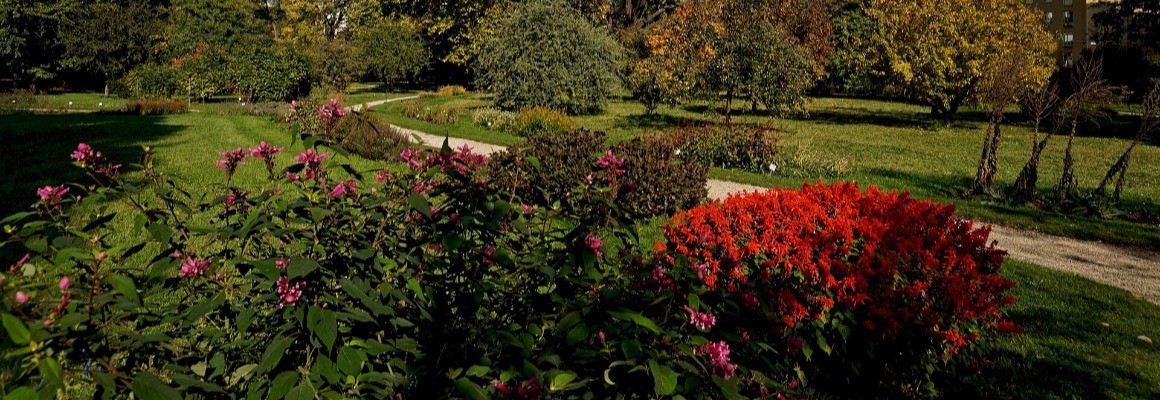
The Belvedere gardens are an outstanding example of historic Baroque landscape design in Europe. They extend between the two palaces across several terraces. Symmetrical paths, clipped hedges, lawns, fountains, and sculptures create a striking perspective from the Lower to the Upper Belvedere.
Decorative plants bloom in spring, shaded paths are especially pleasant in summer, and autumn brings changing leaf colours. The grounds also include the Orangery, the Privy Garden, and an Alpine Garden featuring mountain plants.
Historical Significance
On 15 May 1955, the Austrian State Treaty restoring Austria’s sovereignty after the post-war occupation was signed in the Marble Hall of the Upper Belvedere. This event made the palace an important site of national remembrance. The Belvedere forms part of Vienna’s protected historic urban landscape, included on the UNESCO World Heritage List.
How to Get to the Belvedere
The complex is located in Vienna’s Landstraße district. Tram line D provides convenient access to the Upper Belvedere via the Schloss Belvedere stop. You can also take underground line U1 to Südtiroler Platz–Hauptbahnhof and walk for about 15 minutes. Tram line 71 serves the Lower Belvedere at the Unteres Belvedere stop.
Allow several hours if you plan to explore both palaces and the gardens. Before visiting, check opening hours, tickets, and current exhibitions on the museum’s official website.
Gallery