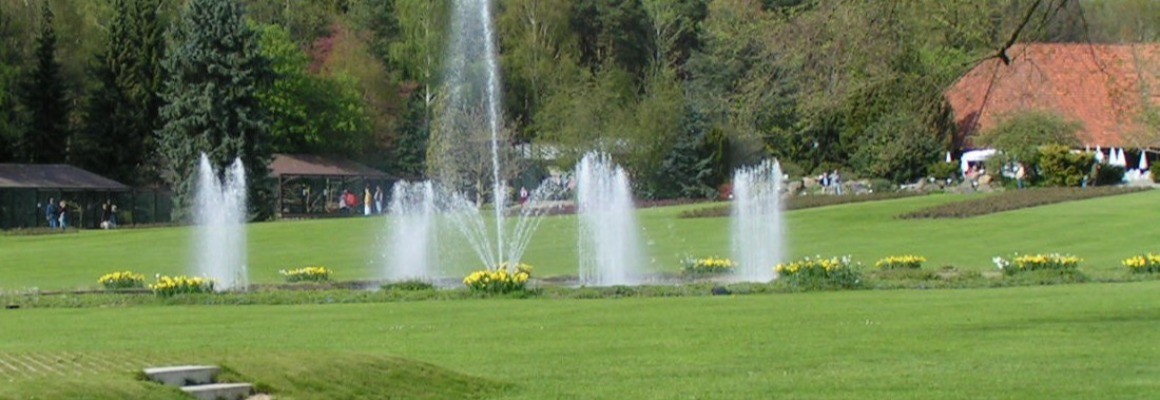
The Herrenhausen Gardens are a renowned historic garden complex in Hanover, the capital of Lower Saxony, Germany. The ensemble brings together Baroque symmetry, botanical collections, fountains and historic architecture. It consists of four gardens: the Great Garden, the Berggarten, the Georgengarten and the Welfengarten, each with its own layout and atmosphere.
The best-known part is the Great Garden (Großer Garten), one of Europe's best-preserved Baroque gardens. Its straight avenues, geometric parterres, clipped hedges, sculptures and water features reflect the ideals of order and beauty held by European courts in the seventeenth and eighteenth centuries. The Berggarten, by contrast, is celebrated for its botanical diversity.
History of the gardens
The history of Herrenhausen began in the seventeenth century. In 1638, Duke George of Calenberg established an estate to supply the Hanoverian court. When Johann Friedrich came to power in 1655, the settlement was renamed Herrenhausen, and a residence and garden began to develop nearby.
Electress Sophia of Hanover, wife of Elector Ernest Augustus, played a decisive role. Having spent part of her youth in the Netherlands, she was familiar with Dutch garden traditions. Under her patronage, a small court garden grew into a major Baroque ensemble. Gardener Martin Charbonnier helped shape the Great Garden, which had acquired its essential form by 1714.
During the eighteenth century, Herrenhausen became an important setting for court life and cultural events. Unlike many European gardens that were later redesigned in the landscape style, the Great Garden retained much of its original Baroque plan. Hanover acquired the garden in 1936 and began restoration, but the Herrenhausen Palace was destroyed during the Second World War. The gardens were restored after the war, and the palace was rebuilt and reopened in 2013.
The Great Garden
The Großer Garten covers around 50 hectares and forms the heart of the complex. Its design is based on symmetry, straight lines and clearly defined spaces. Avenues connect palace buildings, ornamental parterres, fountains, sculptures and themed gardens. The central parterre features decorative patterns made from flowers, lawns and low hedges.
The grounds also contain a gallery, an orangery and other historic structures. These buildings served practical purposes while expressing the status of the Hanoverian court. Architecture, sculptures, vases and water features are integral parts of one artistic design.
Fountains and the grotto
One of the garden's most striking features is the Great Fountain, whose jet rises high above the surrounding parterres. Smaller fountains, ponds and cascades add variety throughout the grounds. The water displays operate according to seasonal schedules, so visitors should check the current timetable before travelling.
Another highlight is the grotto decorated by French-American artist Niki de Saint Phalle. Its interior features colourful mosaics, mirrors and vivid decorative elements. The contemporary artwork contrasts with the strict geometry of the Baroque garden and gives the historic ensemble a distinctive modern feature.
The garden theatre and themed gardens
The historic Gartentheater was created in the late seventeenth century. Clipped hedges form natural stage scenery, while sculptures and decorative details complete the theatrical setting. It recalls the court festivities, performances and celebrations once held in the gardens.
The grounds also include themed areas such as a rose garden, Renaissance garden, Baroque garden, Rococo garden, flower gardens and lawns. These sections illustrate different periods in European garden design, from strict geometry to more varied combinations of plants.
Berggarten: the botanical garden
The Berggarten has a strong botanical and scientific focus. It began in the seventeenth century as a site for growing plants needed by the court and later developed into a major botanical garden. Today, it contains thousands of plant species and varieties from different climatic regions.
Highlights include orchids, cacti, succulents, tropical plants and ornamental species. The greenhouses shelter plants that cannot survive outdoors during northern Germany's cold winters. Labels introduce visitors to plant origins, growth habits and adaptations, making the garden interesting for both specialists and casual visitors.
Georgengarten and Welfengarten
The Georgengarten is a landscape park designed in the English tradition, with open lawns, winding paths and groups of mature trees. It is ideal for leisurely walks, picnics and cycling. Its famous avenue connects the park with the Royal Gardens of Herrenhausen.
The Welfengarten lies beside Leibniz University Hannover. It combines historic park features with open green spaces and mature trees. Both parks complement the formal Great Garden and provide accessible green spaces for everyday recreation.
Seasons and events
Spring brings flowering bulbs and ornamental shrubs. In summer, the Great Garden becomes especially colourful, fountains operate on their seasonal schedule, and concerts, festivals and outdoor performances take place. Autumn adds golden tones to the trees, while winter makes the geometric structure of the Baroque planting more visible. The Berggarten's greenhouses offer botanical interest throughout the year.
Herrenhausen also hosts cultural events, including the International Fireworks Competition, when teams from different countries present musical fireworks displays. Dates and access arrangements change each year, so visitors should consult the official calendar.
Nearby attractions
The Herrenhausen Palace Museum explores the history of the House of Welf and the development of the gardens. In central Hanover, visitors can see the New Town Hall, the Old Market and local museums. Art lovers may enjoy the Wilhelm Busch Museum, dedicated to caricature and drawing. A walk through the avenues of the Georgengarten is another pleasant addition.
Practical information
The gardens are located on Herrenhäuser Straße in Hanover, Germany, and can be reached by public transport, including tram. The Great Garden and Berggarten follow seasonal opening hours, while the Georgengarten is generally accessible at any time. Check the official website for current opening times, tickets, fountain schedules and events.
Allow several hours for the Great Garden and Berggarten. If you want to explore all four gardens and the museum, plan to spend much of the day. Comfortable walking shoes are recommended. The Herrenhausen Gardens are an excellent destination for anyone interested in history, botany, architecture, photography and European garden design.
Gallery