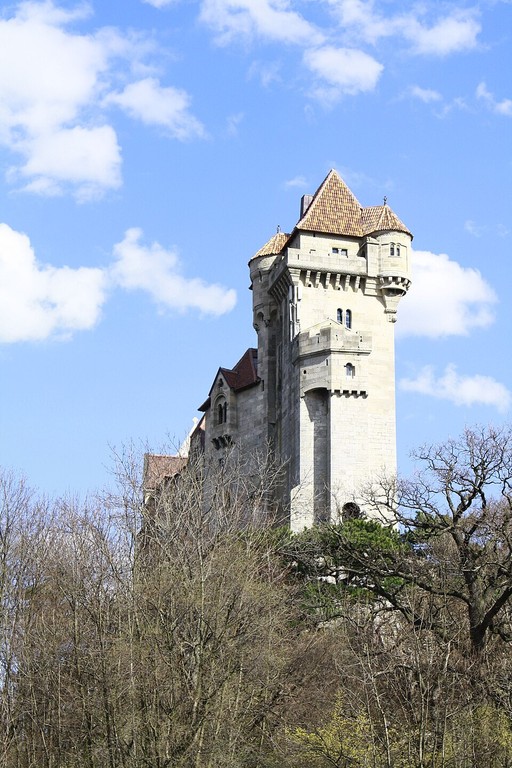
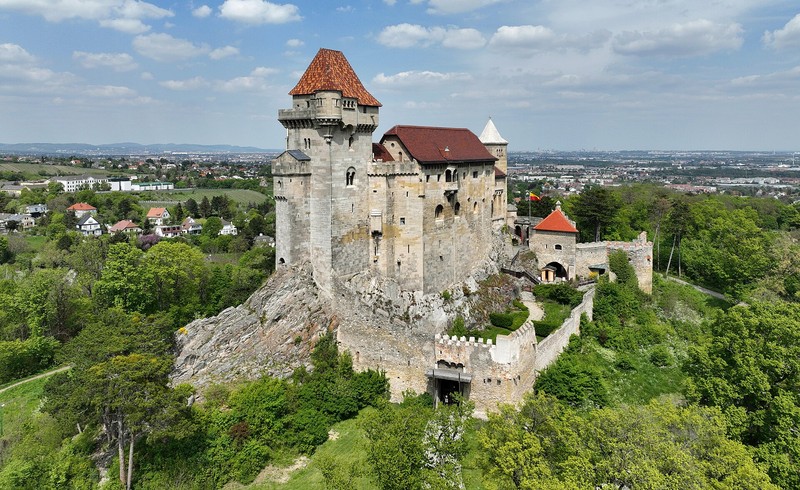
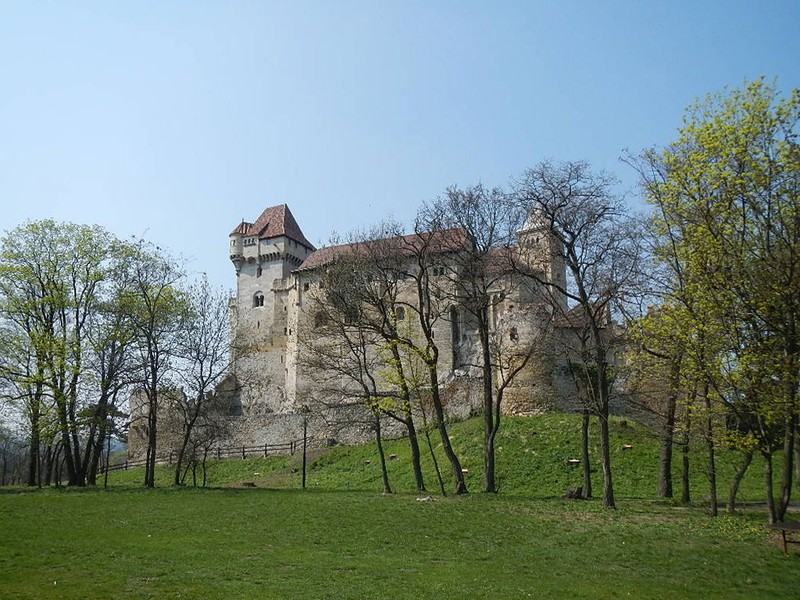
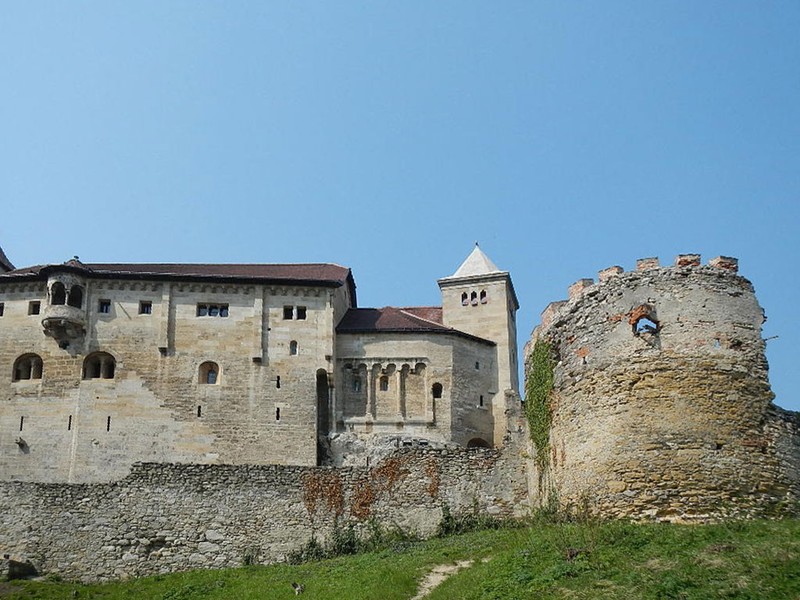
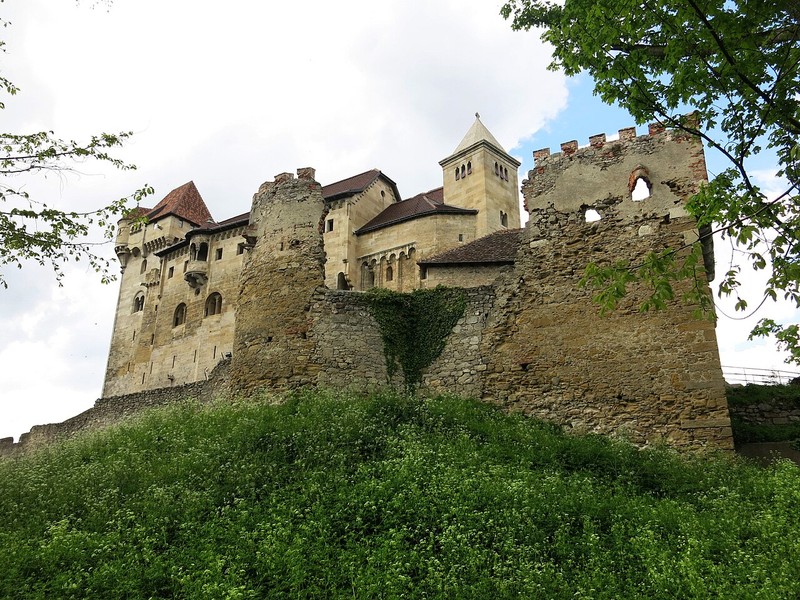
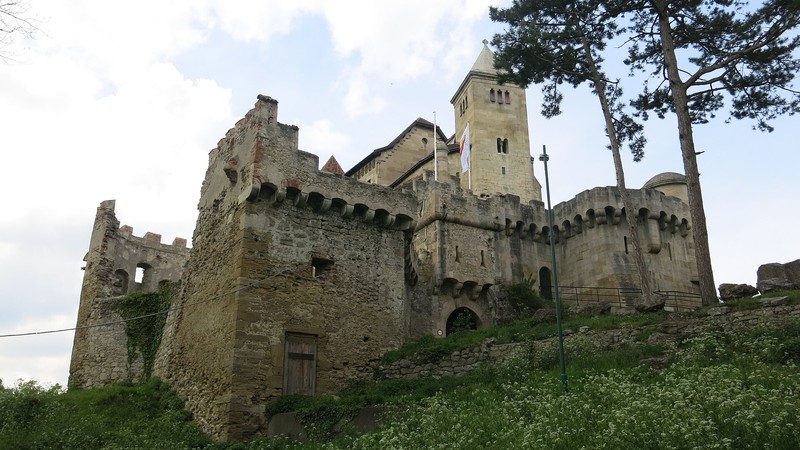
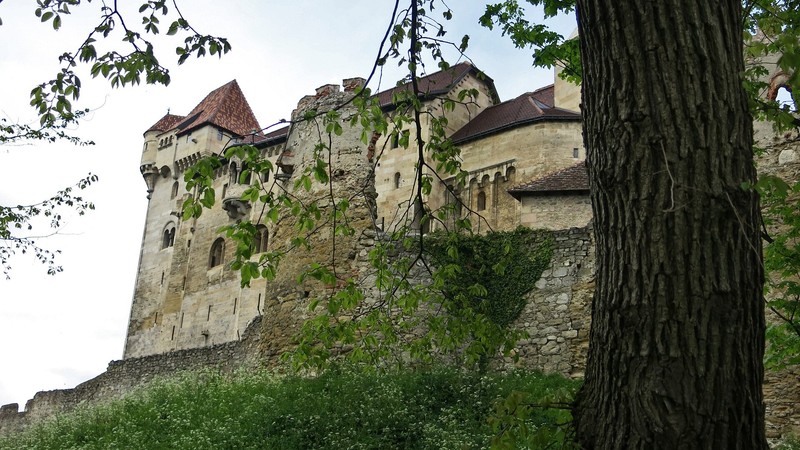
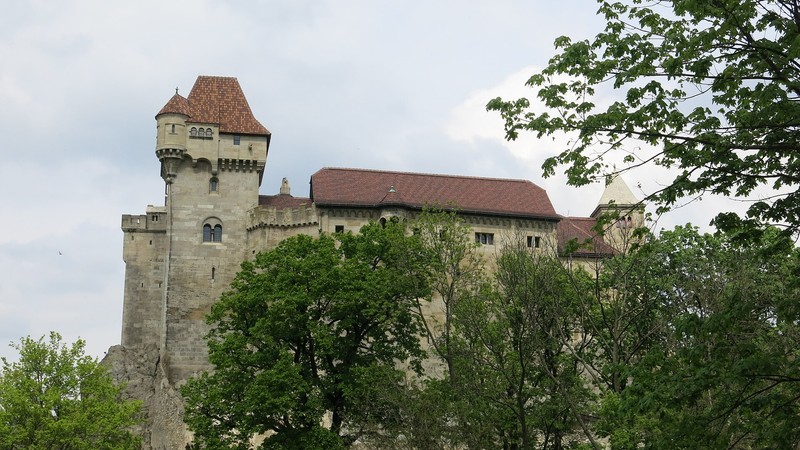
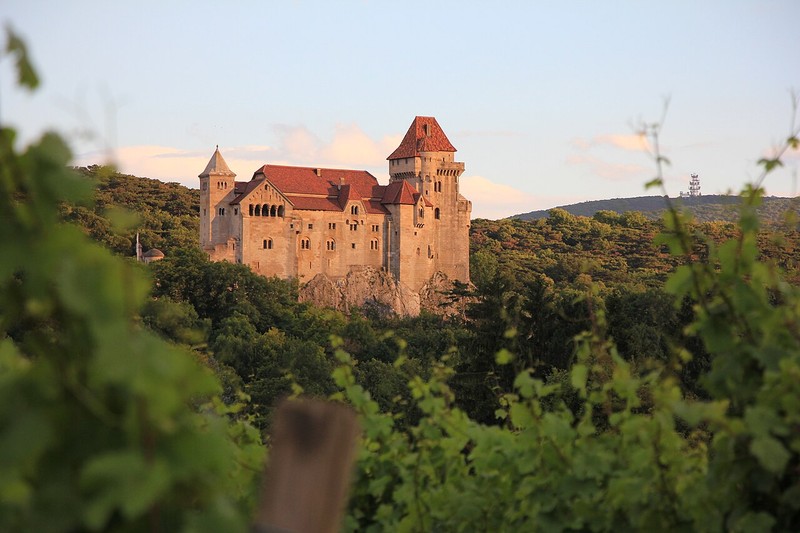
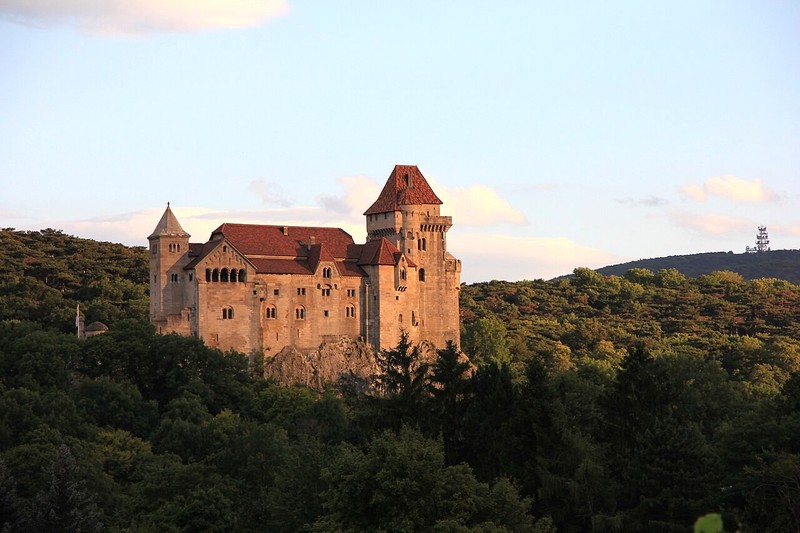
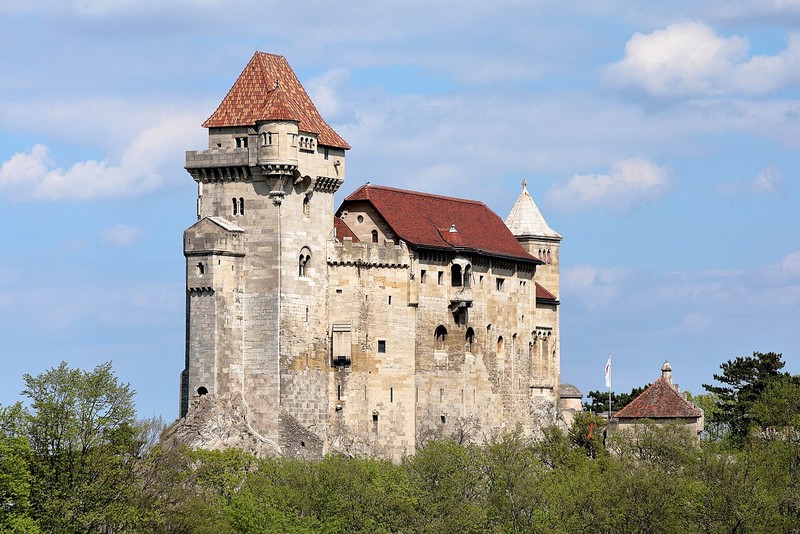
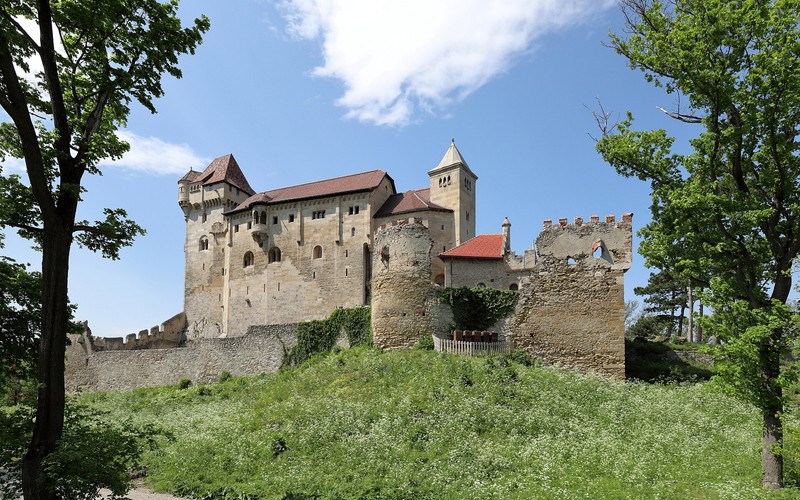
Liechtenstein Castle is a medieval fortress in Lower Austria, perched on a rocky hill near the southern edge of the Vienna Woods, close to Maria Enzersdorf. It lies about 15 kilometres from central Vienna and is considered one of the region's most interesting examples of Romanesque secular architecture. Stone walls, narrow windows, towers and a distinctive silhouette against wooded slopes give the fortress its characteristic medieval appearance.
The castle is known as the ancestral seat of the Princely House of Liechtenstein, whose history spans around nine centuries. Despite repeated destruction and rebuilding, substantial elements dating from the 12th century survive in its architecture. Today, the fortress is privately owned but open to visitors on guided tours. Guests can learn about its history, see historic interiors and discover the origins of one of Europe's well-known dynasties.
History of Liechtenstein Castle
Construction began around 1130–1135. The founder is considered to be Hugo of Liechtenstein, a nobleman whose name later became that of the princely family. The original complex developed in the Romanesque style and consisted of several structures. The castle was more than a defensive stronghold: it also served as the owners' residence and a symbol of their social status.
The German name Liechtenstein is commonly interpreted as “bright stone” or “light-coloured rock”. It is associated with the local landscape and the castle's stone architecture. In sunlight, the pale walls stand out against the greenery of the Vienna Woods. The castle's name became associated with the Liechtenstein family, although the history of the fortress and that of the princely dynasty later followed different paths.
In the 13th century, the castle passed to other owners and changed hands several times in later centuries. Those connected with its history included members of the Stadeck and Khevenhüller families, as well as the Hungarian king Matthias Corvinus. The fortress stood in a strategically important area south of Vienna, and its history reflects the political and military changes that shaped Central Europe.
In 1529, during the first Ottoman campaign against Vienna, the castle was badly damaged. Further destruction occurred in 1683, when Ottoman forces again approached the Austrian capital. After these events, the fortress gradually fell into disrepair and became a ruin.
In 1807, Prince Johann I of Liechtenstein acquired the ruins and returned the property to the family. Preservation and restoration work followed. The extensive restoration of the 19th century helped give the castle its recognisable historic appearance. However, the project did not restore every part to its original state: the present architecture combines surviving medieval features with later alterations.
The castle suffered further damage during the Second World War. After the war, restoration continued with the participation of local residents and volunteers. The fortress later reopened for guided visits and became one of the best-known historic attractions in the Vienna Woods.
Architecture of the medieval fortress
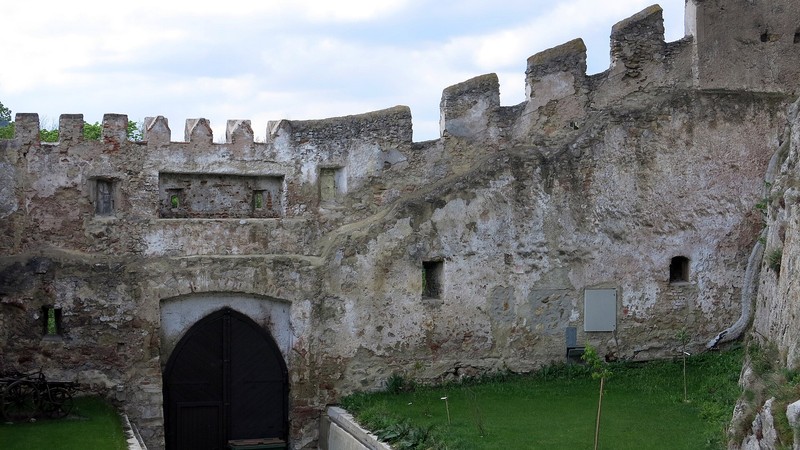
Liechtenstein Castle stands on a narrow rocky outcrop, giving it an elongated silhouette. The complex includes towers, defensive walls, residential rooms and a chapel. Its architecture retains characteristic Romanesque features, including massive stonework, small window openings and simple but striking forms. Later Gothic details can be seen in some sections.
Particularly striking are the tall, narrow lancet windows, stone stairways and walls that appear to follow the contours of the rock. Pale stone contrasts with reddish roof elements and the surrounding greenery. Because of the uneven terrain, buildings occupy different levels, creating an unusual spatial composition.
The castle is considered an important monument of Romanesque secular architecture. According to the castle administration, a substantial proportion of the Romanesque building fabric survives from the original 12th-century phase. This makes Liechtenstein especially interesting to anyone studying medieval Austrian castles and the history of fortification.
Chapel of Saint Pancras
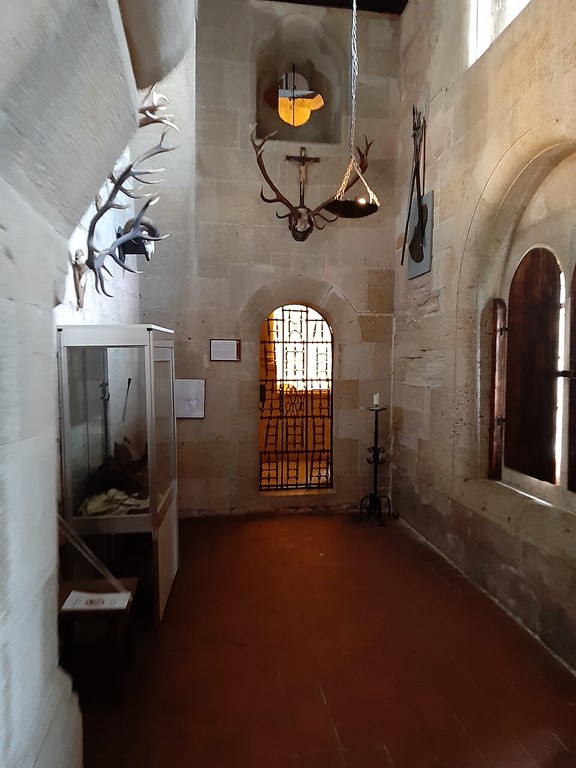
One of the castle's important rooms is the Chapel of Saint Pancras. It is associated with the fortress's early history and preserves architectural elements of particular historical significance. The chapel contains a crucifix depicting Christ that dates to the 13th century. This religious space is a reminder that a medieval castle was not only a defensive structure and residence but also a place of spiritual life.
The chapel continues to be used for religious services. During a guided tour, visitors can learn about its role in the history of the fortress and the features of medieval religious architecture. Access to individual rooms depends on the tour route and current visitor regulations.
Interiors and historical collections
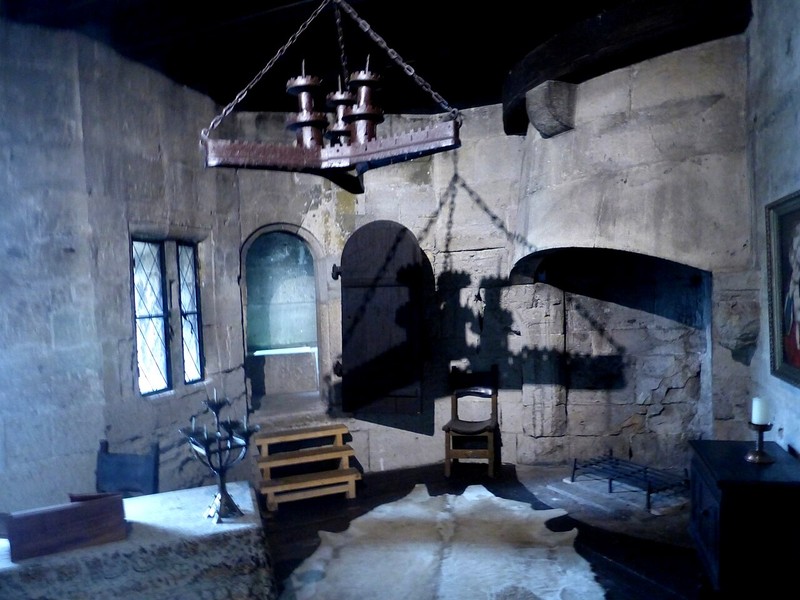
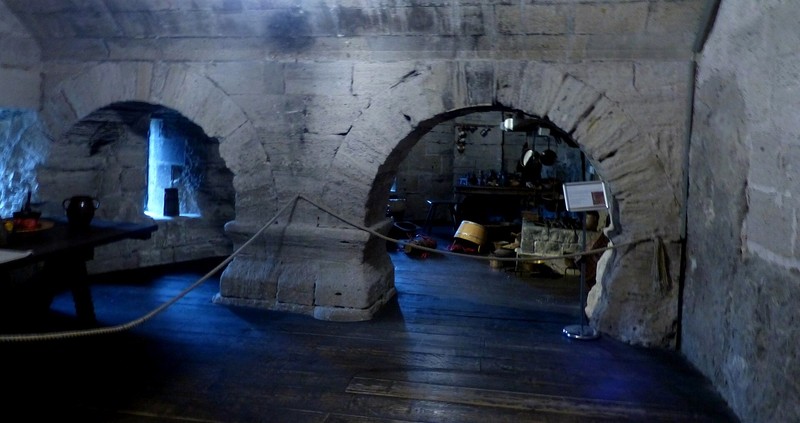
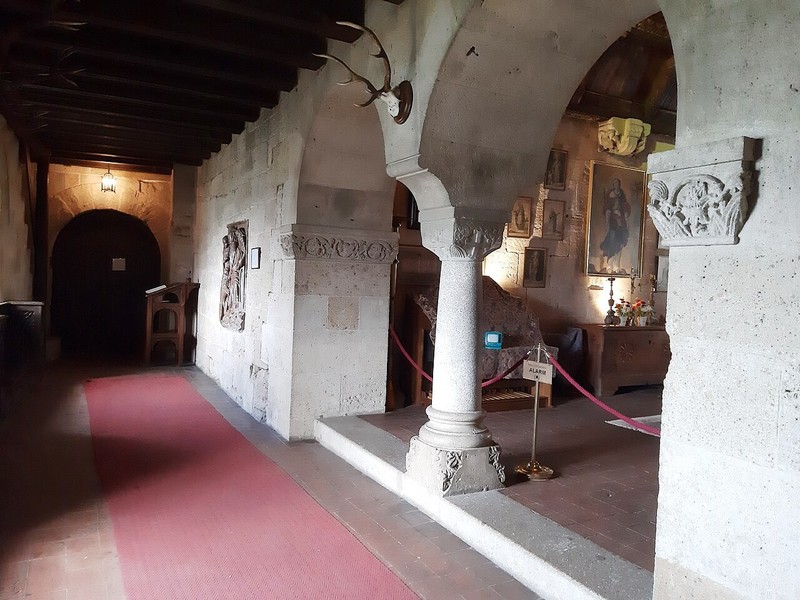
Several rooms survive inside the castle and help visitors imagine the lives of its owners. Highlights include a large hall with wooden beam ceilings, historic furniture and objects associated with military history. The interiors reflect different periods in the fortress's existence and subsequent restoration.
Some rooms display examples of historic weapons and furnishings from the 19th century. The upper floor contains rooms arranged as princely chambers and a portrait gallery featuring members of the dynasty. The displays help connect the history of the building with that of the Liechtenstein family.
Visitors should remember that the castle is privately owned and access to the rooms follows a guided route. Not every room or object is necessarily available on every visit; access depends on the building's condition, restoration work and organisational arrangements.
The castle and the Princely House of Liechtenstein
The fortress gave its name to one of Europe's well-known princely families. Although the family eventually lost ownership of the castle, the name Liechtenstein remained part of its title and became the name of the modern state of Liechtenstein. The castle's history helps explain how medieval estates, family names and political ties shaped the European nobility.
In 1807, Prince Johann I returned the ruins to the family. The castle remains associated with the Princely House of Liechtenstein, although visits are organised by the castle administration. It is not a conventional museum where visitors can explore every room independently, but a historic monument introduced through guided tours of its architecture and family history.
Cultural events
Liechtenstein Castle is not only a historic monument but also a venue for cultural events. It has hosted open-air theatre and performances connected with Austrian drama, including the legacy of Johann Nestroy. Event programmes and dates change from year to year, so check the official website's calendar before travelling.
Its historic architecture and position on a rocky hill make the castle a suitable setting for themed tours and special events. However, attending a cultural event does not necessarily include access to every interior room, so check the conditions of the specific programme in advance.
How to get to Liechtenstein Castle
The castle is located at Am Hausberg 2, 2344 Maria Enzersdorf, in the southern part of the Vienna Woods. It can be reached from Vienna by car or public transport. Driving routes generally leave the city to the south in the direction of Mödling and Maria Enzersdorf. A car park is available approximately 300 metres from the entrance.
By public transport, take a suburban train to Mödling or another suitable rail connection, then transfer to a bus serving Maria Enzersdorf. Check current bus numbers and timetables before travelling, as routes can change. From the bus stop, continue on foot to the castle.
The fortress stands on elevated ground, so allow for an uphill walk and uneven surfaces. Comfortable footwear is recommended for exploring the surrounding area. The visit can be combined with a walk in the Vienna Woods or a stop in nearby towns.
Opening times and visiting information
The castle opens seasonally. According to the 2026 schedule, from 1 April to 30 September guided tours run from 10:00 to 16:00 on Mondays, Tuesdays, Thursdays, Fridays, Saturdays and Sundays; Wednesday is normally a closing day except on public holidays. From 1 October 2026 to 31 March 2027, tours for individual visitors run on Fridays, Saturdays and Sundays from 11:00 to 15:00. During the Christmas period, the castle closes from the Sunday one week before Christmas until 6 January. Schedules can change, so check the official website before visiting.
Tours begin on the hour and are offered in German and English. A standard tour lasts about 50 minutes. Individual visitors generally do not need to book in advance, but groups of 15 or more should arrange their visit beforehand.
According to the official 2026 tariff, admission costs €18 for adults, €10 for children aged 6–18 and €15 at the reduced rate. Family and combined tickets are also available. Prices and conditions may change, so verify them before travelling.
There are many stairs inside, and the rooms are not accessible without steps. Strollers cannot be taken into the tour rooms, but they may be left in a designated area during the visit. Photography and video recording inside the rooms are generally prohibited. Dogs are not admitted.
Liechtenstein Castle makes an interesting day trip from Vienna. Visitors can see rare Romanesque architectural features, learn about the region's medieval history and explore the past of the Princely House of Liechtenstein. The tour is especially appealing to anyone interested in castles, history and Austria's cultural heritage.
Gallery