Traveler Stories — page 8

Alfred Donny Guide
Namibia · October 9, 2026
Driving Across Namibia: Hundreds of Kilometers With Almost No People

Driving Across Namibia: Hundreds of Kilometers With Almost No People

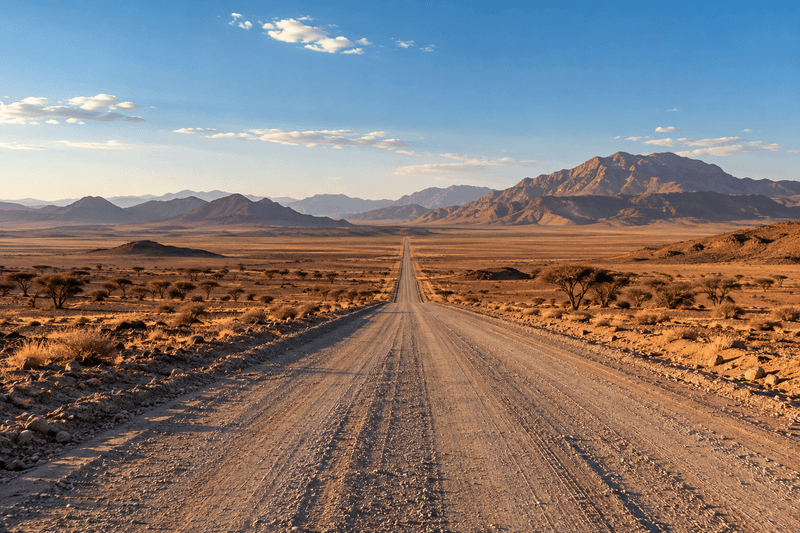
Some journeys are about the road itself rather than the attractions along the way. Namibia became that kind of place for me. I expected deserts, sand dunes and occasional wildlife, but I didn't expect to remember the endless stretches of road most vividly - with almost nothing around except land, sky and a thin line disappearing into the distance. When nothing changes outside the window for hours At first, the drive seemed ordinary. We left a small settlement, passed a few houses and soon entered wide-open country. The asphalt gave way to gravel, and dry hills, rocky plains and scattered shrubs stretched out beyond the windows. After a while, I realized I hadn't seen an oncoming vehicle for a long time. Mountains occasionally appeared on the horizon, and sometimes the road descended into a shallow valley. But there were hardly any people. Even familiar road signs were rare, and the nearest café or fuel station could be a long way away. In these conditions, distance feels different. A hundred kilometers looks insignificant on a map, but on a gravel road it becomes a long journey. You cannot simply speed up to reach your destination sooner. You have to watch the surface, avoid loose stones and be ready for unexpected bends. That was when I understood that in Namibia, the road itself becomes an attraction. You don't need to turn off somewhere all the time. Sometimes it is enough to keep driving and watch the immense landscape change. The desert turned out not to be empty at all When you think of a desert, you imagine endless sand and an absence of life. But Namibia's landscapes were much more varied. Some stretches were rocky plains; elsewhere, dry riverbeds, low mountains and scattered trees appeared. After rain, even arid areas can briefly turn green. Sometimes you can spot antelope or other wild animals beside the road. They do not appear on a schedule, which makes every sighting feel like an unexpected gift. You have to look around instead of focusing only on the road. Of course, stop only somewhere safe and never approach the animals. The changing light is another memorable part of the journey. In the morning, the ground looks cool and grayish. By midday it turns golden, and toward evening the hills and mountains take on reddish tones. Even a familiar stretch of road can look completely different on the return trip. Eventually, you stop expecting something famous to appear around every bend. In Namibia, beauty often lies in simple things: a lone tree, a long shadow, a cloud above a dry valley or a road disappearing beyond the horizon. Here you really understand how big the world is The strongest feeling came when I stopped in a safe place and stepped out of the car. The space around me was so vast that my eyes seemed to have nowhere to settle. There was no city noise, hardly any traffic, and the wind felt like the only sound in the enormous landscape. A journey like this quickly teaches you the importance of planning. Before a long drive, fill the tank, check your water supply, charge your phone and find out where the next fuel station is. Mobile coverage can be unreliable on some routes, so offline maps are useful. On gravel roads, you also need to consider the surface conditions and drive at a speed that is safe for them. Yet it is precisely this distance from everyday bustle that makes the journey special. You don't have to keep deciding where to go or what to see. Just follow the road, stop occasionally for a view and let the journey become part of the experience. I remember Namibia for more than its dunes and famous natural landmarks. What stayed with me were the long drives, dust trailing behind the car, the rare oncoming vehicle and the horizon that seemed to move farther away with every kilometer. Sometimes, all you need for a real adventure is to keep going.

Read more →
0 0
Alfred Donny Guide
Namibia · October 9, 2026
Namibia: The Trees Standing in the Middle of a Dead Desert

Namibia: The Trees Standing in the Middle of a Dead Desert

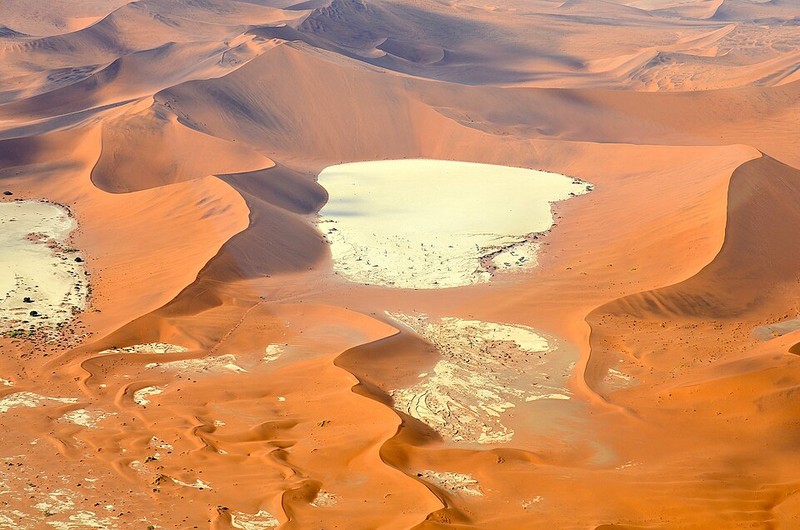
When I first saw photos of Deadvlei in Namibia, I thought they looked like a movie set from another planet. White ground, enormous orange dunes and black trees standing in the desert as if time had stopped. The most amazing part is that this place really exists. A valley where time seems to have stopped Deadvlei lies in Namib-Naukluft National Park, among some of the world's tallest sand dunes. Its name is often translated as “dead marsh” or “dead valley.” Water once reached this area, trees grew here and a very different ecosystem thrived. Then the climate changed, the river stopped feeding the valley, and it became a dry plain. The most striking feature is the old camel thorn trees. They died roughly 600-700 years ago, but the extremely dry climate has kept them from fully decomposing. Their trunks darkened under the sun and over time, while their branches still reach toward the sky. The result is a landscape unlike almost anywhere else on Earth. Against the bright dunes, the trees look almost black. There is no familiar green vegetation, and the ground is so pale that it appears white. The contrast is so strong that it is hard at first to believe you are looking at a real desert. Getting there means crossing the sand Deadvlei is not right beside the road. The journey starts in the Sossusvlei area, where visitors come to see Namibia's famous dunes. From there, the route crosses sandy terrain, with part of the journey completed on foot. Even a short walk can feel long in the heat, so it is best to arrive early, carry water and wear comfortable shoes. Along the way, enormous sand slopes rise around you. Some reach hundreds of metres in height. Their colors change with the light, from soft gold to deep red-orange. It can seem as if the dunes are moving, although what changes most visibly is the light and shadow. When Deadvlei finally comes into view, the scene is extraordinary: a flat, pale surface, scattered dark trees and giant walls of sand all around. Instead of rushing to take photos, you want to stop and look at every detail. Why these trees are so hard to forget Deadvlei has no waterfalls, dense forests or animals constantly appearing in front of the camera. Its main characters are silence, sand and trees that outlived the environment that once sustained them. They have stood in the same place for centuries while the wind slowly reshapes the surrounding dunes. The most striking thing is the sense of scale. Beside the huge sandy slopes, a person looks tiny, and the trees resemble silhouettes in an old photograph. Yet there are no artificial sets here: nature, climate and time created everything. Deadvlei is often described as one of Africa's most unusual landscapes, and it is easy to understand why. It shows how dramatically nature can change when water disappears, and how long the environment can preserve traces of the past. I would not limit the visit to a single photo with the dunes in the background. Walk across the valley, look at the cracked ground and study the branches of the old trees. Those details are what make the place unforgettable.

Read more →
0 0
Vlad Discoverer
Japan · October 9, 2026
Why I decided to leave alone: Solo trip to Kyoto

Why I decided to leave alone: Solo trip to Kyoto

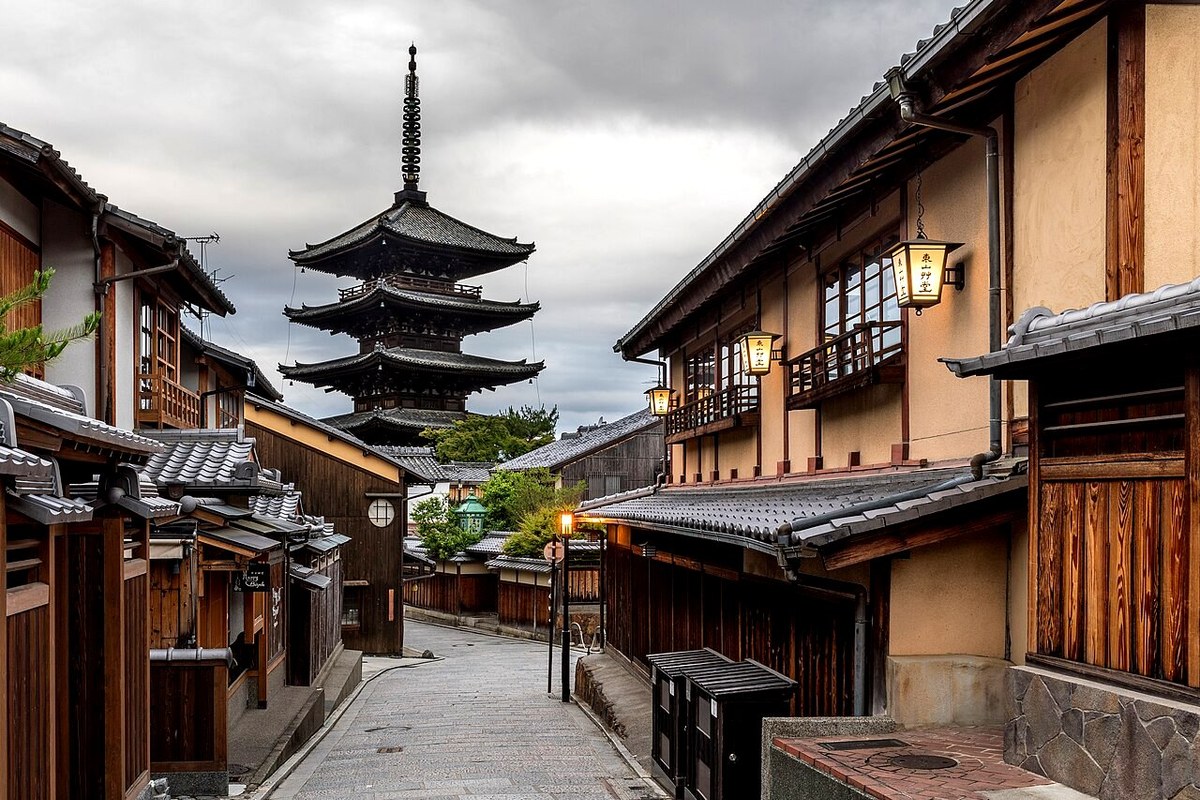
For a long time I couldn't explain to myself why one day I just opened a website with tickets and started looking for a trip that I would go on alone. There was no grandiose reason, quarrels, a desire to escape from everyone, or a sudden midlife crisis, although from the outside, it probably looked that way. At some point, it just seemed to me that I had been living in a regime for too long, where I was constantly consulting with someone, adjusting to someone, and even choosing a restaurant with an eye to what would please not only me. In the end, I chose Kyoto in Japan, why did I do that? It's hard to say now, because at that moment the choice was more emotional than logical. I looked at photos of old streets, temples, wooden houses, and gardens, and for some reason I thought: "That's where I want to go." A few days later, the ticket was bought, and with it came a new problem: now I really had to go alone. I was a little scared at first. The most interesting thing started after buying the ticket. While the trip was only in my head, everything seemed romantic: I was walking around Kyoto alone, taking pictures of beautiful places, going to small cafes, not arguing with anyone about the route and waking up when I want. And then I imagined an airport, a plane, an unfamiliar country, a different language, public transport and myself in the middle of it all with a suitcase, the romance evaporated a little. I even started coming up with reasons why the trip could be canceled. Sometimes it seemed to me that I hadn't prepared enough, sometimes I remembered that you can actually have a great vacation at home without spending money on a flight to Japan. But the ticket had already been bought, and at some point I realized that it wasn't the trip itself that scared me the most. I was afraid to be alone with myself. At the airport, I realized that there was no turning back. Kansai International Airport When I arrived at the airport, everything suddenly became very real. I was standing with my suitcase, looking at the scoreboard and thinking that a couple of days ago I was sitting at home and quietly going about my business, and now I'm going to fly to the other side of the world. It was especially fun to watch myself from the side. I seem to be an adult, independent man who can solve a lot of everyday issues, but here I checked my passport, ticket and phone several times, as if someone was going to steal my documents right out of my pocket. Before boarding, I looked at my phone again and saw messages from people I knew asking why I decided to go alone in the first place. I didn't have a pretty answer. I just wanted to give it a try. Maybe sometimes that's enough. The first hours in Kyoto When I finally got to Kyoto, at first it felt like my brain was trying to process too much information at the same time. Different signage, different architecture, unfamiliar rules, public transport, people who are completely calmly going about their business while I'm trying to figure out where to go at all. Kyoto Station I checked the route several times and still managed to get off at the wrong stop. This is especially pleasant with a suitcase, because any slight deviation from the route automatically turns into a walk with extra weight. But then a strange thing happened, I realized that I didn't need to explain to anyone why I stopped. If I wanted to look at the house, I looked. If I wanted to turn into an alley, I turned off. If I wanted to sit on a bench for ten minutes and do nothing, I just sat there. And at first it seemed unusual, but then it became very pleasant. For the first time in a long time, I don't owe anyone anything. That's probably what I felt the most. When traveling with someone, even a loved one, there are still a lot of small compromises. Someone wants to go to the museum, someone wants to go to the market. One wants to walk for another hour, the other is already dreaming of a bed. One is ready to wait for the train for twenty minutes, the other starts looking at the timetable with the expression of a man who is about to announce a transport reform. But here everything was simple: I woke up when I wanted to, left the hotel without a clear plan. I could walk all day, or I could go back to my room in the middle of the day and just lie down. And gradually I realized that this was exactly what I needed, not Japan, not Kyoto, but the opportunity to live at least for a short time exclusively in my own rhythm. One unplanned walk One morning I decided to go out early. In Kyoto at this time, the city feels very different: fewer people, quieter streets, soft light, the first cafes are opening, and there is still no usual tourist traffic near the temples. I was walking completely aimlessly and at some point stopped near a small garden. I didn't search for it specifically and didn't even remember the name right away. I just came in. I sat down and looked at the trees for a few minutes. And there something happened to me that I did not expect at all. Zen garden made of dry sand I felt good, not funny, not exciting, not "wow, how beautiful," but good, quiet and calm. I realized that I hadn't been alone with my thoughts for the last few months. Work, business, phone, messages, news, constant plans –something was happening all the time. Even rest turned into a task that needed to be done correctly. But there was no need to do anything here. Minor stress But don't think that after that I turned into an enlightened traveler who sits under a sakura tree and understands the meaning of life. I still remained myself, one day I decided to figure out the route on my own, I took the wrong train too confidently and discovered this only when I realized that the surrounding landscapes were completely different from what I expected to see. I looked at the phone, then at the scoreboard, then back at the phone. Wooden and bamboo facades of houses And I realized that a wonderful independent trip can now turn into a wonderful independent trip to a completely different city. I had to figure it out, and I realized that instead I saw wooden and bamboo facades of houses. The funny thing was that no one could say to me, "I told you so." And you know, it turned out to be unexpectedly pleasant. I made a mistake on my own, figured it out on my own, and went back to where I needed to go. It's a small thing, but for some reason it's these little things that give you confidence later. In the evening, I realized why I had come Shijo Street I spent one evening completely without a plan. I just walked through the streets of Kyoto until it started to get dark. Shops were closing somewhere, lights were turning on in the windows, people were returning home, and I was walking slowly and not in a hurry. At some point, I took out my phone to text someone and stopped. I suddenly wondered why. Not because I was lonely. On the contrary, loneliness was not perceived as something unpleasant for the first time in a long time. I was just in a place where no one expected anything from me. And it turned out to be surprisingly liberating. I realized that loneliness and being alone are not the same thing. Ninezaka Paved Pedestrian Street Before this trip, for some reason, I thought these things were almost the same. If a person travels alone, it means he must be lonely. If he's sitting alone in a cafe, it means he has no one to talk to. If he's walking alone in an unfamiliar city, it means he's waiting for someone. It turned out that everything was completely wrong. You can be alone and feel great. You can sit at a table, drink coffee, look at the people around you and not feel any urgent need to fill the silence with conversation. You can walk down an unfamiliar street and suddenly feel much calmer than in a company. For some reason, Kyoto helped me understand this. What changed after the trip I did not return from Japan as a completely different person. It would be too beautiful and improbable to write like that. I still sometimes put things off, I can still open the refrigerator and look inside for five minutes in the hope that by some miracle dinner has appeared there, and I still periodically make overly optimistic plans for the day. But something has changed. I stopped being afraid to do things on my own. The facade of the Kannon Hall Buddhist Temple If I want to go somewhere, I no longer automatically think, "I need to find a company." If I want to go to a restaurant, I go, if I want to go to a Buddhist temple, I don't need to explain why I became interested in Buddhism. If you want to see a new city, I can go alone. And most importantly, I no longer perceive time alone with myself as something that needs to be distracted from. Why did I decide to leave alone anyway? If you were to ask me now why I bought this ticket then, I probably would have answered a little differently. I didn't leave alone because I wanted to escape from someone. I left alone because I finally wanted to hear my own thoughts. I needed to take away the usual noise around me for at least a few days and check what was left when I didn't have to adjust to anyone, rush anywhere, and constantly explain something to someone. Forest of Kimonos In Kyoto, I realized that I didn't have to be busy all the time. My thoughts became clearer, and there was order, like in a Kimono. I liked it an art installation in the Arashiyama area. I finally realized that it's not necessary to talk all the time. You don't have to turn every day into a list of achievements. Sometimes you can just walk down an unfamiliar street, go to a small cafe, look at an old house, make a mistake with a train, laugh at yourself a little and continue on your way. Now I sometimes choose to be alone on purpose. After that trip, I began to look at travel a little differently. Of course, traveling with loved ones is great, and I would never give up on such trips. But now, sometimes a time appears in my calendar that belongs only to me. And if someone asks if it's boring to travel alone, I don't try to explain it for a long time. The Hall of the founder of the Higashi-Hongan-ji Temple I just remember one quiet evening in Kyoto, when I was walking down an unfamiliar street, everything was quiet, there was no plan ahead, and for the first time in a long time I didn't want to rush anywhere at all. And I will probably never forget the peace I found in the Hall of the founder of the Higashi-Hongan-ji Temple. I guess that's when I realized why I left. I was going to Japan to see Kyoto. And I came back with the understanding that sometimes it is really useful for a person to get lost for a while not in a strange city, but in his own life – in order to find himself again.

Read more →
1 0
Adam Discoverer
Spain · October 8, 2026
A place I found by chance on the map

A place I found by chance on the map

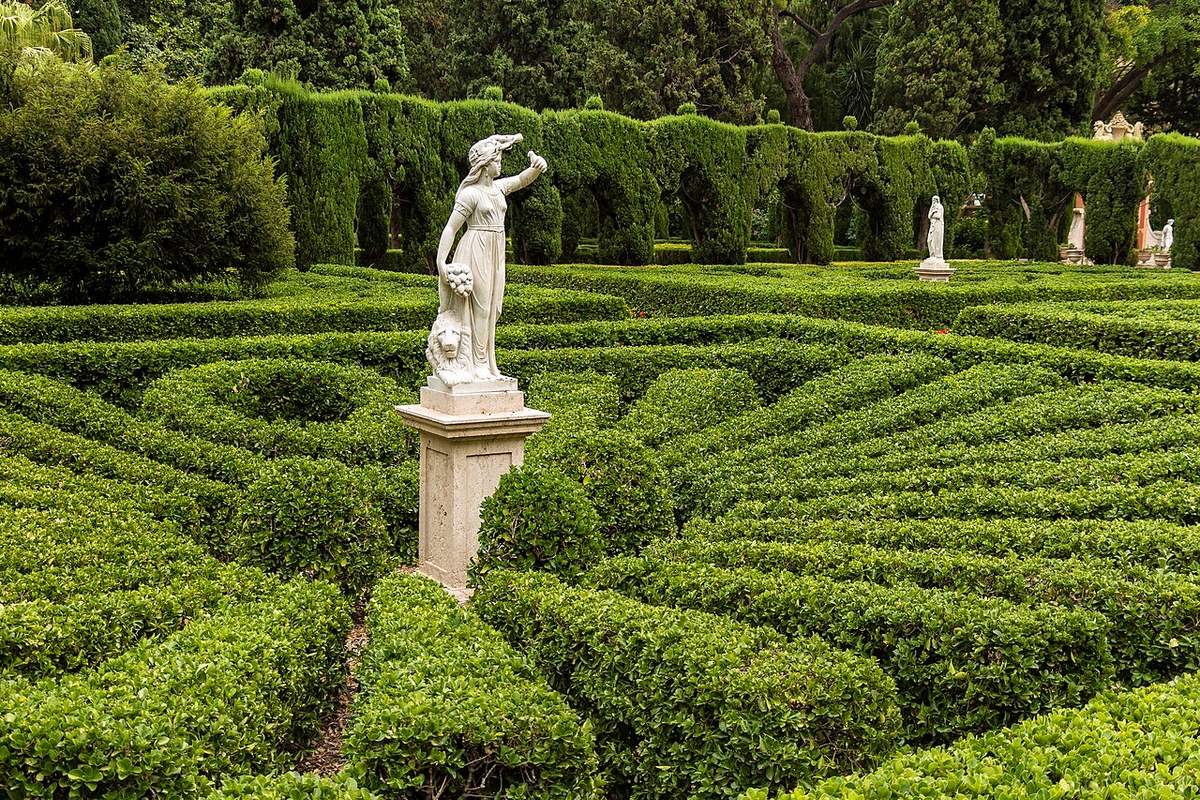
There are cities where I know in advance where I'm going to go, where I'm going to have lunch, and at about what time I'm going to start regretting wearing uncomfortable shoes. Valencia is just one of those places where it is easy to make a route for several days: the old town, the market, the City of Arts and Sciences, the beach, the gardens of Turia, and then for a long time to try to understand why the legs no longer want to participate in the cultural program. But one evening I was sitting at the hotel, flipping through the map without any specific purpose, and noticed a small green dot slightly off my usual route. It was called Jardín de Monforte, the Gardens of Monforte, and I had absolutely no idea what it was. I opened the photos, looked at some pictures and thought the place looked nice, but nothing special. In Valencia, it's generally difficult to surprise a person with a beautiful garden when you have a huge Turia next to you, so at first I just wanted to close the map and forget about this find. But then my tourist curiosity kicked in, which sometimes leads me to beautiful places, and sometimes makes me go completely wrong for half an hour. This time, fortunately, the card turned out to be right. I just wanted to see what was out there. The next day, I went there without much expectation. And that's exactly what I liked later: I didn't go to the famous landmark, didn't stand in line, and didn't even have time to come up with a beautiful photo for my phone in advance. The Monforte Gardens are not far from other green spaces in Valencia, but they look as if they were deliberately hidden from a person who walks too fast through the city. There is a completely different world behind the stone fence, and a small pavilion precedes the entrance. The official tourism website of Valencia also calls Monforte one of the lesser-known places in the city, and the city Park Service describes it as a neoclassical garden for walking and relaxing. I went inside and just stood there for the first few seconds. Not because I saw something grandiose, but because I did not expect to see such a thing in this place at all. A few minutes ago, I was walking along an ordinary city street with cars, traffic lights and people in a hurry, and now I found myself among neatly trimmed bushes, marble sculptures, fountains and quiet alleys. And then I realized that I had accidentally found exactly what I was looking for, even though I hadn't even known what I was looking for before. A small piece of another Valencia The Monforte Gardens are designed in the neoclassical style and occupy just over 12 thousand square meters. There are sculptures, fountains, hedges, flower areas and old trees, and the garden itself is designed so that something new constantly appears around one corner. Monforte Gardens I especially liked the feeling that the garden wasn't trying to show itself all at once. You walk along one path, see a fountain ahead, turn off – a sculpture appears, a few more steps – and another corner opens. At some point, I realized that I had completely stopped looking at my phone. When traveling, I usually photograph almost everything that seems interesting to me, and then in the evening I find about one hundred and forty-seven identical photographs of the same building in the gallery, taken with a slight angle change. Here, I just wanted to keep going. I almost walked by Monforte Gardens in Valencia The funny thing is, if I hadn't opened the map by accident, I might not have gotten here at all. I was walking through Valencia and I knew perfectly well that there was a large city park nearby, but I didn't know anything about Montfort. That's why I like such places more than many famous attractions. When you arrive at the Eiffel Tower or the Colosseum, you know in advance what you're going to see, have a rough idea of the photos, and even understand where the rest of the tourists will be standing. But here I had no expectations at all. It was almost like opening the door to a room you didn't know existed before. The story I learned after the walk Later, I decided to read a little about this place and found out that the history of the garden is much more interesting than I expected. Its origin is connected with a former suburban area outside of old Valencia, and in the 19th century, the Marquis de San Juan, Juan Bautista Romero, acquired the site, who commissioned architect Sebastian Monleon to turn the area into a garden. After the death of the Marquis, the garden passed to the Monforte family, and in the 20th century it became the property of the city. It opened to the public in 1973. I especially liked to find out after the walk. Before that, I was just walking among the trees and sculptures and thought that in front of me was a beautiful old park, but then it turned out that there was quite a long story behind this beauty. However, I have one habit that I can't beat: first see the place, then admire, and only then read where I've been. That's probably why my travels sometimes feel like an investigation in which I'm the main suspect. The most unexpected thing is silence The silence surprised me the most. Not absolute, of course, because Valencia has not disappeared anywhere behind the stone fence, but after the noise of the city inside the garden it really becomes much calmer. I sat down by one of the fountains and just stared at the water for a while. Someone was reading a book nearby, then a couple were talking in low voices, and somewhere else footsteps could be heard on the path. And that's when I realized that I didn't want to go anywhere at all. For a person who usually lives by the principle of "once you arrive, you need to see everything" during a trip, this is quite a serious achievement. Of course, I messed up everything. Then I decided to take some photos. This is where my traditional struggle with reality began. In the first picture, a man I hadn't noticed at all somehow got into the frame. On the second one, I cut off half of the sculpture. On the third one, everything was fine, except for my finger, which somehow ended up in front of the camera. I looked at the result, sighed, and decided that maybe the universe was trying to hint: stop taking pictures, just sit. Sometimes she's right, but it still turned out to be some good shots, in my opinion. A place where I took my time I spent a lot more time in the garden than I intended. Initially, I thought that I would go in for twenty minutes, see what kind of place it was, take some photos and continue the route. As a result, twenty minutes turned into an hour, and then I found that I was already starting to remember where the nearest cafe was and whether I could buy something cold there. This is probably the most accurate indicator of how much I liked the place: if I start looking for food after a walk, it means that the trip is going well. Officially, the Monforte Gardens are now free , and now the city indicates for them the opening hours of 10:00-20:00 from March to October and 10:00-18:00 from November to February. Why did I remember this particular place? That day, I realized one simple thing: the most interesting places to travel are not always located where there are large signs. Sometimes they appear on the map as a small green dot that you notice completely by accident. At first you think, "Okay, I'll come and see," and then you sit by the fountain and realize that this is the moment you'll remember better than another must-see. The Monforte Gardens have become just such a place for me. I did not plan to come here, did not read about them before the trip, and did not even include them in the original itinerary for Valencia. I just opened the map one evening, saw a green spot and decided to check what was there. Now I'm deliberately leaving room for accidents. After this story, I changed my attitude towards routes a bit. I used to think that a good route was when everything was pre–planned: where to go in the morning, where to have lunch, what to watch in the afternoon, and where to go in the evening. Now I make sure to leave a few hours just for randomness. Because it was an accident that once led me to a small neoclassical garden in the middle of Valencia, where I suddenly slowed down, stopped looking at my watch and for the first time all day just sat by the fountain. And if you ever visit Valencia, Spain , don't be surprised if the map suddenly shows you some green dot that you've never heard of before. If I were you, I wouldn't be in a hurry to close it. Sometimes there is a place behind such a point, which you then remember much more often than the sights for which you came to the city in the first place.

Read more →
0 0
richword Expert
Argentina · October 8, 2026
The Seven Colors of Purmamarca Mountain

The Seven Colors of Purmamarca Mountain

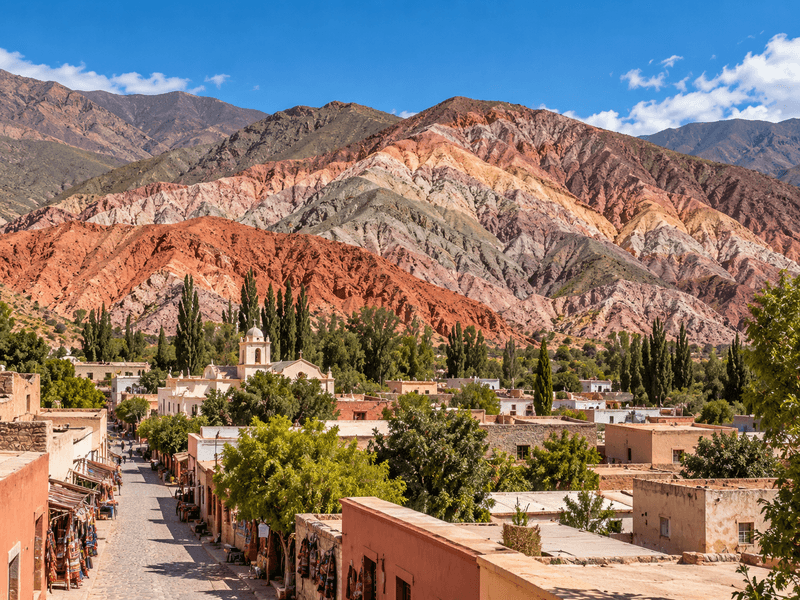
Before the trip, I had seen photos of Purmamarca dozens of times, so I thought I knew what to expect. But when I finally saw Cerro de los Siete Colores in person, the photographs suddenly seemed much less impressive. The mountain really looks as if someone painted enormous stripes across its slopes. The mountain appears right behind the houses Purmamarca sits at the foot of the mountain at about 2,275 meters above sea level. The town itself is small, with white houses, narrow streets, a little square with an artisan market and a church. But after walking only a short distance, the main landscape suddenly appears behind the rooftops. At first I noticed mostly red and brown tones. Then yellow, gray, pink and greenish layers became visible. They run across the slopes like bands of paint. In reality, the colors come from different geological layers and sediments that formed over hundreds of millions of years. The mountain was especially beautiful in the morning, when the sunlight reached the slopes from the side and made the individual layers much easier to see. Then I realized Purmamarca is more than one mountain After taking my first photos, I decided to explore the surrounding landscape. One of the most interesting walks is Paseo de los Colorados , a roughly 3-kilometer circular route around the colorful rock formations. The landscape keeps changing along the way. Some slopes become almost completely red, then gray and yellow walls appear, with dry riverbeds and trails running between them. Against these enormous formations, Purmamarca looks incredibly small. This was when I understood why photographs from this part of Argentina look so unusual. The colors are real - the camera simply cannot always capture the scale of the landscape around them. The most beautiful part began when the light changed By midday I was back near the town. The mountain already looked different. The soft morning colors had become more contrasting, while shadows emphasized the shape of the slopes. That is when I noticed another special thing about Purmamarca: the mountain never looks exactly the same throughout the day. As the sun moves, some bands become brighter while others almost disappear into shadow. Purmamarca lies in the Quebrada de Humahuaca, a historic mountain corridor that is a UNESCO World Heritage Site. Other colorful mountains, small Andean villages and roads leading toward the high-altitude Puna are nearby. In the end, I realized that the seven colors are only the first impression. The real pleasure is simply stopping, looking at the mountains and watching the landscape change with the light.

Read more →
0 0
richword Expert
Argentina · October 8, 2026
Salinas Grandes: A White Desert More Than 3,000 Meters Above Sea Level

Salinas Grandes: A White Desert More Than 3,000 Meters Above Sea Level

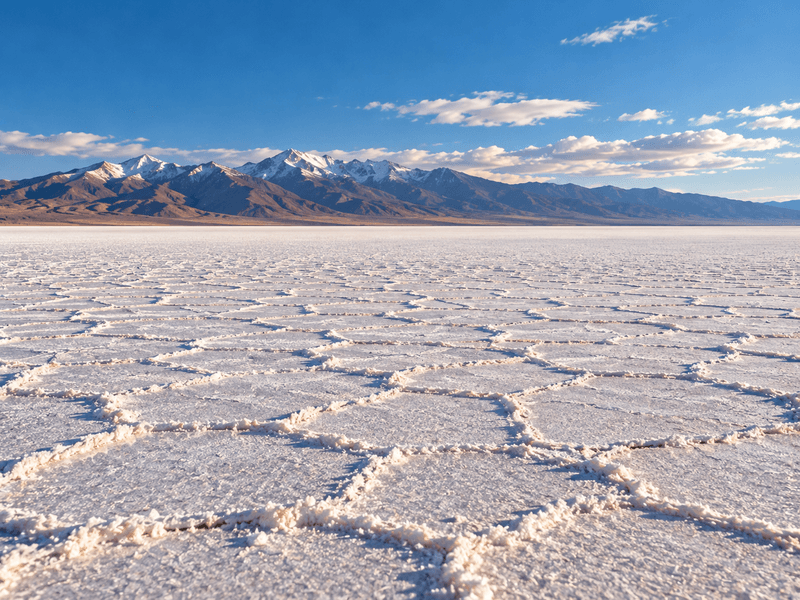
Before visiting Salinas Grandes, I had seen photographs of this place several times and always thought they looked slightly exaggerated. An enormous white surface, a perfectly flat horizon and deep blue skies seemed almost unreal. When I finally arrived, however, the photographs suddenly seemed too ordinary. Salinas Grandes lies in the Argentine Puna at around 3,450 meters above sea level. It is a vast salt plain that seems almost endless. The white surface stretches toward the horizon while the surrounding mountains look surprisingly distant. The road here is already an adventure The journey begins long before reaching the salt flats. From Purmamarca, the road climbs through Cuesta de Lipán and the landscape gradually changes. Green valleys disappear behind you, vegetation becomes scarce and the mountains become increasingly rugged. Then a white line appears in the distance. At first it is difficult to understand what you are seeing. It could be snow or an enormous lake. The closer you get, the clearer it becomes: it is salt. The white surface seems endless Stepping out of the car and walking onto the salt flat creates a strange sensation. There are almost no familiar landmarks. White ground, blue sky and distant mountains make it difficult to judge distances. The salt forms unusual patterns and geometric shapes. During the rainy season, parts of Salinas Grandes become covered with water and turn into a huge natural mirror. I especially liked the simple contrast of white salt, blue sky and brownish mountains. There is nothing complicated about the landscape, yet that simplicity makes it incredibly powerful. At this altitude, you feel the scale differently There is another part of Salinas Grandes that photographs cannot really explain: the altitude. You are standing at around 3,450 meters above sea level, and your body can notice the difference. After the drive and walking, you may feel tired, especially if you came from a much lower elevation. It is worth taking things slowly, drinking enough water, protecting yourself from the sun and paying attention to how your body reacts to the altitude. But the altitude also makes the landscape feel even more extraordinary. This is not simply a desert. It is a high-altitude emptiness with almost no trees, dry transparent air and enormous horizons. At one point I stopped in the middle of the white plain and understood that this feeling of scale is exactly why people come here. Salinas Grandes is one of those places that is difficult to capture completely in a photograph. In a picture it is just a white surface surrounded by mountains. In reality, you hear the wind, feel the altitude and realize how enormous the landscape really is. That is probably why this white desert stayed in my memory longer than many of Argentina's better-known natural attractions.

Read more →
0 0
Stanislav Discoverer
Portugal · October 8, 2026
A small town that surprised me: Obidos, Portugal

A small town that surprised me: Obidos, Portugal

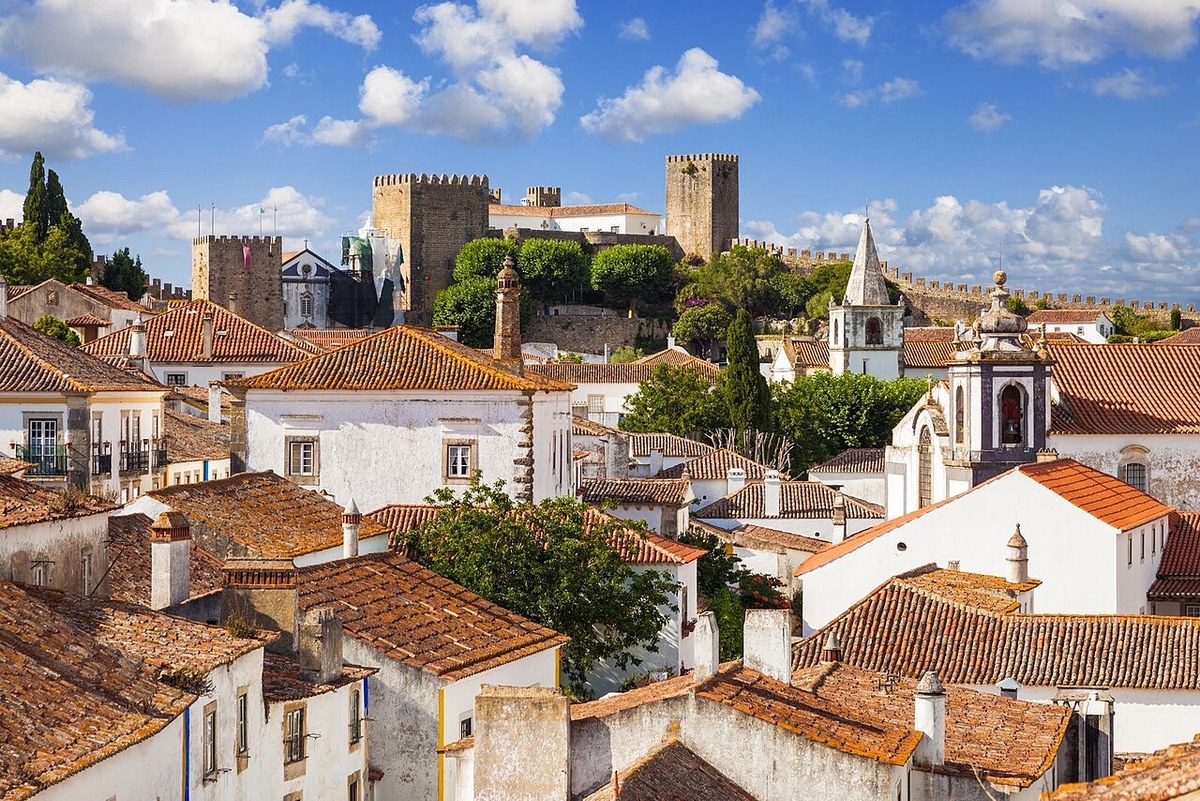
Sometimes I come to a city with a huge list of places that I definitely need to see, and sometimes I just mark a point on the map and think: "Well, let's see what's in there." That's exactly what happened to me with Obidos in Portugal. I knew that this was a small medieval town surrounded by fortress walls, that there was a castle and beautiful white houses here, but I did not feel any special delight in advance. After Lisbon, I was generally a little skeptical and thought that Obidos would be a pleasant stop for a few hours, after which I would quietly continue my journey. In the end, it turned out quite the opposite: I arrived for one day, and left with the feeling that the city had somehow managed to deceive me. At first it just seemed beautiful to me, then cozy, and after a few hours I didn't want to leave at all. The funny thing is that Offending didn't try to impress me at all, he just existed in his calm medieval rhythm, and I gradually got involved. The first impression of Obidush When I approached the historical center, the first thing I saw were the fortress walls and gates. Obidush really looks like someone decided to save a piece of the Middle Ages, carefully placed it on a hill and said: "Just please don't change anything much here." Inside the walls there are white houses with colored details, narrow cobbled streets, small squares and flowers on the windows, and above all this stands a castle. Medieval castle-fortress of Obidush I walked through the main gate and realized almost immediately that my usual travel pattern would not work here. In big cities, I usually turn on the "need to do everything" mode, start checking the map and mentally allocate time between the sights. I walked a hundred meters in Obidusha, saw a beautiful house, stopped to take a picture, then turned into an alley, then saw another alley and at some point just put my phone in my pocket. It was probably the first proper thing to do all day. The street where I stopped looking at the map The main street of the old town, Rua Direita– gradually leads through the historical center to the castle. It looks completely harmless on the map, but on the spot I was constantly distracted by white houses, flowers, small shops, and people who were sitting at tables and in no hurry. Rua Direita Street I especially liked that the city doesn't look equally polished from all sides. Somewhere the facade is fresh and neat, somewhere there are traces of time on the wall, somewhere flowers hang from the window, and an old bicycle stands near the door. It's these little things that create the feeling of a real place, not the scenery for a tourist movie. I took out my phone several times to check where to go next, but each time I found a new reason not to. At some point, I realized that I had been walking for almost twenty minutes with practically no direction, and for the first time during the trip it didn't bother me at all. Castle and walls Of course, I wasn't going to completely ignore the main attraction of Obidush. The castle and the fortress walls are part of the very character of the city, and the fortress itself has a very long history: fortifications existed during the time of Arab rule, after the Christian conquest the castle was rebuilt several times, and in the XX century it was restored. I enjoyed taking photos from different angles and lighting, as if there was a new place in front of me. I climbed the walls and immediately understood why it was worth coming here not only for the sake of photography. From the height of the town Halls, it looks very different: white houses gather into one dense picture, hills and green spaces open behind them, and somewhere in the distance you can feel the proximity of the Atlantic. The most interesting thing is that I forgot about the time on the walls again. However, the romance continued exactly until the moment when I looked down and realized that for some reason it became much scarier for me to walk along the narrow fortress wall than it seemed from below. I tried to pretend that I was just carefully examining the architecture, although in fact I was carefully rearranging my legs and mentally asking fate not to turn my trip into international news. An offended man who lives his own life What surprised me the most was not even how beautiful the city is, but the fact that ordinary life can be felt inside a tourist place. There are houses, shops, small cafes, churches, courtyards and streets where people walk not because they came to see the attraction, but because it is their city. Officially, Obidos is considered one of the best preserved medieval cities in Portugal , and you can really feel it when you walk through its streets. The medieval layout, fortress walls, castle, white houses and many historical buildings have been preserved here. But for me, the main discovery was something else: despite all this history, Obidush does not seem like a museum. In it, you can just go for coffee, stop to talk, look into a store or sit on a bench, and all this happens against the background of very old walls. It turns out a strange combination: the Middle Ages are all around, but life is completely modern. My encounter with the local cherry tincture Of course, it was impossible to come to Obidos and not try the famous ginjinha. Local cherry tincture is traditionally served here in a small chocolate cup, and Portugal itself recommends trying this local specialty in this way. ginjiinha I looked at this chocolate cup with the expression of a person who has just been offered a very interesting experiment. First I drank the tincture, then I ate the chocolate and realized that the locals clearly know how to properly lure tourists: after that, it's impossible to say that you just came to see. However, I quickly realized that if I continued to experiment with local drinks, then a walk along the fortress wall could become even more exciting, so I decided to limit myself to one glass. Sometimes prudence comes late, but it comes anyway. Coffee, pause and complete lack of haste After my walk, I went in for a coffee and finally allowed myself to just sit. On a normal trip, I would have already checked the next point on the route, looked at the museum's opening hours and tried to figure out how many minutes it would take to get there on foot. And here I was sitting by the window and looking at Rua Direita. Tourists were passing by, someone was taking pictures at home, someone was looking for a free table, someone was just walking around without any purpose, and it all happened so calmly that I gradually stopped feeling like a person who is on a journey. In general, it seems to me that the best way to study Offending is not to try to swallow it in two hours, but to leave yourself time just to wander. The official tourist portal also offers a walk through the maze of streets inside the walls, and among the main places are the Church of Santa Maria, the Church of Mercy, the Church of San Pedro, the city museum and other historical sites. And of course, I got lost. The funniest thing happened in the late afternoon. I decided to go beyond the main tourist route, turned aside somewhere and was absolutely sure that I perfectly understood where I was. Fifteen minutes later, I was already looking at the phone card with the same expression on my face that usually means: "Okay, calm down, we'll figure it out now." I really figured it out, but only after I walked down the same street twice and finally admitted that the small town had somehow managed to confuse me. And you know, I wasn't even upset. After all, if you're wrong, then why not in a city with white houses, flowers, ancient walls and narrow streets. The evening snack turned out to be the most beautiful When the sun started to set, I returned closer to the center again. The light became softer, the walls took on a warm hue, the tourists gradually became fewer, and the city suddenly became completely different. During the day, Offending seemed beautiful and a little fabulous to me, but in the evening it became somehow homely. Someone was closing a store, someone was sitting in a cafe, light fell from the windows of houses, and the narrow streets became almost empty. I walked without any plan and thought that I was going to spend only a few hours here in the morning. And that's when I finally realized that I was wrong. Why did this small town surprise me? It wasn't the size, the castle, or even the fortress walls that surprised me. Although all this is certainly beautiful. Most of all, I was surprised by the feeling that appears a few hours after arrival: you stop wanting to rush somewhere. I'm used to travel being a constant movement. One city today, another tomorrow, a museum in the morning, a square in the afternoon, a restaurant in the evening, and in between, I still need to take photos, buy something home and not lose my phone charger, which for some reason I manage to put in the most inaccessible place of the suitcase every time. And in Obidusha, for the first time in a long time, I just slowed down. It was enough for me to walk down the street, look at the old houses, climb the walls, drink coffee and sit in the square in the evening. I would come back here again. When I left Obydos, I had the feeling that I had spent a lot more time here than I actually had. This is probably the case with places where you don't have to constantly entertain yourself and rush somewhere. I came here with the idea that this is just a small town along the road that you can see between the more serious points of the route. But he left with a completely different opinion: sometimes it's small towns that give travel what big tourist capitals lack. Obidos wasn't trying to be Portugal's main discovery for me. He just greeted me with his white houses, old fortress, narrow streets, flowers on the windows and a cup of coffee at the moment when I finally stopped looking at the clock. And, perhaps, now I know how I will choose small towns further. If there's a place on the map that I'm thinking about first: "Well, what's there to see?", I'll try not to drive by. Because after Offending, I already know that sometimes that's where the most interesting journey begins.


Read more →
0 0
richword Expert
Argentina · October 8, 2026
Mendoza Turned Out to Be Much More Than a Wine Region

Mendoza Turned Out to Be Much More Than a Wine Region

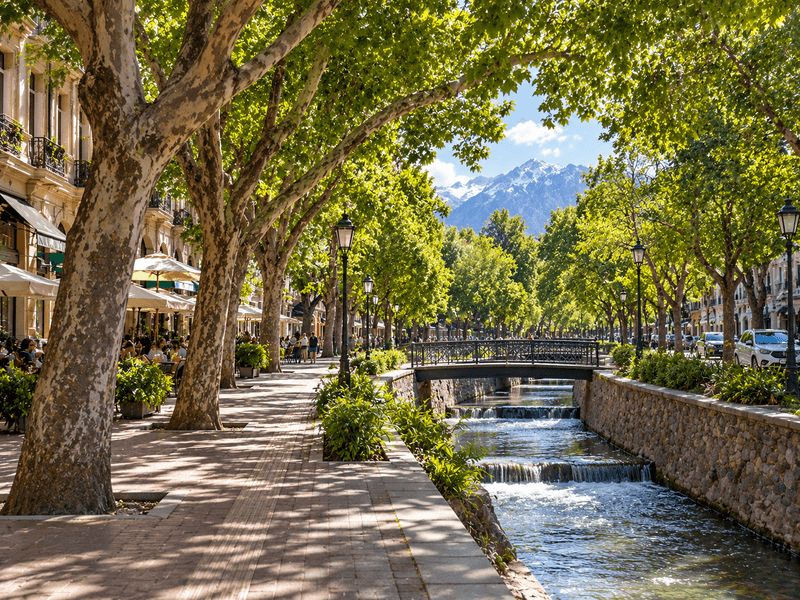
Before traveling to Mendoza, I almost automatically associated the region with wine. Vineyards, tastings and a bottle of Malbec with the Andes in the background - that was more or less the picture in my head. Within the first few hours, however, it became clear that I had seriously underestimated this place. Mendoza turned out to be a city with a distinctive atmosphere, wide streets, enormous amounts of greenery and mountains that constantly remind you where you are. The city itself is surprisingly green The first thing that surprised me in Mendoza was the number of trees. Wide streets disappear under greenery, trees form natural tunnels above the sidewalks, and small irrigation channels run alongside the roads. It is especially interesting when you remember where the city is located. The climate is dry and rainfall is limited, while the surrounding landscape is largely arid. Mendoza became green thanks to an extensive irrigation system. That makes walking through the city completely different from what you might expect from a place surrounded by dry landscapes. Then the vineyards appear Of course, it is impossible to visit Mendoza without encountering wine. Outside the city, vineyards stretch along the roads, while snow-covered peaks of the Andes rise on the horizon. This was where I finally understood why Argentine Malbec became so famous. But the wine itself is only part of the experience. The combination of vineyards, dry climate, mountain air and enormous Andes is what makes the region so memorable. At that point Mendoza stopped being just a wine region for me. Wine is part of a much bigger story - the story of how people learned to grow grapes almost on the edge of dry land and mountains. A completely different Mendoza begins beyond the city The strongest impression came from traveling toward the Andes. The farther you go, the less familiar city life remains. The road begins to climb, the landscape becomes harsher and the mountains gradually take over the horizon. The main star of this route is Aconcagua, the highest mountain in South America. Even without planning a climb, traveling into this part of the province feels like an adventure. This contrast became my biggest discovery. Mendoza can begin with a glass of Malbec beneath the trees, continue through vineyards and end beneath enormous Andean peaks. Now when I think about Mendoza, wine is not the first thing that comes to mind. I remember the green streets, irrigation channels, vineyards against the mountains and the road disappearing into the Andes.

Read more →
0 0
richword Expert
Argentina · October 8, 2026
Ushuaia: The City at the End of the World

Ushuaia: The City at the End of the World

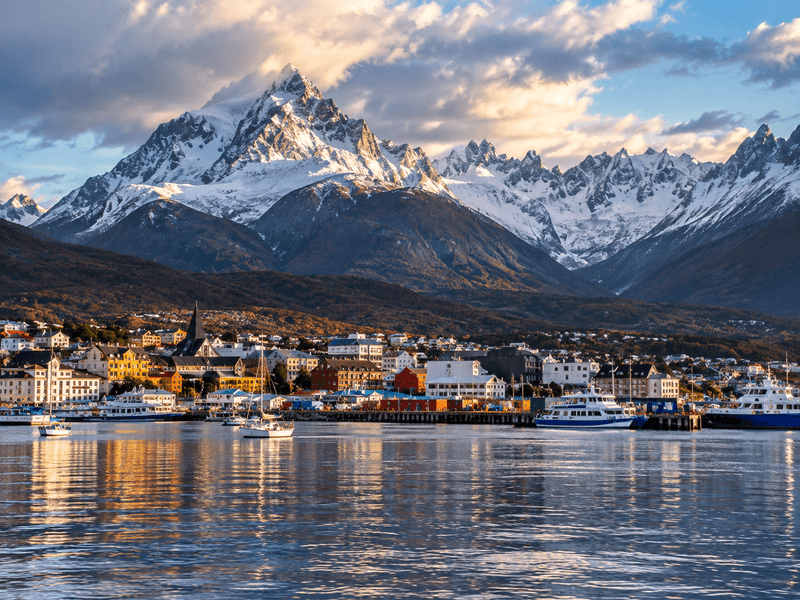
When I first saw Ushuaia on a map, its location was what surprised me most. The city lies in the far south of Argentina, between the mountains and the Beagle Channel, with the vast land of Tierra del Fuego stretching beyond it. It felt strange that such a remote place could have a real city with streets, cafés, hotels and a port. After just one day, however, I understood that Ushuaia is memorable for more than its location. You constantly feel how far you are from the familiar world. A city between mountains and cold water My first impression of Ushuaia was very different from that of an ordinary resort town. There is no feeling of endless summer here. Rugged mountains rise around the city, snow can remain on the peaks even in summer, and the weather can change within minutes. On one side there is the city, with houses, restaurants and tourist shops. On the other are mountains, forests and the cold waters of the Beagle Channel. The journey farther south starts here Ushuaia is an important starting point for exploring Tierra del Fuego and for cruises toward Antarctica. In the port you can see tourist ships and smaller boats heading into the Beagle Channel. I went out onto the water, and that was when the city revealed another side. The buildings disappeared behind us, replaced by islands, mountains and open water. Sea lions and birds can be spotted on the rocks. The thought that travelers leave from here for Antarctica makes the place even more impressive. The national park where the city ends Another reason to visit Ushuaia is Tierra del Fuego National Park. Roads pass through forests, with lakes, rivers and mountain slopes appearing along the way. In the morning you can drink coffee in the city and watch ships in the port, and shortly afterward find yourself among forests and mountains with almost no urban noise. That is what makes Ushuaia a true city at the end of the world. Its main attraction is the feeling that you have reached a very remote corner of the south, with Antarctica lying beyond. After Ushuaia, I realized that some cities are remembered not for the number of attractions they have, but simply for where they are.

Read more →
0 0
richword Expert
Argentina · October 8, 2026
Why Patagonia Is One of the Best Places to Experience Wildlife

Why Patagonia Is One of the Best Places to Experience Wildlife

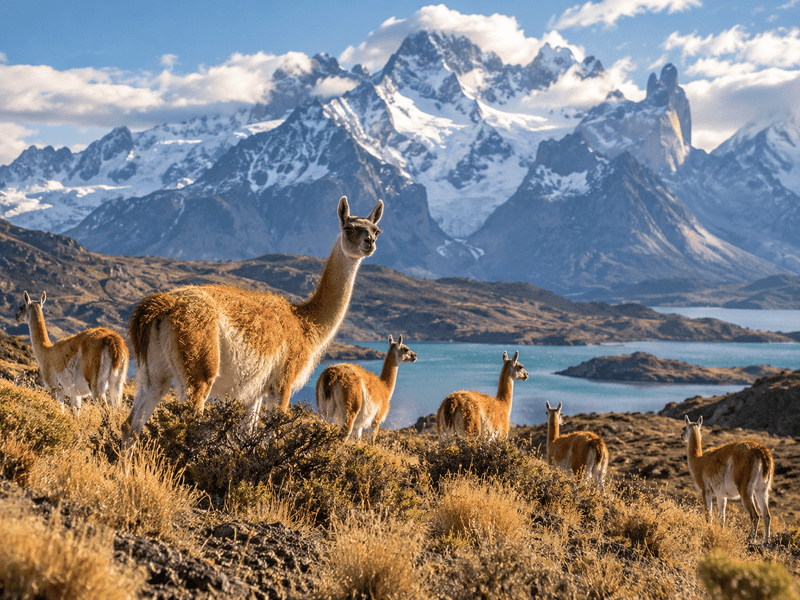
Before traveling to Patagonia, I imagined wildlife encounters in a fairly simple way: go far from the cities, find a national park and hope to get lucky. Patagonia turned out to be different. The landscapes are so vast that animals become part of the scenery, and an encounter can happen when you least expect it. You don't have to search for wildlife for hours One of Patagonia's strongest impressions is its enormous sense of space. Roads cross steppes, mountains, lakes and coastlines, while in some areas there are so few people that it feels as if nothing exists around you. That is when you start noticing life everywhere. Guanacos appear on the slopes, large birds fly over the roads, and sea lions and penguins can be found along the coast. Sometimes an animal is only a few dozen meters away and still behaves completely calmly. I especially liked that it never feels like a zoo. Nobody gathers the animals in one place for tourists. They simply live in their natural surroundings, while people are only temporary visitors. Penguins, whales and sea lions are only part of the story Patagonia is fascinating because the wildlife changes depending on the location and season. The coast of Chubut is home to famous colonies of Magellanic penguins. In parts of the Valdes Peninsula, you can observe sea lions, elephant seals and whales. The most remarkable part is seeing animals without glass between you and them or from a huge viewing platform. Near penguin colonies, for example, you can walk along marked trails while the birds move between their burrows and head toward the ocean. The important thing is not to approach them deliberately, feed them or block their path. Whale encounters feel completely different. You may see a huge back or tail appear above the water in the distance. A few seconds later, the ocean becomes completely calm again. Those moments stay with you precisely because they cannot be staged or repeated on command. The real attraction is the feeling of untouched nature In Patagonia, I realized that a wildlife experience does not have to be a checklist of animals. Sometimes the feeling of the place matters much more. You can drive for hours along an empty road surrounded by dry grass, mountains and strong wind, and suddenly see a herd of guanacos. You can reach the ocean and find dozens of sea lions on the shore. You can watch a penguin colony for a long time and realize that the birds simply do not care about the people nearby. That is why Patagonia leaves such a strong impression. You may see penguins, whales, guanacos, sea lions and countless birds, but the most important discovery is different: nature here does not try to impress tourists. It simply goes on living its own life.

Read more →
0 0
1…789…22