Traveler Stories — page 7

Stanislav Discoverer
India · October 9, 2026
My first trip abroad: India, Mumbai and my personal Shantaram

My first trip abroad: India, Mumbai and my personal Shantaram

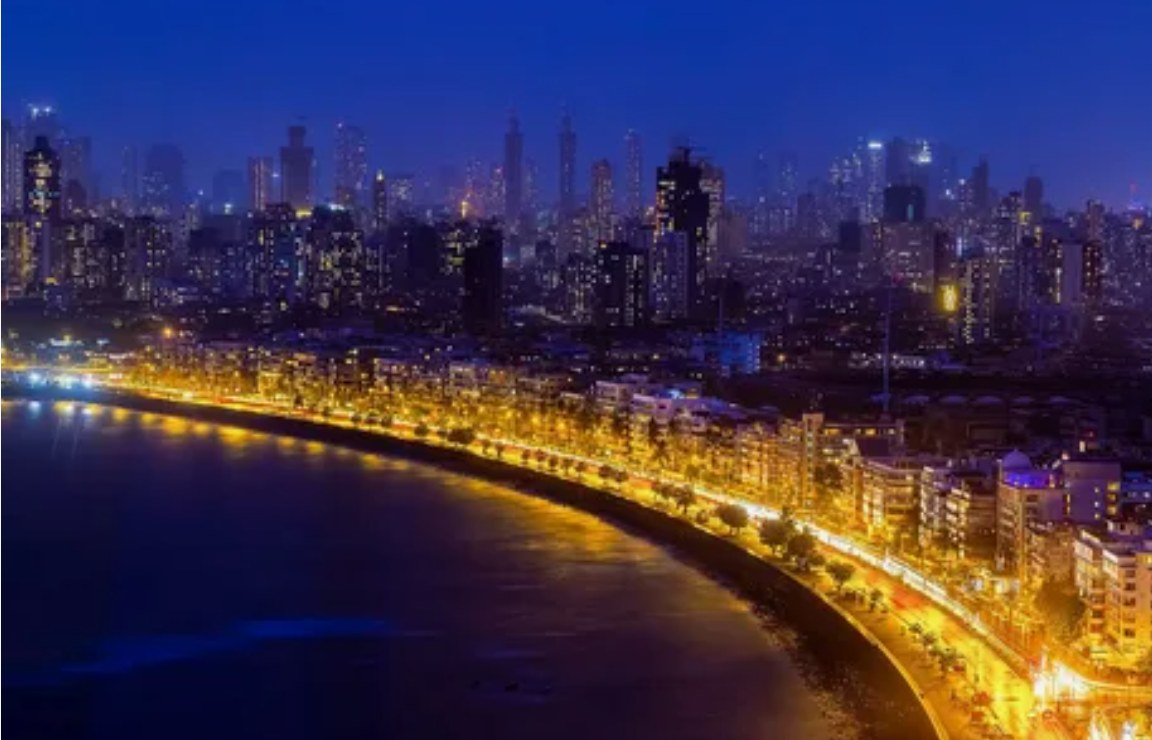
My first trip abroad began with the fact that I checked my passport three times, double-checked my ticket and looked at my phone several more times to make sure that the plane really existed and no one canceled my trip solely because of my unpreparedness. I was in my early thirties, I had never left my native country before, and for some reason I imagined a trip abroad as a serious challenge, which I had to prepare for almost like an expedition to the North Pole. I studied the route in advance, read travel tips, watched videos about local customs and made a list of things that should not be forgotten, although in the end I almost left my phone charging at home anyway. I chose India as the country for my first trip, and Mumbai as the city. The reason was quite simple: A few years ago, I read Gregory David Roberts' novel Shantaram , and this book somehow planted a city in my head that I had never been to. I imagined narrow streets, small tea shops, bustling markets, old buildings, people with completely different destinies, and that special atmosphere where a new story seemed to begin around every corner. Of course, I understood that fiction is not a substitute for real life, but I really wanted to see Mumbai with my own eyes and check if the city that I had imagined so many times while reading existed somewhere beyond the pages. I was inspired by the book Shantaram If you haven't read Shantaram, I'll explain it without spoilers.: This is a novel in which the main character arrives in Bombay, now Mumbai, and finds himself embroiled in a completely new life for himself. The book features slums, friendship, dangerous acquaintances, love, the search for freedom, and a person's attempts to sort out their own past. The city there is not just a backdrop for adventures, but a full-fledged participant in the events, with its contradictions, noise, beauty and cruelty. I read this book in the evenings after work, sometimes getting so carried away that I was going to go to bed early, and then I discovered that it had been night outside for a long time. I liked the way the author described Mumbai.: not as a set of attractions that need to be visited in three days, but as a huge living organism in which completely different worlds exist side by side. After Shantaram, it became interesting to me not so much to see the famous buildings of India, but to feel the daily life of the city, walk along ordinary streets, sit in a small cafe and see how Mumbai would turn out without literary decorations. However, there was one small problem: I was going to India for the first time, and my experience of traveling abroad before that was limited to reading books and looking at other people's photos. There was already a real adventure going on in my head, but in reality I still couldn't confidently figure out even transfers at the airport. But the ticket was bought, the vacation was agreed, and I didn't want to back down anymore. The first acquaintance with India Chhatrapati Shivaji Maharaj International Airport When I got out of the airport, the first thing I felt was a completely new sense of scale for me. People, cars, taxis, buses were moving around, someone was talking on the phone, someone was meeting relatives, someone was in a hurry, and I was standing with my suitcase and trying to figure out where my new life was starting for the next few days. I've read about the noise of Indian cities in books, but it's one thing to imagine it, and quite another to be inside. Here, sounds don't just accompany the street, they seem to fill the entire space: car horns, salesmen's voices, passersby's conversations, motorcycles, and constant traffic. At one point, I even thought that if there was a "pause the city" button in Mumbai, I would have pressed it for at least five minutes to calmly check the route. But then I noticed that the locals are well-versed in all this chaos. They crossed the streets, made travel arrangements, bought food, talked with friends, and continued to do their usual things as if nothing unusual was happening around them. And everything was unusual only for me, a person who found himself in a country for the first time, where even the road from the airport to the hotel turned into a separate adventure. My first Indian transportation experience Before the trip, I read a lot about how to get around Mumbai, but for some reason I was sure that everything would become clear on the spot. This was my first serious mistake, although it will not be the last. I tried to figure out the transport, checked the map several times and went to the subway. Mumbai Metro I realized that the Mumbai Metro was opened in 2014, but I did not fully understand the public transport system. In the end, I decided to take a taxi, because after the flight, I wanted to make a simple decision at least once without additional research. Even here, there was a small performance. I showed the driver the address of the hotel, he nodded, I got in the car and almost immediately started looking out the window, trying to memorize the city. After a while, I realized that we were moving in a completely different way than I had imagined on the map, and I was about to take out my phone to check the route, but then I decided not to panic ahead of time. The driver drove calmly along his roads, and I gradually realized that in an unfamiliar country, not everything has to look the way I'm used to at home. When we finally got to the hotel, I pulled out my suitcase, paid for it, and felt like a man who had just crossed a small continent on his own. It seems ridiculous now, but back then, even an ordinary trip around the city was perceived by me as an achievement. I didn't know yet that in a couple of days I would be much more relaxed about unfamiliar streets, local routes, and situations where there were no ready-made instructions. The city that couldn't fit in my head The next day, I went for a walk around Mumbai and started with the Colaba district, where there are old buildings, hotels, shops and many places familiar from the photos of travelers. I wanted to see the famous India Gate, walk along the embankment and look into a cafe where I could sit quietly with a cup of tea. But even in this relatively touristic area, the city constantly gave me new experiences that could not be included in the itinerary in advance. Kolaba District Ordinary apartment buildings stood next to beautiful historical facades, fruit was sold near shops, food was sold on the streets, and motorcycles maneuvered between cars. It was impossible to just look at the architecture here, because life was happening nearby all the time and persistently attracted attention. I could stop to look at an old building, and a minute later I was watching a salesman deftly packing purchases, a family choosing fruits, or several people animatedly discussing something at a small table. I liked the feeling, even though sometimes I got tired of the amount of sounds, smells, and movement. To be honest, I thought the city was much smaller, but I'm glad I was wrong. For the first time, I realized that traveling can be not only beautiful, but also physically exhausting, especially when you're trying to figure out exactly what's going on around you every minute. Sometimes I wanted to go back to the hotel, take a shower, lie on the bed and just sit in silence, and then go outside again, because curiosity still turned out to be stronger than fatigue. I was looking for my Shantaram Of course, I couldn't come to Mumbai and not remember the book for which I chose this country in many ways. I understood in advance that the novel should not be perceived as an accurate map of the city: it is a work of fiction based on the author's experience, and not an instruction for a traveler. But I wanted to see places that would help me feel the atmosphere of history, and just walk through the streets where literary Mumbai could meet the present. I remembered the characters in the book, their conversations, actions, and attempts to find their place in a huge city. At the same time, the real Mumbai constantly reminded me that everyone here has their own story, which I don't know anything about. The people I passed by were not characters from my journey, and the city did not exist in order to confirm my book impressions. He lived his life, sometimes surprising me, sometimes tiring me, and sometimes making me stop and just watch. At some point, I found myself stopping looking for a specific scene from the novel and starting to perceive the city for what it is. I was sitting in a small cafe, drinking tea and looking out at the street where people were talking, buying food and hurrying somewhere. I didn't need to find the exact location from the book, because the main discovery was happening right in front of me: literature helped me want to come here, but I could only understand the city through my own experience. And that's probably why I love good books. They don't always provide answers, but sometimes they open a door that you weren't even going to look into before. Tea, street food, and my caution One of the most pleasant discoveries for me was Indian tea. I've seen it sold several times in small establishments and on the streets, and finally decided to give it a try. I liked masala tea, this drink turned out to be rich, fragrant and not at all like the tea I usually drank at home, and a small portion unexpectedly suited the hot day well. I was much more careful with the food at first. I had read the hygiene tips in advance, so I chose places where food was prepared in my presence, and I was attentive to water and drinks. But curiosity overcame the fear of unfamiliar cuisine anyway, and I started trying local dishes, trying not to portray a man who came to India solely for the usual breakfast of eggs and toast. However, once I ordered a dish that seemed completely harmless according to the description, and then I discovered that my ideas about the degree of spiciness and Indian reality exist in different universes. I tried to maintain my dignity, drank water and pretended that everything was going according to plan, although inwardly I was already saying goodbye to my taste buds. Now that I remember that lunch, it seems to me that it was then that I finally realized that traveling is not only an opportunity to see another world, but also a willingness to sometimes look a little funny in it. What I learned about myself in Mumbai Before the trip, I considered myself a fairly independent person, but now I realize that my independence worked well in a familiar environment where I knew the language, rules, transport, and had a rough idea of what to expect from the world around me. In India, many familiar landmarks disappeared, and I had to learn to calmly react to unfamiliar situations, ask questions, check information, and admit that I couldn't know everything in advance. I realized that it's not necessary to figure everything out the first time. You can make a mistake with a turn, misunderstand the pointer, get confused in front of an unfamiliar menu and still continue your journey. The main thing is not to turn every little mistake into proof of your own inadequacy, because in this case you can spend the whole vacation berating yourself for not being born with a ready–made world map in your head. I also became more attentive to my own expectations. Before the trip, I imagined Mumbai through the pages of Shantaram, photographs and other people's stories, but the real city turned out to be much more complicated than any image. It had beauty and noise, historic buildings and everyday difficulties, moments of excitement and fatigue, and sometimes it all happened literally on the same street. I realized that I don't have to immediately give a verdict to every place I visit, and that sometimes it's enough just to admit that I don't understand everything yet, but I'm interested in learning more. My first trip abroad was not at all what I expected. When I was going home, I had a lot of photos on my phone, several new addresses, a list of dishes that I would like to try again, and a pretty impressive collection of stories about how I tried to figure out transportation and local customs. I didn't become an expert on India, I didn't fully understand Mumbai, and I certainly couldn't say that I now know how life works in this huge country. But I came back with a much more important feeling: the world turned out to be much bigger, more diverse and more interesting than the one I knew from familiar streets and books. Shantaram once helped me imagine Mumbai, and the real trip taught me not to confuse the idea of a place with the place itself. The book remained important to me, but now I have my own memories: noisy streets, a cup of hot tea, unfamiliar food, evening air, and moments when I was just standing in the middle of the city, trying to make sense of everything and realizing that I had never felt so far from my usual life before. My first trip abroad did not make me a fearless traveler who is now ready to go anywhere without preparation and doubt. I still carefully plan trips, check documents, and sometimes worry before departure, but now I understand that the unknown does not necessarily mean danger or failure. Sometimes it's just a space where you can learn something new about the world and about yourself. And if someone asks me why I chose India for my first trip abroad, I will answer that I once read Shantaram and wanted to see the city that hooked me so much. But if you ask me what I really brought from Mumbai, I'll probably say something else: I brought the understanding that life is much more interesting when you don't limit it to what you already know. After all, sometimes one book makes you buy a ticket, one unfamiliar city changes your usual view of the world, and your first trip abroad becomes the beginning of a whole story that can no longer be read from someone else's pages.And, perhaps, this is the best thing that could happen to me on my first trip.

Read more →
1 0
Svetlana Discoverer
Brazil · October 9, 2026
A trip to Brazil, after which I changed my attitude to life

A trip to Brazil, after which I changed my attitude to life

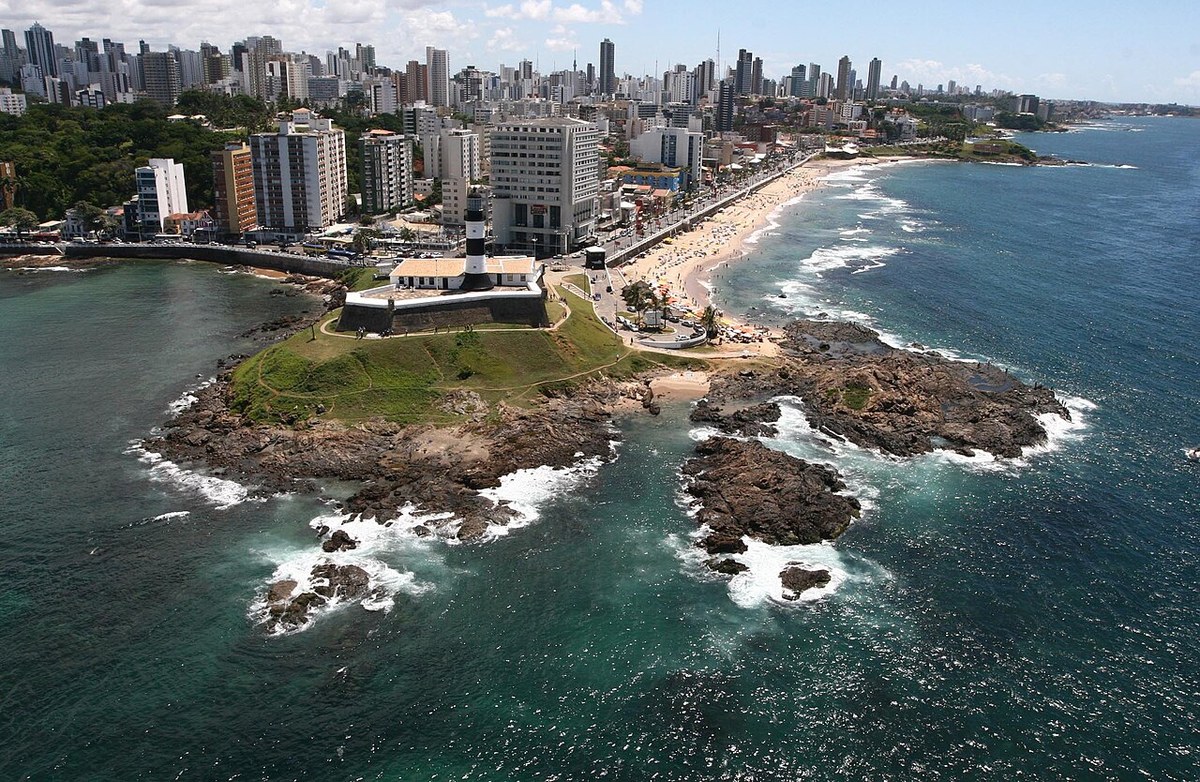
For a long time I lived with the feeling that I had to sort out all the cases first, help my loved ones, fulfill promises, solve accumulated issues, and only then think about myself. Moreover, this "later" was constantly pushed back, because life was surprisingly able to throw up new tasks just when it seemed to me that I could finally exhale a little. I could spend weeks planning weekends, and then spend them doing household chores, refusing to meet with a friend for another urgent job, and postponing the purchase of tickets, because now doesn't seem to be the right time to travel. From the outside, everything looked quite reasonable: I was a responsible person, I tried not to let anyone down, and I was used to relying primarily on my own strength. But sometimes in the evenings, when everything was finally over, I felt a strange emptiness and couldn't explain why I wanted to go somewhere so much, even though nothing bad seemed to be happening in my life. I didn't want to run away from my family, my job, or my familiar city, I was just tired of constantly being the person who organizes everything, remembers everything, and takes care of everything, leaving my own desires at the very end of the list. One day I opened the world map and, quite by chance, I stayed in Brazil, saw Salvador. At first, I was surprised that he was in Brazil, but then I decided to figure it out. I found out that, it turns out, there is a city of Salvador, the capital of the state of Bahia, and there is a state of the same name in Central America. And there is a big difference between them, I realized that I want to go to Brazil. It was an unusual decision, because I knew almost nothing about this place, but for some reason I immediately imagined walking down an unfamiliar street without any purpose, and ahead of me there was a whole day that did not need to be organized for anyone. A few weeks later, I had tickets, accommodation reservations, and a pretty serious worry about the trip, which initially seemed almost impossible. I didn't know what exactly I was taking away from Brazil, but I already felt it.: I need to get out of the usual circle for a while, in which I stopped noticing myself a long time ago. Salvador greeted me in a completely different way than I expected. When I arrived in Salvador, the full name of which sounds like San Salvador da Bahia de Toduz us Santos, the first impression turned out to be quite contradictory. On the one hand, the city immediately captivated me with its colors, noise, music and the feeling of proximity to the ocean, but on the other, I was tired after the road, did not navigate well in unfamiliar streets and constantly checked my phone so as not to miss the right turn. I imagined how beautiful it would be to walk around Brazil, enjoy the atmosphere and take photos, but the first hours were more like trying to figure out a complex board game, the rules of which no one explained. I was especially surprised by how quickly I switched back on the usual control mode. As soon as I left my things in my apartment, I already opened the list of saved places, started checking the distances and calculating how many sights I could see before the evening. It seems that I came here precisely to take a break from the endless race, but as soon as I found myself in a new city, I immediately organized another race for myself, only now with a tropical climate and a lot more reasons to sweat. The historical center of the city That day, I managed to stroll through the historic Pelourinho district, where the famous colorful colonial buildings stand, look into several shops and take photos, which I was quite pleased with. However, when I returned to my room in the evening, I found that I hardly remembered my own feelings of the day again. I remembered which streets I'd walked through and what I'd photographed, but I could hardly remember the last time I'd just enjoyed what was happening without thinking about the next destination. And then I decided that the next day I would try to do everything completely differently. A day in which there was not a single mandatory item I woke up in the morning without an alarm clock, although usually even on vacation I managed to set it at a fairly early time so as not to lose a single precious minute. The first thing I did was reach for my phone, but I stopped in time and left it on the bedside table, deciding to at least have breakfast without checking messages, news and weather. It turned out to be surprisingly difficult, because my hand reached for the screen on its own, as if without it I risked missing some global event. The Barr Lighthouse After breakfast, I went outside and decided to go wherever I wanted and accidentally stumbled upon the Barr Lighthouse. It is located in the Barra district, at the entrance to the Bay of All Saints, where the waters of the Atlantic Ocean meet. I don't know how long I've been here, but I've enjoyed not keeping track of time. According to my inner feelings, I admired this beauty for 20 minutes, maybe longer. Next, I wasn't going to specifically look for hidden sights or make up another route, but just wanted to see the city through the eyes of a person who doesn't have to do absolutely everything. At one point, I stopped near a bright house, then paused at a small storefront, and then saw a cafe where several people were quietly having breakfast at tables on the street. I ordered coffee and some local pastries, which I pronounced with such care, as if my fate depended on the right emphasis. Fortunately, they understood me, the order arrived, and I was able to do the most important thing – to eat and look around. People were talking around me, cars were passing, music was playing somewhere, and I was sitting there and suddenly realized that I absolutely did not need to turn this morning into an achievement. Probably, nothing special happened from the outside. An ordinary woman was sitting in a cafe in an unfamiliar city, drinking coffee and looking at passers-by, but for me it was almost a small discovery. I've been living in a regime for so many years where any free time should be put to good use that I've already forgotten how pleasant it is to just exist without constantly trying to improve myself and my own life. I saw how much I had been saving for later. Pelourinho Later, I went for a walk around Pelourinho, the historic center of Salvador, which is known for its colonial buildings, churches and cobbled streets. I walked slowly between the colorful facades, looked at the balconies and doors, listened to the music coming from the neighboring streets, and from time to time stopped to take a photo. But the most important thing was not happening around me, but in my head, because I suddenly began to remember all the things that I had promised myself for years to do when I had free time. I wanted to learn how to draw, but I always had more important things to do. I wanted to go to the seaside more often, but then work projects, household issues and other reasons to stay at home began. I wanted to walk more, read books, not just before going to bed, when my eyes were already closing by themselves, and sometimes buy myself something beautiful just because I like it, and not because it was a special holiday. I suddenly realized that it's not necessary to give up your own desires in order to be a good person. You can take care of your loved ones and at the same time remember yourself, you can perform duties and at the same time leave time for pleasure, or you can just admit that some things are as important to me as all other tasks. For some reason, it used to seem to me that taking care of yourself should begin only after everyone around you is happy, but now this idea looked completely ridiculous. At one point, I stopped near a beautiful building, looked at it, and suddenly smiled. Not because I found some special attraction, but because for the first time in a long time I stopped perceiving my own desires as something optional. I came to Brazil not only to see another country, but also to remember that I also have a life that I want to enjoy. A little nuisance that made me laugh Of course, it would be too beautiful if, after such a discovery, I started moving around the city exceptionally easily and confidently. In practice, everything turned out to be much more prosaic: at some point I took a wrong turn, lost my bearings, and spent quite a long time trying to figure out how to return to a familiar street. The map on my phone stubbornly suggested a route that I could not immediately compare with the surrounding buildings, and the heat finally convinced me that my plans for a quiet walk needed a little revision. Previously, I probably would have started to get annoyed, worry about lost time, and berate myself for not preparing carefully enough. But this time I found a place to sit down, bought water, and decided to rest first before figuring out the route. The world didn't collapse, the sights didn't disappear, and I suddenly discovered that I could calmly deal with situations that previously seemed like a small personal disaster to me. The funny thing is that in the end I still found a way, and with it a small place where I could have a snack. I wasn't going to go there, I didn't save it on my phone, and I didn't even know in advance that it existed, but it was there that I spent a pleasant hour relaxing after a walk. It turned out that the day, which I deliberately decided not to plan, gave me much more peace of mind than all my carefully organized routes. I thought about how much effort I spend trying to figure out every little thing, even though life is constantly making its own adjustments anyway. And, perhaps, for the first time, I wanted not to fight it, but just to leave a little room for surprises. An evening by the ocean that I didn't want to end In the late afternoon, I went to the coast because I wanted to look at the ocean and relax a little after a walk. I settled down in a convenient place where I could see the water, and watched for a long time how the light changed, how people walked along the shore, and how evening gradually fell. There were plenty of sounds, movement, and life around, but at the same time, for the first time in a long time, I felt a calmness inside me that needed no explanation. I remembered how I often told myself that I would start living differently when I solved all the problems, completed a complex project, or finally achieved some stability. But life never becomes completely free of worries, and if you wait for the moment when everything will be perfect, you can never wait. There will always be some business that needs to be completed, an issue that needs to be resolved, or a circumstance that will require a change of plans. The Atlantic Ocean continued to be an ocean, no matter how many tasks I had left at home. People were walking nearby, talking, laughing, someone was photographing the sunset, and someone was just sitting and looking at the water. I also sat and thought that happiness might not require me to become better, more successful, or more productive every minute, but sometimes it starts with allowing myself to just be here and now. I didn't make any big decisions that night, and I didn't promise myself to start a new life on Monday. I just felt that I no longer wanted to constantly put myself off for later, because that "later" could be infinitely far away, and the ordinary days that make up life are passing right now. What changed when I returned home After returning, of course, I was greeted by the familiar reality. There were messages on my phone, letters waiting in the mail, there were things at home that I had left before the trip, and work tasks were absolutely not going to be solved on their own just because I spent a few days in Brazil. For the first few days, I started rushing again, trying to do everything at once, and even found myself getting annoyed with the usual queue at the store. But at least now I noticed what was going on. I remembered the morning in Salvador, when I was sitting at a table with a cup of coffee and was in no hurry, and I tried at least sometimes to regain this feeling in everyday life. I began to go out for walks more often without a specific goal, stopped filling the whole weekend with activities and began to allow myself to relax without coming up with a convincing excuse for this. Gradually, I realized that I didn't need to completely change my circumstances in order to change my attitude to life. I couldn't cancel all my obligations, give up work, or stop caring for my loved ones, and I didn't want to do that. But I could stop considering my own desires as something secondary, which is remembered only after everything else is done. I signed up for classes that I had been putting off for a long time, started meeting my friends more often, and finally stopped waiting for a special reason to buy flowers. Sometimes I still find myself wanting to postpone something pleasant until better times, but now I try to ask myself a simple question: if it's really important to me, why do I leave it for later again? The journey that taught me to choose myself Salvador did not solve all the problems of life for me, did not relieve my worries and did not turn me into a person who always knows what he wants. I can still get tired, worry about the future, and sometimes try to control things that cannot be foreseen in advance. But this trip gave me the opportunity to see my own life from the outside and realize that for too long I have been trying to be comfortable, responsible and correct, forgetting that I also want something more than just to successfully cope with everything. I went to Brazil, thinking that I needed a break from my usual life, but I came back thinking that I no longer wanted to live as if real life would begin after I finally managed everything. I don't have to wait for the perfect moment to enjoy myself, I don't have to deserve every little holiday, and I don't have to turn all my free hours into a useful activity. Sometimes it's enough to go outside, buy coffee, call a loved one, go for a walk, or afford a day without a strict schedule. I see travel differently now. For me, this is not only an opportunity to see new countries and bring home beautiful photos, but also a chance to stop for a while, notice my own habits and remember what really matters. I still dream of new trips, building routes and keeping interesting places on the map, but I no longer want to wait for the next vacation to start treating myself with the same care that I used to treat others. Sometimes I open the photos from Salvador again and linger on one shot, where there is nothing particularly impressive: just the ocean, evening light and a piece of shore. For me, this photo was a reminder that on that day, for the first time in a long time, I stopped thinking about what I should do next and just allowed myself to feel good. This trip changed my attitude to life, not because I found the secret of happiness in Brazil, but because I finally understood.: I don't have to take care of the whole world first to get the right to take care of myself. And now, when I start putting off my own desires for later, I remember Salvador, the ocean, and the amazing tranquility I felt in an unfamiliar city. I can't always change circumstances, not everything depends on me, and not every day is easy, but I can at least stop making my own life the last item on my to-do list. After all, one day I may discover that I have been preparing so diligently for a happy future that I almost did not notice how the years passed. And I want not only to make plans for life, but also to really live – with all its surprises, imperfections, small joys and moments that do not need to be deserved.

Read more →
0 0
richword Expert
Tanzania · October 9, 2026
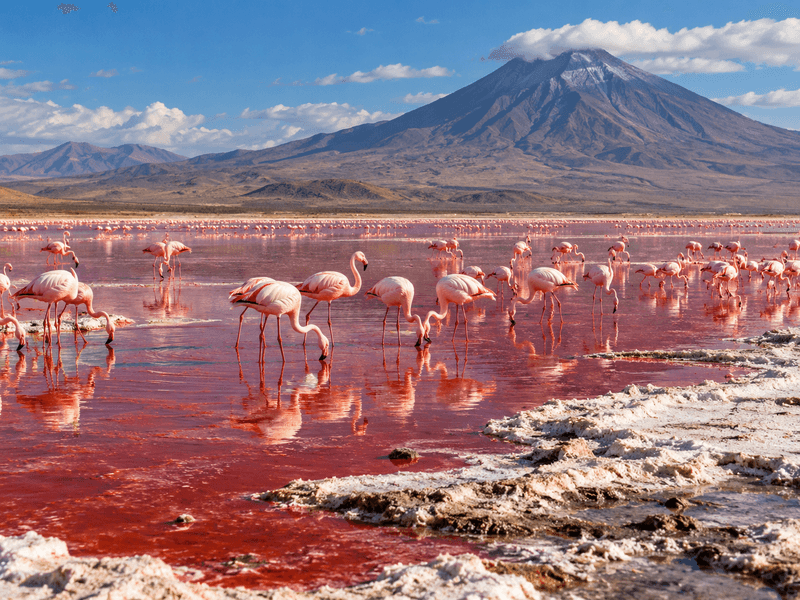
Lake Natron: Red Water and Thousands of Flamingos

Lake Natron: Red Water and Thousands of Flamingos

When I first saw photographs of Lake Natron in Tanzania, I thought the landscape belonged to another planet. Parts of the water appear red or pink, the shores are covered with white mineral crusts, and thousands of flamingos gather in the shallows. Against dry hills and a vast sky, the lake looks almost unreal. Yet this remarkable scenery is part of a delicate ecosystem adapted to conditions that many living things could not survive. Lake Natron lies in northern Tanzania, near the Kenyan border in the East African Rift Valley. It is a shallow, salty, alkaline lake fed by rivers and hot springs, with almost no outlet. Under the strong sun, water evaporates, minerals accumulate and the shoreline changes over time. Why does the water turn red? Natron's unusual chemistry is the key. During the dry season, evaporation increases the concentration of salts, and patches of red, orange and pink appear in the shallows. These colours are associated with salt-loving microorganisms, including certain cyanobacteria that can survive in highly alkaline water. The lake does not have one uniform colour: depth, salinity, sunlight and season all make a difference. In some places, white mineral deposits cover the surface like a thin layer of ice. The water should not be touched casually, however. Its alkalinity can irritate skin and eyes, and the lake is not a place for an ordinary swim, even when a section looks like a peaceful pink lagoon. The scenery changes throughout the year. After rain, the lake may spread across a wider area, while in hot, dry periods the salt crusts and colourful shallows become more prominent. This changing landscape is part of what makes Natron so compelling for photographers and travellers. Why do flamingos come here? Lake Natron is one of the most important breeding sites for lesser flamingos in East Africa. The harsh environment can work in the birds' favour: high salinity and alkalinity limit the number of potential predators and competitors. In the shallows, flamingos find food, including microscopic algae and other tiny organisms. When large flocks gather, pink silhouettes reflect on the water and their calls carry across the shore. From higher ground, the view can be extraordinary: a long shoreline, patches of coloured water and a moving pink ribbon of birds. Their numbers and locations change with the season and lake conditions, so a huge flock is never guaranteed. How to visit without harming the environment Trips to Natron are often arranged from Arusha or included in a northern Tanzania itinerary. Roads in this remote area can be challenging, so travelling with an experienced local driver or guide is often the easiest option. Check road conditions, accommodation and the weather before setting out. Drinking water, sun protection and sturdy footwear are essential in the hot, dusty climate. Keep your distance from the birds, avoid nesting areas and take all rubbish away. Do not taste the water or touch mineral deposits if you do not know whether contact is safe. Natron is remarkable because its fragile ecosystem supports life in an extreme chemical environment, and its unusual colours are part of a much larger natural cycle. I would remember this place for more than its red water and flamingos. It makes you realise how varied the natural world can be. A landscape may look imaginary, yet its beauty is created by real processes unfolding before our eyes.

Read more →
0 0
richword Expert
Madagascar · October 9, 2026
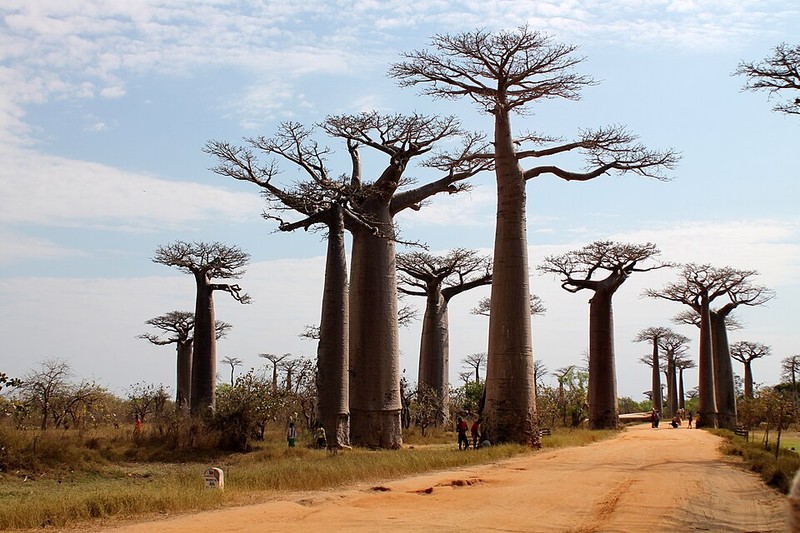
The Avenue of the Baobabs: Trees That Look Upside Down

The Avenue of the Baobabs: Trees That Look Upside Down

Some places are impossible to mistake for anywhere else. Madagascar's Avenue of the Baobabs is one of them. Across the plains in the island's west stand enormous trees with massive trunks and almost bare branches. From a distance, they look as though someone pulled them out of the ground, turned them upside down and planted them again with their roots pointing skyward. When I first saw photographs of this landscape, it looked like a scene from a fantasy film. Yet these baobabs are real, and they have witnessed generations of people come and go. I arrived in the late afternoon, as the sun began to sink toward the horizon. The road passed through rural settlements and fields before gradually leading to the famous avenue. At first, only a few trees appeared, but soon they lined both sides of the dirt road. Their silhouettes rose above the plain, while their broad trunks took on a warm reddish glow in the evening light. Why baobabs look as if their roots are in the air The trees' unusual shape is their most striking feature. Baobabs have exceptionally thick trunks that can store water, helping them survive long dry periods. During the dry season, they lose their leaves, leaving only powerful branches against the sky. These branches resemble roots spreading through the air. The avenue lies near Morondava in western Madagascar. The trees here are Grandidier's baobabs, Adansonia grandidieri, a species known for its tall form and smooth, greyish trunk. Some grow to several dozen metres tall, and individual trees may be hundreds of years old. They have survived a changing landscape and become one of Madagascar's most recognizable natural symbols. The Avenue of the Baobabs is not a planted ornamental park. These trees remain in an area whose landscape has changed significantly through farming and deforestation. Today, the place is also a reminder of how fragile natural environments can be. When is the best time to visit? The most popular time to arrive is just before sunset. The sunlight turns the trunks golden and coppery, while long shadows stretch across the reddish earth. Many travellers come at this hour, so early morning can offer a quieter walk. The light is softer then, the air is fresher and the surroundings are often more peaceful. The easiest way to reach the avenue is from Morondava. Visitors often combine the trip with stops at fishing villages and other natural sites in western Madagascar. Roads can be rough, so check route conditions in advance and allow enough time for the journey. Why this landscape is worth seeing The avenue impresses visitors with more than the size of its trees. It is the sense of space that makes it special: open plains, red earth, enormous trunks and a sky that seems to change colour before your eyes. Unlike many famous attractions, there are no elaborate structures or artificial decorations here. The landscape has been shaped by nature itself. I stayed until the sun had almost disappeared below the horizon. The baobabs became dark silhouettes, and the sky slowly shifted from orange to violet. At that moment, it was easy to understand why people say the trees look upside down: their branches resemble the roots of fantastic plants reaching toward the sky. The scene stayed with me long after I left, reminding me that some of the world's strangest wonders do not belong to imaginary places - they already exist on our planet.

Read more →
0 0
Alfred Donny Guide
Madagascar · October 9, 2026
Lemurs in the Wild: An Encounter You’ll Never Forget

Lemurs in the Wild: An Encounter You’ll Never Forget

Madagascar is one of those places where nature seems to follow its own rules. Unusual plants grow here, forests shelter animals found nowhere else on Earth, and lemurs leap between the branches. Before my trip, I had only seen them in documentaries, so I had no idea how amusing and extraordinary they would be in real life. I set off for a forest reserve early in the morning, while the air was still cool and a light mist hung above the trails. The guide warned me that lemurs might appear without warning: you hear a rustle, look up, and suddenly several curious faces are watching from a tree. That is exactly what happened. First, a long striped tail flashed through the leaves, then a wide-eyed lemur appeared on a branch. Meeting the forest’s residents The ring-tailed lemurs impressed me most. Their long black-and-white tails make them easy to recognize, even from a distance. They moved along the ground in small groups, leaped onto rocks and watched their surroundings carefully. Some searched for food, while others sat in the sunshine with their front paws raised, almost as if they were sunbathing. Lemurs are different from the monkeys most people know. They are a distinct group of primates that evolved in relative isolation on Madagascar. Many species live on the island, each adapted to its own habitat: some inhabit dry forests, while others prefer humid tropical vegetation. Seeing them in the wild means discovering a unique natural world shaped over millions of years. The best part was watching them without rushing. One lemur cautiously approached the trail, looked in my direction and quickly followed the others. The encounter lasted only seconds, but these are the moments that stay with you far longer than ordinary holiday photographs. Why lemurs need protection Behind their charming appearance is a vulnerable world. Many lemur species are threatened with extinction. Their natural habitats are shrinking because of deforestation, expanding farmland and other human pressures. For animals found only in Madagascar, the loss of forest can mean the disappearance of an entire population. That is why it is best to observe lemurs in national parks and reserves where conservation specialists work. Do not feed them, try to catch them or approach too closely. Even if a lemur looks friendly, it is still a wild animal that needs space. Planning your own encounter Andasibe-Mantadia National Park in eastern Madagascar and Berenty Reserve in the south are two places to consider. Different species live in different areas, so the best choice depends on your route and which animals you hope to see. A local guide can help you spot lemurs while minimizing disturbance to their natural behavior. I left the forest feeling as though I had briefly stepped into another world. No elaborate attractions are needed here: just follow the trail, listen to the leaves rustling and look carefully around you. When a wide-eyed lemur suddenly appears among the branches, you understand why meeting these animals is so hard to forget.

Read more →
0 0
Anna Explorer
Italy · October 9, 2026
Why am I no longer afraid to travel alone after Rome?

Why am I no longer afraid to travel alone after Rome?

A few years ago, the idea of traveling to another country alone caused me about the same joy as having to assemble a cabinet on my own according to the instructions, in which half of the details are drawn for no clear reason. It seemed to me that a company was absolutely necessary for traveling: someone should help me figure out the transport, tell me the way, hold my bag while I took pictures, and, most importantly, share responsibility for all possible troubles. What if I get lost, lose my documents, fail to communicate with the locals, or get sick at the most inopportune moment? There was a whole list of disasters in my head, and some of them were so unlikely that I thought I could write a separate script for a disturbing series based on them. That's why I spent a long time choosing to travel with friends or acquaintances, even if our interests did not coincide at all. I wanted to walk along the old streets, but for someone it was more important to spend half a day at the mall; I dreamed of waking up early and seeing the city without crowds of tourists, and my companions believed that the vacation starts only in the afternoon. Sometimes I agreed to things that I didn't want at all, just because I was afraid to be alone in an unfamiliar place. I didn't realize then that sometimes being alone on a trip can be much more enjoyable than a company in which you constantly forget about your own desires. Rome, which I almost missed. Everything changed thanks to a trip to Rome, Italy. I have long dreamed of seeing this city, imagined walking near the Colosseum, throwing a coin into the Trevi Fountain, drinking coffee in a small square and looking at the ancient buildings that locals pass by every day, not even suspecting that for someone they look like a real miracle. But when I started looking for fellow travelers, it turned out that everyone had their own plans, circumstances, and reasons to postpone the trip indefinitely. Vesuvius At first I decided to wait, then I waited a little longer, and then I discovered that several months had passed, and I was still sitting at home and looking at photos of Italy, as if they could somehow miraculously transport me there. At some point, I felt offended not at my friends or the circumstances, but at myself. It turned out that I was postponing my own dream just because I couldn't find someone who would travel with me at a convenient time and want about the same thing. One evening, I reopened the ticket website, looked at the dates for a long time, closed the page several times and came back, and then I bought a ticket. When the confirmation came, I smiled at first, and a minute later I felt my stomach tighten with excitement. Now it was not just a dream that could be discussed over a cup of tea, but a real trip from which I had to get out on my own if something went wrong. The first test began at the airport I arrived at the airport in advance because I was sure that if I was going to do something stupid, it would be better to do it with time to spare. I checked my passport, ticket, boarding pass and hotel reservation several times, and then I reached into my bag again to make sure that the passport was really where I had just checked it. If the documents could talk, they would probably ask to be left alone for at least ten minutes. When I finally boarded the plane, instead of the expected panic, I felt strangely relieved. The most difficult decision had already been made, and now all that remained was to fly, and not come up with new reasons why an independent trip might end in failure. I looked out the window and thought that maybe it wasn't as scary as I imagined, although I wasn't completely sure of my own abilities yet. In Rome, I was greeted by noise, movement, unfamiliar signs, and the feeling that everyone around me knew exactly where they were going, except for me. I was trying to figure out the route to the hotel, while keeping an eye on my things and trying not to look like a person who had just been dropped off in the city center without an instruction manual. After some time, I got to my apartment, left my suitcase and realized that the first test had been passed: I really found myself alone in another country, and for some reason the world did not collapse. I got lost and for the first time I didn't scold myself. The next day, I went for a walk through the historic center. I had an approximate route, but I decided not to turn the walk into a military operation and allowed myself to deviate a little from the planned path. Everything was going great until I turned into another beautiful street and discovered that I had absolutely no idea where I was. At first, I calmly opened the map, then took a wrong turn, then came back and found myself again near a familiar cafe that I had already seen about twenty minutes ago. At some point, I started laughing because the situation looked completely ridiculous: I was in one of the most visited tourist cities in the world, holding a modern smartphone in my hands and managed to turn an ordinary walk into a small expedition. Previously, I would have been angry with myself, decided that I had not prepared well, and would have started to worry about the lost time. But that day I just stopped, calmly sorted out the map and continued on my way. Yes, I spent an extra half hour, but I saw several streets that I had no intention of visiting at all, and I found a small bakery where I bought such delicious pastries that for a few minutes I forgot about all my navigation problems. It was then that I first thought that traveling on my own didn't require me to be infallible. I don't need to know every turn in advance, navigate an unfamiliar city perfectly, and anticipate all possible situations. It's enough for me to be able to stop, think and find a solution if something went wrong. The most difficult thing was not in a foreign country I expected that I would be most afraid of the language barrier, public transport or unfamiliar streets, but gradually I realized that the real problem was in a completely different place. It was hard for me to stop comparing myself to other travelers who looked so confident, independent, and free in the photos. It seemed that they could easily find the best cafes, know secret routes, never make mistakes with tickets, and generally wake up every morning with a ready-made plan to conquer the world. I could choose which direction to go in for half an hour, buy the wrong transport ticket, or return to the hotel earlier because I was tired. Sometimes I just wanted to sit in a cafe and do nothing, but I found myself thinking that I should use my time more efficiently, because I don't know when I will return to Rome. It turned out that even on vacation, I continued to demand the perfect result from myself, as if someone was going to check my route and give an estimate for the number of attractions visited. Gradually, I began to ask myself another question: not how many places I managed to see, but whether I felt good that day. And sometimes the answer was unexpected. The day when I visited several famous places could only be remembered for fatigue, and an ordinary walk without a plan, a cup of coffee and a conversation with the friendly hostess of a small store left much warmer memories. I finally realized that I don't have to prove to anyone that I know how to travel properly. I didn't come to Rome to take the independence exam, but to live for a few days the way I really wanted to. Dinner at a table for two, where I was sitting alone I was most worried about the restaurants. For some reason, it seemed to me that sitting alone at a table was almost a public admission that you didn't have any friends, although if you think about it, people around you are usually too busy with their own affairs to study my biography by how many chairs there are near my table. One evening, I finally decided to go to a small restaurant that I noticed while walking. It was cozy inside, companies were talking at nearby tables, glasses were clinking, and such aromas were wafting from the kitchen that my inner critic gave way to ordinary hunger for a while. I asked for a table for one, sat down, and suddenly realized that I didn't know where to put my hands if I didn't have to hold the phone or pretend like I was texting someone. Spaghetti I really felt awkward for the first few minutes. Then they brought the spaghetti that I ordered. The dish turned out to be so delicious that all my worries about how I look from the outside have completely lost their relevance. I had a quiet dinner, watched the life of the restaurant, and even found myself enjoying not having to keep up a conversation, not waiting for someone to finish eating, and not coordinating the choice of dish with another person. When I went out into the evening street, I felt really proud of myself. Not because she had accomplished some incredible feat, but because she had done something that she had previously avoided because of completely far-fetched fears. And I really liked that feeling: it turns out that life doesn't get any less interesting just because you come to a restaurant without company. I've learned to ask for help. At the same time, traveling on my own has not turned me into a person who now believes that he must cope with everything solely on his own. On the contrary, in Rome, I realized how important it is to be able to calmly ask for help when you really need it. One day I couldn't figure out the route of public transport and turned to the station employee, and in another situation I asked the cafe employee if I understood the address of the place I needed correctly. Nothing terrible happened. People answered, showed directions, sometimes explained with gestures, and sometimes just smiled when they saw my confusion. I realized that not knowing the language does not make me helpless, and the question does not turn me into a person who is unable to organize a trip on my own. Of course, I became more attentive to security: I saved the address of the hotel in advance, watched my belongings, checked my return routes and did not go to unfamiliar places late at night just for the sake of a beautiful photo. Independence for me gradually ceased to mean the need to be fearless. It has come to mean the ability to make decisions, notice your own limitations, and feel free to seek help when it makes sense. What I realized when I got home When the trip was over, I returned home with photos of Rome, a few small souvenirs, and a whole collection of stories about how I was looking for a way, trying to figure out transportation, and once almost bought something completely different from what I was going to. But that wasn't even the most valuable thing. I suddenly noticed that I was calmer about everyday difficulties and less afraid of situations in which I did not know in advance how everything would happen. In the past, I always wanted someone more confident to be around, who could suggest the right decision or take on some of the responsibility. Now I know that I can manage on my own, although this does not mean that I will never need help again. I can make mistakes, get confused, get tired, or change plans, but none of these things makes me weak and doesn't mean I shouldn't have gone on a trip. The most amazing thing is that along with confidence came another feeling – I became much more comfortable spending time with myself. I've learned to notice exactly what I want, not to adjust every step to other people's preferences, and not to perceive my free time as a void that urgently needs to be filled with conversation or entertainment. And although I still love traveling with my loved ones, now I have another option: if no one can come with me, I no longer have to abandon my own plans. Why am I no longer afraid to travel alone? I can't say that I'm not afraid of anything anymore. Before a new trip, I still check my documents, study the way to the hotel, and sometimes imagine standing in the middle of an unfamiliar city with a phone in my hand and the expression on the face of a man who was clearly hoping for a more understandable scenario. But now these thoughts don't make me give up the trip, because I know that fear doesn't always mean that you can't do something, sometimes it just says that I'm going to try something new. Rome taught me not to wait for the perfect moment, the right company, and absolute self-confidence. He showed that you can not know all the answers in advance, sometimes make mistakes, ask for help and still have a great time. I also realized that traveling on my own is not a test of courage or a way to prove to others what an independent woman I am. This is an opportunity to get to know myself a little more closely, to hear my own desires and to make sure that I am able to take a step towards what I have long dreamed of. Now, when I see a beautiful city on the map and think about how I would like to visit it, I no longer start with the question: "Who would I go with?" At first, I ask myself, "Why don't I go myself?" And, perhaps, this is the main discovery for me. I stopped being afraid to travel alone, not because I learned not to be afraid at all, but because I no longer let fear decide for me what my life might be like.

Read more →
0 0
Alfred Donny Guide
Zambia · October 9, 2026
Swimming at the Edge of Victoria Falls: What to Know About Devil’s Pool

Swimming at the Edge of Victoria Falls: What to Know About Devil’s Pool

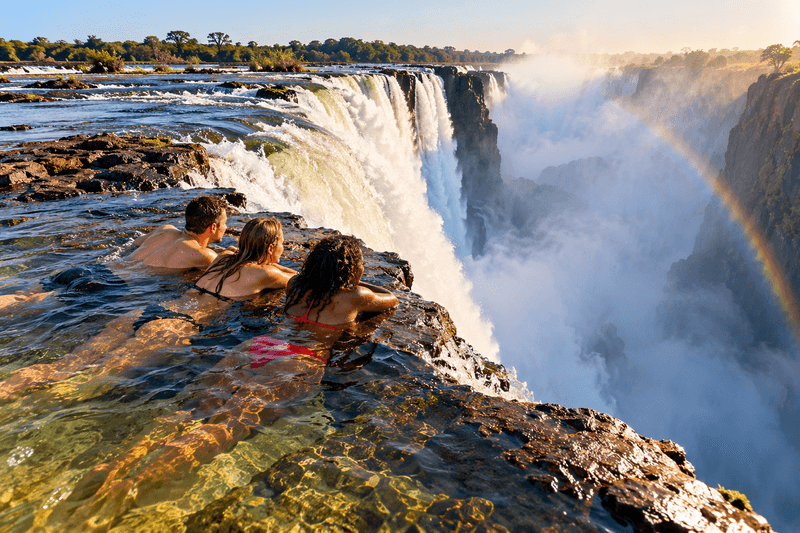
Imagine floating in clear water just a few steps from the edge of one of the world's most powerful waterfalls. A vast drop opens before you, the Zambezi thunders below, and a natural rock pool lies behind you. It sounds unbelievable, but this place exists. Known as Devil’s Pool, it sits at Victoria Falls on the border between Zambia and Zimbabwe. After seeing photos of the pool, I wanted to understand how visitors could get into the water so close to the drop. Devil’s Pool is not an ordinary tourist swimming pool, but a natural basin formed in rock near the waterfall's edge. Visits are possible only when water levels are suitable and as part of an organized guided excursion. Where is Devil’s Pool? Devil’s Pool is on the Zambian side of Victoria Falls, near Livingstone Island. During the low-water season, conditions may allow visitors to reach the natural pool, where a rock lip helps prevent swimmers from being swept over the edge. That is why the photographs look so astonishing: people appear to be swimming right beside the drop. However, this is not a fenced or fully protected platform. Beyond the rocky edge is a fall of more than a hundred metres. Strong currents, slippery rocks and changing river levels can create serious hazards. Visitors must never attempt the experience independently. Trained guides assess the conditions and decide whether access is permitted that day. Excursions usually involve reaching the island and crossing a section of water. The exact route depends on river conditions and the operator's procedures. Before booking, check the duration, participant requirements and what the price includes. When can you swim there? The key factor is the water level of the Zambezi. During high-water periods, Devil’s Pool closes because the current becomes too dangerous. Access is generally possible during the dry season, roughly from August to January, although exact dates change from year to year with rainfall and river conditions. Do not plan your visit based on the calendar alone. Even if tours operated during the same month last year, conditions may be different this season. Confirm current availability with an authorized operator before travelling. Is the experience worth it? For travellers who enjoy unusual adventures, Devil’s Pool can become one of the most memorable moments of a trip to Africa. It offers an extraordinary perspective on the falls and a close-up sense of the river's power. But it is not simply a place for a relaxed swim. Follow your guide's instructions, never approach the edge on your own, and skip the excursion if conditions seem unsafe. Do not try to recreate the photographs without professional supervision: the natural rock basin does not guarantee protection from a fall. Beauty and risk coexist here, so caution matters more than getting a dramatic picture.

Read more →
0 0
Alfred Donny Guide
SOUTH AFRICA · October 9, 2026
Penguins on an African Beach: Where to See Them

Penguins on an African Beach: Where to See Them

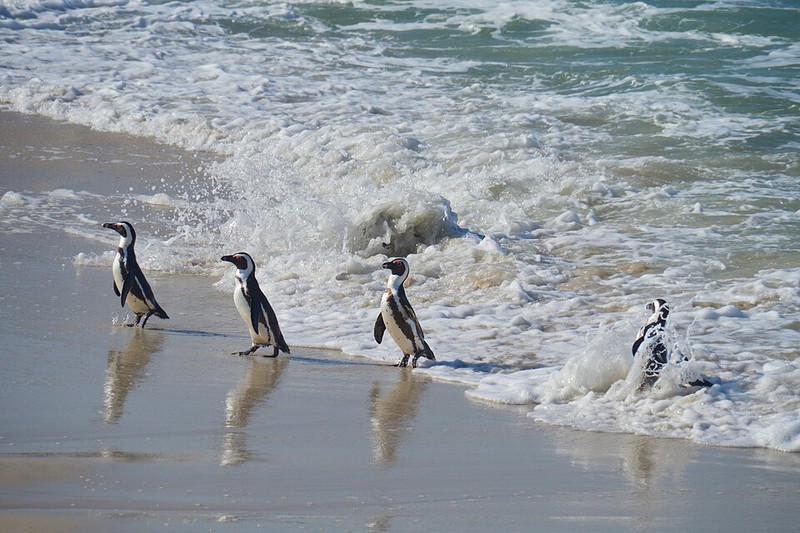
When people imagine Africa, they often picture hot savannas, elephants and lions. Yet in the south of the continent, penguins stroll along sandy beaches. This is not a zoo but the real coastline of South Africa. I had wanted to see these birds in the wild for a long time, so I headed to Boulders Beach near Cape Town. The drive follows the ocean past rocky coves and small coastal settlements. Even along the way, you begin to appreciate how varied Africa's landscapes can be. Seeing the penguins against turquoise water and pale boulders for the first time felt almost unreal. They wandered across the sand, warmed themselves on the rocks and dived into the ocean. Boulders Beach: the best-known place to meet penguins Boulders Beach lies near Simon's Town, roughly an hour's drive from central Cape Town, depending on traffic. It is home to African penguins, recognizable by the black band across their chest and dark faces framed by pale patches of feathers. The beach is famous for its huge rounded boulders, which shelter small sandy coves. Penguins move freely around their habitat, rest, preen and interact with one another. Wooden boardwalks allow visitors to watch them without entering their space. Remember that these are wild animals, not pets. Do not touch or feed them, or try to lure them closer for a photograph. The best approach is simply to pause and observe. Sometimes a penguin will wander surprisingly close to the viewing barrier on its own. Where to see penguins away from the crowds Another worthwhile stop is Stony Point Nature Reserve at Betty's Bay, along the coast east of Cape Town. It also shelters a colony of African penguins, which can be viewed from designated paths. It is a good option for travelers following the scenic coastal route who want another encounter with wildlife. Do not expect to find dozens of penguins on every African beach. Their wild population has declined dramatically, making colony protection especially important. African penguins are critically endangered, and their breeding sites need careful protection. When to visit Boulders Beach can be visited throughout the year. Penguins live here year-round, although their numbers and behavior vary with the season and breeding cycle. Morning can be a pleasant time to visit before the area gets busy. Check opening hours and access rules before setting off, as some sections may close temporarily to protect the animals. This encounter reminded me that Africa is far more diverse than its familiar stereotypes suggest. You can watch penguins beside a cold ocean in the morning and later explore mountains, vineyards or national parks. That unexpected contrast is well worth setting aside a day for when visiting the Cape Town area.

Read more →
0 0
Gilyana Guide
Italy · October 9, 2026
What did my trip to Italy teach me?

What did my trip to Italy teach me?

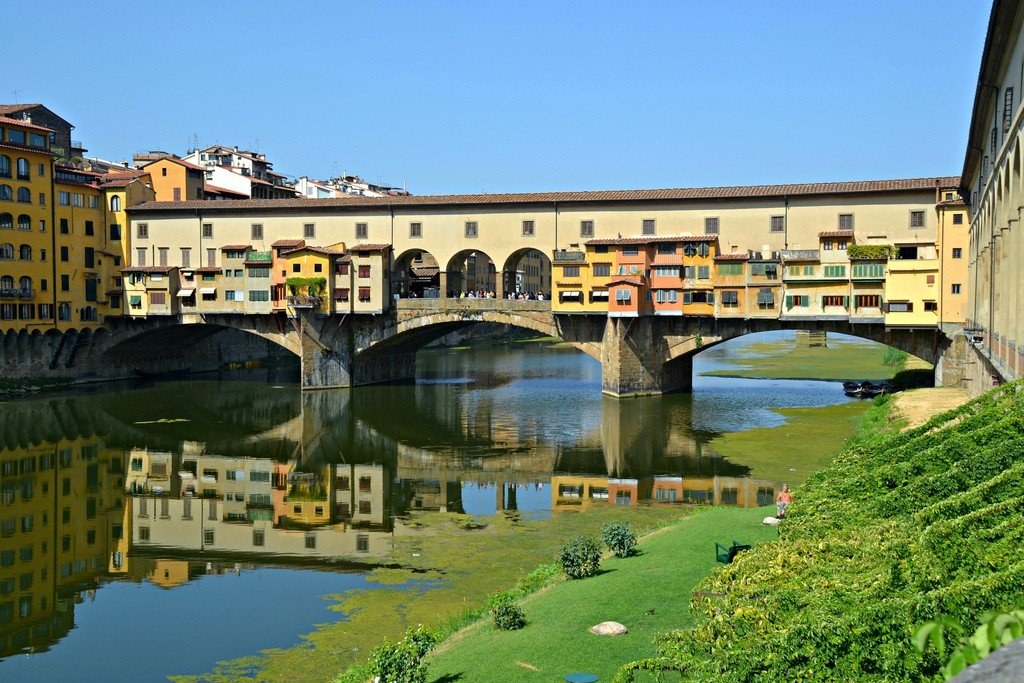
I used to think that traveling was necessary in order to see beautiful places, take photos, taste unfamiliar food and bring home a suitcase of impressions, which can then be disassembled for several weeks. I made up routes in advance, saved interesting cafes, marked the sights on the map, and tried to plan for literally everything, including the weather, transportation, and a backup option in case of rain. I wanted every trip to be perfect, because vacations don't happen that often, and the money I spent, it seemed to me, should definitely pay off with unforgettable emotions. But one day I went to Italy and came back with a completely different understanding of travel, and of myself too. Italy, which I went to for beauty I started my trip with Florence, a city that has long existed in my imagination thanks to photographs, films, and endless stories from other travelers. I imagined old streets, cozy cafes, bridges over the Arno, beautiful squares and that special Italian sun in which even an ordinary cup of coffee looks worthy of a magazine cover. I prepared thoroughly: I made a route by day, marked the museums, selected several restaurants, and even calculated how long it would take to get from one place to another. If diplomas were awarded for careful travel planning, I would already be confidently teaching this discipline. The Ponte Vecchio Bridge On the first day, everything really went almost perfectly, and I enjoyed walking around the city, looking at the facades of buildings, photographing storefronts, and checking my phone from time to time. However, by lunchtime, I discovered that instead of enjoying myself, I was beginning to feel strangely anxious.: It seemed to me that I was staying too long in one place and might not have time to watch everything else. While I was admiring the beautiful square, the next point of the route was already scrolling through my head, and for some reason during lunch I checked my watch, as if I had not had a dream trip, but a responsible work shift with a strict schedule. The funny thing is that I came to Italy for a vacation, but I managed to turn my own vacation into a project with deadlines, checkpoints and an internal boss who constantly demanded to speed up. The day when everything didn't go according to plan On the second day, I decided to take the tram to one of the attractions along a pre-saved route, but I realized pretty quickly that I had taken a wrong turn. At first, I calmly looked at the map and decided that nothing terrible had happened, because even in an unfamiliar city it is impossible to get lost completely if you have a smartphone and at least a little common sense. Ten minutes later, common sense was already silent, the smartphone showed a route that for some reason I could not compare with the surrounding streets, and I stood near an unfamiliar intersection and felt my wonderful tourist mood slowly evaporate. Florence Tram I tried to go back, but in the end I went even further, and then I found that the charge of the phone had noticeably decreased exactly when I needed it most. To top it all off, it started to rain, and I had to find shelter under the awning of a small store, clutching my bag and wondering why people always look so carefree in photos when traveling, and at that moment I looked more like a drenched person who accidentally lost an argument with the navigator. I was annoyed, tired, and almost ready to cry out of frustration, because it felt like I'd ruined my precious day. That's when, for the first time in the entire trip, I stopped trying to fix the situation immediately. I just stayed under the awning, waited for the rain to ease a little, and looked around instead of frantically searching for the right road again. An elderly Italian woman stood next to me with a bag of groceries, who said something to me in Italian, smiled and gestured to the sky, as if we both understood perfectly well that the weather sometimes has its own plans. I didn't understand almost a word, but for some reason I smiled back, and the tension I'd been carrying around for the last half hour suddenly became a little weaker. The most unexpected walk When the rain stopped, I decided not to try to catch up with my own route anymore and just walked down the street, which seemed beautiful to me. I didn't know where it would lead, I had no idea how long the walk would take, and for the first time in several days, I didn't feel the need to immediately find out all the details. On the way, I came across a small bakery, several old houses with green shutters, a cozy courtyard, and a cafe with tables and chairs wet from the rain. Sicilian Round Buccellato pie I went into a bakery, bought a pie, and to be honest, I barely pronounced the name, but now it seems to me that there is nothing complicated about it. I went on my way, enjoying the fact that I had absolutely nowhere to rush. Then I found a small cafe, ordered coffee, and sat by the window, where I could see people returning to their business after the rain. No one paid attention to the fact that I was sitting alone, no one demanded that I go somewhere immediately, and no one except my own inner critic thought that I was wasting valuable time. I was looking at the street and suddenly realized that for the first time in the last few days I was really where I came from. Before that, it was as if I was always looking at Florence through a list of attractions that I had compiled myself, and completely forgot to notice the life around me. And now it was good for me to just sit, drink coffee, look at passersby and feel the smell of fresh pastries mixing with the aroma of wet stone. At that moment, I realized that the warmest memories don't always appear where you had planned them in advance. Sometimes they start with a wrong turn, a dead phone, and rain that you didn't order at all. I stopped being afraid that I would miss something. After that day, I began to gradually change my attitude towards traveling. I still wanted to see the famous places of Florence, but I no longer perceived every failed route as a personal defeat. If I wanted to stay in the square, I stayed, if my legs were tired, I sat down to rest, and if I happened to find a beautiful street, I allowed myself to walk along it, even when it was not marked in my saved places. The Arno River One morning I went for a walk without a detailed plan and found myself near the Arno River, where I watched the reflections of buildings in the water for a long time. I could have been standing in line at the museum or rushing to another famous landmark, but instead I just enjoyed the silence and the soft morning light. It suddenly became completely unimportant to me how many photos I would take and how many points I would have time to mark on the map, because I finally stopped measuring the quality of my vacation by the amount I saw. It was probably then that I first felt the real freedom for which people go on trips. Not the kind of freedom that is beautifully written about in books, but a completely simple one: the ability to decide for yourself how to spend the day, not scold yourself for being tired and not try to turn every minute into a useful achievement. What Italy has taught me I didn't return home as a completely different person, and I don't want to pretend that one trip can instantly resolve all internal issues. I still sometimes worry about small things, make too long to-do lists, and can spend half an hour choosing between two completely identical options. But after Florence, I began to notice more often the moments when I create unnecessary tension for myself, trying to control what is impossible to control completely. Piazza della Signoria I realized that I don't have to do everything perfectly to enjoy life. Sometimes you can make a mistake with the road and accidentally end up in Piazza della Signoria, choose the wrong restaurant, get caught in the rain, or spend half the day completely differently than you intended, and still return home happy. Moreover, it is precisely such imperfect moments that sometimes become the most vivid memories, because they do not have a pre-conceived scenario and the need to meet their own expectations. I also learned how to navigate the transportation system. Traveling by public transport is cheaper, but the main thing is that I realized how to hear myself better. If I'm tired, I no longer need to prove to myself that I can walk another ten kilometers; if I want to be quiet, I don't have to fill every free minute with conversations and activities. And if something doesn't go according to plan, it doesn't mean that the day is ruined, and I haven't prepared well enough for life myself. The most important souvenir On my last evening in Florence, I walked through the familiar streets I had passed in the early days. I looked at the buildings, recalled my little adventures and smiled at how much I was worried about the lost route, which eventually gave me one of the most enjoyable days of the trip. I no longer wanted to have time to go somewhere else, buy another souvenir, or make sure to take the perfect keepsake photo, because I felt that I was already taking the most important thing with me. I took home not only photos, several postcards and memories of delicious Italian coffee, but also a new attitude towards my own mistakes. Now I knew that not everything in life needs to be controlled, that random turns sometimes turn out to be more interesting than pre-laid roads, and rest should not turn into a competition in which I appointed myself both a participant and a strict judge. When people ask me what my journey has taught me, I usually reply that I have become calmer about the unexpected and have learned to allow myself spontaneity more often. But to be honest, Italy has taught me much more.: You don 't have to wait for the perfect circumstances to feel happy, because life doesn't only happen when everything goes according to plan . Sometimes it happens in the rain, on an unfamiliar street, over a cup of coffee in a small cafe, or at the moment when you finally put your phone away and just look around. And now, when I think of Florence, I don't think about how many sights I've seen, but about how one day I accidentally lost my way and for the first time in a long time I stopped being afraid that I was going the wrong way.

Read more →
0 0
Alfred Donny Guide
Namibia · October 9, 2026
Skeleton Coast: Why Is This Namibian Shore So Ominous?

Skeleton Coast: Why Is This Namibian Shore So Ominous?

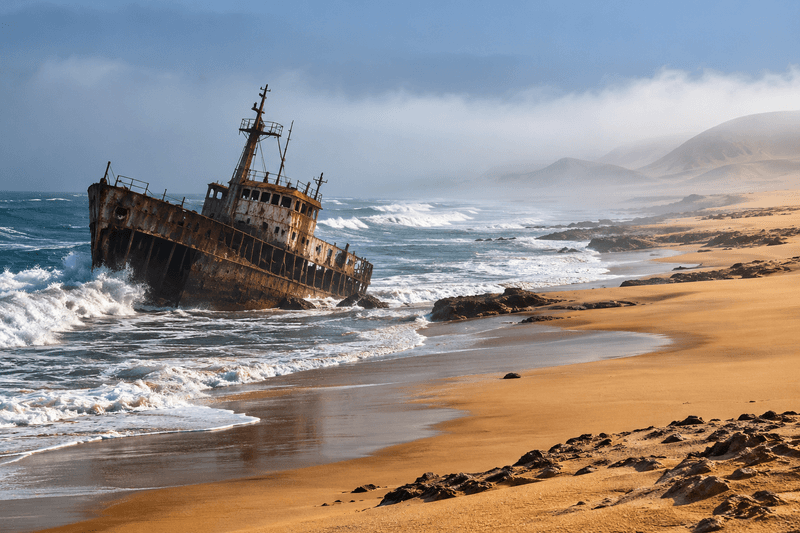
Imagine a place where an endless desert meets the cold Atlantic Ocean. Thick fog hangs above the water, waves crash against the shore, and rusting shipwrecks lie scattered across the sand. This is Namibia's Skeleton Coast, one of Africa's harshest and most unusual coastlines. The coast where ships disappeared The name sounds like a warning, and there are real reasons behind it. For centuries, ships faced dangerous conditions here. Dense fog concealed the shoreline, cold currents and heavy surf made navigation difficult, and safe natural harbors were scarce along many stretches of coast. A ship stranded on a sandbank could become a trap. Even if sailors managed to reach land, another danger awaited them: the arid Namib Desert. Finding water and reaching a settlement was far from easy. The coast gradually gained a reputation as a place where a shipwreck could mark the beginning of an even greater struggle for survival. Over time, stories of lost vessels accumulated. Some wrecks can still be seen along the shore. Their metal hulls rust in the wind while the sand slowly swallows what remains. The contrast between ocean and desert gives the landscape its unsettling character. Where the fog and gloomy atmosphere come from The main reason for the unusual weather is the cold Benguela Current, which flows along the southwestern coast of Africa. It cools the air above the ocean and helps create dense coastal fog. At times, the shoreline seems to disappear behind a gray curtain, leaving only nearby waves, dark rocks and silhouettes on the sand visible. Yet just a few kilometers inland, the dry desert begins. Familiar coastal greenery is scarce, and pale sand gives way to rocky plains and dunes. The cold, damp air above the water and the dry expanses of the Namib create a striking contrast. But the Skeleton Coast is more than a desert graveyard for ships. Despite the harsh climate, wildlife has adapted to these conditions. Large colonies of Cape fur seals gather along certain stretches of shore, while antelope and other desert animals inhabit inland areas. Fog brings moisture that plays an important role in the local ecosystem. All of this makes the landscape both gloomy and surprisingly alive. There are no bright resort beaches or familiar crowds of holidaymakers. There is wind, ocean, fog and nature following its own rules. Why this place attracts travelers People do not come to the Skeleton Coast for swimming or lounging beside the water. They come for the feeling of remoteness, unusual landscapes and the stories the ocean seems to have left behind. The wrecks are especially striking against the empty shoreline. A rusted hull half-buried in sand looks like a fragment of a long-forgotten expedition. In the fog, these places can seem almost unreal, even though every wreck may have a genuine story of human struggle against the sea. Access varies across the coastline. The southern part of the national park can be visited along permitted routes, subject to entry rules, while reaching remote northern areas often requires special arrangements. Before traveling, check current access conditions and prepare your vehicle, water supplies and navigation. The Skeleton Coast did not acquire its ominous name by accident. Shipwrecks, marine animal bones, dense fog and the harsh desert shaped its reputation over many years. Yet behind the eerie image lies a remarkable natural world where ocean and desert exist side by side. That contrast is what makes the place unforgettable.

Read more →
0 0
1…678…22