Traveler Stories — page 6

Gilyana Discoverer
Norway · September 24, 2026
Traveling by car in Norway

Traveling by car in Norway

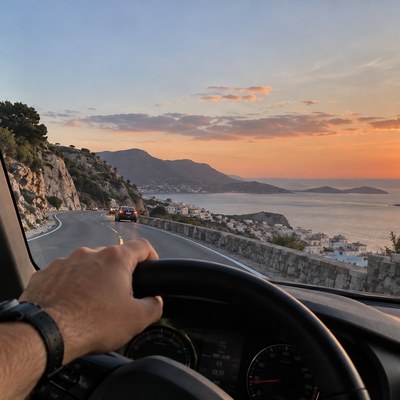
I have long wanted to see Norway by car, because it seemed to me that in this country the path itself should be no less important than the destination. An airplane can quickly take you from one city to another, but then you'll miss all the fun: waterfalls that suddenly appear around a bend, small wooden houses on the shore of a fjord, sheep that are completely uninterested in traffic rules, and mountains that look like someone specially put them as decorations for the movie. One day I decided that Norway needed not just to see, but to drive through, as far as I had enough time, energy and patience for Norwegian prices. First impression of the road It was like I was inside a huge postcard, only the postcard was constantly moving. The scenery outside the window was changing, and before I could get used to one view, another, even more beautiful, would appear a few minutes later. Sometimes the road ran along a calm fjord, then a real mountain serpentine began, and then suddenly a waterfall appeared, and I started looking for a place to stop, because it was simply impossible to pass by such a sight. At some point, I realized that my main plan for the day was something like this: drive, stop, take pictures, drive again, and stop again. What I remember the most I was especially impressed by the fjords, because the photos don't convey their true scale at all. When you stand next to the water and look up at the huge rocks, you get the feeling that the person here is generally a random character who was forgotten to be removed from the frame. Several times I just stood silently and looked around, although it's usually difficult for me to spend more than five minutes without a phone, photos, or any comments. Here, I just wanted to remember everything with my eyes, because even the best camera couldn't convey the feeling of this space. The difference between expectation and reality At the same time, traveling by car in Norway turned out to be not as carefree as I imagined. At some point, I decided that I had already gotten used to the local roads well enough, and it was then that another section appeared ahead, where the road went up, became narrower, and there was nothing around but mountains and rocks. I looked at the navigator, then at the road, then back at the navigator and tried to figure out why it was so calmly telling me that the next turn was still a few kilometers away, as if I were driving along Moskovsky Prospekt. An unexpected adventure In Norway, I had to accept that the usual human "quick run to the store" here could turn into a separate expedition. There were shops everywhere, so one day I decided that I would definitely find water without any problems, and I set off almost light. After a while, it turned out that the nearest store was not at all where I would like it to be, and my body was already beginning to hint very transparently that it was time to think ahead. As a result, I learned to treat water, food, and snacks almost as a strategic resource, especially when the mountain road loomed ahead again. Mobile wardrobe The funniest thing happened with the stops. In Norway, it's almost impossible to drive past a beautiful place and tell yourself: "Okay, I'll take a picture next time." The next time may simply not happen, because in five minutes an even more incredible landscape will appear around the bend. Therefore, my car gradually turned into a mobile wardrobe, a snack warehouse and a photo studio at the same time, and I myself learned to change clothes between stops as quickly as if I were participating in some very strange travel show. A separate story is the Norwegian weather It can change in the time it takes you to get out of the car, take out your phone, and try to take a beautiful photo. I could start the day with the sun, get caught in the rain an hour later, then see the fog, and after a while find myself back in the sunny valley. At first, I tried to plan photos and walks depending on the forecast, but I realized pretty quickly that Norway would do it its own way anyway. So I just started carrying a jacket, a raincoat, and hope for the best. One of the most memorable moments was the feeling of absolute freedom that appears during a car trip. You can stop wherever you want, turn off to a small village, linger by the fjord, or just park by the road and look at the mountains for a few minutes. On a typical trip, I often think about the time, the schedule, and what else I need to see, but here I've gradually stopped counting the hours. For the first time in a long time, it didn't matter at all how many sights I could see in a day. What I've learned Norwegian roads have taught me to take my time. Here, speed seems to become secondary by itself, because there are too many things around for which you want to go slower. Especially beautiful sections begin where the road passes between the mountains and the water, and then I caught myself thinking that I absolutely do not want this segment to end. Even if the next destination was waiting for me, I wanted to stay inside this landscape for a little longer and drive without any purpose. Another memory One day, after a long drive, I was so tired that I decided to have a quick snack and continue on my way, but I managed to cause a small disaster in the car with coffee and food. On a normal trip, I would have been upset, but here I just looked at all this, sighed and thought that now I have another Norwegian memory, just not the most photogenic. But in the evenings, I felt especially strongly what all this was about. After driving all day, I wanted to find a small cozy house or hotel, take off my shoes, put my phone on charge and just sit by the window. Mountains were dark behind the glass, and water was visible in the distance, and I was going through the photos of the day and couldn't decide which one turned out better. And each time, I discovered that the photo I thought was ordinary actually looked like it had been specially prepared for a travel magazine. A special atmosphere It seems to me that this is why a car trip through Norway is remembered not by individual sights, but by the feeling of the road. I remember not only fjords and mountains, but also turns, rain on the windshield, small stops, coffee at a roadside cafe, sheep near the road, and those moments when I just sat behind the wheel and realized that I was in a place that I had previously known only from photographs. When the trip was over, I caught myself with a strange feeling.: I wanted to return not so much to a particular city or a particular fjord, but to get back in the car and drive somewhere further. Perhaps this is the main secret of Norway – it makes you enjoy not only where you come from, but also the road itself. And the road there is so beautiful that sometimes you completely forget where you were going to go at all.

Read more →
0 0
Svetlana Photo Hunter
Italy · September 24, 2026
What to see in Rome in 3 days

What to see in Rome in 3 days

Rome has long been on my list of cities that I really wanted to see, but before the trip I was a little worried.: how do you even manage to see Rome in three days and not turn the trip into a marathon with a pedometer? There are so many attractions here that you can create a route for several weeks and still find something new every day. Therefore, I decided not to try to embrace the immensity, but to choose the most interesting places and build a route so that between them there was time just to walk along the streets, drink coffee and sometimes sit shamelessly in the square, watching people. I must say right away that three days is not much for Rome, but it is quite enough for a first acquaintance if you plan the route in advance. I tried to combine places that are close to each other, so as not to spend half the trip on public transport and not look for legs all over the city in the evening. As a result, I had three rather eventful days, after which I realized that Rome could either be viewed, photographed, or eaten – I couldn't physically do all this at the same time. Day One: Colosseum, Roman Forum and the atmosphere of Ancient Rome I decided to start the first day with the most obvious place, the Colosseum . It seems to me that coming to Rome and not seeing it would be about as strange as coming to Paris and pretending that you are not interested in the Eiffel Tower at all. When I first saw the Colosseum live, it turned out to be much more impressive than in photographs, especially when you realize how many events have happened here over the centuries. Nearby is The Roman Forum , so I immediately included it in the itinerary. You can't just quickly check the list of attractions here: you want to look at the ruins, columns, old roads and try to imagine what this area looked like two thousand years ago. However, after a while I realized that my brain had stopped distinguishing one ancient column from another, and my legs began to hint quite transparently that it was time to sit down. After the forum, I went to the Palatine , which offers beautiful views of the ancient part of Rome. It was here that I first felt that the city cannot be perceived only as a set of individual attractions, because history is literally underfoot, around houses and even in the middle of ordinary streets. However, I took so many photos that in the evening I had to free up my phone's memory, deleting some old screenshots that for some reason I had carefully stored for the last two years. After such a walk, it was time to slow down a little and go for lunch. I didn't specifically look for a restaurant with a lot of reviews on the Internet, but just turned onto a small street and chose a place where locals and several tourists were sitting. I ordered pasta, coffee, and dessert, and then I sat for another twenty minutes and watched people pass by, because in Rome, even an ordinary lunch somehow turns into part of a trip. In the evening, I went for a walk in Piazza Venezia and looked at the monument to Victor Emmanuel II. After that, you can just walk wherever your eyes look, because in the center of Rome it is almost impossible to walk several blocks without bumping into a beautiful building, fountain, small church or square that you want to photograph. It was these aimless walks that eventually turned out to be one of my favorite moments of the trip. Day Two: The Vatican, the Pantheon and the Trevi Fountain I decided to dedicate the second day to the Vatican, so in the morning I went to St. Peter's Cathedral . Even if you're not particularly interested in architecture or art, it's worth coming here at least for the sheer scale of this place, because the photos don't convey the feeling of standing inside and trying to look at everything around you. After the cathedral, I went to The Vatican Museums , where, of course, I quickly realized that it was impossible to see absolutely everything in one visit. There are so many halls, paintings, sculptures and details that after a while I just followed the stream of people and hoped that I hadn't missed something particularly important. But The Sistine Chapel really became one of those places that I remembered for a long time, although I couldn't take pictures there, so I had to remember it with my eyes. After the Vatican, I decided to walk a little towards the center. On the way, I stopped for coffee and suddenly discovered that in Rome, even an ordinary cup of espresso can become a separate event, especially if you drink it at a small bar where people come in for a few minutes, greet the barista and disappear back into the city. As a real tourist, I sat the longest and tried to understand why locals drink coffee in two minutes, but it took me almost half an hour. The next stop was The Pantheon . It looks very impressive from the outside, but it is especially interesting to go inside and look at the huge dome with a round hole in the center through which daylight enters. At that moment, I finally realized that in Rome, you can just raise your head and get a little historical shock again. After the Pantheon, I went to Piazza Navona . Here you can relax a little, sit by the fountain and just watch the life of the square, which remains quite lively even in the evening. I especially liked that after a busy first half of the day there is no need to rush anywhere, you can just walk along the neighboring streets and gradually move to the next point. And the next point was, of course, the Trevi Fountain . I got there in the evening, and even though there were a lot of people, the atmosphere was still incredible: the lighting, the sound of water, the old buildings around, and a huge number of people trying to take the same photo at the same time. I was no exception either, and for a while I tried to capture the moment when there would be at least five seconds without someone's head in the frame. Before returning to the hotel, I made sure to throw a coin into the fountain. I don't know if it really works, but I didn't take any chances – in case Rome decides that I haven't formulated my wish well enough, and there won't be a second trip. Day three: Spanish Steps, Villa Borghese and Trastevere I decided to make the third day a little calmer, because after the first two days, my legs had officially stopped supporting the idea of a cultural marathon. In the morning, I went to the Spanish Steps , which turned out to be exactly as I imagined it from the photos, only there were significantly more people around. Of course, it wasn't possible to sit on the steps, but there are many beautiful streets, shops and cafes nearby, so the walk turned out to be very pleasant. Then I headed towards Villa Borghese . After the dense urban development, the huge green park has become a real salvation, because here you can finally exhale a little, hide from the noise and just walk among the trees. If you still have the strength and desire to see art, you can visit the Borghese Gallery, but it is better to plan tickets there in advance. After the park, I headed towards the center again and decided not to build too strict a route. At some point, I just turned onto a small street, saw a nice cafe, had coffee with dessert, and realized that it was for the sake of such moments that I generally like to travel on my own. When you don't have a tour group that leaves for the next attraction in three minutes, you can sit quietly and look at the city for as long as you want. I left it for dessert last night. Trastevere . This area with its narrow streets, ancient houses, small squares and cozy restaurants seemed to me to be one of the most atmospheric places in Rome, especially when it starts to get dark and the lanterns come on. Here I completely stopped looking at the clock and just walked around, went into small shops, looked at the windows and chose a place for the last Roman dinner. Of course, I couldn't leave without pasta and tiramisu. I told myself that this would be the last dinner, and therefore I could relax a little with a budget, but then I discovered that in Rome the word "a little" has its own meaning, completely separate from mathematics. However, I didn't regret it, because after dinner I walked through the evening streets for a long time and thought that three days had passed much faster than I would have liked. How much time does it take to visit the main attractions? If you're only going to Rome for three days, I wouldn't try to schedule every hour by the minute, because the city is completely unsuitable for this approach. It is better to choose several main places for each day in advance, and leave free time between them so that you can safely eat, drink coffee, go to the store or just turn off the route. Otherwise, there is a risk of returning home with a huge number of photos and the feeling that you have hardly seen Rome itself. At the same time, it is better to plan some popular places in advance, especially if the trip falls during the high season. I would check the time of visiting the Colosseum, the Vatican Museums and the Borghese Gallery separately, and leave the rest of the walks more free. This is especially convenient in Rome, because there are always small squares, churches, fountains and streets between the main attractions, which did not exist at all in your original plan. What did you manage to see in three days? During these three days, I managed to see the Colosseum, the Roman Forum, the Palatine, the Vatican, St. Peter's Cathedral, the Sistine Chapel, the Pantheon, Piazza Navona, the Trevi Fountain, the Spanish Steps, Villa Borghese and Trastevere. At the same time, I managed to leave enough time for the usual walks, coffee, pasta, ice cream and those very random turns, thanks to which the journey ceases to be just a list of attractions. Of course, it's impossible to get to know Rome completely in three days, and I didn't even try. This city generally seems like one that needs to be viewed gradually: today there are ancient ruins, tomorrow there is a small street, the day after tomorrow there is a random coffee shop that you did not plan to visit at all. And that's probably why, after three days, I didn't feel like I'd ticked off Rome, but on the contrary, I left with the feeling that now I just needed to come back someday. The most difficult thing in Rome was not even to make a route and not to figure out the transport, but to force yourself to stop in the evening and go to the hotel. Because every time it seemed: well, one more street, one more fountain, one more turn – and there will definitely be something beautiful. As a result, I walked so many kilometers in three days that my phone thought I was preparing for the Olympics, and I was finally convinced.: Rome is best viewed in comfortable shoes, with a good appetite and with plenty of free time.

Read more →
0 0
Svetlana Photo Hunter
Spain · September 24, 2026
My budget for a week in Barcelona

My budget for a week in Barcelona

I've wanted to go to Barcelona for a long time, but before the trip, I was most interested in one question: how much money do I really need for a week?I found completely different figures on the Internet – someone promised to meet almost a penny, and someone talked about such expenses, as if he was going not to Barcelona, but to buy an apartment with a sea view there. I wanted to find a middle ground: travel normally, eat delicious food, visit interesting places and at the same time not check the card balance after each glass of sangria. That's why I decided to plan my budget at home. I must say right away: I did not set myself the task of traveling as cheaply as possible, because then I would have to look at the Sagrada Familia through the bus window and eat only sandwiches from the supermarket. I wanted to save money for the small pleasures that make the trip real: coffee in the morning, a nice dinner, ice cream during a walk, and some completely unnecessary souvenir that would remind me at home that I again don't know how to pass by tourist shops. Flight is the first item of expenditure I started looking for tickets in advance and first opened several websites at the same time. Ten minutes later, I already had so many tabs that I no longer understood where exactly I found a good option, and where I just looked at a ticket for a completely obscene amount. As a result, I chose a flight that was suitable for the price and immediately wrote it into the budget, so that later there would be no feeling that Barcelona began with a financial crime. I have invested a small amount for the flight. Of course, the price strongly depends on dates, baggage, and how much to buy tickets in advance, so it's better to count this part of the budget separately and not focus on one specific amount. Housing – I had to think a little bit here It was more interesting with an apartment or a hotel. I didn't want to live somewhere on the edge of the city, so that I could spend half my time and energy on the road every evening, but I didn't want to overpay just for a beautiful photo of a balcony. That's why I looked not only at the price, but also at the location, transportation, reviews, and distance to the main places I was going to visit. As a result, I got about 3,000 euros for seven nights. And here I finally realized one simple thing: sometimes a slightly more expensive apartment turns out to be more profitable if, thanks to its location, you can walk most of the week and not spend money on transportation. Food is the very point where my budget started to get nervous. At first, I wanted to put a very modest amount on the food, but then I remembered that I wasn't actually going to Barcelona to eat oatmeal in the room. In the morning there was coffee and something small, in the afternoon I could have a snack in a cafe or grab something at the market, and in the evening I already wanted to have a good dinner and try the local cuisine. On average, I spent about 500 euros a day, although some days turned out to be cheaper, and some suddenly turned into a gastronomic holiday. The most dangerous phrase was "let's just have coffee," because after coffee there was usually a croissant, dessert, ice cream, and sometimes even dinner, which was not included in the original plan at all. Transport I decided not to complicate my life with transportation and looked in advance at which option would be more convenient for the week. In Barcelona, it is quite realistic to walk some of the routes, especially if you want not just to get from point A to point B, but to explore the city on the way. I spent about 40 euros a week on the metro and other public transport. Sometimes I walked on purpose, even if the navigator showed a rather impressive distance, because it is during such walks that you can accidentally find a small square, a beautiful house or a cafe that was not on my route at all. Museums, attractions, and small desires This is where I decided not to skimp on everything. If I came to Barcelona, I wanted to see its famous places not only in photographs, so I allocated a separate amount in advance for entrance tickets and excursions. I spent about 300 euros on the sights. Moreover, I planned part of the expenses in advance, and part appeared already on the spot according to the principle "when will I be here again?", which is a real enemy of any tourist budget. And, of course, shopping I honestly wasn't going to buy anything special. I had a very beautiful plan: to come, see the city, take photos and return home with the same amount of money that I left with. The plan lasted until about the first pretty shop. As a result, I left about 150 euros for souvenirs and small purchases. Nothing grandiose, but it's these little things that lie at home and suddenly bring you back on a journey, even after a few months. How much did my week in Barcelona cost in the end If you add up the flight, accommodation, food, transportation, attractions and small purchases, my budget for the week turned out to be about 3,000 euros per person. At the same time, I did not try to live as economically as possible, but I also did not allow myself to have dinner every night in a restaurant overlooking the sea just for the sake of a beautiful photo. The most important thing is that I have determined in advance the amount that I am ready to spend, and I have left a small reserve for unforeseen expenses. And this decision turned out to be very useful, because there is always something completely unexpected when traveling: a lost ticket, a sudden taxi, rain, which makes you have to buy an umbrella, or the dessert that you "just wanted to try." As a result, I realized that a week in Barcelona is quite possible to organize for a different budget. You can significantly save on housing, eat easier, walk more and choose free entertainment, or you can add restaurants, excursions and beautiful places – and the amount will grow quite quickly. For me, the ideal option turned out to be when I knew my financial limit, but at the same time I did not feel like a person who came to Spain solely to count euros. And do you know what the best part is? At the end of the week, I looked at my expenses and realized that Barcelona had not ruined me. But she left behind photos, the smell of coffee in the morning, evening walks, several completely unnecessary purchases and a very persistent desire to come back one day and tell herself again: "This time I will definitely save money."

Read more →
0 0
Gilyana Discoverer
Italy · September 24, 2026
How I organized a trip to Italy on my own

How I organized a trip to Italy on my own

I've wanted to go to Italy for a long time, but for some reason I kept putting it off. It seemed that an independent trip there was already the highest league of travel. We need to figure out tickets, housing, trains, public transport, restaurants, Italian names that are impossible to pronounce the first time.… And then I thought, well, what am I missing? And I started organizing the trip myself. Spoiler alert: I only lost a few hours of sleep, some nerves, and once almost lost myself at an Italian train station. Now about everything in order. I chose the route first. I wanted to see a diverse Italy, so I decided to make an approximate route: Rome → Florence → Venice → Milan. I have allocated about 10 days for the trip. No one wanted to sit with my moody cat any longer. At first I wanted to add Naples, but then I looked at the map and looked at myself. And I decided that 4 cities were enough for me for now, because a vacation is still a vacation, not a suitcase-carrying championship. I searched for the tickets myself. At first, I spent several nights in a row comparing dates. To be honest, this is the moment when it seems that you are almost an aviation expert. In my search engine it was: "If you fly on Tuesday, it's cheaper by so much." "If you come back on Sunday, it's more expensive." "If you fly to a nearby airport, you can save money, but then spend the money on a transfer." At some point, I opened so many tabs that I no longer understood which ticket I was going to buy. In the end, I found a suitable option and bought it. And here an amazing thing happened. Before the purchase, I was just planning a trip, after the purchase, I was already on my way to Italy. There was no turning back. Housing: here I became almost a professional critic I chose hotels not only based on photos, but also looked at the map, the distance to the center, reviews, and especially reviews from recent months. You know, a photo of a ten-year-old room can look great. But in reality, you will be greeted by a bed that remembers the football World Cup. In Rome, I chose a place closer to the center, in Florence – so that I could walk a lot. In Venice, it was as convenient as possible, because I wasn't going to carry my suitcase across the bridges. Although, as it turned out later, Italy decided to have a little laugh at my plans. Rome I purposely left the first day almost free. I flew in, checked in, left my things and just went for a walk. Without a list of twenty attractions. And it was the right decision. It's impossible to look at Rome properly if you run along the route all the time. I walked, went to cafes, looked at the streets, squares and buildings. And then, of course, I went to the Colosseum. And that's when I realized one simple thing.: no photo conveys its size. You stand next to me and think: "So. But now I'm really in Rome." I tried not to skimp on food in Rome to the point of fanaticism. Because coming to Italy and eating only buns from the supermarket is already too harsh an experiment, but I didn't arrange a restaurant for myself every night either. I alternated between cafes, small trattorias and ordinary places where you could just have a snack. Florence I went from Rome to Florence by train. And here the independent journey showed me its real face.: I bought a ticket in advance. I checked the time. I checked the train number. I checked the train station. I checked the ticket again. In general, I was 97 percent confident in myself. The remaining 3% still let me down. At first, I couldn't find the right platform at the train station. Then I found it, and after a while I saw the train and realized that I was standing at the wrong car. I ran with my suitcase as if the whole Italian railway was chasing me. But I did, and Florence absolutely captivated me. This is where I first caught myself thinking that I don't want to rush anywhere. You can just walk down the street. Look around. Come in for coffee. Sit down. Go again. That's why I love independent trips. Venice and my suitcase I was already traveling to Venice with some experience: I knew that I needed to look at the route. I imagined that train stations could be big, and I realized that I shouldn't relax. However, I did not take into account the bridges: there are a lot of bridges and steps. Now imagine me with a suitcase. I go up, down, up again, and down again. After a while, I was already looking at each new bridge with the expression of a person who is ready to personally discuss some issues with the architect of Venice. But then I went out to the canal, saw the gondolas, looked at the old houses. And she forgave everything, and Venice can be forgiven a lot. I saved Milan for last. After Venice, Milan seemed to me quite different – more businesslike, faster and more modern. I liked this switching of travel modes. I specifically left time just for walking and shopping. But, of course, the trip couldn't end without an adventure. Last night, I decided to wash a couple of things. Why? Because, apparently, I decided to prove to myself that even in Italy I am capable of running a household. I loaded my clothes into the washing machine and pressed the button. It was only later that I realized that the instructions were exclusively in Italian. I stood in front of it and looked at the buttons as if I were trying to decipher an ancient manuscript. In the end, everything was washed, but I still don't know which mode. How much did I spend? I set a budget in advance and tried to stick to it. The main expenses turned out to be as follows: the flight depended on the dates and the city of departure; Housing is the most visible expense item, especially in popular cities; I bought trains between cities in advance, where it was profitable; urban transport – metro, buses and sometimes taxis; The food –it all depended on where I ate.; museums and attractions were also laid out in advance. But there was one important point, I left a separate reserve of money for unforeseen expenses. And I strongly advise you to do the same, there is always some expense during the trip, which was not in any plan. "Well," I said, "since I'm here," a sudden taxi, an extra ticket, and a few purchases that just happened to be "necessary." What I realized after this trip Organizing Italy on my own turned out to be much easier than I imagined. Yes, you need to spend time, you will have to study something, you can make a mistake with the train, get lost, or not immediately figure out the ticket vending machine. But that's exactly what makes the trip my own: I chose the cities myself, decided where to live, and made up the route. She could have changed it herself at any moment. And most importantly, I wasn't in a hurry and didn't depend on anyone. If I wanted to spend three hours in a cafe, I did. If I wanted to turn into a small alley, I turned off. If the attraction suddenly wasn't impressive, I didn't have to stand next to it for exactly 47 minutes just because it was written in the program. And when I returned home and started sorting through the photos, I realized that what I like most are not photos of famous places, but completely ordinary ones.: Coffee in the morning. The street after the rain. The train window. A small trattoria. A suitcase in the middle of the room. My tired legs after 20 thousand steps. And the very picture of me standing on an Italian street and smiling. Because at that moment, I already knew for sure.: I was able to organize everything myself. And now Italy for me is not just a country where I once went. This is a country that I know the way to now. Even if sometimes this road passes through three bridges, the wrong car, and a shower that turns on only after negotiations with it.

Read more →
0 0
Alfred Donny Photo Hunter
September 23, 2026
I almost paid three times as much for a taxi.

I almost paid three times as much for a taxi.

I almost paid three times as much for a taxi. After arriving, I left the airport with my backpack and immediately heard: "Taxi?" Where are you going? I gave the address of the hotel. The man confidently told me the price, which seemed quite normal to me. I was tired after the flight, so I didn't really figure it out and got into the car. On the way, the driver turned out to be very talkative. He talked about the city, showed me some buildings, and said several times that I was lucky to find a "good price." I even thought that I had made a really good deal. When we arrived, he mentioned an amount almost three times the amount we talked about at the beginning. At first I thought I had misunderstood him. He asked to see the calculation. The driver started explaining something about baggage, airport fees, travel, and several other surcharges that had never been discussed before. The most unpleasant thing wasn't even about the money. I was standing with a suitcase near an unfamiliar hotel and realized that arguing with the person who had already brought me to the place was not the most pleasant situation. In the end, I paid, but after that I decided never to get into a taxi again, simply because the driver looks convincing. Now, before traveling, I check in advance which taxis are official, install the local app and check the approximate cost of the route. If the price is announced in advance, I try to clarify whether this is the final amount and whether there are additional fees . And if the driver starts rushing, says "get in, we'll figure it out later" or offers a price that is noticeably different from the usual one, I simply refuse. Because when traveling, the most expensive mistake is not to overpay a few euros. The most expensive mistake is to realize that they are trying to deceive you, and still agree.

Read more →
1 0
Alfred Donny Photo Hunter
September 23, 2026
Mistakes I made during the trip

Mistakes I made during the trip

Mistakes I made during the trip After each trip, I realize one simple thing: most of all, I learn not from good moments, but from my own mistakes. Moreover, most of them could have been avoided if I had at least thought a little in advance. Mistake #1. The route is too dense The most common mistake is to try to see absolutely everything. I marked dozens of places on the map in advance, made up an approximate route, and was sure that everything would work out. It didn't work out. At some point, I no longer looked at the city, but simply moved between the points. I arrived, took a photo, looked at my watch, and ran on again. As a result, I almost didn't remember some of the places. Now I try to choose a few really interesting places for the day, and leave free time between them. If there's something interesting along the way, great. If you just want to sit in a cafe and look at people, that's great too. Error #2. I trusted the navigator too much. One day, the map showed me that it was only a twenty-minute walk to the right place. Twenty minutes later, I found myself roughly where I was before, only very tired. I forgot that the map shows the distance, but it doesn't always explain how convenient it is to walk it. Now, before walking, I look not only at the route, but also at the area itself. Sometimes ten minutes by taxi is much more reasonable than forty minutes on foot in the heat. Mistake number 3. I didn't leave any time left This applies to transportation. Several times, I planned everything almost minute by minute. If the train was supposed to arrive at 2:20 p.m., in my plan, the next part of the route would start at 2:35 p.m. It only sounds beautiful on paper. In practice, a delay in transport, a queue, or an accidentally closed entrance is enough, and the entire ideal plan begins to crumble. Now I always leave a reserve. It's better to arrive a little earlier and have a quiet coffee than to run around the airport with a backpack and mentally promise myself that I'll be smarter next time. Mistake number 4. I took too many things Before a trip, it always seems to me that I will definitely need everything. Three pairs of shoes. Clothes for different occasions. Some things will "suddenly come in handy." As a result, half of the suitcase returns home completely untouched. After several trips, I realized that if a thing is needed only in a very hypothetical situation, it can most likely be left at home. Mistake number 5. I took too many pictures Perhaps the strangest mistake. I was on my way to see a new place, but sometimes I found myself standing with my phone in front of my face and trying to take the perfect shot. And then I realized that I hadn't really looked at the place itself. Now I try to just stand and watch first, and only then I take out my phone. Photos are necessary, but they should not become the main purpose of the trip. And the main mistake Probably, my main mistake is constant haste. I kept thinking that I had to catch something, see it, and take a picture. It wasn't until near the end of the trip that I realized I wasn't particularly late for anything. Traveling is not a competition. Sometimes the best moment of the day is not on the list of attractions at all. It can be a random cafe, a conversation with a stranger, a small street that you turned into just out of curiosity, or an ordinary sunset that caught you without a phone in your hands. Now I try to leave room for such accidents in the route. Because they are the ones who most often turn an ordinary trip into a story that you want to tell later.

Read more →
1 0
richword Explorer
September 23, 2026
Which apps have been useful to me on my journey?

Which apps have been useful to me on my journey?

I used to be quite skeptical about travel apps. It seemed that the card, hotel reservation and translator were enough, and everything else could be solved on the spot. Then I went on trips several times where the Internet suddenly disappeared, the navigator sent me somewhere wrong, and the desired address turned out to be written in a language I don't understand at all. After that, my phone gradually turned into a full-fledged travel kit. Now, before the trip, I check several applications in advance and try to set them up at home. Not because I want to look at the screen all the time, but on the contrary - to spend as little time on the phone as possible while traveling. Maps and navigation The first thing I install before any trip is the maps app. I usually use Google Maps, and for some trips I additionally download offline maps. Offline mode is generally one of the most useful things for me. One day I found myself in a small town where the mobile Internet was so bad that the map loaded at about the same speed as a tree grows. It's good that the desired area was saved in advance. The maps also turned out to be useful not only for finding attractions. I often look at where supermarkets, pharmacies, cafes, bus stops and public toilets are located. The last point is especially appreciated after a few hours of walking. Translator Translator is an application that I used to open only as a last resort. Now I use it all the time. It's especially convenient when you can just take a picture of the menu, signboard, or instructions and get a translation. It's much faster than trying to type an unfamiliar word manually. But the most interesting thing happens not in restaurants, but during regular communication. Sometimes it's enough to show a person a translation on the screen to solve a problem that could turn into a ten-minute pantomime without a phone. At the same time, I try to download the required language in advance. When traveling, the Internet has an unpleasant habit of disappearing exactly when it is needed most. Booking of accommodation The hotel booking app is also always at hand. I like the opportunity to quickly open the address, view the booking conditions and show the driver exactly where to go. In addition, I save a screenshot of the booking. It seems like a small thing until you find yourself at the reception desk with a dead phone and start explaining to the hotel employee that the room is indeed booked, just that the confirmation is somewhere "in the cloud" for some reason. Airline's App After a few trips, I stopped considering it useless. An electronic boarding pass, flight information, exit number, and departure time changes are all much more convenient to keep in one place. This is especially useful when the flight is delayed. Instead of looking for information on the scoreboard every ten minutes, you can just check your phone. However, I still sometimes keep a paper copy of important documents. Apparently, after a certain amount of traveling, you begin to realize that technology is fine until it suddenly decides not to work. Taxi and transportation The taxi app greatly simplifies life in an unfamiliar city. There is no need to explain to the driver with gestures where to go and try to understand the local fares. Besides, I like to see the approximate cost of the trip in advance. This helps you at least roughly understand how much it will cost to move around the city. If I use public transport, I download the application of the local metro or transport system in advance. Sometimes it shows routes much better than regular maps. Currency Converter At first glance, it seems that a currency converter is not particularly needed. Then you go into the store, see the price in the local currency, and start mentally multiplying, dividing, and rounding. After five minutes, you don't know if this lunch is really inexpensive or if you've just spent half your budget on a drink. So now I just open the converter and check. The note-taking app But this app is often underestimated. I'm creating one note with the hotel's address, booking number, departure time, important phone numbers, and a small list of places I want to visit. I can also write down the name of a cafe I like or the address of a store I happened to see on a walk. As a result, you don't have to remember later: "Where did I see this? It seems to be somewhere near that square..." And the main thing is not to turn traveling into working with a smartphone. With all this, I try not to install twenty apps for every occasion. Maps, translator, reservations, transportation, airline, currency converter, and notes are enough for most trips. Because apps should help you travel, not replace the journey itself. It doesn't make much sense to come to another country and spend half the day staring at a screen. Sometimes it's better to close the card, put the phone in your pocket and just go where the street leads. That's when most of the time there are places that weren't on my original itinerary at all.

Read more →
0 0
richword Explorer
September 23, 2026
What should I take with me on a trip for a week?

What should I take with me on a trip for a week?

What am I taking with me on a trip for a week I used to pack my suitcase before every trip, as if I was going to emigrate instead of for a week. I took three pairs of shoes, clothes for all occasions, and half the bathroom, and for some reason I always managed to forget something I really needed. One day I returned from a trip with half the things that I hadn't taken out of my suitcase at all. But I had to buy a phone charger at the airport. After that, I decided to conduct an experiment: to assemble the next week's trip as intelligently as possible - only what I really use. And it turned out that there are much fewer things needed than it seems. Clothes: the main thing is not to take too much The first rule I've learned for myself is not to take clothes for every day . If I'm traveling for a week, I don't need seven T-shirts, seven pairs of socks, and seven sets of clothes at all. I usually take 4-5 T-shirts, a pair of shorts or light trousers, one more versatile pair of trousers, several sets of underwear and socks. If the trip assumes cool weather, I add a light sweatshirt or jacket. I also make sure to take something in which I can go out properly in the evening. Not because I'm going to go to a restaurant every day, but because one day there's bound to be a situation where you want to go out for dinner after the beach, and you look like you've just come from a desert tour. I try to limit shoes to two pairs: comfortable sneakers and something light. If I take the third pair, I almost always regret it later, because it takes up half the suitcase and lies there idle for most of the trip. The first-aid kit that I underestimated before I had another problem with the first aid kit for a long time.: I either didn't take anything at all, or I put so much in there, as if I were going to open my own medical center. Now I'm taking a small set of the most necessary things: remedies that may be useful to me personally, patches, antiseptic, painkillers and medications that I take regularly. Plus, something for stomach problems - after several trips, I realized that the local cuisine can sometimes surprise more than any attraction. I put sunscreen on separately if I go to a place where there is a lot of sun. I used to consider it something optional, until one day I spent the whole next day in my room, because I decided the day before that "an hour in the sun wouldn't do anything." Did. Electronics This is where I try to control myself especially strongly. The phone number is clear. Charging is the same. I almost always take a powerbank, especially if I plan to walk and take pictures a lot. I also have a small universal socket adapter that has been living in a travel bag for a long time. I only take my laptop when I'm really going to use it. If the trip is an ordinary tourist trip, then most often I leave him at home. After all, I'm going to see a new city, not continue to sit in front of the screen. I'm taking headphones too. Sometimes a long flight or bus ride becomes much more enjoyable if you can turn on the music and just look out the window. Documents and things that you remember too late My passport and money are obvious, but I try to keep my documents in more than one place. I keep a copy of my passport and basic travel information on my phone so that I don't run out of information in case of an unpleasant situation. Before departure, I check the insurance, reservations, tickets and the address of the accommodation. All this takes a few minutes, but it's much more pleasant to check your documents at home than to try to figure out at the airport why the booking confirmation letter suddenly disappeared just when it was needed. I also take a small backpack for daily walks. It holds water, a phone, a power bank, documents, sunglasses and some small things. What am I not taking now? It's probably even more important. I stopped taking clothes "just in case," huge bottles of cosmetics, several books that I don't read anyway, extra shoes, and all sorts of things that could theoretically be useful. Because after a week of traveling, a simple thing almost always turns out: if I really need some small change, it can most likely be bought on the spot. But for some reason I have to carry all this on myself for seven days. Now, before closing the suitcase, I ask myself one question: "Am I sure I'm going to use this?" If the answer is "well, maybe," the item usually stays at home. And the more I travel, the more I like this approach. A good suitcase for a week-long trip is not one that can barely be closed. This is the one that, after packing, you can safely pick up with one hand and not feel that you accidentally packed your whole house there along with your things.

Read more →
0 0
Anna Traveler
Japan · September 23, 2026
My first trip to Japan

My first trip to Japan

After a couple of days of vacation, I was standing at Tokyo airport with my suitcase in one hand and my phone in the other, and I was already beginning to suspect that everything was not going according to plan. Japan greeted me not with sakura trees, Mount Fuji, or even some ancient temple, but with an automaton who spoke to me very enthusiastically in Japanese. I stared at him for a few seconds, then at the screen, then back at the machine, and finally decided that it was better to postpone the first contact with Japanese civilization for later. The first thing that surprised me was the silence Perhaps what struck me most in the first few hours was how peaceful Japan is, even where there are a lot of people around. There are dozens of passengers in the subway, everyone is going somewhere, someone is reading, someone is looking at the phone, someone even manages to get some sleep, but there is no usual feeling of fuss and noise. At first, I couldn't get used to it and kept catching myself thinking that now someone would definitely start talking loudly on the phone, sort things out, or at least tell a friend how his day had been. But nothing like that happened. After a few trips, I learned to keep quiet myself, although at first I did it more out of fear that I would accidentally violate some Japanese law on silence. And then I realized that I really like it: I can just sit by the window, look at the city and take my time. Japanese trains are a separate art form. The first time I saw a Japanese train, I just stood there for a while, looking at it. It was so clean, tidy and somehow incredibly organized that I even felt a little embarrassed to go in there with my suitcase. It seemed like an employee was about to appear and politely say: – Sorry, your suitcase is not aesthetic enough. But no one stopped me, and I went inside safely. The most amazing thing started later, when I looked at the scoreboard for the first time and realized that the train really arrived when it was written. Not """in about ten minutes," not ""it should be now," not "something is delayed," but exactly when promised. I looked at the clock, then at the train, and thought: How do they even do this? After several trips, Japanese precision became so familiar to me that I even began to miss it even before I left the country. A transition that looks like a scene from a movie And then, for the first time, I found myself at a Japanese pedestrian crossing, and it was a sight that I will definitely not forget. The light turned green, and suddenly people came from all sides. They were moving at the same time, calmly and completely confidently, and in the first seconds I was trying to figure out exactly where I needed to go so as not to end up in the middle of this human stream. At first, I carefully chose the direction myself, then I realized that I completely did not understand where my right was, where my left was, and why the person in front of me was going exactly where I was going to go a second ago. In the end, I just followed the crowd and decided that this was also part of the Japanese experience. Automatons that know more than me But I really fell in love with Japanese vending machines, because it seems that in this country a vending machine can do almost anything. A drink, please. Coffee, of course. The ticket is no problem. Something completely incomprehensible, the name of which I can't even read, is also welcome, but first try to figure out which button to press. One day, I stood in front of a ticket vending machine for quite a long time and tried to figure out what was required of me. There were hieroglyphs on the screen, some numbers and buttons next to it, and I felt like a person who had accidentally been put at the control panel of a spaceship. I pressed one button, the machine said something, after which I pressed another, and he said something again with an expression as if he was starting to lose patience. In the end, I bought a ticket, although I only found out the destination later. The most interesting thing is that I wasn't even sure who defeated whom in this situation – I was an automaton or an automaton was me. Meeting with advanced technology After a long walk, I returned to the hotel completely happy, very tired and dreaming only of a warm bath and a comfortable bed. I dropped my things, took off my shoes, and finally went into the bathroom, where a new encounter with Japanese technology awaited me. There were so many buttons on the control panel that I felt like a pilot of a small airplane. I pressed one and the water turned on, pressed the second and some kind of indicator light came on, and after the third, a completely unexpected sound came from the wall. I froze and just stood in the middle of the bathroom for a few seconds, trying to figure out exactly what I had just done. At that moment, it seemed to me that the Japanese bathroom had decided to test how well I was able to stay calm in a stressful situation. In the end, everything ended well, but after that incident, I began to treat each button with great respect and first read the instructions several times before pressing anything. I also came to Japan for the food. Of course, it's impossible to come to Japan and not taste the local cuisine, so one of the first days I went to a small cafe and opened the menu with great interest. The menu was great. And completely Japanese. I looked at it in much the same way as I would at the instructions for a spaceship, so I decided to use the most reliable tourist method – to choose a dish based on a photo. Everything looked very appetizing in the picture, and I confidently showed the waiter the right position. When the order arrived, I looked at the plate, then at the photo on the menu and realized that there was a slight difference between them. However, the taste turned out to be so good that after five minutes I didn't really care what I ordered. This is probably one of the main secrets of Japanese cuisine: even if you don't fully understand what lies in front of you, there's a good chance you'll like it anyway. It was the little things that surprised me in Japan Of course, I expected to see temples, neon streets, skyscrapers, sakura trees and everything that is usually imagined when thinking about Japan. But most of all, I was surprised by completely ordinary things that cannot be found in the tourist list of attractions. I was struck by the cleanliness of the streets, the tranquility of the people, their respect for other people's space and how neatly everyday life is arranged. I liked just walking down the street and noticing details that I probably wouldn't even have noticed at home. It was especially surprising how easily completely different eras get along here: next to an ultramodern building there may be a small old temple, and behind a noisy street with neon signs, suddenly there is a quiet alley with a tiny restaurant where several people are quietly having dinner at the counter. I went to Japan with the feeling that I would get to the country of the future, but I found myself in a country where the future somehow miraculously lives quite peacefully next to the past. And I realized the most important thing before I left. When it was time to leave, I caught myself thinking unexpectedly: I didn't want to say that I had already "seen Japan." Because it's impossible to see Japan in one trip. You can see Tokyo, taste sushi, ride a high-speed train, get lost near a station, get into a temple, select the right button in a vending machine several times, and even experience a small domestic disaster in a hotel bathroom, but the feeling of the country will still remain much more than all this. I wanted to walk through the same streets again, go to a small cafe again, get on the train again and look out the window, find myself again among the huge stream of people at the intersection and just watch how this amazing daily life works. I came to Japan with a question.: "What's so special about it?" And she was already leaving with a completely different one.: "When can I come back here?" And yes, next time I'll know exactly which button to press in a Japanese bathroom. Probably.

Read more →
1 0
Svetlana Photo Hunter
Thailand · September 23, 2026
What you need to know before your first trip to Thailand

What you need to know before your first trip to Thailand

The thought that Thailand is always warm bothered me. I knew that sooner or later I would go to this country. My dream came true, but the expectations were not met the first time. Before the trip, I knew that the sea was warming up to +27 °C and above, and it seemed to me that the rest was not important. I am sharing tips after 3 trips to Tai that I would like to read before the trip. The first thing that greets you is the heat I like walking in the clouds while flying on an airplane. I felt comfortable, but there was no trace of comfort on the streets of Bangkok. Literally 5 minutes later, I was sweating profusely and felt like a wet dumpling. The hair has become unrealistically porous. Moreover, according to the forecast it was only about +32, but in fact +39. "So what," I thought at first. "We have such temperatures in summer too, even more." No. It doesn't happen, because here you come out of an air-conditioned room and immediately get the feeling that someone has covered you with an incredibly warm blanket. Comfortable clothes are not a recommendation, but practically a matter of survival. And you don't have to take half of your wardrobe with you "just in case." In Thailand, you'll still wear about the same thing: a light T-shirt or a white shirt, shorts, comfortable shoes, and something that you can quickly throw on at the temple. Because temples are a separate story. You can't come to a temple like you can to a beach I knew that, of course. I found out almost immediately that my shorts and T-shirt are great for breakfast, walking, and even boat trips, but they are completely unsuitable for some temples. And here I am standing at the entrance, looking at the sign, looking at myself, the sign is looking at me. We both understand that it's better to have a light shirt or cape in your backpack before traveling. And clothes that cover your shoulders and knees, especially if you're going to visit temples. You also often need to take off your shoes before entering. By the way, this is very convenient until you discover that you arrived in Thailand in shoes that cannot be removed quickly. You stand like this in front of the temple, unlace it, while a small queue of people forms behind you, who have already managed to take off their shoes in order to gain enlightenment and, it seems, start a new life. Don't try to eat all Thai on the first day. This is where I showed real courage. I saw a small outdoor cafe, it smelled like something incredible. I'm asking: "Is it spicy?" They answered me: – No (No spicy). I believed it, and that was my first mistake, because "not spicy" in Thailand is a very philosophical concept. After 5 minutes, I was sitting with a red face, trying to smile and pretend that everything was fine with me. I washed everything down with water, which, of course, did not help at all. But then I realized the main thing: if you don't eat spicy food, talk about it several times and as convincingly as possible. And it is better to learn the phrase mai phet – "not sharp". Although you know, sometimes even after that you can still have a pepper. Water is always with you. Not "if you get thirsty," but always. You can leave the hotel for 10 minutes and come back looking like you just ran a marathon. A bottle of water in a backpack quickly becomes the main travel accessory. Also, I wouldn't experiment with tap water. It's easier to buy bottled water for drinking. But the shops here are a separate joy. Especially the 7-Eleven. If this is your first time in Thailand and you still don't know what to do in the evening, just go to the nearest 7-Eleven. I'm serious. Sometimes it seems that any life problem can be solved there. Except, perhaps, the problem of "where did the money go after two days in Bangkok". It's better not to argue with a taxi In Bangkok, I first tried to deal with taxis as if they were negotiations at an international summit. –How much?" - 500 baht. – No, it's expensive. – 400. — no. – 300. - OK. And then, after driving for a couple of minutes, I realized that it was possible to call a car through the app and not participate in this performance at all. So install the taxi app in advance and use it whenever it's more convenient. And if you take a regular taxi, make sure that the driver turns on the meter, if this is provided for the trip. And don't be surprised by traffic jams, believe me, Bangkok knows how to stand. Very beautiful and very long. Sometimes you sit in the car, look at the skyscrapers, listen to the air conditioner and think, "Well, at least I'm not late." But no, then you remember that you have a tour in 20 minutes. At such moments, I begin to involuntarily philosophize about life. And then the sea appears And this is where Thailand finally captivates. After Bangkok, you arrive on an island or by the sea, go outside in the morning and realize why you came all this way in the first place. The sea, palm trees, boats, the smell of fruits, warm air. It seems like you were going to get up early and go out, and then you sit on the terrace with coffee. You look at the sea and decide: "I'm not going anywhere today. I've been traveling enough." After an hour, you go anyway, because Thailand is too beautiful to stay in a hotel. But don't try to see the whole of Thailand in one trip. This is probably my main conclusion after the first trip. Bangkok is one mood, Phuket is another, Koh Samui is a third, the north of the country is generally a separate story. And if you try to cram all this into one week, you won't get a trip, but a suitcase packing competition. Today is the temple. Tomorrow is the island. Flight the day after tomorrow. Then the suitcase again. Then the transfer. Then you sit on the beach and don't remember where you are at all. It's better to choose a few places and leave some time just to live. Because the most interesting thing in Thailand often happens not when you go to point number 7 of your route, but when you take a wrong turn. And one last thing Don't expect Thailand to look like a postcard every minute. There will be heat, traffic jams, and strange smells. Be prepared to encounter insects that look like they have undergone military training. There will be food that you will not be able to identify even after explaining, there will be rain that starts suddenly and ends just as suddenly. And there will definitely come a moment when you just stop in the middle of the street, look around and think.: "Wow. I'm really in Thailand." It's worth going on a trip for this moment. The first trip to Thailand is not so much about the ideal route, but about how you first try to control everything, and then gradually realize that it is much more pleasant to just live here according to circumstances.

Read more →
0 0