The Hummanaya Blowhole is a remarkable natural attraction on Sri Lanka’s southern coast, near the fishing village of Kudawella and not far from Dikwella and Tangalle. Ocean waves force seawater through a narrow opening in the rocks, sending it high above the shore like a natural marine geyser. It is the only widely recognised blowhole of its kind in Sri Lanka and one of the island’s most distinctive geological features.
How the blowhole forms
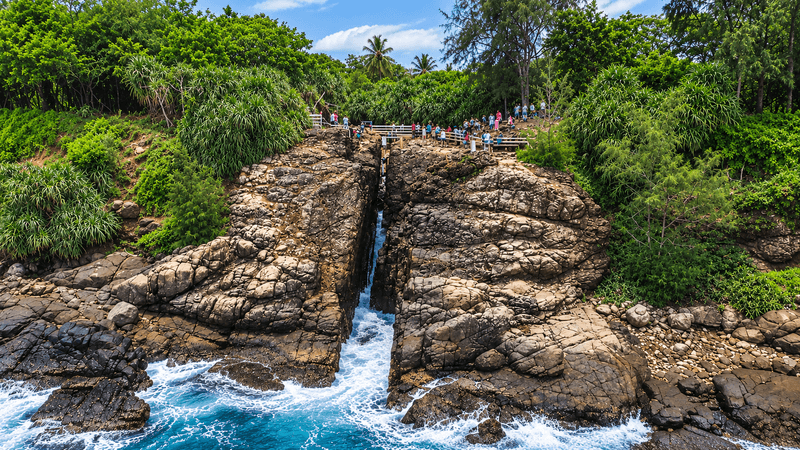
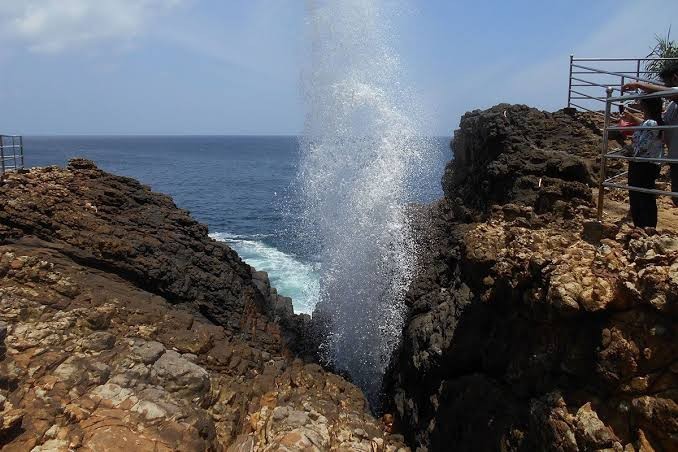
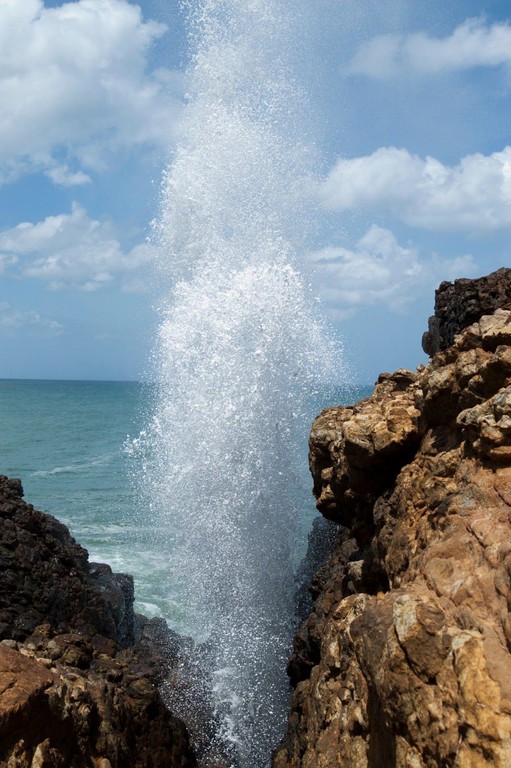
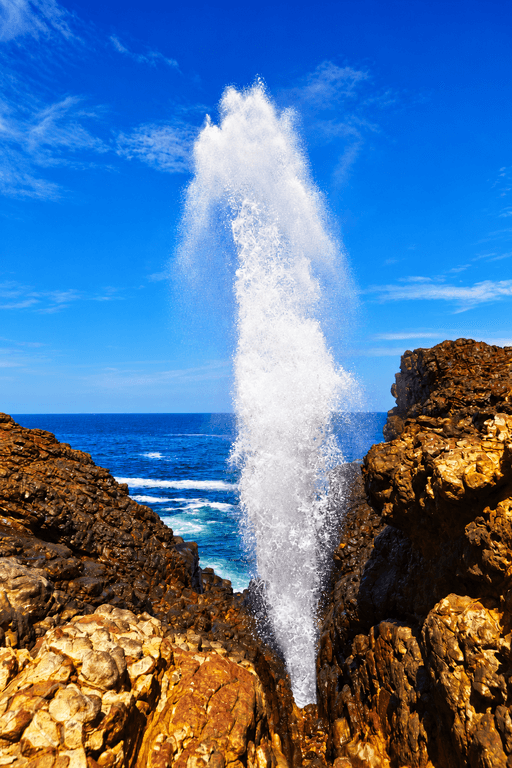
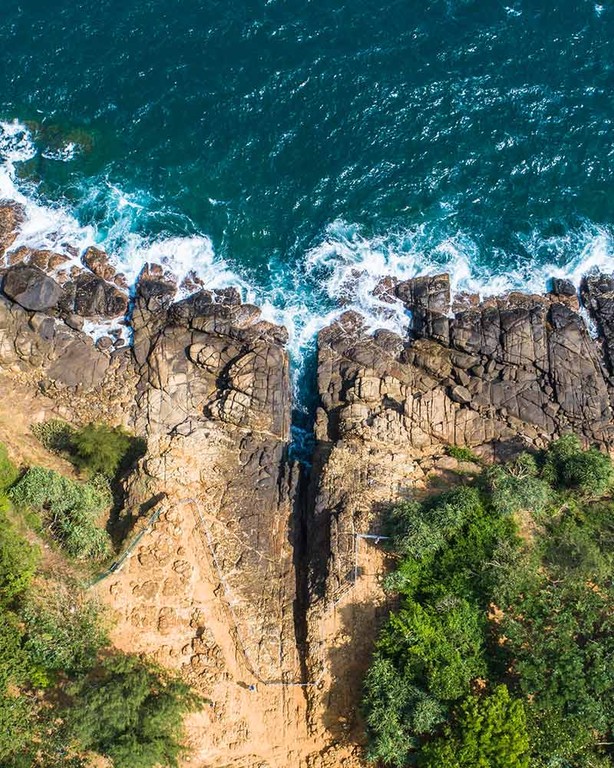
Hummanaya developed through the long-term erosion of coastal rocks by the sea. Water enters a submerged cavity and moves through a natural passage connected to a narrow opening near the top of the rocky formation. When a powerful wave fills the cavity, pressure pushes the water out through the opening. The resulting jet is accompanied by a deep rumble and a cloud of spray.
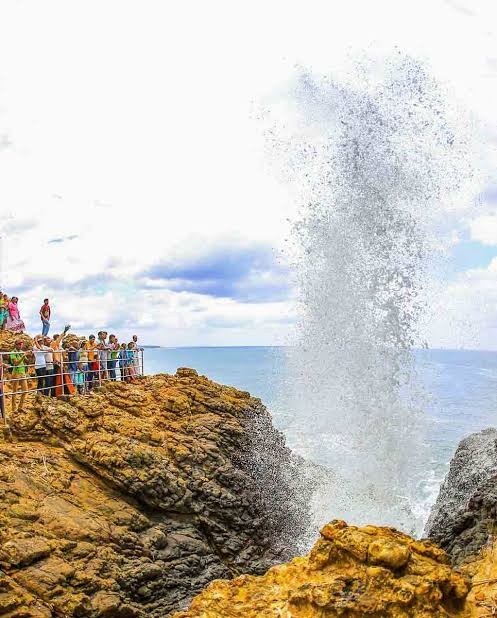
The height of the water depends on wave strength, wind direction, tide and sea conditions. Under favourable circumstances, spray can rise approximately 25–30 metres, although the display is much smaller when the ocean is calm. Each visit can therefore be different, and visitors may need to wait for a particularly powerful eruption.
The meaning of the name Hummanaya
The name is associated with the sound made when the water bursts through the rocks. In Sinhala, it evokes a distinctive, drawn-out “hoo” sound that can sometimes be heard before the spray appears. When the blowhole is active, the noise of the ocean combines with a deep rumble and the sharp hiss of falling water.
Rocky coast and ocean scenery
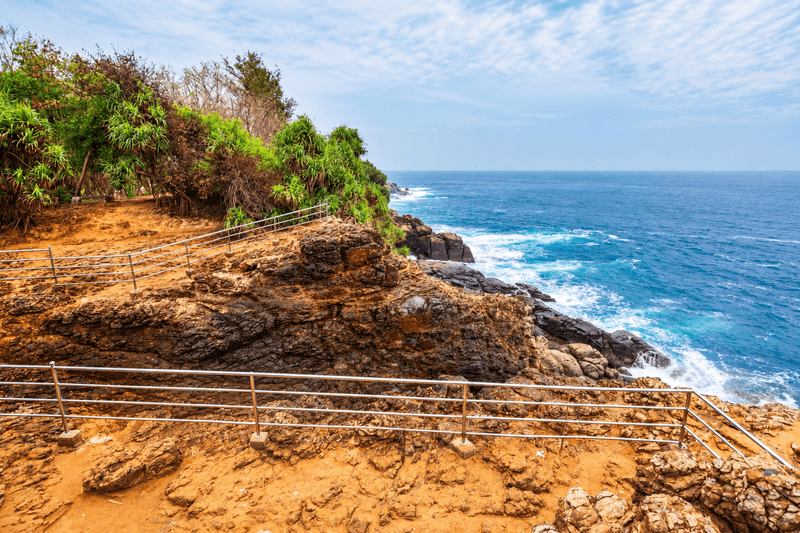
The blowhole lies along a rugged stretch of the Indian Ocean coastline. Visitors can see dark coastal rocks, foaming waves and an expansive sea horizon. The contrast between the calm distant horizon and the sudden eruption of water creates a striking natural spectacle. The site is particularly interesting for people who enjoy geology, photography and unusual natural phenomena.
A short path leads from the entrance to a designated viewing platform. Along the way, visitors can see coastal vegetation, rocky formations and everyday life in the nearby fishing village. On windy days, the waves become more powerful and spray may spread well beyond the opening.
When to see the strongest eruptions
The most dramatic displays often occur during the south-west monsoon, roughly from May to September, when the sea along Sri Lanka’s southern coast is usually rougher. June and other periods of strong swell can provide good viewing conditions. High tide and powerful waves may also intensify the effect, but the exact timing of a large jet is difficult to predict.
The blowhole remains a natural attraction during calmer months, although the water jets may be lower. Check the local forecast and sea conditions before travelling. A maximum-height eruption should not be expected on every visit.
Viewing platform and visitor facilities
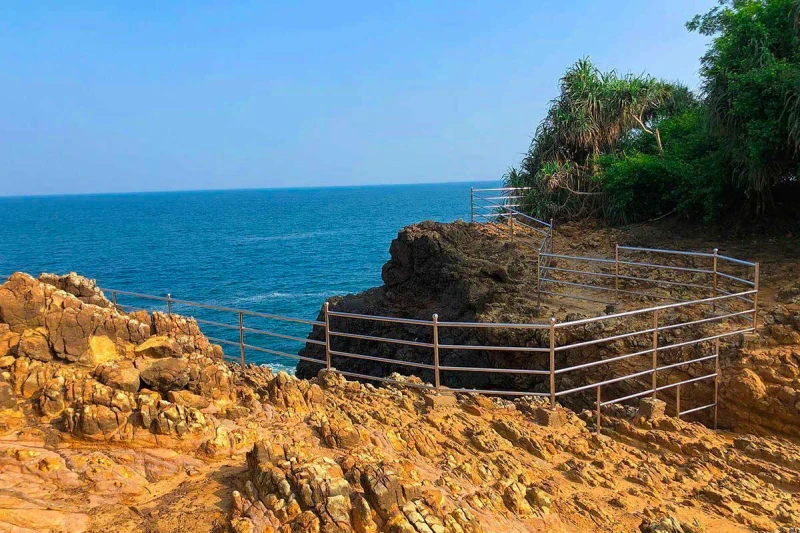
A designated viewing platform allows visitors to observe Hummanaya from a safer distance. A short path with steps leads to the viewing area, and some sections may be uneven or slippery from moisture and sea spray. Small stalls near the entrance sometimes sell drinks, snacks and souvenirs.
Most visitors allow between 30 minutes and an hour and a half, depending on the activity of the blowhole and how long they wait for a strong eruption. Daylight is the best time to visit, as it makes the rock formations and coastal scenery easier to appreciate.
Kudawella fishing village
Hummanaya is close to Kudawella, a small coastal settlement where fishing remains an important part of everyday life. A visit can be combined with a walk through the surrounding area and an introduction to local coastal traditions. Some nearby eateries serve fresh fish and Sri Lankan dishes.
The region is generally quieter than the island’s major tourist centres. Visitors may see fishing boats, coastal homes and the daily routines of people whose livelihoods and cultural traditions are closely connected to the ocean.
Places to visit nearby
The trip can be combined with visits to Dikwella and Hiriketiya beaches, both known for their coastal scenery. The area around Tangalle offers sandy coves and places for walks beside the ocean. Travellers interested in cultural attractions may also consider Wewurukannala Temple, known for its large Buddha statue.
How to get to Hummanaya
The blowhole is located near Kudawella, between Dikwella and Tangalle on Sri Lanka’s southern coast. It can be reached from Dikwella by tuk-tuk, taxi or rental car. Road transport is also available from Matara and other coastal towns. The journey from Colombo takes several hours, depending on the route and traffic conditions.
Travel tips
Watch the blowhole only from designated viewing areas, and never approach the opening or the edge of the rocks. Sudden waves can sweep across coastal rocks even when the sea appears relatively calm. Follow staff instructions and wear shoes with good grip.
Bring drinking water, a hat, sunscreen and a camera. Protect electronic devices from salt spray, avoid leaving rubbish behind and respect the coastal environment.
Why visit Hummanaya
The Hummanaya Blowhole offers a memorable way to witness the power of the ocean. The spectacle is created entirely by waves, rocks and a natural passage formed over time. It makes an interesting stop on a journey along Sri Lanka’s southern coast, especially for travellers interested in geology, seascapes and unusual natural wonders.
Gallery