Slope Point is the southernmost point of the mainland of New Zealand’s South Island. It lies in the Southland region, along the scenic Catlins coast, where the vast Southern Ocean meets steep cliffs and green farmland. This remote destination attracts visitors with its rugged scenery, powerful winds, and unmistakable feeling of being at the edge of the world.
Landscapes at the Southern Edge of the Island
The coastline at Slope Point features steep cliffs, rocks rising from the water, and powerful ocean waves. Winds frequently blow from the south after travelling thousands of kilometres across the Southern Ocean. On clear days, the horizon seems endless, while stormy weather reveals the full force of the sea.
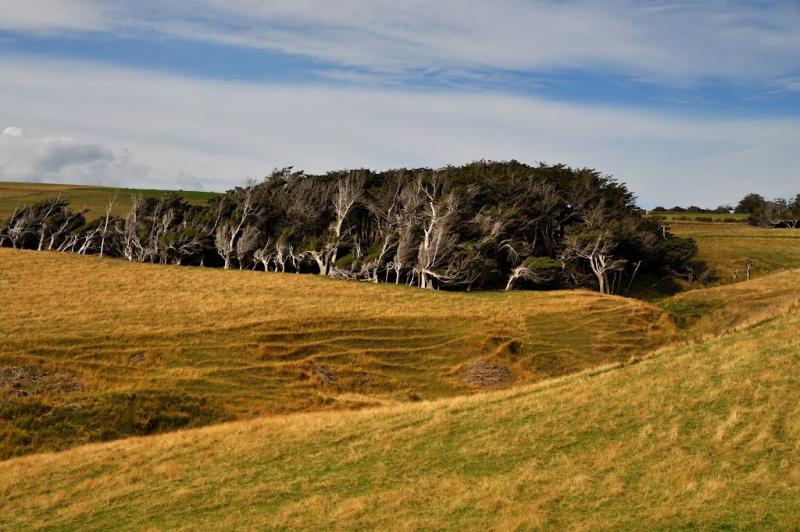
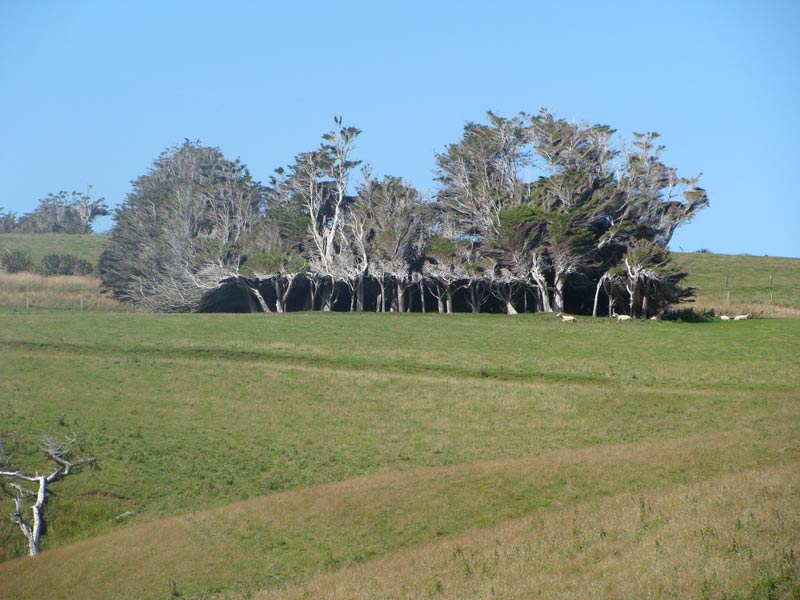
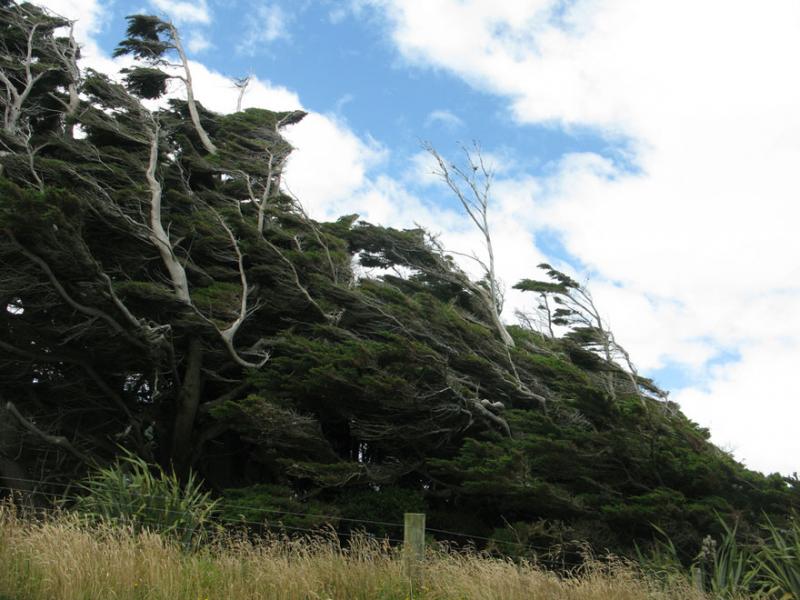
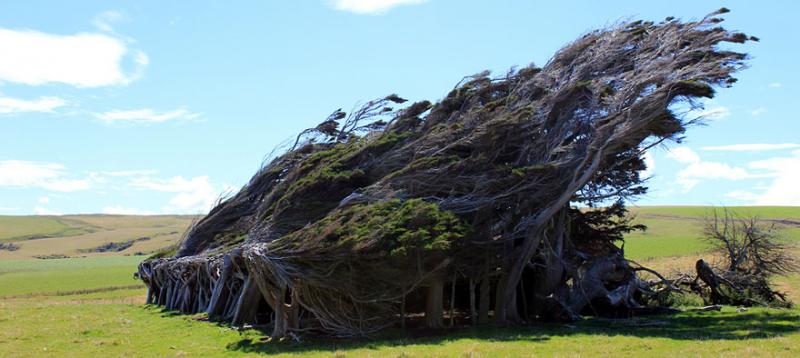
One of the area's most distinctive sights is its wind-bent trees. Their unusual shapes resemble sculptures created by nature. Some were planted by farmers as shelter belts to protect livestock from harsh weather. Over time, persistent gusts shaped their trunks and branches into dramatic forms.
The Famous Signpost and Lighthouse
One of the most photographed features at Slope Point is a signpost showing distances to the Equator and the South Pole. It has become a symbol of this remote part of New Zealand and highlights the cape's unusual geographic position. A small solar-powered lighthouse stands nearby.
Despite the popularity of the signpost, Slope Point is not a developed tourist complex. There are no shops, cafés, or extensive facilities. Its simplicity and isolation allow visitors to experience the natural environment and listen to the ocean without the noise of a town.
Where Slope Point Is Located
The point lies in the Catlins, in the southern part of the South Island. It is approximately 24 kilometres south of the small settlement of Waikawa and around 70 kilometres east of Invercargill. The surrounding area is known for its sparsely populated farmland, bays, forests, and rugged coastline.
Slope Point is often visited during a road trip around the South Island. The journey can be combined with a stop at Curio Bay, known for its petrified forest, and other natural attractions in the Catlins.
The Walk to the Point
A short walking track leads from the car park to the viewpoint across private farmland. The walk usually takes around 10–20 minutes each way. The route is relatively easy, but grass and ground can become wet after rain, so sturdy footwear is recommended.
Because the track crosses private land, visitors should follow signs and respect the work of local farmers. Public access may be closed during the sheep-lambing season, usually from September to November. Check local access information before travelling.
Nature and Wildlife
The surroundings combine pastureland, coastal cliffs, and open ocean. Native birds may be seen in the area, while marine mammals are occasionally spotted in nearby waters. Wildlife sightings depend on the season and conditions, so encounters cannot be guaranteed.
The coastal environment is adapted to strong winds, salty spray, and changeable weather. Keep away from cliff edges, as barriers may be absent and sudden gusts can be dangerous.
When to Visit
Slope Point can be visited in different seasons when the track is open. During Southern Hemisphere summer, from December to February, daylight hours are generally longer, although the weather can change quickly even in warm months. Autumn and spring can bring dramatic coastal scenery, but wind and rain may make the walk more challenging.
Before setting out, check the weather forecast, road conditions, and access arrangements across farmland. There are no full visitor facilities on site, so bring water, suitable clothing, and anything else needed for the walk.
Why Visit Slope Point
Slope Point is less about buildings or attractions and more about experiencing New Zealand's wild nature in a rugged, almost untouched setting. Wind-bent trees, steep cliffs, crashing waves, and the famous signpost make it memorable for nature lovers and photographers.
A visit offers a powerful sense of the scale of the Southern Ocean and the chance to see one of the southernmost points of the South Island. Take care around the cliffs, respect private land, and help preserve the natural landscape.
Gallery