Anuradhapura – the ancient capital of Sri Lanka
Anuradhapura is one of Sri Lanka’s most important historical and religious centers, located in the North Central Province. For many centuries it served as the capital of Sinhalese rulers and a major center of Buddhist culture. Today, its ancient ruins, enormous stupas, monastic complexes and sacred trees form an extensive historic site included on the UNESCO World Heritage List.
The ancient city flourished for more than a thousand years and played a major role in the island’s political, spiritual and economic life. Royal palaces, monasteries, temples, artificial reservoirs and sophisticated irrigation systems were built here. Many structures made of brick and stone demonstrate the engineering skills of ancient Sri Lankan society.
The Sacred City of Anuradhapura was inscribed on the UNESCO World Heritage List in 1982. Its importance lies not only in monumental architecture but also in its continuing religious traditions: many ancient sacred sites remain active Buddhist places of worship.
History of the ancient city
Anuradhapura emerged as an important political center in the first millennium BCE and became the capital of an ancient kingdom around the 4th century BCE. Over the following centuries, it developed into one of South Asia’s major centers of power, trade and Buddhism.
The spread of Buddhism in Sri Lanka is traditionally associated with Mahinda, who arrived on the island in the 3rd century BCE during the reign of King Devanampiya Tissa. Anuradhapura became a center of Buddhist learning, monastic life and temple construction. Sacred relics were brought here, monastic communities developed and stupas became the city’s defining architectural landmarks.
Successive rulers expanded the city and improved its water supply. Artificial reservoirs provided water for residents, monasteries and farmland. These irrigation systems supported agriculture in the island’s dry zone and helped sustain the kingdom for centuries.
Political stability weakened toward the end of the 10th century. An invasion in 993 led to the loss of Anuradhapura’s position as the principal capital. Political power shifted elsewhere, and many ancient structures were gradually abandoned and partly covered by tropical vegetation. Archaeological study and restoration gained momentum in the 19th century.
Sri Maha Bodhi sacred tree
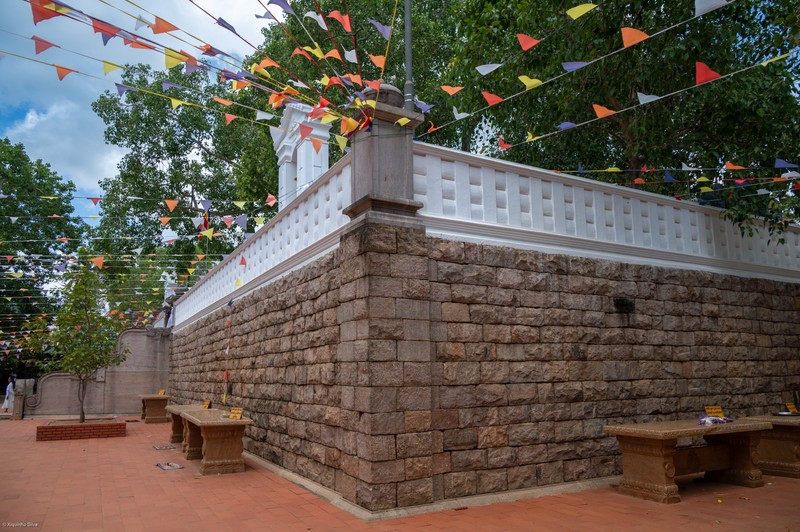
Sri Maha Bodhi is one of Anuradhapura’s most revered Buddhist sites. According to tradition, the tree grew from a cutting of the Bodhi tree in India under which the Buddha attained enlightenment. The cutting was brought to Sri Lanka in the 3rd century BCE by the Buddhist nun Sanghamitta, daughter of the Indian emperor Ashoka, and planted in Anuradhapura.
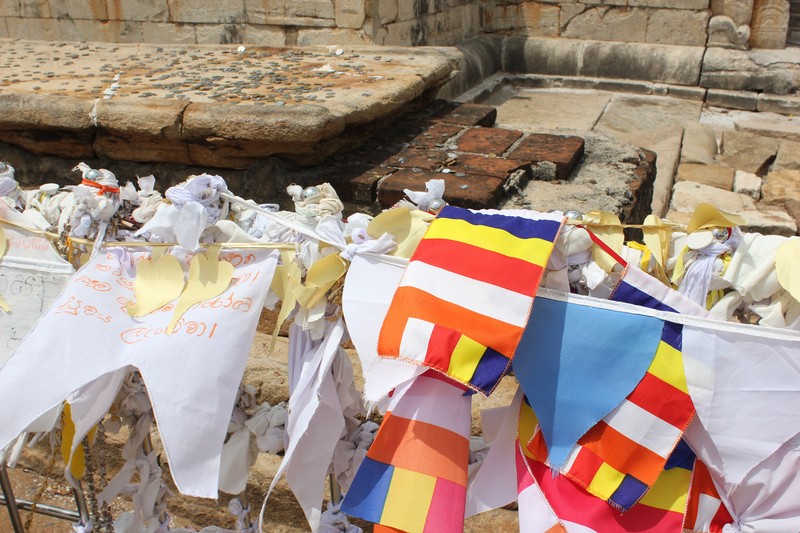
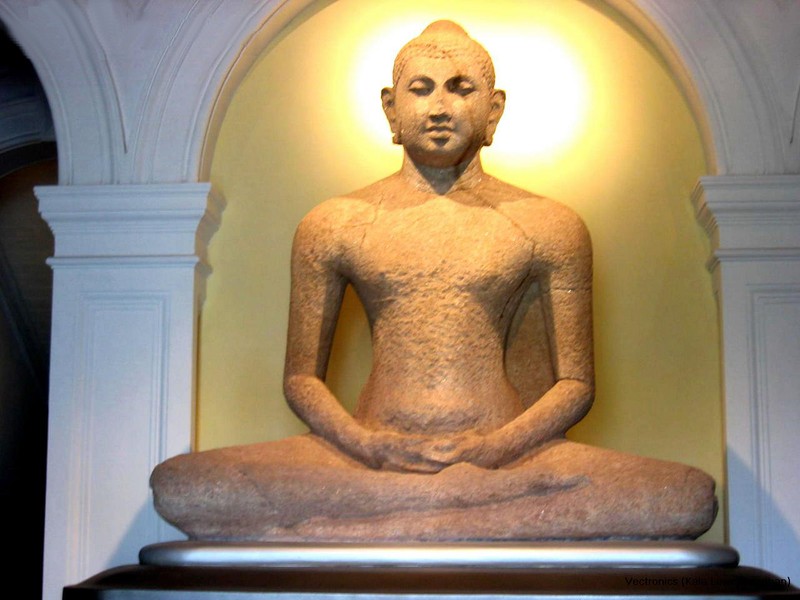
The tree became a symbol of Buddhism’s arrival on the island and has attracted pilgrims for centuries. Railings, ritual platforms and prayer areas surround it. Worshippers offer flowers and take part in religious ceremonies. For Buddhists, it is not merely a historical monument but a living spiritual symbol.
Sri Maha Bodhi is regarded as one of the oldest historically documented trees associated with a known planting date. Its significance extends beyond botany, representing the continuity of Buddhist tradition and Anuradhapura’s connection to the early history of Buddhism in Sri Lanka.
Ruwanwelisaya Stupa
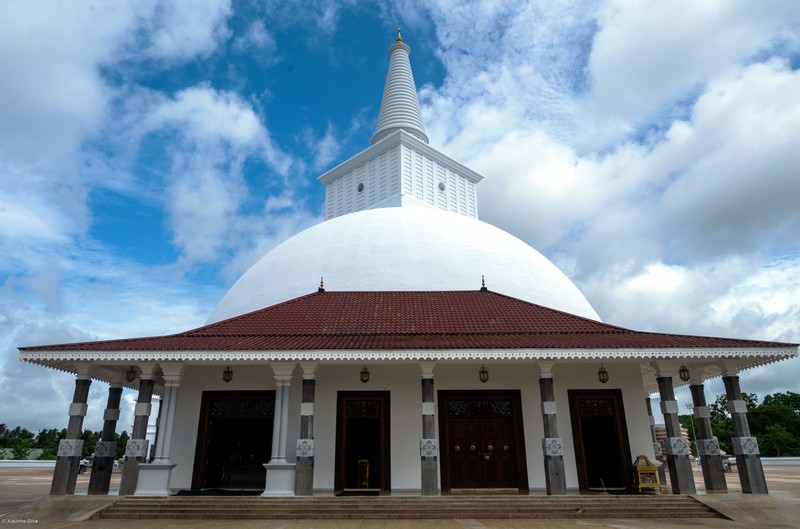
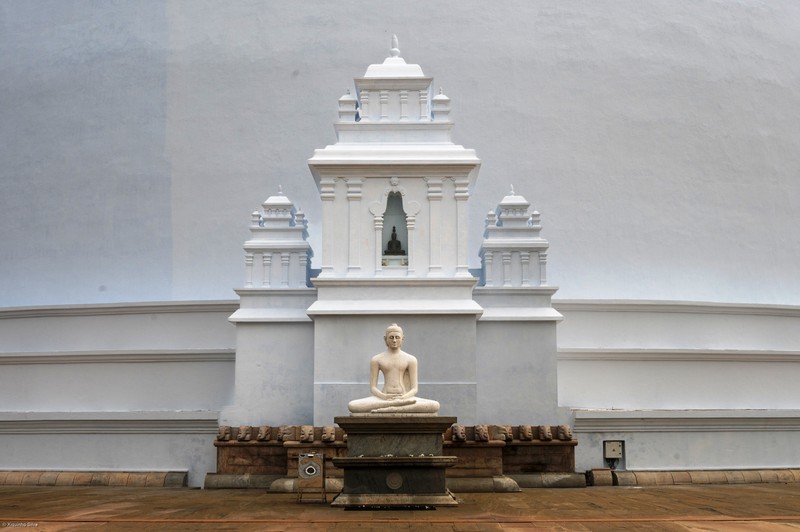
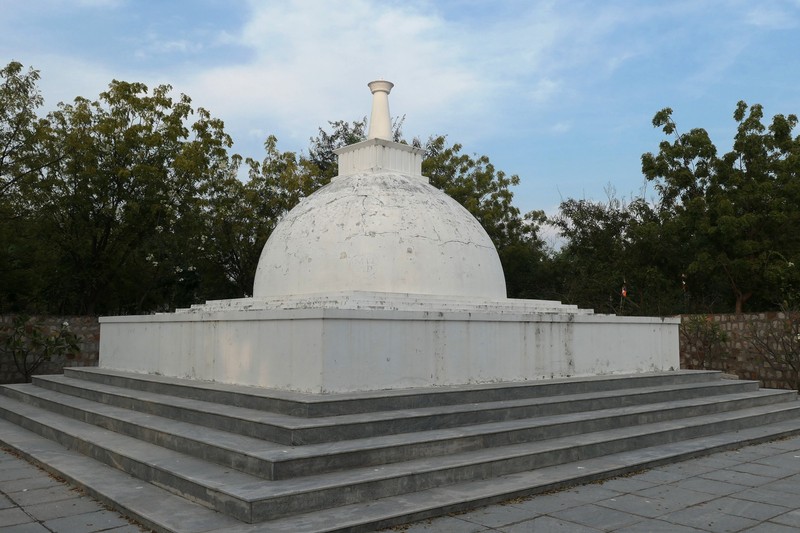
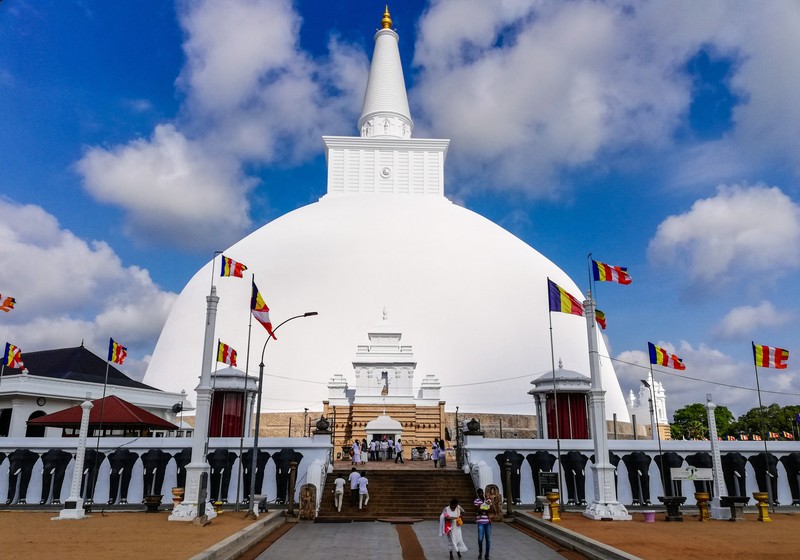
Ruwanwelisaya is one of Anuradhapura’s most famous stupas. Its construction is traditionally attributed to King Dutugemunu, who ruled in the 2nd century BCE. The white dome, massive base and surrounding columns create an impressive architectural ensemble visible from different parts of the sacred city.
In Buddhist tradition, stupas are monuments associated with the veneration of the Buddha and the preservation of sacred relics. Ruwanwelisaya remains a place of prayer and pilgrimage. Visitors often walk around it as an act of reverence. The stupa is especially striking at sunrise and in the evening, when its pale surface stands out against the sky.
The monument also demonstrates the advanced building skills of ancient Sri Lanka. Constructing such a large structure required organized labor, the transport of building materials and considerable engineering knowledge.
Jetavanaramaya Stupa
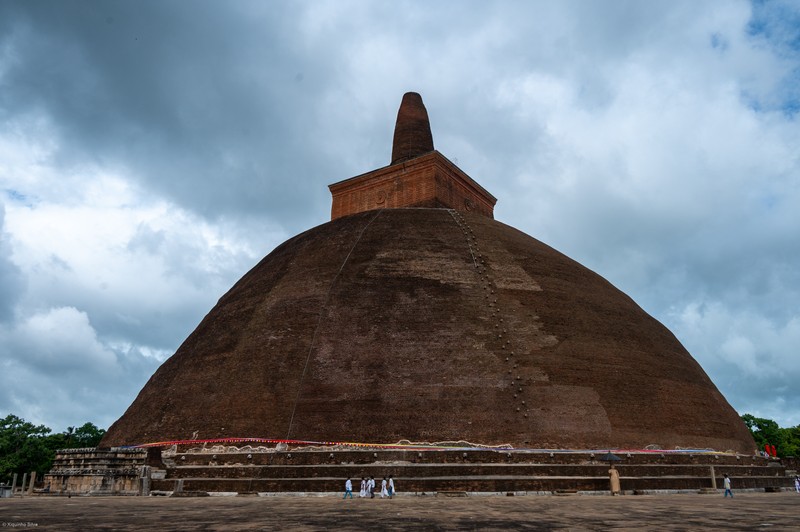
Jetavanaramaya is one of the largest ancient brick stupas in the world. Construction began under King Mahasena in the 3rd century CE. At its height, it was an enormous religious monument and one of the most impressive structures of its time.
The stupa belonged to the Jetavana monastic complex, an important center of Buddhist education and monastic life. Archaeological research has uncovered monastery remains, everyday objects and other evidence of a large religious community.
Its massive brick structure demonstrates the sophistication of ancient construction techniques. Despite damage and later restoration, Jetavanaramaya remains remarkable for its scale and simple form.
Abhayagiri Monastery and Stupa
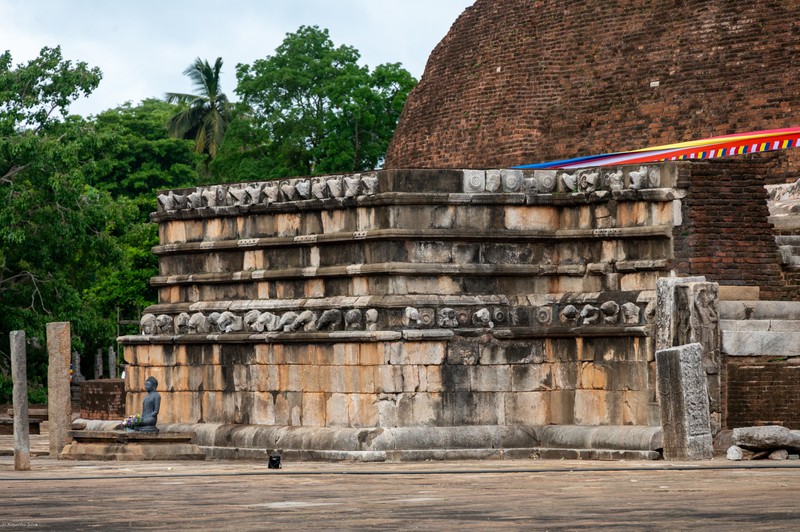
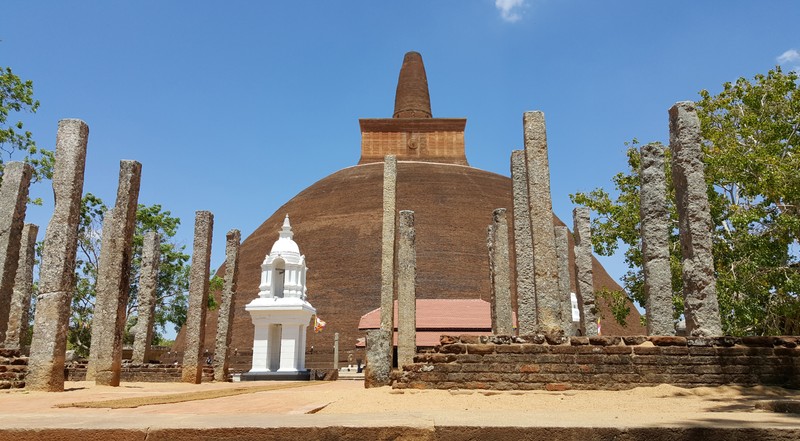
Abhayagiri was another major religious complex in the ancient city. It developed into a large monastic center with temples, monks’ residences, learning spaces and service buildings. Its stupa was built in the 1st century BCE and became one of the largest in ancient Sri Lanka.
The monastery played an important role in the development of Buddhist teachings and cultural links with other parts of Asia. The archaeological site includes the stupa, stone foundations, carved elements and other remains that help explain life in a large monastic community.
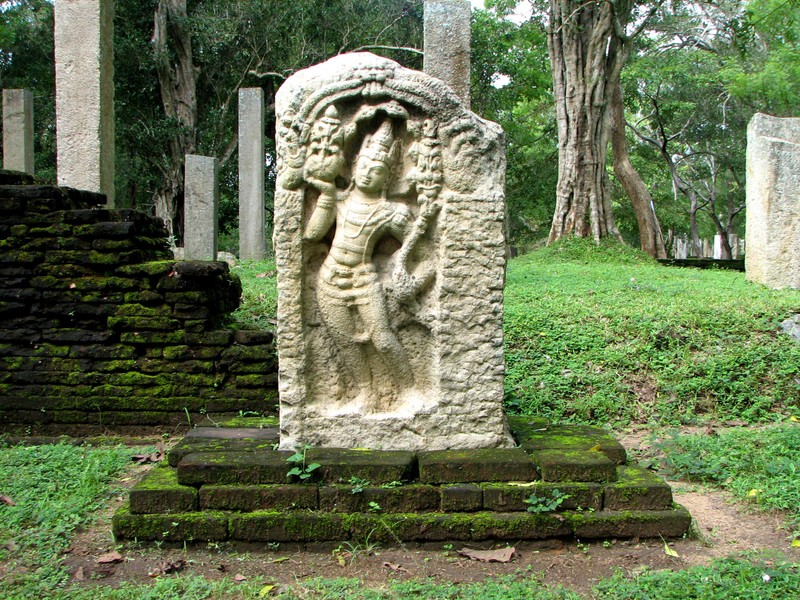
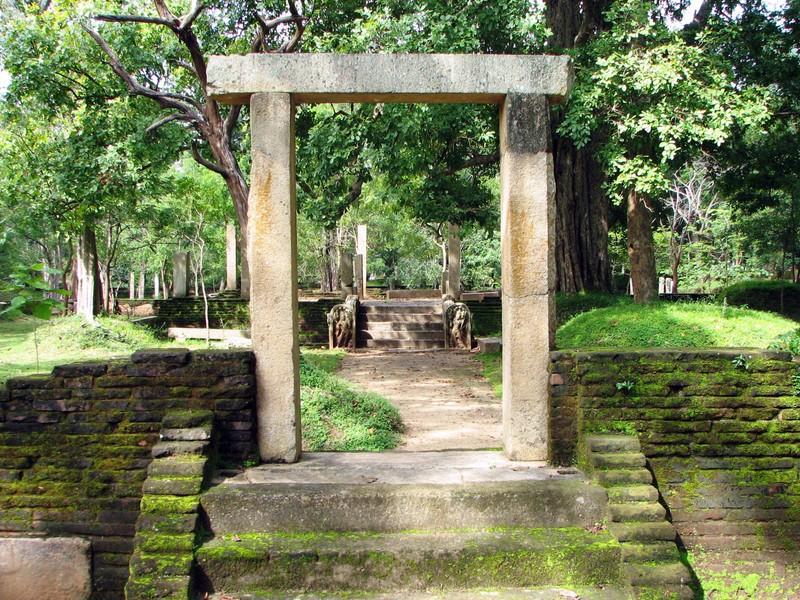
Carved architectural details, including moonstones and guard stones near entrances, are particularly interesting. They illustrate the artistic traditions of ancient Sri Lanka.
Thuparamaya Stupa
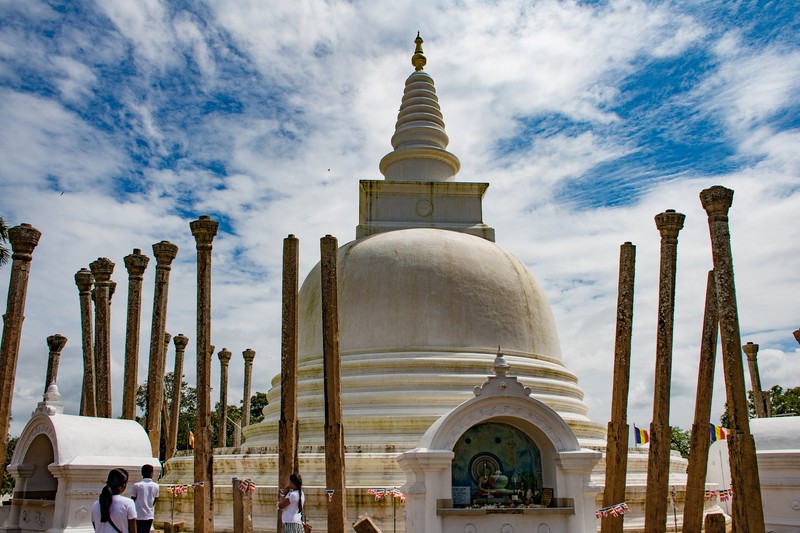
Thuparamaya is considered one of Sri Lanka’s oldest Buddhist stupas. Its construction is traditionally linked to the reign of Devanampiya Tissa in the 3rd century BCE, when Buddhism became established on the island. According to religious tradition, the site enshrines a relic associated with the Buddha.
Unlike the enormous Ruwanwelisaya and Jetavanaramaya, Thuparamaya has a more compact form and is surrounded by stone columns. These remains suggest that the sacred structure once had a roof or canopy. The stupa remains an important place of worship and a key stop on a tour of Anuradhapura.
Isurumuniya Rock Temple
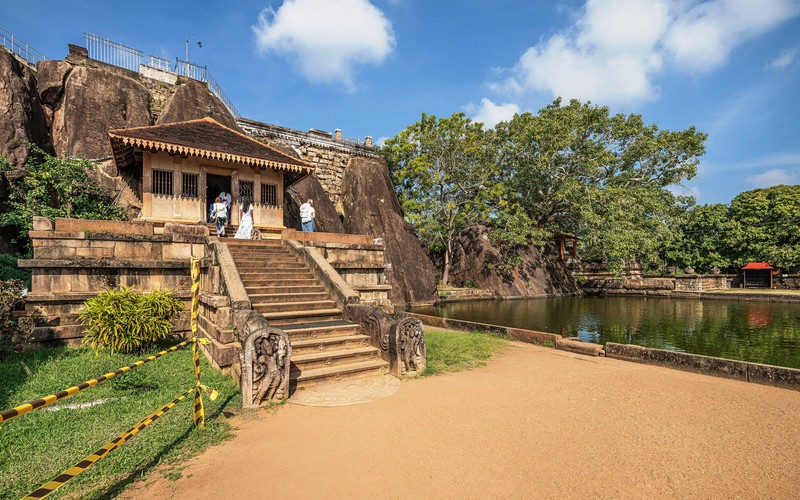
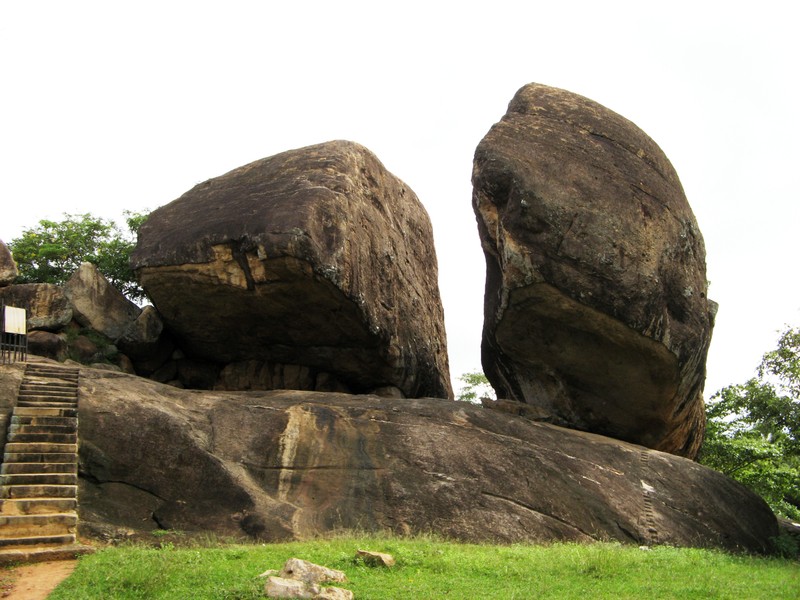
Isurumuniya is an ancient rock temple known for expressive stone reliefs and its connection with early Sri Lankan Buddhist art. Set among rocks and greenery, it differs from the massive stupas that dominate the landscape of Anuradhapura.
The temple is particularly famous for a sculpture commonly called the Isurumuniya Lovers. Interpretations of the figures vary, but the work is one of the island’s best-known examples of ancient stone carving. Other reliefs depict animals and mythological figures.
A visit to Isurumuniya reveals a more intimate side of Anuradhapura’s heritage: not only monumental religious structures, but also carefully crafted works of art.
Kuttam Pokuna Twin Ponds
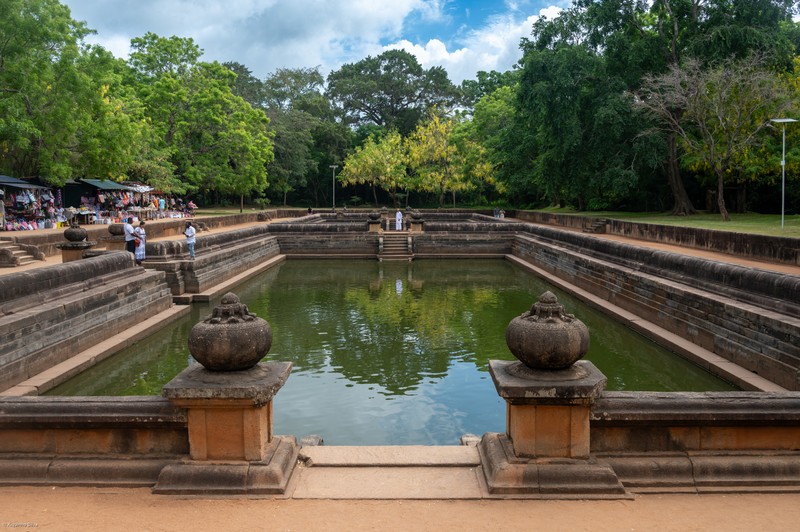
Kuttam Pokuna, or the Twin Ponds, is an outstanding example of ancient hydraulic architecture. The two stone pools were associated with monastic life and used for bathing. They feature carefully planned geometry, stone steps and a water supply system.
The ponds demonstrate the engineering knowledge of ancient builders in water management. Water was essential for daily life, religious rituals and agriculture in the island’s dry zone.
Today, Kuttam Pokuna is one of Anuradhapura’s most interesting archaeological sites. Its precise stonework and carefully designed structure remain impressive after many centuries.
The Brazen Palace
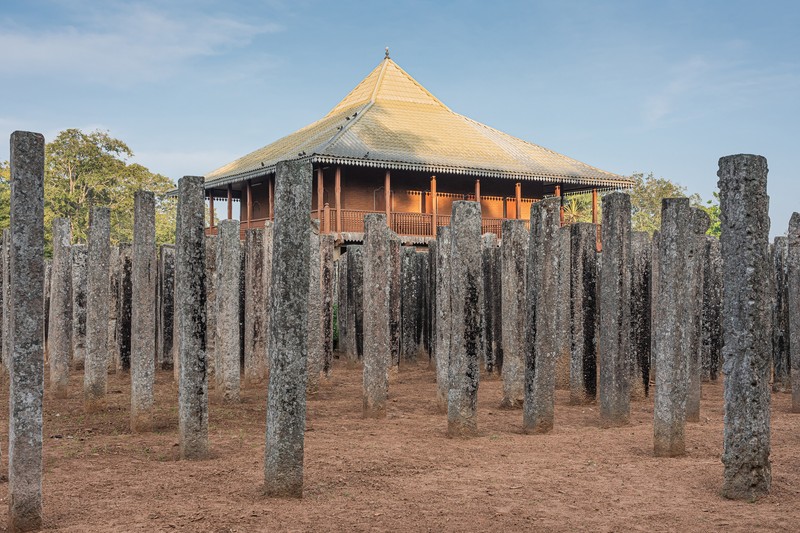
The Brazen Palace, also known as Lovamahapaya, formed part of a large monastic and royal complex. Its name is associated with the metal or bronze roof decorations described in historical accounts. The building once had several stories and numerous rooms intended for monks.
Today, mainly rows of stone columns remain. They help visitors imagine the scale and layout of the former building. Although most of the original structure has disappeared, the ruins remain important evidence of the architectural ambitions of Anuradhapura’s rulers.
The Brazen Palace is located near Sri Maha Bodhi, making it easy to include in a walking route through the central sacred area.
Ancient reservoirs and irrigation systems
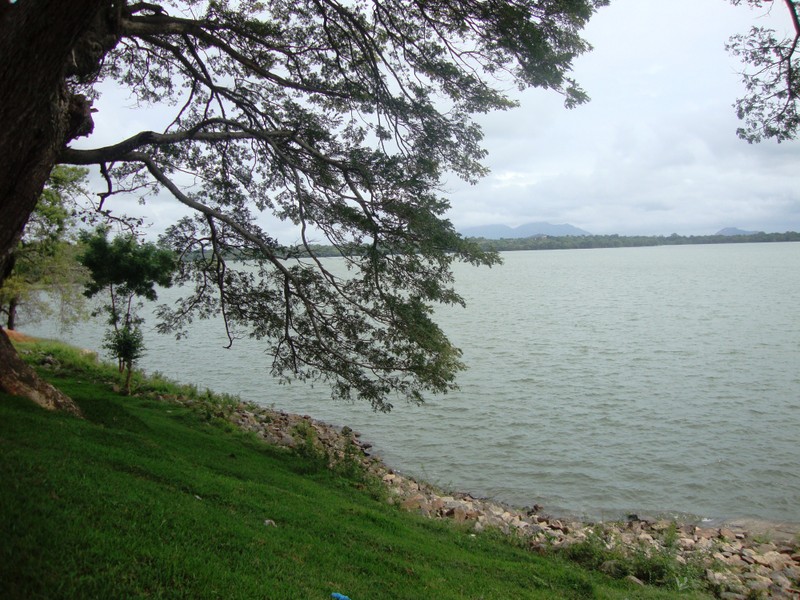
One of the greatest achievements of Anuradhapura’s civilization was its sophisticated water management system. Artificial lakes and reservoirs, known locally as wewa, collected seasonal rainfall and supplied water to farmland, monasteries and residential areas.
Notable reservoirs in the region include Tissa Wewa and Nuwara Wewa. They formed part of a large network of dams, channels and distribution structures that supported life in Sri Lanka’s dry zone. Their construction required careful planning and substantial labor.
This irrigation heritage is important beyond architectural history. It shows how ancient communities adapted to climatic conditions and sustained agriculture over many generations.
Exploring the ancient city
Anuradhapura’s archaeological area is extensive, so a full day is recommended. Major attractions are spread across a large area and can be reached by bicycle, tuk-tuk, car with a driver or guided tour.
A convenient route can include Sri Maha Bodhi, Ruwanwelisaya, Thuparamaya, Abhayagiri, Jetavanaramaya, Isurumuniya and Kuttam Pokuna. Some areas are best explored on foot, allowing visitors to appreciate the carvings, stonework and architectural details.
Anuradhapura remains an active religious center. Visitors should remove shoes in sacred areas, cover their shoulders and knees, remain quiet and avoid disturbing worshippers. The sun can be strong across the open archaeological grounds, so bring water and a hat.
Best time to visit Anuradhapura
Early morning and late afternoon are generally the most comfortable times to explore the ancient city. Many archaeological areas are exposed to direct sunlight, so it is sensible to start early and take breaks. Check the weather forecast before travelling and wear comfortable shoes for long walks over paths, earth and stone steps.
Why visit Anuradhapura
Anuradhapura offers a remarkable introduction to Sri Lanka’s ancient civilization through architecture, religious traditions and engineering achievements. Its enormous stupas demonstrate the skill of ancient builders, the sacred Bodhi tree preserves the memory of early Buddhism, and the reservoirs reveal sophisticated water management.
Rather than a single monument, the ancient city is a complete historic landscape where sacred structures, monastic ruins, stone carvings and natural surroundings tell the story of a major spiritual and political center of Sri Lanka.
Gallery