Park Güell is one of Barcelona's best-known attractions and an outstanding example of Catalan Modernisme. Located on Carmel Hill in the northern part of the city, it is famous for its unusual mosaics, winding paths, storybook pavilions and architectural forms inspired by nature. The park was designed by the celebrated Catalan architect Antoni Gaudí and has become one of Barcelona's defining symbols.
Originally, the park was not intended as a public space but as part of an ambitious residential development. The entrepreneur Eusebi Güell wanted to create an exclusive neighbourhood with gardens, convenient infrastructure and views over the city. The project did not achieve the expected commercial success, however, and the grounds eventually became a public park. Today, Park Güell is one of Catalonia's most visited places and forms part of the UNESCO World Heritage property known as the Works of Antoni Gaudí.
The History of the Park
The story of Park Güell began in the early twentieth century. In 1900, Eusebi Güell commissioned Antoni Gaudí to design a residential complex on the outskirts of Barcelona. The idea was to create a modern neighbourhood where houses would blend harmoniously with nature and residents could enjoy green spaces and shared facilities.
Gaudí began work with the hill's difficult terrain in mind and sought to preserve the natural environment as much as possible. Rather than flattening the land, he used its contours to create paths on different levels, retaining walls and terraces. Construction continued from 1900 to 1914, but the residential project proved unsuccessful: few buyers purchased plots, while the distance from the city centre and limited infrastructure made the neighbourhood less attractive.
As a result, the original plan was never fully realised. Only a few houses were built, and Gaudí himself lived in one of them from 1906 to 1925. After the architect's death and further changes in Barcelona's development, the grounds gradually acquired a public role. The park opened to visitors in 1926.
In 1984, Park Güell was included on the UNESCO World Heritage List as part of the Works of Antoni Gaudí. This status recognises its architectural significance and Gaudí's influence on the development of modern architecture.
The Architecture of Antoni Gaudí
The defining feature of Park Güell is the organic relationship between architecture and nature. Gaudí avoided the rigid geometric forms typical of traditional formal gardens. Instead, he drew inspiration from plants, rocks, animals and natural lines. Paths curve along the hillside, columns resemble tree trunks, and buildings look like settings from a fairy tale.
The architect used local stone, ceramics, coloured pieces of glass and unconventional structures. Practical needs were often combined with artistic ideas in his work. Colonnades support paths and terraces, canopies provide shade, and rainwater collection and drainage systems are integrated into the architecture.
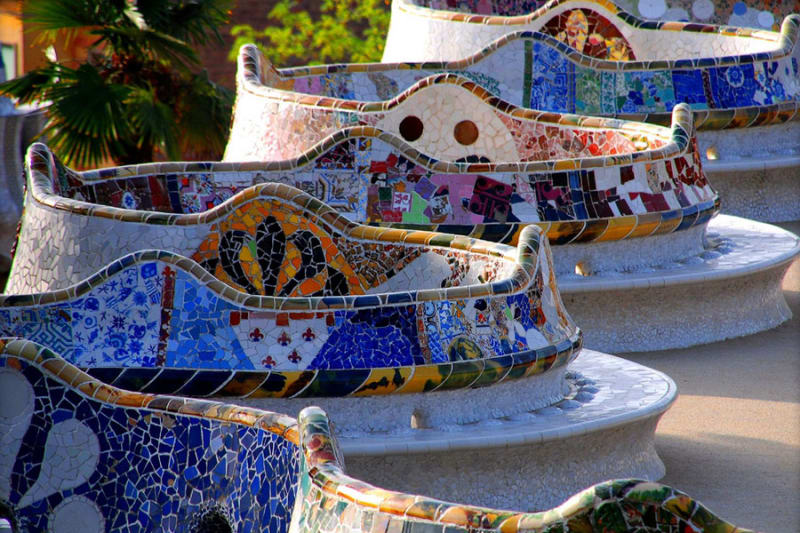
A particularly important technique is trencadís, which decorates surfaces with fragments of broken ceramic tiles and glass. It gives the structures vivid textures and intricate colour combinations. The mosaics do more than embellish individual buildings: they bring the different elements of the park together into a unified artistic composition.
The Grand Staircase and the Mosaic Lizard
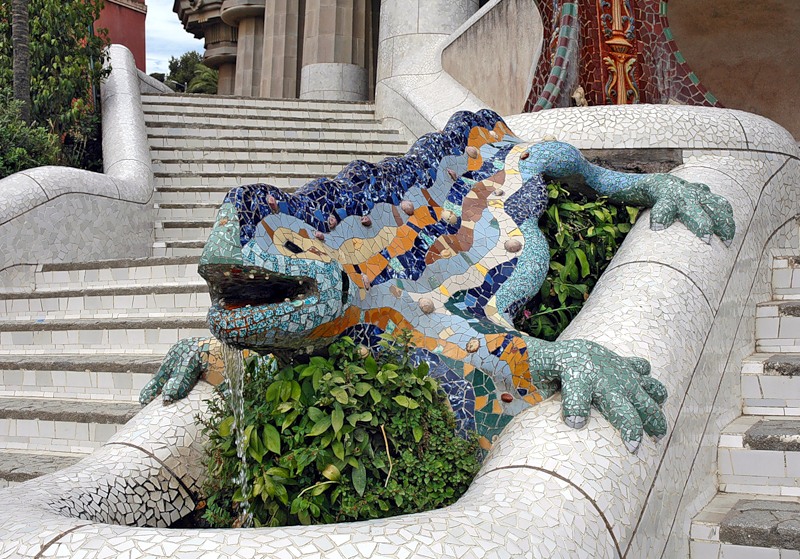
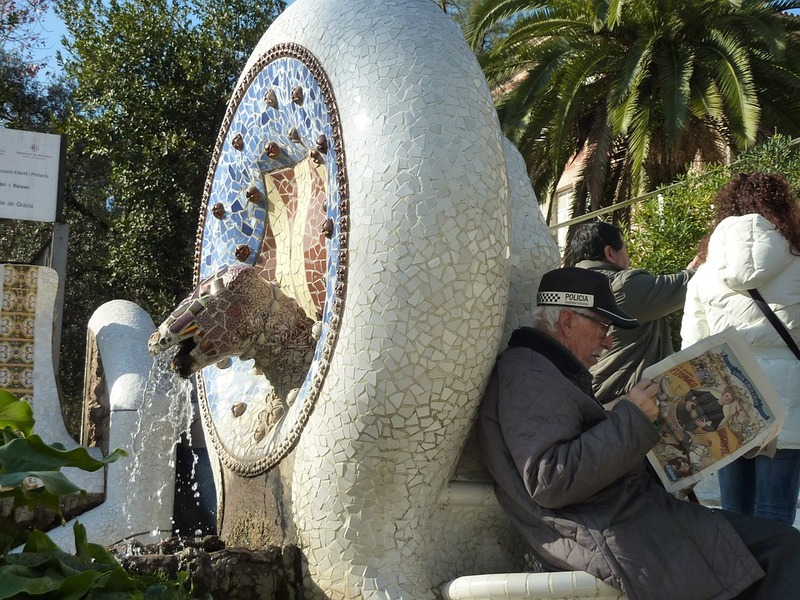
One of the most recognisable places in Park Güell is the monumental staircase near the main entrance. It leads to the Hypostyle Hall and is divided into several levels. At its centre are decorative fountains and the famous mosaic figure of a dragon or salamander, commonly known as El Drac.
This colourful figure has become one of Barcelona's symbols. Covered in multicoloured ceramic fragments, it fits naturally into the surrounding forms. Taking a photograph beside the mosaic salamander is one of the most popular activities for visitors, so the area can become crowded at peak times.
The staircase is not purely decorative: it connects the entrance area with the upper architectural section of the complex. The composition illustrates Gaudí's characteristic approach, in which sculpture, engineering and architecture become parts of a single space.
The Hypostyle Hall
Above the staircase is the Hypostyle Hall, which was designed as a covered market for the planned residential neighbourhood. The space is formed by numerous massive columns supporting the terrace above. Their arrangement resembles a stone forest and creates an unusual rhythm within the structure.
The hall combines architectural expression with engineering function. Its columns carry the weight of the square above, while some structural elements help collect and channel rainwater. The system demonstrates how Gaudí integrated aesthetic decisions with practical requirements.
The ceiling is decorated with circular mosaic features. Coloured fragments create intricate patterns that reward a closer look. With its columns, changing light and ornamental details, the hall resembles both an ancient architectural space and a fantastical cave.
The Main Square and the Wavy Bench
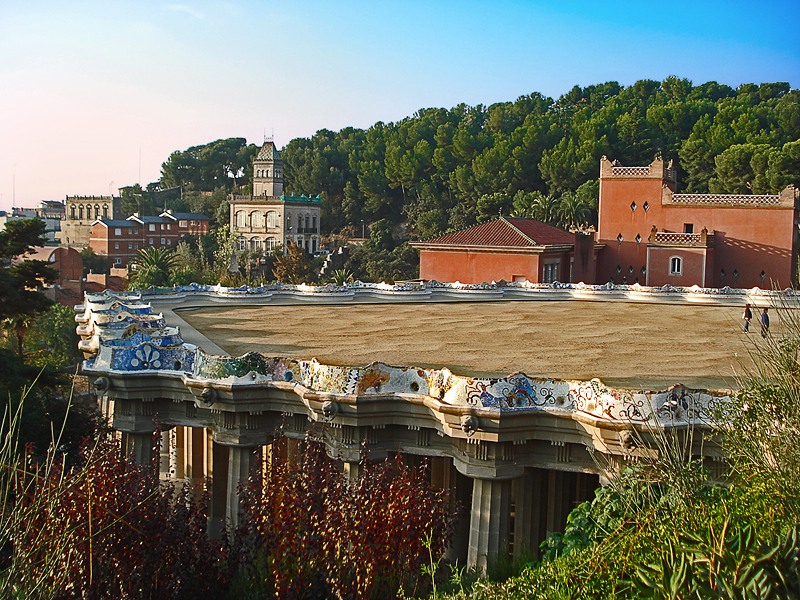
Above the Hypostyle Hall lies a large open terrace known as the Greek Theatre or Nature Square. It was intended for public events and gatherings for residents of the planned neighbourhood. Today, it is one of the best places to enjoy panoramic views over Barcelona.
A long, undulating mosaic bench runs along the edge of the terrace. Its winding form follows the natural lines of the landscape and allows people to sit facing different directions. The bench serves as both a barrier and a striking decorative feature.
Its colourful surfaces form intricate patterns of geometric shapes, plant motifs and abstract designs. The curves were not created solely for visual effect: the backrest is shaped to provide comfortable support, and the structure takes the human body into account. It is one of the best-known examples of how Gaudí combined art and function.
The terrace offers views of the city, surrounding hills and, on a clear day, the Mediterranean Sea. In good weather, the location of Barcelona between the mountains and the coast is especially easy to appreciate.
The Entrance Houses and Fairytale Pavilions
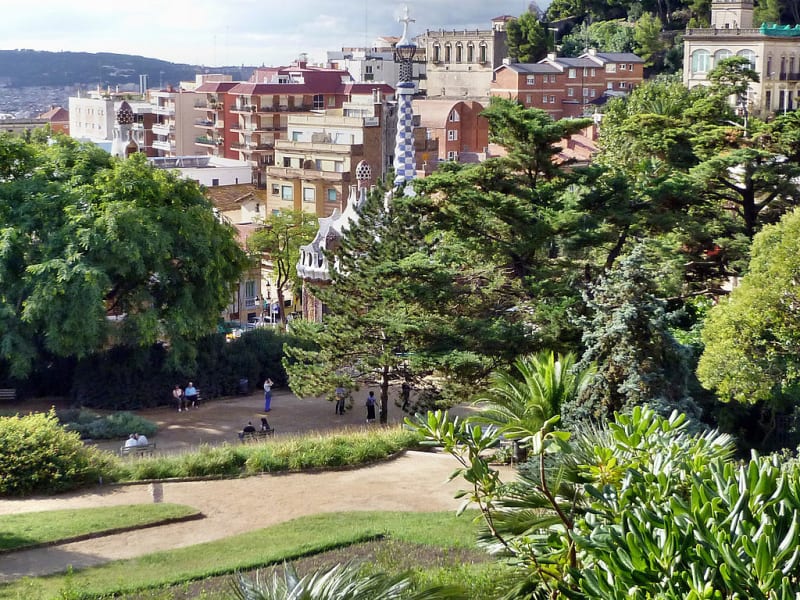
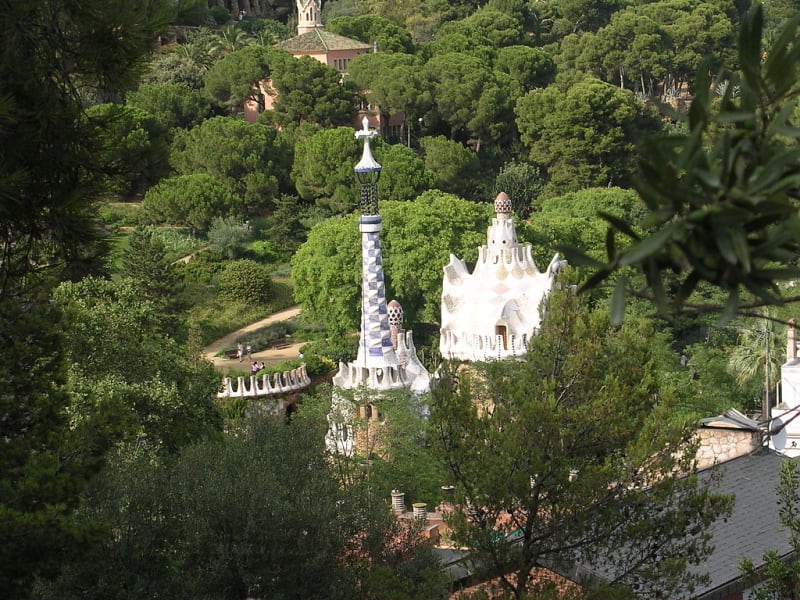
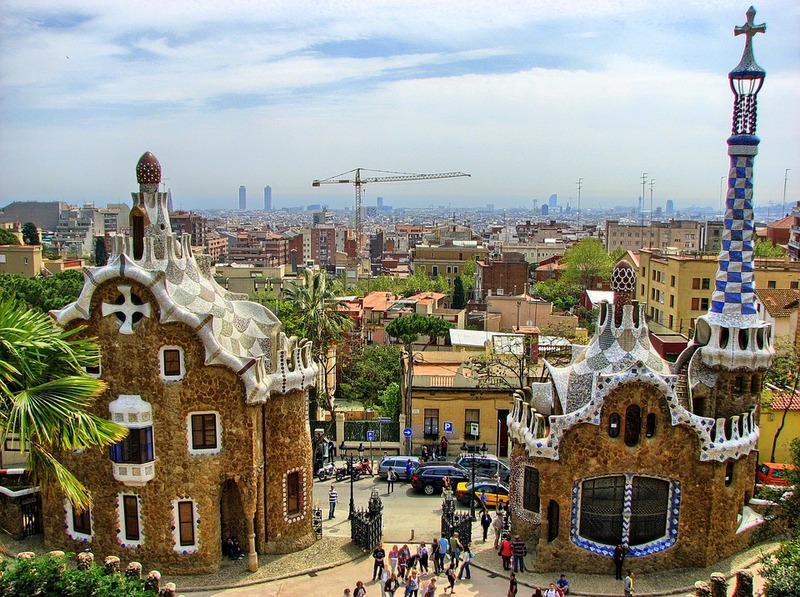
The main entrance is framed by two unusual pavilions with curved roofs and decorative details. Their silhouettes resemble storybook cottages, while colourful ceramics emphasise their imaginative character. One pavilion originally served as a porter's lodge, while the other housed administrative or gatekeeping functions.
These buildings show how carefully Gaudí treated even small structures. Roofs, turrets, windows and decorative elements form a coherent composition, yet each pavilion has its own character. Against the greenery and stone walls, they appear to belong to an unusual architectural world.
Near the park stands the Gaudí House Museum, where the architect lived in the early twentieth century. The building contains objects related to his life and work, along with furniture and decorative elements designed by him or associated with his artistic tradition. Visiting the house museum provides a deeper understanding of the principles behind his architecture.
Viaducts and Paths Among the Rocks
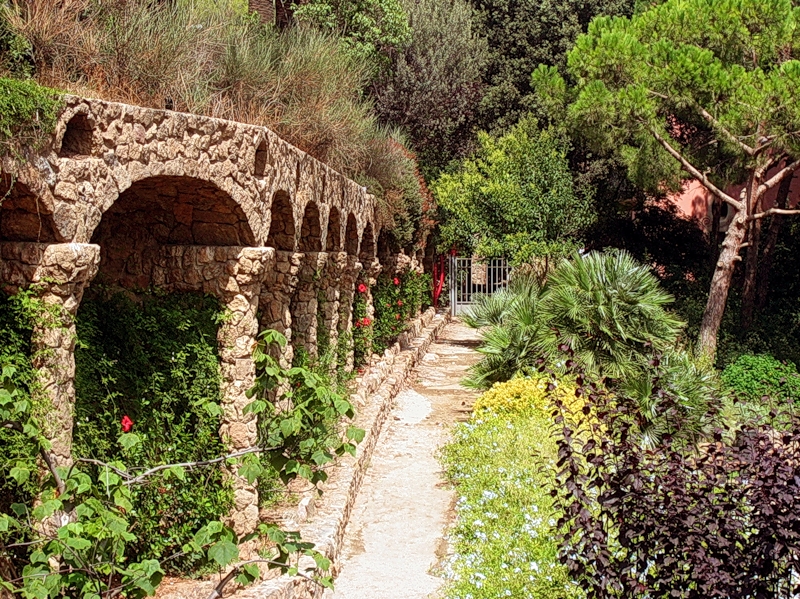
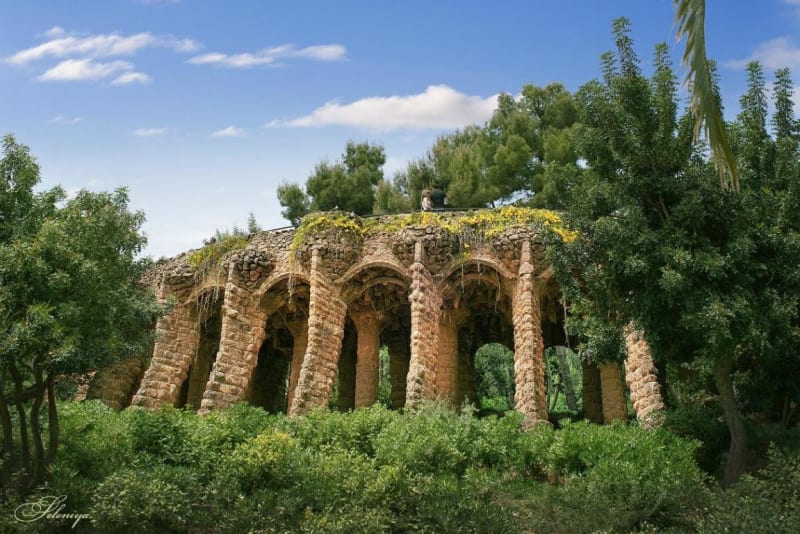
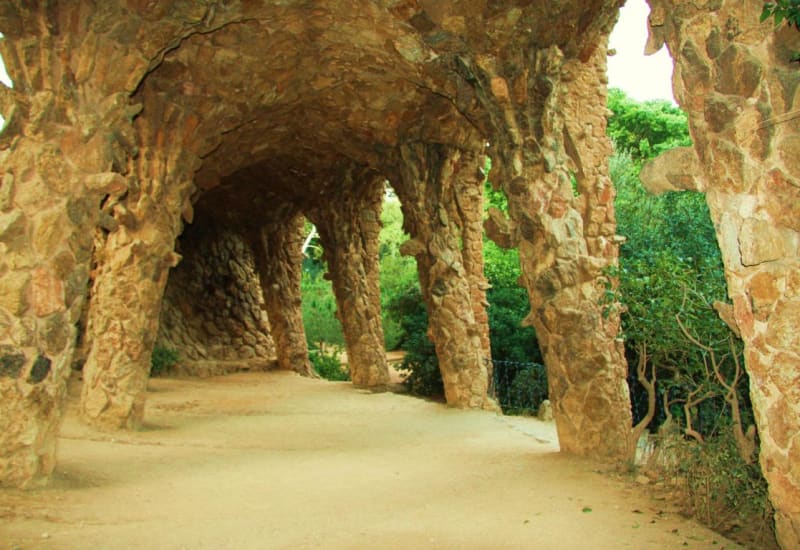
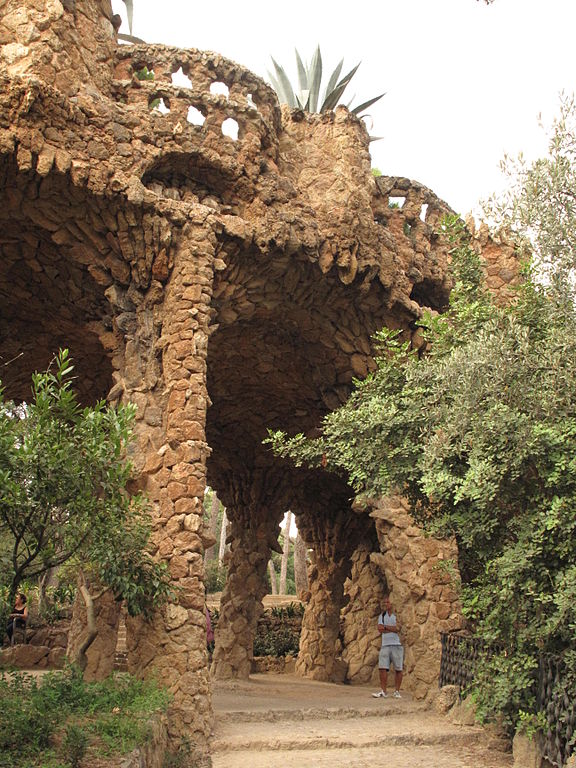
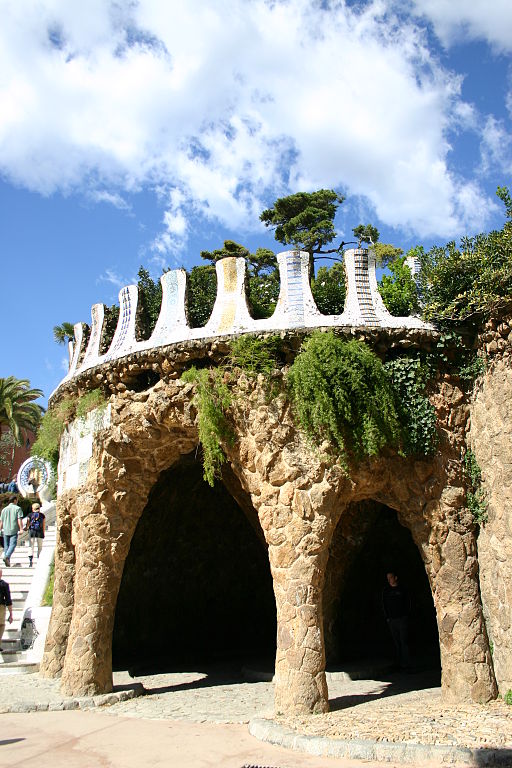
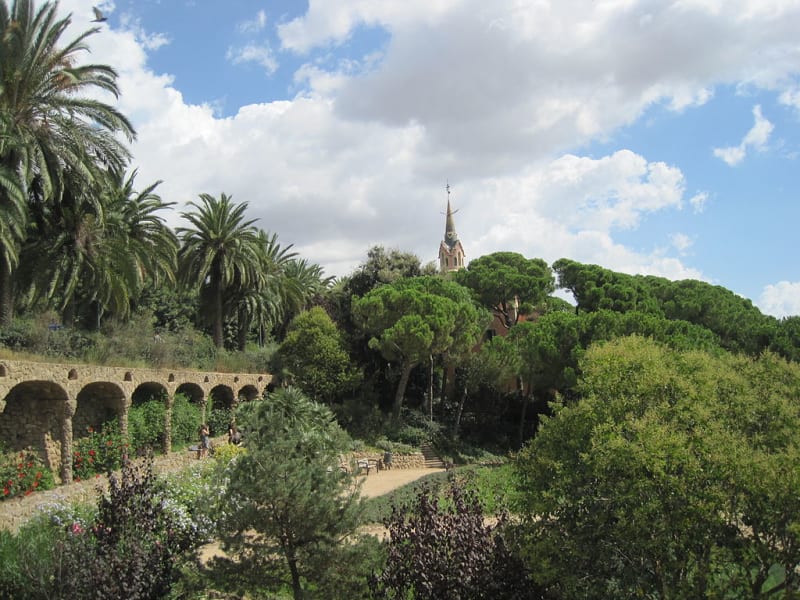
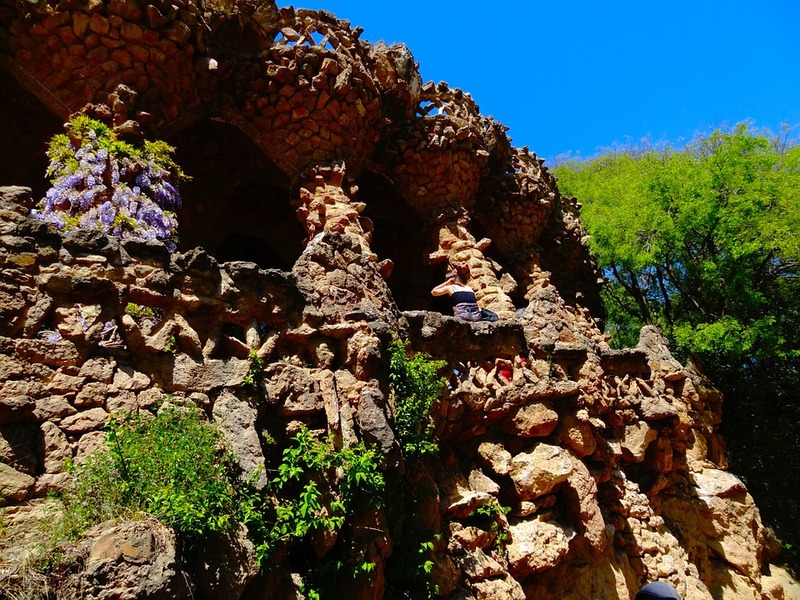
Park Güell is notable not only for its individual buildings but also for its network of walking paths. Because of the steep slopes, Gaudí designed viaducts, arcades and retaining structures that allow visitors to move around the hill while preserving its natural contours.
Some paths pass beneath stone arches, while others curve along the slopes or climb towards viewpoints. Many columns are tilted or unusually shaped, making the structures resemble natural rock formations. At the same time, they serve practical purposes by supporting walkways and distributing loads.
Walking these routes reveals different perspectives of the park and details that may be missed near the main attractions. The arcades provide shade from the sun, while open sections offer views of Barcelona and the surrounding hills.
Nature and Green Spaces
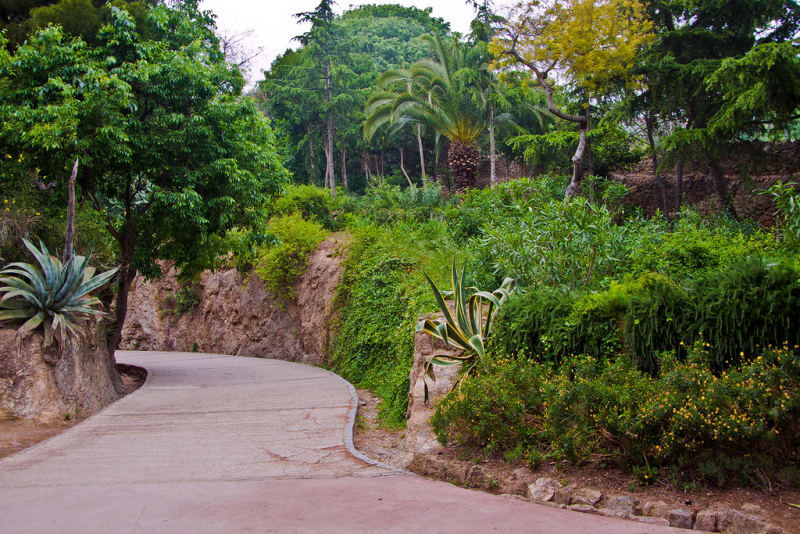
Despite its unusual architecture, Park Güell retains the character of a green space. Pine trees, palms, shrubs and other Mediterranean plants grow throughout the grounds. The vegetation provides shade, softens the rocky landscape and helps integrate the architecture with the natural surroundings.
When designing the park, Gaudí took the local climate and soil conditions into account. He aimed to work with the existing terrain rather than turn the hill into a levelled artificial landscape. This approach preserved the area's natural features and created a park where the architecture seems to grow out of the ground instead of standing apart from it.
Today, the grounds combine a protected monumental area with green spaces for walking. Visitors should treat the plants carefully, avoid leaving litter and respect restrictions on access to certain sections.
Best Time to Visit
Park Güell can be visited throughout the year, although spring and autumn are generally the most comfortable seasons. Temperatures are suitable for longer walks, and the vegetation looks especially appealing. Summers in Barcelona can be hot, so it is best to arrive in the morning or late afternoon and bring drinking water.
Early morning is a good choice for visitors who want to see the popular spots when there are relatively fewer people. Around midday, the staircase, mosaic salamander and main terrace are usually busy. Before visiting, check current opening hours and entry rules: access to the monumental area may require a ticket for a specific time slot.
After rain, some paths and stone surfaces can become slippery, so comfortable footwear is important. Since the park is on a hill, the walk includes both uphill and downhill sections. Visitors who find steep routes difficult should study the site map and available entrances in advance.
How to Get to Park Güell
Park Güell is in northern Barcelona on Carmel Hill. It can be reached by public transport, including the metro and city buses, followed by a walk to the entrance. The best route depends on the station, direction of travel and current transport arrangements.
Because the park is on a hill, the approach may include fairly steep climbs. Street escalators help on some routes, but not every approach avoids walking uphill. Before travelling, check current routes and choose an entrance that suits your plans.
If you plan to visit the monumental area, check ticketing rules and available time slots in advance. During the high season, tickets for convenient times can sell out quickly. Allow several hours to explore the main structures and walk through the grounds at a relaxed pace.
Why Visit Park Güell
Park Güell is a place where architecture, mosaic art and nature form a unified ensemble. Visitors can see some of Antoni Gaudí's most famous works, enjoy panoramic views of Barcelona and discover the defining features of Catalan Modernisme.
Every part of the park reveals new details: unusual columns, colourful mosaics, winding paths and imaginative buildings. A visit offers more than photographs of famous landmarks; it also shows how Gaudí sought to combine functionality, artistic imagination and the natural environment. Park Güell remains one of Barcelona's leading attractions and a must-see for anyone interested in architecture and Catalan culture.
Gallery