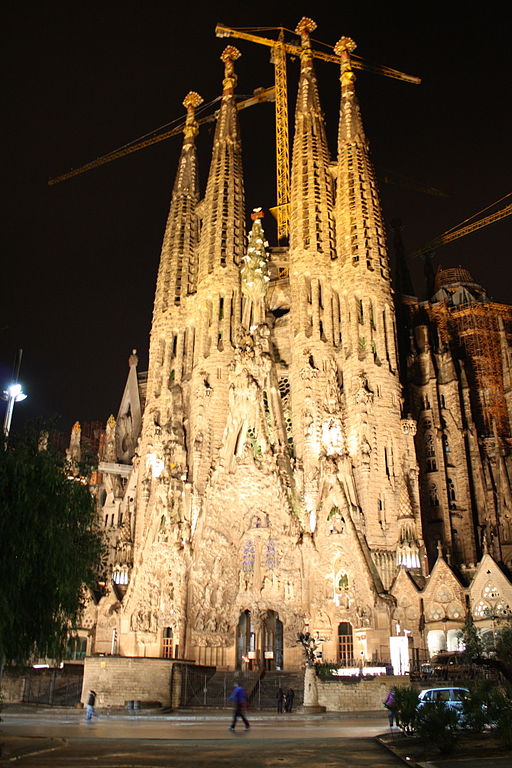
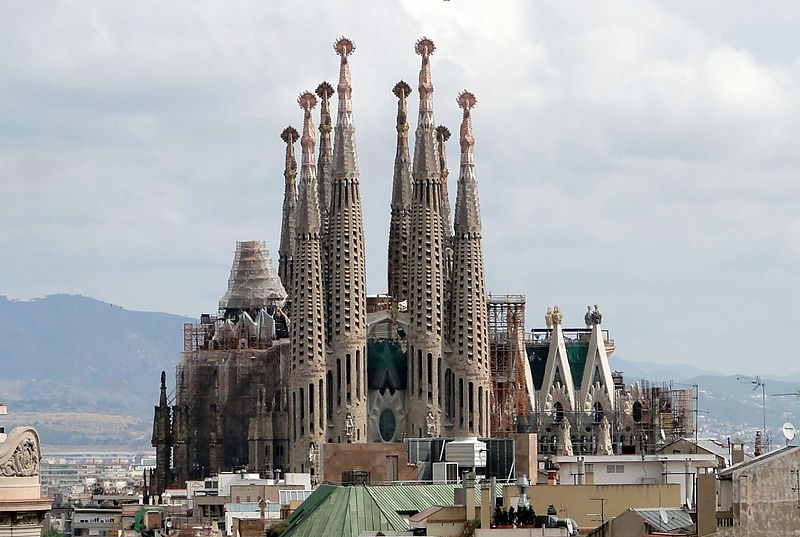
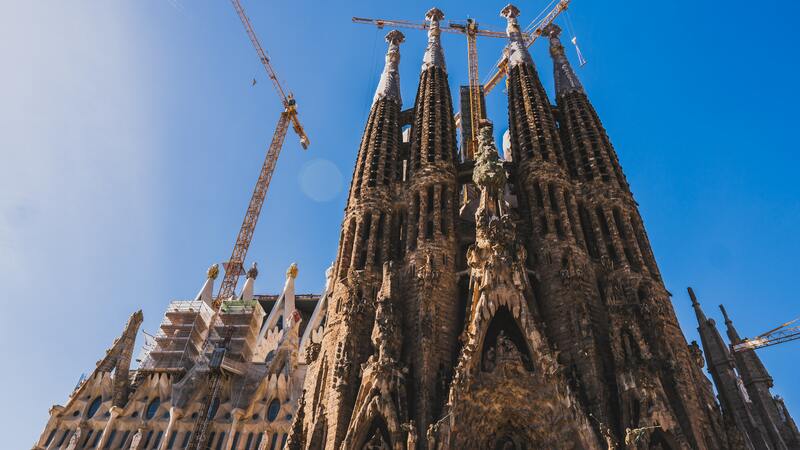
The Sagrada Família is a famous Catholic basilica in Barcelona designed by architect Antoni Gaudí. It is one of Spain’s most recognisable landmarks and a masterpiece of Catalan Modernisme. Its extraordinary towers, sculptural façades, complex geometry and interior resembling a stone forest make it unlike any other church. Construction began in the 19th century and continues today, making the basilica one of the most ambitious architectural projects in the world.
History of construction
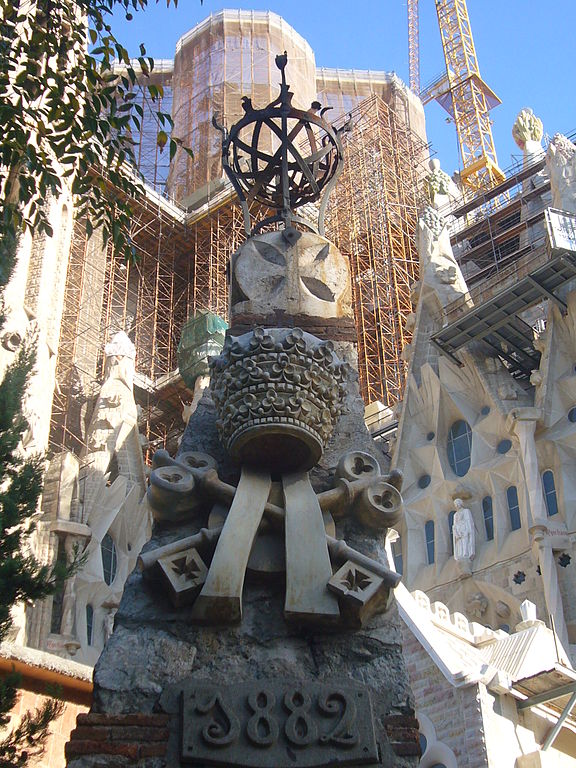
Construction began on 19 March 1882, following a design by Francisco de Paula del Villar. His original proposal was a conventional Neo-Gothic church, but he left the project after disagreements. Antoni Gaudí took over in 1883 and transformed it into a much more ambitious design inspired by nature, geometry and Christian symbolism.
Gaudí devoted the final decades of his life to the basilica. He developed models, façades and structural solutions, knowing that he would not live to see the building completed. In 1926, he was struck by a tram and died from his injuries. He was buried in the church’s crypt. Many models and documents were destroyed during the Spanish Civil War, so later architects had to reconstruct parts of the design from surviving plans and records.
The central tower completed in 2026
On 20 February 2026, the exterior of the central Tower of Jesus Christ was completed with the installation of the upper part of its cross. The tower reaches 172.5 metres and is the highest point of the basilica. The entire building is not yet finished: interior work and other construction stages continue, including the monumental Glory Façade.
Gaudí’s architecture
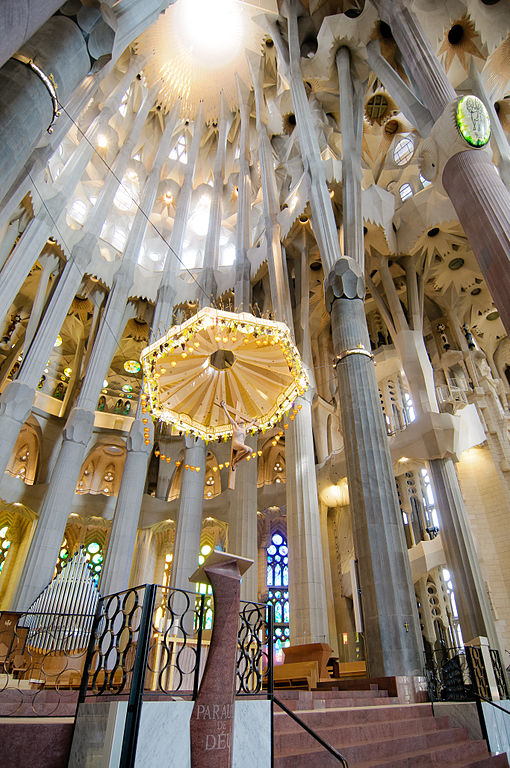
The basilica combines Gothic influences, Catalan Modernisme and Gaudí’s distinctive organic style. The architect studied natural forms such as trees, shells, bones and crystals. Inside, columns branch out like tree trunks, while the vaulted ceilings resemble interwoven canopies. Complex geometric forms are not merely decorative; they also help distribute structural loads.
The Nativity Façade
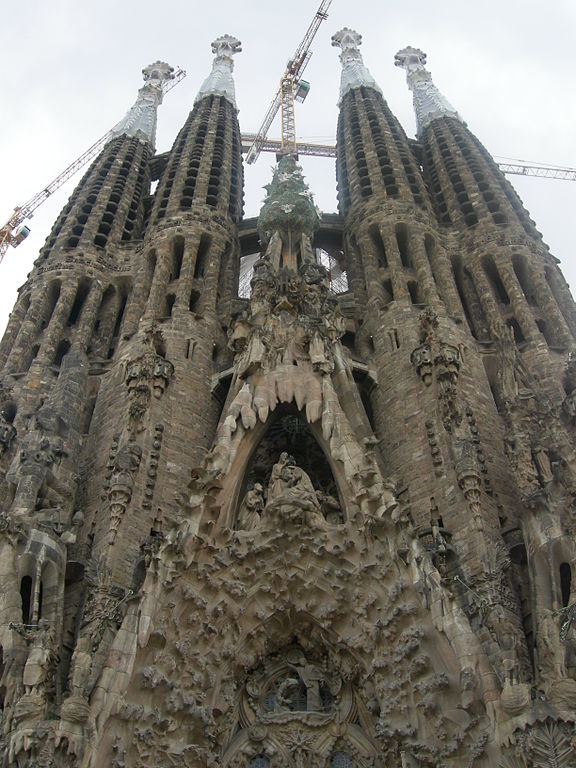
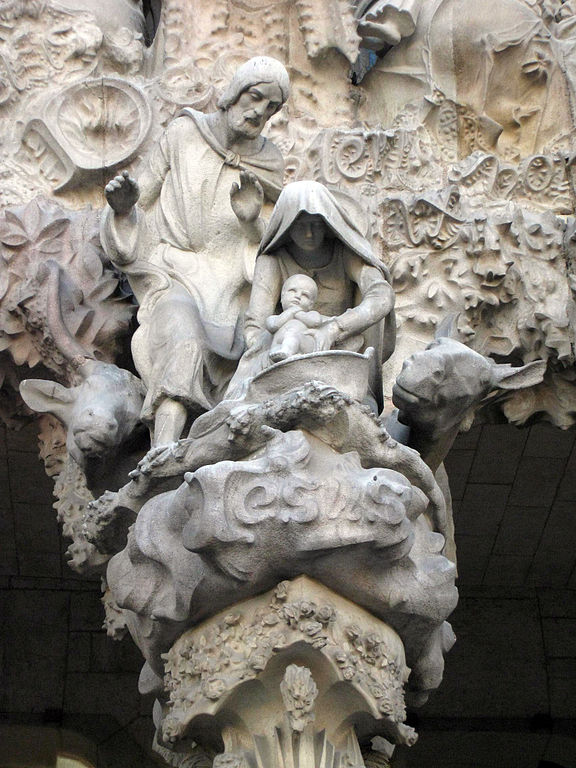
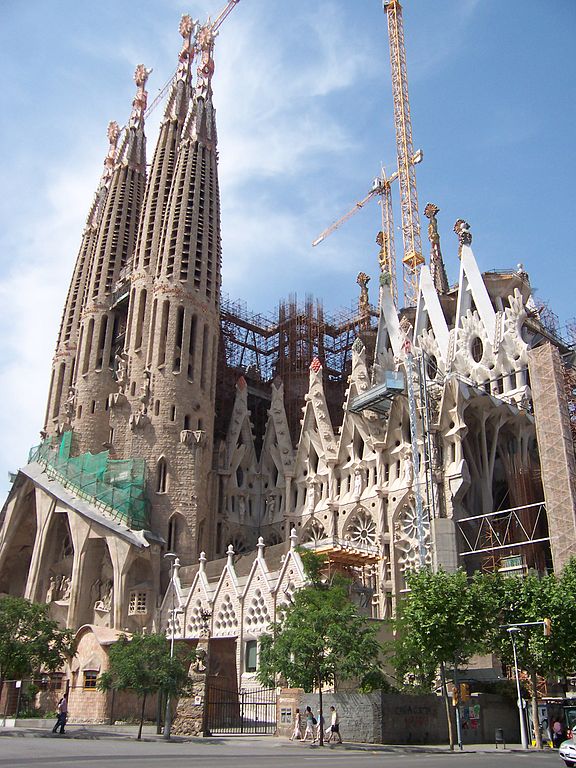
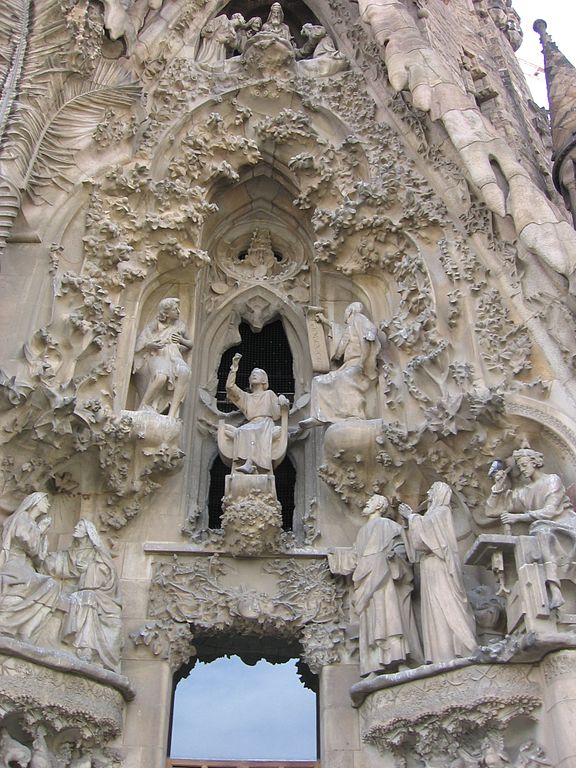
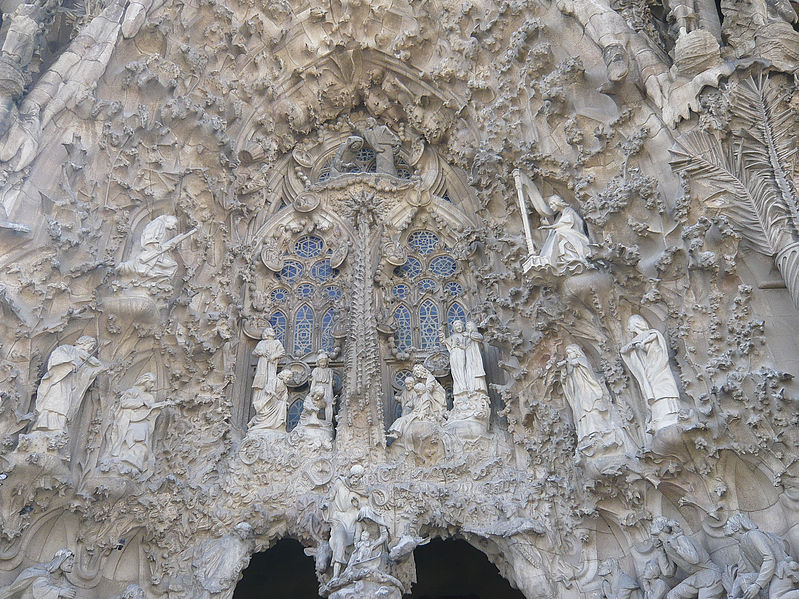
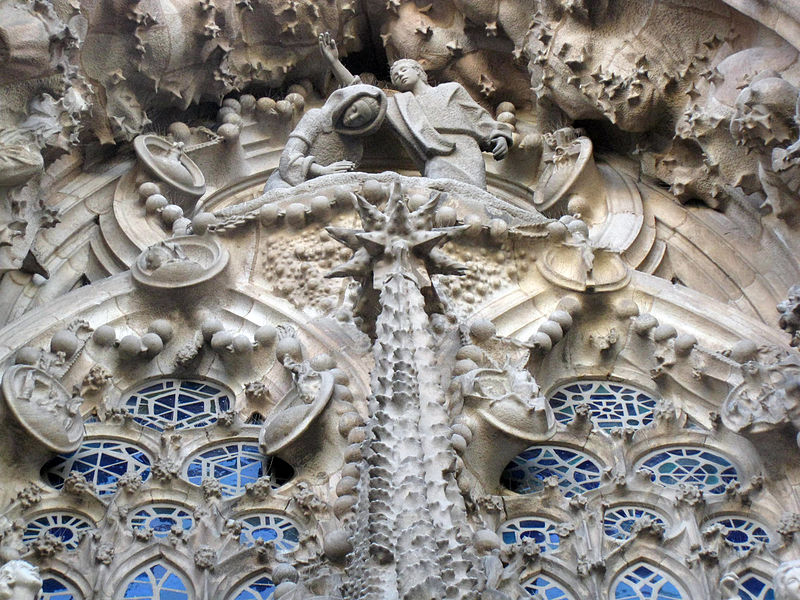
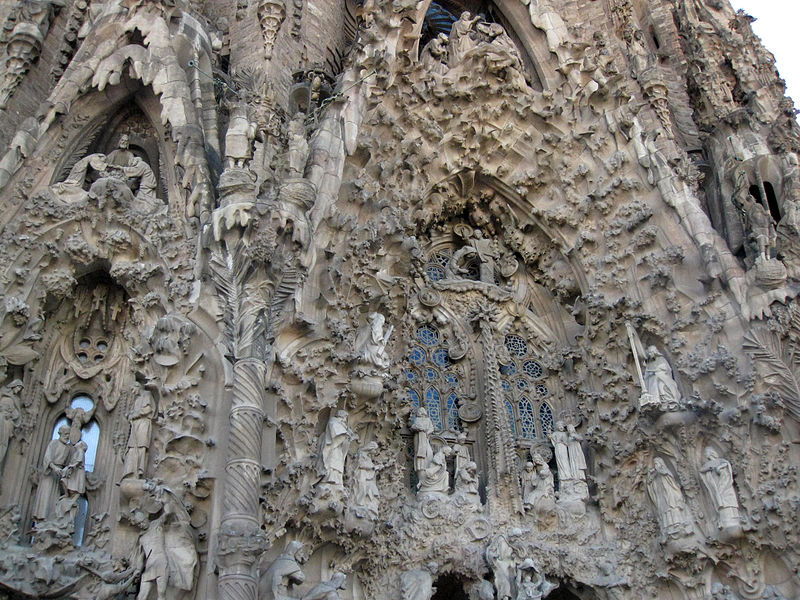
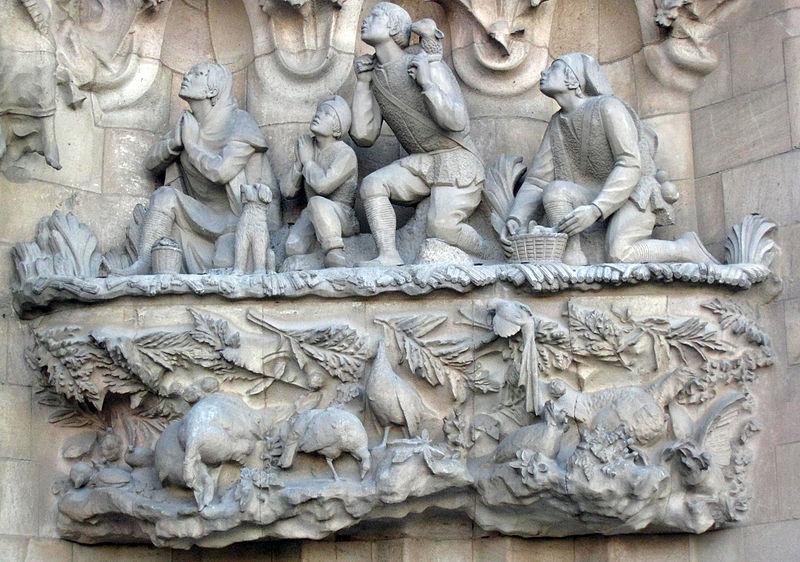
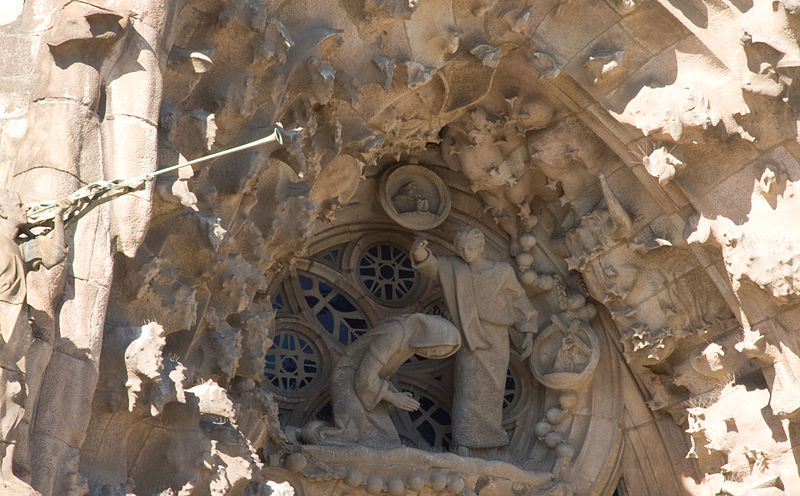
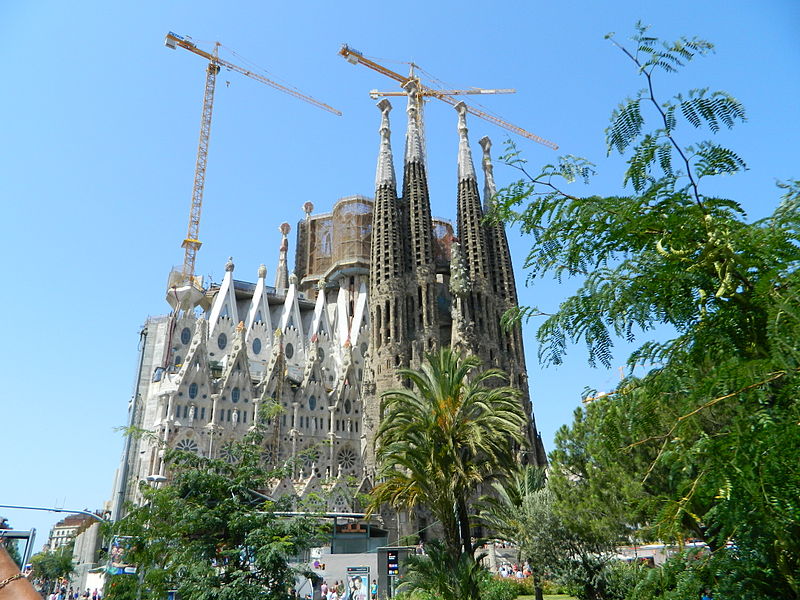
The Nativity Façade is dedicated to the birth of Jesus Christ. It is richly decorated with plants, animals and biblical scenes, including the Nativity and the adoration of the Magi and shepherds. This façade is the part most closely associated with Gaudí’s personal vision. In 2005, it and the crypt were included in UNESCO’s World Heritage property known as the Works of Antoni Gaudí.
The Passion Façade
The western Passion Façade depicts the final days of Jesus, his suffering and crucifixion. Unlike the richly ornamented Nativity Façade, it is austere, angular and dramatic. The sculptural groups were created by Josep Maria Subirachs. Its symbolic details include a magic square whose rows and columns add up to 33, traditionally associated with the age of Christ at his death.
The Glory Façade and the towers
The Glory Façade is intended to become the basilica’s principal entrance. Its themes include the resurrection, Christ’s heavenly glory and the spiritual journey of humanity. It is the largest of the three façades, and its completion remains a major stage of the project.
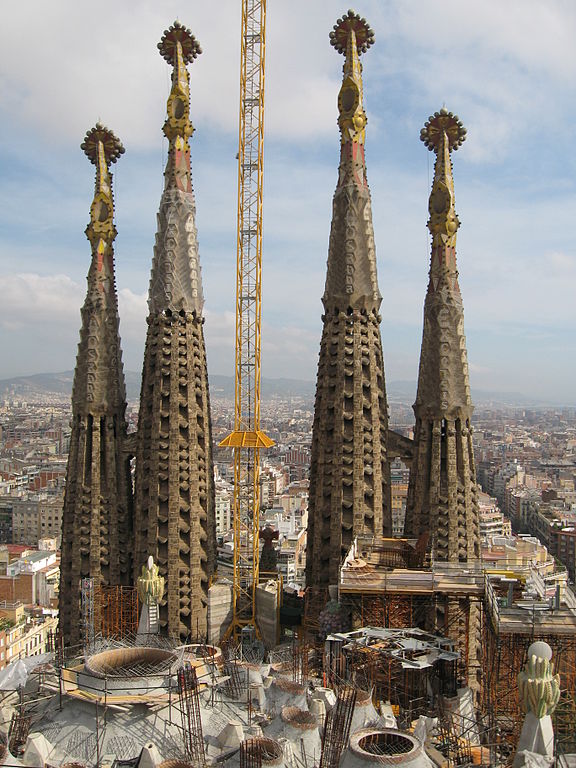
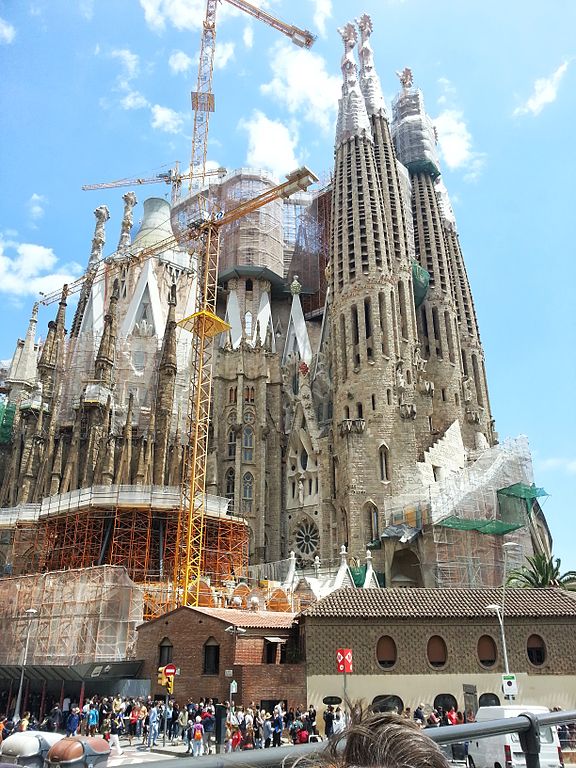
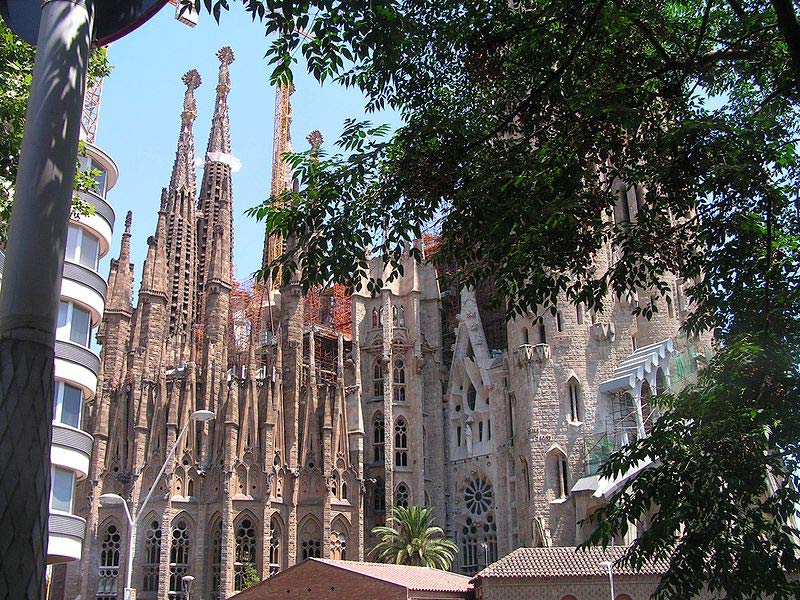
Gaudí’s design includes 18 towers: twelve for the apostles, four for the evangelists, one for the Virgin Mary and the tallest for Jesus Christ. The central tower reaches 172.5 metres. The four evangelist towers surround it, while the tower of the Virgin Mary is crowned by a large illuminated star.
The interior: a forest of stone and light
The interior resembles a forest of stone. Columns branch towards the ceiling, supporting a complex system of vaults. Large stained-glass windows fill the space with coloured light that changes throughout the day. Warm reds, oranges and yellows dominate one side, while blues and greens characterise the other. Gaudí aimed to unite engineering, natural forms and a spiritual atmosphere.
The crypt and UNESCO heritage
The crypt beneath the altar is one of the oldest parts of the basilica and contains Gaudí’s tomb. It remains a religious space, so visitors should observe silence and respect the rules of the church.
The basilica forms part of UNESCO’s World Heritage property, the Works of Antoni Gaudí. Its importance lies in the way Gaudí combined structural experimentation, artistic expression, natural forms and Christian symbolism in a distinctive architectural language.
Visiting the basilica
The Sagrada Família is located at Carrer de Mallorca, 401, Barcelona. The nearest metro station is Sagrada Família, served by lines L2 and L5. Tickets should be purchased in advance through the official website for a specific entry time. Some ticket types include access to the towers, but availability depends on operating conditions and safety requirements.
Allow at least one to two hours to explore the interior, façades and museum. The Sagrada Família is an active basilica, so visitors should dress appropriately, behave respectfully and avoid disturbing religious services. It remains one of the world’s most remarkable architectural projects, with a history that continues into the 21st century.
Gallery