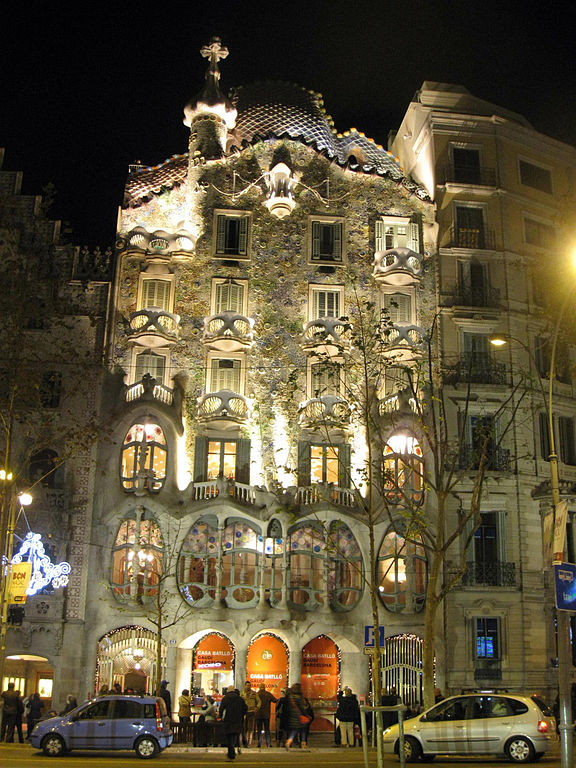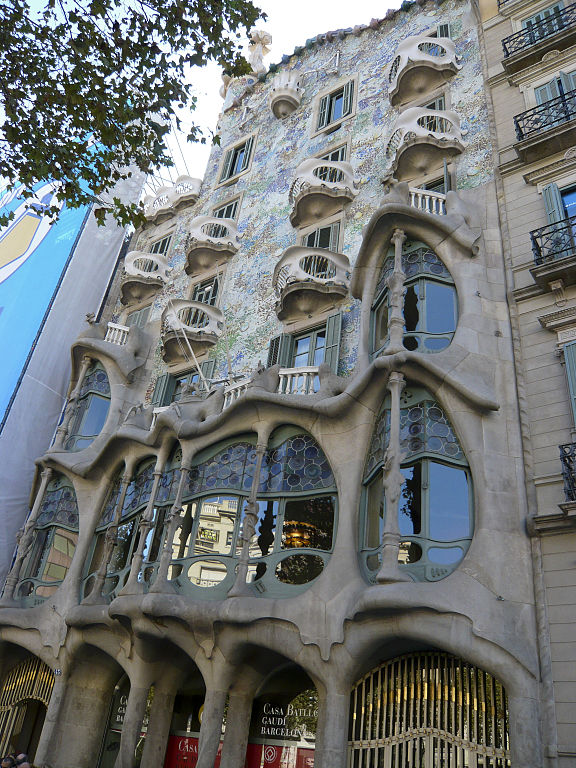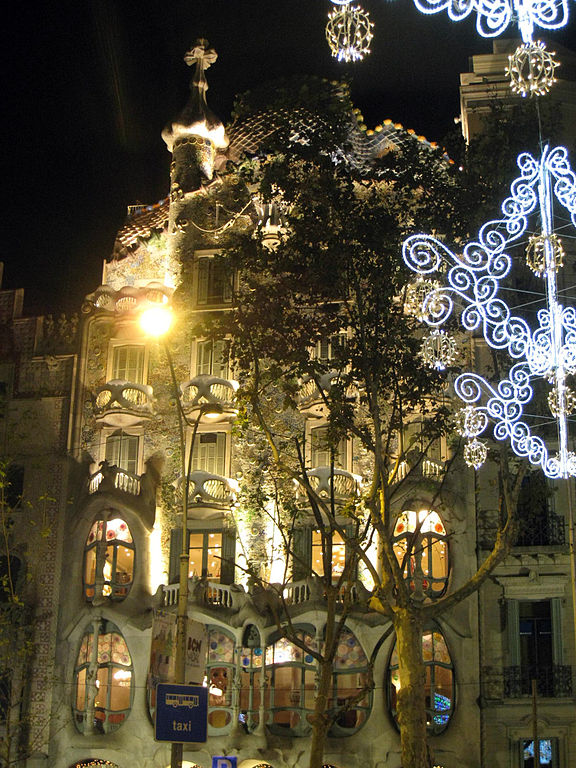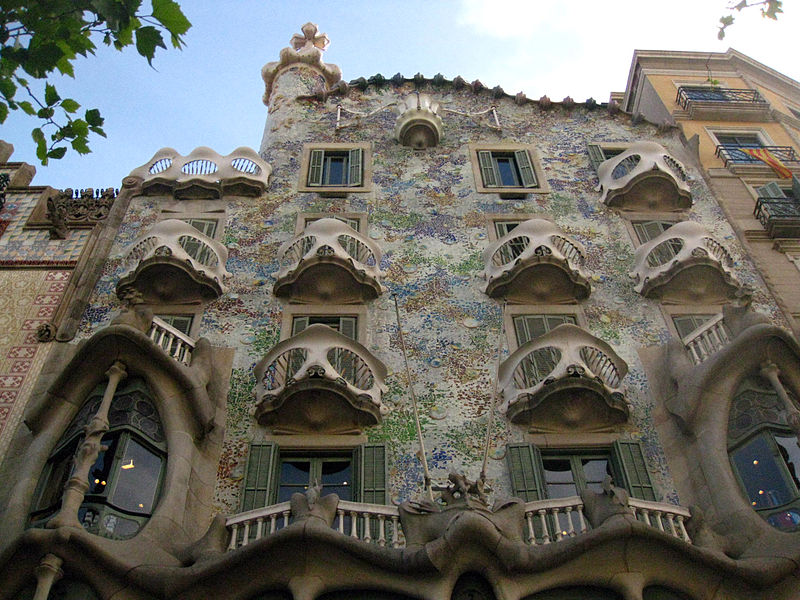

Casa Batlló is one of Barcelona’s most distinctive architectural landmarks. Located on Passeig de Gràcia, it is famous for its flowing façade, colourful ceramic mosaic, unusual balconies and roof that resembles a dragon’s back. The building is a celebrated work by Antoni Gaudí and one of the best-known examples of Catalan Modernisme.
The original building was constructed in 1877 to a design by Emilio Sala Cortés. In the early 20th century, industrialist Josep Batlló acquired it and commissioned Gaudí to transform the property. Between 1904 and 1906, the architect radically redesigned the façade and interiors while retaining the original building’s basic structure. The result was a complete artistic environment in which architecture, furniture, decoration and practical features work together.
The façade and its inspiration
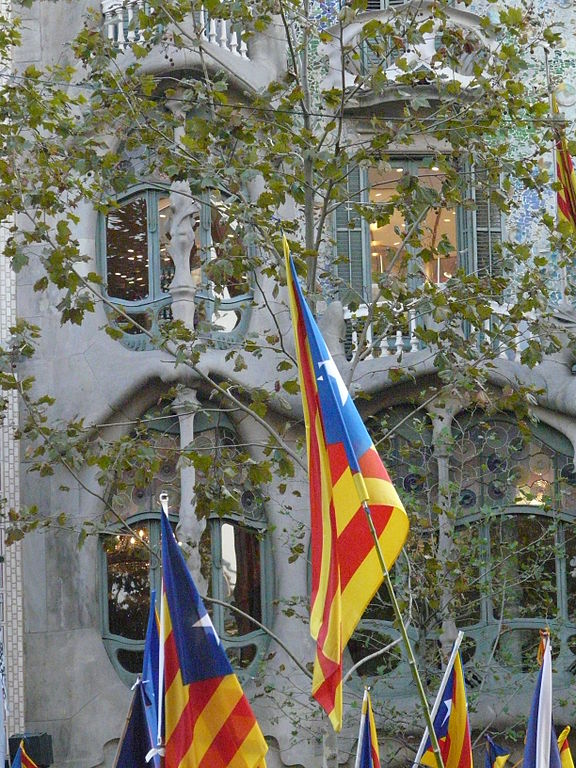
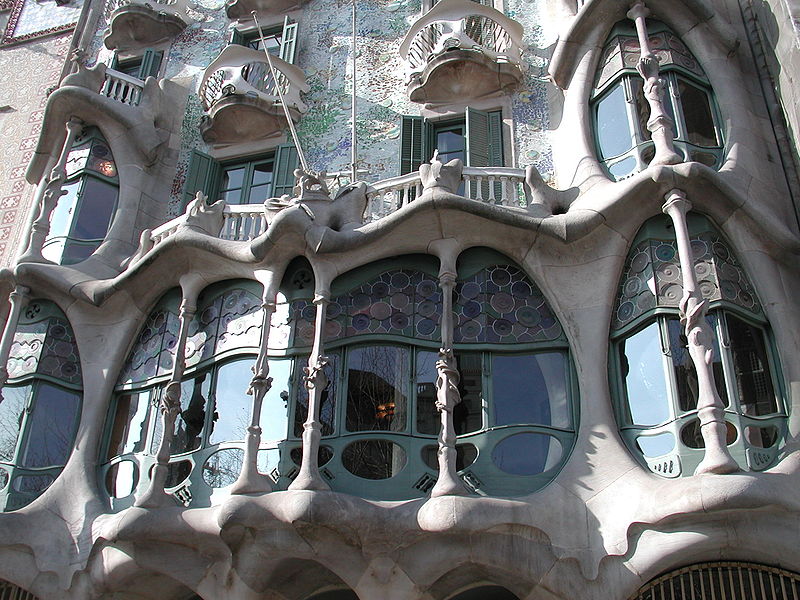
The façade combines stone, glass, wrought iron and colourful ceramics. Its undulating surfaces resemble waves, while the trencadís technique uses fragments of ceramic and glass to create a shimmering mosaic. Blue, green and golden tones change with the light. The balconies are often compared to masks or skulls, and the columns below have been likened to bones, inspiring the informal nickname House of Bones.
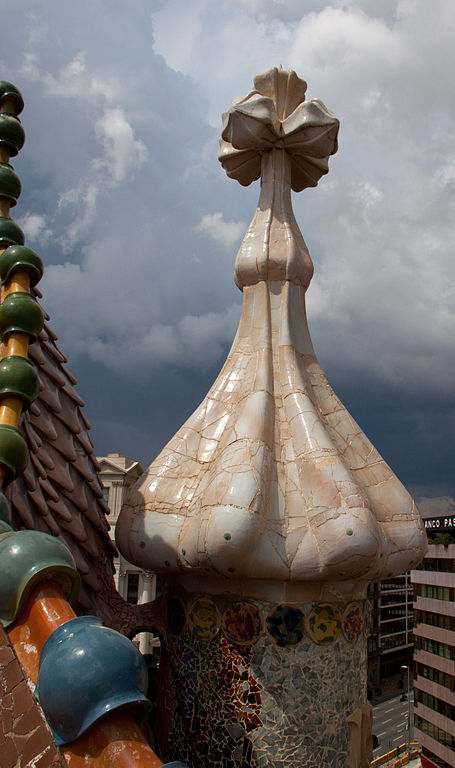
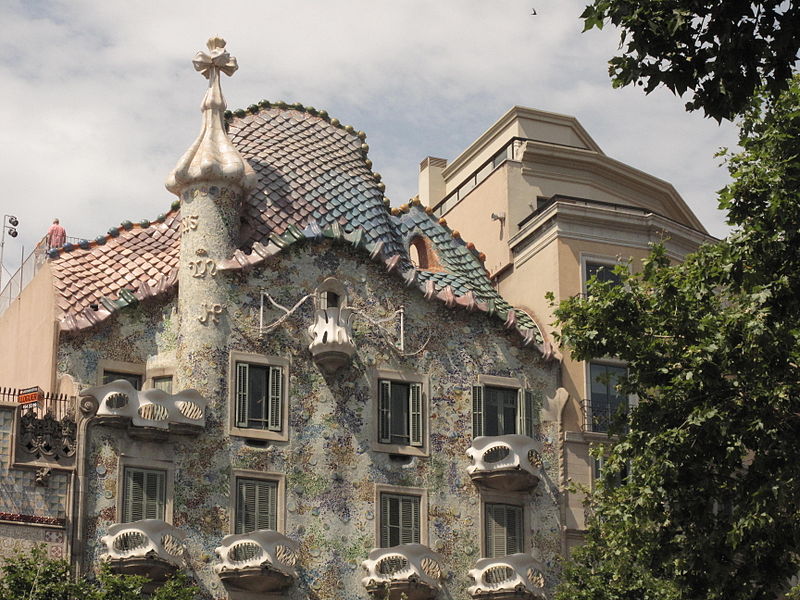
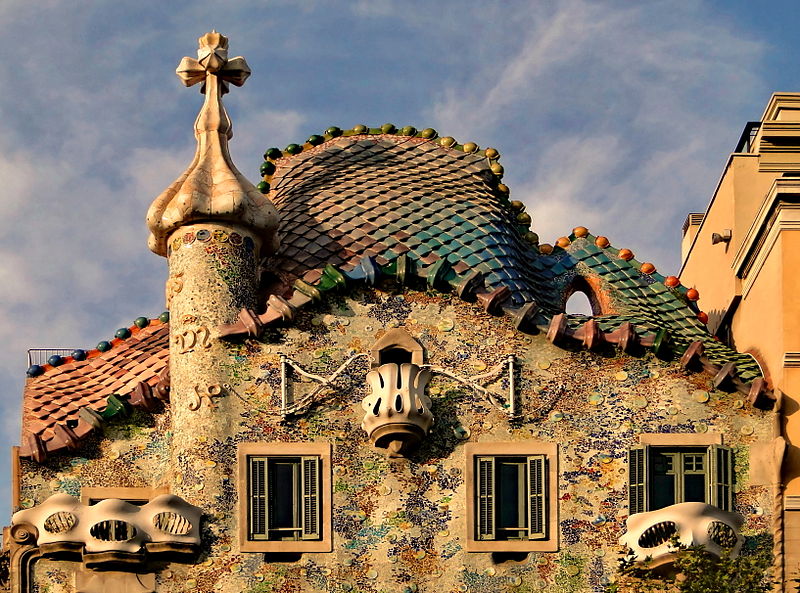
Casa Batlló is often interpreted through the legend of Saint George, the patron saint of Catalonia, who defeated a dragon. The roof resembles a dragon’s back, its colourful tiles suggest scales, and the tower topped with a cross is sometimes associated with the saint’s weapon. This is a popular interpretation rather than a definitive explanation of every architectural detail.
The interior and light well
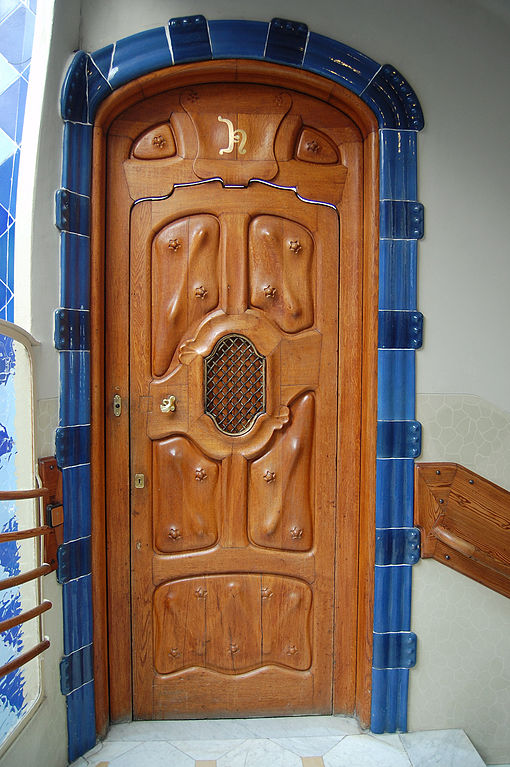
Inside, Gaudí avoided conventional straight lines and designed curved walls, distinctive windows, doors and decorative elements. The main floor contained the Batlló family’s principal rooms. Custom-designed wooden furniture, door handles and fittings were created to complement the architecture and improve everyday use.
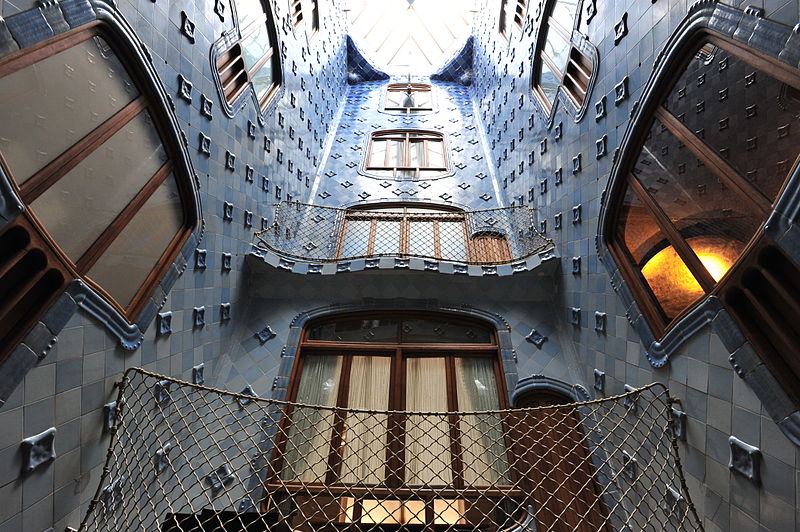
One of the most remarkable features is the central light well, decorated with ceramic tiles in different shades of blue. The colour becomes lighter toward the top, helping distribute daylight more evenly throughout the building. Window sizes and ventilation features were carefully designed to improve natural lighting and air circulation.
The attic and roof
The attic contains a sequence of curved arches supporting the roof. Their repeating shapes resemble the skeleton of a large animal or the inner structure of a boat. This space reveals the engineering behind Gaudí’s imaginative design: structural elements also become part of the visual composition.
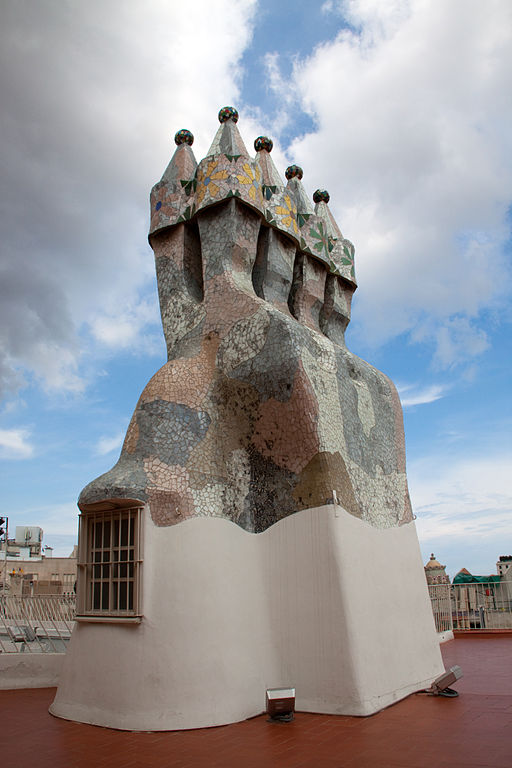
The roof has a flowing silhouette covered in colourful ceramic pieces that resemble scales. Unusually shaped chimneys and ventilation structures rise from its surface. Gaudí transformed these practical elements into sculptural features, and the small tower topped with a cross gives the roof its distinctive outline.
Gaudí and Catalan Modernisme
Antoni Gaudí was one of the most original architects of the late 19th and early 20th centuries. He drew inspiration from nature, experimented with geometry and combined architecture with decorative arts. Casa Batlló illustrates his belief that a building should be conceived as a coherent whole, from the exterior and interior to furniture and technical systems.
The building forms part of the UNESCO World Heritage property known as the Works of Antoni Gaudí, inscribed in 1984 and extended in 2005. It is an outstanding example of Catalan Modernisme and one of Barcelona’s most recognisable cultural landmarks.
Location and visiting
Casa Batlló is located at Passeig de Gràcia 43 in central Barcelona. Nearby Modernista buildings include Casa Amatller and Casa Lleó Morera. Together, these buildings form part of the area commonly known as the Block of Discord, where visitors can compare different architectural approaches.
The nearest metro station is Passeig de Gràcia, served by lines L2, L3 and L4. The building can also be reached by train or on foot from Plaça de Catalunya. Casa Batlló welcomes visitors every day, but opening times and access to particular areas may change, so check the official website before travelling. Advance booking is recommended, and a typical visit takes about one hour to one hour and fifteen minutes.
During the visit, look closely at the mosaic façade, the blue light well, the attic arches and the sculptural chimneys on the roof. Casa Batlló combines fantasy, natural inspiration and engineering into a unique architectural work that remains one of Gaudí’s most memorable creations.
Gallery