The Artigas Gardens are an unusual landscape garden in Catalonia associated with the celebrated architect Antoni Gaudí. They are located in La Pobla de Lillet, in the province of Barcelona, amid wooded slopes and the valley of the Llobregat River. Stone bridges, paths, stairways, fountains and grottoes blend with the natural terrain, making the gardens a distinctive example of architecture integrated into nature.
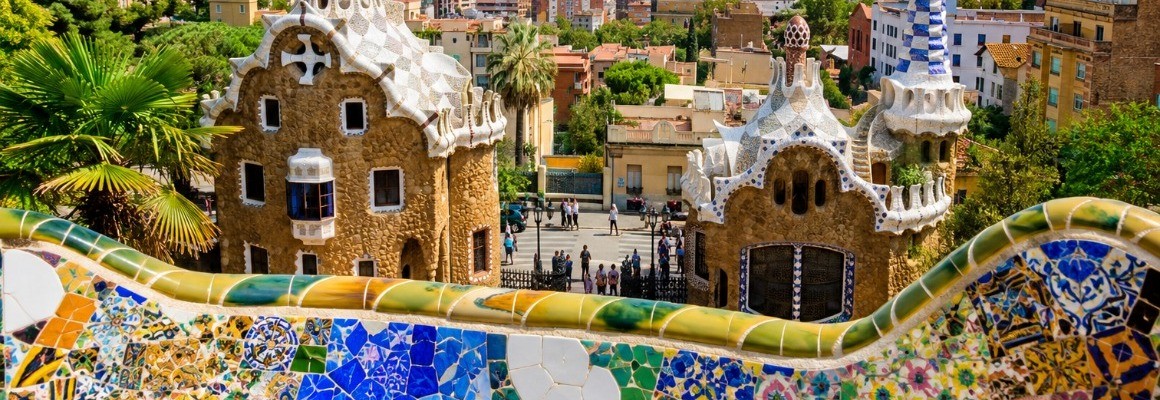
The gardens are often compared with Park Güell in Barcelona because both are associated with Gaudí. However, their appearance is quite different. Instead of colourful ceramic mosaics and broad urban viewpoints, the Artigas Gardens rely on local stone, water, moss and vegetation. The result feels like a natural valley enhanced by carefully placed architectural features.
History
In the early 20th century, La Pobla de Lillet was shaped by textile production and industrial development in the surrounding mountains. Gaudí visited the area in connection with his work on the Catllaràs chalet, designed for workers and engineers associated with a nearby mining operation. During his stay in the valley, he was hosted by the Artigas family, who owned a local textile factory.
In gratitude for their hospitality, Gaudí proposed a garden design for land near the family home and factory. Work began in 1903. Craftsmen familiar with the work at Park Güell were involved in the early stages, and local workers later contributed to the construction. The project was conceived as a place for relaxation in which architecture would complement the natural landscape.
The gardens are traditionally attributed to Gaudí and are presented as his work by local cultural and tourism institutions. However, the original plans have not survived, and some details of his direct involvement remain a subject of historical research. The gardens later fell into neglect after the Artigas family left the area. Restoration began in 1992 and was completed in 1997, allowing the site to reopen to visitors.
Architecture among nature
The gardens extend along both sides of the Llobregat River. Water forms small cascades, feeds fountains and connects different parts of the landscape. Stone structures appear to grow out of the surrounding rocks, while vegetation softens the boundaries between natural and built forms.
Unlike formal French gardens, the Artigas Gardens do not rely on strict symmetry or long, straight avenues. Paths follow changes in elevation, and bridges, steps and small terraces reveal new views along the way. This approach reflects Gaudí’s interest in organic shapes and in adapting architecture to the character of a particular site.
The waterfall and grotto
The waterfall fountain is one of the garden’s most striking features. Water runs over stone surfaces, forming small cascades that emphasise the natural slope. Its sound contributes to the peaceful atmosphere.
The stone grotto resembles a natural cave. Arched ceilings, shadows and damp stone surfaces create a distinctive experience. The gardens also contain structures resembling catenary arches, reflecting Gaudí’s interest in geometry and engineering.
Stone bridges and animal fountains
Stone bridges connect the riverbanks and different levels of the grounds. They are functional structures as well as elements of the overall composition. One of the best-known is Pont dels Arcs, or the Bridge of Arches, whose supports and curves resemble natural rock formations.
The Ox Fountain and the Lion Fountain are among the garden’s decorative highlights. In Christian tradition, the lion is associated with the evangelist Mark and the ox with Luke. The original composition also included symbols of the other evangelists. An angel traditionally associated with Matthew later disappeared, so the initial arrangement has not survived in full.
The gazebo and viewpoints
La Glorieta, a small gazebo on higher ground, serves as both an architectural feature and a viewpoint. From here, visitors can look across the vegetation, stone structures and river valley. Such viewpoints encourage visitors to experience the gardens as a complete landscape rather than simply a collection of individual objects.
The Artigas Gardens and Park Güell
Both sites demonstrate Gaudí’s desire to unite architecture and nature. Park Güell is known for its colourful mosaics, open spaces and famous serpentine bench, while the Artigas Gardens focus on stone, water and natural vegetation. They are more compact and create the feeling of walking through a small mountain valley.
The Artigas Gardens reveal a less familiar side of Gaudí’s work. Here he responded to a natural landscape rather than an urban setting, using the terrain as the foundation for paths, bridges, arches and grottoes.
Location and visiting
The gardens are located in La Pobla de Lillet, in the Berguedà area of Barcelona province, Catalonia, Spain, beside the Llobregat River. The address is Carrer del Ferrocarril, s/n. A visit can be combined with exploring the town and other industrial and natural heritage sites in the region.
Travelling by car is generally the most convenient option. Public transport in this part of Catalonia is less frequent, so check bus routes and timetables in advance. Opening hours and admission prices vary by season. The ticket office generally closes 30 minutes before the gardens, and current details should be checked with the local tourism service.
The route crosses uneven ground and includes steps and changes in elevation. The gardens are not fully accessible to visitors with reduced mobility, so comfortable shoes are recommended. Allow about an hour for a relaxed visit. The Artigas Gardens bring together natural scenery, engineering and decorative art in a landscape closely associated with Gaudí’s distinctive approach.
Gallery