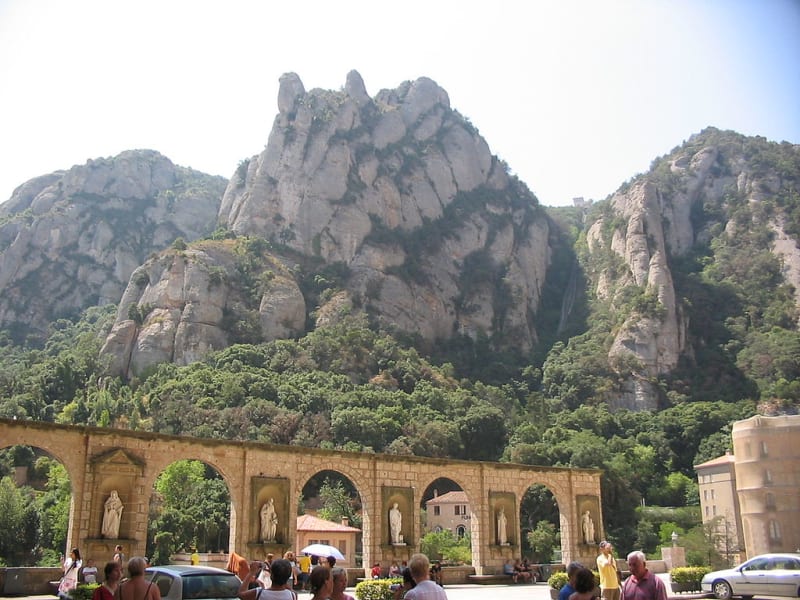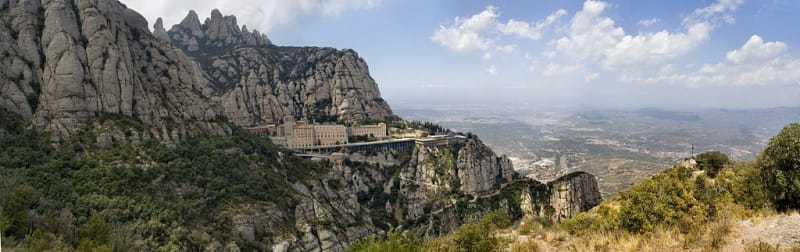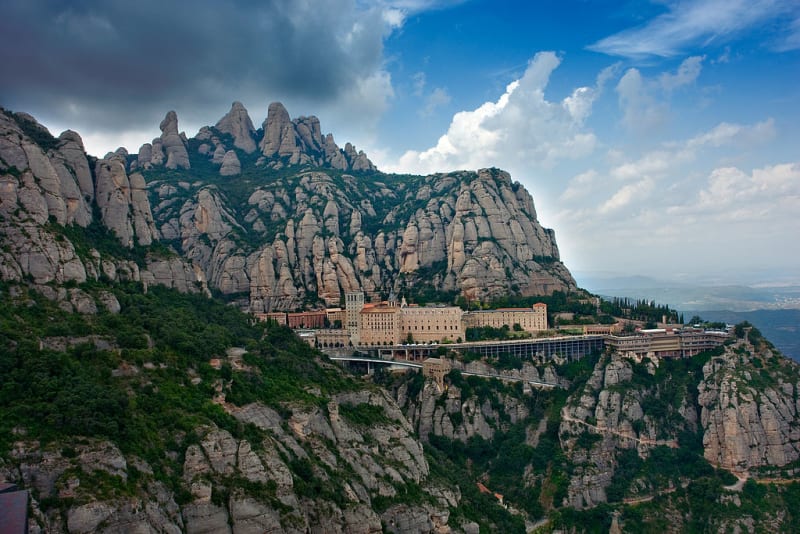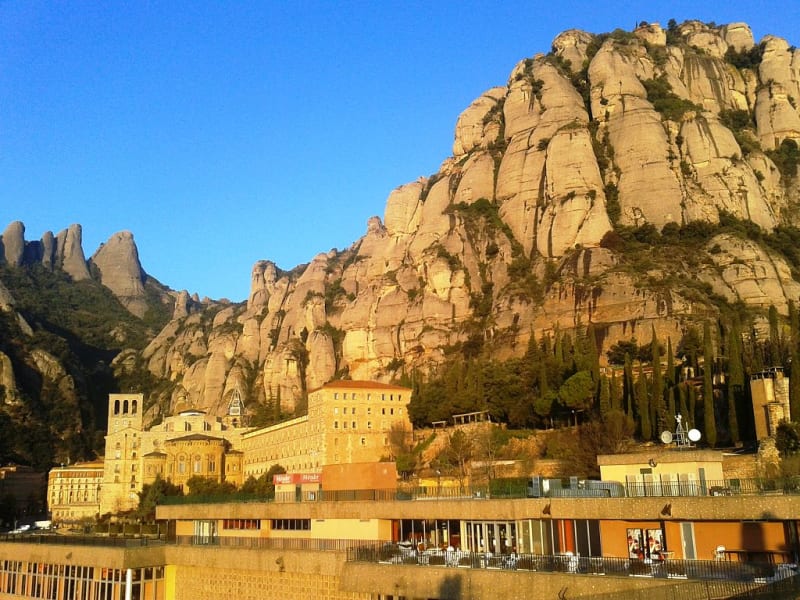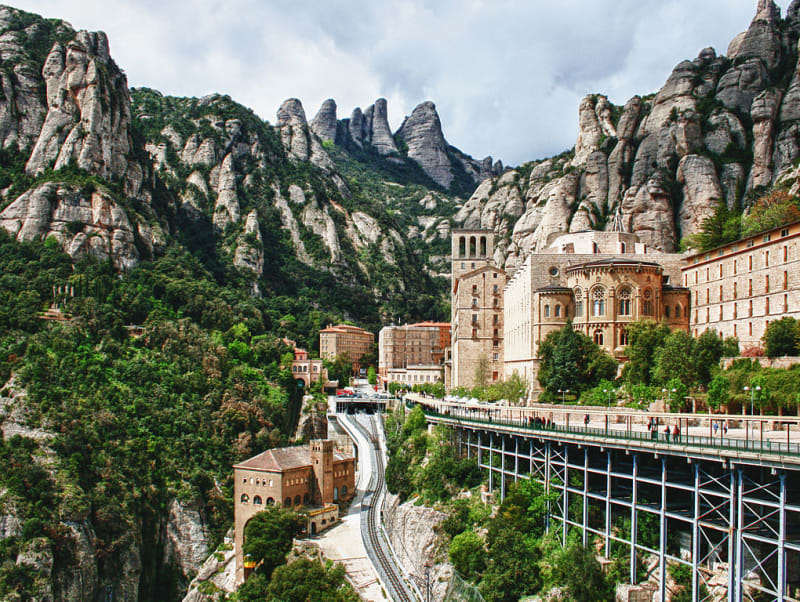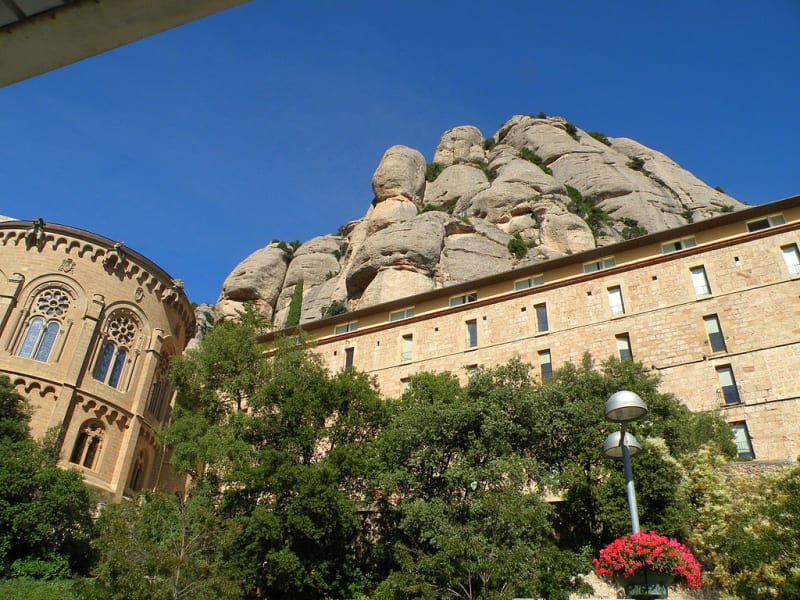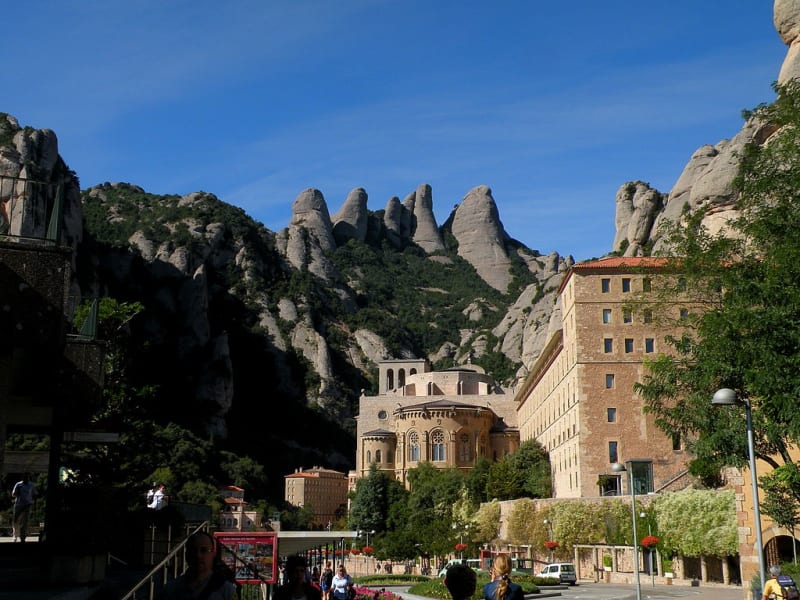

Montserrat National Park is one of Catalonia’s best-known natural attractions, located about 60 km northwest of Barcelona, Spain. Its defining feature is a remarkable mountain massif made up of rounded rock formations, sharp pinnacles and narrow ridges. The silhouettes resemble towers and enormous figures, making Montserrat one of the region’s most distinctive landscapes.
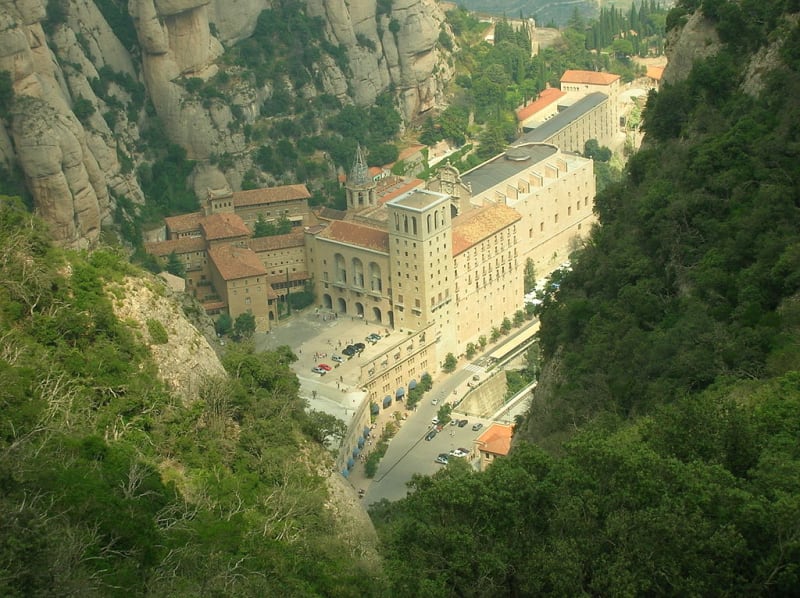
Nature here is closely connected with Catalan history and culture. The Benedictine Monastery of Santa Maria de Montserrat stands among the mountains and has welcomed pilgrims and travellers for centuries. A visit combines hiking, historic architecture and panoramic views across the surrounding valleys.
Location and geology
The massif is in Catalonia, near the towns of Monistrol de Montserrat, Collbató, El Bruc and Marganell. The protected natural area covers approximately 3,630 hectares. It is valued for its geological uniqueness, variety of natural habitats and cultural importance.
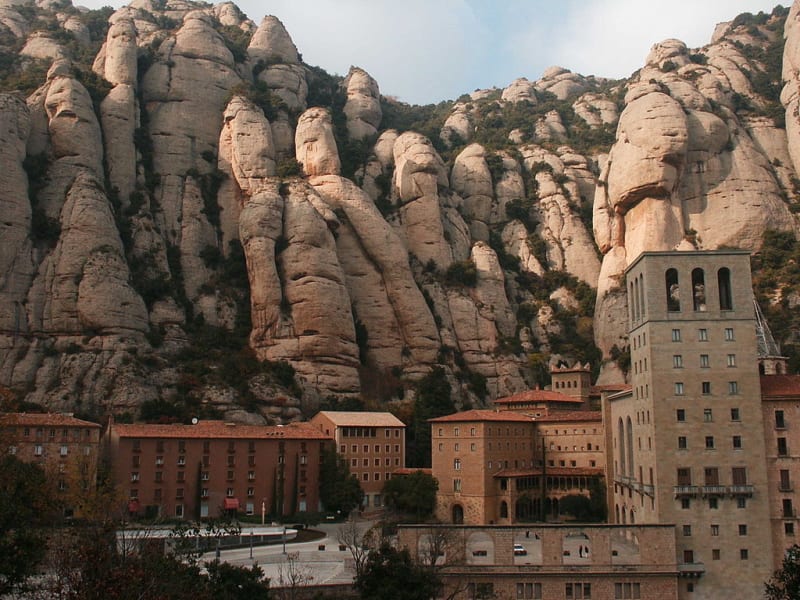
Montserrat’s rocks developed from sedimentary material, including pebbles and other fragments bound together by natural cement made from sand and clay. Over millions of years, water, wind and temperature changes shaped the distinctive towers, rounded domes and narrow passages. Some peaks resemble human faces or animals, inspiring local legends and unusual names.
Santa Maria de Montserrat Monastery
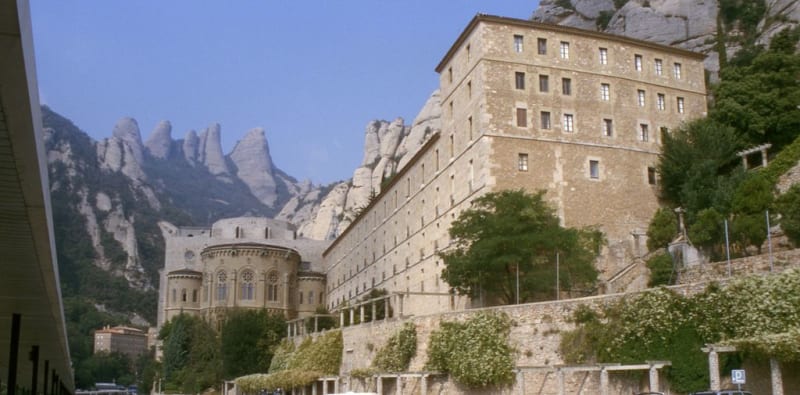
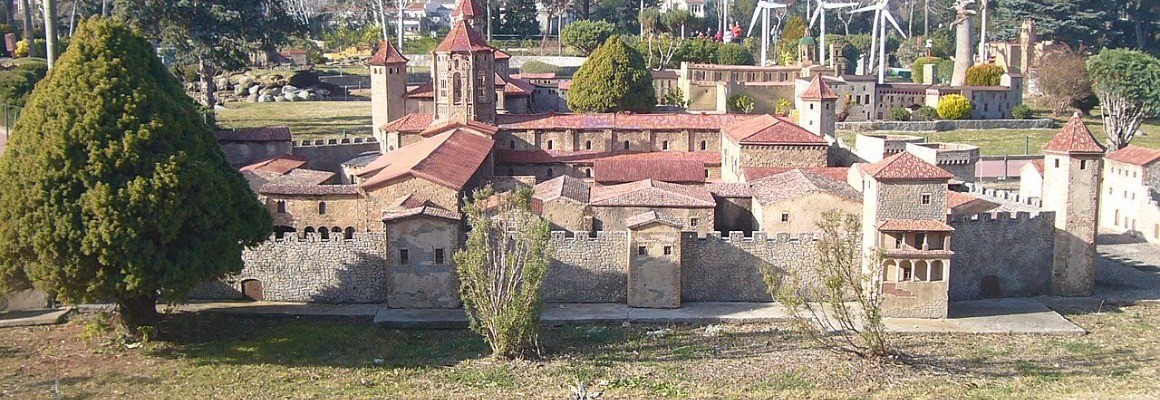
The mountain’s main cultural landmark is the Benedictine Monastery of Santa Maria de Montserrat. Its history reaches back to the Middle Ages, and the architectural complex was expanded and rebuilt over several centuries. The monastery has become one of Catalonia’s most important religious and cultural symbols.
Its most revered object is the statue of Our Lady of Montserrat, known as La Moreneta and venerated as the patron saint of Catalonia. Pilgrims come here alongside visitors interested in history, art and architecture. Check service times and access arrangements for individual areas before visiting.
Nature, plants and wildlife
Montserrat’s vegetation is typical of the Mediterranean climate, although elevation and differences in moisture create several habitats. Evergreen oaks, pines, shrubs and flowering plants grow on the slopes. Cooler, damper locations support shade-loving species, while exposed rock faces host plants adapted to limited soil and water.
The park supports birds, small mammals, reptiles and amphibians. Wildlife associated with the area includes falcons, thrushes, wood pigeons, squirrels, wild boar and mountain goats. Wildlife watching requires patience and quiet. Keep your distance, do not feed animals and never leave food along the trails.
Hiking trails and viewpoints
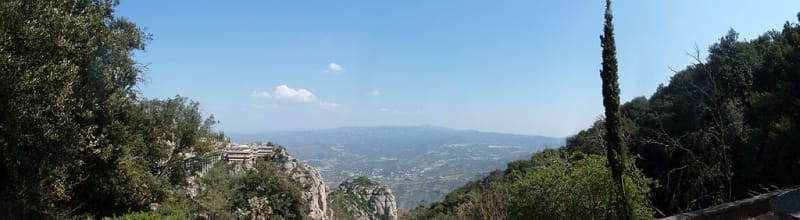
Montserrat is popular with walkers thanks to its network of paths between rock formations, woodland and viewpoints. There are relatively short walks for casual visitors as well as more demanding ascents for experienced hikers. Along the way, trails offer views of mountain ridges, Catalan valleys and the surrounding countryside.
One well-known route leads to Sant Jeroni, the massif’s highest point at approximately 1,236 metres. On clear days, the summit offers extensive views across Catalonia. Choose a route suited to your fitness, wear sturdy footwear and carry enough water and sun protection. Rocks can become slippery after rain, while exposed paths heat up quickly in summer.
Funiculars and access to the mountain
Some parts of Montserrat can be reached by transport as well as on foot. The Sant Joan funicular provides access to higher trails, while the Santa Cova funicular travels towards the sanctuary of the same name. A rack railway connects Monistrol de Montserrat with the monastery complex, and the Aeri de Montserrat cable car offers another way to ascend the mountain.
From Barcelona, visitors can take a train to Monistrol de Montserrat and transfer to the rack railway, or travel to the cable-car station. Drivers can reach the monastery by mountain road, although parking may be limited during busy periods. Check timetables, prices and service status before setting out.
Best time to visit Montserrat
Montserrat can be visited throughout the year. Spring and autumn are often comfortable for walking because temperatures are more moderate. Summer can be hot on exposed slopes, so it is best to start hikes early and carry plenty of water.
Winter can be cool and windy, and rain can make paths slippery. Mist may quickly hide the views and make navigation more difficult. Check the forecast and official park notices before beginning a hike.
Visitor guidelines
Montserrat combines a protected natural area, a religious complex and a popular tourist destination. Visitors should respect the quiet of the monastery, follow clothing requirements in religious spaces and avoid disturbing services. On the trails, stay on marked paths, do not collect plants and take all rubbish away.
A short visit can combine the monastery with a nearby viewpoint, while a longer hike is best planned as a full-day outing. Comfortable shoes, water, a hat and a light jacket are useful in every season because conditions on exposed mountain paths can differ considerably from those in Barcelona. Montserrat brings together unusual geology, Mediterranean nature and Catalonia’s cultural heritage in one remarkable landscape.
Gallery