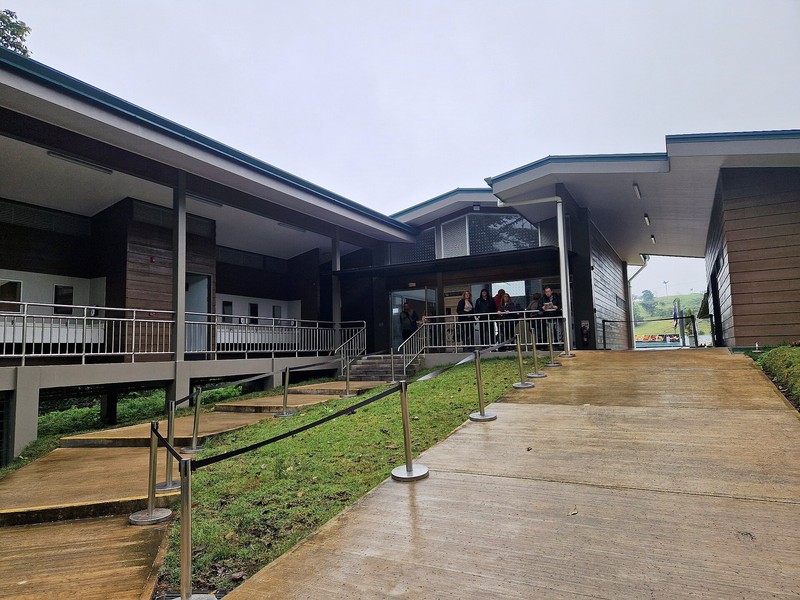
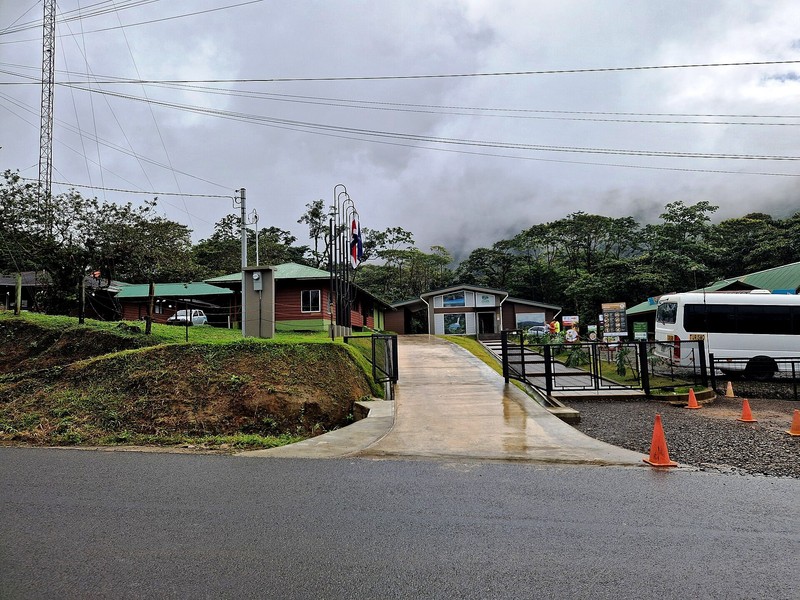
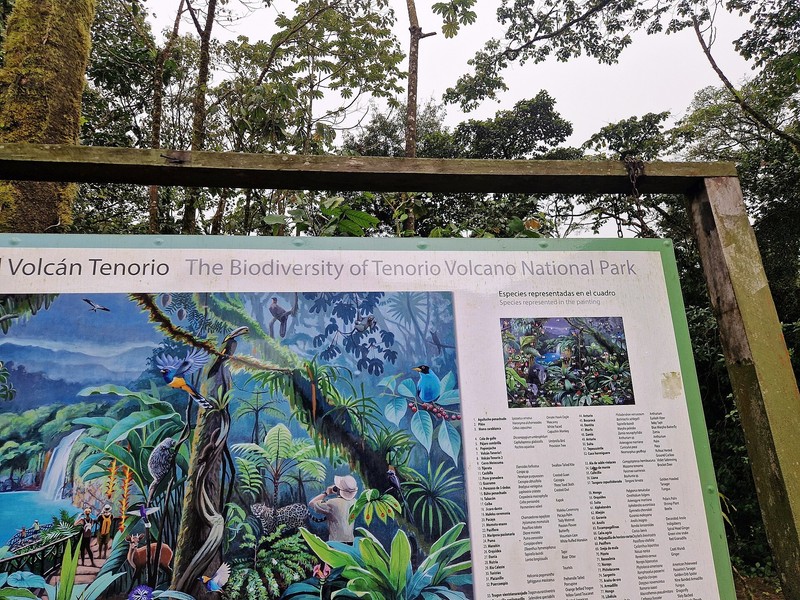
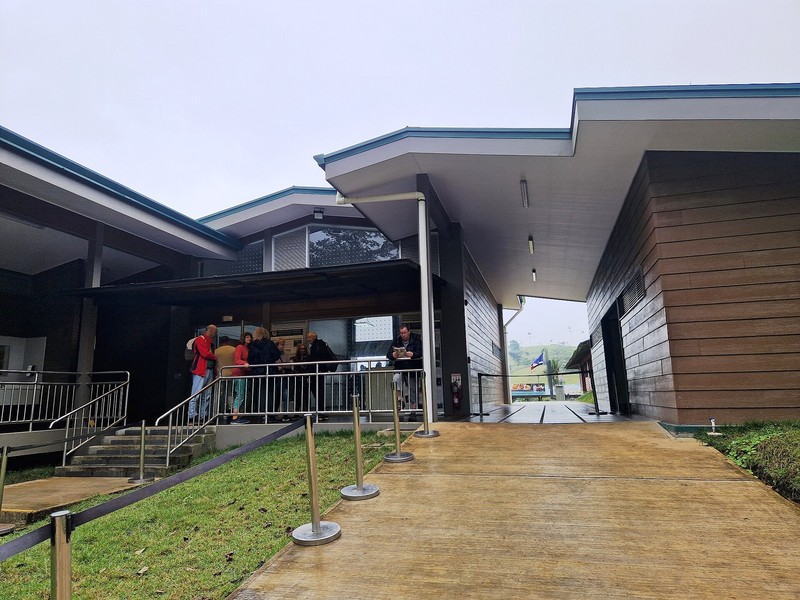
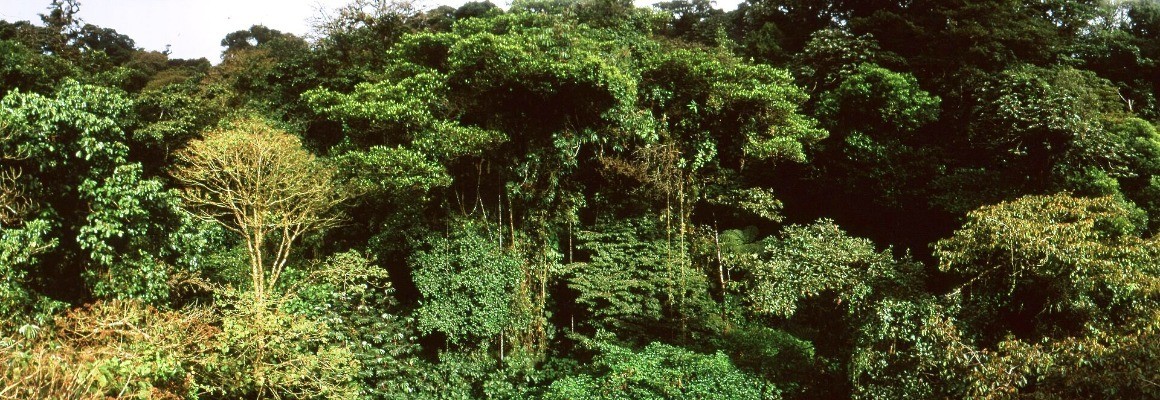
Tenorio National Park lies in northwestern Costa Rica, in the Cordillera de Guanacaste mountain range. It protects tropical forests, volcanic landscapes, rivers and diverse wildlife. Its best-known attraction is Río Celeste, a river famous for its unusual turquoise-blue water, along with the waterfall of the same name surrounded by lush vegetation.
Río Celeste
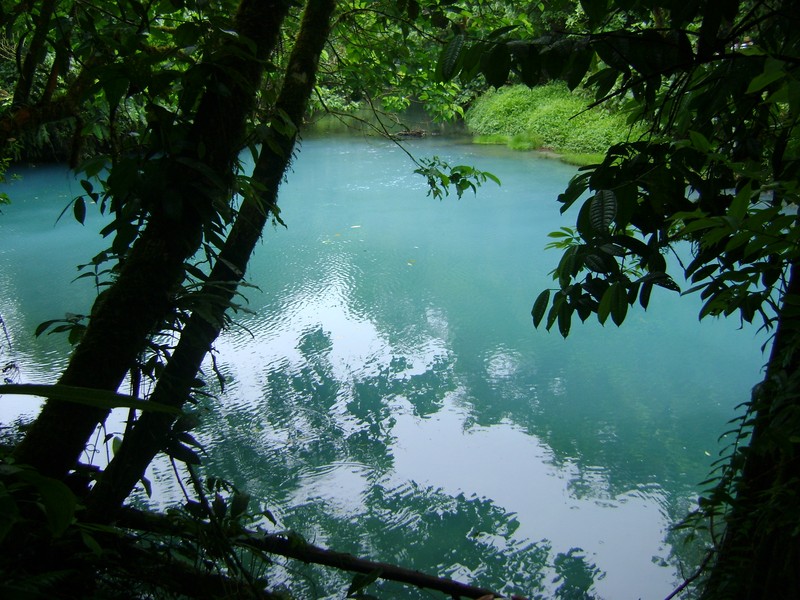
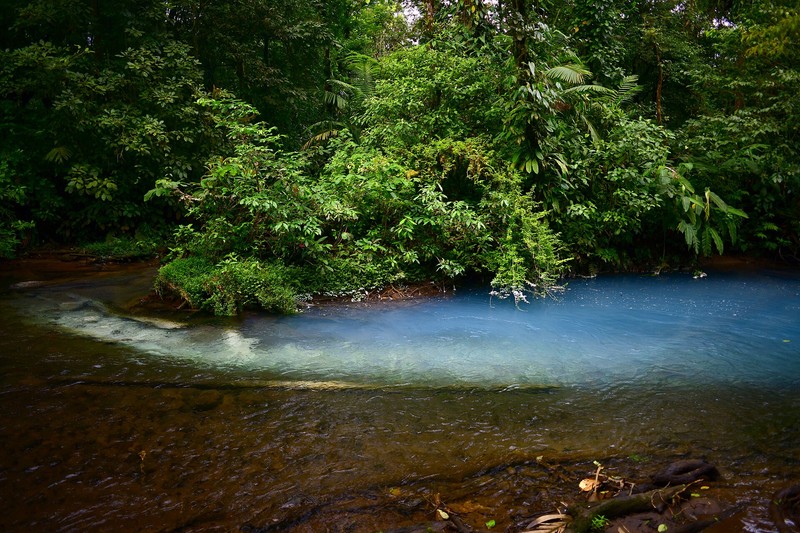
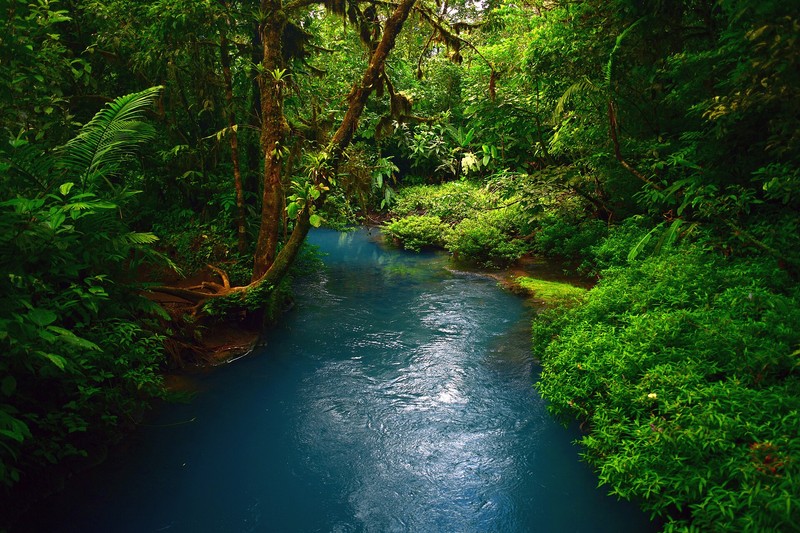
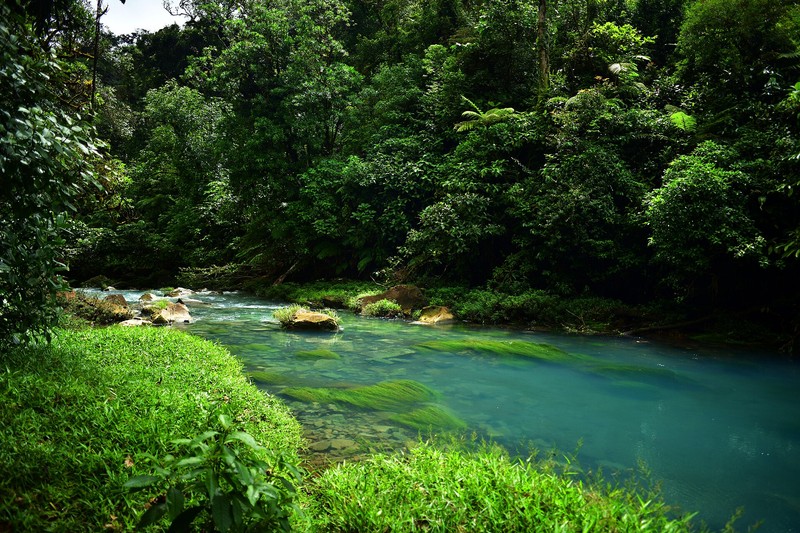
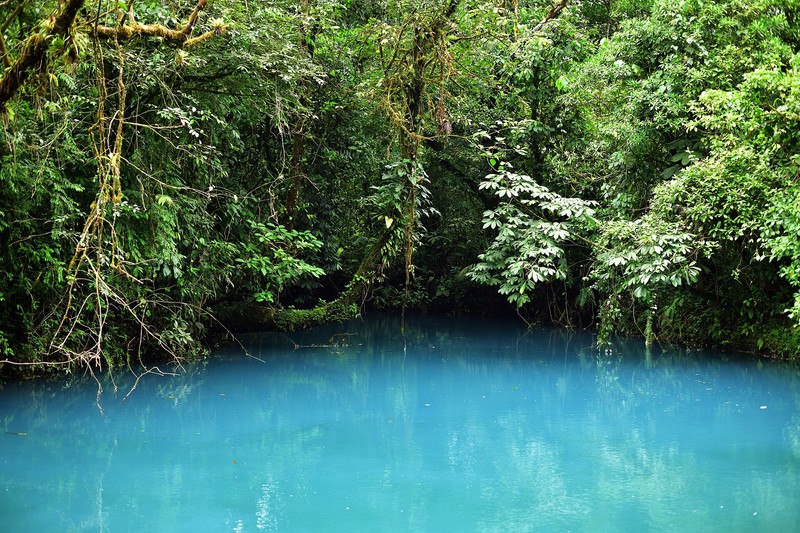
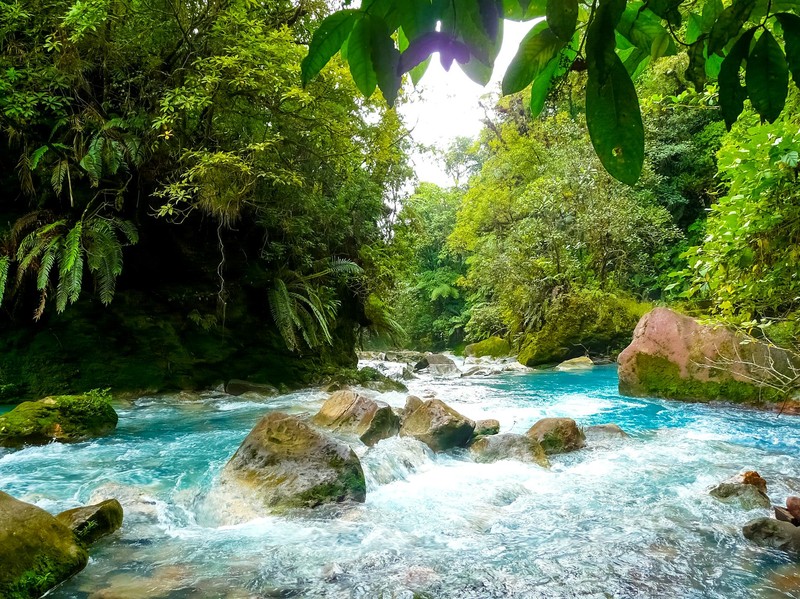
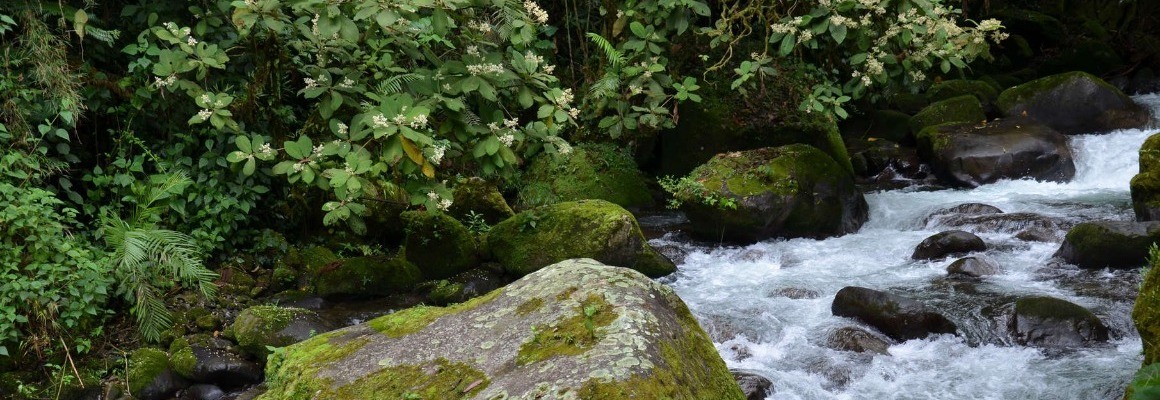
Río Celeste is considered one of Costa Rica’s most unusual rivers. Its vivid blue-turquoise appearance results from an optical effect that occurs when water streams with different chemical characteristics meet. The phenomenon is especially noticeable at El Teñidero, where the transition from clear water to the distinctive blue color can be observed. The effect is natural rather than the result of artificial dyes.
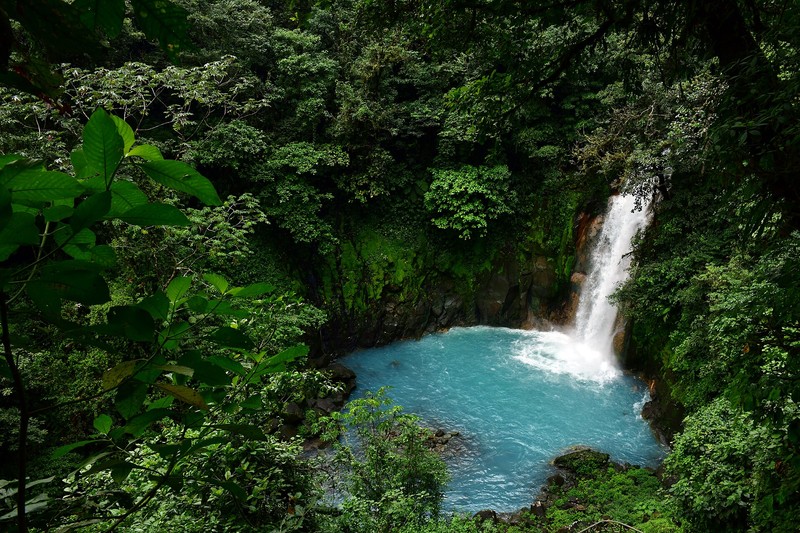
Río Celeste Waterfall
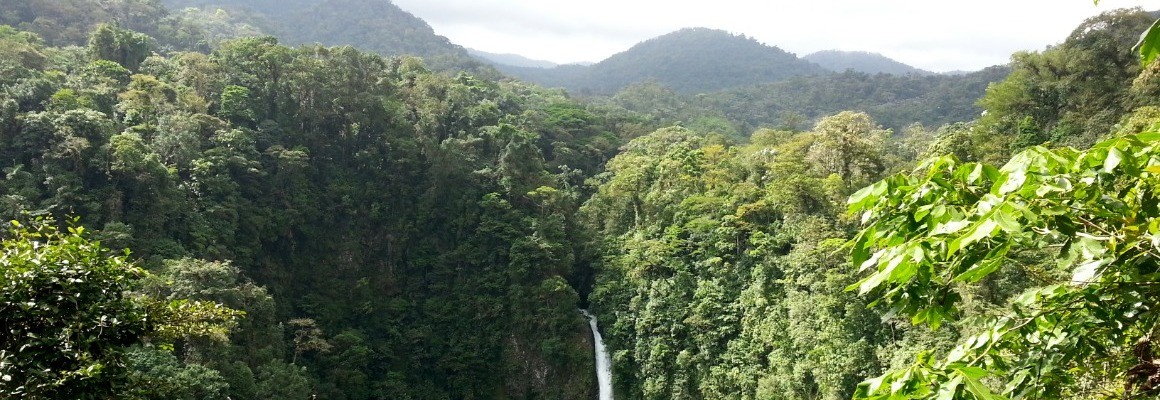
The Río Celeste Waterfall is the park’s signature photographic attraction. Water falls approximately 20–30 meters into a naturally formed pool of intense blue. A forest trail with stairs and uphill sections leads to the waterfall. Steps and soil can become slippery after rain, so wear shoes with good grip. Swimming in the river and waterfall area inside the park is prohibited.
Misterios del Tenorio Trail
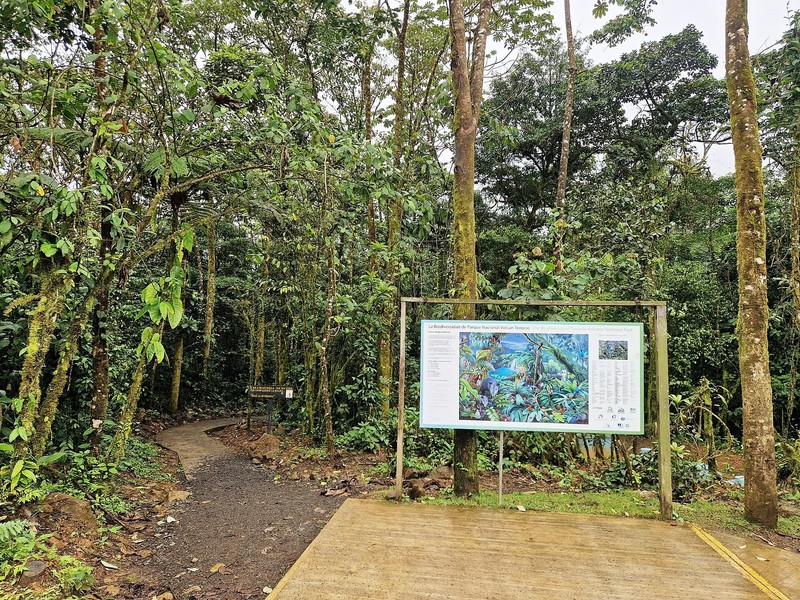
The park’s main route is called Misterios del Tenorio, or “Mysteries of Tenorio.” This linear trail is about 3 km one way, or approximately 6 km round trip. A visit usually takes around three hours, depending on walking pace and stops. The route passes through tropical forest and connects the waterfall, a viewpoint, the Blue Lagoon, geothermal features and El Teñidero. Some sections include stairs and steep climbs.
The Blue Lagoon and Geothermal Features
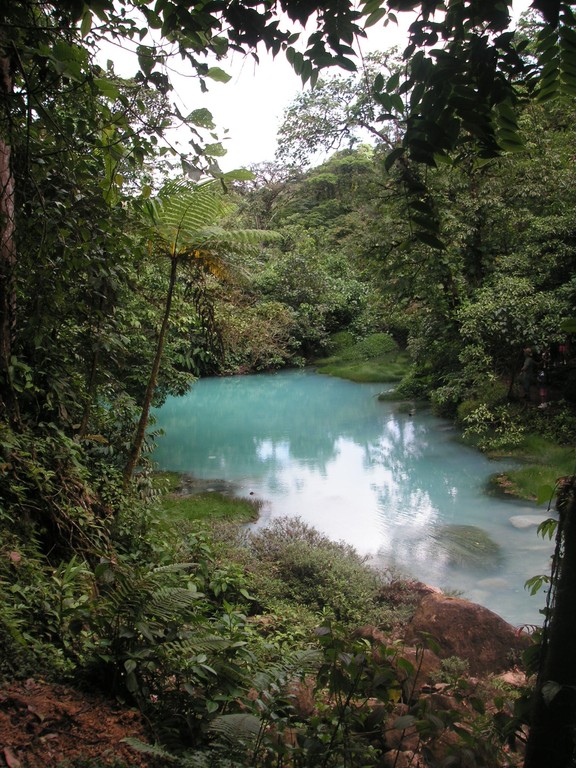
Laguna Azul, or the Blue Lagoon, is a small pool with an intense blue color. Despite its appealing appearance, entering the water is not allowed. The trail also passes borbollones, places where hot gases and steam escape through cracks associated with the region’s volcanic activity. Observe these features only from a safe distance and designated areas.
Tenorio Volcano and Panoramic Views
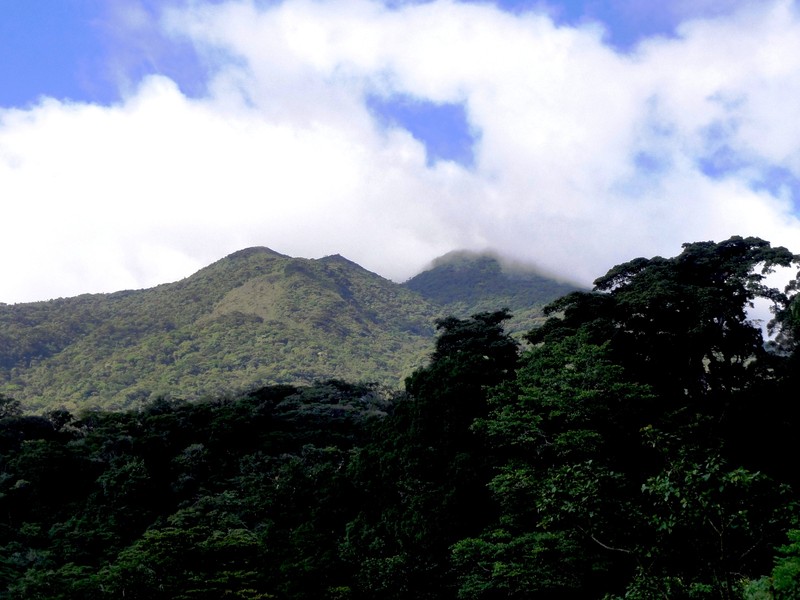
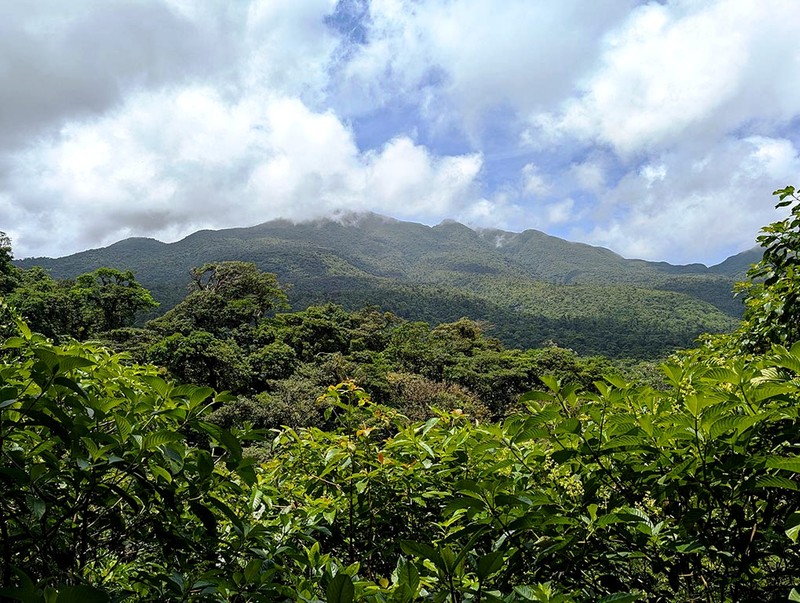
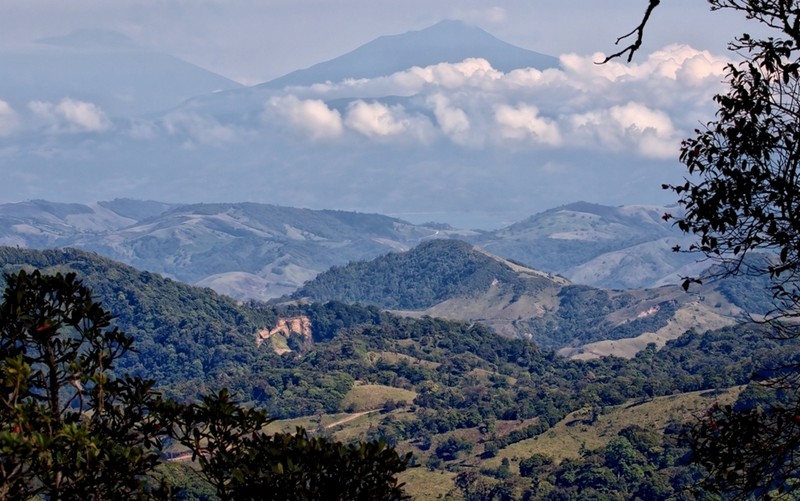
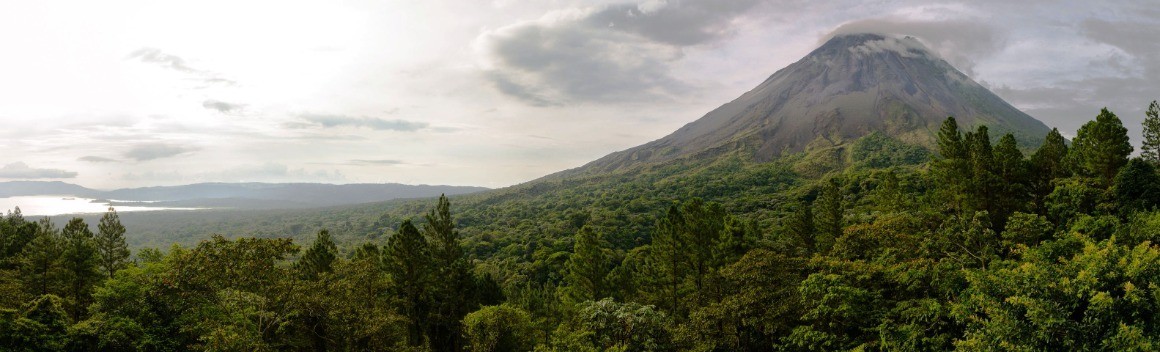
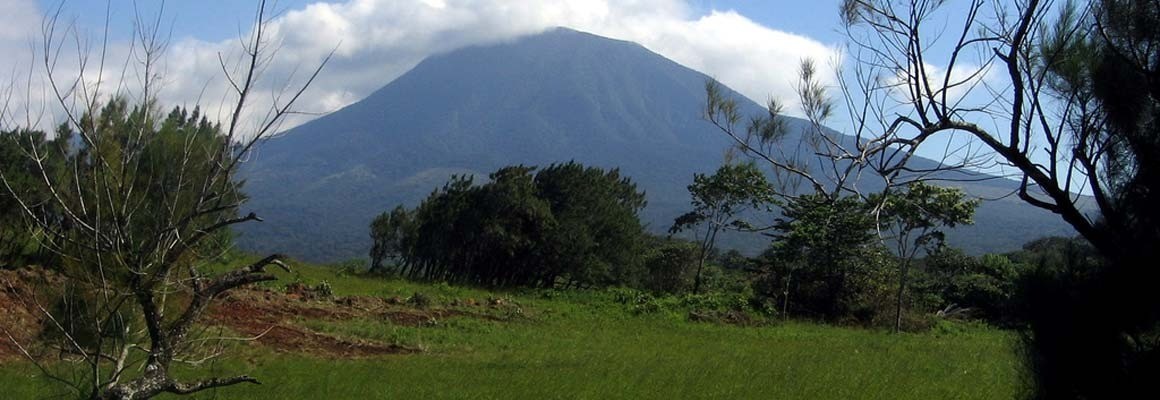
Tenorio Volcano forms part of the Guanacaste volcanic range and has several cones. Its highest point reaches approximately 1,916 meters above sea level. From selected viewpoints, visitors can see forested mountain slopes and broad plains stretching toward both the Pacific and Caribbean sides of Costa Rica.
Flora and Fauna
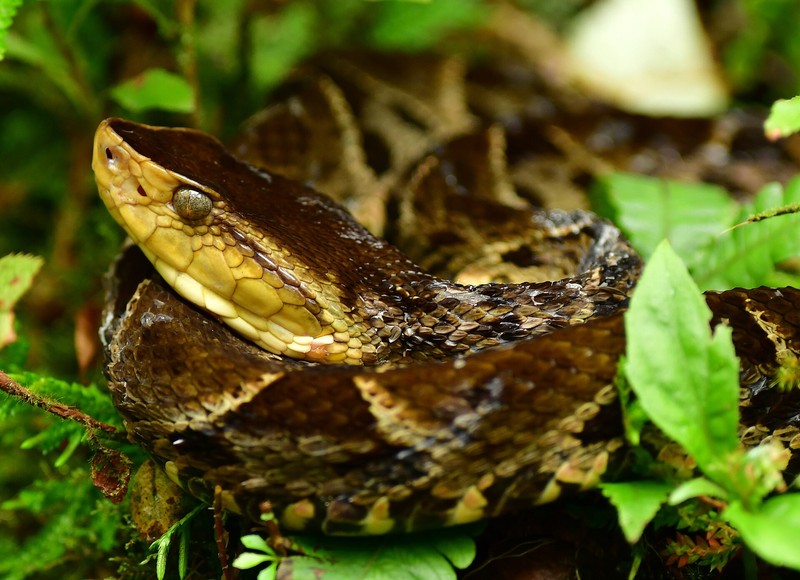
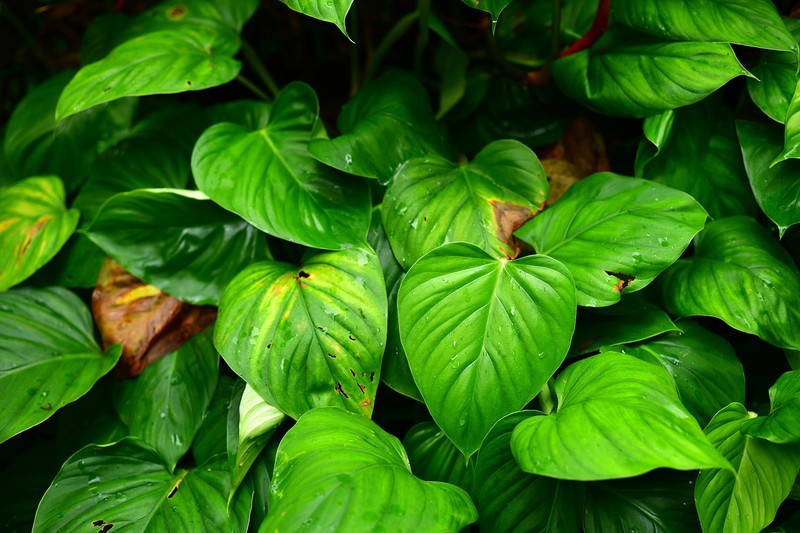
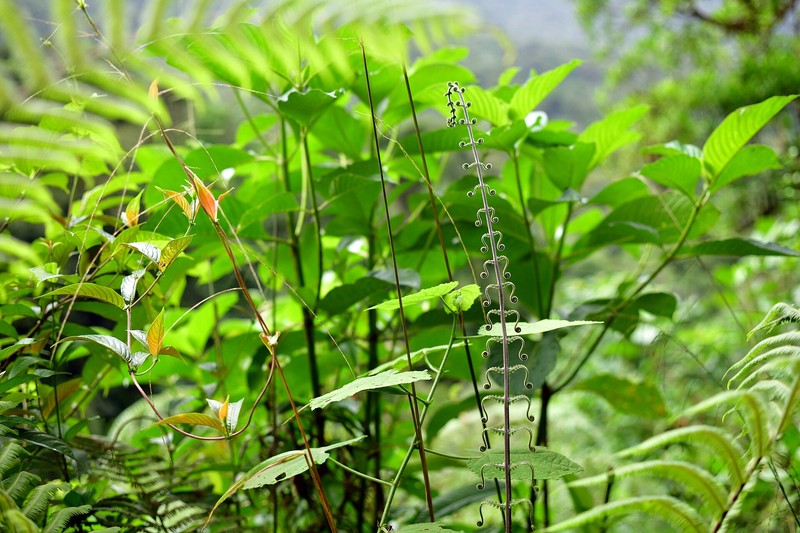
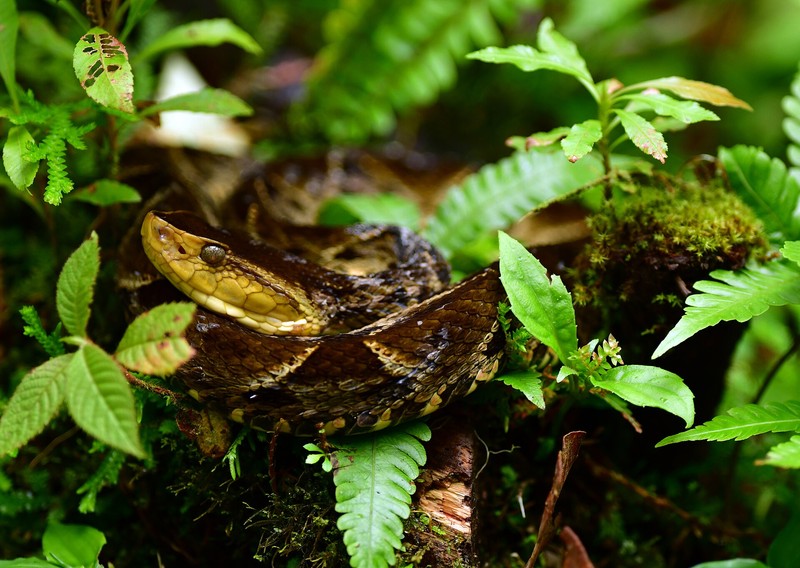
The park protects tropical wet forest, premontane rainforest and montane forest. Palms, ferns, bromeliads, orchids and many other moisture-loving plants thrive here. Wildlife includes white-faced capuchins, howler monkeys, tapirs, agoutis, peccaries and anteaters. Birds include trogons and three-wattled bellbirds. Animal sightings are not guaranteed, and visitors should never feed or approach wildlife.
Best Time to Visit
The climate is humid, and rain can occur during much of the year. Relatively drier hiking conditions are more common from December to April. During the rainy season, trails become muddier, but the forest is especially lush and streams and waterfalls are often fuller. An early start is recommended. Entry is generally permitted from 8 a.m. to 2 p.m., and visitors may remain until 4 p.m. Check current official information before travelling.
How to Get There
One of the main access points is near Bijagua, about 9 km from the park entrance. Visitors can drive from Liberia or from central Costa Rica, depending on their route. Private parking lots operate near the entrance, with fees that should be confirmed locally. Public transport may require a taxi or a prearranged transfer from nearby towns.
Visitor Tips
Bring closed shoes with good traction, drinking water, rain protection and insect repellent. Stay on the marked trail. Swimming, pets, drones, smoking, alcohol and single-use plastics are prohibited. Tickets should be purchased through the official SINAC booking system. Tenorio National Park is an excellent destination for seeing Río Celeste, walking through tropical rainforest and discovering Costa Rica’s volcanic landscapes.
Gallery