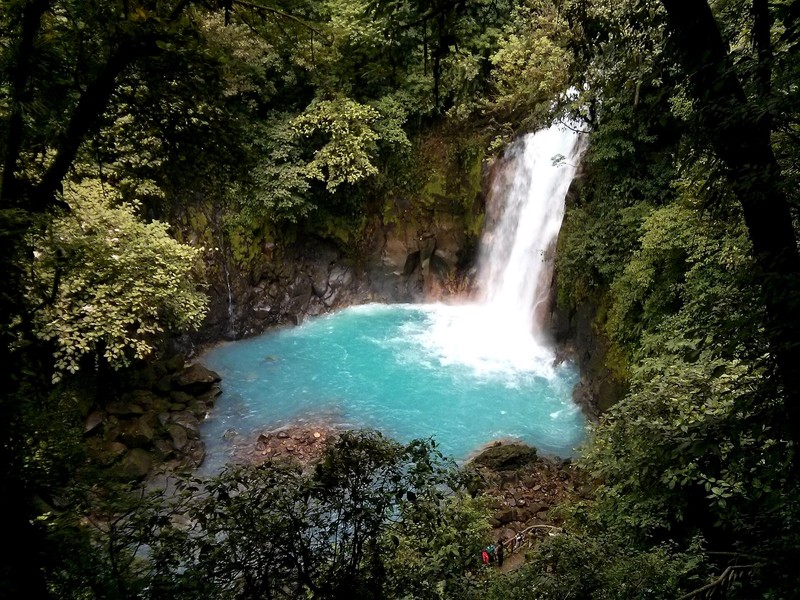
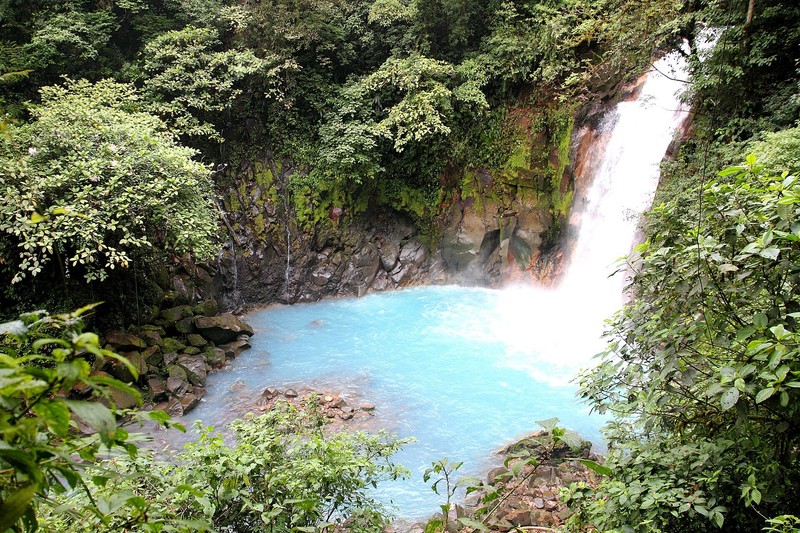
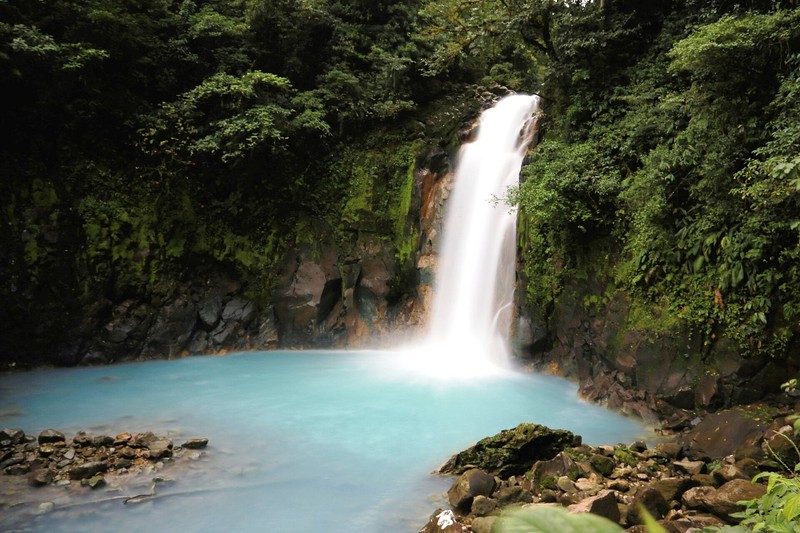
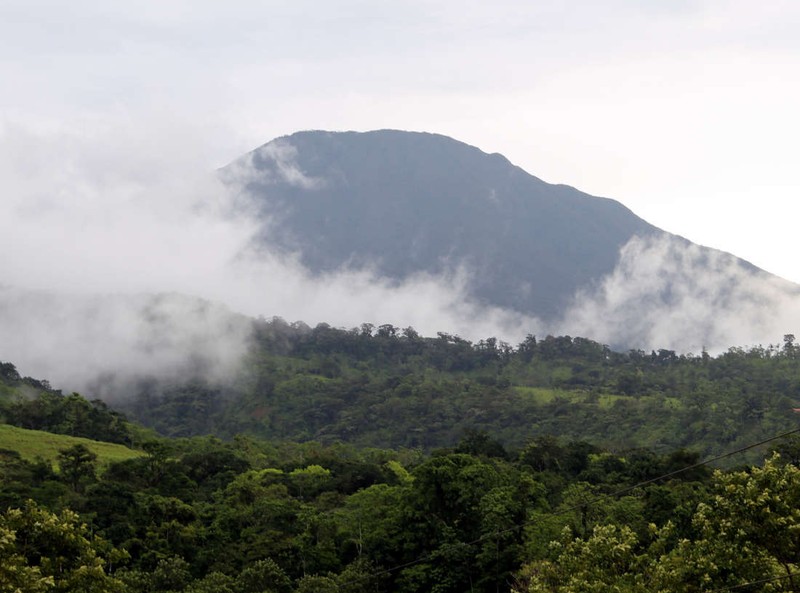
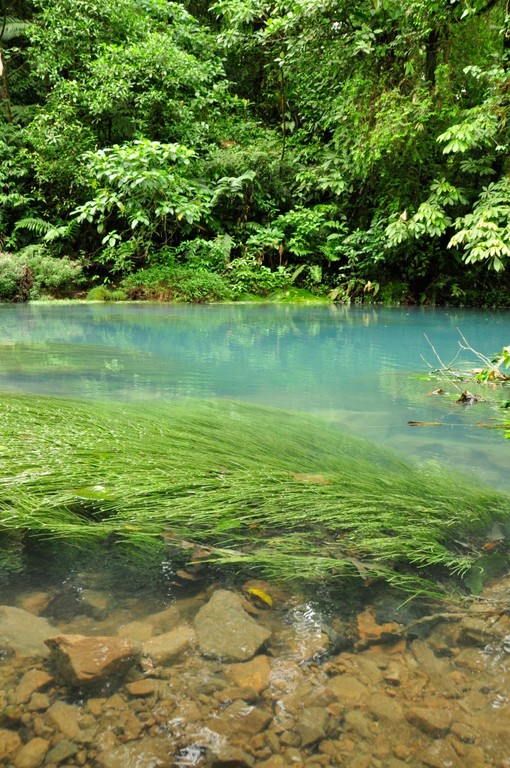
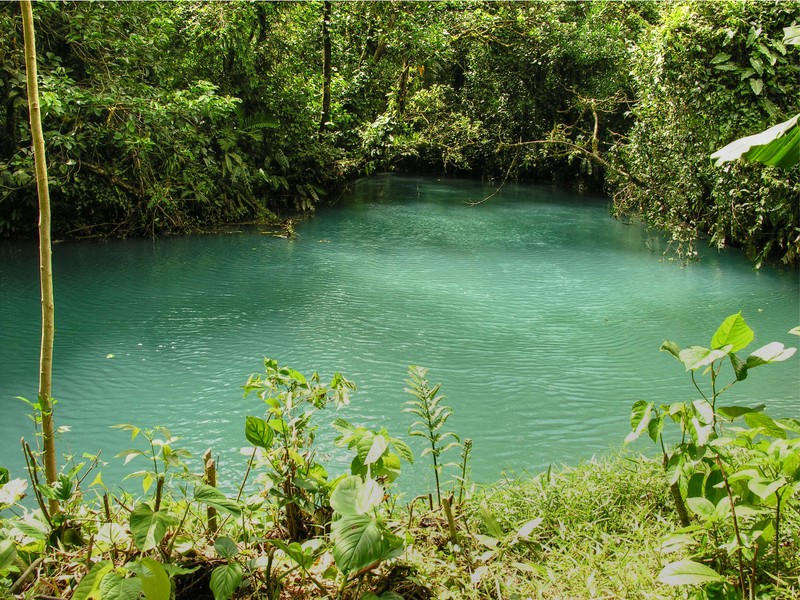
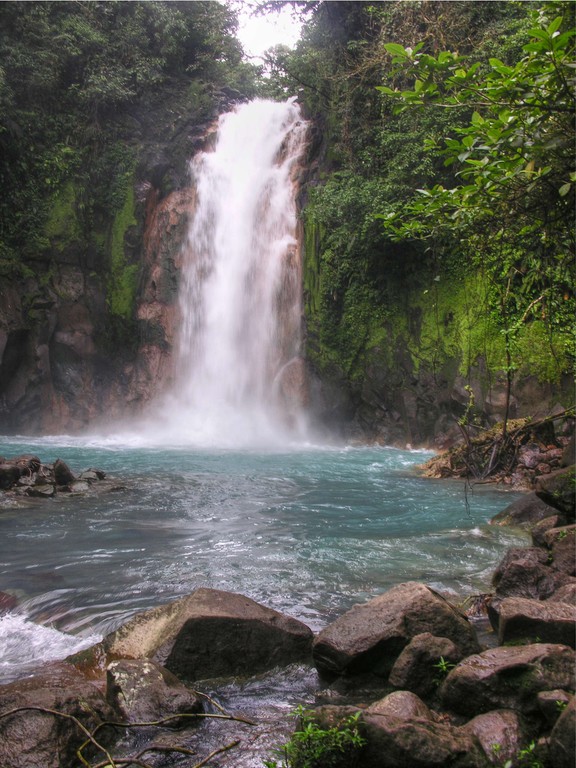
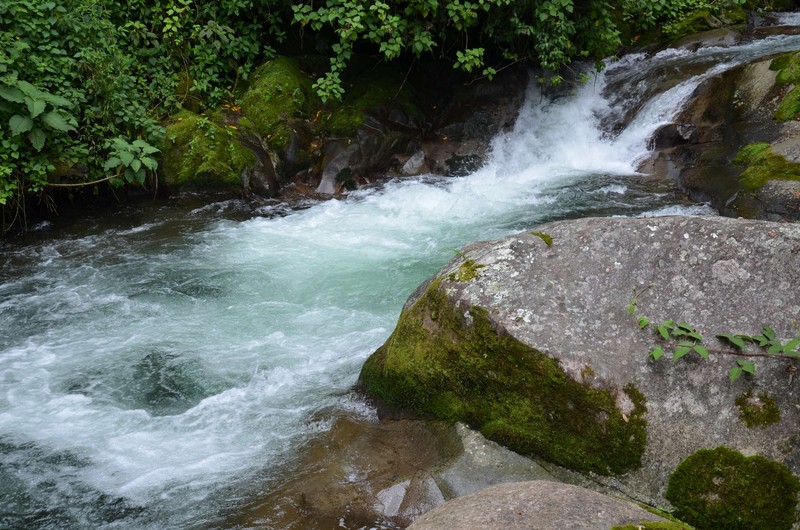
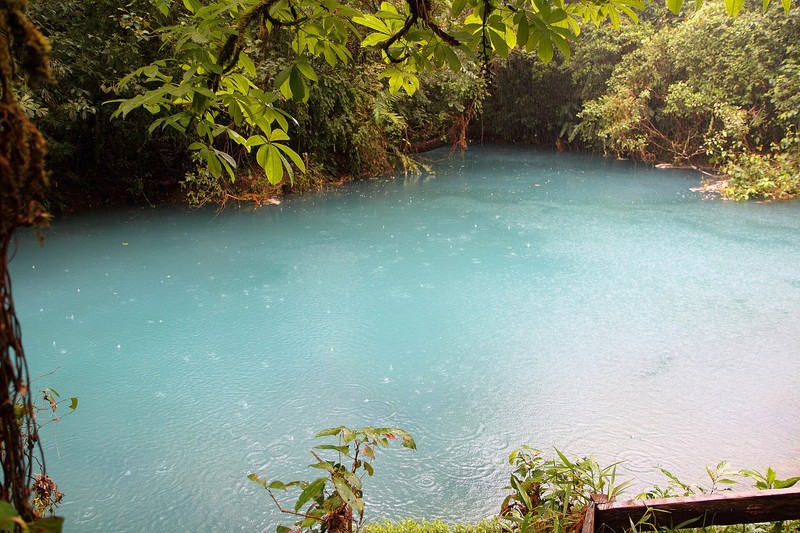
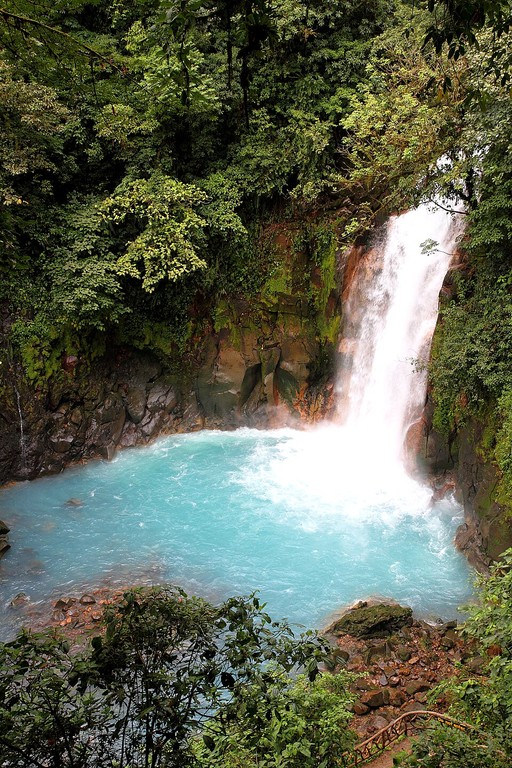
Rio Celeste Waterfall is one of Costa Rica's most remarkable natural attractions. It lies in Tenorio Volcano National Park, surrounded by dense tropical rainforest in the northwestern part of the country. Its main feature is the vivid turquoise-blue water that plunges about 30 metres into a natural pool framed by greenery. The combination of brilliant water, rainforest, and volcanic scenery makes it a popular destination for nature lovers and hikers.
Where Rio Celeste Waterfall Is Located
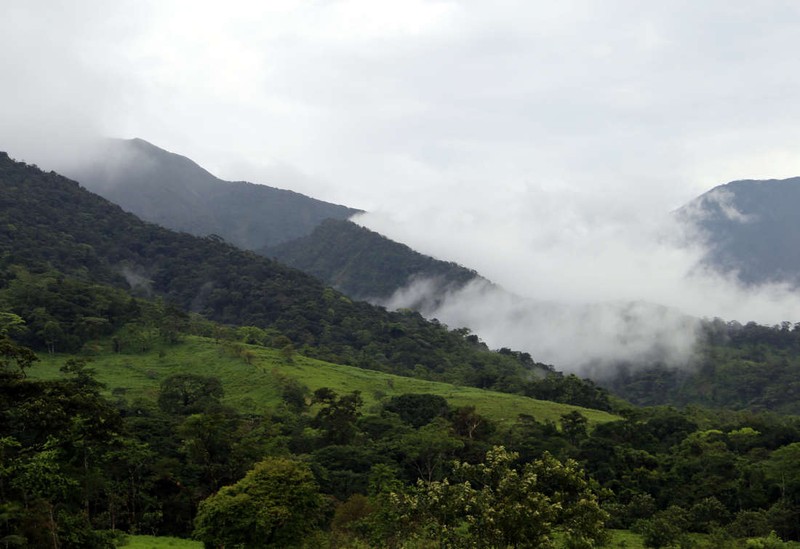
The waterfall is inside Tenorio Volcano National Park in northern Costa Rica, in the Guanacaste mountain region. Bijagua is a nearby settlement commonly used as a base for visits. The road passes through rural landscapes, pastures, and patches of tropical forest. The waterfall lies within a protected area that preserves forest ecosystems, rivers, and wildlife habitats.
Why the Water Is Turquoise
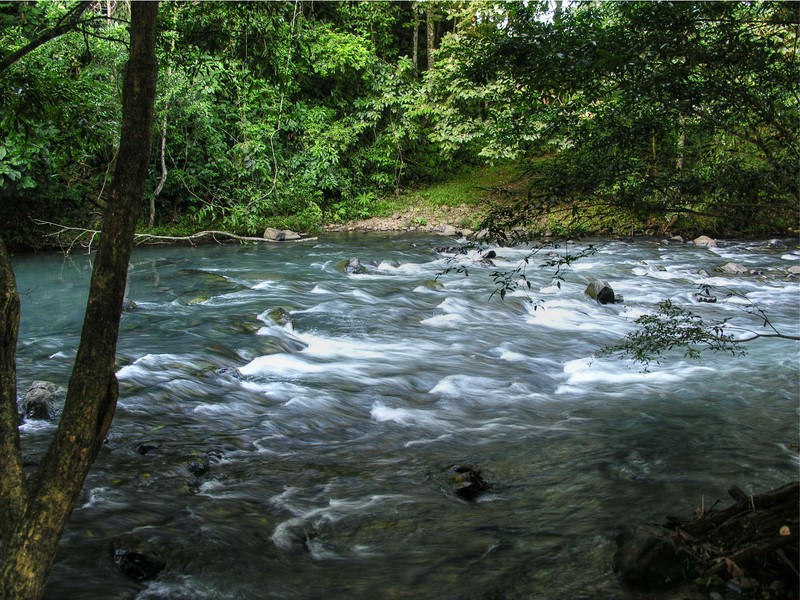
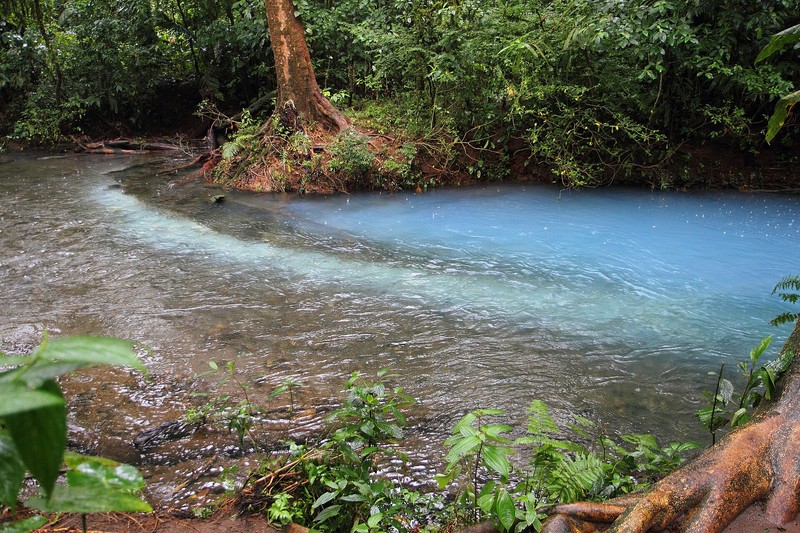
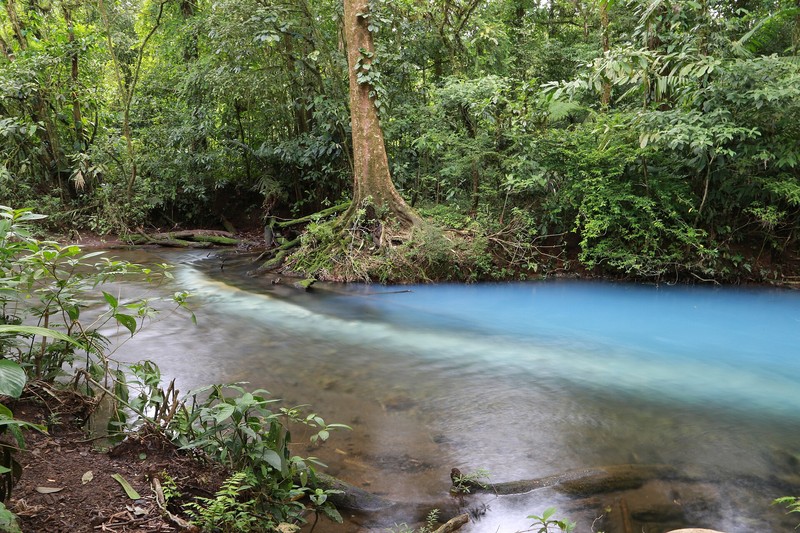
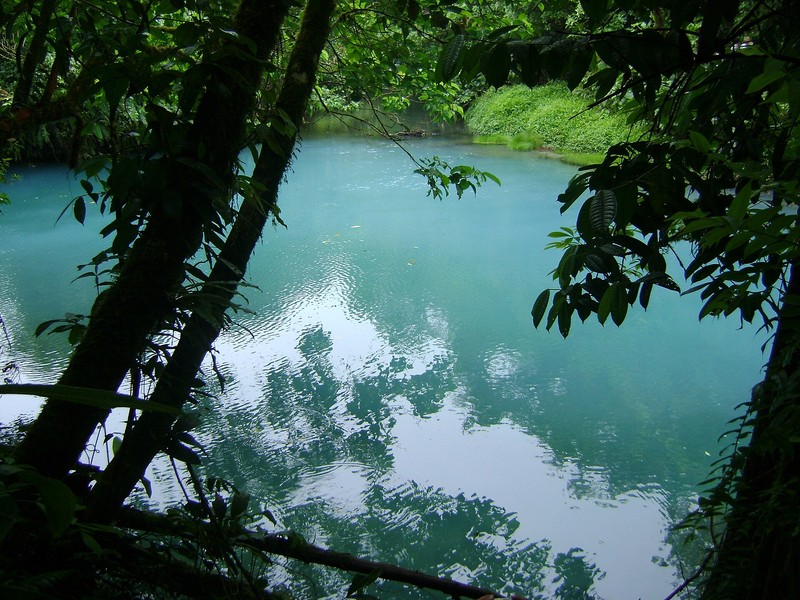
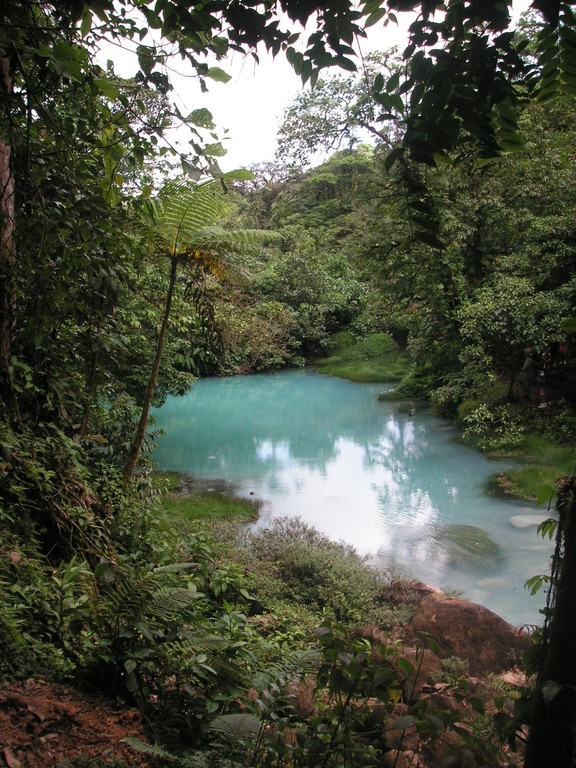
The unusual colour of Río Celeste is caused by a natural optical phenomenon. At El Teñidero, two streams with different water characteristics converge. Their mixing changes how suspended mineral particles interact, causing them to scatter sunlight in a way that gives the river its bright blue-turquoise appearance. The water is not dyed with an artificial pigment; its colour is related to the properties of suspended particles and the way light travels through the water.
Waterfall Height and Features
Rio Celeste Waterfall is approximately 30 metres high. The stream drops over a rocky ledge into a natural pool surrounded by tropical vegetation. Against the lush green forest, the blue water stands out dramatically. The waterfall's appearance varies with lighting, cloud cover, and rainfall. After heavy rain, the water can become less clear and its turquoise colour less pronounced.
Tenorio Volcano National Park
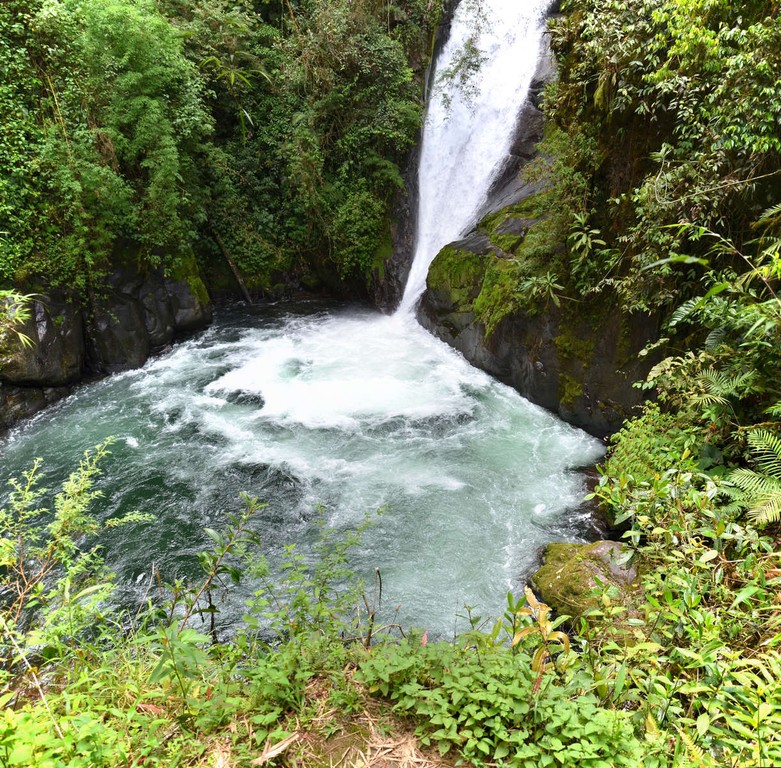
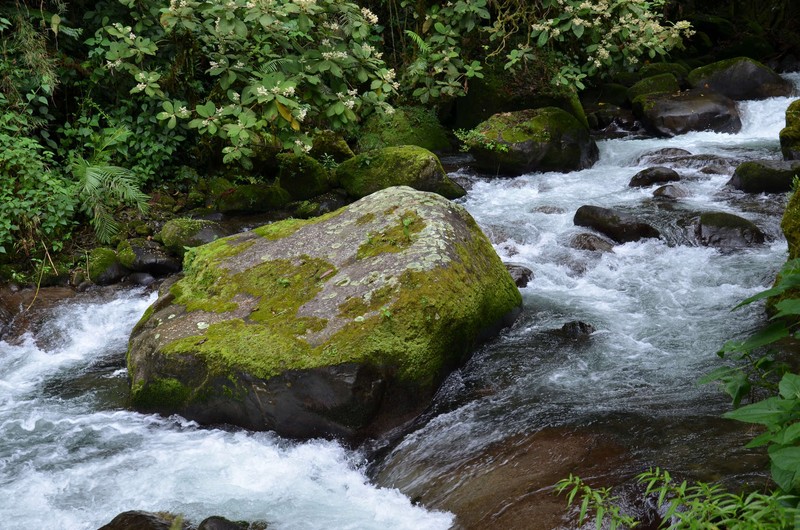
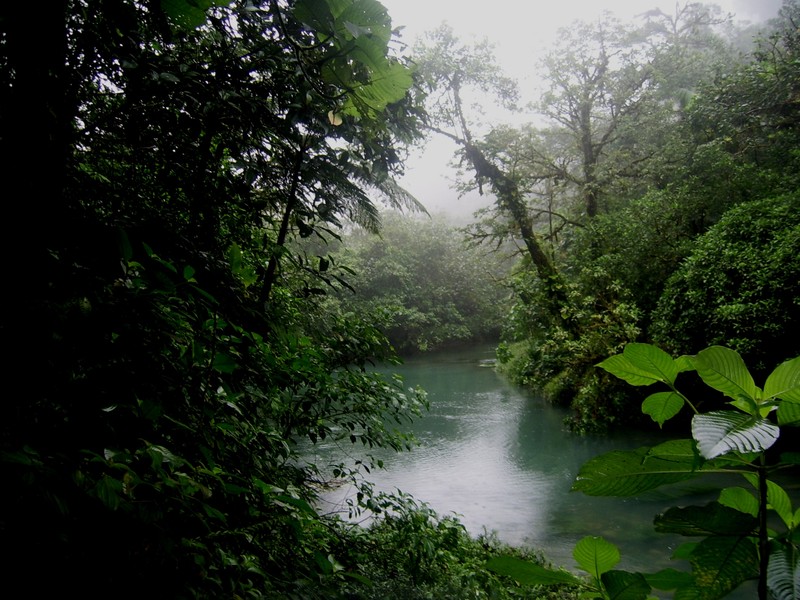
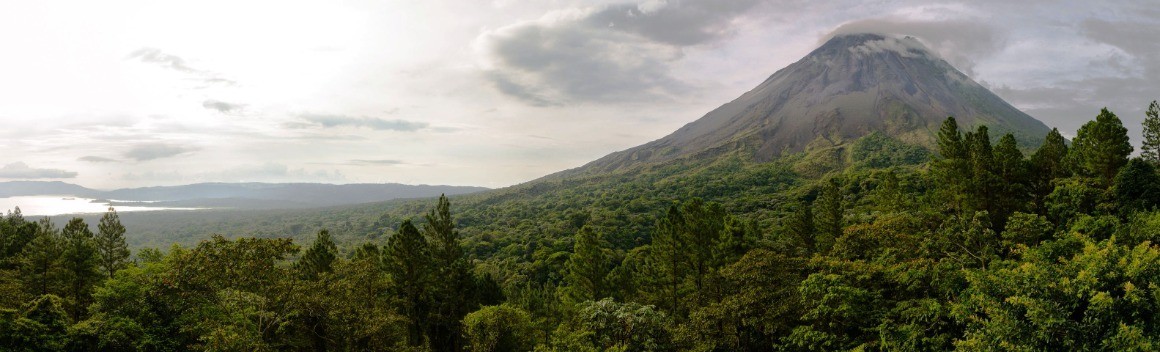
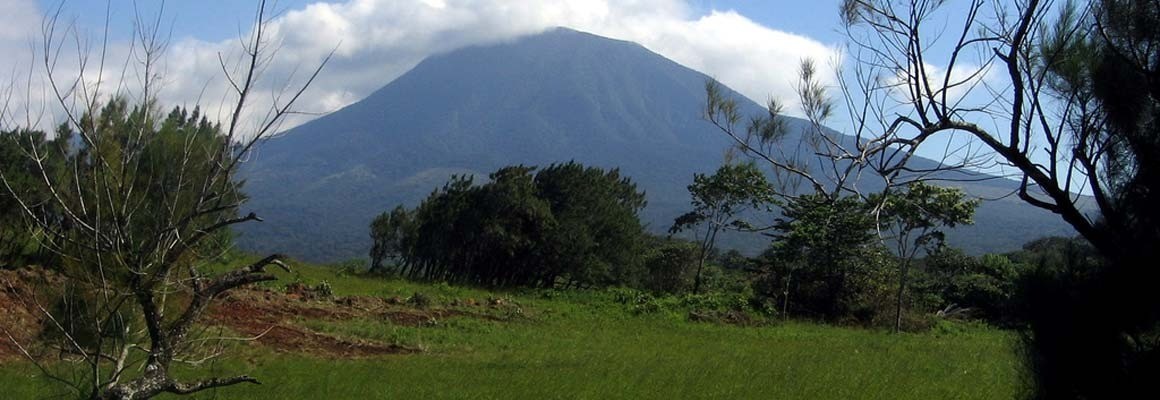
The waterfall is one of the main attractions of Tenorio Volcano National Park. The protected area includes humid tropical forests, rivers, streams, and volcanic landscapes. Palms, ferns, bromeliads, and orchids grow here. The forests provide habitat for monkeys, anteaters, tapirs, and many bird species. High humidity keeps much of the vegetation dense and green throughout the year.
The Hiking Trail to the Waterfall
The waterfall is reached by a marked hiking trail through tropical forest. The route may include tree roots, uneven ground, and damp steps, so sturdy shoes with good grip are recommended. Visitors must descend a staircase to reach the waterfall viewpoint. Along the way, the trail offers views of the surrounding vegetation as well as the waterfall itself. Trail conditions and access to individual sections may change with the weather and park management decisions.
Other Natural Attractions Along Río Celeste
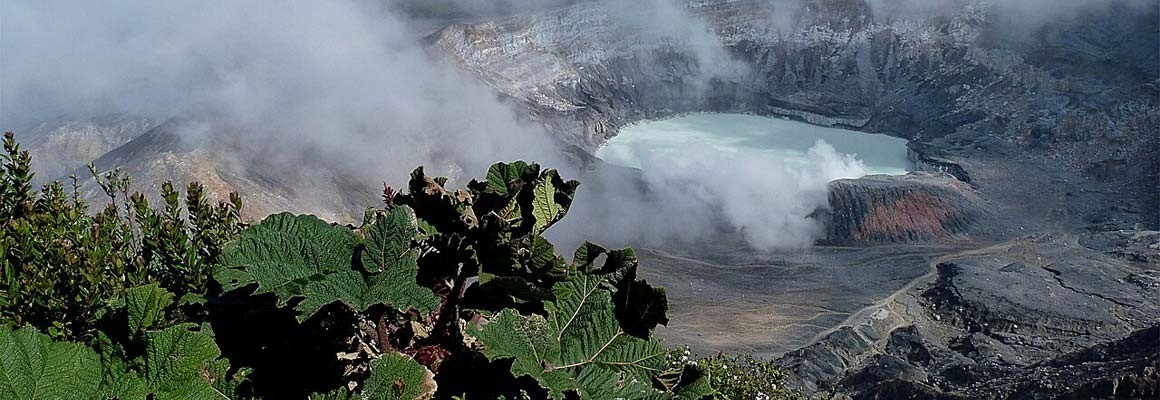
The national park route includes several other natural features. Laguna Azul is known for its intense blue water. At Los Borbollones, visitors can observe signs of geothermal activity, including gases escaping from the ground. El Teñidero is the confluence where the change in water colour becomes visible. These places help explain the region's natural processes. Visitors should stay on marked trails and keep away from hazardous areas.
Can You Swim in Río Celeste?
Swimming in the river and the waterfall pool is prohibited within the national park. The restriction helps protect the fragile natural environment and keeps visitors safe. Water, slippery rocks, currents, and the volcanic setting can pose risks. The best way to enjoy the turquoise river is from official viewpoints and designated trails without entering the water.
Best Time to Visit Rio Celeste Waterfall
Hiking conditions are often more comfortable during the relatively dry months, especially from December to April. However, rainfall can occur at any time in this part of Costa Rica. Heavy rain may make the water cloudy and the trails slippery. The river's turquoise colour is usually more noticeable in clear weather. Check the forecast and current park rules before setting out.
How to Get to Rio Celeste Waterfall
Bijagua and other settlements in the Guanacaste region are common starting points. The area can be reached by car from Liberia or the La Fortuna region, followed by signs to Tenorio Volcano National Park. Public transport may involve transfers and an additional taxi ride. Travel time depends on the starting point, road conditions, and weather. Check park opening hours and entry requirements before travelling.
Visitor Tips
Bring shoes with non-slip soles, drinking water, and rain protection. Humidity is high in the rainforest, and the weather can change quickly. Stay on marked trails, do not feed wildlife, leave no litter, and do not remove natural objects. Allow enough time for the visit so you can walk the trail at a comfortable pace and enjoy the waterfall and turquoise river.
Gallery