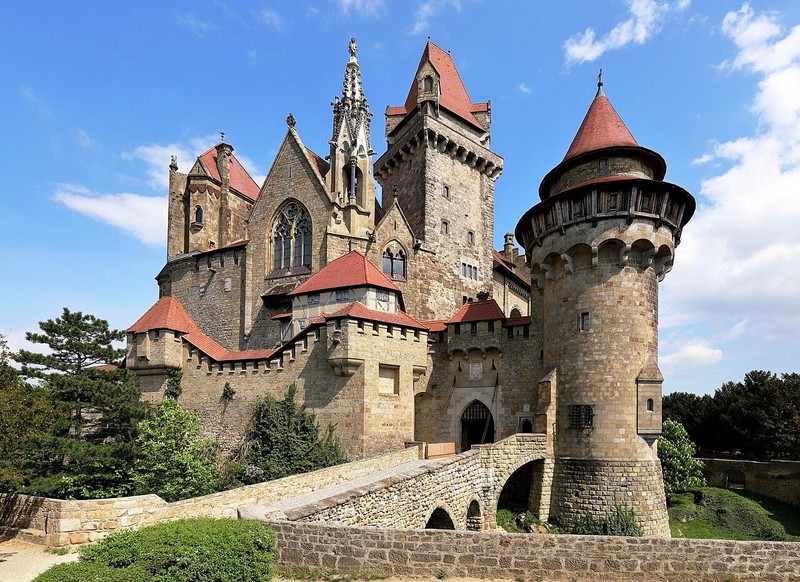
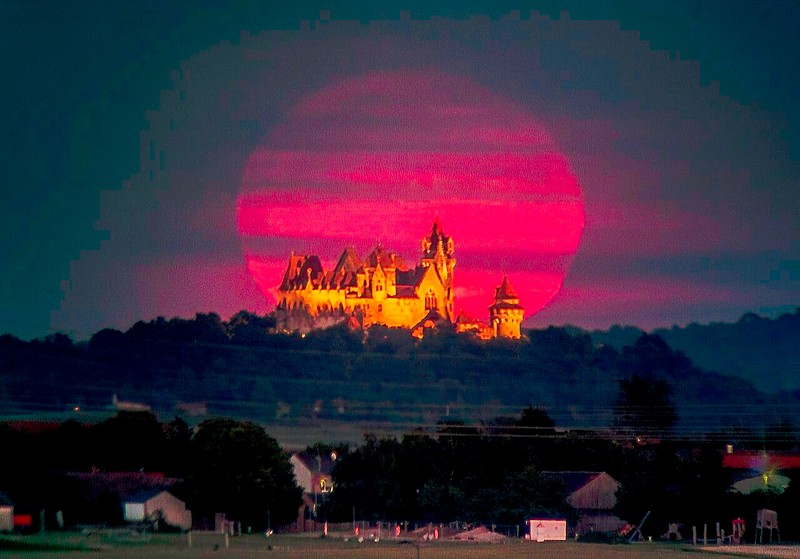
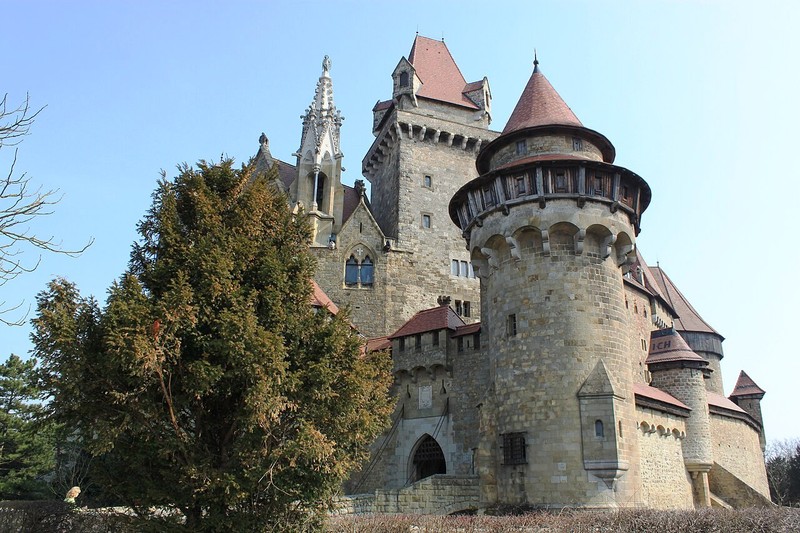
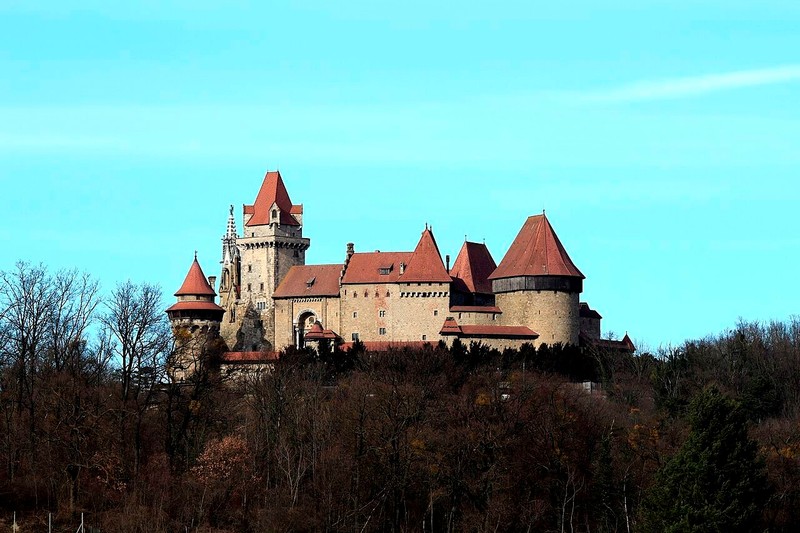
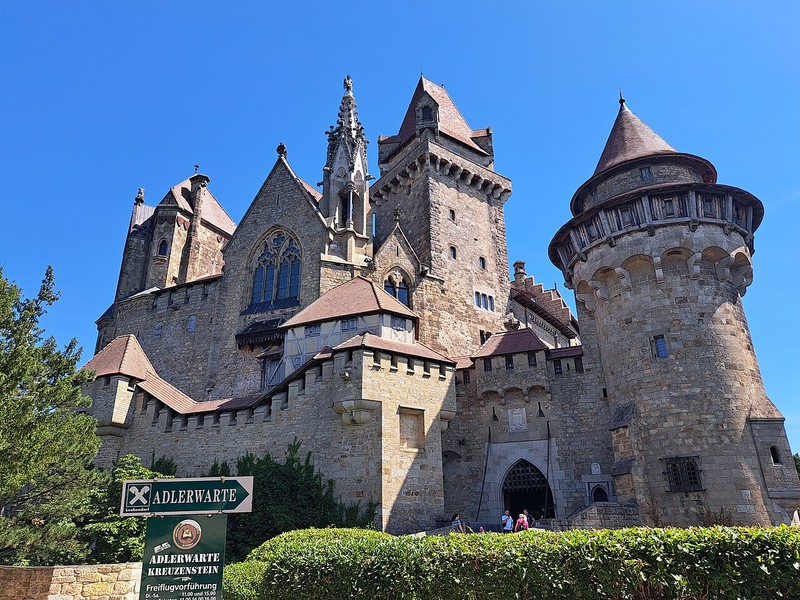
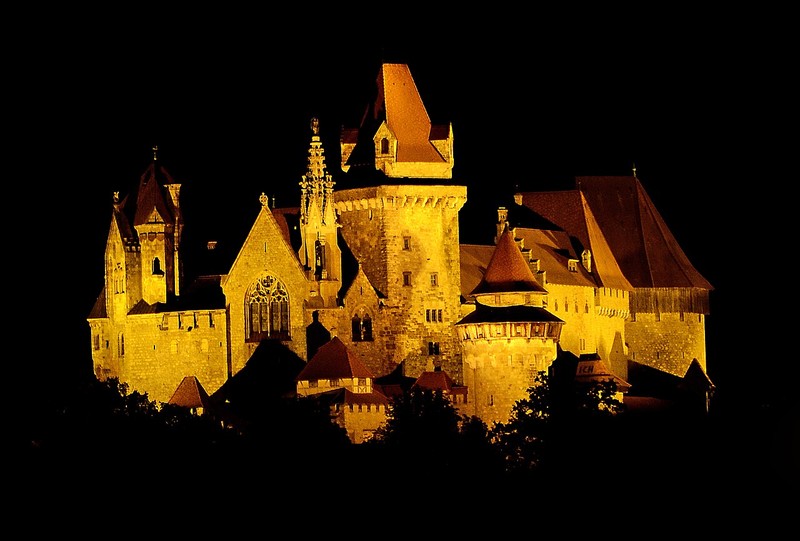
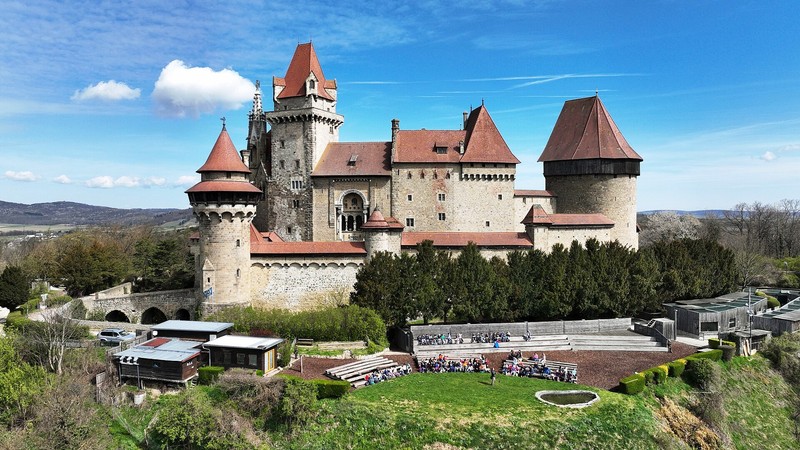
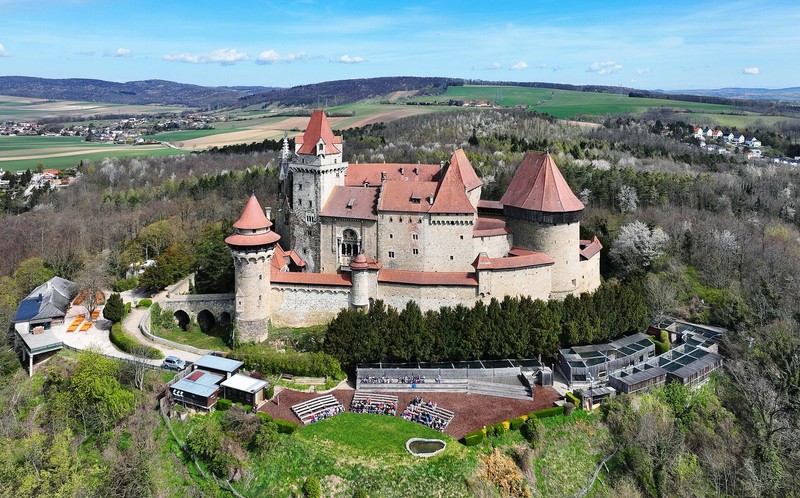
Kreuzenstein Castle is one of the most picturesque historic landmarks in Lower Austria. It stands on a wooded hill near Leobendorf, about 20–25 kilometres north of Vienna. Rising roughly 260 metres above sea level, the fortress is a striking feature of the surrounding landscape. Its crenellated walls, towers, courtyard and medieval-style interiors evoke the atmosphere of a traditional knight's castle.
Today, Kreuzenstein operates as a private museum displaying weapons, armour, furniture, works of art and objects from everyday life in earlier centuries. Visits are available only as part of a guided tour, allowing visitors to learn not only about the architecture but also about the collection and the differences between the present castle and the original medieval stronghold.
History of Kreuzenstein Castle
The fortress dates back to the 12th century and appears in early sources under the name Grizanstein. Its elevated position gave it strategic importance: from the hill, the surrounding countryside and important routes in the Danube region could be monitored.
Over the centuries, the estate passed between different noble families. During the Thirty Years' War, Swedish troops occupied the fortress. In 1645, as they withdrew, the castle was blown up and reduced to ruins. Much of the structure was destroyed, and local residents later reused stones from the remains for building projects. A few surviving fragments eventually became part of the restored complex.
A new chapter began in the 19th century, when Austrian Count Johann Nepomuk Wilczek (1837–1922) took an interest in the ruins. He planned to rebuild the castle and house his collection of historical objects there. Work began in 1874 under architect Karl Gangolf Kayser. After Kayser's death, other specialists continued the project, which was completed in 1906.
The reconstruction incorporated surviving parts of the old fortress as well as architectural elements acquired from other historic buildings. Kreuzenstein is therefore not an entirely preserved medieval castle, but a historic ensemble created in the 19th and early 20th centuries in Romanesque and Gothic styles. Its appearance reflects the period's fascination with the medieval past and the desire to recreate its atmosphere.
Architecture and the courtyard
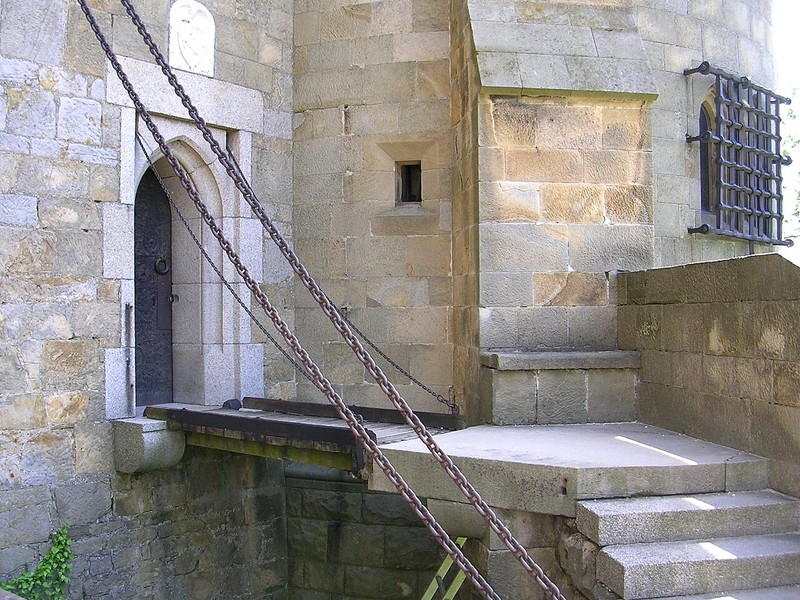
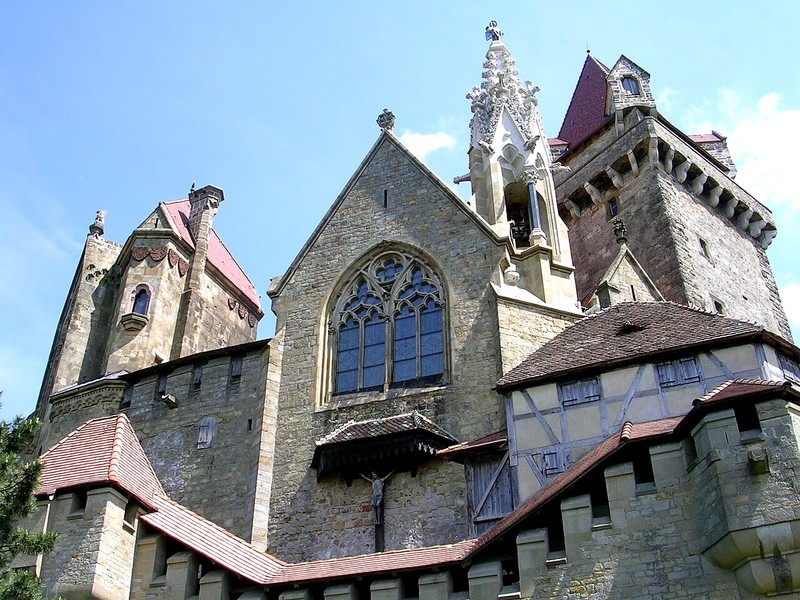
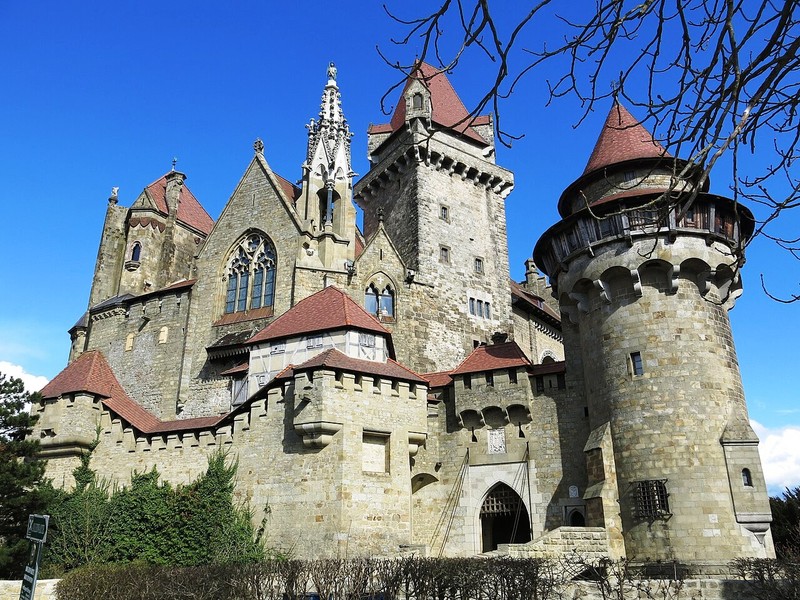
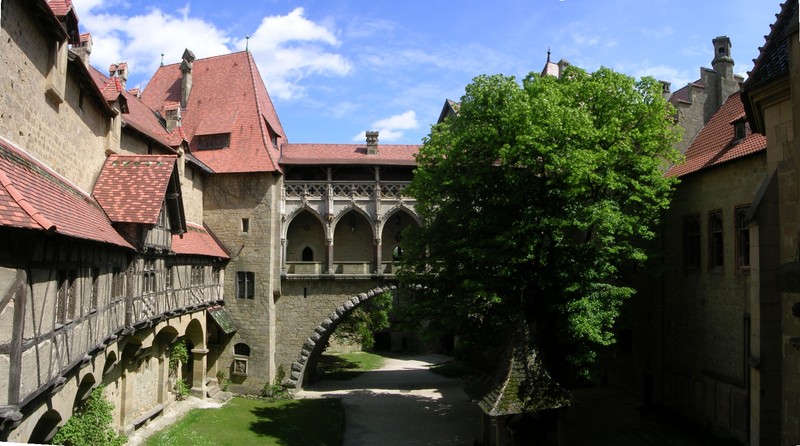
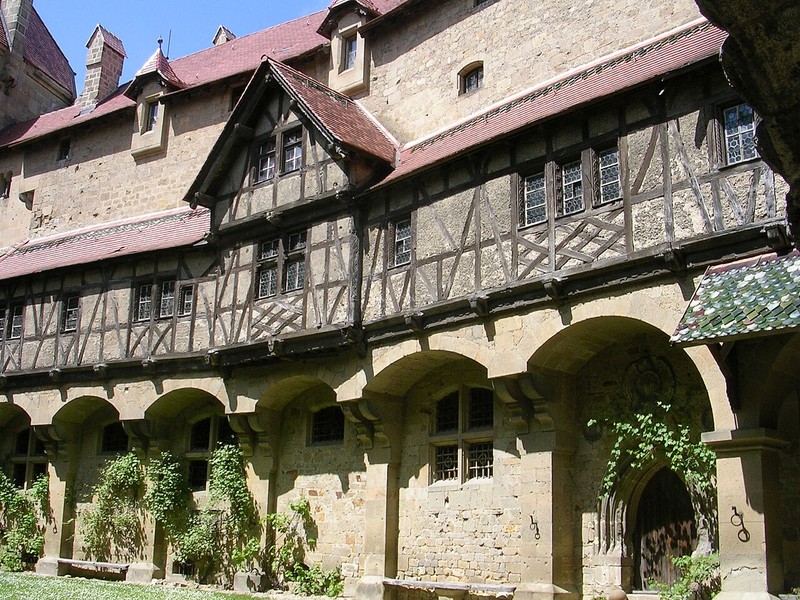
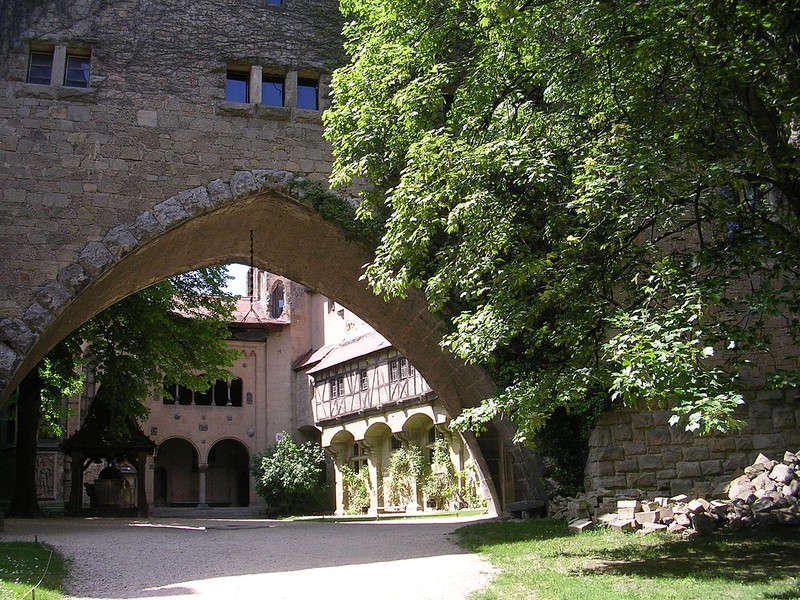
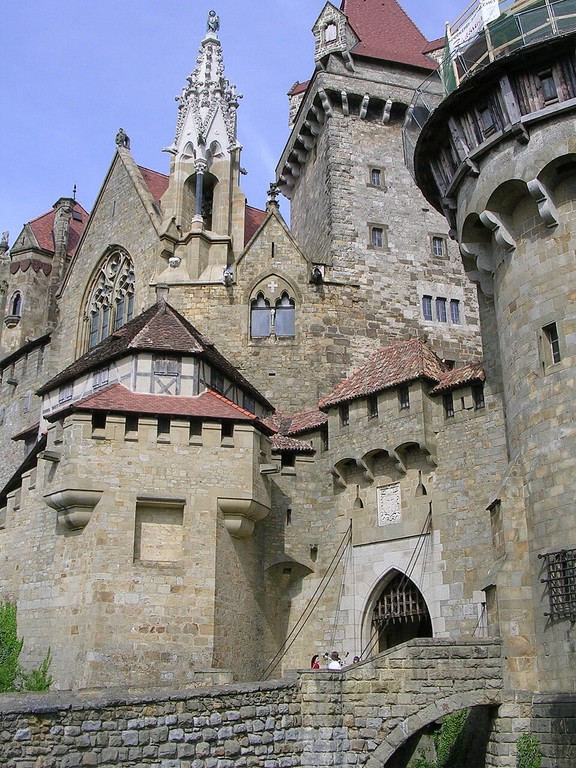
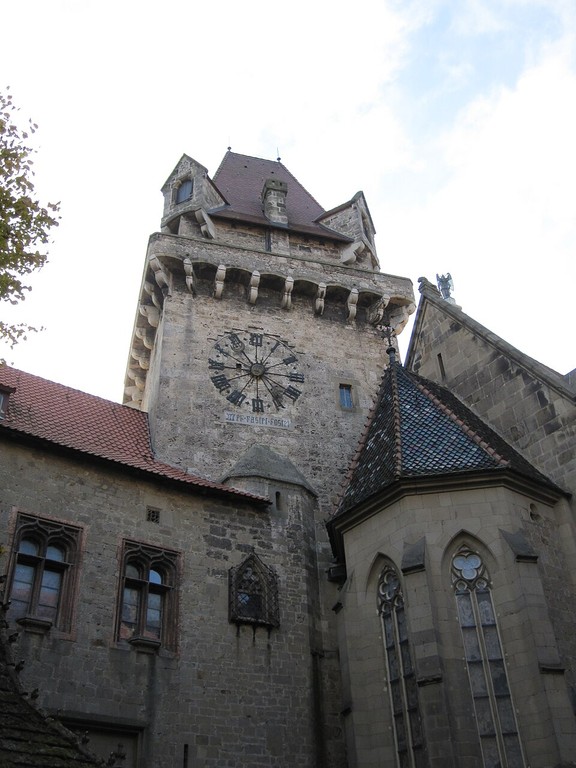
The castle comprises towers, defensive walls, internal buildings and an enclosed courtyard. Romanesque and Gothic features appear throughout, including narrow windows, stone stairways, imposing gates and distinctive roofs. Some architectural details come from different historical periods because elements from various sources were incorporated during the reconstruction.
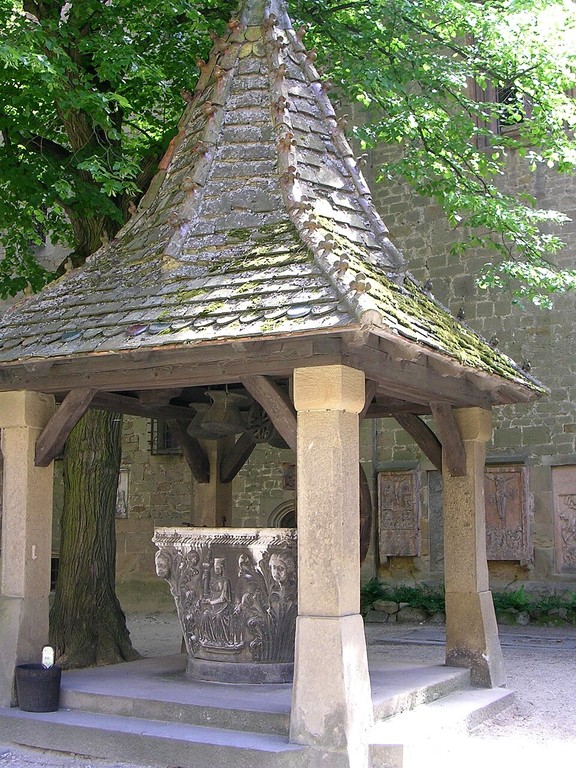
The courtyard contains a chapel, a clock tower, a well and service buildings. Their arrangement helps visitors imagine how the castle was organised and which spaces supported everyday life. Against the forest and valley, the complex is also an appealing subject for architectural photography.
What to see inside the castle
The guided tour introduces visitors to the private Wilczek family collection, which contains objects from different periods of European history. The rooms and exhibits available may depend on the tour arrangements.
The armoury. Swords, spears, halberds, shields, helmets, armour and other military equipment illustrate how weapons and protective gear changed over the centuries.
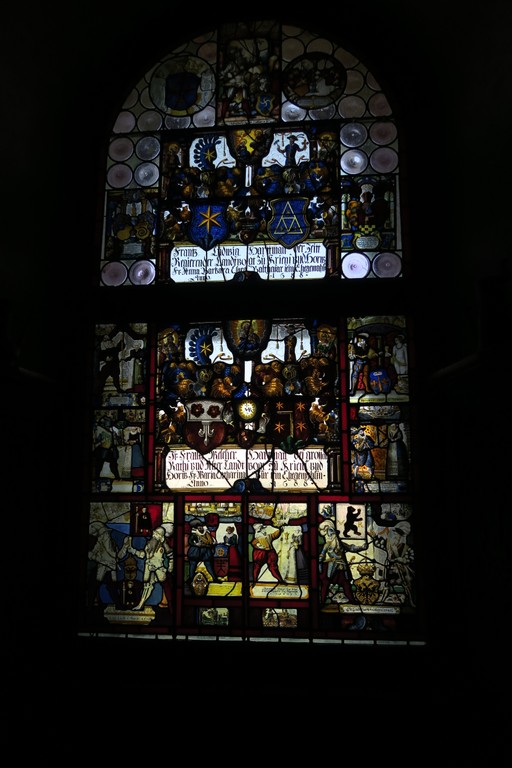
The castle chapel. Gothic decorative elements, an altar and stained glass can be seen in the chapel, highlighting its religious role within the castle.
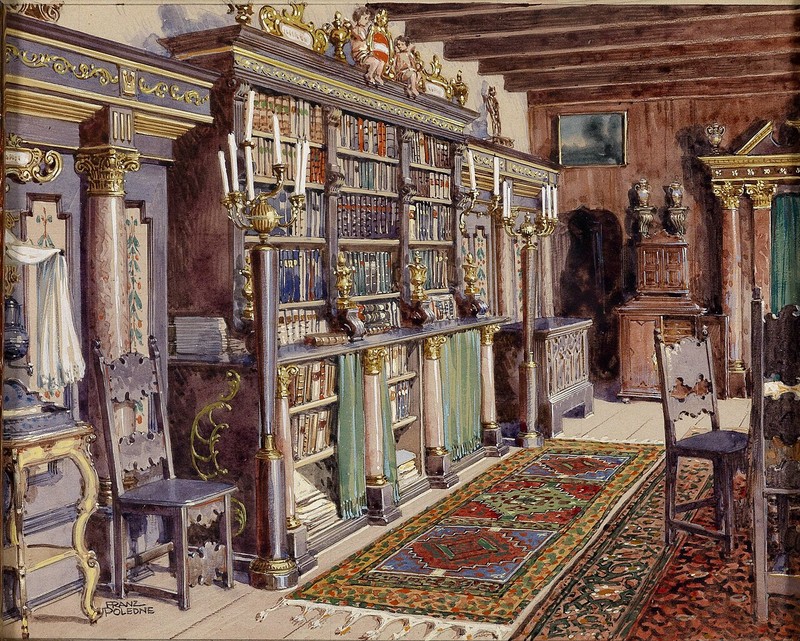
The knights' hall. Historic furniture, decorative textiles and other furnishings help visitors picture formal gatherings and the daily life of the fortress's owners.
Living chambers. These rooms contain objects that evoke historic domestic interiors. One unusual item is the so-called dream board, associated with historical beliefs about sleep and the interpretation of dreams.
The castle kitchen. Old utensils and equipment used to prepare and store food reveal the practical side of life in a large castle.
Other historical objects. The collection includes furniture, works of art, decorative details and everyday items. Its variety makes the tour interesting for visitors interested not only in military history but also in European domestic life and culture.
Kreuzenstein Castle in film and photography
With its distinctive silhouette and medieval atmosphere, Kreuzenstein attracts photographers and filmmakers. Its stone walls, towers and interior spaces provide a setting suited to historical and fantasy stories. Access to the interiors is limited to guided tours, and photography or filming rules may change.
How to get to Kreuzenstein Castle
From Vienna, the castle can be reached by car or public transport. By car, take the A22 motorway towards Korneuburg, then follow signs for Leobendorf and the castle. A car park is located below the hill; a fee has applied since May 2026, so check the current conditions before travelling.
By public transport, take a suburban train to Leobendorf-Kreuzenstein station. The walk from the station to the castle takes around 40 minutes, partly through woodland and uphill. Wear comfortable shoes and allow extra time for the climb. A car or taxi may be more convenient for visitors wishing to avoid the walk.
Opening times and practical tips
The regular visiting season runs from 1 April to 31 October. The castle is open from 10:00 to 16:00 Monday to Saturday and from 10:00 to 17:00 on Sundays and public holidays. Tours start on the hour and last approximately 45–60 minutes. In October, the final tour may be cancelled because of shorter daylight hours. From November to March, tours are generally arranged for groups of at least 20 people.
According to the official website, admission costs €15 for adults and €8 for children aged 3–16. Prices and payment conditions can change, so check them before visiting. Larger groups need to register in advance.
There are many steps and uneven surfaces inside, so the castle is not suitable for visitors with limited mobility. Strollers cannot be taken on the tour, and the path from the car park is uneven in places. Check the schedule before setting out and aim to arrive about 15 minutes before the tour begins.
Kreuzenstein Castle makes an appealing day trip from Vienna. Visitors can discover the history of medieval fortresses, see a collection of historic weapons and furniture, and explore a distinctive architectural ensemble built on the ruins of an older castle.
Gallery