Catacombs of Paris
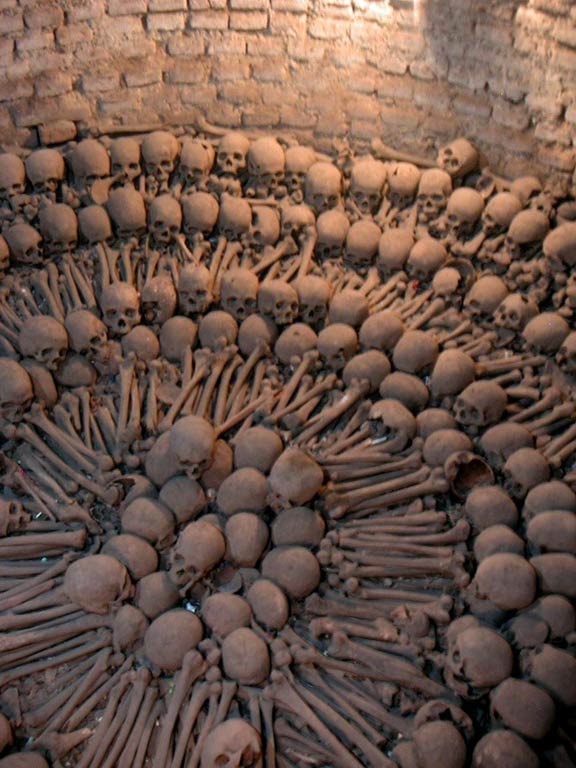
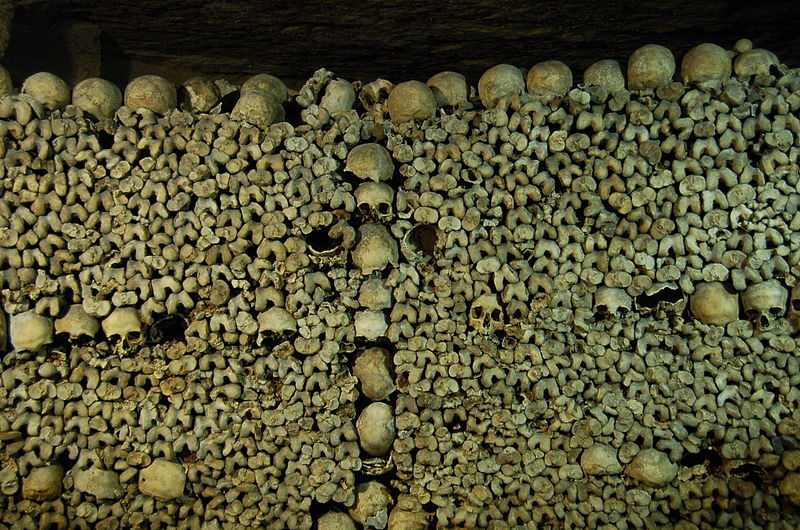
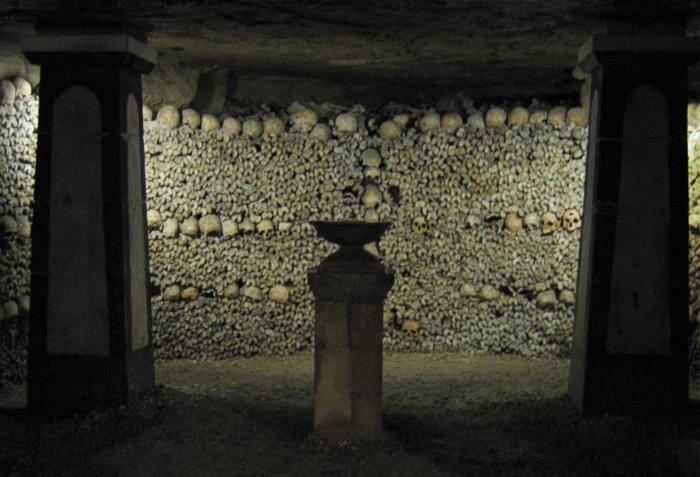
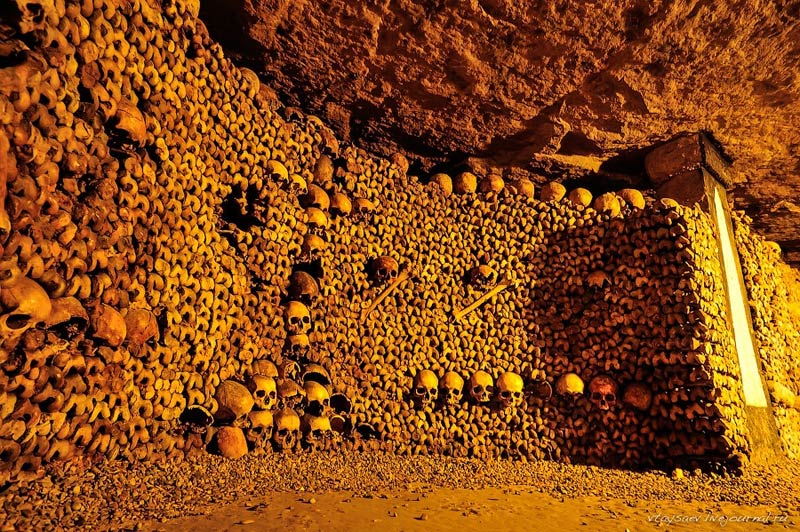
The catacombs of Paris are a sinister landmark in Paris. Since the 18th century, the remains of the deceased have been left here. By now, there have been 6 million remains and, according to some sources, 300 km of tunnels have been dug, and the area they occupy is more than 11,000 m2.
These tunnels were once mines for mining stone. Until the 10th century, almost all stone mining took place on the left side of the Seine River, but eventually moved to the right. The very first mines used to take place in the place where the Luxembourg Gardens are now located, these possessions were given by Louis XI to limestone mining. Over time, the mines moved further away from the city of Paris, and the Val de Grace Hospital, Gobelin Street, Saint-Germain-des-Prés, Saint-Jacques, and Vaugirard are now located in these areas. In 1259, the monks came up with the idea to continue digging catacombs, and wine cellars were built on the site of the old mines.
Over time, the city expanded and the city buildings appeared above the mines, which could collapse at any moment. Then, in 1777, King Louis XVI ordered the creation of a special service that monitored the condition of the catacombs of Paris and reinforced the most dangerous places. In its more than 200-year history, the General Inspectorate of Quarries has built many fortifications that completely prevented the destruction of the catacombs. To do this, they used the simplest method - they filled the voids with concrete.
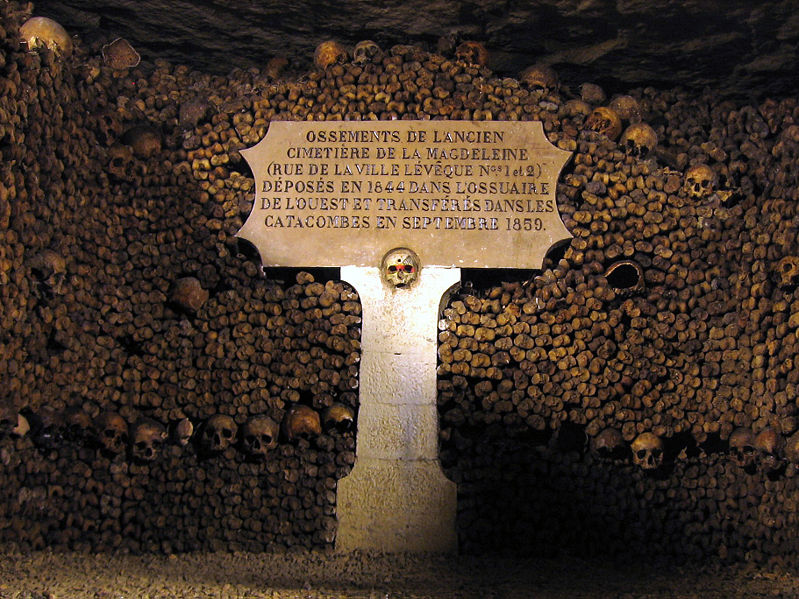
The same feature of the Paris catacombs is skeletons. And all this was due to the fact that among Christians it was customary to bury the dead next to churches. And the Catholic Church in the Middle Ages was only glad of this, because they were paid big money for these burials in their cemeteries. Since the 10th century, all parishioners from 19 churches and unidentified dead have been buried in one such cemetery of the "Innocents" with an area of 7,000 m2. In 1418, the plague complicated the situation, adding at least 50,000 corpses at once, in 1572 thousands of dead from St. Bartholomew's Night. And in the 18th century, there were already more than 2 million troupes on the burial ground. Everything would be fine if the thickness of the graves did not go 10 meters deep in some places. It got to the point where there could have been up to one and a half thousand remains of different years in one grave. The burial ground became a place of concentration of many diseases, and it was rumored that the stench emanating from it made milk and even wine sour. The priests did not want to miss Pribili and strongly resisted the closure of the cemetery.
In 1763, the Paris Parliament forbade burial in the cemetery, but the priests did not particularly obey this. The incident in 1780 was the last straw, after which no one else was buried there, or indeed on the territory of the city. A wall separated the cemetery from the nearby houses, and at one point it could not withstand the load and collapsed - the basements of the houses on Rue de la Langri Street were filled with corpses and sewage from the cemetery. For more than a year, the remains were removed from the cemetery at night, disinfected and laid in the forgotten mines of Tomb Isoire at a depth of 18 meters. Soon, the remains from 17 more cemeteries were taken there.
Nowadays, the entrance to the catacombs is located near the Danfer-Rochereau metro station. 2 km of catacombs have been equipped for guests and no more than 200 people can enter there at once. Since 1980, the catacombs of Paris have been patrolled by special police patrols, fining anyone outside the tourist areas.
The cops are here for a reason. In 1804, the remains of a man were discovered in these labyrinths, and the church watchman who disappeared 11 years ago was identified using keys and clothing. Perhaps he wanted to find wine cellars. During the Second World War, the French underground hid in the catacombs of Paris, and just half a kilometer away, the secret headquarters of the German army was located in the same catacombs.