Lake Natron is one of East Africa’s most extraordinary natural destinations, located in northern Tanzania near the Kenyan border. It lies in the Great Rift Valley, surrounded by volcanic mountains, arid plains, and rocky escarpments. Against this rugged landscape, the lake displays shades of red, pink, and orange created by salt-loving microorganisms and algae. Its almost otherworldly appearance attracts travelers, photographers, and nature researchers.
The lake is known not only for its unusual colors but also for the extreme chemistry of its water. It is a shallow saline-alkaline lake whose level changes noticeably with the seasons and rainfall. During dry periods, water evaporates and leaves mineral salt crusts along the shores and shallows. Natron is one of the region’s most important wetlands and has international conservation significance.
Why Lake Natron Has Unusual Colors
The red and pink shades of Natron are associated with microorganisms capable of living in water with high concentrations of salts and alkalis. Cyanobacteria and other microscopic organisms containing pigments play an important role. Depending on water depth, salt concentration, sunlight, and microbial activity, the lake may appear reddish, pink, orange, or almost white where a salt crust forms.
Evaporation is especially intense in the hot, dry climate. Dissolved minerals, including sodium compounds, accumulate in the lake, and salt deposits form in some areas. In places, the surface resembles a cracked mosaic, while shallow sections develop vivid colors. The combination of minerals, microorganisms, and fluctuating water levels gives Natron its unusual appearance.
An Extreme Environment and Alkaline Water
Natron is a soda lake with highly alkaline and saline water. Under certain conditions, its pH can approach 12. Water temperatures can become very high in some areas, particularly during hot periods and near certain springs. This environment is unsuitable for many familiar aquatic organisms, yet specialized bacteria, algae, and several fish species have adapted to its extreme conditions.
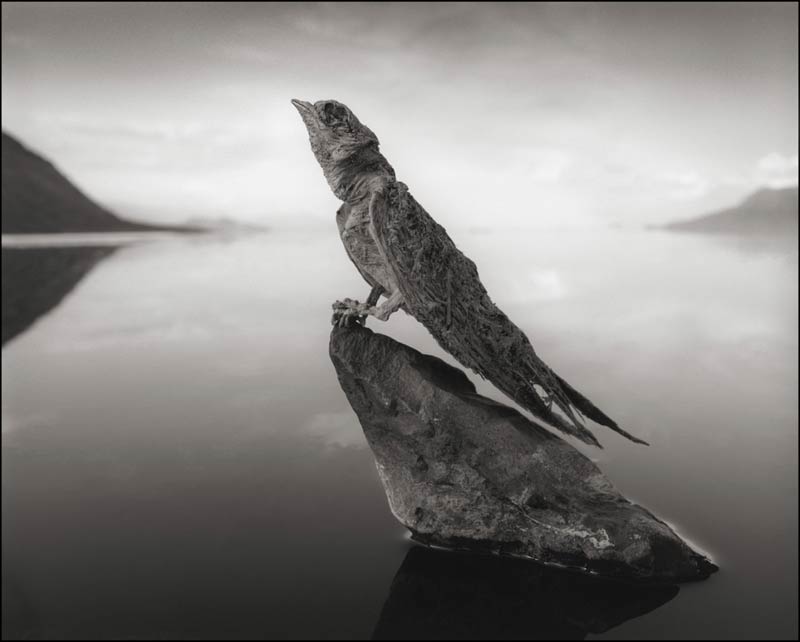
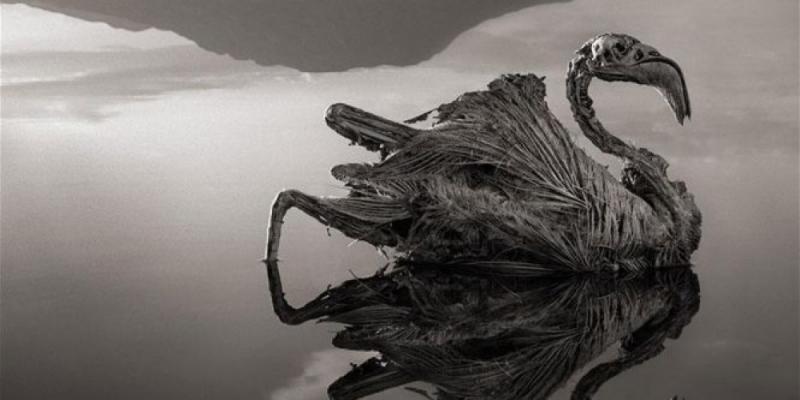
The lake is sometimes described as a place that turns animals to stone. This is an exaggeration associated with photographs of dead birds and other animals whose remains become coated with mineral deposits. Natron does not instantly turn living creatures into stone, but its high alkalinity, salinity, and temperature can be dangerous to organisms that are not adapted to such conditions. Visitors should therefore treat the water with caution and avoid entering the lake unless local specialists have confirmed it is safe.
A Major Refuge for Lesser Flamingos
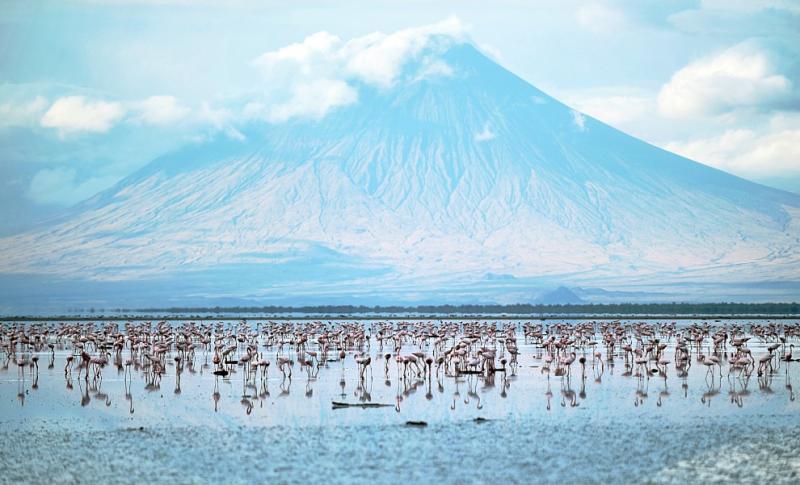
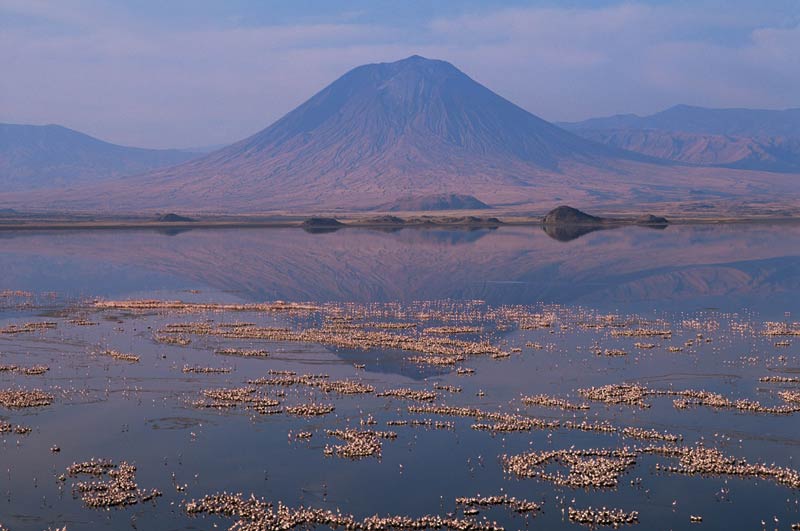
Despite its harsh conditions, Natron is enormously important for birds. It is one of the world’s most important breeding sites for lesser flamingos and a key nesting area in East Africa. During favorable seasons, enormous flocks gather here, and the population associated with the region numbers in the millions.
Alkaline water and salty shallows create a natural barrier against many land predators. In some areas surrounded by water and salt deposits, flamingos build cone-shaped mud nests. Usually, each nest holds a single egg. Breeding success depends on water levels, rainfall, the condition of the salt flats, and food availability. Even relatively small environmental changes can affect entire colonies.
Lesser flamingos feed mainly on microscopic algae and cyanobacteria that thrive in salty water. They filter water through their specialized bills to obtain nutrients. Other waterbirds and wetland species also occur around the lake. Natron is especially valuable for birdwatchers, but visitors should keep their distance and avoid disturbing nesting colonies during the breeding season.
Ol Doinyo Lengai Volcano
One of the most striking features of the surrounding landscape is Ol Doinyo Lengai, a volcano rising south of the lake. Its name is commonly translated from the Maasai language as “Mountain of God.” The volcano has great cultural significance for the Maasai people who live in the region and remains an active geological feature.
Ol Doinyo Lengai is known for its unusual natrocarbonatite lava, whose chemical composition and relatively low eruption temperature differ from those of most other volcanoes. After cooling, this lava can become pale in color, making the volcano especially remarkable from a geological perspective. Climbing to the summit requires good physical fitness, an experienced guide, and a check of current volcanic conditions.
The view of the volcano, salt plains, and colored lake creates one of the most recognizable landscapes in northern Tanzania. The contrast between Natron’s reddish surface, dark volcanic slopes, and bright sky makes the area particularly attractive for landscape photography.
Engare Sero Gorge and Waterfalls
Near the lake lies Engare Sero Gorge, where water flows between rocks and forms small waterfalls and natural pools. Unlike the exposed salt flats, this area includes cooler, vegetated sections that contrast with the hot, dry plains. Walks to the waterfalls reveal another side of the region and showcase its geological diversity.
The gorge route usually follows a rocky streambed and may involve crossing water. Conditions vary by season, so it is advisable to go with a local guide, wear shoes with good grip, and allow for sudden changes in water levels. Swimming should take place only in suitable locations identified by local specialists.
The Natural Landscape of the Great Rift Valley
Lake Natron lies in one of Africa’s most striking geological regions. The Great Rift Valley was formed by tectonic processes that stretch the Earth’s crust, creating faults, escarpments, and volcanic features. Lava fields, rocky hills, dry plains, and seasonal watercourses can all be seen around the lake.
Vegetation here is adapted to heat, salty soils, and limited freshwater. Thorny shrubs, acacias, grasses, and salt-tolerant plants grow in the surrounding area. Springs and small green patches occur in wetter locations. This variety of habitats supports birds, reptiles, insects, and other wildlife, although species are unevenly distributed across the region.
Maasai Culture
The Natron area is part of the traditional homeland of the Maasai, an East African people whose culture is closely connected with pastoralism and seasonal herd movements. In nearby settlements, travelers may learn about traditional house construction, crafts, clothing, music, and dance. These encounters can help visitors better understand the relationship between local communities, the arid landscape, and its natural resources.
Cultural visits should be arranged respectfully and with the agreement of community representatives. Visitors should ask permission before photographing people, avoid interfering with daily life, and choose tours that provide fair payment to local guides and hosts.
Conservation and Threats to the Ecosystem
The Natron Basin was designated a wetland of international importance under the Ramsar Convention in 2001. Its value lies not only in its unusual geology but also in its role in protecting lesser flamingos and other waterbirds. The ecosystem depends on seasonal rainfall, river and stream inflows, water levels, and salt concentrations.
Climate change, disruption of natural water flows, excessive land use, and industrial development can affect bird-breeding conditions. If the lake’s level or chemical composition changes significantly, suitable nesting sites and food resources may decline. Protecting the wider catchment and developing tourism responsibly are therefore important for the region’s future.
When to Visit Lake Natron
Natron can be visited in different seasons, but travel conditions depend heavily on rainfall and temperature. Getting around is generally easier during the cooler dry months, while roads may become difficult to navigate and some routes unsafe during the rainy season. Flamingo viewing depends on lake conditions and the breeding season, so large gatherings of birds cannot be guaranteed on a specific date.
The lake is in a remote part of northern Tanzania. Trips are often organized from Arusha and combined with other natural attractions in the region. A suitable vehicle is usually necessary for local travel, while hikes to waterfalls and mountain ascents require a local guide. Before setting out, visitors should check road conditions, route accessibility, and current safety advice.
Lake Natron is a place where extreme natural conditions support a surprisingly rich ecosystem. Reddish water, salt crusts, flamingo flocks, volcanic mountains, and Maasai cultural traditions make it one of Tanzania’s most unusual destinations. It is more than a spectacular landscape: it is a fragile natural system whose preservation depends on careful treatment of water, wildlife, and local communities.
Gallery