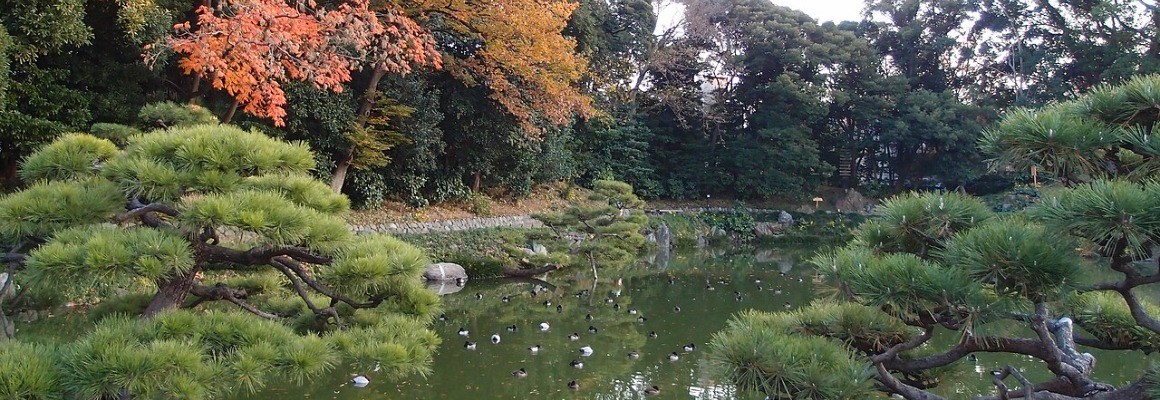
Rikugien Garden is one of Tokyo’s finest traditional Japanese gardens, known for its winding paths, artificial hills, ponds and carefully designed landscape compositions. Its name can be translated as “Garden of the Six Principles of Poetry” and refers to a traditional classification of poetic forms. Rikugien was created as a place where natural scenery and literary imagery come together in a unified artistic landscape.
The garden is located in Bunkyo Ward, slightly away from the capital’s busiest tourist streets. Beyond its gates, the noise of the city gives way to quiet paths, reflections of trees in the water and small bridges. Rikugien is especially appealing to visitors interested in Japanese aesthetics, seasonal changes and a peaceful break from urban life.
History of Rikugien Garden
Rikugien was created during the Edo period in the early eighteenth century. Construction began in 1695 at the direction of Yanagisawa Yoshiyasu, an influential official close to shogun Tokugawa Tsunayoshi. The project took several years, and the garden’s layout was inspired by famous landscapes and imagery from classical Japanese poetry.
Unlike gardens designed primarily for religious contemplation, Rikugien was intended as a place for leisurely walks and aesthetic enjoyment. Visitors could follow its paths and gradually discover new views of ponds, hills, stones and plants. Each turn revealed a different composition, much like an illustration accompanying a poem.
Over the following centuries, the garden changed hands and passed through several stages of its history. In the late nineteenth century, it became the property of entrepreneur Iwasaki Yataro, founder of Mitsubishi. The grounds were later transferred to the city, and the garden opened to the public in 1938. Today, Rikugien is designated a Special Place of Scenic Beauty and is regarded as an important example of Japanese landscape art.
The Meaning of the Name Rikugien
The name refers to the “six principles of poetry,” a concept originating in Chinese literary tradition and adapted in Japanese culture. In Japanese poetry, these principles helped describe different ways of expressing emotions, creating imagery and conveying meaning. The garden’s creator sought to translate literary aesthetics into a living landscape.
Rikugien’s design incorporates motifs associated with classical poems and celebrated natural locations in Japan. Hills, ponds, stone arrangements and individual trees create scenes that can be interpreted as visual references to literary works. A walk through the garden therefore becomes more than an encounter with plants: it is a journey into the world of Japanese poetry.
Ponds, Hills and Walking Paths
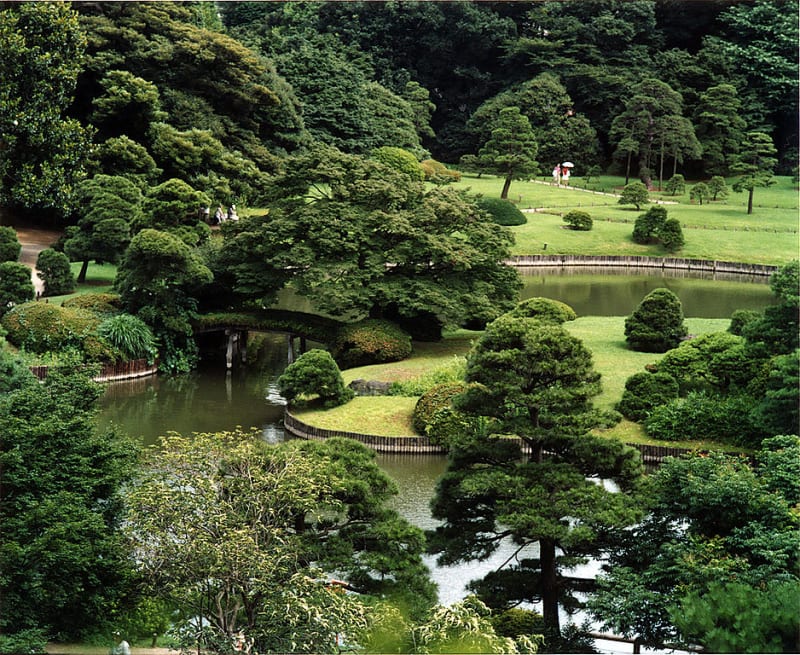
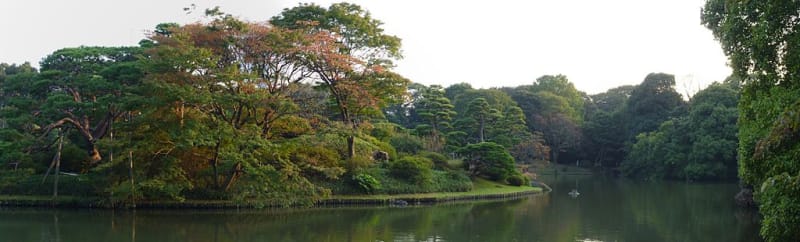
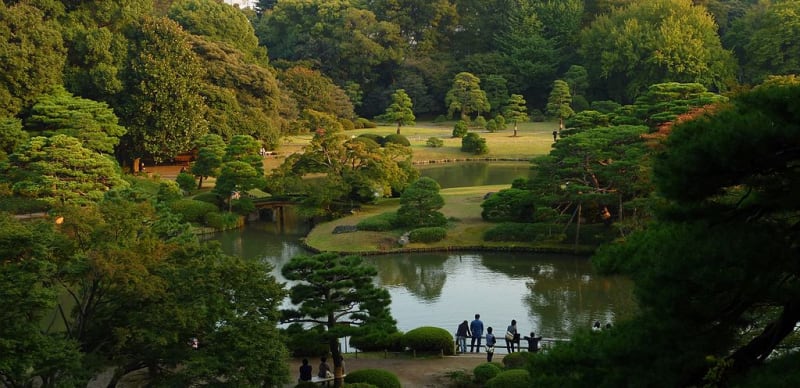
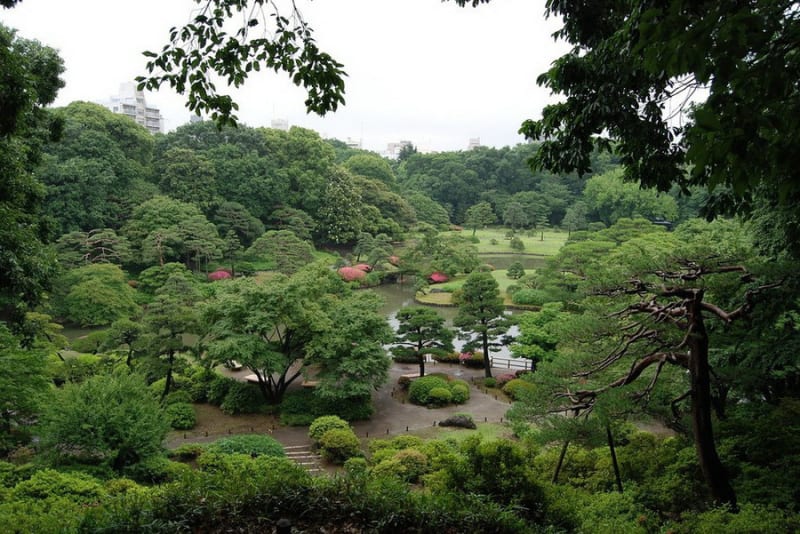
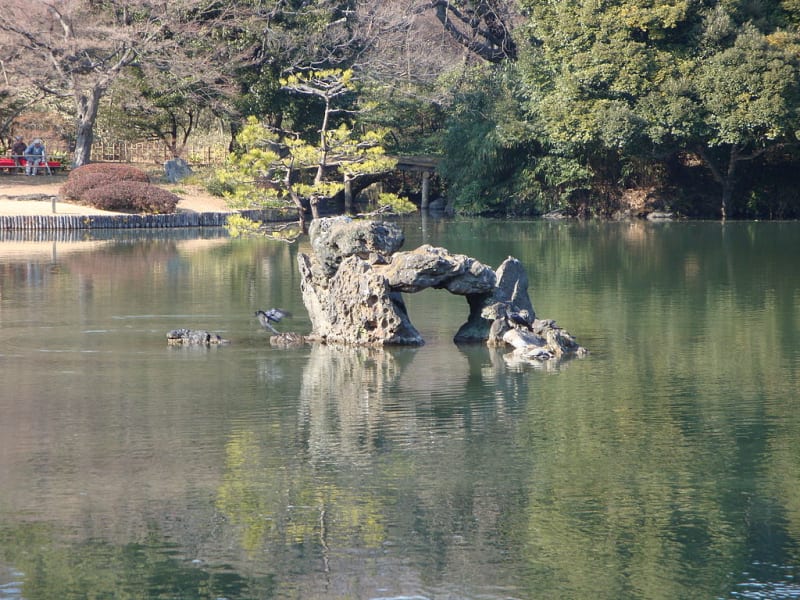
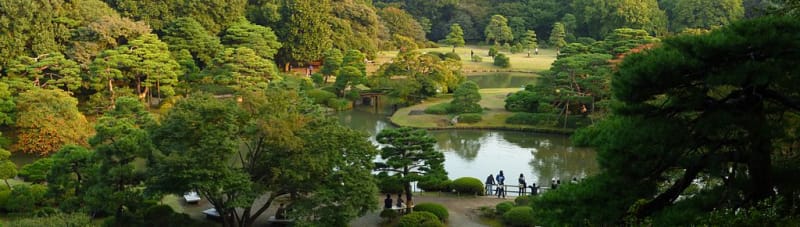
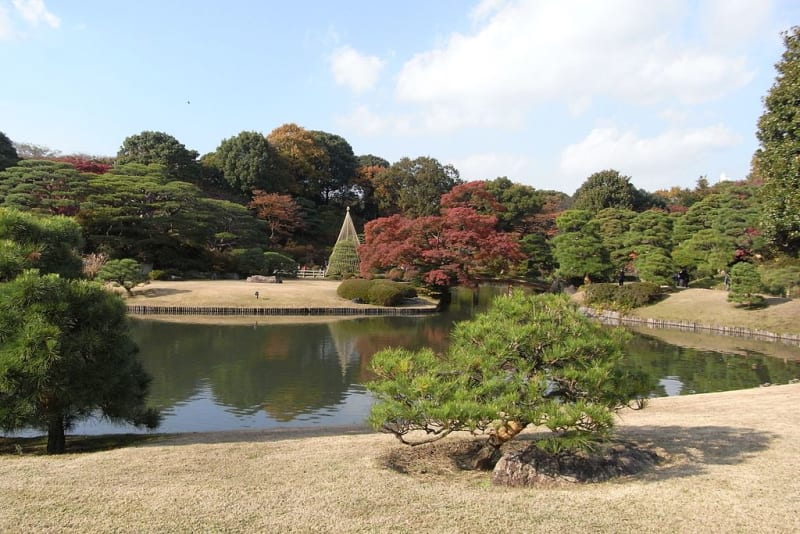
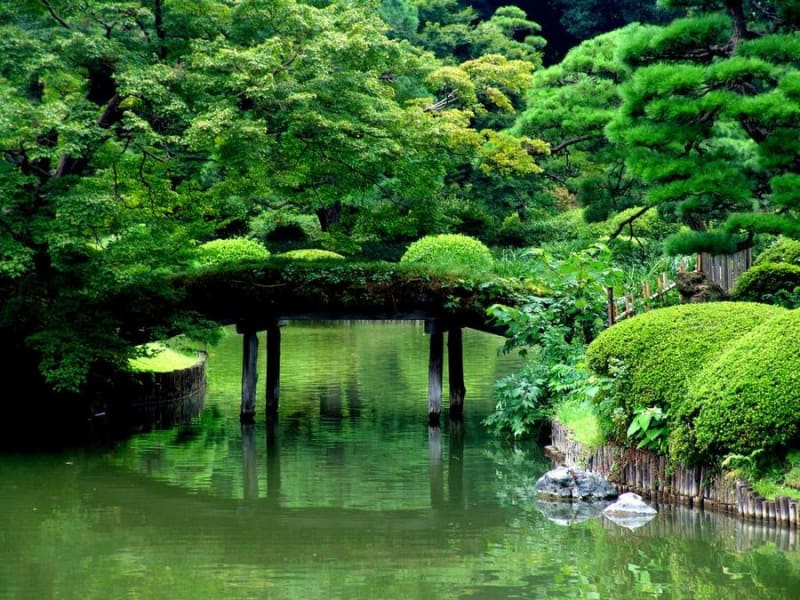
The main feature of Rikugien is a large pond around which the principal walking area is arranged. Its irregular shoreline, small islands, stones and trees create picturesque views. The water reflects the sky and surrounding vegetation, allowing the landscape to change with the weather and time of day.
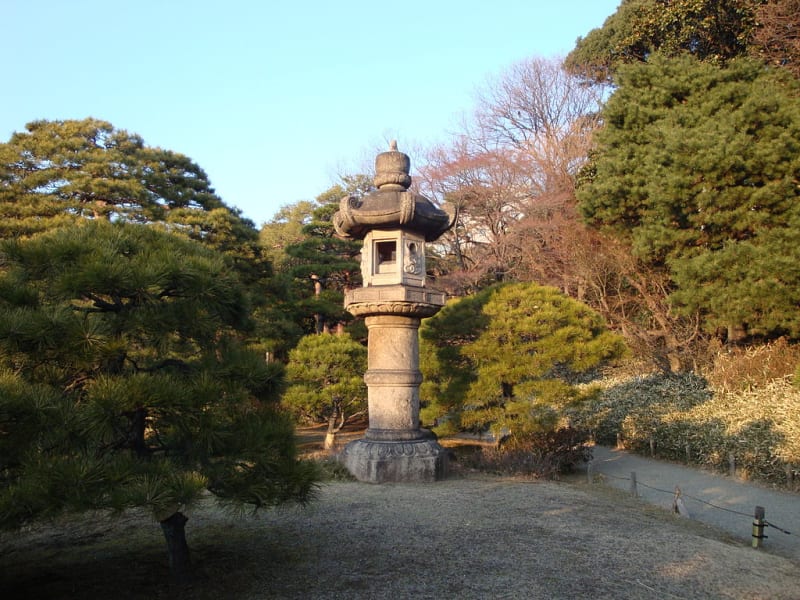
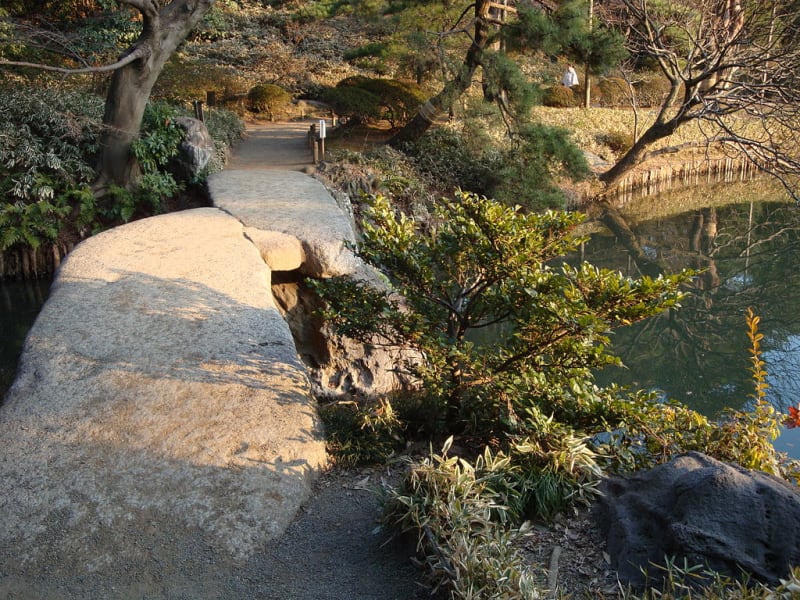
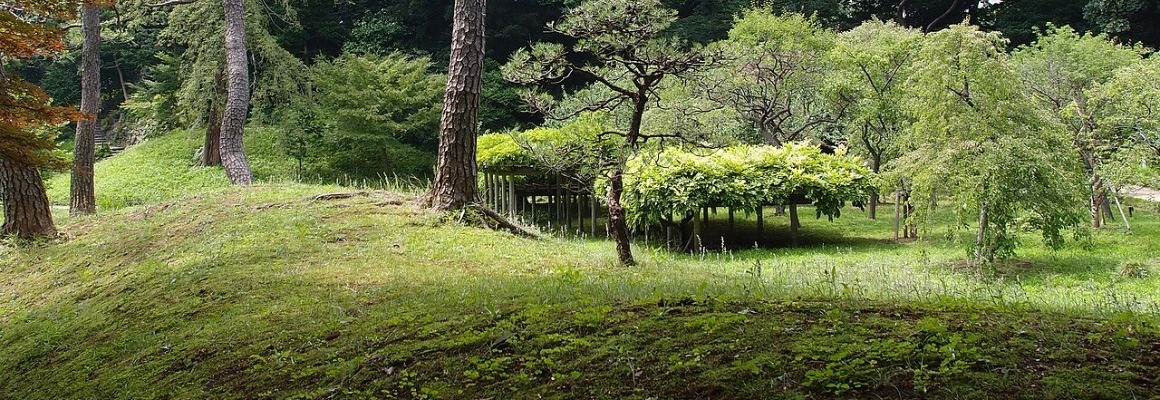
Paths pass through different sections of the garden and reveal new perspectives. Some offer broad views across the water, while others lead past small bridges, stone lanterns or vegetation-covered slopes. Artificial hills create the impression of natural terrain and provide viewpoints from different heights. There is no single dominant panorama: the experience unfolds gradually as visitors walk.
At Rikugien, the relationships between elements matter as much as their individual beauty. Trees partly conceal some areas and reveal others, creating a sequence of changing views. This technique is characteristic of Japanese garden design, where visitors become participants in the landscape rather than simply observing it from outside.
Seasonal Colours of the Garden
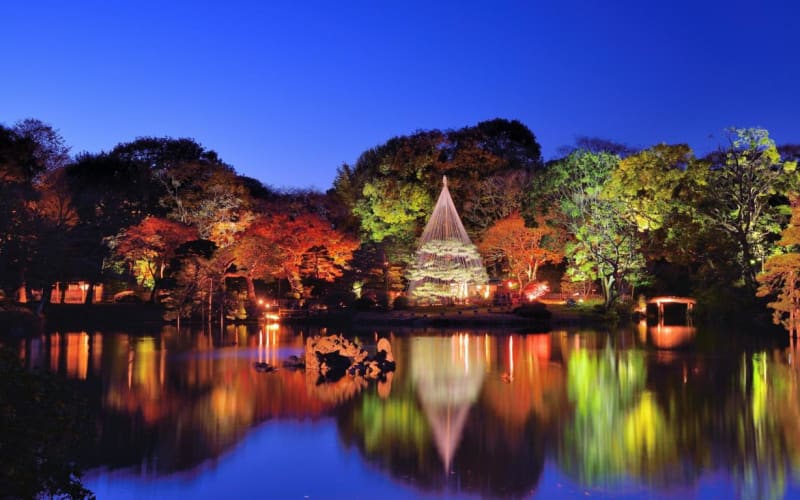
Rikugien is attractive throughout the year, with each season creating a different mood. In spring, flowering trees bring colour to the garden, particularly the weeping cherry tree that has become one of its best-known features. During the blossom season, its cascading branches form a striking landscape element, and seasonal evening illuminations sometimes present the tree in a different light.
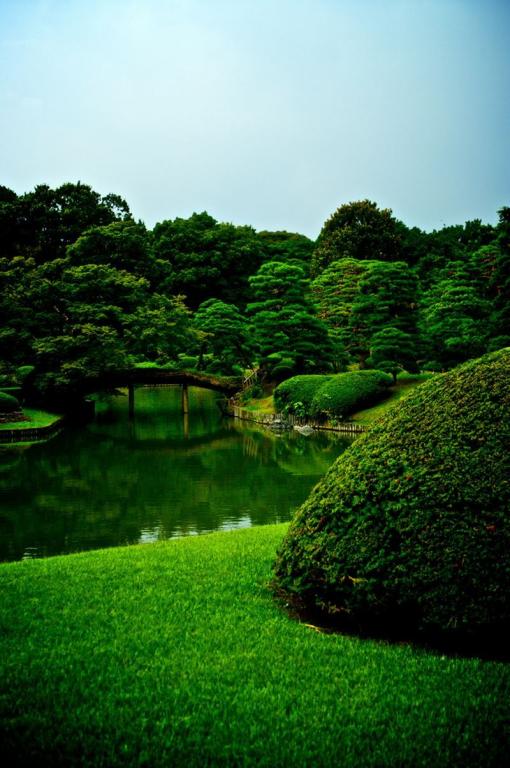
In summer, the garden becomes lush and shady. Tree canopies protect the paths from the sun, while reflections of greenery in the pond create a sense of coolness. It is a pleasant time for an unhurried walk, although Tokyo can be hot and humid during summer.
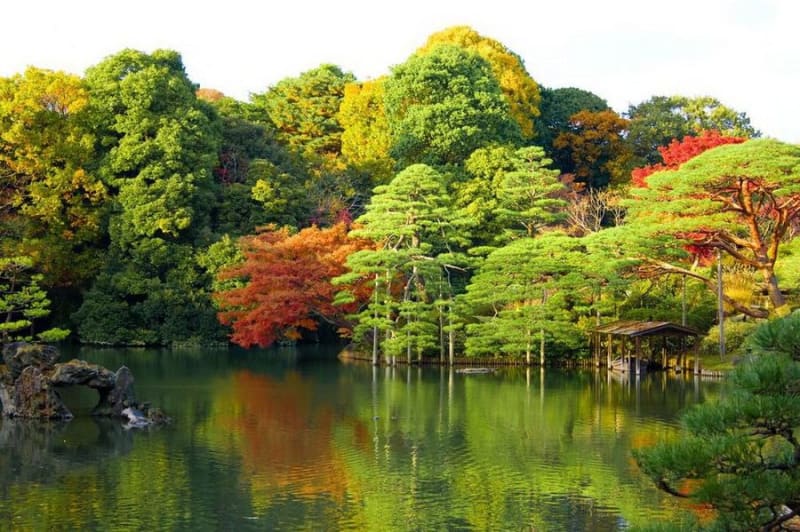
Autumn is one of the most impressive seasons to visit Rikugien. Maple leaves turn red, orange and gold, contrasting with dark evergreen foliage and the calm surface of the water. Special evening illuminations are sometimes organised during the autumn foliage season, but dates and access arrangements should be checked in advance.
In winter, the garden takes on a more restrained appearance. Branch silhouettes, stones, bridges and the overall structure of the landscape become more noticeable. On clear days, the lack of dense foliage makes it easier to appreciate the layout and details of the traditional design.
Best Places for Photography
One of the most popular photography spots is the weeping cherry tree, particularly when it blooms in spring. Its cascading branches create a striking silhouette against the garden, while reflections in the water and evening lighting can add depth to photographs.
The paths beside the pond also offer attractive views. From here, visitors can photograph small islands, stones, bridges and reflections of trees. In autumn, areas where red maple leaves contrast with green evergreens are especially photogenic. To capture the atmosphere of the garden, look beyond wide panoramas and notice details such as moss on stones, curved branches and narrow paths.
When taking photographs, avoid disturbing other visitors and follow the garden’s rules. Additional restrictions may apply during seasonal events, and the use of tripods or professional equipment should be checked with the administration in advance.
How to Get to Rikugien
The garden is located in Bunkyo Ward, in the northwestern part of central Tokyo. One convenient option is to take the JR Yamanote Line to Komagome Station. The south exit is about a seven-minute walk from the garden entrance. Sendagi Station on the Tokyo Metro Namboku Line is another option, approximately a ten-minute walk away.
Before travelling, check current opening hours, ticket prices and any changes to visiting arrangements through official Tokyo information sources. The garden can be much busier than usual during cherry blossom season and autumn foliage. If you plan to attend an evening event, confirm the last admission time separately.
Practical Tips for Visitors
Allow one to two hours for a visit to Rikugien so you can explore the main paths at a relaxed pace, enjoy the pond and notice the details of the garden’s design. Comfortable shoes are useful because some paths may be uneven or damp after rain.
If you want to see cherry blossoms or autumn foliage, plan your visit around seasonal forecasts. Exact flowering dates and changes in leaf colour depend on the weather and vary from year to year. For a quieter experience, consider visiting on a weekday and arriving near opening time.
Rikugien fits easily into a Tokyo itinerary that includes other historic gardens, temples and museums. There is no need to rush: the garden is best appreciated during a leisurely walk, with time to pause by the water, observe reflections and notice details that are easy to miss when hurrying.
Why Visit Rikugien Garden
Rikugien offers a chance to see how Japanese garden art combines nature, literature and philosophy. There is no need to search for a single main attraction: the beauty comes from the relationship between water, trees, stones, paths and ever-changing views. Each season reveals a different side of the garden, from spring blossoms to autumn colours.
For travellers seeking a quieter side of Tokyo, Rikugien provides a welcome contrast to busy streets and modern districts. It is an ideal place for walking, photography and discovering traditional Japanese aesthetics, offering a brief experience of harmony between people and nature.
Gallery