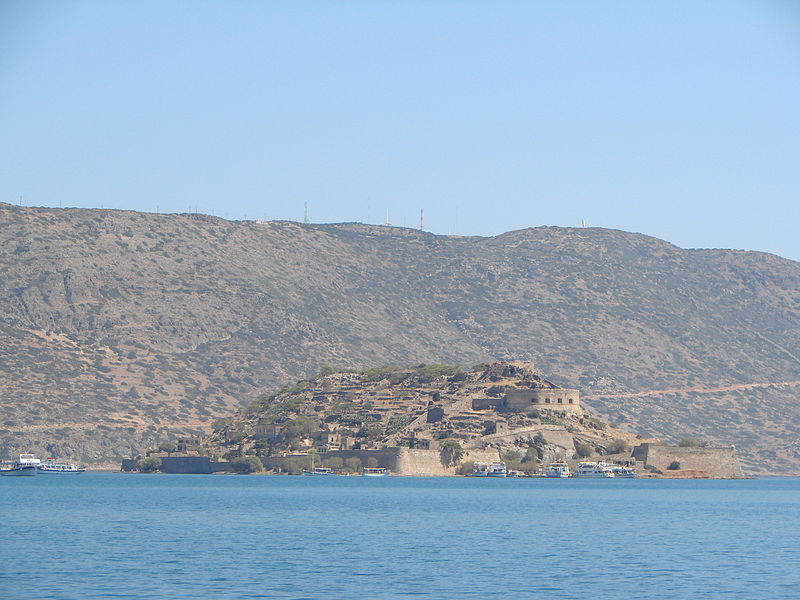
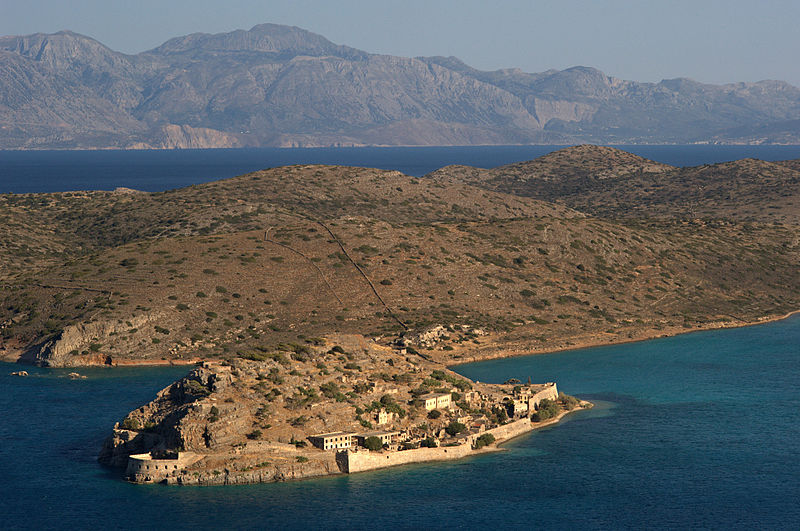
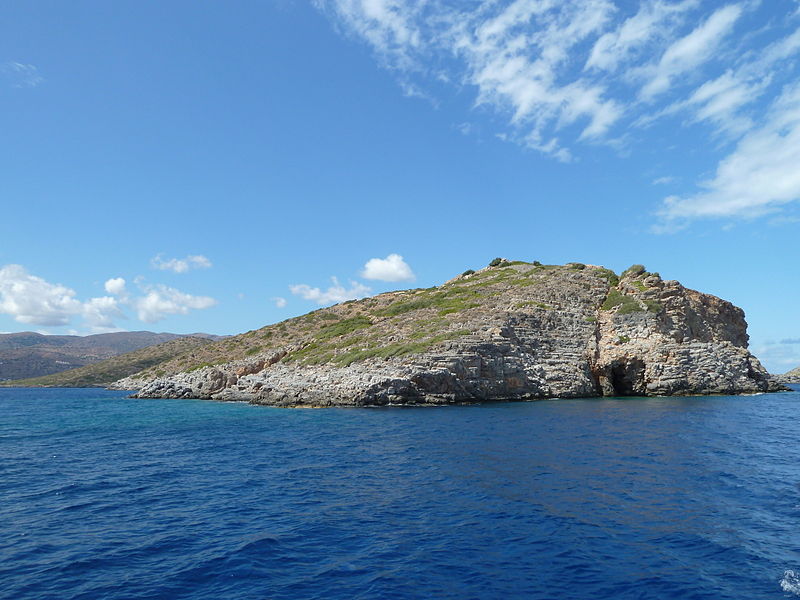
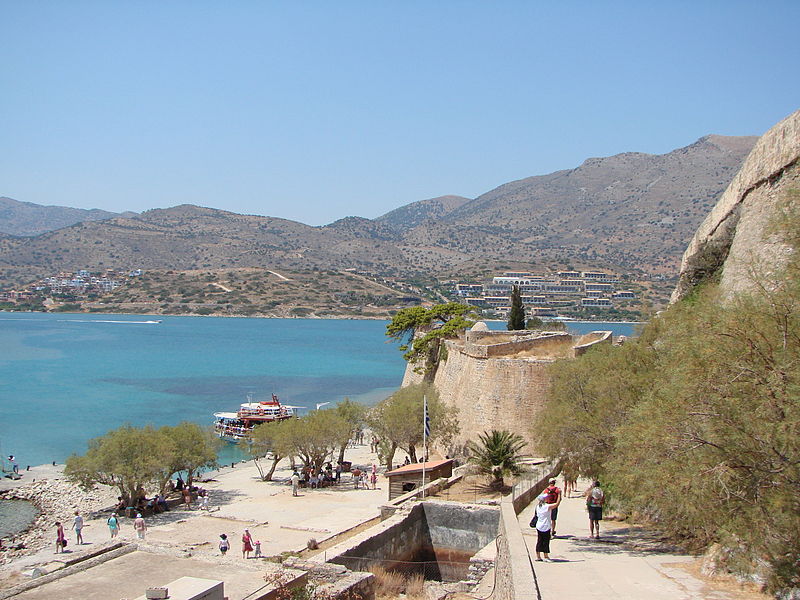
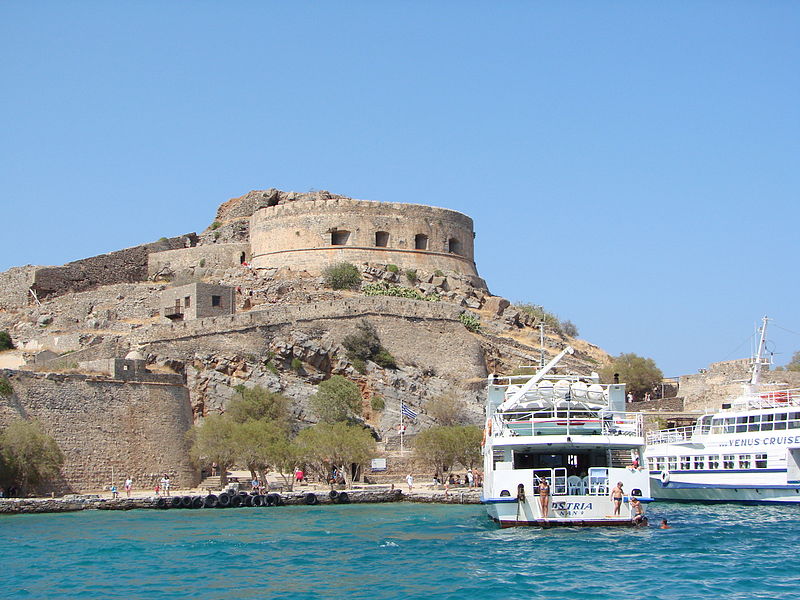
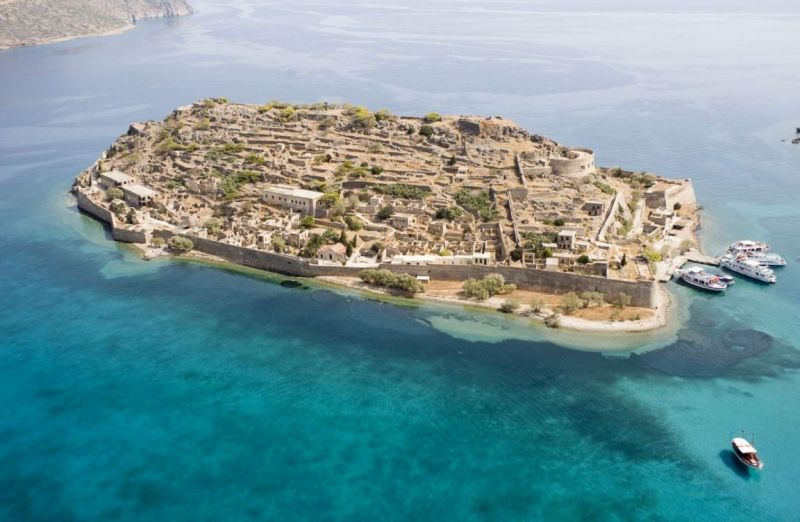
Spinalonga is a small rocky islet off the northeastern coast of Crete, at the entrance to the Gulf of Mirabello near Elounda and Plaka. Although it covers only about 0.085 km², it has a remarkable history. Its surviving landmarks include a Venetian fortress, remains of an Ottoman settlement and buildings associated with a former leprosy colony. Today, Spinalonga is one of Crete’s best-known historical sites.
The Venetian fortress
In antiquity, the islet was known as Kalydon and helped protect the harbour of the ancient city of Olous. Its present character largely dates from Venetian rule. Construction of the major fortress began in 1579 and continued through several phases. Bastions, defensive walls and projecting works were adapted to the rocky terrain and the growing importance of artillery. The fortifications protected the harbour and nearby maritime trade routes, including those associated with local salt production.
After the Ottoman conquest of most of Crete, Spinalonga remained under Venetian control. It finally surrendered to Ottoman forces in 1715 following a siege. Its long resistance makes the fortress an important example of Venetian military architecture in the eastern Mediterranean.
The Ottoman settlement
After 1715, an Ottoman settlement gradually developed on the island. Some houses were built on the foundations of earlier Venetian structures. During the nineteenth century, Spinalonga became a significant commercial centre in the Gulf of Mirabello. Historical records indicate that more than a thousand people lived there in 1881, alongside numerous homes, shops and workshops.
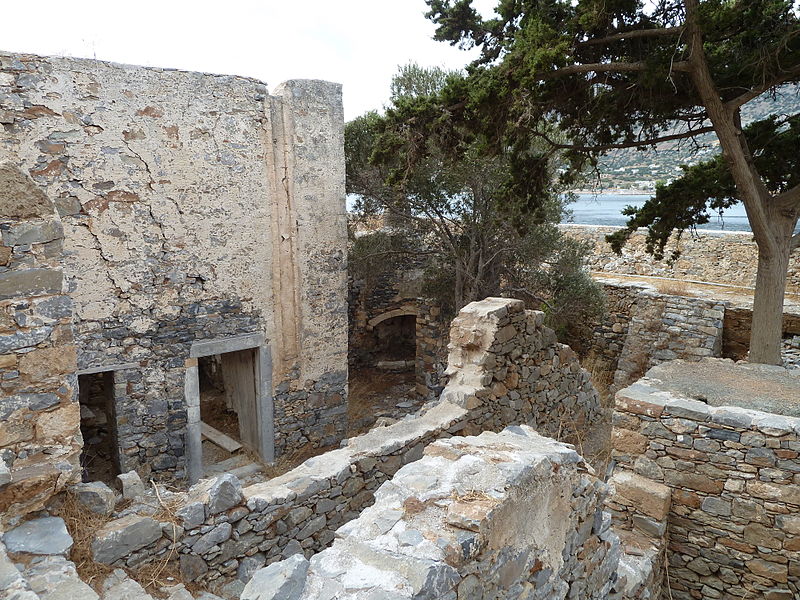
Two-storey buildings, narrow lanes and the remains of residential quarters still reveal traces of this period. Local Cretan and Balkan architectural traditions can be seen alongside the older defensive structures. Political upheaval and revolts in Crete during the late nineteenth century led many inhabitants to leave.
The leprosy colony
The most widely known and tragic chapter in Spinalonga’s history began when the island was designated for people with Hansen’s disease, commonly known as leprosy. In 1903, the authorities of the Cretan State decided to establish a settlement for patients there. People from other parts of Greece were later sent to the island as well. The colony remained open until 1957.
Life on Spinalonga involved enforced isolation, limited resources and separation from families. Nevertheless, residents formed a community, worked, ran shops, married and raised children. Their story reflects the social consequences of fear, stigma and limited medical understanding of infectious diseases.
Ruined houses, public buildings and streets help visitors imagine everyday life in the former settlement. The site should be approached not only as an archaeological attraction but also as a place of human memory and remembrance.
Spinalonga and UNESCO
The islet was designated an archaeological site in 1976. In 2014, Greece added the Fortress of Spinalonga to UNESCO’s Tentative List. This means it has been proposed for possible future World Heritage inscription; it does not mean that the site is already on the main World Heritage List.
Its significance lies in the coexistence of Venetian military architecture, Ottoman residential heritage and buildings associated with the twentieth-century colony. Together, these layers preserve several important chapters of Cretan history in a remarkably small area.
What to see
Visitors can explore the massive fortress walls, bastions and main gate, then follow stone lanes through the remains of the residential settlement. Buildings from the Ottoman period and the leprosy-colony era provide a deeper sense of the island’s past. Elevated points offer views across the Gulf of Mirabello, the Kolokitha Peninsula and the Cretan coast.
The island is best explored on foot. Although the area is small enough for a visit lasting a few hours, some paths are uneven, with steps and exposed sections under the sun. Comfortable shoes, drinking water and sun protection are recommended.
How to reach Spinalonga
There is no road or pedestrian connection to Crete, so visitors arrive by boat. Services and excursions usually depart from Plaka and Elounda, with longer trips available from Agios Nikolaos. The crossing from Plaka takes only a few minutes, while the journey from Elounda generally takes around ten minutes.
Check boat schedules, opening hours and ticket information before travelling, as arrangements and prices can change by season. Spinalonga is an excellent destination for travellers interested in Cretan history, historic fortifications and Mediterranean coastal scenery.
Gallery