Mercantour National Park is located in southeastern France, in the Provence-Alpes-Côte d'Azur region, close to the Italian border. It is one of the most scenic mountain areas of the French Alps, where high peaks, glacial lakes, deep valleys and forests meet alpine meadows and historic settlements.
The national park was established on 18 August 1979. Its overall territory, including the associated area of participating municipalities, covers approximately 1,891 km². The strictly protected core accounts for about 679 km², while the surrounding membership area covers around 1,212 km². This arrangement helps preserve natural ecosystems while supporting traditional life in mountain communities.
Mountain scenery and the park's area
Mercantour stretches across the southern Alps and includes several mountain ranges and valleys. Its position between the Mediterranean Sea and high alpine areas brings together alpine, Mediterranean and continental influences. Over relatively short distances, visitors can encounter forested slopes, rocky peaks, high-altitude pastures and rugged mountain scenery.
The highest point of the park is Cime du Gélas, which reaches approximately 3,143 metres above sea level. Mountain areas contain evidence of ancient glaciation, including glacial lakes and valleys shaped by ice and flowing water. The terrain ranges from gentle slopes to steep cliffs, so hiking routes vary considerably in difficulty.
The park's size is important when planning a visit: its valleys and main natural attractions cannot all be explored in a single day. Visitors should choose one valley or several nearby routes for a short trip, while a more comprehensive journey requires several days.
Valleys and scenic places
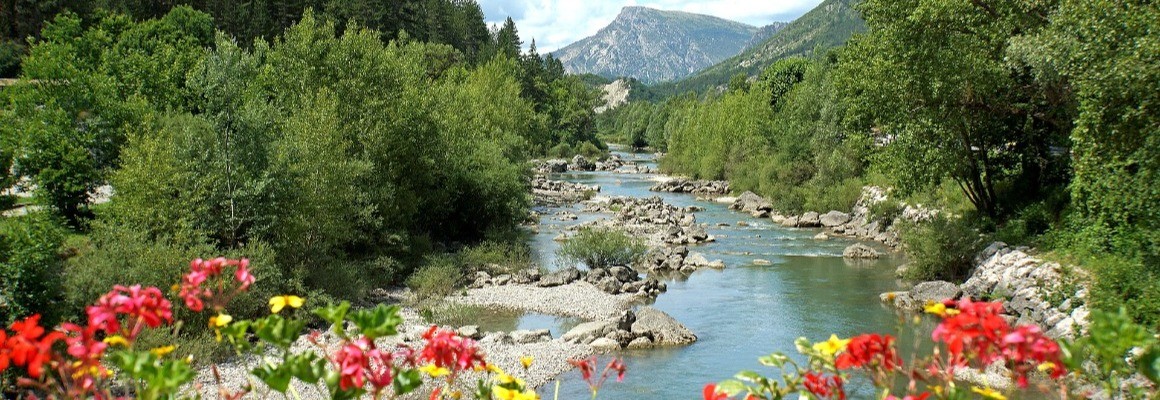
The Mercantour area includes several valleys, each with its own character. The Vésubie Valley is known for mountain forests and walking routes, the Roya Valley for historic villages and roads alongside mountain rivers, while the Tinée and Ubaye valleys offer views of high peaks, pastures and alpine slopes. The Verdon Valley features striking mountain scenery and sections of turquoise water.
One of the region's best-known places is the Vallée des Merveilles, or Valley of Wonders, in the Mont Bégo massif. Tens of thousands of ancient rock engravings have been discovered here, most dating from the Bronze Age. The stone surfaces preserve images of people, animals, weapons and geometric symbols. This archaeological landscape provides insight into the beliefs and activities of people who lived in the Alps thousands of years ago.
Access to archaeological areas is regulated to protect the heritage. A qualified guide is recommended on some routes, and the engravings must not be touched or damaged. Check trail access and current requirements before visiting.
Wildlife
Mercantour is known for its rich wildlife. Chamois, Alpine ibex, roe deer, red deer and wild boar live in its mountain forests and on its slopes. Wolves are also found in the region after returning to this part of the Alps in the late twentieth century. Animals occupy different elevations: some prefer forests and scrubland, while others use open rocky slopes and alpine meadows.
Birds of prey, including golden eagles and bearded vultures, can be seen above the mountain valleys. Depending on the location and season, visitors may also encounter many smaller bird species, insects and amphibians. Wildlife should be observed from a distance, without approaching young animals or feeding wild creatures.
Vegetation and natural diversity
More than 2,000 plant species have been recorded in the park. Lower elevations contain forests and Mediterranean vegetation; higher areas are dominated by coniferous and deciduous woodland, followed by alpine meadows and plants adapted to short summers and harsh conditions. Rare and endemic species occur in some areas.
This variety is linked to changes in elevation, geological structure and the influence of different climate zones. Mercantour is therefore valuable not only to visitors but also to researchers studying biodiversity, climate change and mountain ecosystems.
Hiking and outdoor activities
The national park offers routes of varying length and difficulty, from short valley walks to multi-day high-altitude treks. Popular outings lead to lakes, mountain passes, villages and viewpoints. Along some trails, visitors can see pastures, traditional stone buildings and remnants of old mountain roads.
Before hiking, check the forecast, trail conditions and seasonal restrictions. Mountain weather can change rapidly, and thunderstorms are possible in summer. Cold winds and patches of snow may occur at high elevations even during the warmer months. Bring water, suitable clothing and footwear, and choose a route appropriate for your fitness level.
Mountain villages, refuges and visitor information centres are located within and around the park. Depending on the route, visitors can combine outdoor activities with local museums, traditional architecture and regional food.
When to visit Mercantour
Summer and early autumn are generally suitable for most hiking routes, when many high-altitude trails are accessible and lakes and passes can be explored. Spring brings new growth, but snow may remain at higher elevations. In autumn, forests turn golden, and the air can be exceptionally clear, although daylight hours become shorter.
In winter, snow covers parts of the region, some roads and trails become difficult to access, and certain mountain passes may close. Winter walks and mountain activities remain possible, but conditions should be checked in advance and safety rules followed.
Visitor rules and nature conservation
Mercantour is a protected natural area with specific regulations. Visitors should stay on marked routes, take their rubbish away, avoid collecting rare plants and leave wildlife undisturbed. Rules are stricter in the protected core than in the surrounding membership area, where villages and traditional economic activities are present.
Mercantour National Park is ideal for travellers who want to discover the diversity of the French Alps, hike mountain trails, explore glacial lakes and see ancient rock engravings. Its large area offers both accessible walks and demanding treks for experienced hikers.
Gallery