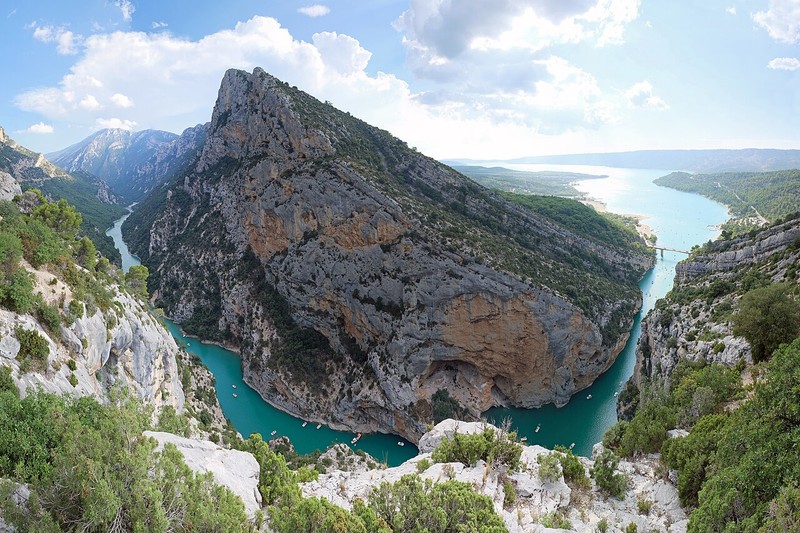
The Verdon Gorge is one of France's most spectacular natural landscapes, located in the Provence-Alpes-Côte d'Azur region in the southeast of the country. Carved by the Verdon River through limestone, the canyon is known for its towering cliffs, turquoise-green water, and scenic roads along the rim. It is a popular destination for hiking, climbing, photography, and water activities.
The gorge lies between the Alpes-de-Haute-Provence and Var departments and forms part of the Verdon Regional Natural Park. It stretches for about 25 km, with limestone walls rising several hundred metres above the river in places.
How the gorge was formed
The limestone formed in ancient marine environments. Over time, flowing water gradually widened cracks and deepened the river channel, while erosion and geological movements shaped the steep walls and winding valley. The river's distinctive turquoise colour depends on natural water conditions, light, and mineral particles.
The Verdon River and its turquoise water
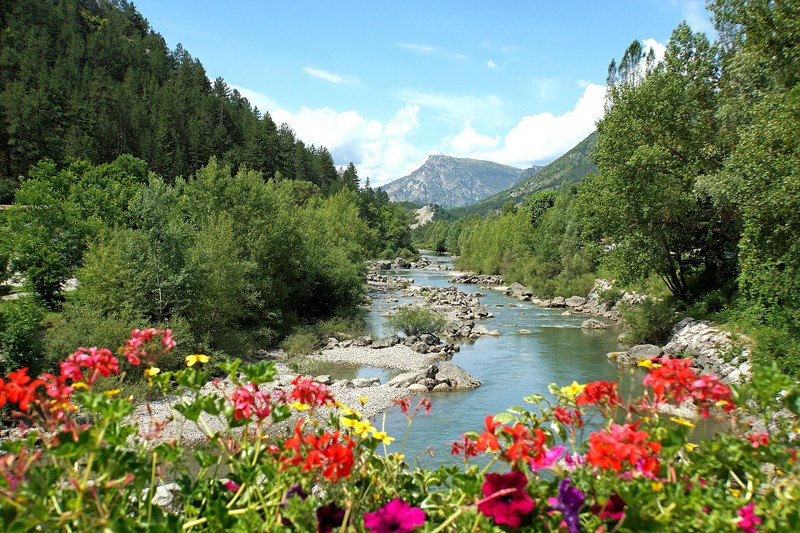
The Verdon River is the natural heart of the canyon. In sunny weather, its turquoise and green shades contrast beautifully with the pale limestone cliffs. Swimming in the river inside the deep gorge is prohibited because of strong currents, cold water, and hazardous conditions. For water-based recreation, choose permitted areas at nearby lakes or use qualified local operators.
The best viewpoints
Point Sublime
Point Sublime is one of the gorge's best-known viewpoints. It offers sweeping views of the deep valley, limestone walls, and winding river. It is a convenient stop for visitors who want to appreciate the canyon without undertaking a long hike.
Route des Crêtes
Route des Crêtes is a scenic road near La Palud-sur-Verdon, with several viewpoints overlooking the cliffs and canyon. Check road access before travelling, as some sections and viewpoints may be affected by seasonal or weather-related restrictions.
Balcons de la Mescla and Corniche Sublime
Balcons de la Mescla provides views of the gorge's bends and the meeting of waterways. Corniche Sublime runs along the southern side and reveals a different perspective of the canyon. Drive carefully on narrow sections and stop only in designated areas.
Hiking trails
The Verdon Gorge has trails ranging from short walks to demanding routes along cliffs and above the river. Check current trail conditions, weather forecasts, and access restrictions before setting out.
Sentier Blanc-Martel
The Blanc-Martel Trail is one of the region's most famous hikes, measuring about 15 km. It runs deep inside the canyon and includes tunnels and stairways. Allow most of a day to complete the hike. The route is not a loop, so plan your return transport in advance. A seasonal shuttle may connect the start and finish points. Rockfalls can lead to temporary closures or detours, so consult current notices.
Sentier de l'Imbut
The Imbut Trail is a challenging route with steep and rocky sections. It is best suited to experienced hikers who are comfortable on uneven terrain. Check whether the trail is open before departure.
Lake Sainte-Croix
Near the western end of the gorge lies Lake Sainte-Croix, a large artificial lake known for its turquoise water. Depending on weather and local rules, visitors can rent pedal boats, kayaks, or electric boats. The Pont de Galetas area is especially popular, where the Verdon emerges from the canyon and flows into the lake. It can become crowded in summer, so an early visit is recommended.
Flora and fauna
Pine trees, oaks, junipers, and Mediterranean shrubs grow on the slopes. The cliffs provide habitat for birds of prey, including vultures that can sometimes be seen soaring above the canyon. Help protect the environment by staying on marked trails, avoiding disturbance to wildlife, and carrying out all rubbish.
Climbing and other activities
The tall limestone walls have made the Verdon Gorge a renowned climbing destination. Routes vary in difficulty, but most require appropriate experience and equipment. Beginners should consider hiring a qualified instructor. Other activities in the region include cycling, paragliding, water excursions, and guided white-water trips on permitted sections.
When to visit
Spring and autumn are good seasons for hiking and scenic drives because temperatures are generally milder. Summer is the busiest period, ideal for viewpoints and Lake Sainte-Croix, but July and August can bring traffic, full car parks, and high temperatures. In winter, some roads and trails may be restricted by snow, ice, or strong winds.
How to get there
La Palud-sur-Verdon and Rougon are key starting points on the northern side, while villages on the southern rim provide alternative access. A car is the most convenient way to combine viewpoints and nearby villages. Allow a full day or more for hiking and visiting the lake. Public transport is limited, although buses and dedicated shuttles operate during certain periods.
Travel tips
Wear sturdy shoes and bring water, a hat, and sun protection. A flashlight for tunnels and extra food may be useful on the Blanc-Martel Trail. Do not light fires or camp in prohibited areas. Swimming in the river inside the canyon is dangerous and forbidden. The Verdon Gorge combines dramatic scenery, outdoor adventure, and relaxing views of turquoise water.
Gallery