The Forbidden City is China’s largest palace complex and one of the most famous landmarks of traditional Chinese architecture. Located in the heart of Beijing, it served as the residence of Chinese emperors for nearly five centuries. Behind its high walls and broad moat lay a world of palaces, ceremonial halls, courtyards, and gardens that ordinary people were not permitted to enter.
History of the Imperial Residence
Construction of the Forbidden City began in 1406 on the orders of the Yongle Emperor of the Ming dynasty. The main works were completed in 1420, after which Beijing became the imperial capital. The complex remained the center of China’s political power under the Ming and Qing dynasties until the monarchy fell in the early twentieth century.
For centuries, the palace hosted state ceremonies, meetings with officials, and decisions of great importance. Emperors, members of their families, court officials, and numerous servants lived there. Access to different sections was strictly controlled, and breaking palace rules could lead to severe punishment.
Why It Was Called the Forbidden City
The name refers to the restricted access to the palace grounds. The emperor was regarded as the Son of Heaven, and his residence formed a special world separated from everyday life in the capital. Most subjects could not enter freely, so the name emphasized the complex’s secluded and sacred status.
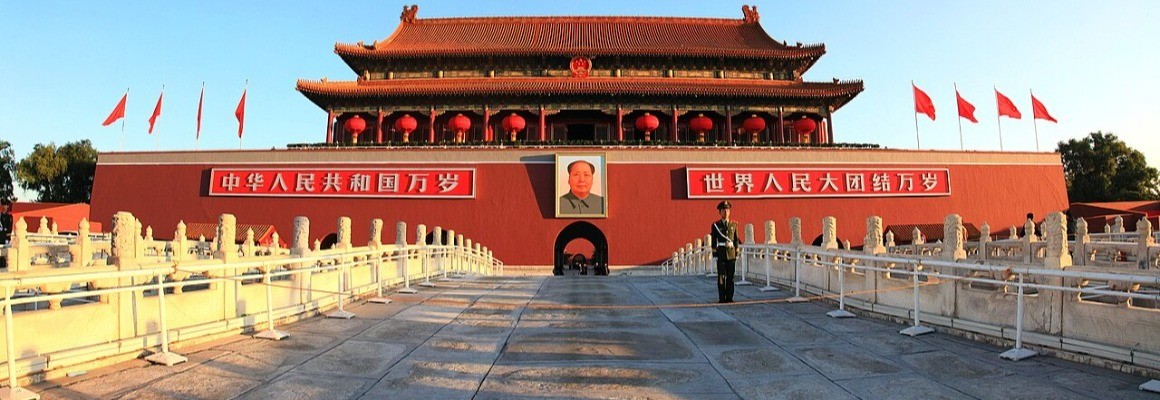
The Forbidden City was not a separate city in the modern sense but an enormous palace ensemble within Beijing. Its rectangular grounds are enclosed by a wall about ten meters high and a moat. A multi-tiered tower rises at each corner, while the main gates follow a strict north–south axis.
Architecture and Symbolism
The complex covers about 72 hectares and contains hundreds of buildings. Traditional Chinese architecture placed great importance on symmetry, orientation, and the symbolic meanings of colors and numbers. The main structures stand along a central axis, while their size and decoration emphasized the emperor’s authority.
The roofs covered with yellow glazed tiles are especially striking, since yellow was associated with imperial power. Red walls and columns symbolized prosperity and solemnity. Many rooftops feature small figures of mythical creatures with protective and symbolic meanings.
Main Palaces and Halls
One of the best-known structures is the Hall of Supreme Harmony, where major state ceremonies took place. It is the largest building in the complex and one of its architectural symbols. A vast stone terrace in front of it reinforces the ceremonial character of imperial rituals.
The halls in the central section were used for official events, audiences, and court business. More private quarters behind them were reserved for the emperor and his family. In the northern part of the complex, the Imperial Garden features trees, rock arrangements, pavilions, and winding paths, contrasting with the geometric courtyards and grand halls.
Life Behind the Palace Walls
The Forbidden City was not only a political center but also a complex working community. The imperial court required kitchens, storerooms, workshops, and quarters for servants and guards. A strict hierarchy governed the palace, and numerous rules regulated the behavior of courtiers.
Behind the splendor of the halls lay the demanding lives of those who kept the residence running. The imperial family rarely left the guarded grounds, and access to the ruler depended on a person’s position at court. The complex’s history includes not only stories of power and wealth but also court intrigue, struggles for influence, and changes in Chinese politics.
From Palace to Museum
After the Qing dynasty fell in 1912, Emperor Puyi continued to live in the inner quarters for a time, even though the monarchy had ended. He was finally expelled from the palace in 1924. In 1925, the Palace Museum opened on the grounds, making historic buildings, artworks, and objects from imperial life accessible to the public.
The museum’s collections include paintings, calligraphy, ceramics, jade objects, clocks, jewelry, furniture, and other items connected with the Chinese court. During wars and political upheavals, some collections were moved for safekeeping, so their history also reflects the dramatic events of the twentieth century.
The Forbidden City Today
Today, the Forbidden City is one of Beijing’s leading cultural attractions and welcomes visitors from around the world. In 1987, UNESCO added it to the World Heritage List as an outstanding example of Chinese palace architecture. The complex is immensely important for the study of history, art, religion, and the political structure of imperial China.
A visit reveals more than a collection of ancient buildings: it shows a carefully organized space in which architecture reflected the structure of power. Long courtyards, monumental gates, painted ceilings, and rows of pavilions help visitors imagine the ceremonial life of the imperial court. Allow several hours to explore the complex and check the current visitor rules and ticket reservation requirements in advance.
Gallery