A sea temple on a rocky outcrop
Pura Tanah Lot is one of Bali's best-known Hindu temples, set on a rocky formation off the coast near Beraban village in Tabanan Regency. It lies around 30 kilometres from Denpasar and has become one of the island's iconic landmarks. At sunset, the temple's silhouette above the waves of the Indian Ocean creates a memorable coastal scene.
The name Tanah Lot is commonly interpreted as “land in the sea.” At high tide, water surrounds the rock; at low tide, part of the approach to its base may become accessible. The temple remains an active sacred place, not simply a tourist attraction, so access to its inner religious areas may be restricted.
History and the legend of Nirartha
The temple's story is associated with Dang Hyang Nirartha, a respected Hindu priest who, according to Balinese tradition, travelled around Bali in the fifteenth or sixteenth century. During a journey along the coast, he is said to have found the rock near Beraban and stopped there to meditate. Local tradition holds that the place made a strong spiritual impression on him.
One legend tells of a dispute between Nirartha and the local community leader, who opposed the priest's teachings. Nirartha is said to have moved the rock into the sea through spiritual power and established a shrine there. Another story describes sacred snakes that guard the rock. These accounts belong to local mythology rather than documented history, but they remain an important part of the site's cultural identity.
Religious significance
Tanah Lot is one of Bali's notable sea temples, associated with reverence for the ocean and the spiritual protection of the island. Worshippers visit to pray and make offerings, and religious ceremonies continue to take place here. An important celebration is the temple odalan, held according to the Balinese Pawukon calendar roughly every 210 days. The exact dates should be checked in advance.
Visitors should avoid interrupting ceremonies, respect barriers and follow the instructions of temple staff. The inner sacred areas are primarily intended for worship, so tourist access may be limited.
The rock, tides and ocean waves
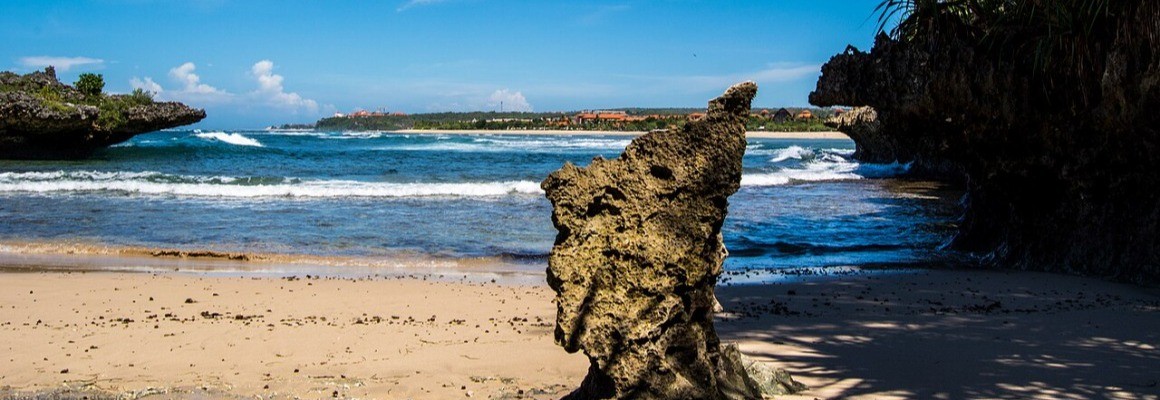
The temple's defining natural feature is the rock on which it stands. Waves and coastal erosion continually shape the shoreline, while surf breaks against the dark stones at the base. This setting gives the temple its dramatic appearance against the ocean.
At low tide, more of the rocky base becomes visible and visitors may be able to approach it where permitted. At high tide, the route may be submerged. Do not attempt to cross water in rough conditions or ignore safety barriers: wet rocks are slippery and sea conditions can change quickly.
Viewpoints and photography
The best-known views are from coastal terraces and paths on higher ground. From these viewpoints, visitors can see the temple above the water, waves breaking around the rock and the wide ocean horizon. Crowds tend to gather before sunset, when the light creates a striking silhouette.
Early morning is a good choice for a quieter visit and softer light. If you want to see the sunset, arrive well in advance to find a safe viewing spot. Different points along the coast offer varied perspectives, so there is no need to venture onto unsafe rocks for a photograph.
Other temples nearby
Nearby Pura Batu Bolong stands on a rocky projection with a natural hole in the stone. Its name is often translated as “hollow rock.” The region also contains Pura Pakendungan, associated with local religious traditions and stories about Nirartha. Together, these shrines form part of a wider sacred landscape rather than a single isolated monument.
Visitor facilities and getting there
The route to the temple passes through a visitor area with souvenir shops, local handicrafts, cafés and restaurants. Parking, toilets and information services are available. The area can become busy in the late afternoon, and traffic near the entrance may slow down.
Tanah Lot is in Beraban village, Tabanan Regency, around 30 kilometres from Denpasar. Travel time depends on traffic and your starting point. Visitors can arrive by car, with a hired driver or as part of a guided tour. From the parking area, the viewpoints are reached on foot through the visitor zone.
When to visit
The temple can be visited throughout the year, but the experience depends on weather, waves and time of day. Bali's dry season generally runs from April to October, although conditions vary. Morning is better for a quieter atmosphere, while sunset is popular for views and photography. Check current opening information and the ceremony calendar before travelling.
Practical tips
Bring drinking water, sun protection and a hat, and wear shoes with a good grip. Keep away from cliff edges during rough surf and never cross flooded areas. As this is an active Hindu sanctuary, respect ceremonies, do not touch offerings and follow local guidance on clothing and access.
Why visit Tanah Lot?
Pura Tanah Lot combines a dramatic coastal landscape, Balinese Hindu traditions and distinctive local architecture. The temple on the rock, the sound of the ocean, legends of Nirartha and nearby shrines make it much more than a famous photo stop. A visit offers insight into the living religious culture of Bali and the connection between the natural world and local belief.
Gallery