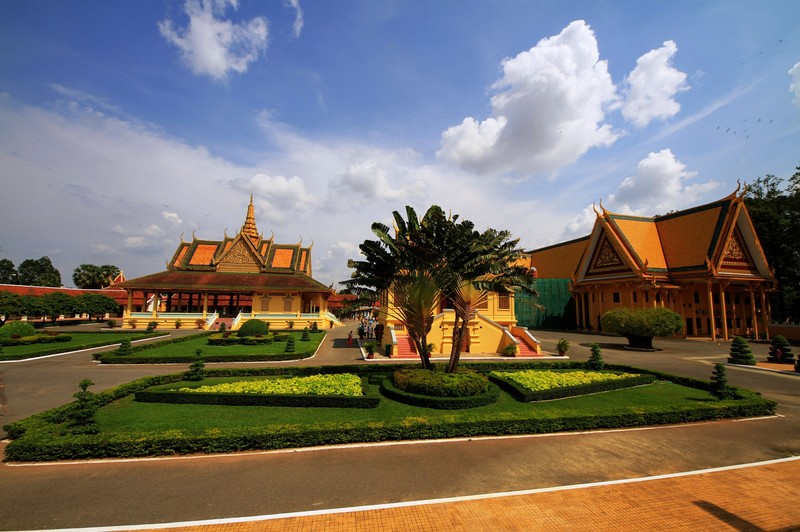
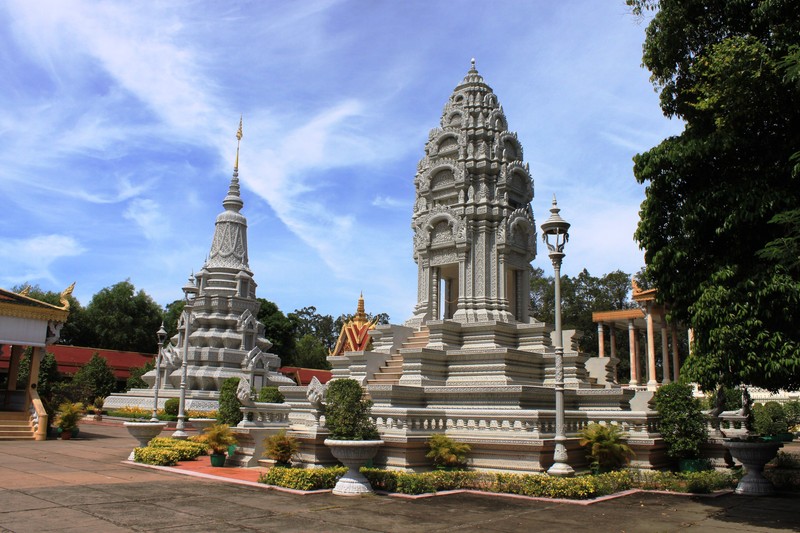
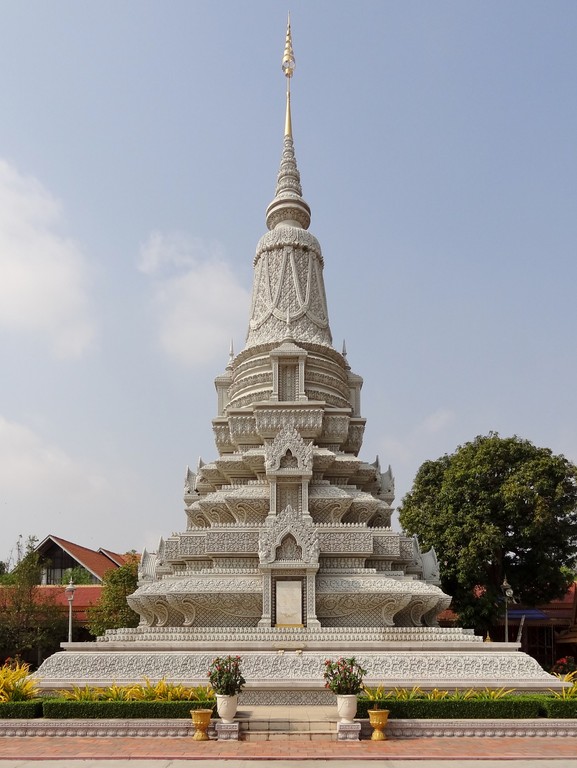
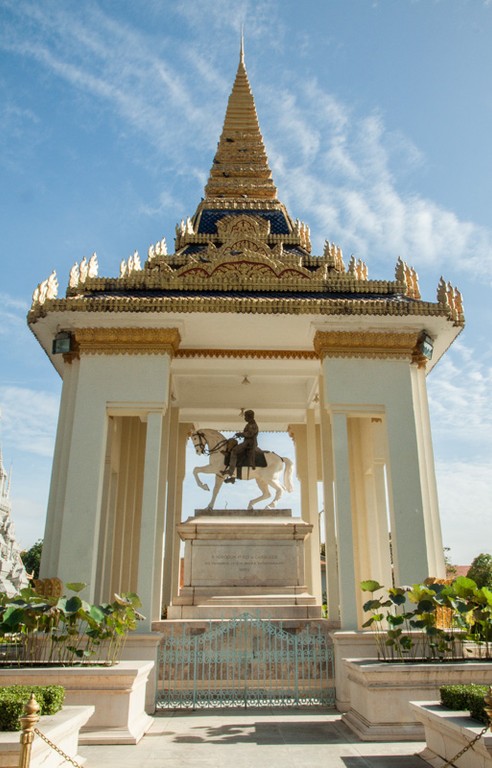
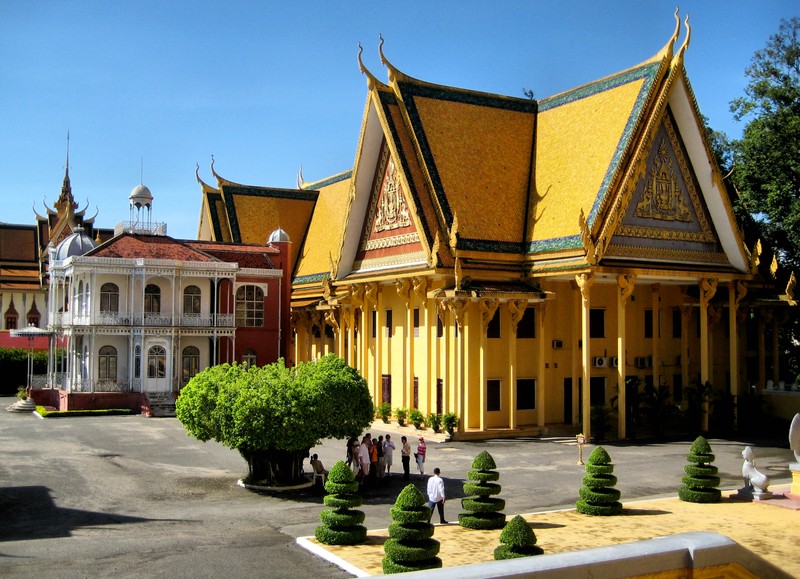
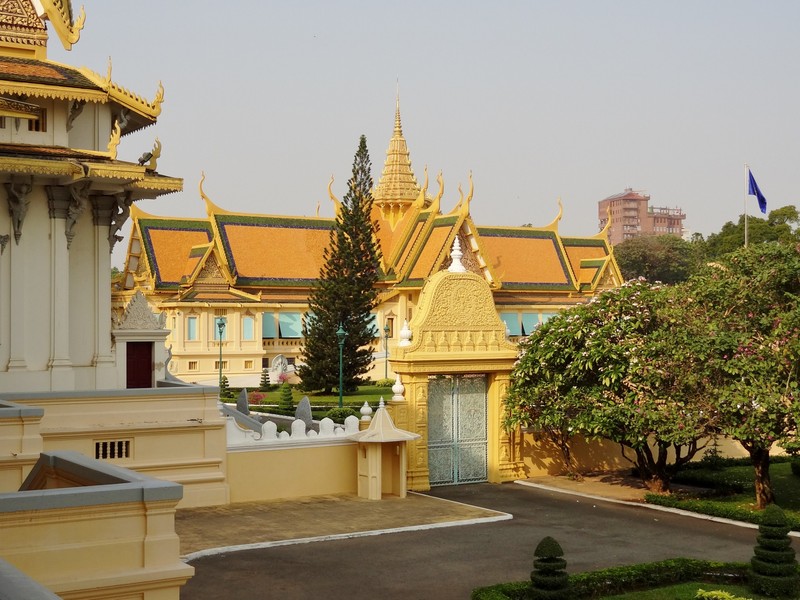
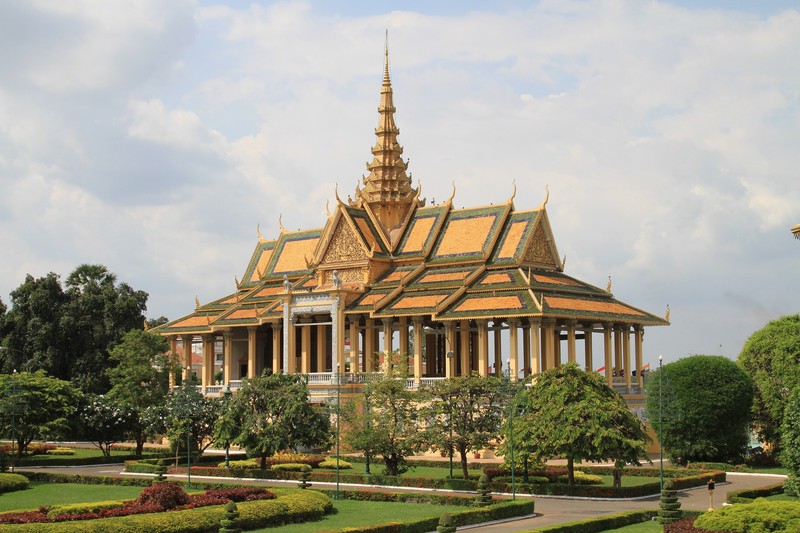
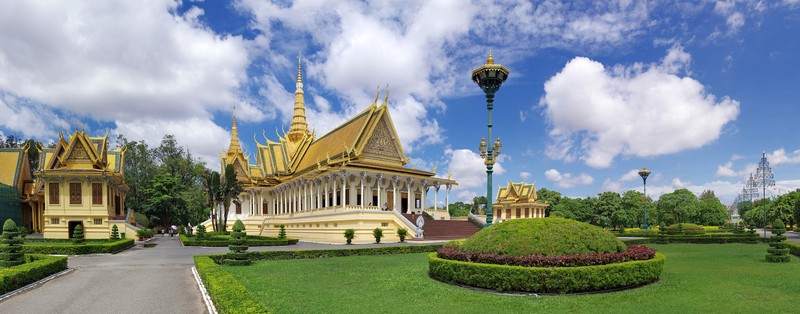
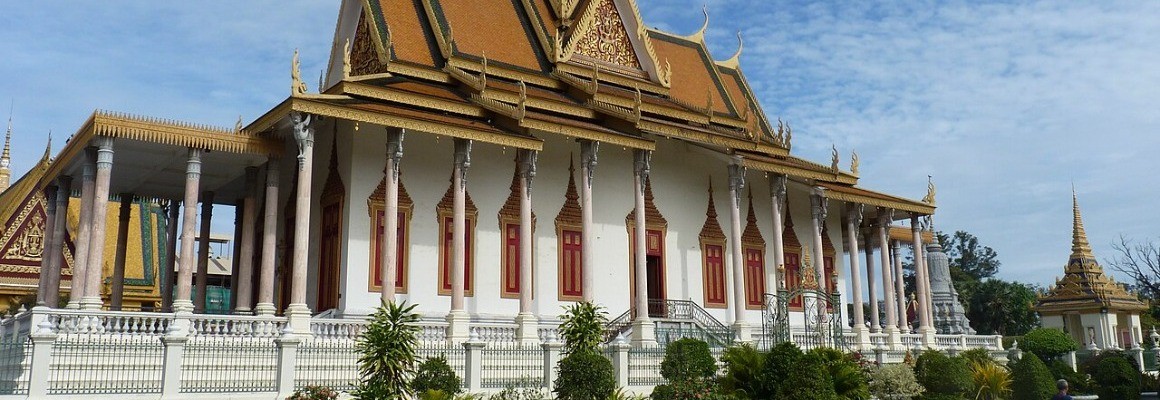
The Royal Palace of Phnom Penh is one of Cambodia’s most important historic landmarks and the official residence of the monarch. Construction began in 1866, after King Norodom moved the capital from Oudong to Phnom Penh. Located beside the Tonle Sap River, the complex is known for its gilded roofs, tall spires, traditional Khmer architecture and landscaped gardens.
History of the palace
The new royal residence became the political and ceremonial centre of the capital. Over subsequent decades, buildings were rebuilt, expanded and decorated. The complex combines traditional Khmer forms and Buddhist symbolism with a few European architectural influences.
The Throne Hall
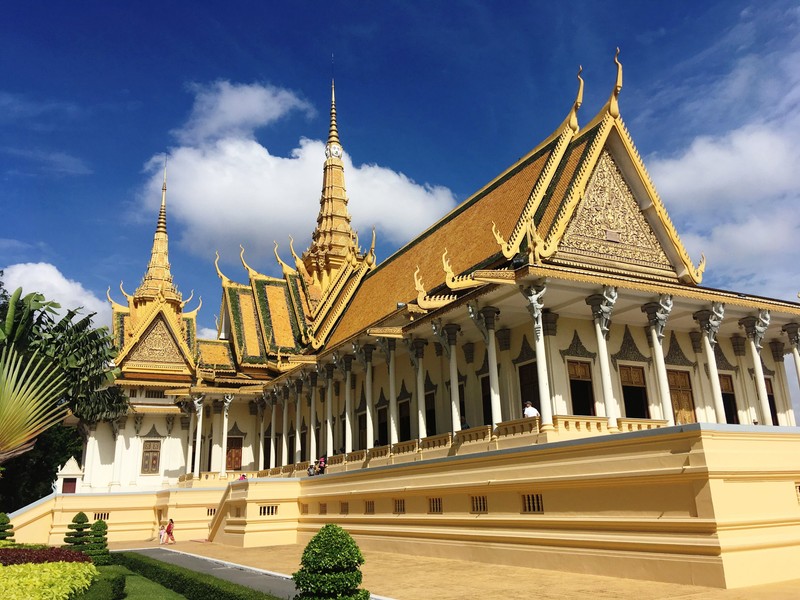
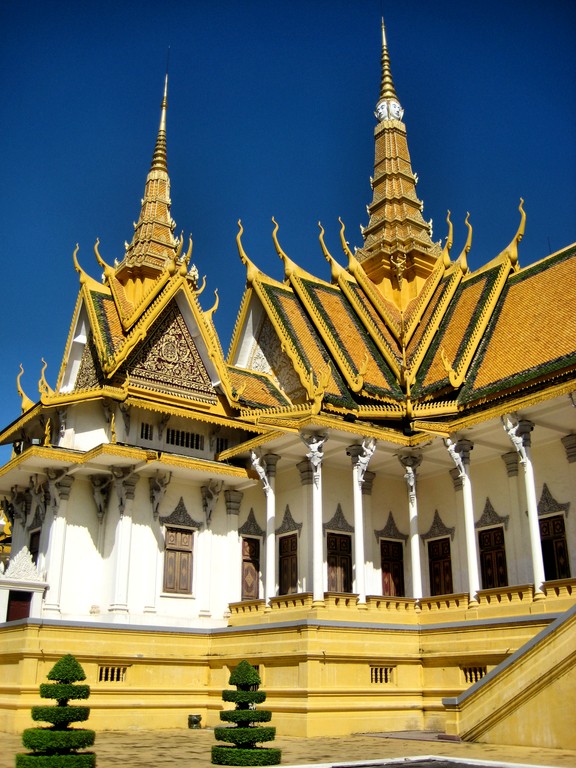
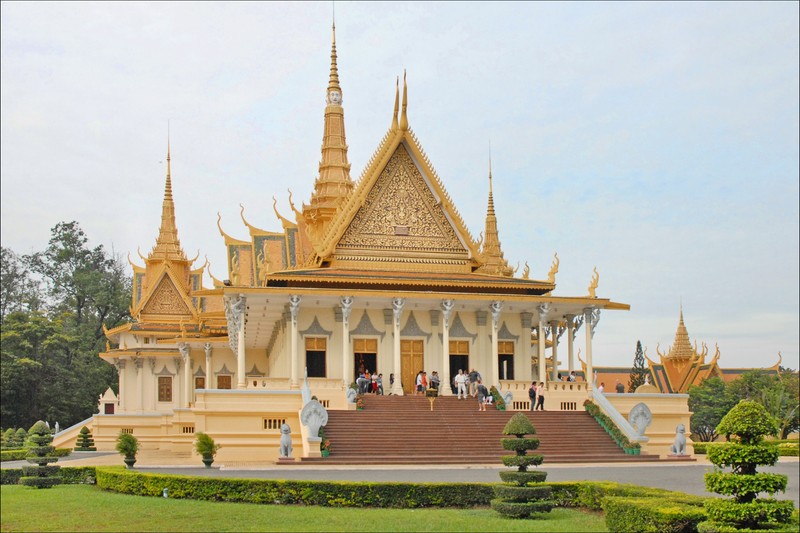
The Throne Hall is used for coronations, official receptions and state ceremonies. Its present building was completed in 1919, and its central spire rises about 59 metres. Visitors generally view the hall from outside because interior access is restricted. Photography inside is prohibited.
The Silver Pagoda
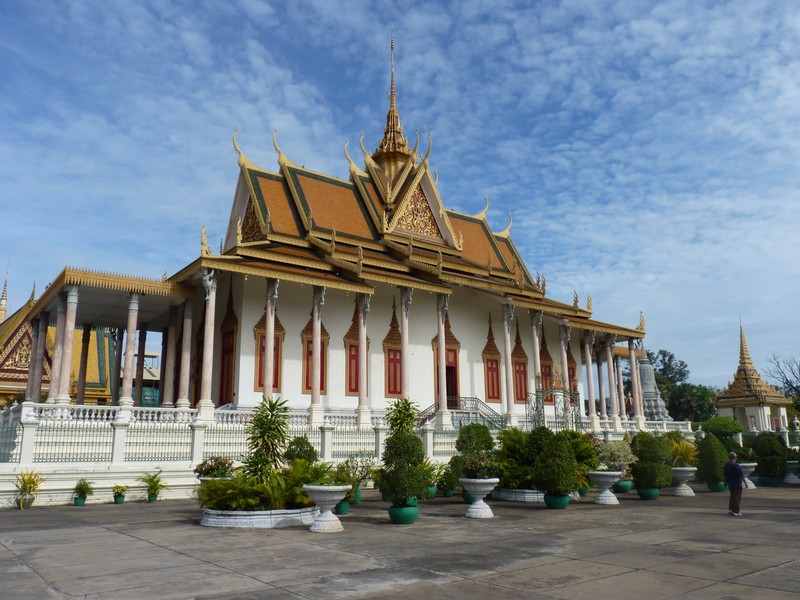
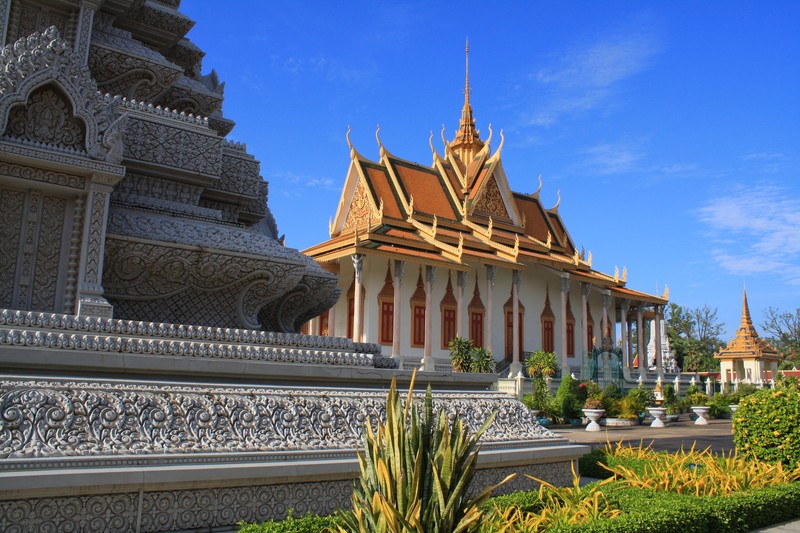
The Silver Pagoda, officially Wat Preah Keo Morakot, is one of the complex’s most valuable religious buildings. Its popular name comes from a floor covered with more than five thousand silver tiles. The pagoda houses sacred Buddhist images, including a crystal Emerald Buddha and a large gold Buddha Maitreya decorated with diamonds.
The surrounding gallery contains murals based on the Reamker, the Khmer version of the Ramayana. They depict epic heroes, mythical beings and dramatic battles. Photography inside the pagoda is not permitted, and visitors may be required to remove their shoes.
Pavilions and gardens
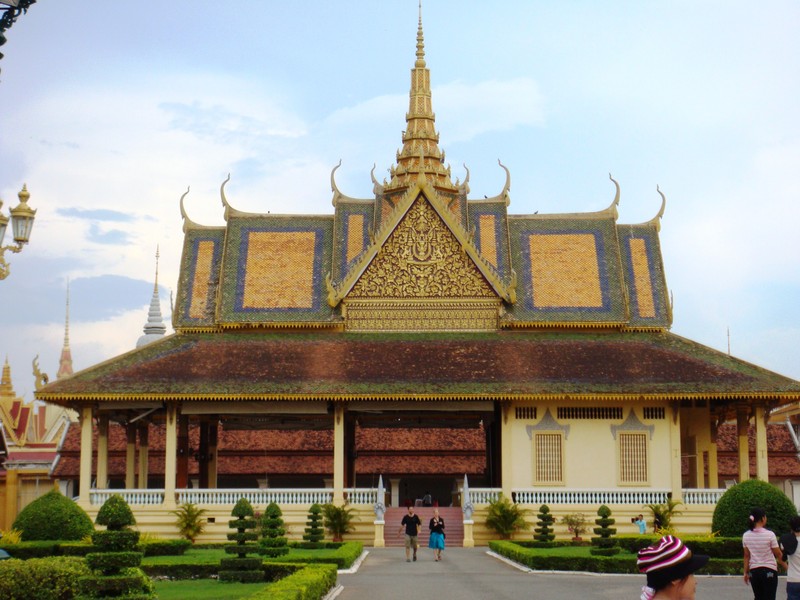
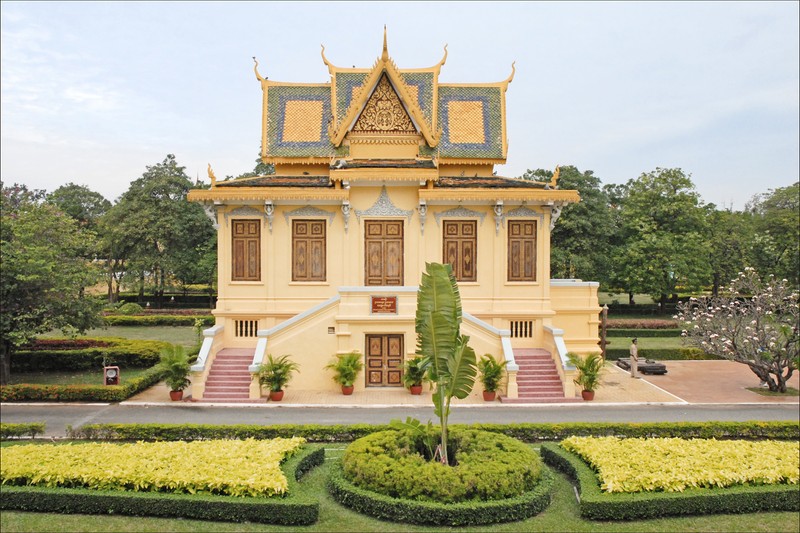
Chan Chhaya Pavilion, often called the Moonlight Pavilion, is associated with ceremonies and traditional dance performances. Another unusual structure is the metal Napoleon III Pavilion, presented to King Norodom by France in the nineteenth century. Its European design contrasts with the surrounding Khmer buildings.
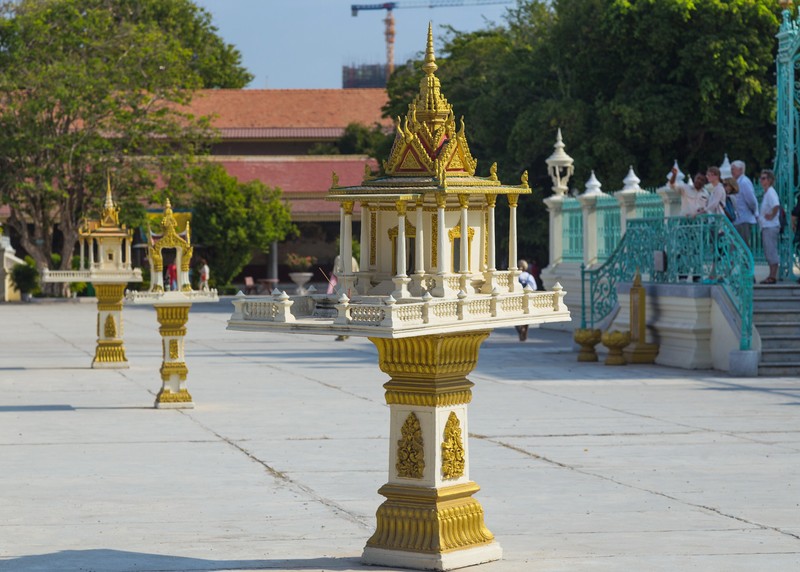
Manicured lawns, trees, flowerbeds and paths create a peaceful setting around the palace buildings. Some areas remain closed because the complex continues to serve as an active royal residence.
The palace today
The complex remains the official residence of King Norodom Sihamoni and a venue for important state events. The monarchy has cultural significance in Cambodia, and the palace symbolises the continuity of Khmer traditions and statehood.
Getting there and visitor information
The palace stands on Samdach Sothearos Boulevard in central Phnom Penh, near Sisowath Quay and the National Museum of Cambodia. Visitors can walk, take a tuk-tuk or use a taxi. Visiting hours are commonly split into two sessions, 8:00–11:00 and 14:00–17:00, but the schedule may change for royal ceremonies.
The dress code is strictly enforced: shoulders and knees must be covered. Photography is prohibited inside the Throne Hall and Silver Pagoda. Check current opening conditions, ticket prices and visitor rules before travelling.
Why visit the Royal Palace
The Royal Palace offers an introduction to Cambodia’s architecture, Buddhist art and royal history. The Throne Hall, Silver Pagoda, gardens and pavilions reveal different aspects of the country’s royal heritage. A visit can easily be combined with a riverside walk and a trip to the National Museum.
Gallery