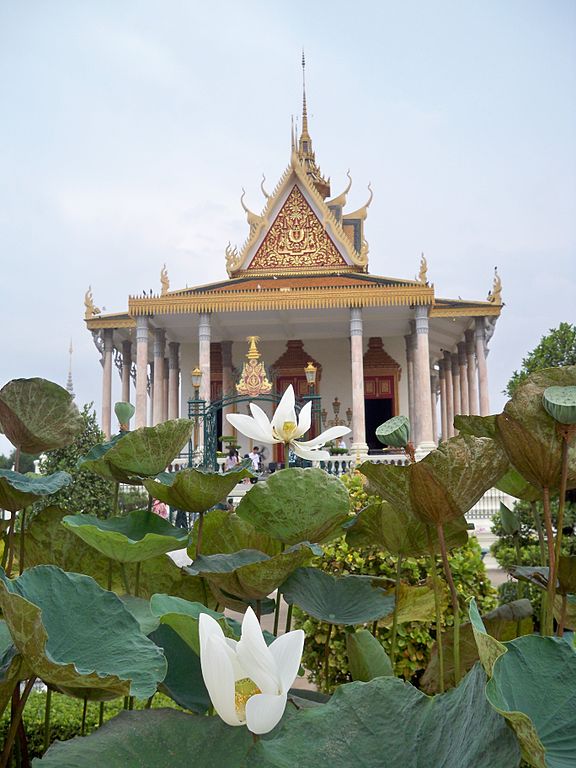
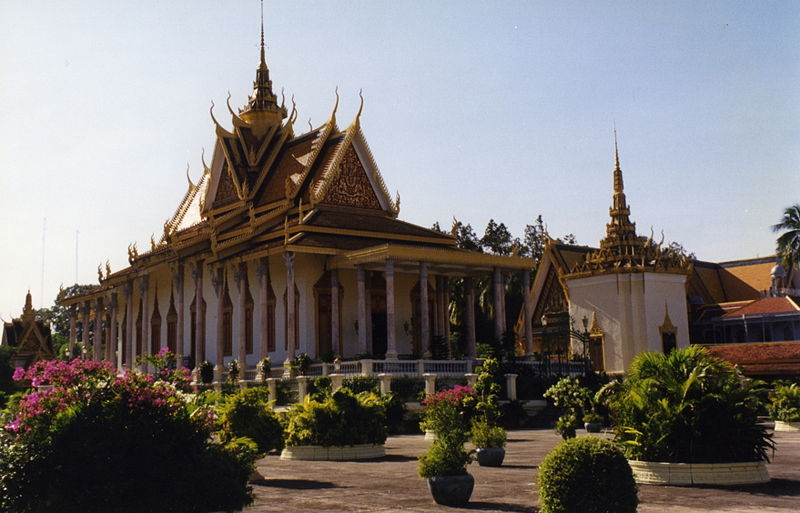
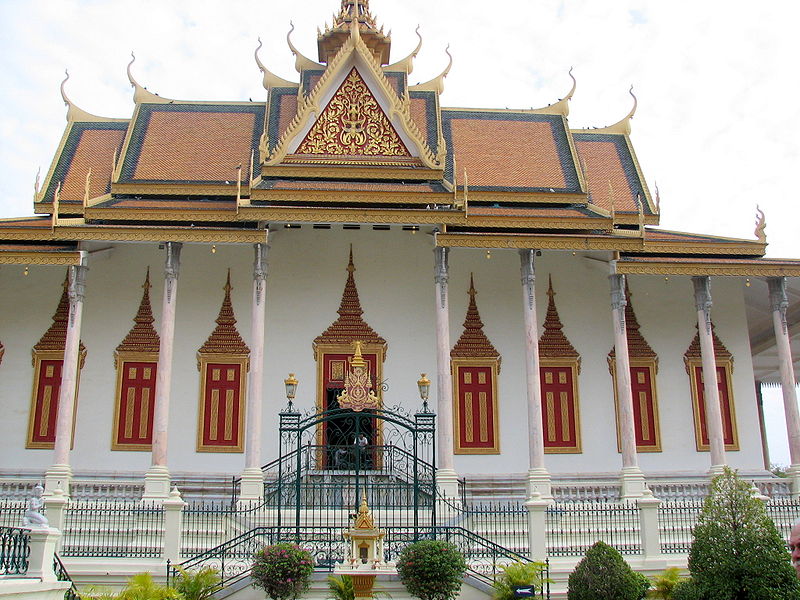
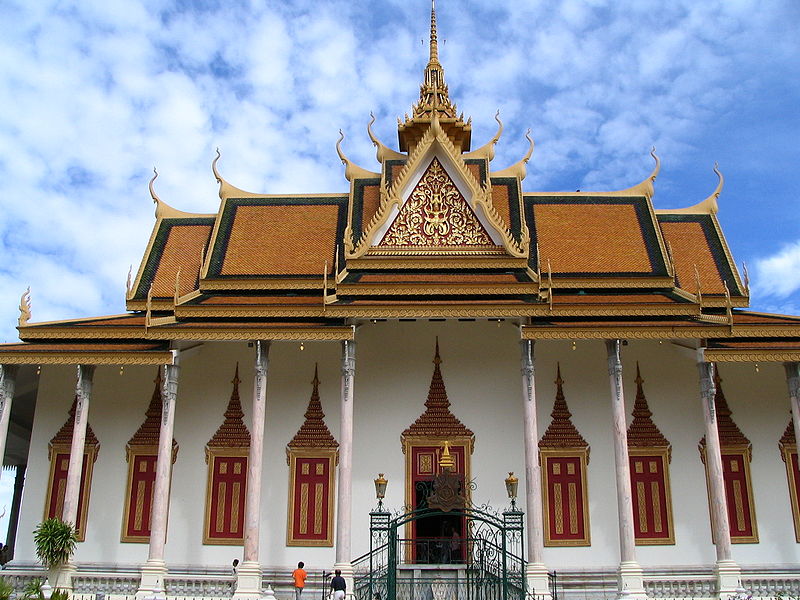
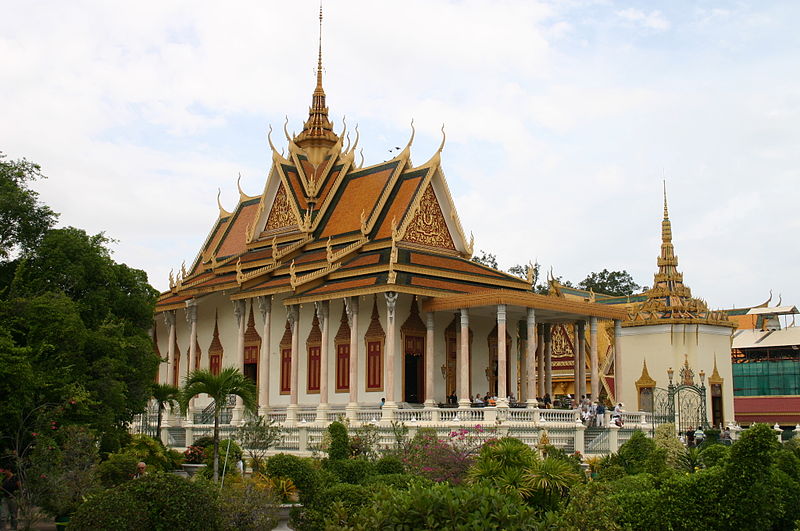
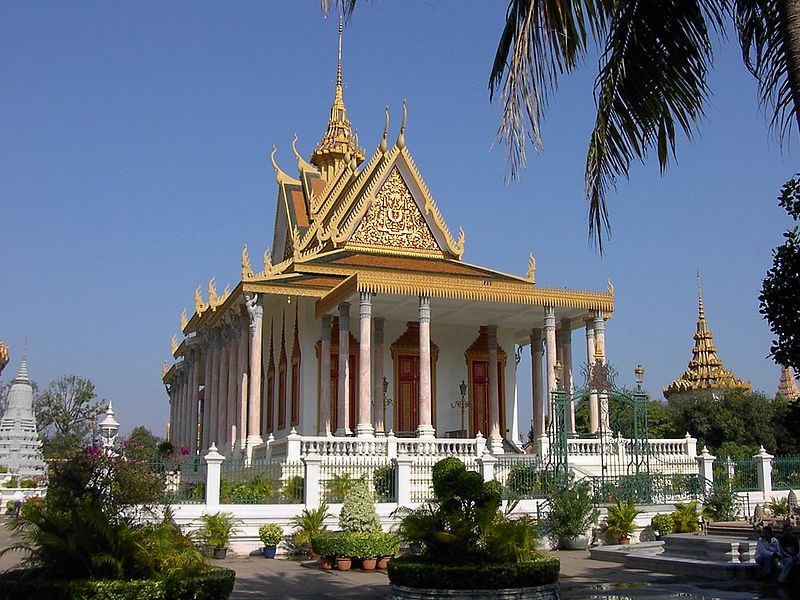
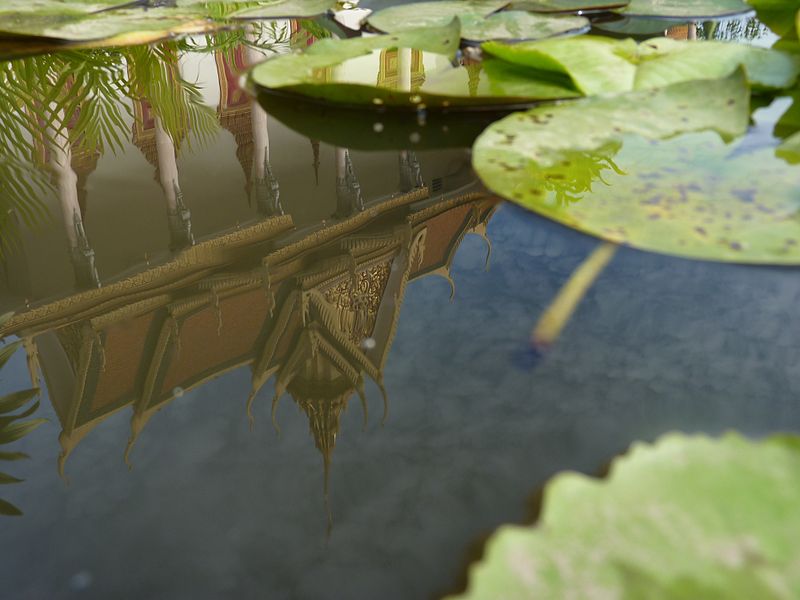
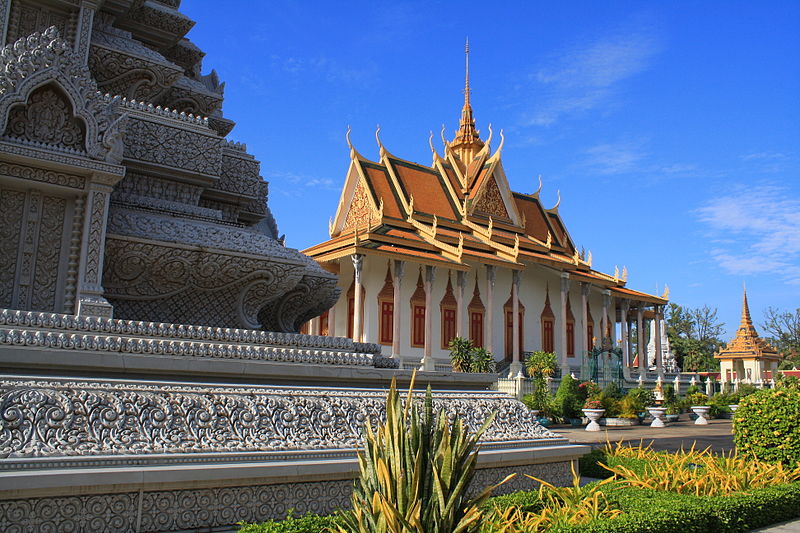
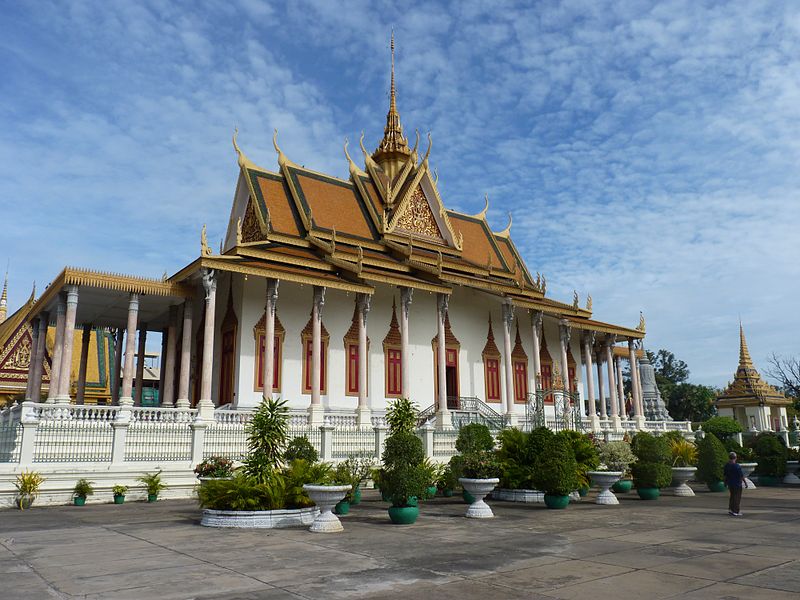
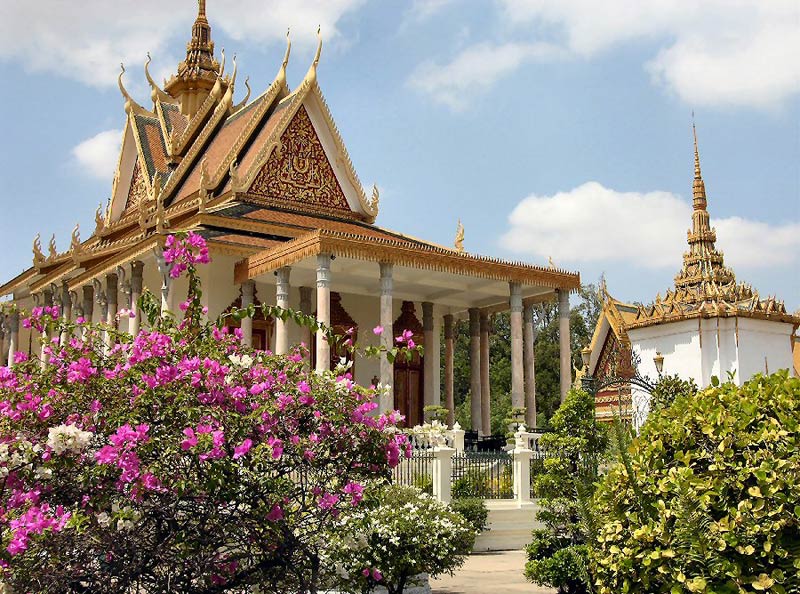
The Silver Pagoda is a celebrated Buddhist temple in Phnom Penh, the capital of Cambodia. It stands within the Royal Palace complex and is one of the country's most important religious and cultural landmarks. Its official name is Wat Preah Keo Morakot, or the Temple of the Emerald Buddha. The pagoda is famous for its silver-tiled floor, precious Buddha images and traditional Khmer art.
History of the Pagoda
The present temple was built during the reign of King Norodom, between 1892 and 1902. Its original structure used wood and brick and followed traditional Cambodian architectural forms. In the 1960s, the building was reconstructed with reinforced concrete while retaining its earlier appearance. It continues to be associated with royal and Buddhist ceremonies.
The Silver Floor
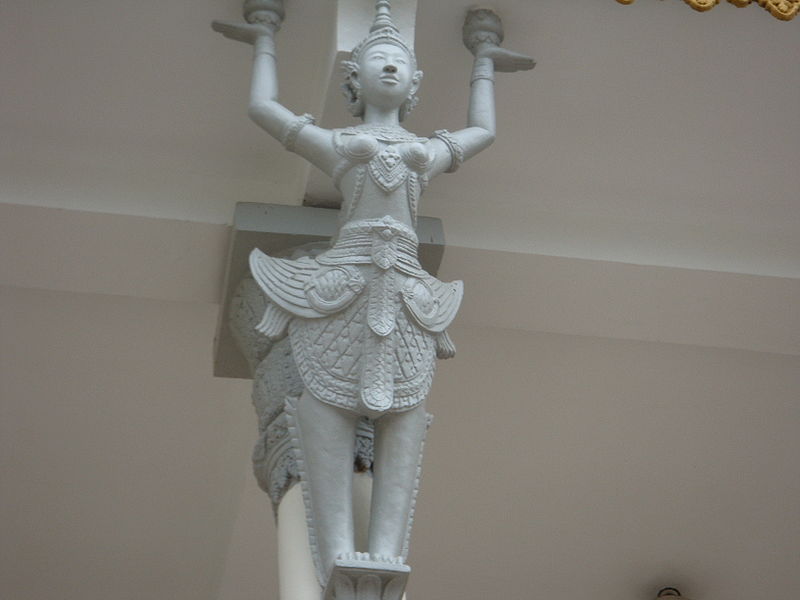
The pagoda takes its popular name from the thousands of silver tiles covering its floor. Commonly cited accounts give the original number as 5,329. Much of the floor is protected from foot traffic to preserve the historic material. The interior also contains ritual objects, decorated columns and a remarkable collection of Buddhist images.
The Emerald Buddha
One of the temple's principal sacred objects is the Emerald Buddha, known locally as Preah Keo Morakot. Despite its name, the image is made from clear crystal rather than emerald. The pagoda houses many Buddha figures made from gold, silver, bronze and other materials, some decorated with precious stones.
The Golden Maitreya Buddha
Another celebrated work is a life-size golden statue of Maitreya Buddha. Published descriptions state that it weighs about 90 kilograms and is adorned with thousands of diamonds. Maitreya is the future Buddha in Buddhist tradition, expected to appear in a future age.
Murals of the Reamker
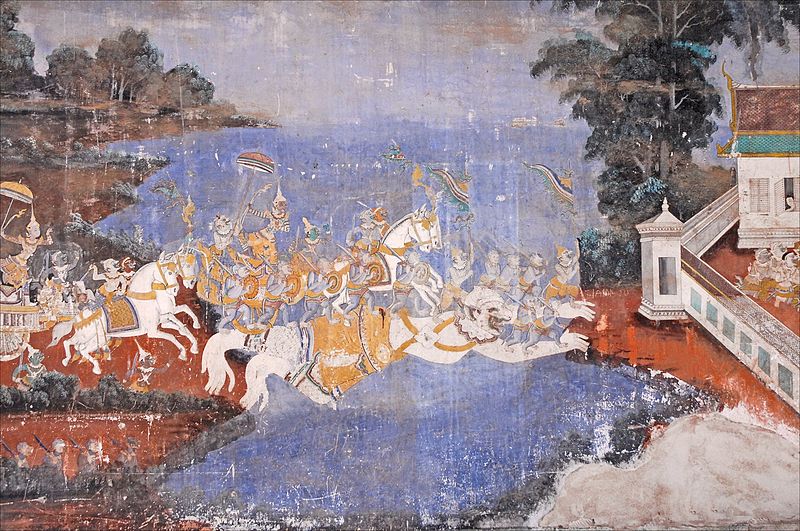
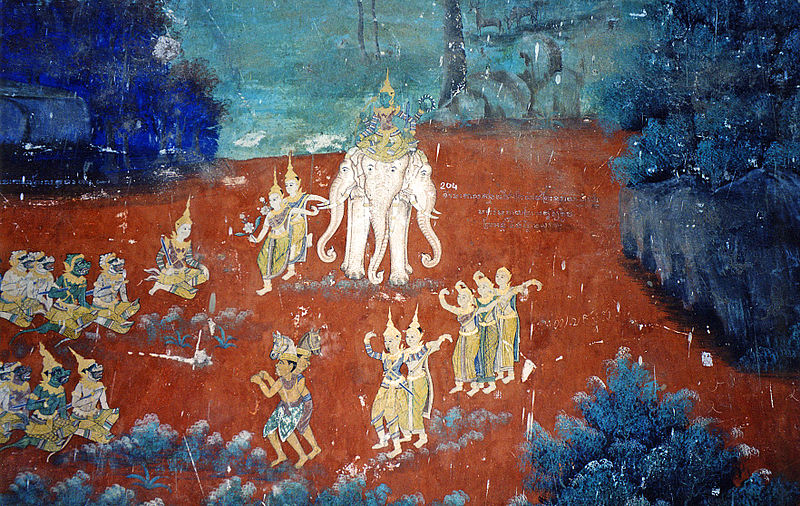
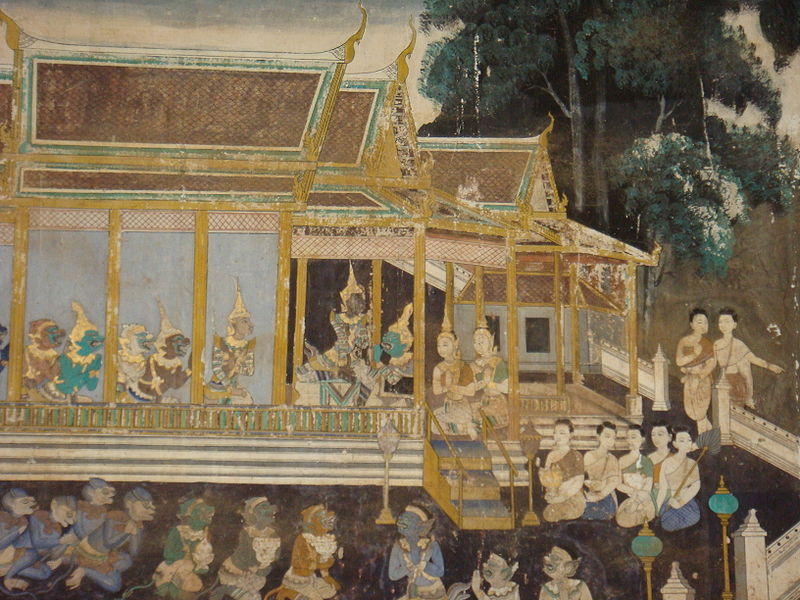
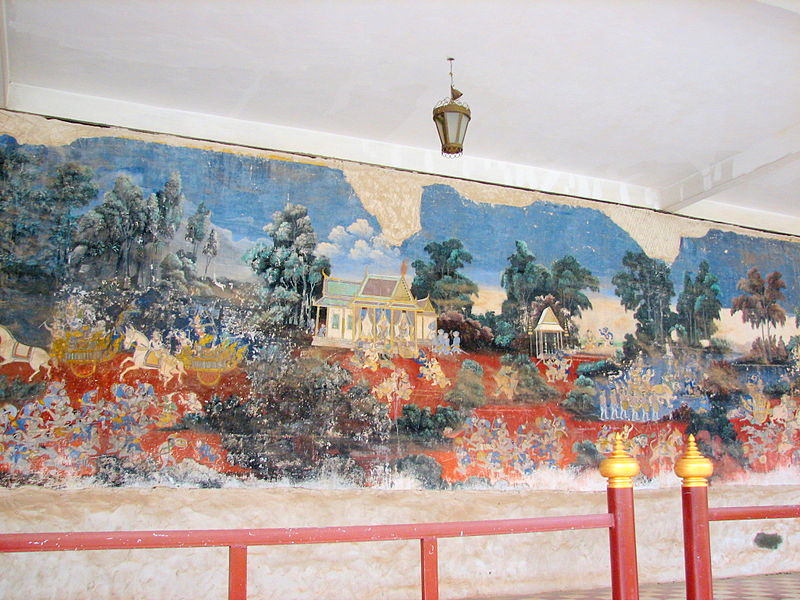
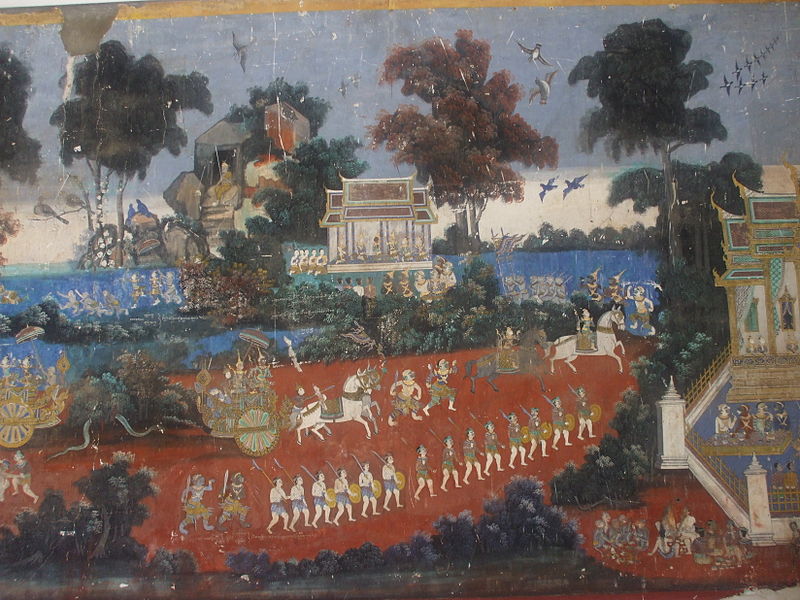
The galleries around the compound feature murals depicting episodes from the Reamker, the Khmer version of the Indian epic Ramayana. The paintings portray heroes, battles and mythological beings while reflecting Cambodian artistic traditions. They were created by Cambodian artists in the early 20th century and have suffered damage from weather and the passage of time.
The Pagoda and the Royal Palace
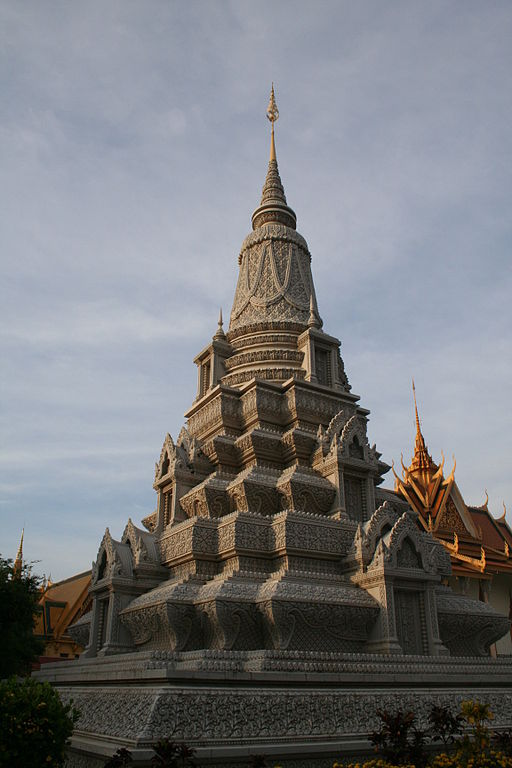
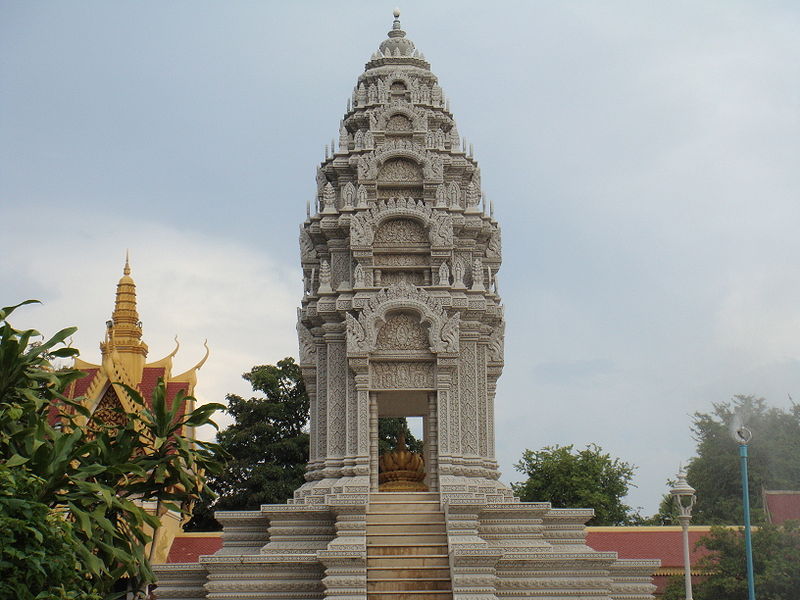
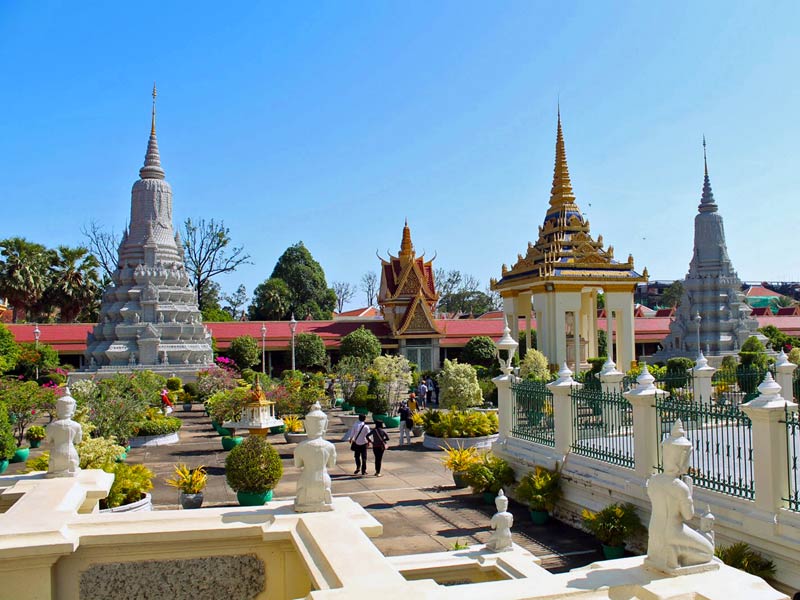
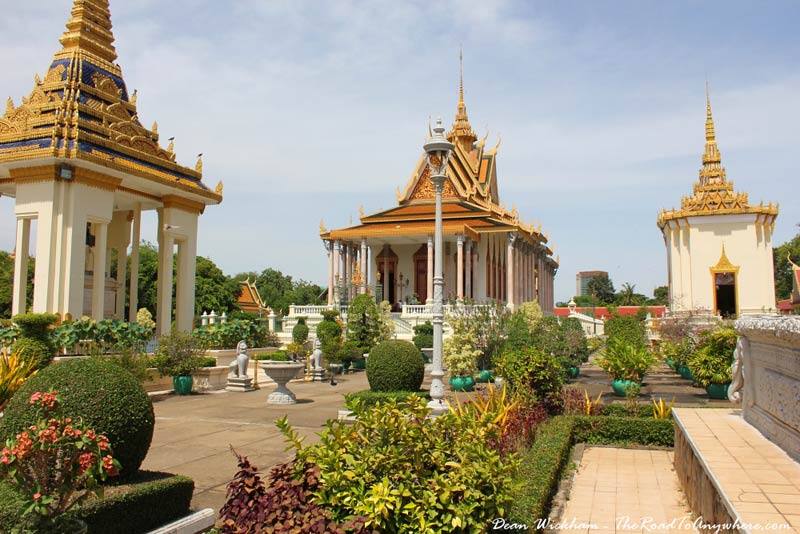
The Silver Pagoda is part of Phnom Penh's Royal Palace, which became the royal residence after the capital moved to the city in 1866. The wider compound contains ceremonial halls, pavilions, stupas and gardens. Some sections remain closed because they are still used by the royal family.
Visiting the Silver Pagoda
The pagoda is usually visited together with the Royal Palace. Visitors should wear modest clothing covering their shoulders and knees and follow the rules on photography. Access hours can change during official ceremonies, so checking current arrangements before a visit is advisable.
Cultural Significance
The Silver Pagoda brings together Buddhist traditions, royal history and Cambodia's artistic heritage. Its silver floor, sacred statues and murals illustrate the importance of Buddhism in Cambodian life and the historical role of royal patronage in preserving art.
Gallery