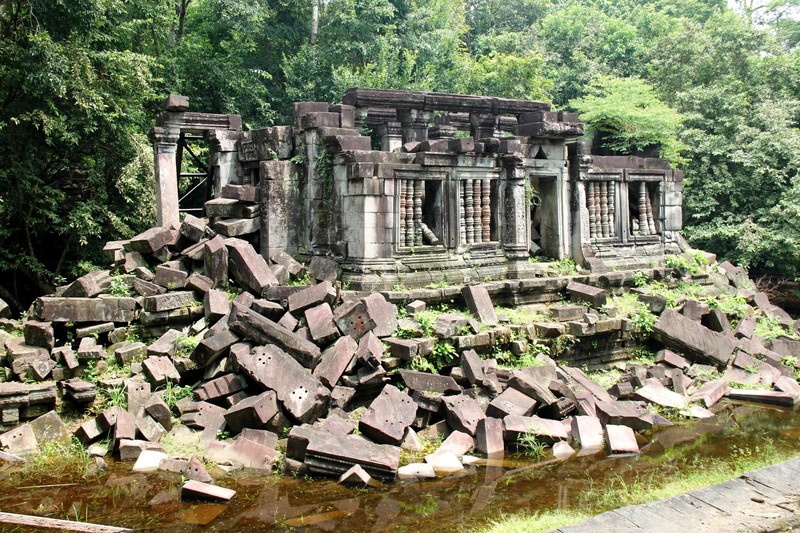
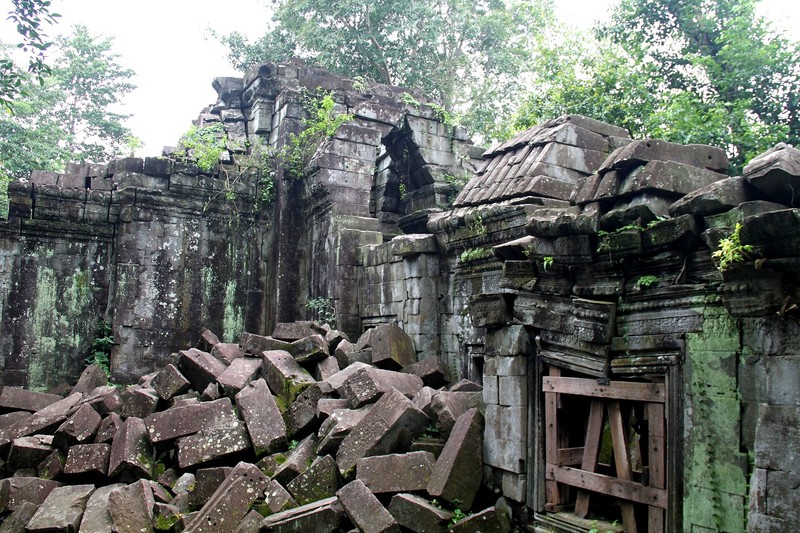
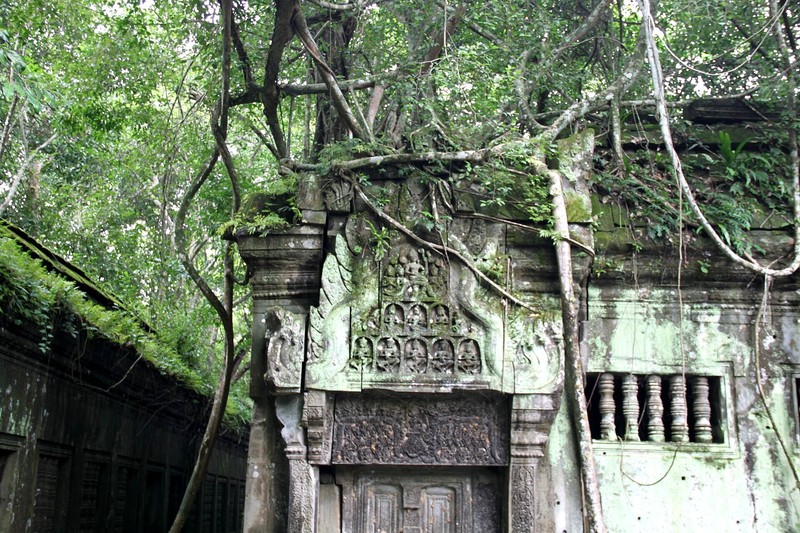
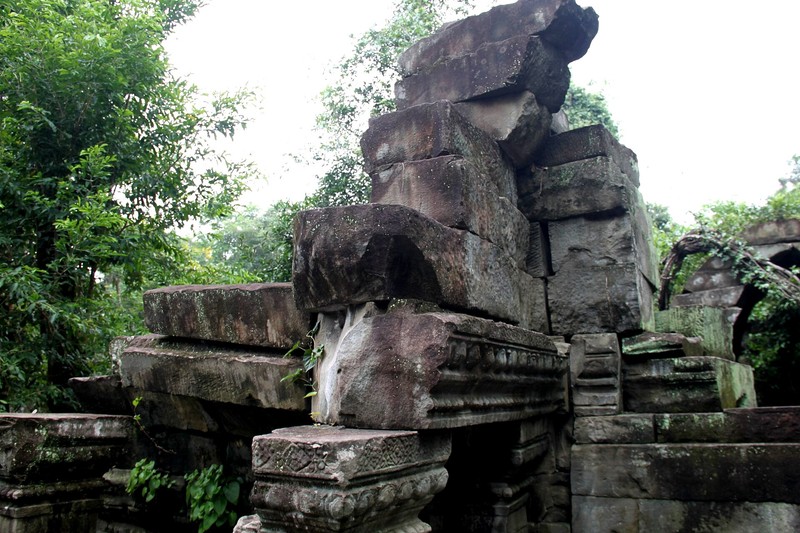
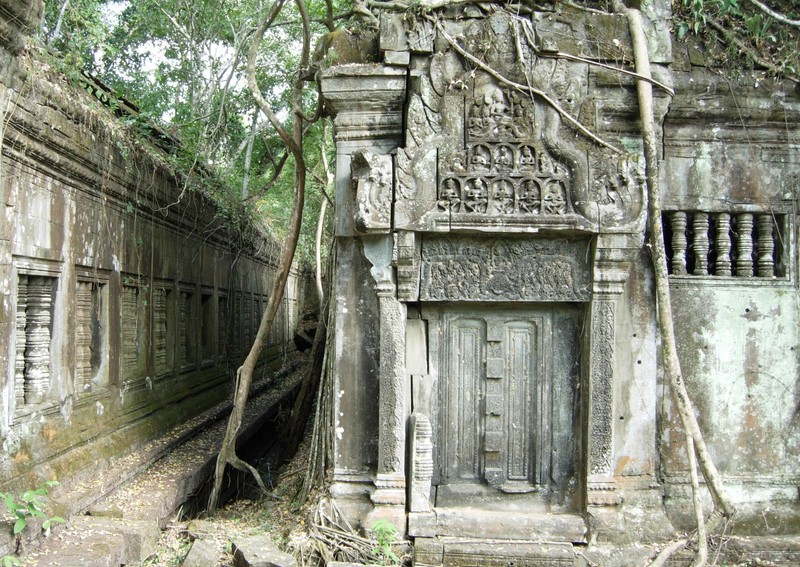
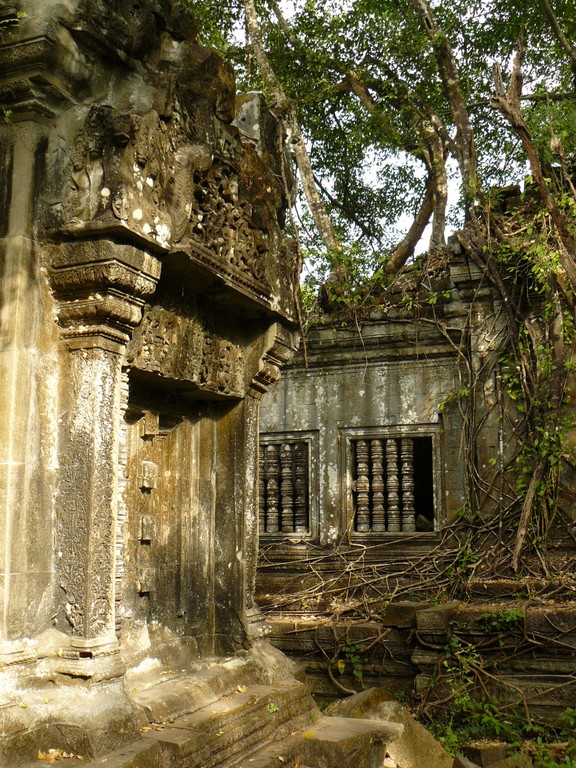
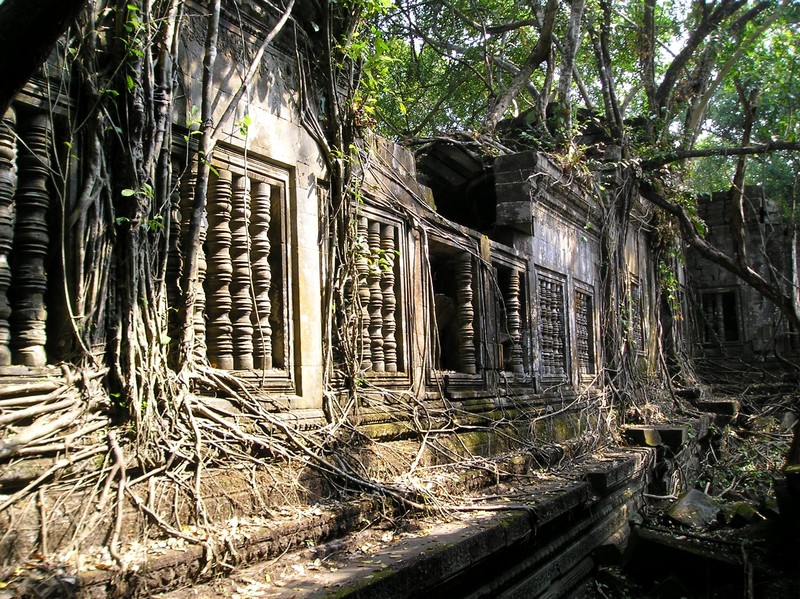
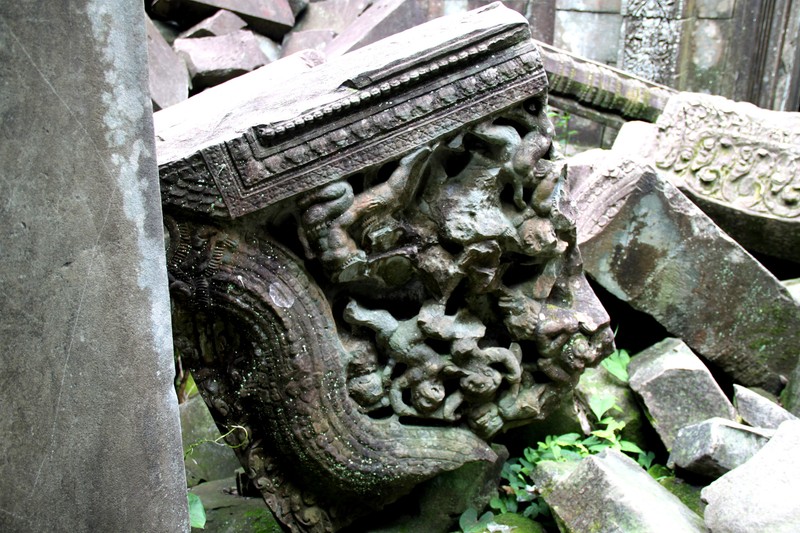
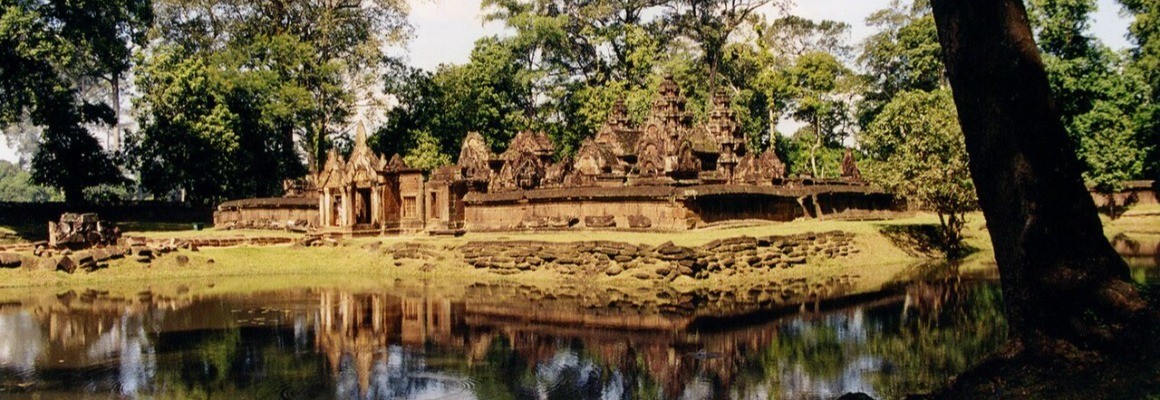
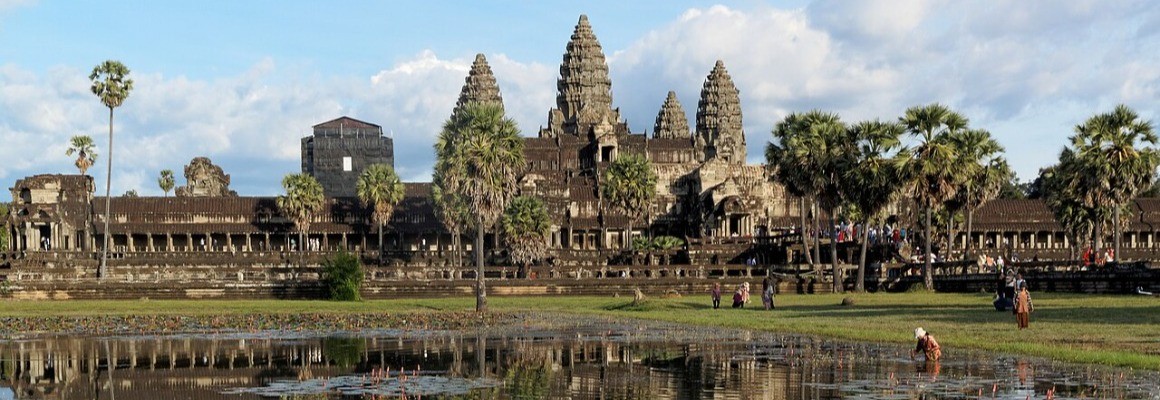
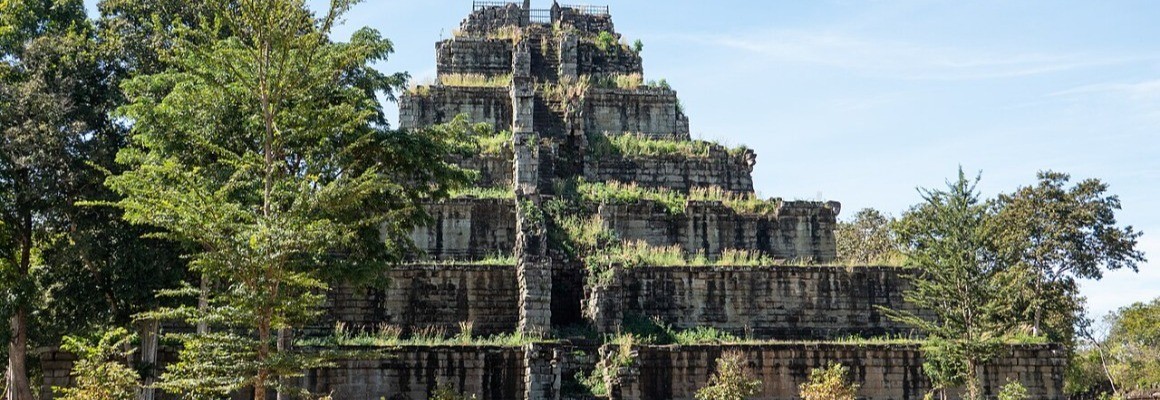
Beng Mealea is an ancient temple complex in Cambodia, hidden among the tropical vegetation of Siem Reap Province. Its name is commonly translated as “Lotus Pond.” The temple is known for collapsed galleries, massive sandstone blocks and trees growing among the old masonry. Unlike carefully restored monuments, Beng Mealea reveals how time and nature have transformed the architecture of the Khmer Empire.
History of the Ancient Temple
Beng Mealea was built in the first half of the 12th century during the reign of King Suryavarman II, who is also associated with the construction of Angkor Wat. Its architecture shares many features with that famous temple, although Beng Mealea stands away from Angkor’s main temple centre.
The temple lay along an ancient royal road connecting Angkor with regions to the east and leading toward Preah Khan of Kompong Svay. Such routes supported travel, trade and royal missions. Its proximity to the sandstone quarries of Phnom Kulen may also have helped supply building materials.
Architecture and Layout
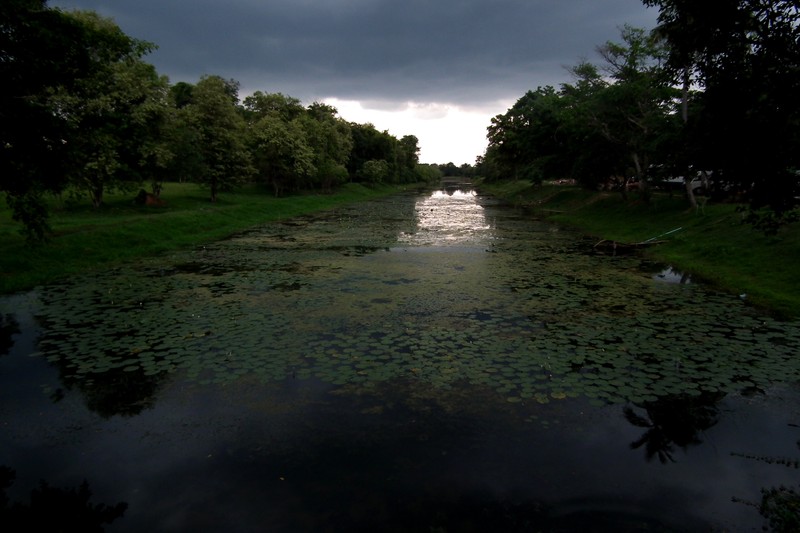
Built mainly of sandstone, the complex was arranged around a central sanctuary enclosed by galleries and connecting passages. It faces east, although approaches were provided on several sides. A large moat formed part of the architectural design and may have symbolised the cosmic ocean surrounding Mount Meru in Hindu cosmology.
Causeways and terraces feature naga balustrades, representing mythical serpent beings, as well as stone columns, lion figures and decorative carvings. Many sections have collapsed, but the remaining structures still reveal the scale of the original design.
Ruins in the Tropical Forest
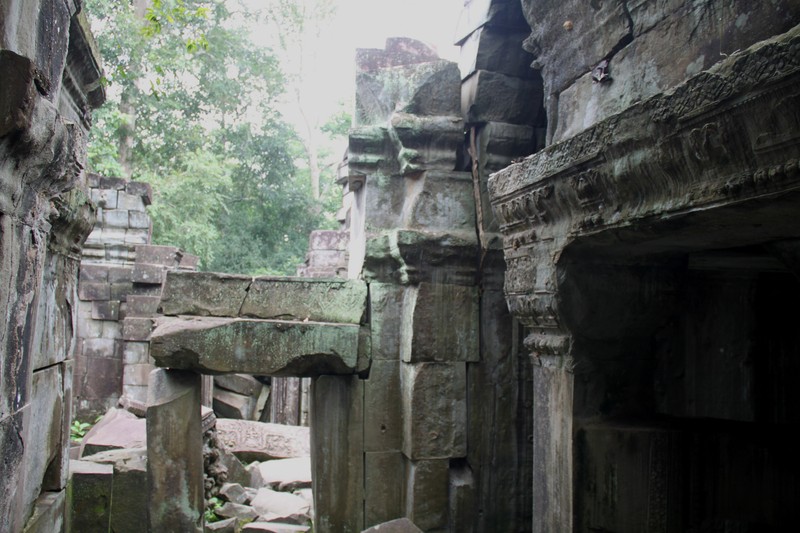
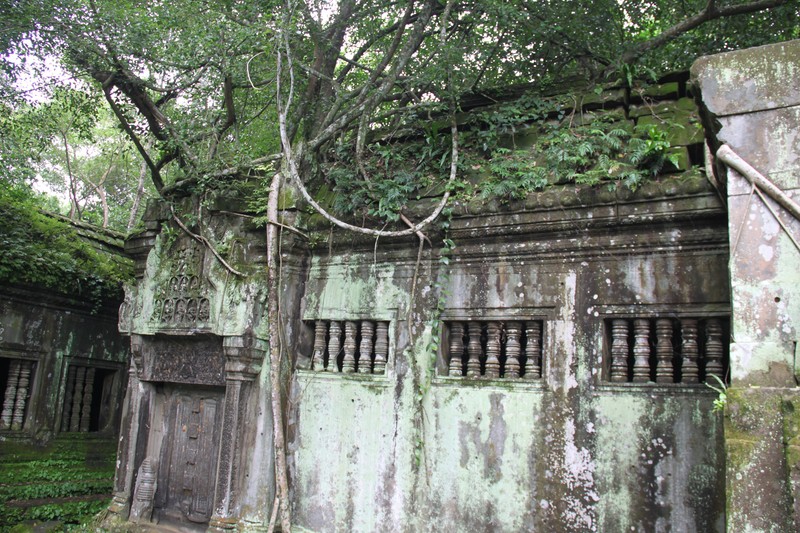
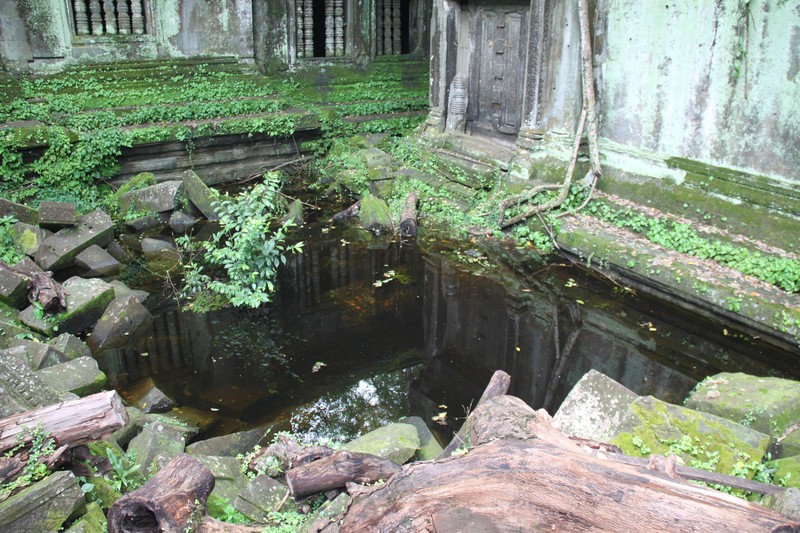
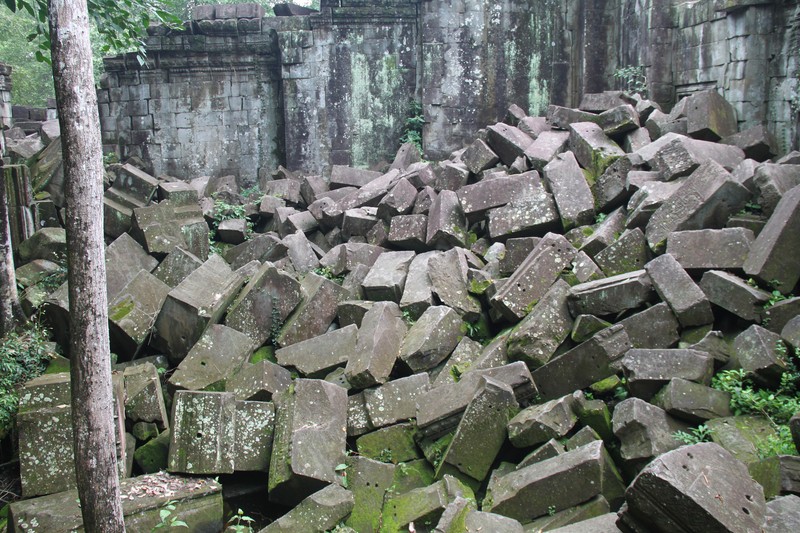
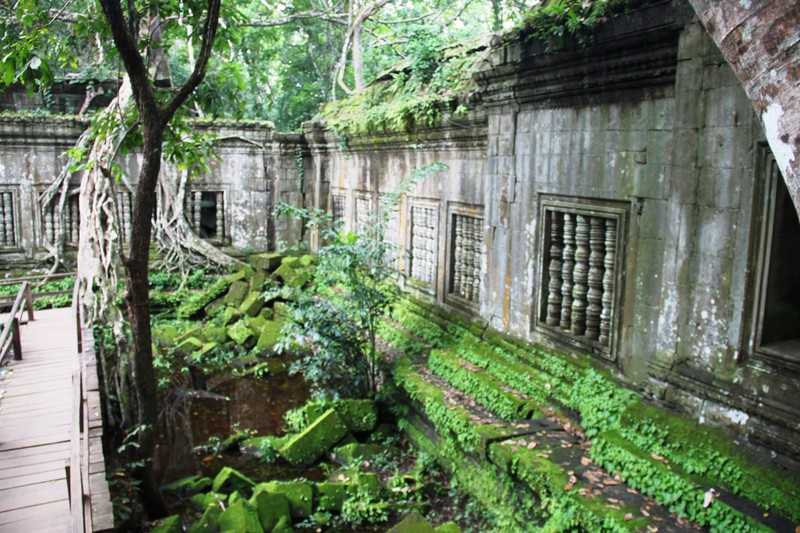
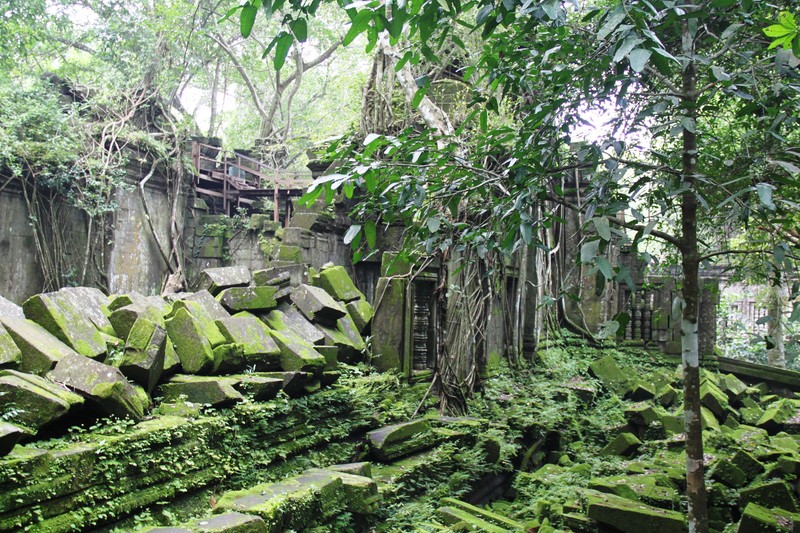
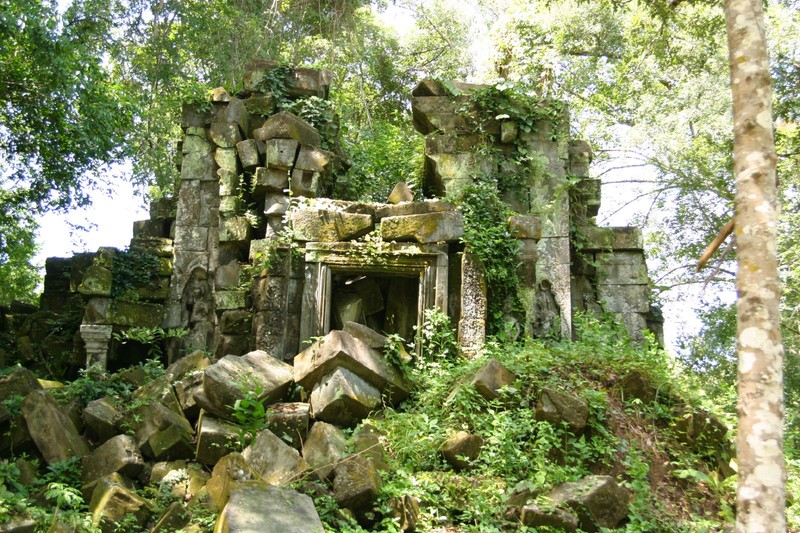
Beng Mealea’s defining feature is the combination of ancient architecture and untamed vegetation. Galleries have fallen in, sandstone blocks fill courtyards and passages, and trees and vines surround columns and walls. The ruins retain visible signs of age rather than presenting a completely restored appearance.
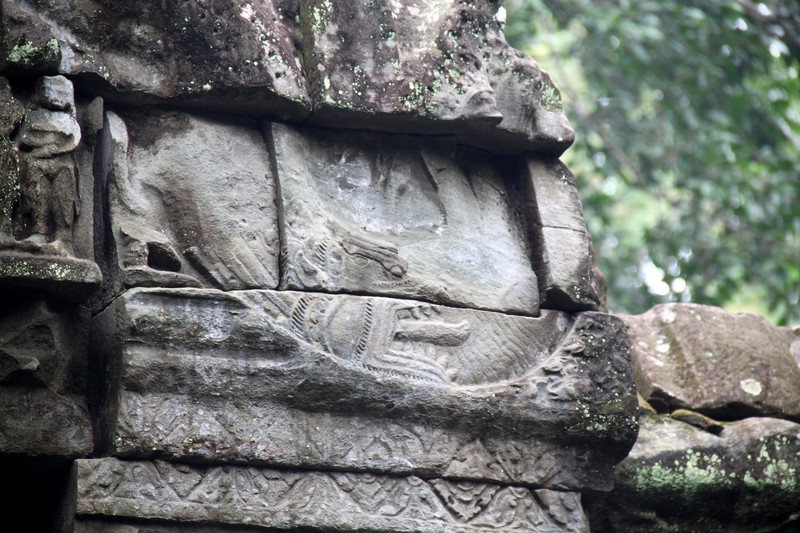
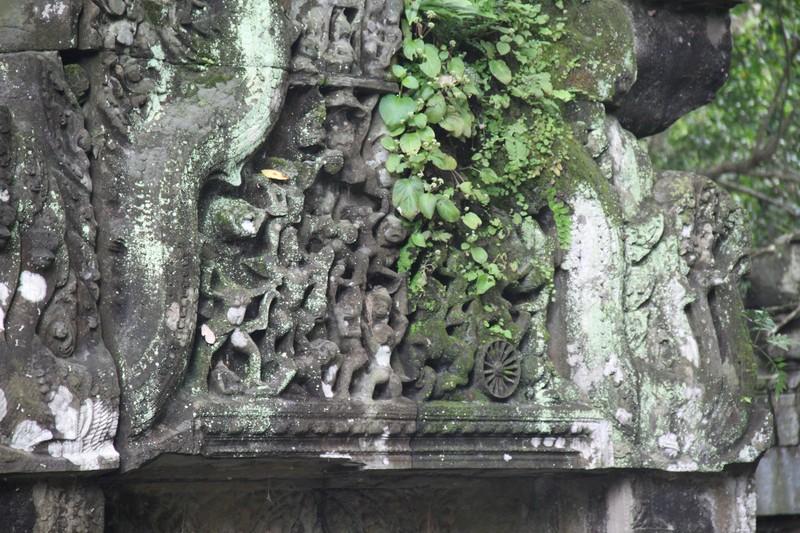
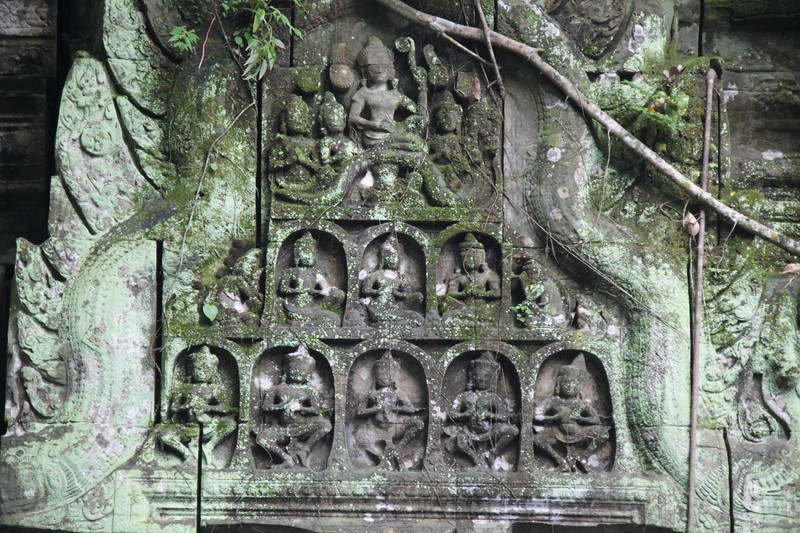
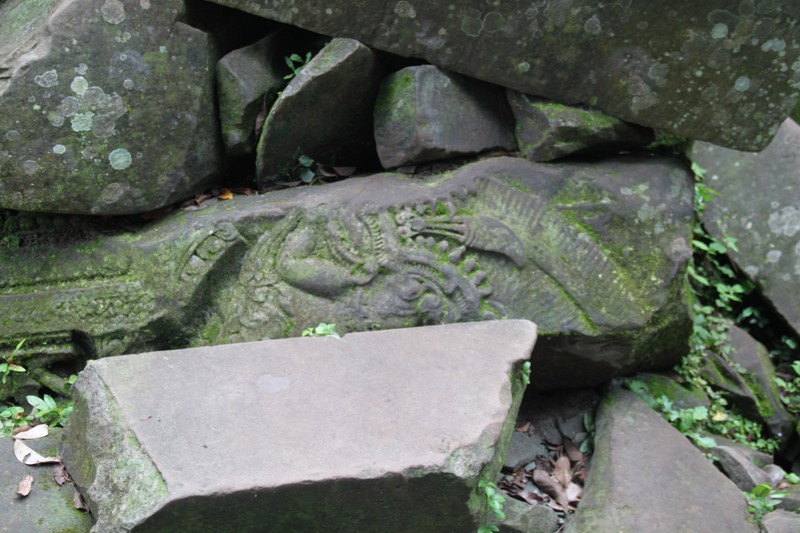
Carved lintels and pediments preserve religious imagery and ornamental details. Khmer temple art includes motifs such as the Churning of the Ocean of Milk, a mythological scene involving gods and asuras. These details demonstrate the skill of the temple’s stoneworkers.
UNESCO and Heritage Protection
Beng Mealea is included on Cambodia’s UNESCO World Heritage Tentative List. The submission made in 2020 highlights its architectural importance and connection with ancient roads. Tentative-list status means the site is being considered as a possible future nomination; it does not mean it is already inscribed on the main World Heritage List.
Visiting Beng Mealea
Look for the sandstone galleries, connecting passages, carved lintels and naga balustrades. The temple lies roughly 60–80 kilometres from Siem Reap, depending on the route. Visitors commonly arrive by car, taxi or organised tour. Check current access arrangements and opening hours before travelling.
Wear sturdy shoes and bring water, sun protection and insect repellent. Stone surfaces can become slippery after rain. Do not climb unstable walls or leave designated paths.
Why Visit Beng Mealea?
Beng Mealea offers a chance to explore Khmer imperial architecture beyond Angkor’s best-known monuments. Its ruined corridors, surviving carvings and forest-covered stonework reveal both the ambition of ancient builders and the long interaction between architecture and nature.
Gallery