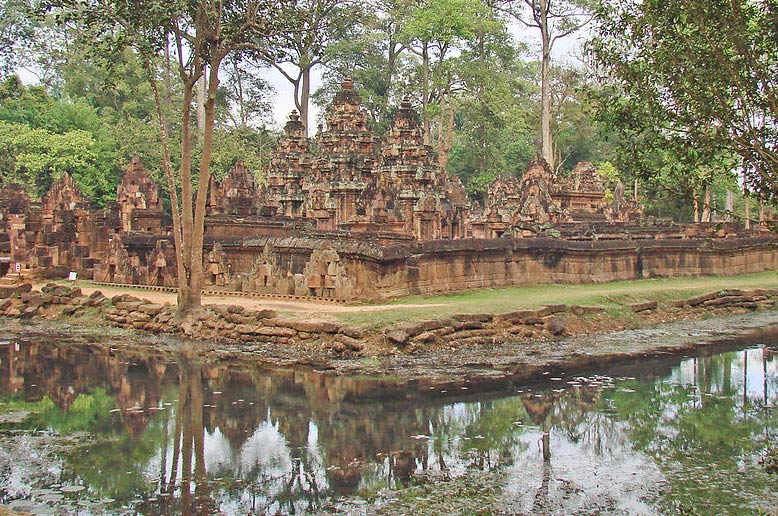
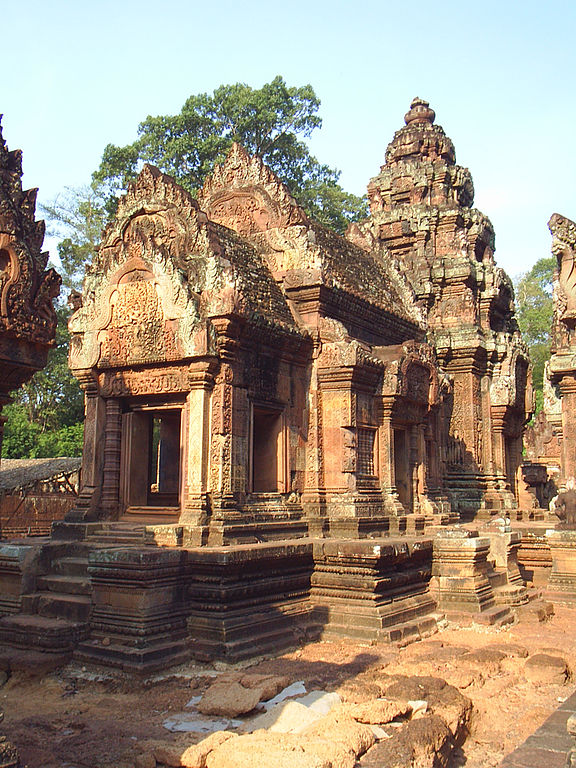
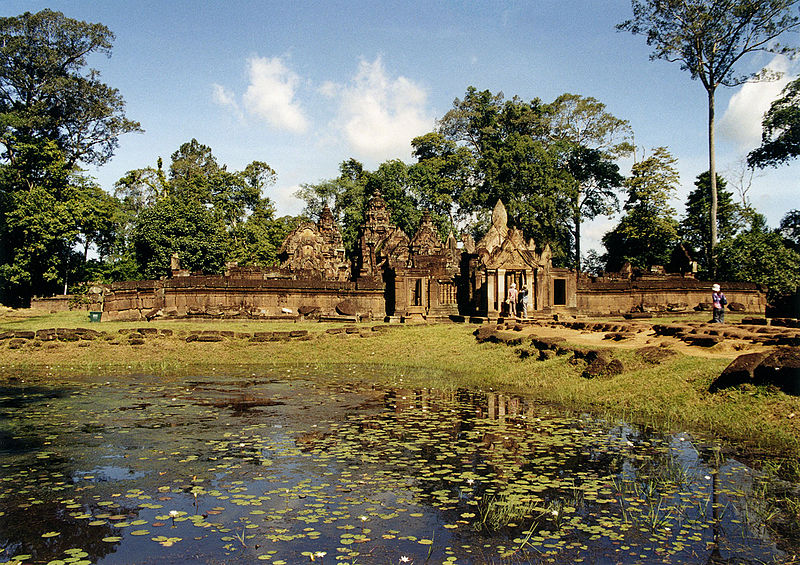
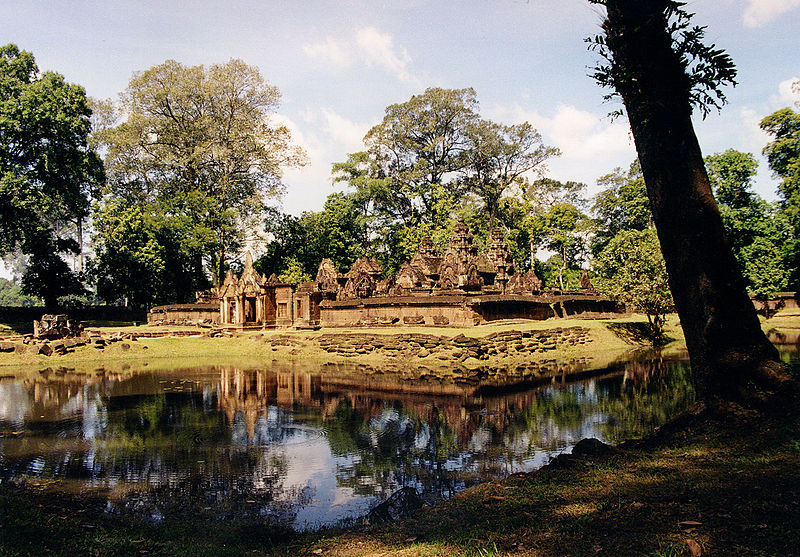
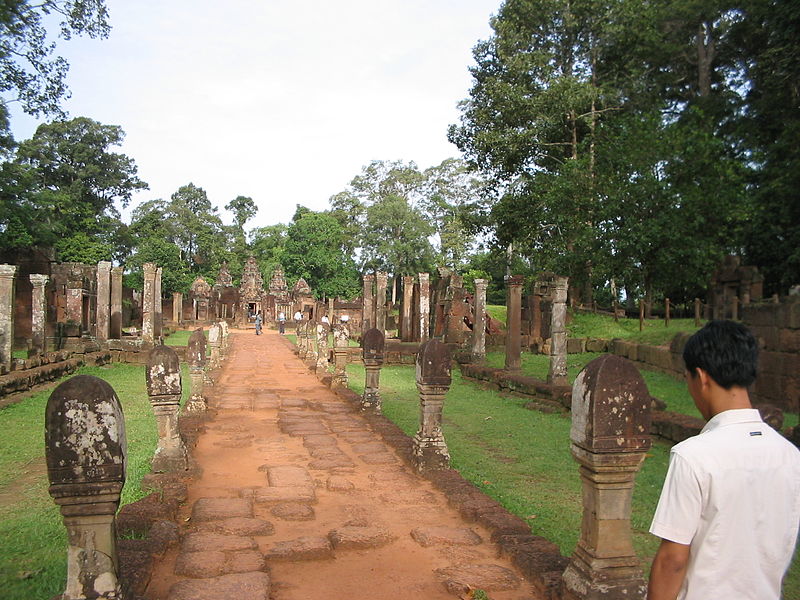
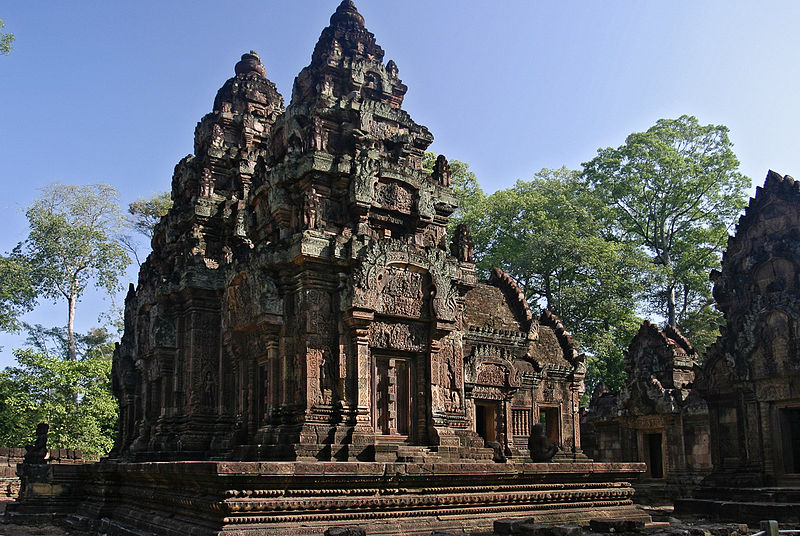
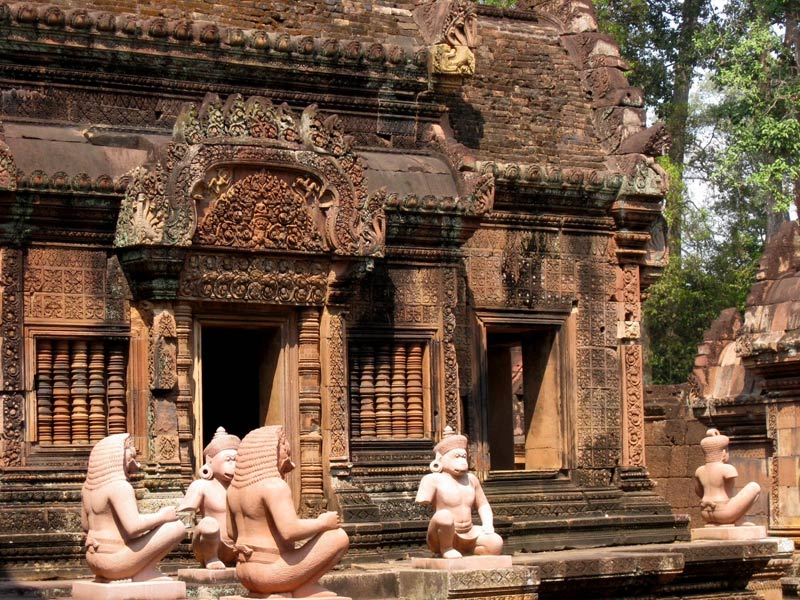
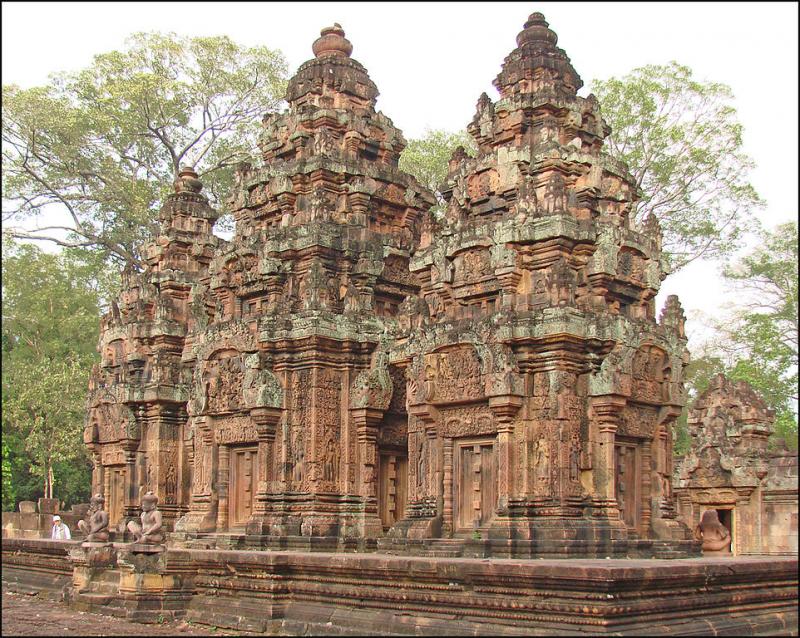
Banteay Srei is an ancient Hindu temple complex northeast of the main group of Angkor temples in Cambodia’s Siem Reap Province. It is celebrated for its elegant architecture, compact buildings and exceptionally detailed stone carvings. Consecrated on 22 April 967, the temple was dedicated to Shiva. Its pink-red sandstone and intricate decoration have earned it a reputation as a jewel of Khmer art.
Unlike many major Angkor temples associated directly with kings, Banteay Srei is linked to Yajnavaraha, a scholar, religious figure and counsellor to King Rajendravarman II. The temple forms part of the Angkor archaeological complex, inscribed on the UNESCO World Heritage List in 1992.
History of the temple
Banteay Srei was built in the 10th century, during the flourishing of Khmer civilisation. It was consecrated under the name Tribhuvanamaheshvara, associated with Shiva as lord of the three worlds. The complex served as a religious centre, while its architecture and inscriptions reflect the learning, beliefs and artistic skill of Khmer society.
As Angkor gradually declined, many ancient structures were abandoned or became overgrown. Banteay Srei attracted renewed attention in the late 19th century and became the subject of archaeological research and restoration during the 20th century. Today it is protected as part of the historic Angkor area.
Architecture in pink sandstone
The temple’s defining feature is its fine-grained pink and reddish sandstone, which can be carved with remarkable precision. Craftspeople created elaborate patterns, miniature figures and deep reliefs. In morning and evening light, the stone takes on warm pink and honey-coloured tones.
The buildings are unusually small compared with the largest temples of Angkor, allowing visitors to examine the decoration at close range. The complex includes several enclosure walls, sanctuaries, towers and entrance pavilions. Laterite, another material widely used in Khmer architecture, was also employed in its construction.
Carved reliefs and deities
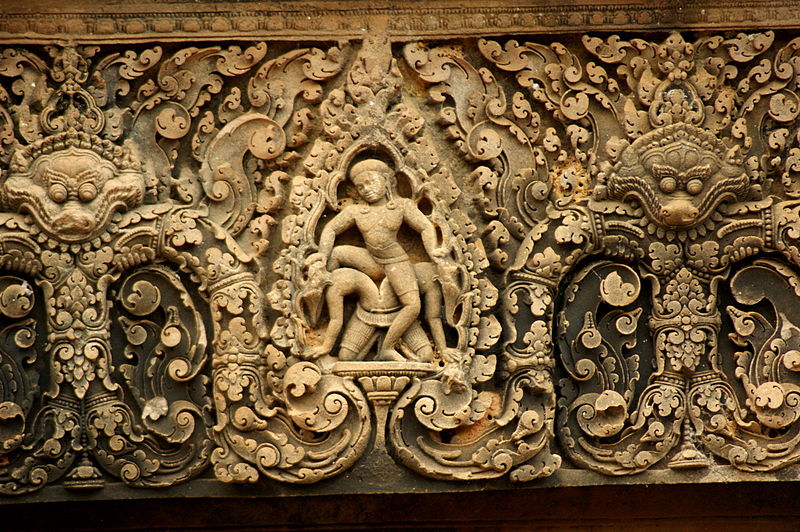
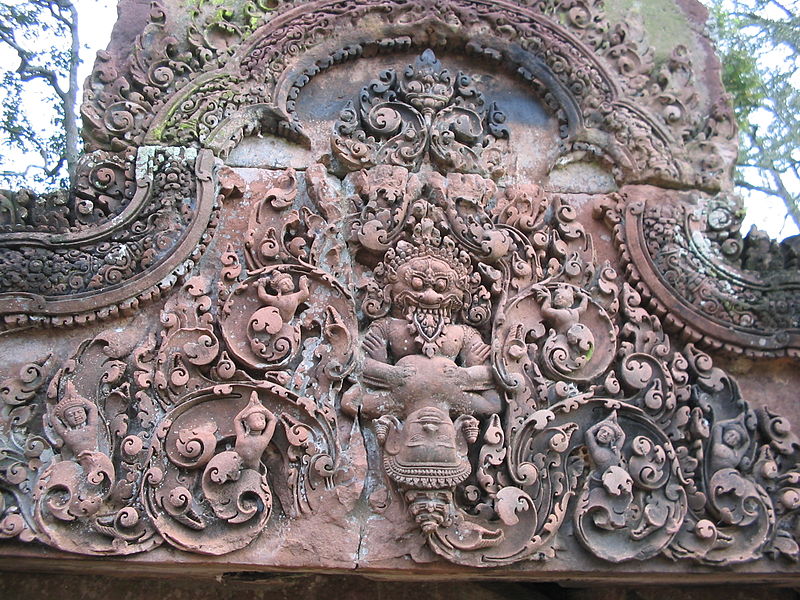
Banteay Srei is famous for carved pediments above doorways, decorated columns and ornamental lintels. The reliefs depict Hindu myths, deities, mythical animals and plant motifs. Particularly striking are the finely rendered devatas, female divine figures whose detailed appearance is often associated with the temple’s modern name.
Among the notable scenes are depictions of Shiva dancing and episodes from Hindu mythology. The carvings are more than decoration: they communicate religious ideas and views of the universe. Their remarkable preservation offers an insight into the skill of Khmer artists in the 10th century.
Religious significance
The temple was dedicated to Shiva, one of Hinduism’s principal deities, associated with destruction, transformation and renewal. Its sanctuaries were used for religious rites, and the arrangement of the buildings reflected ideas about sacred space. Architecture, symbolism and sculpture combine to express the religious outlook of the period.
Location and surroundings
Banteay Srei lies about 25 kilometres northeast of Angkor’s main temple group, near Phnom Dei hill. The road passes through the countryside of Siem Reap Province, with rice fields, small settlements and tropical vegetation. A visit can be combined with Kbal Spean, known for carvings in a riverbed, or other temples outside central Angkor.
Restoration and conservation
Although sandstone allows fine carving, it is vulnerable to moisture, vegetation and erosion. Conservation work therefore includes monitoring stone surfaces, recording damage and preventing further deterioration. Visitors should not touch fragile reliefs, cross barriers or climb on architectural features.
How to get there
Siem Reap is the main base for visiting the temple. Travellers usually arrive by car, taxi, tuk-tuk with a driver or organised tour. The journey from central Siem Reap generally takes around 40–60 minutes, depending on road conditions. Check current Angkor Archaeological Park access rules and ticket conditions before travelling.
Best time to visit
The dry season usually makes travel easier, although midday heat can be intense. During the rainy season, the landscape becomes lush, but downpours may affect road conditions. Early morning is a good time to explore and photograph the carvings, as softer light brings out the sandstone’s colour and the depth of the reliefs. Check current opening hours before your visit.
Travel tips
One to two hours is usually enough to explore the temple carefully. Bring water, a hat, sun protection and comfortable shoes. Side lighting is especially useful for photographing the detailed carvings. Avoid touching the stonework and follow all conservation rules.
Banteay Srei is a rewarding destination for anyone interested in ancient architecture, Hindu mythology and Khmer history. Its compact buildings and remarkably delicate carvings reveal an intimate artistic side of Angkor that can be overlooked at larger temple complexes.
Gallery