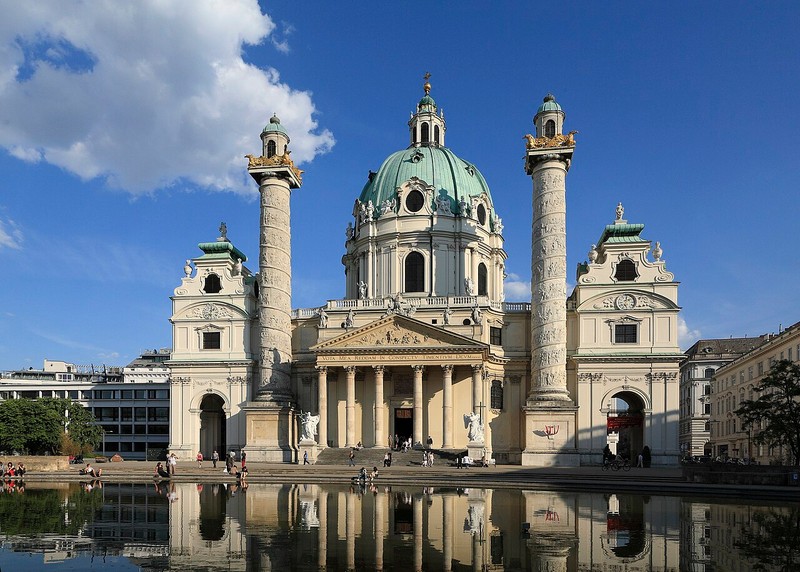
Karlskirche, or St. Charles Church, is one of Vienna’s best-known churches and an outstanding example of Austrian Baroque architecture. Located on Karlsplatz, it is recognised by its large dome, monumental columns and richly decorated interior. Its construction is linked to a vow made by Emperor Charles VI during the plague epidemic of the early 18th century.
History of Karlskirche
In 1713, a plague epidemic struck Vienna. Emperor Charles VI vowed to build a church dedicated to Saint Charles Borromeo, who was regarded as a protector against the disease, if the epidemic came to an end. After the crisis passed, the project moved forward, and the foundation stone was laid in 1716.
The design was created by the renowned architect Johann Bernhard Fischer von Erlach. After his death in 1723, construction was continued by his son, Joseph Emanuel Fischer von Erlach, who modified parts of the original plan. The church was consecrated on 28 October 1737. It became one of the major works of the architect’s later career and an important part of Vienna’s historic cityscape.
Architecture and exterior
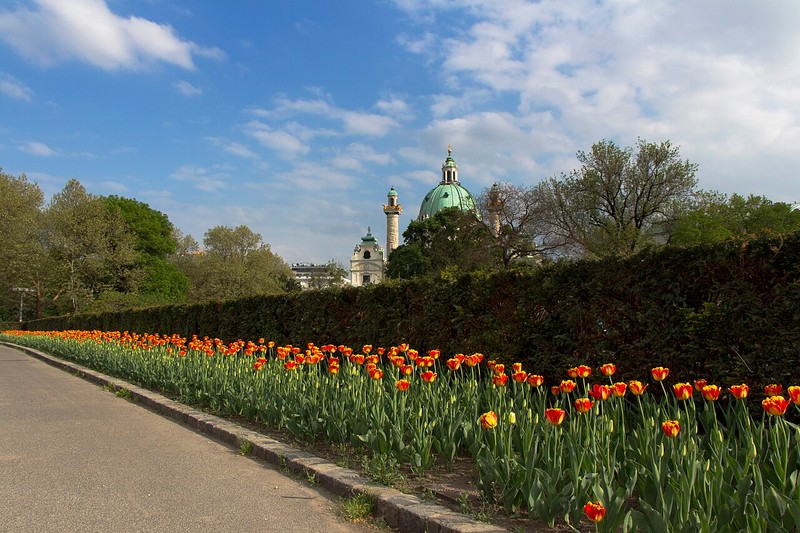
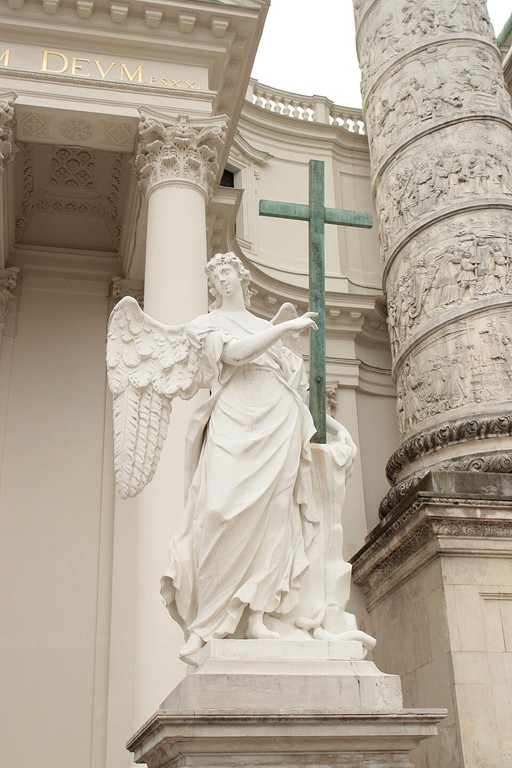
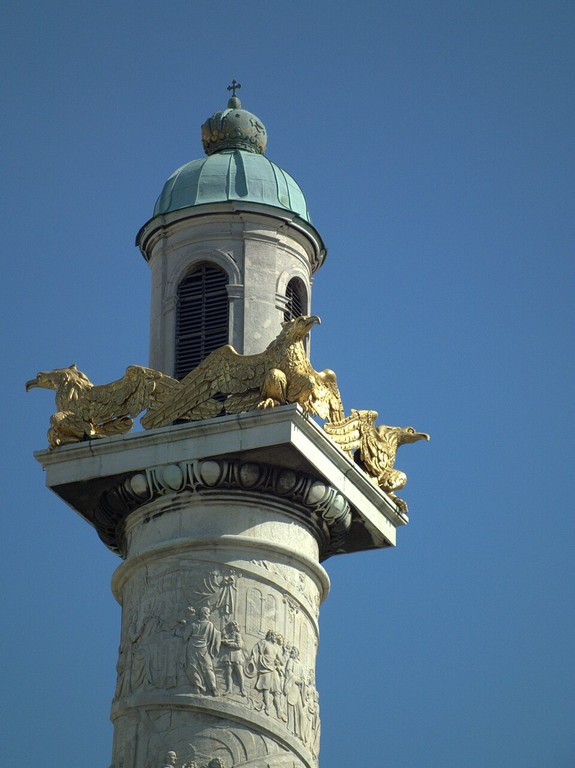
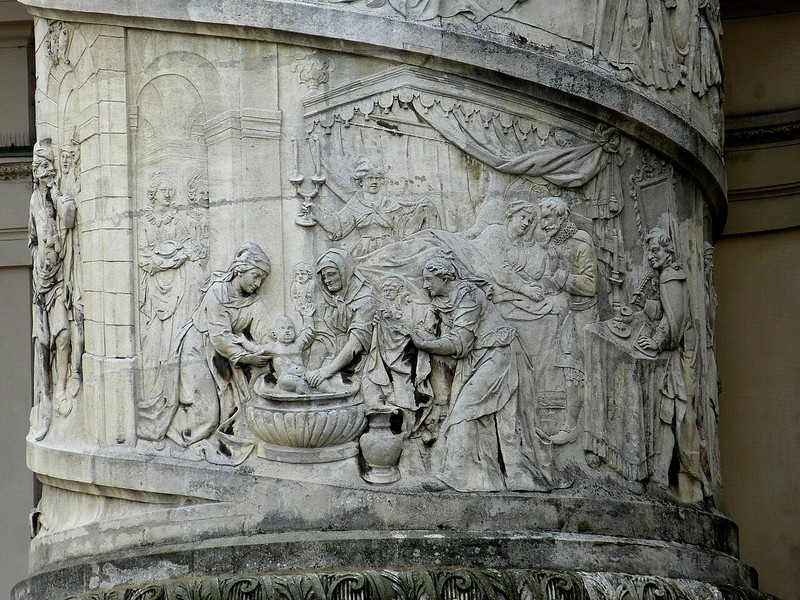
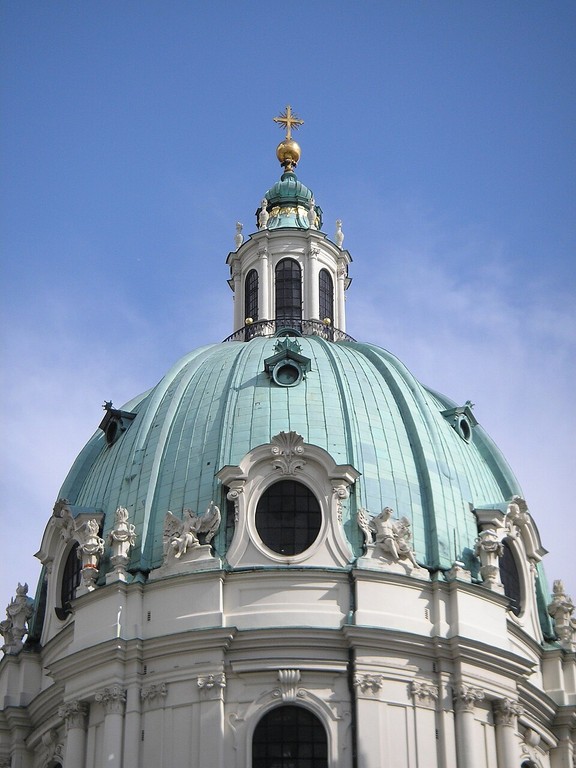
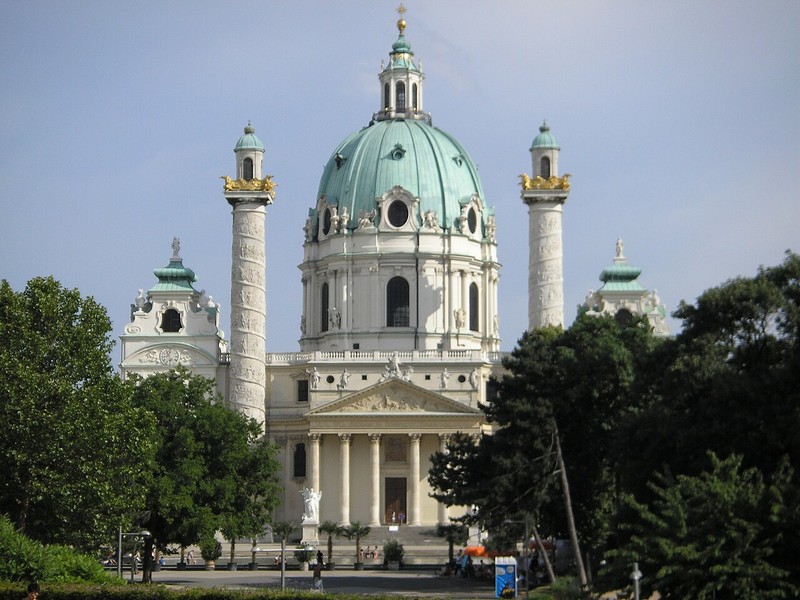
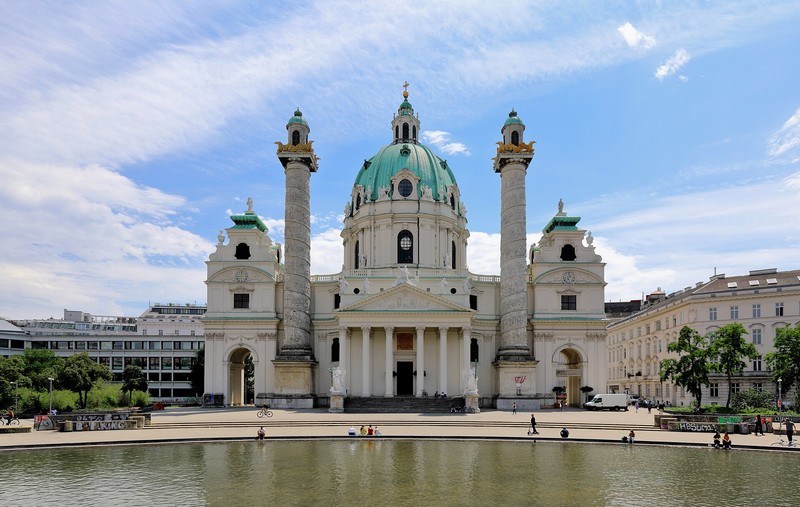
Karlskirche stands out for its unusual combination of architectural influences. A columned portico resembling an ancient temple marks the entrance, while two monumental columns on either side feature reliefs depicting the life of Saint Charles Borromeo. Their form recalls Roman triumphal columns. A large Baroque dome rises above the central structure, creating a distinctive silhouette together with the towers and side elements.
The church combines references to classical, Byzantine and other architectural traditions, making it particularly interesting to visitors fascinated by European architecture. The façade and dome are clearly visible from Karlsplatz, and the building’s reflection in the fountain in front of the church is one of the area’s familiar city views.
Interior and dome frescoes
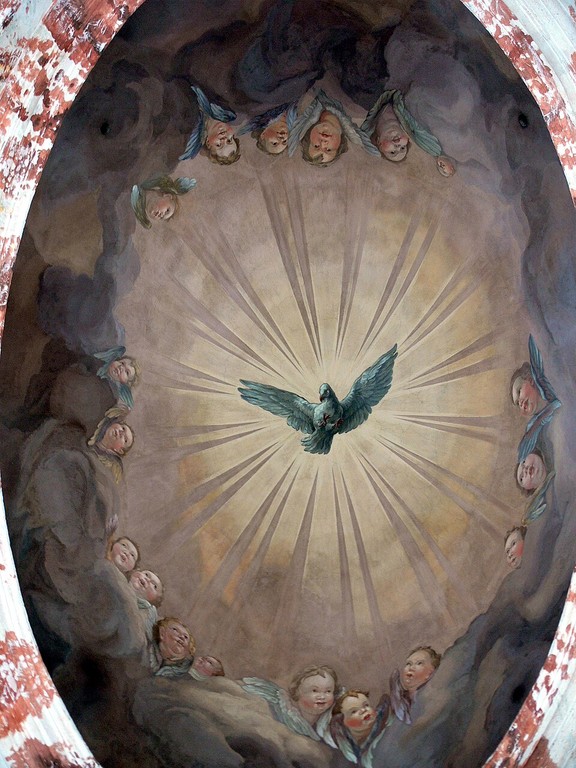
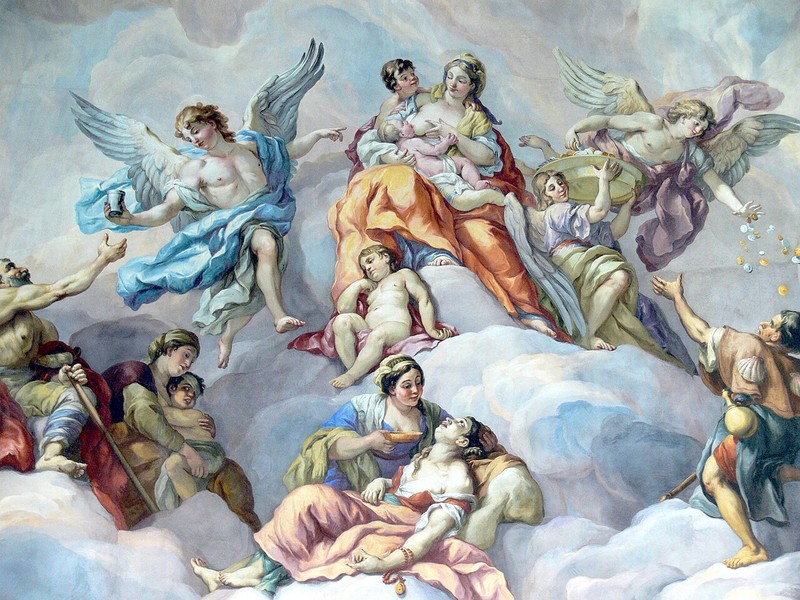
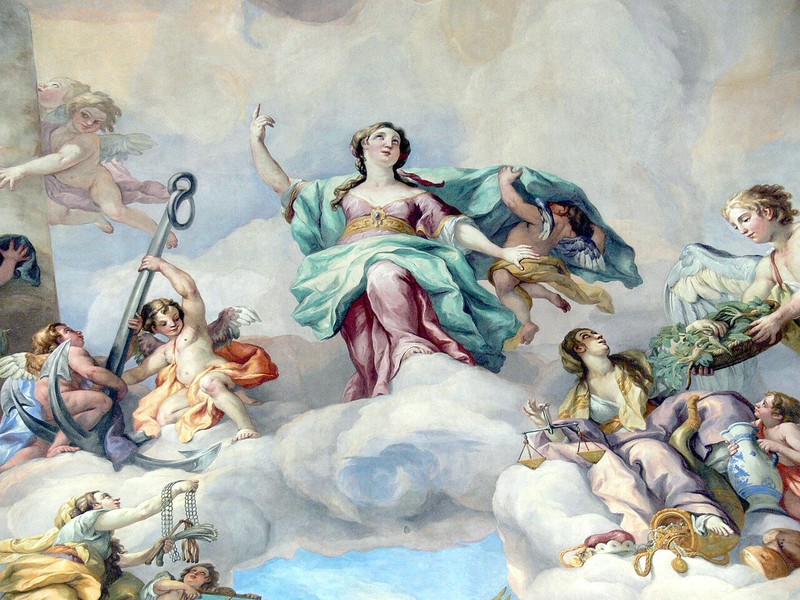
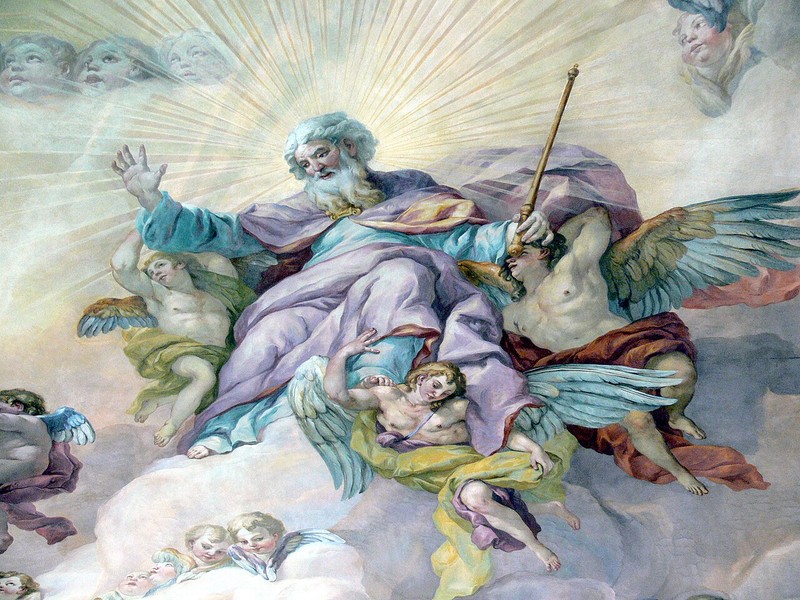
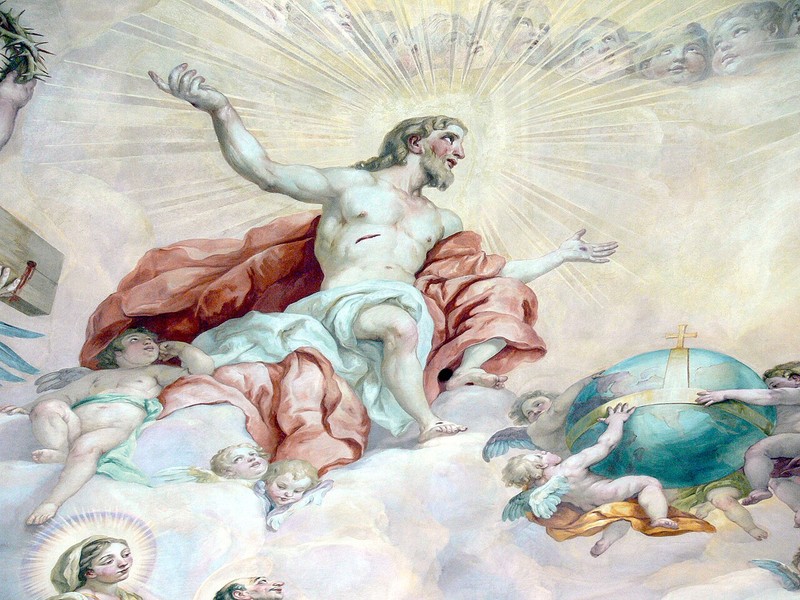
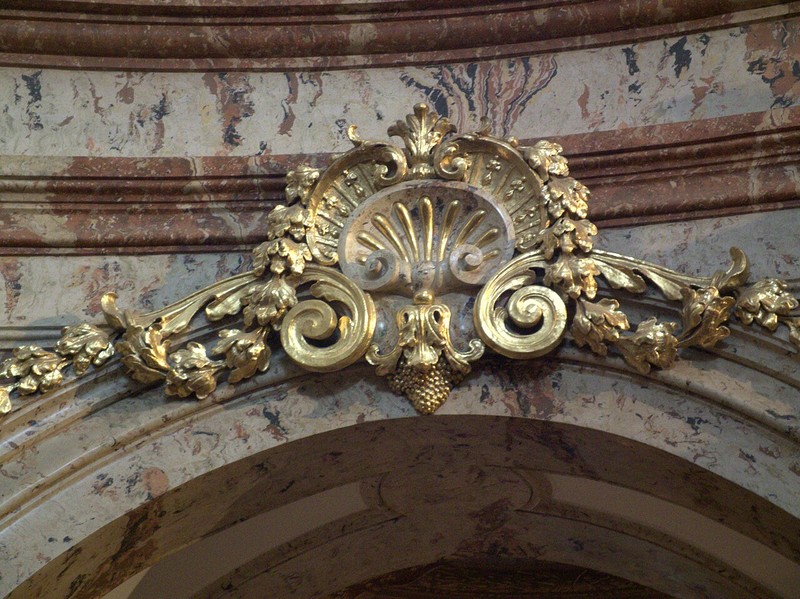
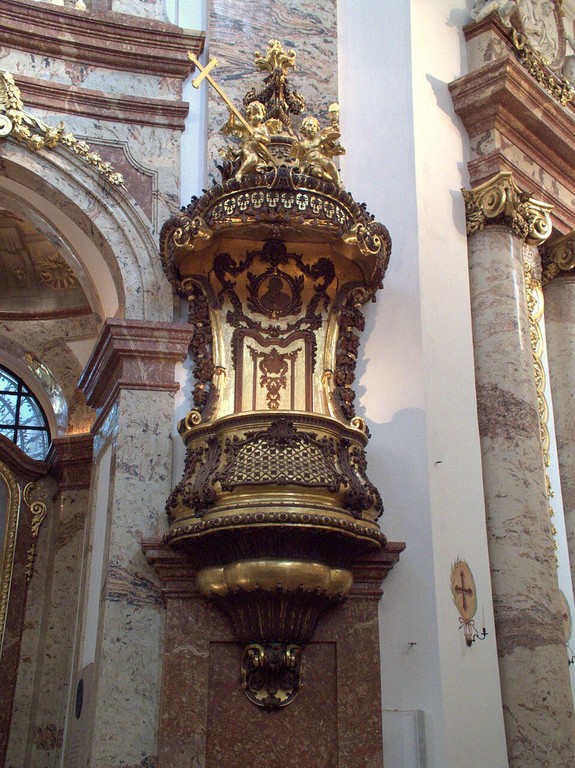
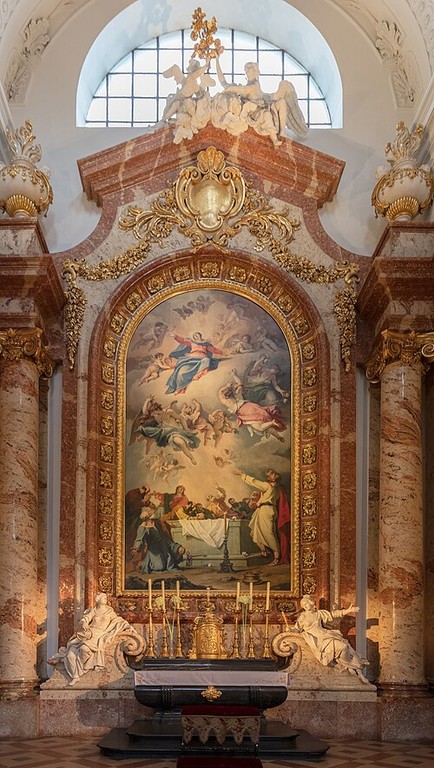
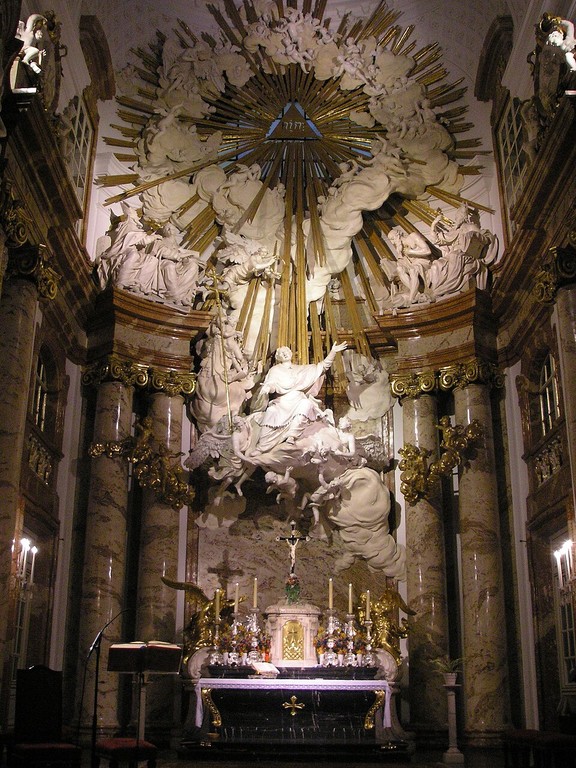
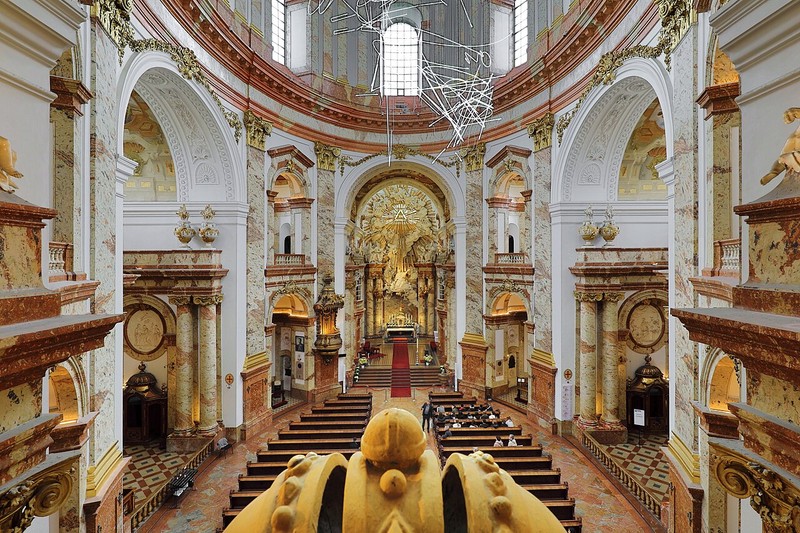
Inside, visitors can admire marble surfaces, decorative details, the high altar and elaborate paintings. The central feature is a dome fresco by Johann Michael Rottmayr dedicated to Saint Charles Borromeo. It depicts the saint pleading with God to end the plague, surrounded by allegorical figures representing faith, hope and love.
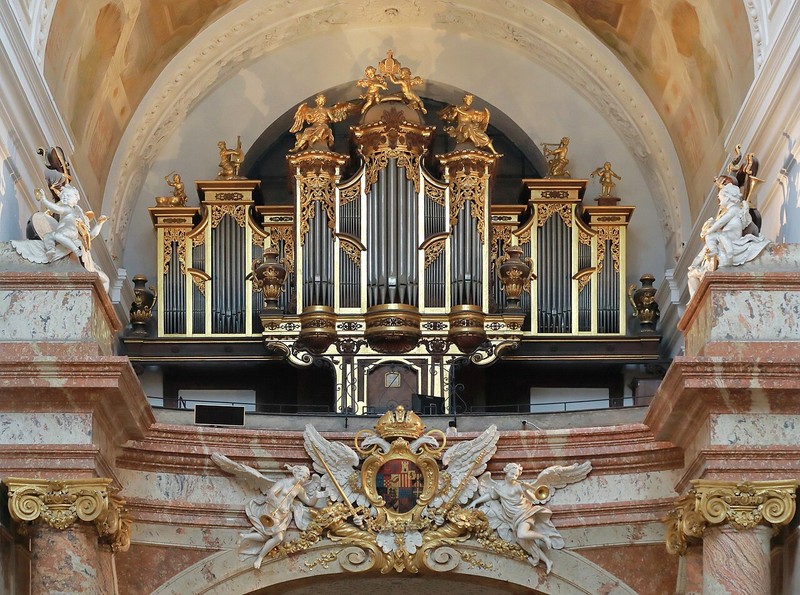
The dome painting enhances the sense of height and solemnity. Light, architectural lines and decoration draw the eye upwards towards the central composition. The high altar and organ are also worth examining; parts of the organ date from different periods in the church’s history.
Panoramic terrace and museum displays
A visit to Karlskirche offers more than religious art. Visitors can reach the panoramic terrace above the entrance portal via the organ gallery and enjoy views of Karlsplatz and the surrounding city. The church also displays ecclesiastical treasures and historical material explaining the building’s architecture and history.
A detailed scale model of the church is another highlight, allowing visitors to examine its structure and features that are difficult to see from outside. Check the official website before visiting, as access to individual areas, opening hours and admission arrangements may change.
How to get to Karlskirche
The church is located at Karlsplatz, 1040 Vienna, close to the Ringstrasse and other central attractions. The easiest way to reach it is by public transport to Karlsplatz station, served by underground lines U1, U2 and U4. The church is only a short walk from the station.
Allow around half an hour to admire the exterior and explore the square. More time is needed if you plan to visit the interior, panoramic terrace and exhibitions. Karlskirche can easily be included in a central Vienna itinerary alongside the Wien Museum, the Vienna Secession building and other nearby sights.
Gallery