


Stanislav
Author
Lvl 5. 🏛️ Discoverer
19/25
19Posts
5Likes
4Followers
8Following
Why did I return to Prague after 10 years?
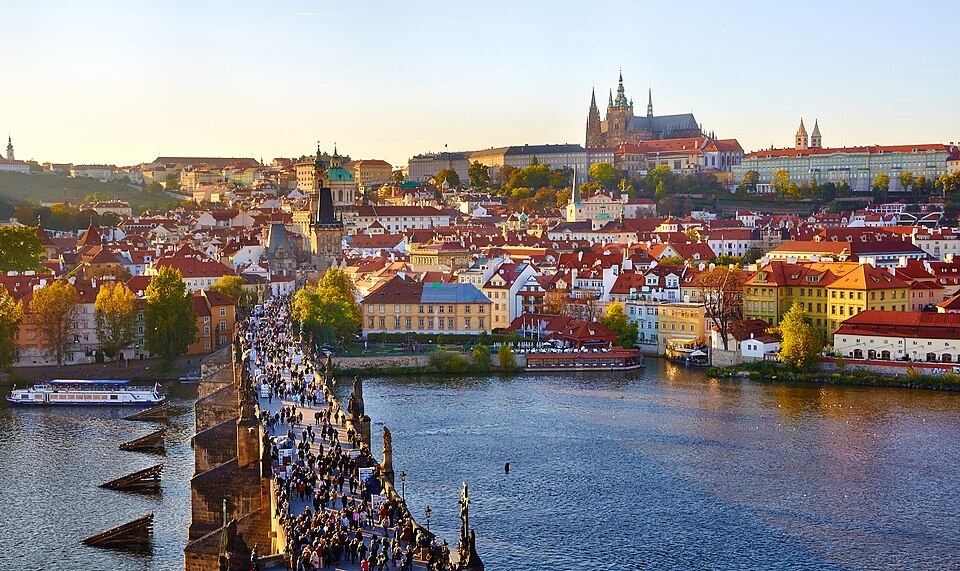
Ten years ago, I left Prague with the feeling that I would definitely return here one day, although then this promise to myself sounded about as convincing as my words that I would start running in the morning on Monday. Life has gradually been filled with work, new trips, household chores and endless chores, which for some reason always turn out to be more urgent than their own desires. Meanwhile, Prague remained in my memory a city of red roofs, ancient bridges, the smell of fresh pastries and narrow streets, along which I once wandered without a special plan, sincerely believing that this was the way to travel. Charles Bridge The decision to return came unexpectedly, on a very ordinary evening, when I was sorting through old photos on my computer and came across a picture of the Charles Bridge. In the photo, I looked noticeably younger, dressed a little differently, and for some reason carried a backpack of this size, as if I was going to cross the Sahara non-stop instead of going to Europe for the weekend. I looked at this picture for a long time and suddenly realized that I wanted to see not only Prague, but also myself from ten years ago, at least mentally to meet with that guy who came here for the first time and was sure that he had a lot of time ahead of him. First morning: Hello, Prague, I'm here again! I arrived in Prague early in the morning, when the city was just waking up, and the tour groups had not yet managed to completely occupy all the convenient places for photographing. I went outside with my suitcase, breathed in the cool air, and felt the same pleasant excitement that comes before meeting someone I haven't seen in a long time. However, the romantic mood quickly shattered into practical reality: the suitcase's wheel got stuck between the stones of the old pavement, and I had to negotiate with my own luggage for several minutes while passersby walked around me with the expressions of people who have already seen a lot in this life. Old Town Historic District The first thing I decided to do was go to the Old Town, because it was there that my acquaintance with the Czech capital began ten years ago. The Old Town Square greeted me with familiar facades, majestic towers and the famous astronomical clock, near which the first lovers of beautiful photographs were already gathering. I was standing in the middle of the square and trying to figure out exactly what had changed, but I quickly noticed that the city looked almost the same as in my memory, but now, for some reason, I first check my phone charge, the cost of coffee and the availability of tables, instead of just looking around. Then I could walk for hours without a route, enter unfamiliar alleys and not worry at all if I suddenly found myself far from the hotel. Now I downloaded the map in advance, saved the address of the hotel, marked several restaurants and even checked the weather forecast on three different websites, as if I was going not to walk around Prague, but to lead a rescue operation in the mountains. The funny thing is that half an hour later I took a wrong turn and found myself on a quiet street that wasn't on my itinerary, but it was there that I felt like a real traveler for the first time that morning. Charles Bridge and the memories that have not disappeared Charles Bridge I arrived at the Charles Bridge towards morning, when a light haze hung over the Vltava River, and the ancient towers were gradually illuminated by soft sunlight. Ten years ago, I found myself here late at night and I remember standing at the railing for a long time, watching the reflections of the lights in the water, while my friend persistently urged me to go to dinner, because romance is romance, and the body after a day of walking already demanded a normal meal. This time, I also stayed by the river, but now no one was rushing me, and I was finally able to calmly examine the sculptures, bridge towers, and small boats gliding through the water. I tried to remember what I was thinking about back then, on my first trip, but my memory helpfully provided separate pictures instead of a coherent story: wet sneakers after a sudden rain, a huge portion of food in a small restaurant, and endless attempts to figure out public transport. Some moments were preserved surprisingly clearly, although I had absolutely no memory of what I had for breakfast three days ago, and this is probably another proof that human memory works according to its own rules. We may forget important everyday details, but years later we suddenly remember the color of the sky over an unfamiliar city or a random phrase from a person we will never see again. Charles Bridge Staircase I took a few photos on the bridge, but almost immediately put my phone in my pocket, because I caught myself wanting to capture every beautiful detail. Previously, it seemed to me that if you didn't photograph the place, the impression would gradually disappear, as if it could be stored exclusively in a digital archive. Now I understand that snapshots are useful for memory, but sometimes it's better to just stand by the river, listen to the noise of the city and let the moment stay with you without additional evidence. Prague to taste: goulash, dumplings and a small gastronomic defeat One of the main reasons I never forgot Prague was the local cuisine, although for some reason it occupied about as much space in my memories as the architecture and history of the city combined. On my first visit, I tried the traditional Czech goulash with dumplings and was genuinely surprised at how satisfying the food can be, which looks quite harmless in the photo on the menu. Then I ate every last bite, after which I solemnly declared that I was ready to take a little more walk, but in practice for the next forty minutes I moved with the grace of a man who accidentally swallowed a small suitcase. Of course, on my second visit, I decided to repeat this gastronomic experience, and with the confidence of a person who already knows the local rules and is not going to make the same mistakes. I ordered goulash, dumplings and something else from the menu, the name of which seemed familiar to me, although now I suspect that I chose solely on the principle of "it sounds delicious, so you have to take it." When the waiter brought the order, I realized that I had overestimated my own capabilities again, and the attempt to convince myself that this time I would definitely finish everything ended with the traditional admission of defeat in front of the plate. But it was at this table that I found myself thinking that returning to a familiar place does not mean repeating the old journey. I was eating the same hearty food again, admiring similar streets and noticing familiar details, but I perceived everything a little differently, because in ten years I had seen other countries, tried different cuisines and realized that the best experiences are not always associated with the most expensive restaurants or carefully planned routes. Sometimes a simple meal, a cozy place, and evenings when you don't have to rush anywhere are enough. Streets that I didn't notice the first time Mala-Strana district On this visit, I specifically decided to get away from the most famous attractions and spend a few hours in areas where I had hardly visited before. I walked around the Mala Strana area, looked at old houses, looked into courtyards and from time to time stopped near small cafes where locals were quietly drinking coffee without trying to take pictures of the cup, the facade of the building and their own reflection in the window at the same time. Gradually, it began to seem to me that this was exactly the kind of Prague I missed on my first visit: not only the famous postcard with bridges and towers, but also an ordinary city where people go to work, buy groceries and swear at the weather. I noticed a small souvenir shop in one of the alleys and decided to buy something to remember me by, although I usually try not to bring home things that have been gathering dust on the shelf for years. In the end, I spent almost twenty minutes there, choosing between a magnet, a postcard, and a small ceramic figurine, as if the well-being of the entire Czech economy depended on my decision. In the end, I bought a postcard with a view of Prague because it took up little space in my luggage and did not require a separate shelf, and also because I liked the idea of writing a few lines to myself and saving them until my next return. Later, I sat in a small cafe for a long time, watching passersby and thinking about how easily we sometimes turn travel into a list of mandatory items that need to be completed in a limited time. We strive to see all the sights, taste all the famous dishes, visit the best viewing platforms and be sure to bring photos that will convince others that the trip was perfect. But the most interesting thing about this race may not be noticed: the feeling of an unfamiliar city, the casual smile of a passerby, the smell of rain on the old pavement, and that rare state when you are not late and do not owe anyone anything. What has changed in ten years View from the Malostranskaya tower of Charles Bridge in Prague Of course, Prague didn't stay exactly the same, although many things still seemed familiar, as if I had briefly stepped out of an old photograph and found myself inside it. New establishments appeared somewhere, signs changed somewhere, and the tourist streets began to look a little different than in my memories, although I understood perfectly well that for ten years the city was not obliged to freeze waiting for my return. But what surprised me the most was that I myself became much more relaxed about traveling and no longer felt the need to fill in every minute with something useful. Ten years ago, I wanted to see as much as possible, because it seemed like a good trip had to be intense until the last hour. I might get upset about a closed museum, bad weather, or an ill-chosen restaurant, as if one small nuisance was canceling out the entire experience of the trip. Now I calmly accept such situations and even find a certain charm in them, because they then turn into stories that are most interesting to tell friends, especially if they include a lost ticket, wet socks or a suitcase that refused to cooperate on an ancient pavement. I realized that traveling changes us not only through new countries and acquaintances, but also through comparison with the people we were before. Returning to a familiar place, it's like we get an opportunity to look at our own lives from the outside and notice what we've learned, what we've given up, and what desires still remain with us. In this sense, Prague has become for me not just a city where I wanted to go again, but a kind of reference point that allows me to see the distance between the past and the present. Last evening at the Vltava River On the last evening, I went to the river again, because I wanted to say goodbye to the city in much the same way that I once said goodbye to it ten years ago. The sky gradually darkened, lights came on in the windows of houses, and reflections of bridges and streetlights appeared above the water, creating the very atmosphere for which I once stayed here until late at night. I sat down on a bench, took the postcard I bought out of my pocket and wrote on the back a few sentences saying that I definitely wanted to come back here again, although now I was no longer going to set myself a specific deadline. Vltava I no longer wanted to promise that the next visit would definitely take place in five or ten years, because life rarely asks us if it is convenient for us to change plans. Maybe I'll be back in Prague soon enough, or maybe there will be other cities ahead, new routes, and completely unexpected adventures that are hard to imagine right now. But now I know for sure that some places stay with us not because they have the most beautiful attraction or the best restaurant, but because they once became part of our personal history. Why will I definitely come back here again? When I left Prague, I realized that in ten years the city had become both familiar and completely new to me, and it was this feeling that turned out to be the most valuable in the whole trip. I came back here to remember the past, but instead I got the opportunity to better understand the present, compare my previous expectations with my current desires, and finally stop demanding an ideal scenario from every trip. Sometimes it's enough just to walk down a familiar street, drink coffee in a small cafe, get a little lost and discover that even years later the world still knows how to surprise. That's probably why I advise you to sometimes return to a place you've already visited once, especially if that place has left behind fond memories. There is no need to try to repeat the previous trip down to the smallest detail or look for the very restaurant where you had dinner many years ago, because the point of returning is not to prove to yourself that nothing has changed. It's much more interesting to see familiar places with new eyes and realize that the journey can continue even when the route has long been completed and the plane tickets are only in the old mailbox. And if one day you also return to a city where you haven't been for ten years, don't be surprised if the most powerful impression is not the famous square or the majestic cathedral, but a completely ordinary evening when you sit by the river, look at the lights and suddenly realize how much has happened to you during that time. For the sake of such moments, it's probably worth traveling, even if sometimes you have to drag your suitcase along the cobblestones, look for the right turn in the rain and admit that the third portion of dumplings was completely superfluous.
0
0
My first trip abroad: India, Mumbai and my personal Shantaram
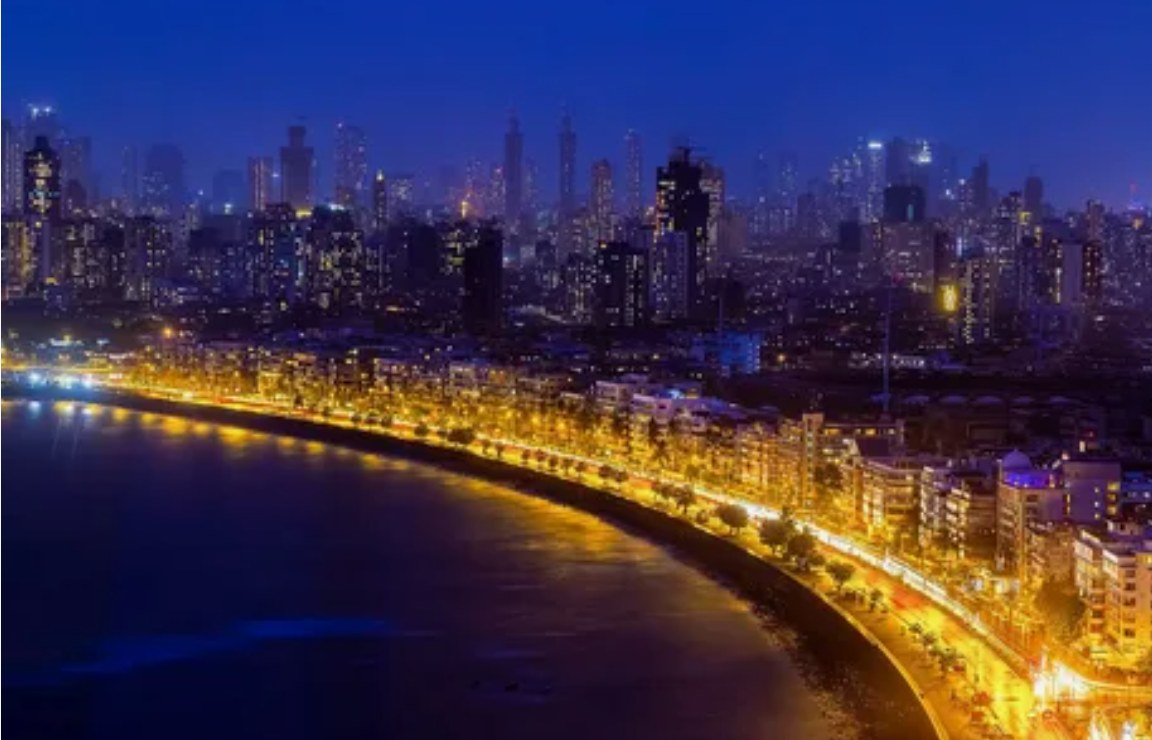
My first trip abroad began with the fact that I checked my passport three times, double-checked my ticket and looked at my phone several more times to make sure that the plane really existed and no one canceled my trip solely because of my unpreparedness. I was in my early thirties, I had never left my native country before, and for some reason I imagined a trip abroad as a serious challenge, which I had to prepare for almost like an expedition to the North Pole. I studied the route in advance, read travel tips, watched videos about local customs and made a list of things that should not be forgotten, although in the end I almost left my phone charging at home anyway. I chose India as the country for my first trip, and Mumbai as the city. The reason was quite simple: A few years ago, I read Gregory David Roberts' novel Shantaram , and this book somehow planted a city in my head that I had never been to. I imagined narrow streets, small tea shops, bustling markets, old buildings, people with completely different destinies, and that special atmosphere where a new story seemed to begin around every corner. Of course, I understood that fiction is not a substitute for real life, but I really wanted to see Mumbai with my own eyes and check if the city that I had imagined so many times while reading existed somewhere beyond the pages. I was inspired by the book Shantaram If you haven't read Shantaram, I'll explain it without spoilers.: This is a novel in which the main character arrives in Bombay, now Mumbai, and finds himself embroiled in a completely new life for himself. The book features slums, friendship, dangerous acquaintances, love, the search for freedom, and a person's attempts to sort out their own past. The city there is not just a backdrop for adventures, but a full-fledged participant in the events, with its contradictions, noise, beauty and cruelty. I read this book in the evenings after work, sometimes getting so carried away that I was going to go to bed early, and then I discovered that it had been night outside for a long time. I liked the way the author described Mumbai.: not as a set of attractions that need to be visited in three days, but as a huge living organism in which completely different worlds exist side by side. After Shantaram, it became interesting to me not so much to see the famous buildings of India, but to feel the daily life of the city, walk along ordinary streets, sit in a small cafe and see how Mumbai would turn out without literary decorations. However, there was one small problem: I was going to India for the first time, and my experience of traveling abroad before that was limited to reading books and looking at other people's photos. There was already a real adventure going on in my head, but in reality I still couldn't confidently figure out even transfers at the airport. But the ticket was bought, the vacation was agreed, and I didn't want to back down anymore. The first acquaintance with India Chhatrapati Shivaji Maharaj International Airport When I got out of the airport, the first thing I felt was a completely new sense of scale for me. People, cars, taxis, buses were moving around, someone was talking on the phone, someone was meeting relatives, someone was in a hurry, and I was standing with my suitcase and trying to figure out where my new life was starting for the next few days. I've read about the noise of Indian cities in books, but it's one thing to imagine it, and quite another to be inside. Here, sounds don't just accompany the street, they seem to fill the entire space: car horns, salesmen's voices, passersby's conversations, motorcycles, and constant traffic. At one point, I even thought that if there was a "pause the city" button in Mumbai, I would have pressed it for at least five minutes to calmly check the route. But then I noticed that the locals are well-versed in all this chaos. They crossed the streets, made travel arrangements, bought food, talked with friends, and continued to do their usual things as if nothing unusual was happening around them. And everything was unusual only for me, a person who found himself in a country for the first time, where even the road from the airport to the hotel turned into a separate adventure. My first Indian transportation experience Before the trip, I read a lot about how to get around Mumbai, but for some reason I was sure that everything would become clear on the spot. This was my first serious mistake, although it will not be the last. I tried to figure out the transport, checked the map several times and went to the subway. Mumbai Metro I realized that the Mumbai Metro was opened in 2014, but I did not fully understand the public transport system. In the end, I decided to take a taxi, because after the flight, I wanted to make a simple decision at least once without additional research. Even here, there was a small performance. I showed the driver the address of the hotel, he nodded, I got in the car and almost immediately started looking out the window, trying to memorize the city. After a while, I realized that we were moving in a completely different way than I had imagined on the map, and I was about to take out my phone to check the route, but then I decided not to panic ahead of time. The driver drove calmly along his roads, and I gradually realized that in an unfamiliar country, not everything has to look the way I'm used to at home. When we finally got to the hotel, I pulled out my suitcase, paid for it, and felt like a man who had just crossed a small continent on his own. It seems ridiculous now, but back then, even an ordinary trip around the city was perceived by me as an achievement. I didn't know yet that in a couple of days I would be much more relaxed about unfamiliar streets, local routes, and situations where there were no ready-made instructions. The city that couldn't fit in my head The next day, I went for a walk around Mumbai and started with the Colaba district, where there are old buildings, hotels, shops and many places familiar from the photos of travelers. I wanted to see the famous India Gate, walk along the embankment and look into a cafe where I could sit quietly with a cup of tea. But even in this relatively touristic area, the city constantly gave me new experiences that could not be included in the itinerary in advance. Kolaba District Ordinary apartment buildings stood next to beautiful historical facades, fruit was sold near shops, food was sold on the streets, and motorcycles maneuvered between cars. It was impossible to just look at the architecture here, because life was happening nearby all the time and persistently attracted attention. I could stop to look at an old building, and a minute later I was watching a salesman deftly packing purchases, a family choosing fruits, or several people animatedly discussing something at a small table. I liked the feeling, even though sometimes I got tired of the amount of sounds, smells, and movement. To be honest, I thought the city was much smaller, but I'm glad I was wrong. For the first time, I realized that traveling can be not only beautiful, but also physically exhausting, especially when you're trying to figure out exactly what's going on around you every minute. Sometimes I wanted to go back to the hotel, take a shower, lie on the bed and just sit in silence, and then go outside again, because curiosity still turned out to be stronger than fatigue. I was looking for my Shantaram Of course, I couldn't come to Mumbai and not remember the book for which I chose this country in many ways. I understood in advance that the novel should not be perceived as an accurate map of the city: it is a work of fiction based on the author's experience, and not an instruction for a traveler. But I wanted to see places that would help me feel the atmosphere of history, and just walk through the streets where literary Mumbai could meet the present. I remembered the characters in the book, their conversations, actions, and attempts to find their place in a huge city. At the same time, the real Mumbai constantly reminded me that everyone here has their own story, which I don't know anything about. The people I passed by were not characters from my journey, and the city did not exist in order to confirm my book impressions. He lived his life, sometimes surprising me, sometimes tiring me, and sometimes making me stop and just watch. At some point, I found myself stopping looking for a specific scene from the novel and starting to perceive the city for what it is. I was sitting in a small cafe, drinking tea and looking out at the street where people were talking, buying food and hurrying somewhere. I didn't need to find the exact location from the book, because the main discovery was happening right in front of me: literature helped me want to come here, but I could only understand the city through my own experience. And that's probably why I love good books. They don't always provide answers, but sometimes they open a door that you weren't even going to look into before. Tea, street food, and my caution One of the most pleasant discoveries for me was Indian tea. I've seen it sold several times in small establishments and on the streets, and finally decided to give it a try. I liked masala tea, this drink turned out to be rich, fragrant and not at all like the tea I usually drank at home, and a small portion unexpectedly suited the hot day well. I was much more careful with the food at first. I had read the hygiene tips in advance, so I chose places where food was prepared in my presence, and I was attentive to water and drinks. But curiosity overcame the fear of unfamiliar cuisine anyway, and I started trying local dishes, trying not to portray a man who came to India solely for the usual breakfast of eggs and toast. However, once I ordered a dish that seemed completely harmless according to the description, and then I discovered that my ideas about the degree of spiciness and Indian reality exist in different universes. I tried to maintain my dignity, drank water and pretended that everything was going according to plan, although inwardly I was already saying goodbye to my taste buds. Now that I remember that lunch, it seems to me that it was then that I finally realized that traveling is not only an opportunity to see another world, but also a willingness to sometimes look a little funny in it. What I learned about myself in Mumbai Before the trip, I considered myself a fairly independent person, but now I realize that my independence worked well in a familiar environment where I knew the language, rules, transport, and had a rough idea of what to expect from the world around me. In India, many familiar landmarks disappeared, and I had to learn to calmly react to unfamiliar situations, ask questions, check information, and admit that I couldn't know everything in advance. I realized that it's not necessary to figure everything out the first time. You can make a mistake with a turn, misunderstand the pointer, get confused in front of an unfamiliar menu and still continue your journey. The main thing is not to turn every little mistake into proof of your own inadequacy, because in this case you can spend the whole vacation berating yourself for not being born with a ready–made world map in your head. I also became more attentive to my own expectations. Before the trip, I imagined Mumbai through the pages of Shantaram, photographs and other people's stories, but the real city turned out to be much more complicated than any image. It had beauty and noise, historic buildings and everyday difficulties, moments of excitement and fatigue, and sometimes it all happened literally on the same street. I realized that I don't have to immediately give a verdict to every place I visit, and that sometimes it's enough just to admit that I don't understand everything yet, but I'm interested in learning more. My first trip abroad was not at all what I expected. When I was going home, I had a lot of photos on my phone, several new addresses, a list of dishes that I would like to try again, and a pretty impressive collection of stories about how I tried to figure out transportation and local customs. I didn't become an expert on India, I didn't fully understand Mumbai, and I certainly couldn't say that I now know how life works in this huge country. But I came back with a much more important feeling: the world turned out to be much bigger, more diverse and more interesting than the one I knew from familiar streets and books. Shantaram once helped me imagine Mumbai, and the real trip taught me not to confuse the idea of a place with the place itself. The book remained important to me, but now I have my own memories: noisy streets, a cup of hot tea, unfamiliar food, evening air, and moments when I was just standing in the middle of the city, trying to make sense of everything and realizing that I had never felt so far from my usual life before. My first trip abroad did not make me a fearless traveler who is now ready to go anywhere without preparation and doubt. I still carefully plan trips, check documents, and sometimes worry before departure, but now I understand that the unknown does not necessarily mean danger or failure. Sometimes it's just a space where you can learn something new about the world and about yourself. And if someone asks me why I chose India for my first trip abroad, I will answer that I once read Shantaram and wanted to see the city that hooked me so much. But if you ask me what I really brought from Mumbai, I'll probably say something else: I brought the understanding that life is much more interesting when you don't limit it to what you already know. After all, sometimes one book makes you buy a ticket, one unfamiliar city changes your usual view of the world, and your first trip abroad becomes the beginning of a whole story that can no longer be read from someone else's pages.And, perhaps, this is the best thing that could happen to me on my first trip.
1
0
A small town that surprised me: Obidos, Portugal
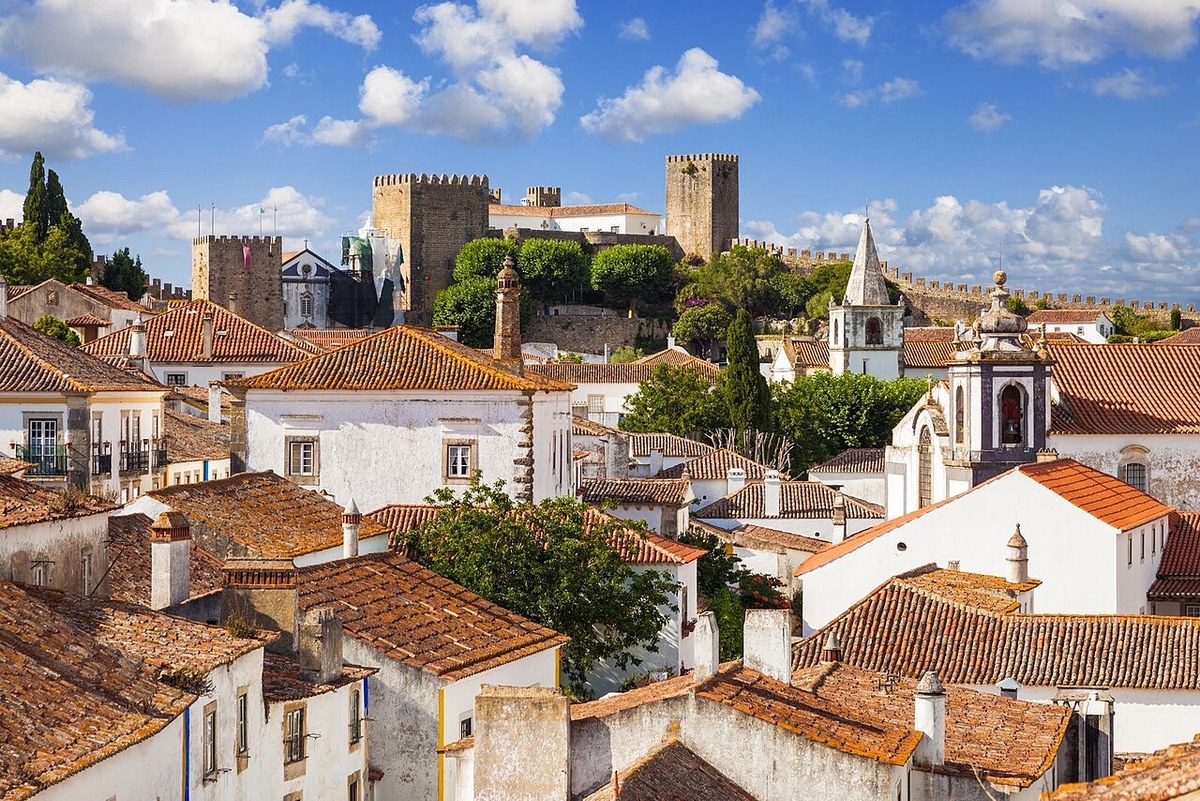
Sometimes I come to a city with a huge list of places that I definitely need to see, and sometimes I just mark a point on the map and think: "Well, let's see what's in there." That's exactly what happened to me with Obidos in Portugal. I knew that this was a small medieval town surrounded by fortress walls, that there was a castle and beautiful white houses here, but I did not feel any special delight in advance. After Lisbon, I was generally a little skeptical and thought that Obidos would be a pleasant stop for a few hours, after which I would quietly continue my journey. In the end, it turned out quite the opposite: I arrived for one day, and left with the feeling that the city had somehow managed to deceive me. At first it just seemed beautiful to me, then cozy, and after a few hours I didn't want to leave at all. The funny thing is that Offending didn't try to impress me at all, he just existed in his calm medieval rhythm, and I gradually got involved. The first impression of Obidush When I approached the historical center, the first thing I saw were the fortress walls and gates. Obidush really looks like someone decided to save a piece of the Middle Ages, carefully placed it on a hill and said: "Just please don't change anything much here." Inside the walls there are white houses with colored details, narrow cobbled streets, small squares and flowers on the windows, and above all this stands a castle. Medieval castle-fortress of Obidush I walked through the main gate and realized almost immediately that my usual travel pattern would not work here. In big cities, I usually turn on the "need to do everything" mode, start checking the map and mentally allocate time between the sights. I walked a hundred meters in Obidusha, saw a beautiful house, stopped to take a picture, then turned into an alley, then saw another alley and at some point just put my phone in my pocket. It was probably the first proper thing to do all day. The street where I stopped looking at the map The main street of the old town, Rua Direita– gradually leads through the historical center to the castle. It looks completely harmless on the map, but on the spot I was constantly distracted by white houses, flowers, small shops, and people who were sitting at tables and in no hurry. Rua Direita Street I especially liked that the city doesn't look equally polished from all sides. Somewhere the facade is fresh and neat, somewhere there are traces of time on the wall, somewhere flowers hang from the window, and an old bicycle stands near the door. It's these little things that create the feeling of a real place, not the scenery for a tourist movie. I took out my phone several times to check where to go next, but each time I found a new reason not to. At some point, I realized that I had been walking for almost twenty minutes with practically no direction, and for the first time during the trip it didn't bother me at all. Castle and walls Of course, I wasn't going to completely ignore the main attraction of Obidush. The castle and the fortress walls are part of the very character of the city, and the fortress itself has a very long history: fortifications existed during the time of Arab rule, after the Christian conquest the castle was rebuilt several times, and in the XX century it was restored. I enjoyed taking photos from different angles and lighting, as if there was a new place in front of me. I climbed the walls and immediately understood why it was worth coming here not only for the sake of photography. From the height of the town Halls, it looks very different: white houses gather into one dense picture, hills and green spaces open behind them, and somewhere in the distance you can feel the proximity of the Atlantic. The most interesting thing is that I forgot about the time on the walls again. However, the romance continued exactly until the moment when I looked down and realized that for some reason it became much scarier for me to walk along the narrow fortress wall than it seemed from below. I tried to pretend that I was just carefully examining the architecture, although in fact I was carefully rearranging my legs and mentally asking fate not to turn my trip into international news. An offended man who lives his own life What surprised me the most was not even how beautiful the city is, but the fact that ordinary life can be felt inside a tourist place. There are houses, shops, small cafes, churches, courtyards and streets where people walk not because they came to see the attraction, but because it is their city. Officially, Obidos is considered one of the best preserved medieval cities in Portugal , and you can really feel it when you walk through its streets. The medieval layout, fortress walls, castle, white houses and many historical buildings have been preserved here. But for me, the main discovery was something else: despite all this history, Obidush does not seem like a museum. In it, you can just go for coffee, stop to talk, look into a store or sit on a bench, and all this happens against the background of very old walls. It turns out a strange combination: the Middle Ages are all around, but life is completely modern. My encounter with the local cherry tincture Of course, it was impossible to come to Obidos and not try the famous ginjinha. Local cherry tincture is traditionally served here in a small chocolate cup, and Portugal itself recommends trying this local specialty in this way. ginjiinha I looked at this chocolate cup with the expression of a person who has just been offered a very interesting experiment. First I drank the tincture, then I ate the chocolate and realized that the locals clearly know how to properly lure tourists: after that, it's impossible to say that you just came to see. However, I quickly realized that if I continued to experiment with local drinks, then a walk along the fortress wall could become even more exciting, so I decided to limit myself to one glass. Sometimes prudence comes late, but it comes anyway. Coffee, pause and complete lack of haste After my walk, I went in for a coffee and finally allowed myself to just sit. On a normal trip, I would have already checked the next point on the route, looked at the museum's opening hours and tried to figure out how many minutes it would take to get there on foot. And here I was sitting by the window and looking at Rua Direita. Tourists were passing by, someone was taking pictures at home, someone was looking for a free table, someone was just walking around without any purpose, and it all happened so calmly that I gradually stopped feeling like a person who is on a journey. In general, it seems to me that the best way to study Offending is not to try to swallow it in two hours, but to leave yourself time just to wander. The official tourist portal also offers a walk through the maze of streets inside the walls, and among the main places are the Church of Santa Maria, the Church of Mercy, the Church of San Pedro, the city museum and other historical sites. And of course, I got lost. The funniest thing happened in the late afternoon. I decided to go beyond the main tourist route, turned aside somewhere and was absolutely sure that I perfectly understood where I was. Fifteen minutes later, I was already looking at the phone card with the same expression on my face that usually means: "Okay, calm down, we'll figure it out now." I really figured it out, but only after I walked down the same street twice and finally admitted that the small town had somehow managed to confuse me. And you know, I wasn't even upset. After all, if you're wrong, then why not in a city with white houses, flowers, ancient walls and narrow streets. The evening snack turned out to be the most beautiful When the sun started to set, I returned closer to the center again. The light became softer, the walls took on a warm hue, the tourists gradually became fewer, and the city suddenly became completely different. During the day, Offending seemed beautiful and a little fabulous to me, but in the evening it became somehow homely. Someone was closing a store, someone was sitting in a cafe, light fell from the windows of houses, and the narrow streets became almost empty. I walked without any plan and thought that I was going to spend only a few hours here in the morning. And that's when I finally realized that I was wrong. Why did this small town surprise me? It wasn't the size, the castle, or even the fortress walls that surprised me. Although all this is certainly beautiful. Most of all, I was surprised by the feeling that appears a few hours after arrival: you stop wanting to rush somewhere. I'm used to travel being a constant movement. One city today, another tomorrow, a museum in the morning, a square in the afternoon, a restaurant in the evening, and in between, I still need to take photos, buy something home and not lose my phone charger, which for some reason I manage to put in the most inaccessible place of the suitcase every time. And in Obidusha, for the first time in a long time, I just slowed down. It was enough for me to walk down the street, look at the old houses, climb the walls, drink coffee and sit in the square in the evening. I would come back here again. When I left Obydos, I had the feeling that I had spent a lot more time here than I actually had. This is probably the case with places where you don't have to constantly entertain yourself and rush somewhere. I came here with the idea that this is just a small town along the road that you can see between the more serious points of the route. But he left with a completely different opinion: sometimes it's small towns that give travel what big tourist capitals lack. Obidos wasn't trying to be Portugal's main discovery for me. He just greeted me with his white houses, old fortress, narrow streets, flowers on the windows and a cup of coffee at the moment when I finally stopped looking at the clock. And, perhaps, now I know how I will choose small towns further. If there's a place on the map that I'm thinking about first: "Well, what's there to see?", I'll try not to drive by. Because after Offending, I already know that sometimes that's where the most interesting journey begins.
0
0
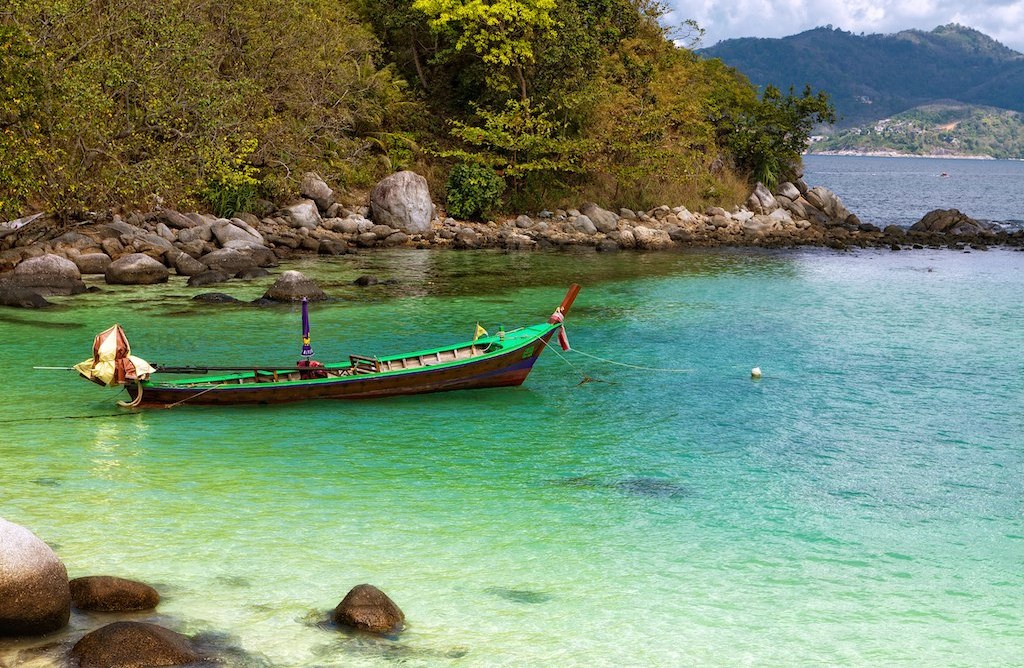
A day in Phuket without hiking routes
In Phuket, for the first time in a long time, I decided to arrange a strange tourist experiment for myself – to spend the whole day without a pre-planned route. I usually travel according to about the same scenario: in the morning I open the map, look at what is interesting around, build a beautiful chain of several points, and then try to do it all before the evening, gradually turning from a tourist into a person who competes with his own navigator. This time, I decided to do the opposite: no mandatory attractions, no "top 10" lists, no attempts to tick off every famous place, but just leave the hotel in the morning and see where it takes me. Morning in Phuket explains very quickly that rushing here is not the smartest idea at all. It was warm, the air seemed humid already in the morning, a small street kiosk was operating somewhere nearby, it smelled of coffee and something fried, and there were gradually more and more scooters on the road. I bought myself a coffee, sat down at a small table, and for the first time during the trip, I realized that I didn't know what to do next, and to be honest, I unexpectedly liked the feeling. I just went where I wanted to go. After breakfast, I decided not to take a taxi or open a map, but just walked through the streets. At first, it seemed to me that in fifteen minutes I would definitely find something so interesting that I would want to return to the original plan immediately, but nothing like that happened, and I just kept walking, looking at houses, small shops, cafes and people who were going about their usual business. At some point, I turned off a fairly busy road onto a quiet street and realized that the tourist part of Phuket was somewhere behind me. I met this cat by chance. He behaved like a master of life, and this is probably the first time I've seen such freedom in the eyes of a stray animal. The area no longer had endless signs with excursions and offers to rent a boat or massage, but there were ordinary apartment buildings, parked scooters, laundry that dried directly in the sun, small shops and cats that clearly considered this territory their own and were not at all interested in my presence. As I walked along, I thought that for some reason these places are more memorable than many attractions, because here you don't look at the scenery for tourists, but just see ordinary life. A cafe that I hadn't planned to look for at all After a while, the heat started to remind me that I was in Thailand after all, and not on a walk through a northern European city. I noticed a small cafe with no loud signage, where locals were sitting at tables, and I decided to go in, although I had no idea what was served here or if I could even explain what I wanted to order. Laab Mu Dish In the end, I dealt with the food roughly according to the principle of "point your finger at something delicious," and it turned out to be one of the best decisions of the whole day. They brought me a simple dish with rice, meat, and vegetables called Laab Mu. It seemed completely harmless to me, but after a few seconds I realized that I had relaxed too soon. I don't really like spicy food, but once I was in Thailand, I courageously finished everything, washing it down with water and pretending that the spice wasn't terrible at all, although a small fire festival was taking place inside me at that moment. The most interesting thing was that no one around seemed particularly impressed by what was happening, because for locals such food was completely ordinary. I was sitting there, wiping my forehead with a napkin and thinking that it was for the sake of such random stops that it was worth sometimes abandoning tourist routes. Phuket turned out to be much quieter than I expected. After lunch, I decided to find a place where I could just sit by the water, but again I did not choose the famous beach on the map. I got on a scooter and drove towards the coast, turning to where the road looked more interesting, and not to where it said "must see". I almost got lost several times, and once I realized that I was going to the wrong place, but I decided not to turn around right away, because it's thanks to such mistakes that sometimes you find places that never existed in your original plan. Pa Tong Beach In the end, I found myself at a quiet stretch of coast where there were very few people. There was no sense of a large resort here, the music from the bars did not cover the sound of the sea, and instead of the endless movement of tourists, I saw several fishermen, locals, and a couple of people just sitting by the water. I took off my shoes, sat on the warm sand and just looked at the sea for a while. After several days of traveling according to schedule, it turned out to be an unexpectedly pleasant experience, because for the first time I didn't have to think about how long it would take to get to the next point, whether I would make it before the museum closed, or where it would be better to park. The sea wasn't going anywhere, and I wasn't going anywhere either, and at that moment it seemed to me that this was how Phuket should be perceived sometimes. A random walk that dragged on In the late afternoon, I went for a walk again, and here my plan finally ceased to exist, although, to be honest, there had been no plan as such for a long time. I passed by small shops, looked into local shops, stopped several times to buy water and fruit, and then noticed a small street with houses and old architecture and decided to walk along it. I enjoyed watching Phuket live without any tourist scene. Somewhere a store was opening, somewhere a cafe owner was putting chairs outside, the children were returning home, and near one of the houses several dogs staged such a concert, as if they had specifically decided to test my patience. I stood next to him, laughed and walked on, and after ten minutes I realized that I had absolutely no idea where I was, because the map was still open somewhere in the depths of the phone, and I was too carried away by the walk. However, getting lost in Phuket wasn't as scary as I imagined. I was just walking along the road, sometimes I recognized familiar places and eventually came to a place from where I could already orient myself normally, although my confidence in my own navigation abilities noticeably decreased after that. An evening without sunset from the tourist list When it started to get dark, I found myself by the sea again. This time, I didn't specifically look for a beautiful viewing platform, because I realized one simple thing all day: sometimes the best view comes exactly when you don't plan it. I sat down near the water and ordered a cold drink, and the surroundings gradually became quieter. The sky was changing color, the sea was getting dark, lights were coming on in the streets, and the whole day, which seemed like a bit of a strange idea in the morning, suddenly formed into a very complete picture. I remembered the morning coffee, the spicy lunch, the random road, the almost lost route, the small cafe and the quiet beach, which was not included in my plans at all. And I realized that for the whole day I had done almost nothing of what is usually advised to tourists in Phuket, but at the same time I felt for the first time that I really saw the island not as a set of attractions, but as a place where people just live. What did this day give me? When I returned to the hotel, the phone showed a fairly modest number of photos, and at first I was even a little upset. Then I looked at them again and realized that almost every photo is associated with a specific moment: here is the coffee in the morning, here is a random street, here is lunch, after which I tried to maintain dignity, here is the sea and the very stretch of coast where I did not intend to go at all. It was then that I realized that the day without a tourist route turned out to be one of the most memorable of the entire trip. I didn't see all the famous places, didn't tick dozens of boxes in front of the sights, and didn't return to the hotel feeling that I had successfully completed the program, but for the first time I allowed myself to simply be a traveler who goes where I want, stops where I like, and sometimes calmly admits that I have no idea where to turn next. Perhaps this is how I will remember Phuket – not only with beaches, palm trees and beautiful photos, but on an ordinary day when I left the hotel without a plan and let the island show itself to me. Sometimes traveling becomes much more interesting when you stop trying to see all the most important things and start noticing what is happening right in front of you. And if I find myself in Phuket again, I will most likely leave one day completely free again, because now I already know that the most interesting routes sometimes start exactly when you weren't going anywhere at all.
0
0
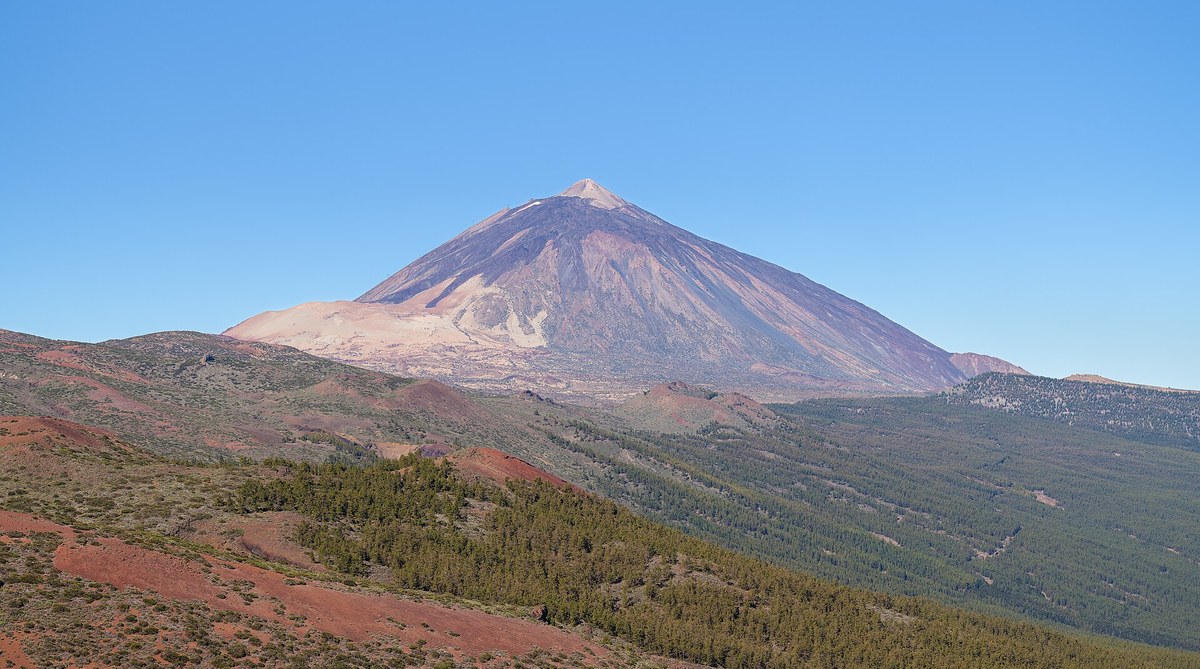
Climbing Mount Teide: my experience
Before the trip to Tenerife, I did not consider myself a person who loves mountains enough to voluntarily climb them. I quite enjoyed looking at the peaks from below, photographing them from the car, sitting somewhere with coffee and talking about how beautiful it would be to be at the top one day, but there was quite a big difference between these arguments and the actual ascent. Therefore, when I decided to try to climb the Teide, I was both interested and slightly suspicious that somewhere in this story I was clearly overestimating my own physical abilities. Teide Peak I didn't choose Teide by chance. It is the highest mountain in Spain, its peak is located at an altitude of 3,715 meters above sea level, and the volcano itself is located inside the Teide National Park in Tenerife. I have seen photos of this area many times and each time I thought that the landscape looked more like the surface of another planet than a European island, so the idea of going up there gradually began to seem too tempting for me to give it up. I knew in advance that this was not a walk in a city park, so I prepared myself as much as I could. I checked the weather, chose comfortable clothes, took water, a snack, sunglasses and a jacket, because it can be warm down in Tenerife, but the situation changes quite quickly at altitude. The most difficult stage of preparation, as usual, was not to pack a backpack, but to convince myself to go to bed early, because for some reason it always seems to me that another episode of the film would definitely not hurt. Early morning and wake up The morning began before dark. I left the hotel with the feeling of a man who voluntarily gave up normal sleep in order to stand on top of a volcano a few hours later, and on the way I periodically wondered how reasonable this decision was. The higher we climbed along the road, the more the landscape changed. Palm trees and the usual island vegetation gradually disappeared, there were fewer and fewer trees around, and then huge volcanic fields, dark rocks and a completely unusual landscape appeared. I asked to stop several times just to look around. It seemed strange that just recently I was by the ocean, and now I was driving in the middle of a landscape that looked more like stills from a science fiction movie. When we got to the starting area of the route, I got out of the car and immediately felt that the air here was completely different. It was noticeably cooler than downstairs, and after an early rise, the body clearly hadn't had time to figure out what was going on. But there was a mountain ahead, and it was too late to retreat. The first few kilometers – so far everything seems easy At the beginning of the climb, I felt pretty confident. I walked briskly, looked around, and even had time to think that all the stories about fatigue at altitude might be a little exaggerated. That was my first mistake. Mountains generally like to give a person confidence first, and then calmly explain who is in charge here. The first sections of the route passed through a volcanic landscape, and I constantly stopped to examine the rocks and surrounding rocks. There is practically no familiar greenery here, but there are a huge number of shades of gray, brown, red and black, and against the background of a bright sky it all looks completely unusual. After a while, I noticed that I started walking slower. It wasn't critical, it wasn't dramatic, it was just that the pace was gradually decreasing, and each small rise already required a little more effort. I decided that this was normal, took a few sips of water and continued. Ten minutes later, he stopped again. It was then that I realized that the mountain was gradually starting to negotiate with me. Height is a completely different feeling The higher I climbed, the more I felt the height. It became a little harder to breathe, I had to pause more often, and the usual pace of walking completely disappeared. The most interesting thing was that I didn't feel physically terribly tired, but my body clearly demanded that I take my time. A few steps, a pause, a few steps – and so gradually moved upward. At some point, I looked down and saw how far I had already gone from the starting point. A huge volcanic landscape stretched below, and the clouds were somewhere much lower. This sight instantly gave me back motivation. I stood and looked at the clouds below me and thought that for the sake of such a view, I could endure a little more. However, then I took a few more steps and stopped again, because motivation is motivation, and the lungs still have their own opinion. The moment when I wanted to turn around About halfway up the climb, for the first time, I had a very serious thought: "Maybe that's enough?" There was no catastrophic fatigue, but I already understood that the peak would not be reached in a couple of minutes, and there was still altitude ahead, climbing and the need to return back. At such moments, it's very easy to start haggling with yourself. I told myself that I had already seen enough, that the view was beautiful, that I could take photos and calmly return downstairs, and then I tried to convince myself that it would be a pity to stop any more. In the end, the simplest argument won out: I came here precisely for the sake of the summit. That's why I decided to keep going, just slower and without trying to prove to anyone that I'm the fastest person on Teide. And it turned out to be the right decision. The last section The closer I got to the top of the route, the more harsh the landscape became. The rocks, volcanic rocks, wind, and almost complete absence of the usual vegetation made it feel like I was not in the Canary Islands, but somewhere much further north and much further from civilization. At some point, I almost stopped talking and just focused on moving. Step, pause, a few more steps, and pause again. I stopped looking at time and started looking only forward. The most interesting thing is that it was then that fatigue faded a little into the background, because one simple thought appeared: the peak is already very close. I got there When I finally got to the top, my first reaction was anything but heroic. I just stopped, no beautiful speeches, no jumping for joy, and I didn't even take pictures right away. I stood there for a few minutes and tried to catch my breath, and then I looked around. And that's when I realized that it wasn't all in vain. I had a huge view of Tenerife, the clouds were far below, and the volcanic landscape stretched away in all directions. The ocean was visible in the distance, and the island itself seemed incredibly small. I took out my phone and took some photos, but I realized very quickly that they still didn't convey that feeling. Because the photo shows the height, the person at the top feels it. What I felt at the top The Teide Crater Perhaps the strongest thing was not even the feeling of victory, but calmness. Downstairs, I was constantly thinking about where to go, how much time was left, what to see next, where to eat, and what to do before the evening. Here, all of a sudden, it all became completely unimportant. I just stood at the top and looked around. After several hours of climbing, it was nice to finally not go anywhere. However, it was also impossible to rest for a long time, because there was a descent ahead, and my body hinted quite clearly that the adventure was not over yet. The descent turned out to be a separate story For some reason, I thought that after the summit, all the most difficult things were over. It turned out that the descent can also remind you of yourself, especially when your legs are already tired from climbing.It was physically easier to go down, but I had to look carefully at my feet, because the rocks and bumps did not disappear anywhere. Plus, there was another problem: I was already relaxed and constantly wanted to stop to look at the landscape again. As a result, it took me quite a long time to get down. But now I was in no hurry. I stopped several times, photographed the mountains, looked at the clouds and just enjoyed the fact that the most difficult part of the route was left behind. When I finally got back to the car, the first thing I did was take off my shoes and get in. I just sat down and did nothing for a few minutes. Was it worth it? If I had been asked about this immediately after the descent, when my legs were tired and my body demanded food and proper rest, I would most likely have said: "Yes, of course, but let's not climb next time." However, in the evening, when I looked at the photos and remembered that moment at the top again, the answer changed. Of course, it was worth it. Because climbing the Teide turned out to be not so much an athletic achievement for me as a test of my own endurance. I realized that sometimes the most difficult part of a journey is not the route itself, but the moment when you start to doubt whether you need to continue at all. On a mountain, it's very easy to tell yourself that you can stop. And sometimes you really need to stop, rest, or give up further lifting if your body says it's time. But if you have the strength, but only fatigue and the desire to return to your comfort zone are in the way, then sometimes it's worth taking a few more steps, because it's behind these few steps that you may find a place that you'll remember for years. What I realized after climbing Teide is not just a mountain, but a volcano (stratovolcano) on the island of Tenerife in the Canary Archipelago. After climbing, I stopped looking at the mountains solely as beautiful scenery for photographs. Now I understand that the mountain is also a conversation with myself, and quite an honest one. She doesn't care how many kilometers you usually walk, how fit you are, or how many beautiful hikes you've done before. She just shows you the route and suggests you move at your own pace. That's what I liked. I wasn't trying to become a mountain climber in one day and I wasn't proving anything to anyone. I just walked up, sometimes I stopped, sometimes I doubted, sometimes I admired the landscape, and eventually I reached the point for which I started all this. And now, when I see Teide's photo again, it's not just the top that I remember. I remember the early morning, the cold air, the first kilometers, the moment when I wanted to turn back, the endless stones under my feet, and that very last stretch when there was very little left to reach the top. That's probably why I look at mountains a little differently now. The lower station of the cable car Previously, it seemed to me that the main thing was to climb, now I understand that the most interesting thing begins even before the top, when you go up and gradually realize that you can do a little more than you thought in the morning. And the peak in such a journey becomes not so much the finale as a beautiful reason to stop, look around and say to yourself: "Well, boy, I've reached it."
0
0
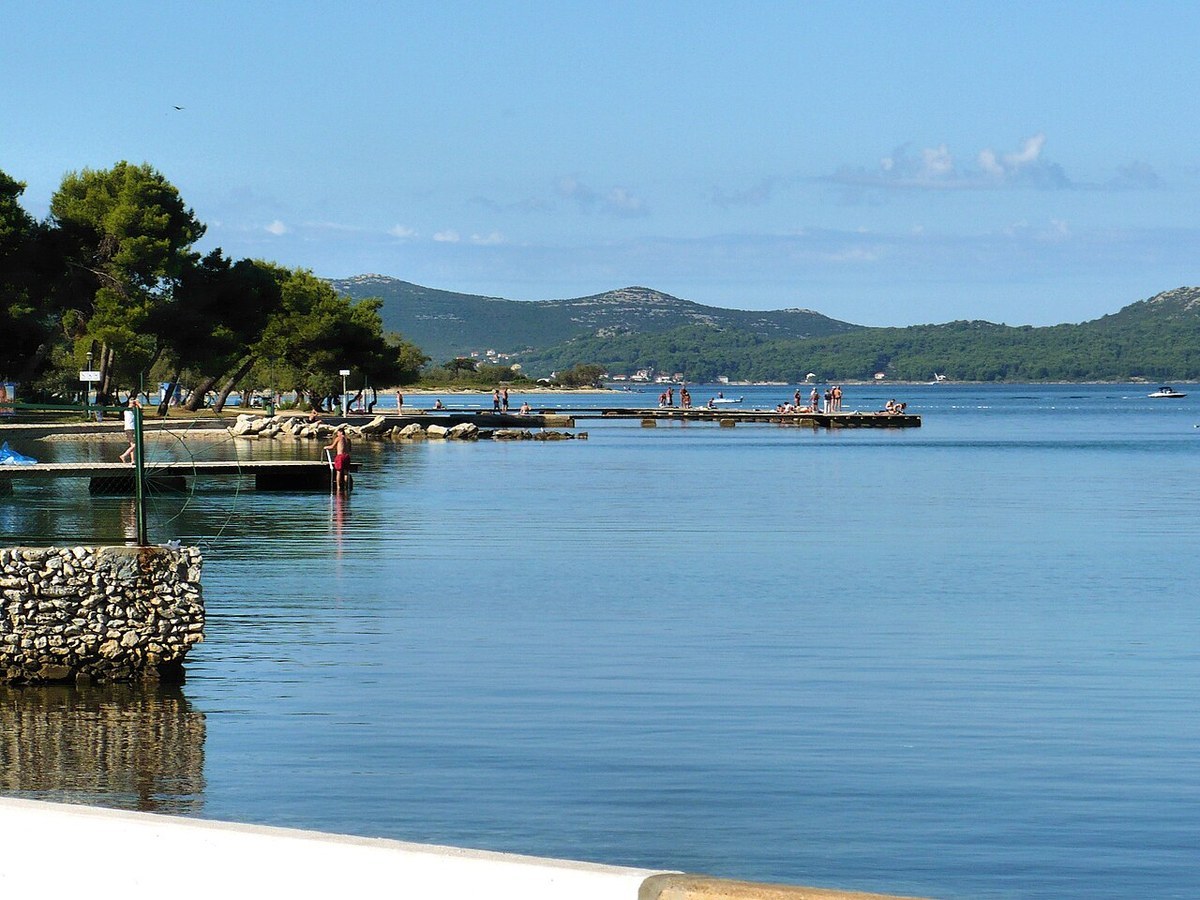
Day 5. The last road and some time for yourself
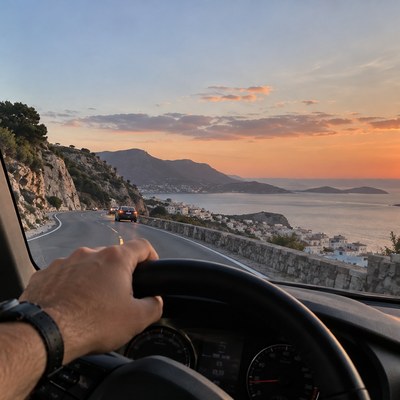
On the last day, I purposely didn't bother with the sights. After four days of constant movement, I just wanted to have a quiet breakfast, drink coffee and spend some more time by the sea. I drove along a small stretch of coast, made several stops and found a place where I could sit quietly by the water. At that moment, I almost stopped looking at the map. The funny thing is that at the beginning of the trip it seemed to me that a good route should be planned almost by the minute. By the fifth day, I realized the opposite: sometimes the best route is the one that leaves room for a "let's take a turn here." Zadar Before leaving, I took another walk through the streets of the nearest town, bought some small souvenirs and stood by the sea for a long time. I wanted to remember not any particular attraction, but the feeling of this trip: the warm air, the salty smell of the sea, the stone streets and the constant desire to stop for another five minutes. My 5-day itinerary in Croatia If you put the whole trip into one scheme, my route turned out like this: Day 1 – Dubrovnik: Old town, city walls, sea and evening walk. Day 2 – Dubrovnik → Split: road along the coast, small stops, coves and evening Split. Day 3 – Trogir → Sibenik: two beautiful historical towns and a quiet walk without haste. Day 4 – Zadar: Old town, Sea organ, embankment and sunset. Day 5 – Coast and free day:a little road, sea, coffee and time just to enjoy the last hours of the trip. Split 5 days for such a route is, of course, not much. I would love to add a few more days to take my time and stop by other places on the way. But it was five days that allowed me to get the most important thing – the feeling of a real journey, when every day is a little different from the previous one. Dubrovnik at sunset Summing up my short trip, I want to say that Croatia is remembered not only by the beautiful sea and ancient cities. Most of all, I remember the road between them, unexpected stops, small cafes, attempts to park where the free space disappears in just a second, and the constant desire to turn somewhere else. If I had repeated this route, I would most likely have left everything about the same, only I would have given more time for spontaneous stops. Because the most interesting thing about traveling along the coast of Croatia begins exactly when you stop thinking about how many kilometers are left to the next point, and just enjoy the road. And, of course, I would get behind the wheel again and drive along the Adriatic. Because when the sea is on the right, the road is ahead, and the navigator sometimes suggests turning off in a completely unclear direction, for some reason life becomes much more interesting.
0
0
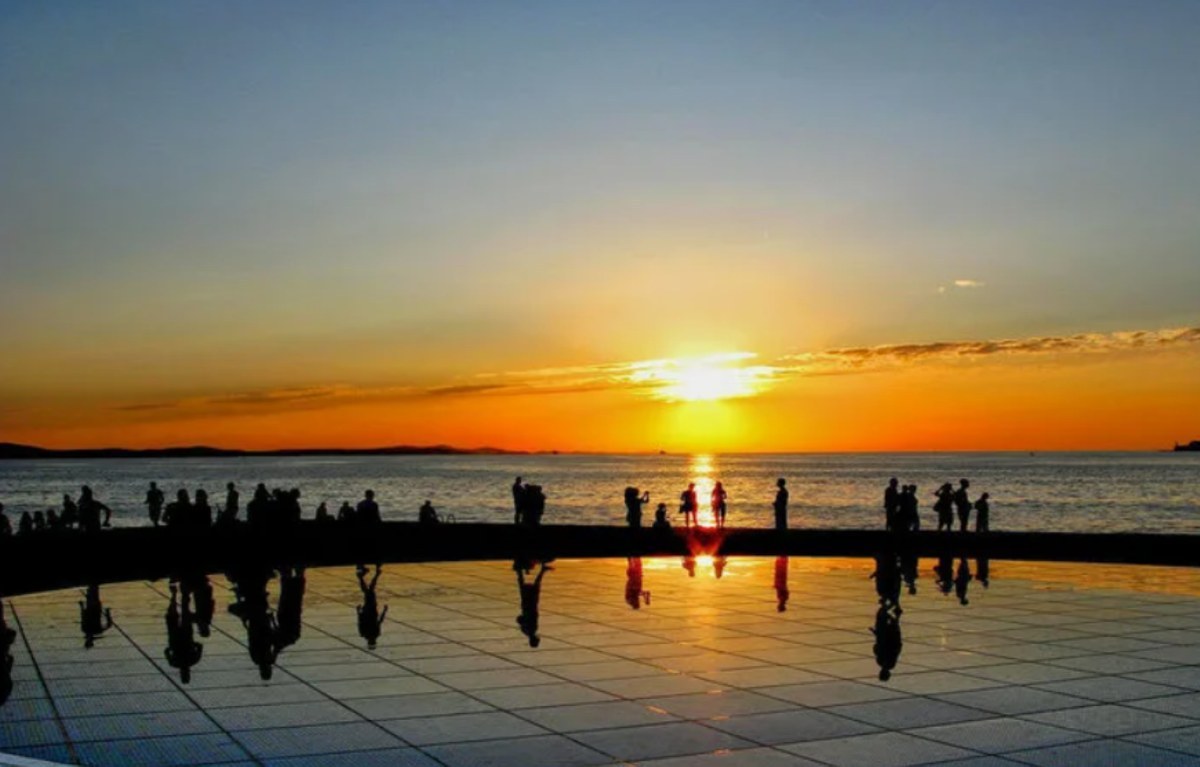
Day 4. Zadar: sea, old town and famous sunset
On the fourth day, I went to Zadar. This city turned out to be completely different from Dubrovnik, and that's why I was especially interested in seeing it. I started walking from the old town, and then gradually went out to the sea. Zadar is generally very well suited for a leisurely walk, when you don't need to run somewhere every half hour. "Greeting to the Sun" (left) and "Sea Organ" (right) One of the main goals of the day was the Marine Organ and the "Greeting to the Sun." I was particularly surprised by the fact that the music appears here due to the movement of the waves. I just sat by the water for a while and listened to these sounds. After a few days on the road, I especially enjoyed doing nothing. You could just sit by the sea, look at people and wait for the sunset. And I really wanted to see the sunset in Zadar. I specially came to the embankment in advance to get a good place, and once again I was convinced that travelers like to make a little joke about our plans. There were a lot of people, and it was almost impossible to find a quiet corner. But when the sun began to sink to the horizon, none of this mattered anymore. The people around me gradually quieted down, the sky changed, the sea began to reflect light, and I just looked ahead. That evening, it seemed to me that for the first time I felt that five days were coming to an end too quickly.
0
0
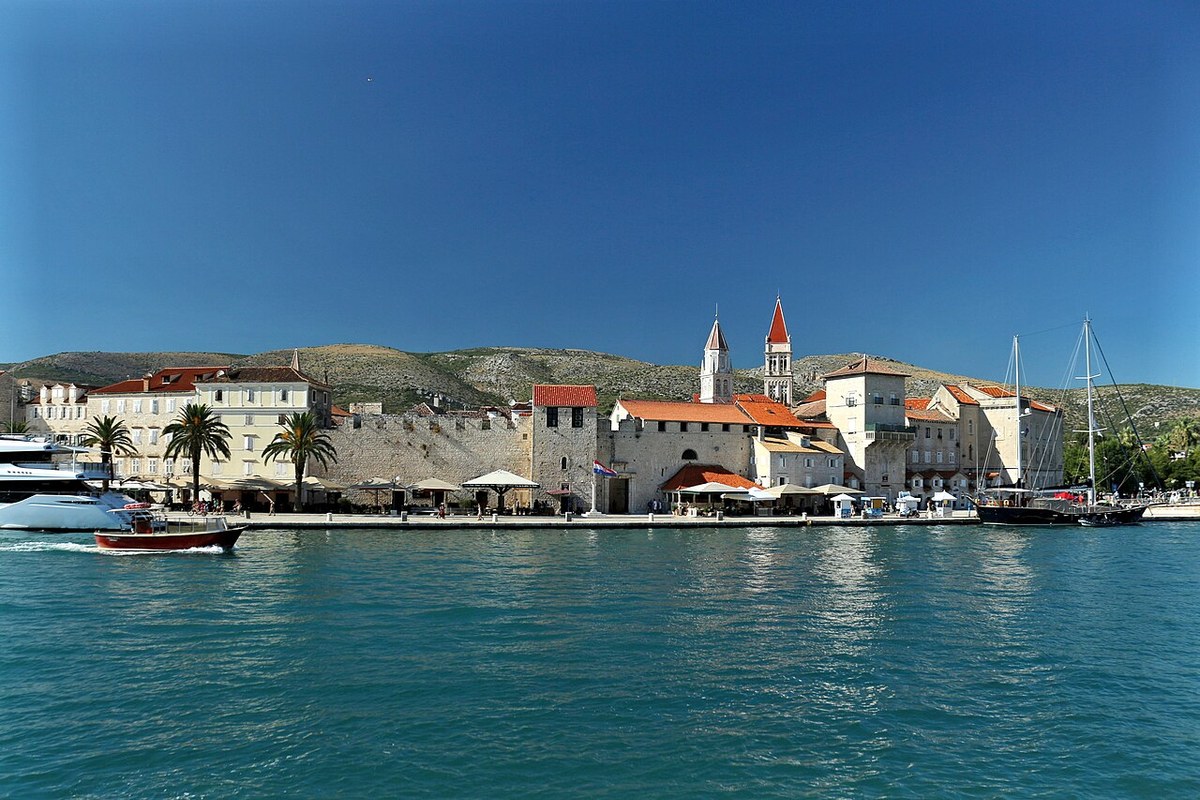
Day 3. Trogir and Sibenik: small towns that you suddenly liked more
On the third day, I decided not to have another race in major cities and went to Trogir. And here one of the most pleasant discoveries of the trip was waiting for me. Trogir is much more compact than Split and feels completely different. Narrow stone streets, small squares, old houses and the sea from almost all sides create the impression that you are walking through the scenery of a historical film. Trogir I purposely left a few hours just for a walk without a specific route. Sometimes I went into small courtyards, sometimes I stopped by the embankment, sometimes I just sat in a cafe and watched people. It seems to me that it is in such cities that you get the best feeling of Croatia, because you are not trying to get a new attraction every minute. Sibenik After Trogir, I went to Sibenik. The journey didn't take long, so I decided that I would have time to walk around the city in peace until the evening. I liked Sibenik for its slightly more relaxed atmosphere. How beautiful it is here at dawn! I hope that the impressions I received from the trip will stay with me for a long time. Here I walked a lot again, went up to the fortress of St. Michael and looked at the city and the sea from above for a long time. At some point, I caught myself thinking that during these three days I had already stopped trying to photograph absolutely everything. Previously, I could stop near every beautiful building, take some photos, choose an angle, see the result and repeat the procedure. And here I just stood and watched. This is probably a sign of a good trip, when the phone gradually ceases to be the main way to remember what is happening. By the way, I was lucky enough to see the sunset in Sibenik. It's incredibly beautiful, just like the picture on your phone. In the evening, I realized that I was very tired and found a small place for dinner and decided to take a chance with the local cuisine again. Everything went much better this time, although after a hearty dinner I realized that what I needed next was not a new route, but a bed.
0
0
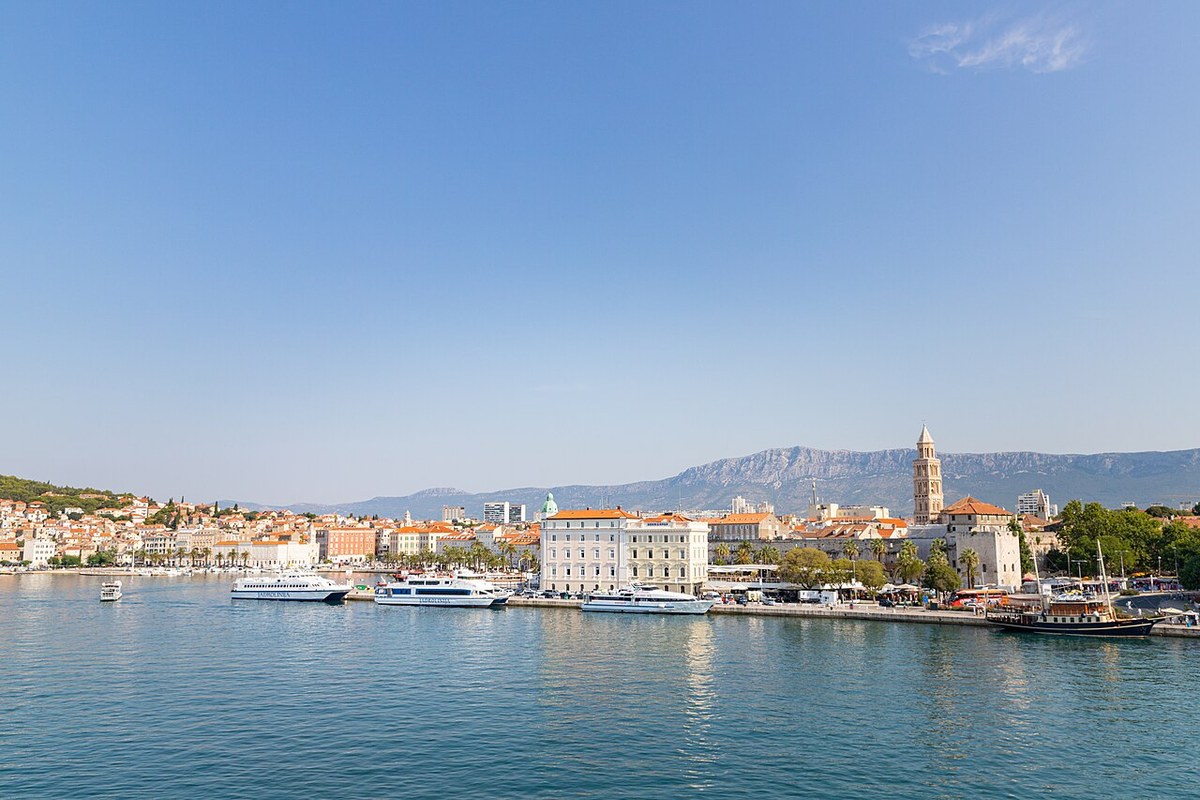
Day 2. The road to Split: sea, stops and a bit of chaos
In the morning I left Dubrovnik for Split. This is where the real road trip began. The road along the coast kept making me stop: either there was a beautiful view of the sea ahead, or a small bay appeared, or I just wanted to get out of the car and stand outside for a few minutes. Dubrovnik I realized one simple thing pretty quickly: if you drive through Croatia in order to get to the next city as quickly as possible, you can miss half the fun. So I stopped rushing and started making unplanned stops. The Adriatic At some point, I saw a small area with a view of the Adriatic and decided to park. It was only after I got out of the car that I realized that there was practically no one around. I stood and looked at the sea and thought that it was worth taking the car for such moments. On the way, I made several stops in small coastal places, had coffee and had lunch. And it turned out to be quite funny with lunch: I chose an institution almost at random, ordered a dish whose name I didn't quite understand, and then received a huge plate and spent some time trying to figure out how to eat it all. I love such moments when traveling, because for some reason they are the ones I remember best later. By evening, I reached Split. After quiet little stops along the way, the city seemed much more noisy and lively to me. Diocletian's Palace The main point of the walk was Diocletian's Palace. However, it is quite difficult to call it just a palace, because the historical complex is actually integrated into modern urban life. People live, work, go to cafes, and you walk through the streets and realize that there are buildings around you that are centuries old. Riva Embankment In the evening, I took a long walk along the Riva embankment. After the road, it turned out to be exactly what you needed: the sea nearby, cafes around, palm trees, evening light and the feeling that today you finally don't have to plan.
0
0
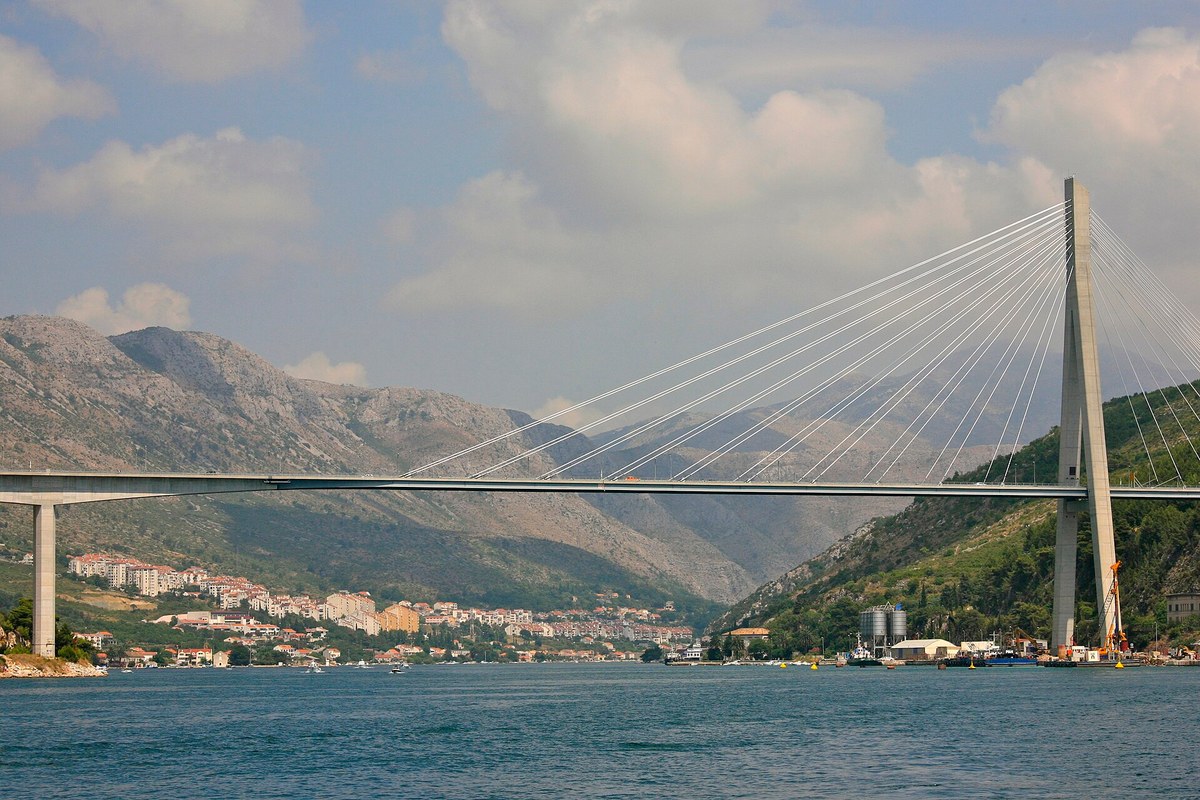
Day 1. Dubrovnik: the beginning of the journey
When I first decided to drive along the Croatian coast, I thought everything would be pretty simple: the sea on my right, the beautiful cities ahead, the car under me, and five days in which I would quietly watch all the most interesting things. In my head, it was almost a perfect road movie, where I drive beautifully along a serpentine, periodically stop for a photo and have dinner somewhere by the sea in the evening. The reality, of course, turned out to be a little more fun, because parking searches, attempts to understand local roads, and the classic "where am I going now?" were quickly added to the beautiful views. But this is exactly the journey I wanted to remember him on in Croatia. It's not easy to come to one resort town and spend a week on the same beach, but to move along the coast, stay where you really want to, and see a slightly different Croatia every day. In five days, I managed to drive through several beautiful cities, swim in the sea, taste local cuisine, get lost several times and finally make sure that a road trip is much more interesting when you don't try to control every minute. I started my first day in Dubrovnik, sharing photos from the cable car. To be honest, it was one of those times when I saw so many photos of the city that I was afraid to be disappointed when I met them. Usually, after the tenth photo of the same place, you get the feeling that you've already been there. But Dubrovnik turned out to be completely different. Old Town When I first saw the old town, surrounded by stone walls and lying right by the sea, I realized that the photos still did not convey the scale. The narrow streets, staircases, old houses, the splendor of the Adriatic and the huge number of people created a strange combination of a medieval city and a modern tourist resort. The first half of the day I just walked around the old town. I climbed the city walls, looked at the sea and the roofs of houses from above, stopped several times for photos, and at some point realized that my phone was almost empty. It was very prudent of me to start a car trip with my phone completely discharged, especially considering that I will still need navigation. After the walk, I decided to relax by the sea for a while. I hadn't planned to swim on the first day at all, but after staring at the incredibly clear water for a few minutes, I had to rethink the plan. After a while, I was already standing on the shore and wondering why I hadn't done it sooner. In the evening, I returned to the old town again. Dubrovnik seemed very lively to me during the day, and towards evening the atmosphere became calmer. The stone walls were gradually illuminated by warm light, the sea was darkening, and for the first time that day I stopped looking at the clock. I decided to spend the night in the Dubrovnik area, because in the morning I had to travel further along the coast. At that moment, I still did not know that the road would become one of the main parts of the entire journey.
0
0
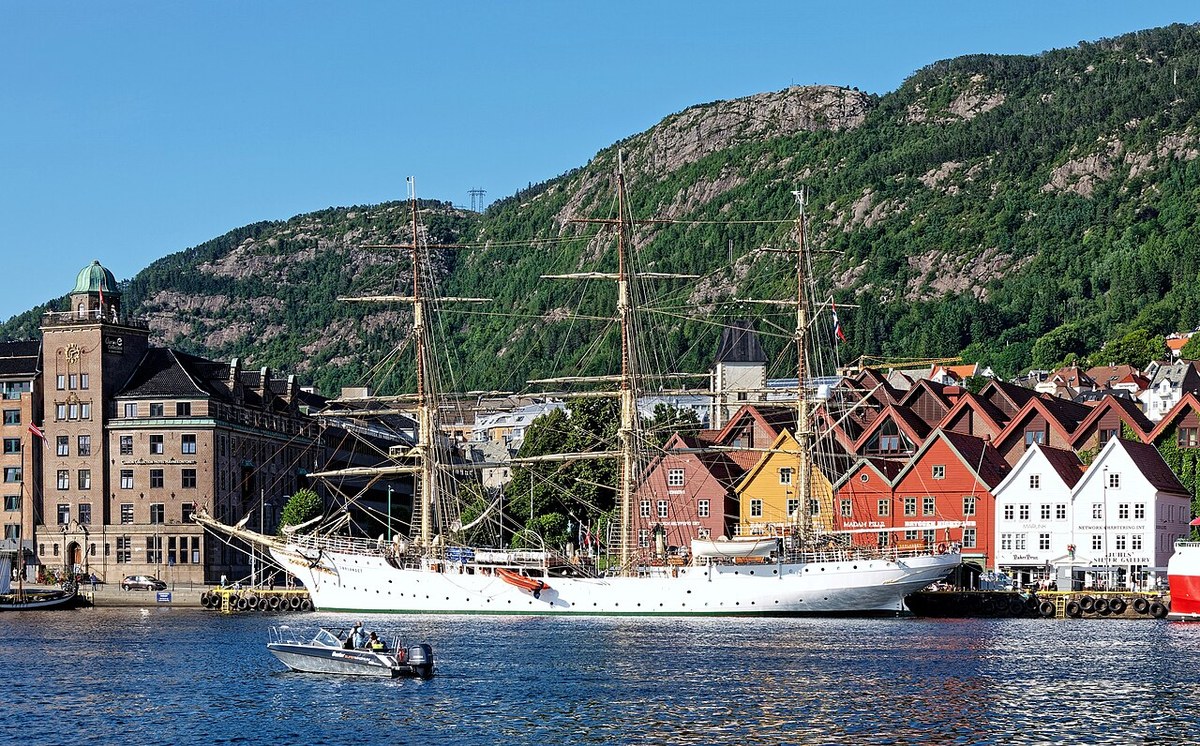
My route in Norway
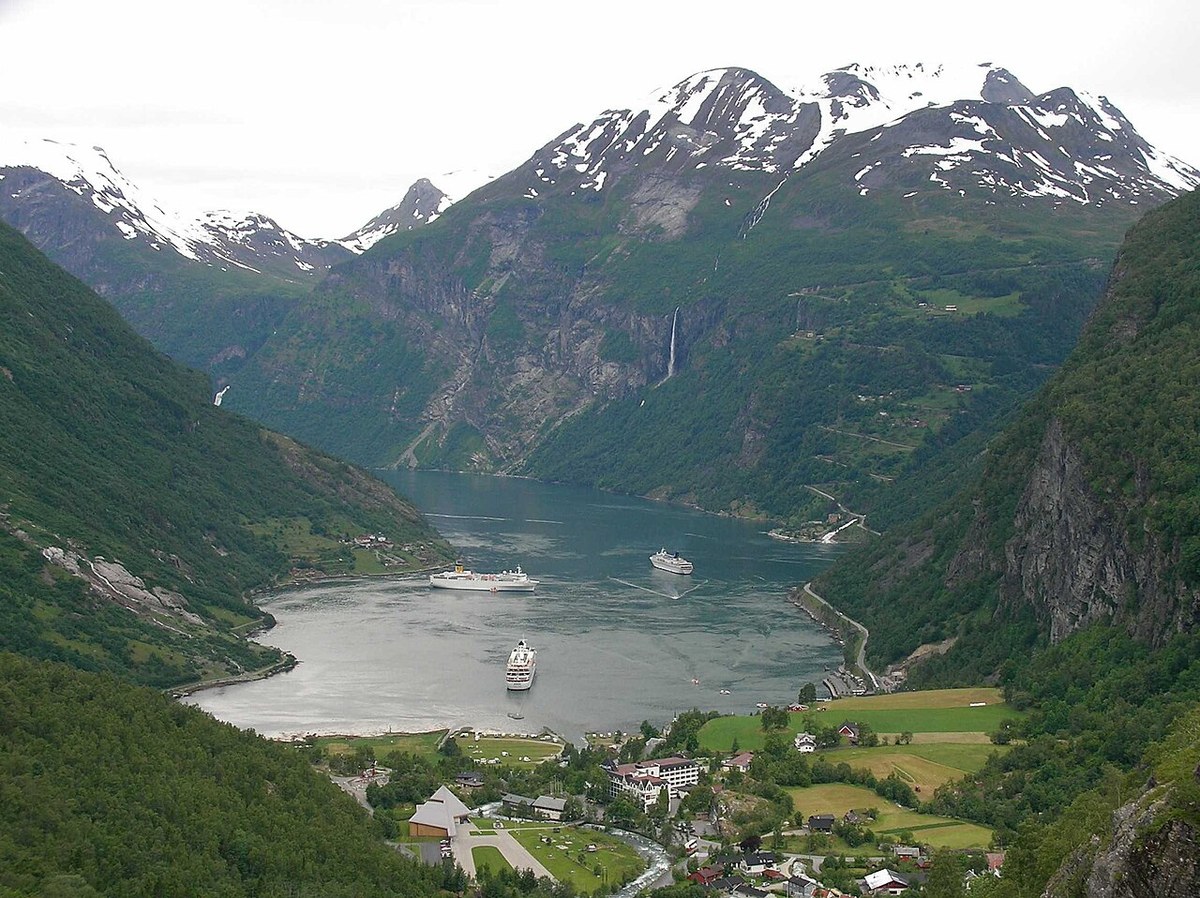
If I were to put the trip together into one route, I would now lay it out like this: Bergen → Sognefjord → Flom → Lerdahl → Geiranger Fjord → Atlantic Road → small coastal towns and villages. This route allows you to see different landscapes of Norway without turning the trip into an endless race between points on the map. I would only immediately put extra time on the road, because in Norway it is almost impossible to move exclusively according to plan. You will definitely see a place where you want to stay, meet a beautiful road, a small waterfall, or just want to drink coffee with a view of the fjord, which means that you will have to let go of your schedule a little. At the same time, I would not try to change my overnight location every day just to see another point. Sometimes it's better to spend two evenings in one place and explore the surroundings in peace than to pack a suitcase every day and spend your energy moving again. On such a journey, not only the list of things you've seen is important, but also how comfortable you feel along the way. A list of necessary items After this trip, I have a very specific list of things that I would no longer underestimate. A good waterproof jacket, comfortable shoes, a phone charger, a power bank, and something to eat in the car would seem to be the most common things, but when there are mountains around and the nearest cafe is unknown, you start to look at a simple candy bar with completely different eyes. I would definitely take a thermos. Stopping by a fjord, pouring yourself a hot coffee and just looking at the water for a few minutes turned out to be one of the most enjoyable little rituals of the trip. Sometimes, for some reason, such moments are more memorable than a long visit to a famous landmark. What did I take with me from this trip After Norway, I was left with the feeling that I had visited a country where nature calmly occupies the first place and does not try to prove anything to anyone. There's no need to come up with entertainment every minute, because sometimes it's enough just to drive, look out the window and wait for the scenery to appear around the next bend. And that's probably what I liked the most. Geiranger Fjord I was driving among the fjords, getting caught in the rain, getting confused on the roads, taking too many photos, reviewing the route several times, and still constantly rejoicing that I was here. Sometimes I got tired, sometimes I got wet, sometimes I realized that the next point was still far away, but I never had the feeling that it was all in vain. Norway has left me with the feeling of an unfinished journey: I seem to have seen a lot, but I still want to take the car again one day, load up my things and drive on, along those roads that I didn't have enough time for this time. And that's probably why I liked this route so much – it didn't set a beautiful point in the journey, but left the feeling that there are still a lot of roads, fjords, small villages and turns ahead, beyond which there will definitely be something new.
0
0
Small villages and stops without a plan
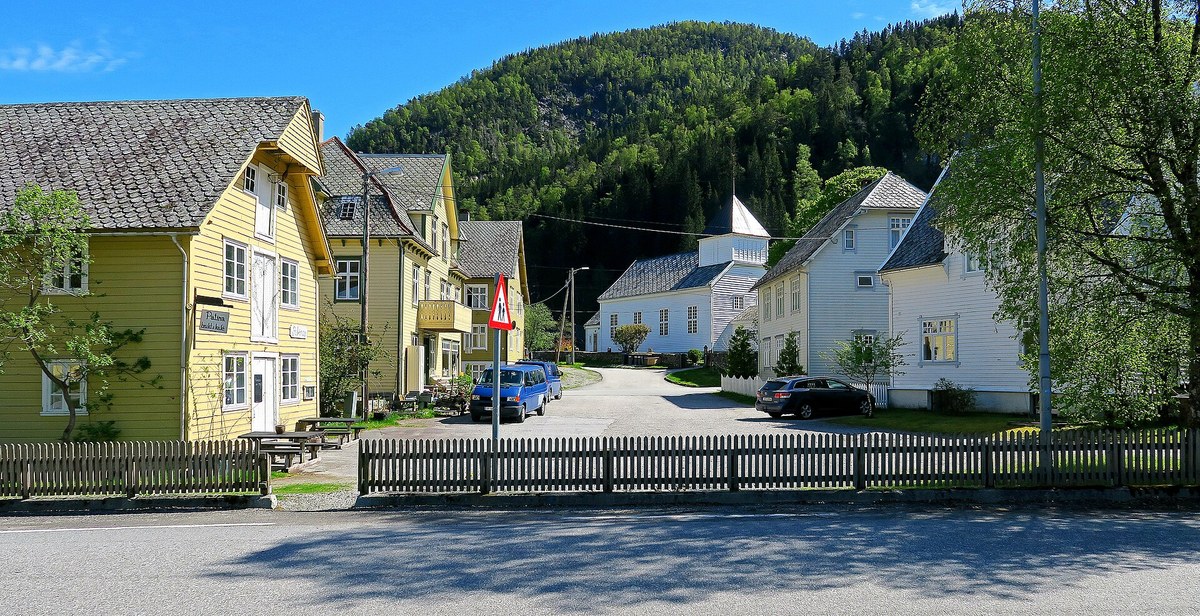
I got the most pleasant moments of the trip not only at the famous viewing platforms. Sometimes I just drove through a small village, noticed wooden houses, boats by the water, or sheep by the road, and realized that this was the frame I wanted to keep in my memory. At such moments, Norway felt not like a collection of attractions, but like a real country where people just live in the midst of all this incredible landscape. Several times I purposely turned off somewhere I hadn't planned to go at all. Sometimes it ended with a beautiful stop by the water, sometimes with another tunnel, which I entered with a slight anxiety, because I had no idea how long it would last. But it's these small adventures that I remember best later, because a trip without a couple of unexpected turns would be too much like a well-organized excursion. Where did I stay I chose the accommodation according to the principle "the main thing is to be comfortable after the road and to want to open the window in the morning." Therefore, the route included small guest houses, simple hotels and cozy places away from major cities. Sometimes the interior was completely ordinary, but in the morning I went outside and saw mountains or water, and after a long drive it worked better than any expensive design. Evanger Village I especially liked the small guest houses, where it was quiet and peaceful in the evening. After a whole day driving, it was nice to take off your shoes, put your phone on charge, make tea, and finally take your time. Sometimes I just sat by the window and reviewed the photos for the day, and almost always I found that half of the pictures were taken in exactly the same place. Eating on the road was also a separate part of the trip. Sometimes I managed to eat normally, and sometimes I limited myself to coffee and something simple, because another viewing platform seemed much more important than a full meal. True, by evening, the body began to remind us that beautiful mountains are wonderful, but the human body still needs food sometimes. How much time should I spend on such a route? The main advice I would give myself before the trip is not to try to cover the whole of Norway in a few days. On the map, it seems that everything is relatively close between the points, but in practice the road takes longer than expected, especially when you constantly want to stop. In addition, some sections are simply impossible to drive fast, because the roads themselves require attention and are not conducive to racing. I liked the format much more when, after several busy days, you could leave at least one day with almost no plan. Back then, I didn't feel like I had to get somewhere all the time. It was possible to calmly wake up, have breakfast, get in the car and just see where today's route would lead.
0
0
The Atlantic Road is another side of Norway
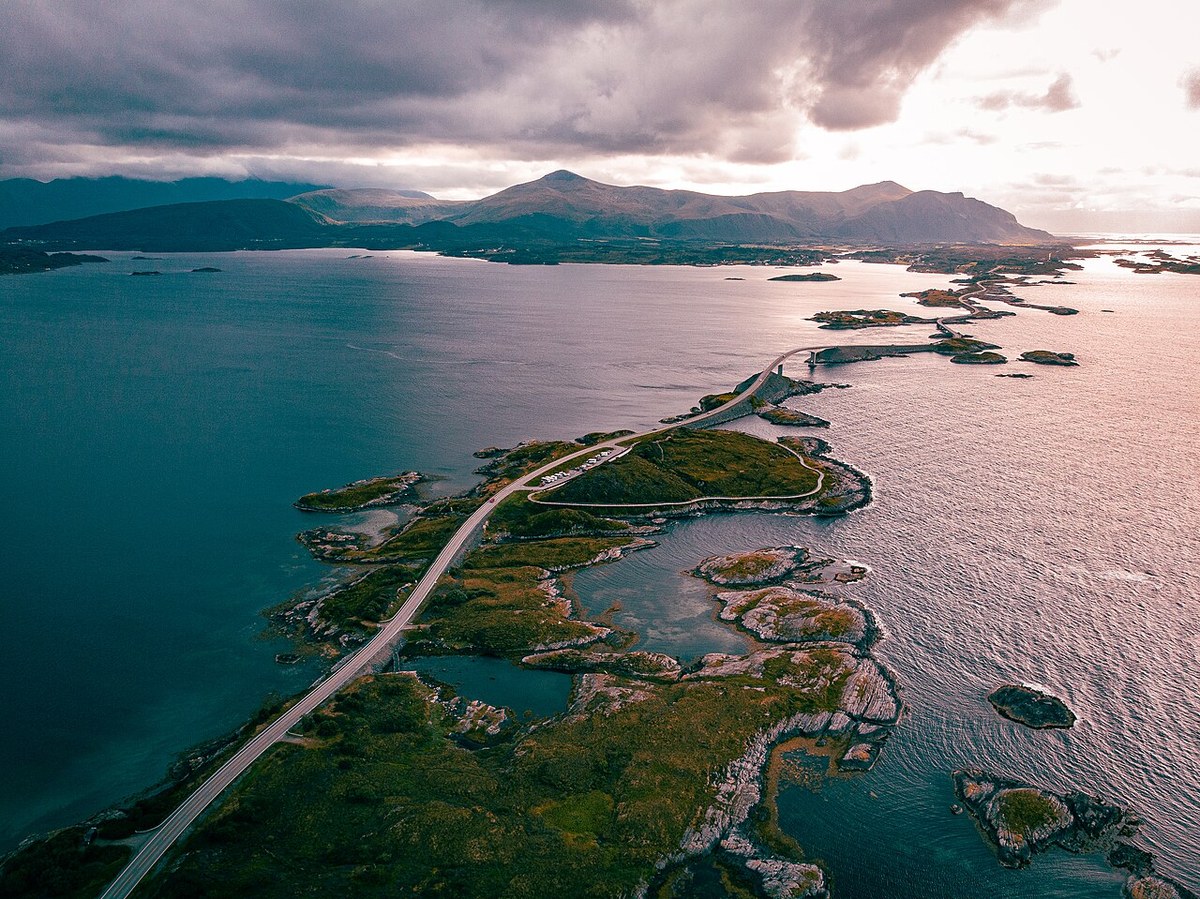
My journey was not without adventures either. One day, after a long drive, I arrived at my apartment, unloaded my things, took a break for a while, and only then realized that I had left one rather important thing in the car, and the parking lot was not nearby at all. At that moment, I really wanted to convince myself that I didn't need the thing at all, because it was so beautiful around me, I could see a river in a mountain valley. But still, I had to put on my jacket again and walk back. Such small things, of course, do not spoil the trip, and then even become a part of it. Now, when I think back to Norway, I remember not only the fjords and mountains, but also this evening, when I once again went to the car and thought, why can't you just pack your things once and never come back to them. Probably because then it would be too perfect a story, but we still have a real journey. The Atlantic Road is another side of Norway After the fjords, I wanted to see another side of Norway, so I included the Atlantic Road in the route. The scenery here is completely different: the sea, small islands, bridges and a road that literally runs through the middle of the water. When you drive along it in good weather, everything looks calm and even a little unreal, but I still kept looking at the sky and thinking how quickly everything can change here. Atlantic Road This section gave me a completely different feeling of the road. After the mountains and narrow fjords, the open sea seemed almost endless, and the wind immediately reminded you that you were far to the north and nature here was clearly not going to adapt to your plans. I got out of the car a few times just to stand by the water, and each time I came back with a little tousled hair and a very pleased expression on my face. Norwegian weather decided to participate The weather tried to test my character several times during the trip. In one day, I could see the sun, rain, fog, more sun, and more rain, and sometimes it all happened faster than I could put my phone back in my pocket. At some point, I just stopped building high expectations from the forecast and carried a jacket with me all the time, because the Norwegian sky clearly does not like it when a person plans his day too confidently. One day I left in the morning in fairly pleasant weather, so I decided that I could leave my raincoat in the car, and on the same day I saw how beautiful the rainbow was. After a while, I had to admit that the decision was controversial, because the weather changed quite quickly, and I was standing at the observation deck and trying to take pictures at the same time and not get wet. Since then, the rule has become simple: everything you need should be nearby, because in Norway, trusting only the morning sun is almost like trusting your own mood forecast. But it was thanks to this weather that some places looked especially atmospheric. When fog appeared over the fjord, the mountains became almost unreal, and after the rain the waterfalls seemed even more powerful. Therefore, I quickly came to the conclusion that bad weather in Norway is a rather arbitrary concept, especially if you came here specifically for the sake of nature.
0
0
The road through Lerdahl to Geiranger Fjord
Then I went towards Lerdahl, and this part of the journey became one of those that I remember with special warmth. There were many mountain landscapes, small settlements and a completely calm road where you just wanted to drive and look around. Sometimes I turned down the music on purpose, because the noise of the wheels and the surrounding landscape created their own atmosphere. The Lerdahl Tunnel is considered to be the longest automobile tunnel in the world, with a 24.5-kilometer path through it. I was surprised when I found out that the psychological burden on drivers was taken into account during the internship. The tunnel consists of 4 sections separated by 3 large mountain caves. The Lerdahl Tunnel On the way to the fjords, I also appreciated this as an attraction. I noticed an interesting thing about myself: the further I drove, the less I wanted to constantly take pictures of everything. At the beginning of the trip, the phone literally did not have time to cool down, and then I began to just look with my eyes more often. This is probably one of the signs of a good trip, when it's no longer so important for you to prove to someone where you've been, because you realize that this moment will remain in your memory even without a photo. Geiranger Fjord – that's what I came for. The main point of my route was Geiranger Fjord. I had seen him dozens of times in photographs and thought that after all I had seen, it would be difficult to surprise me, but in person everything turned out to be even bigger. The narrow fjord, high green cliffs, waterfalls that fall directly from the slopes, and small ships on the water made it feel like I was somehow inside a very expensive tourist advertisement. Geiranger Fjord On one of the viewing platforms, I lost track of time altogether. The plan was simple: get out of the car, take a look, take a few photos and drive on, but each time it seemed like just one more minute and the light would become more beautiful. As a result, I stood there much longer than I intended, and then I found a whole series of almost identical photos on my phone, differing by about a couple of centimeters in the movement of the cloud, but I still couldn't delete them. The funny thing is that at some point I already started to think that now I've definitely seen everything. But then the clouds parted a little, another light fell on the fjord, and I took out my phone again. It seems that it was in Norway that I realized that the phrase "last photo and we're going" is probably the biggest lie of a traveler.
0
0
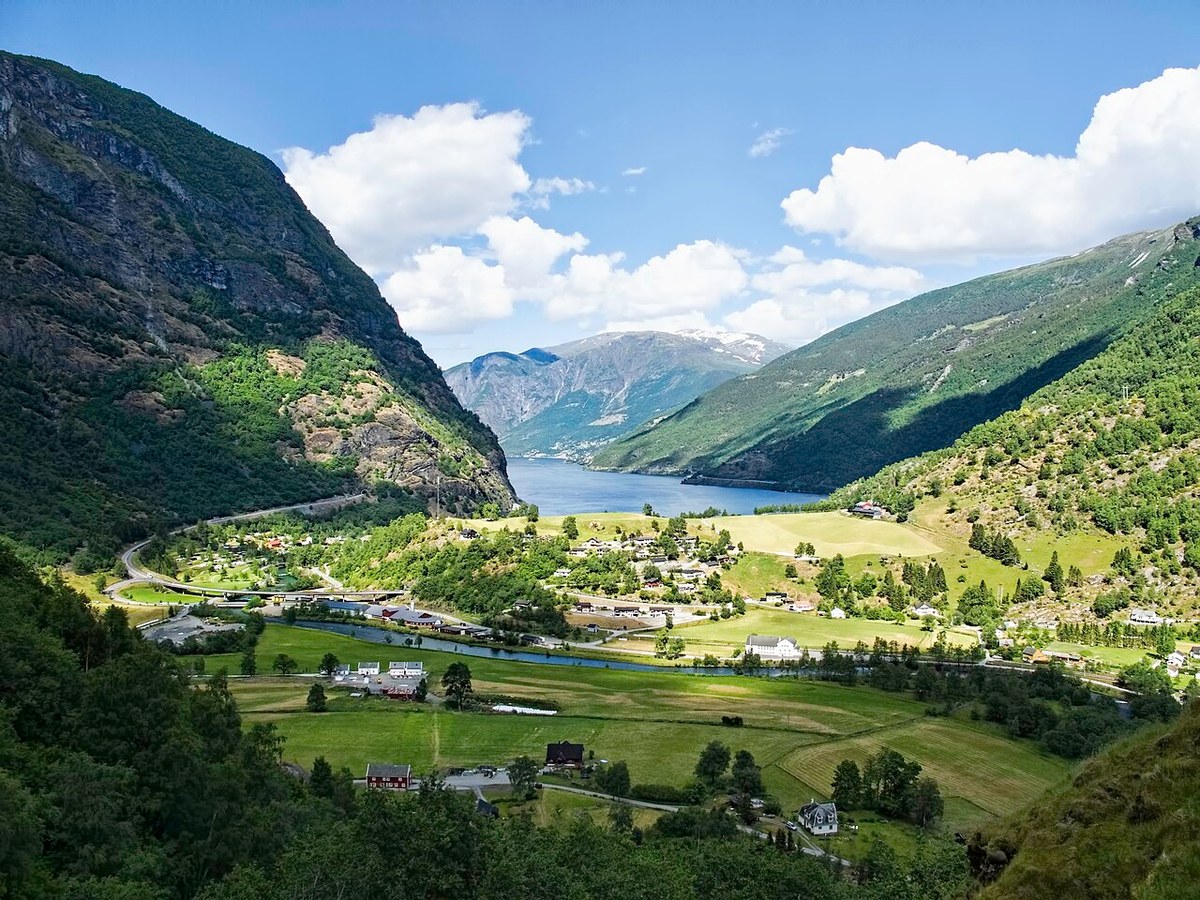
Flom and the road among the mountains
The next stop was Flom, and I especially remembered not so much the town itself as the road to it. Here I finally realized that in Norway, a route is not just a way to get from one place to another, but a separate part of the journey that constantly tries to attract attention to itself. Tunnels give way to streamers, water appears around the bend, then mountains, then a small wooden house that looks like it was specially erected in the most beautiful place in the country. Flom Harbor At some point, I stopped rushing and just started stopping where I really wanted to. I could get out of the car, make coffee, stand by the water for a while and drive on again, completely not worrying that I was behind schedule. Moreover, the less I tried to control everything, the more enjoyable the trip became, because sometimes the best moment of the trip is not a planned attraction, but an accidental stop that you did not intend to make at all. In Flom, I allowed myself to slow down a bit. After several hours on the road, it was especially pleasant to just take a walk, look at the water, sit somewhere with a coffee and feel that you were not running through the list of attractions. However, after a while I looked at my watch again and remembered that I still have the next point on the route, which means it's too early to relax completely.
0
0
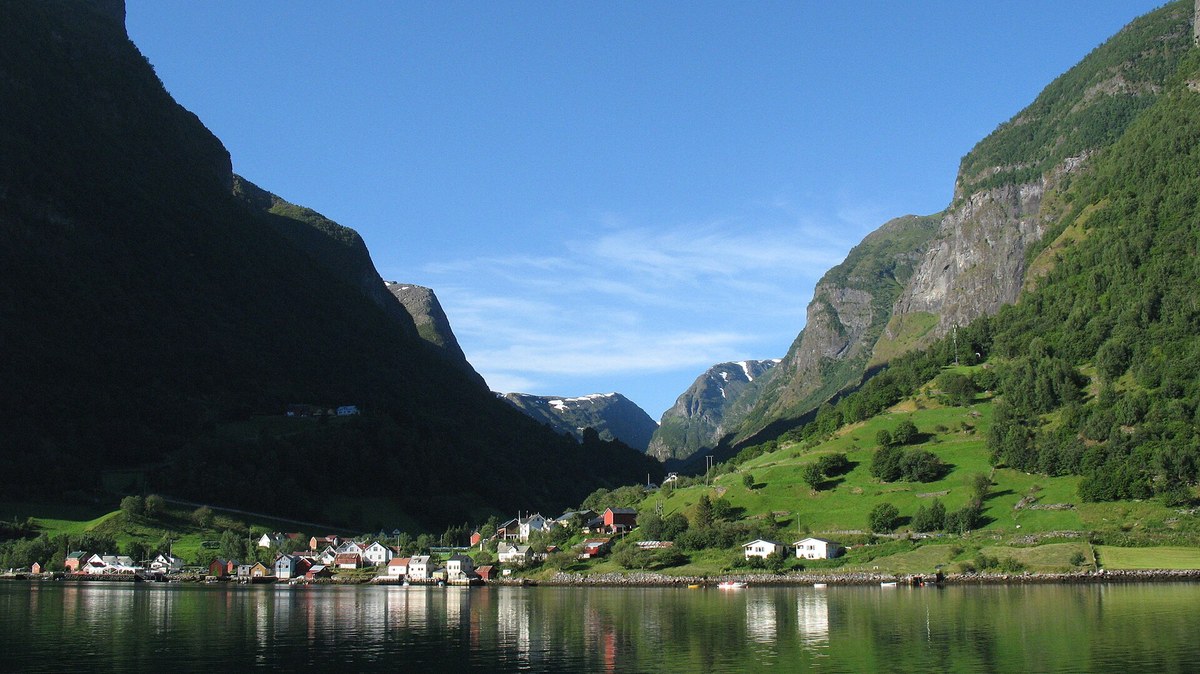
Sognefjord – the first real impression
One of the main points of my route was Sognefjord. I had seen it in photographs many times before the trip, but it turned out to be a completely different feeling in person, because no camera captures this scale. I hope that the emotions I have received will inspire me for more than one year. Sognefjord You stand next to the water, look at the huge rocks and suddenly realize how small you are against the background of all this construction, which nature obviously assembled without any haste. What's the buzz here? I even thought for a moment how much it would cost to move to Norway. How happy the locals are, they can go out into nature at any time. On the way, as I expected, I stopped several times at waterfalls, which in any other country could well become the main local attraction. In Norway, you get used to it quickly: you drive calmly, you notice the sound of water, which, by the way, does not annoy at all, you turn to the side of the road – and there is already a waterfall in front of you. At first, I took pictures of each one in a row, and then I realized that my phone would soon run out of memory altogether, so I had to choose, although it was almost physically painful to delete at least one picture. And I realized that on my next trip I should take a camera or buy a phone with as much memory as possible.
0
0
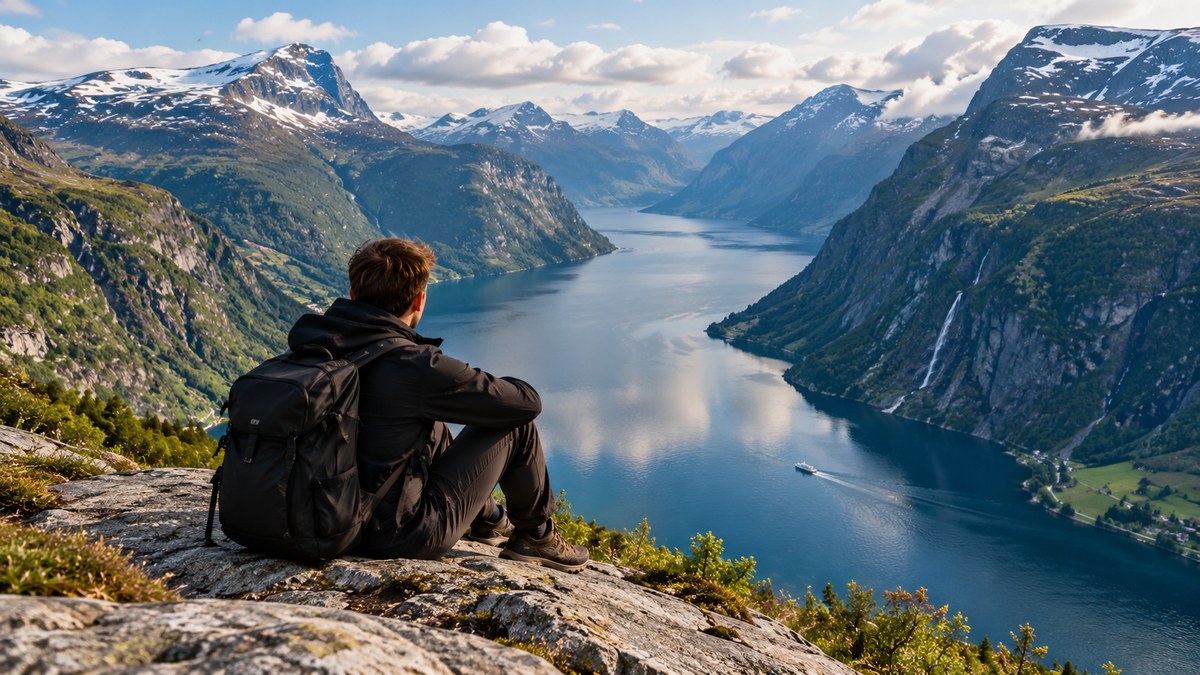
Bergen – the beginning of a great journey
Norway has long lived in my head in the form of photographs with huge mountains, waterfalls and roads that seemed to have been specially laid between the fjords for the sake of beauty. Everything looked so perfect in the pictures that I even suspected a bit of a catch: well, the country can't really be so beautiful, and even in everyday life, without five filters and a special photographer from a helicopter. In the end, I decided to check everything out myself and went on a road trip, where the main plan was to see the fjords, and the backup plan was at least not to get lost on the way. I decided to start the trip from Bergen. The city greeted me with colorful houses, narrow streets, mountains all around, and rain, which the locals seem to perceive about as calmly as we do with ordinary clouds. I came hoping for beautiful sunny photos, but Norway quickly explained to me the local rules: if the sun is out now, it's better to take pictures right away, because in ten minutes everything can change. Bergen Embankment After Bergen, I picked up the car and drove on, towards the fjords, for which the whole trip was conceived. The further away I got from the city, the fewer houses there were and the more mountains, water, tunnels and waterfalls appeared around, and sometimes all this appeared so unexpectedly that I wanted to stop the car literally after every turn. I realized very quickly that in Norway, even an ordinary road can steal half an hour of your time, simply because there's a view nearby that makes it impossible to just say, "Well, we'll see later."
0
0
How much does a trip to Paris really cost?
When I first started calculating how much a trip to Paris would cost, it seemed to me that the most expensive thing here was Paris itself. The city is beautiful, romantic, with the Eiffel Tower, croissants and so many beautiful cafes that the wallet starts to get nervous even before boarding the plane. As a result, it turned out that the main problem is not how much Paris costs, but how quickly I can spend money myself when I see another cafe with beautiful tables on the street. I decided to count the entire trip so that there would be no classic tourist surprise in the style of: "How did it happen that I spent so much when I didn't seem to buy much?" I got a week-long trip, and I tried not to turn it into either a budget marathon with supermarket sandwiches or a vacation for a person who eats breakfast exclusively in restaurants with white tablecloths. It turned out to be quite a common option when you want to see Paris, eat normally, use transport and sometimes indulge in something pleasant. Flight and journey to Paris Of course, the price of tickets affected the cost of the trip the most. I bought them in advance and chose a regular economy class, because I am not yet mentally ready to pay for business class as much as half of my trip costs. Depending on the departure city and dates, the cost may vary greatly, so I would not focus on one specific figure here, but I put about 150-250 euros on a round-trip flight. You also need to get from the airport to the city, and that's when I first remembered that Paris knows how to collect money for literally every move a tourist makes. You can take public transport and spend relatively little, or you can see the queue for the train after a long flight, look at your suitcase and decide that a taxi is a great idea. I chose a more economical option and put about 25-40 euros on the way from the airport and back. Housing: the most serious expense item With housing, everything is a little more complicated, because Paris knows how to surprise. And sometimes it's not the beauty, but the size of the room, when you open the door and realize that you can only put your suitcase in one place, and you'll have to negotiate with him about living together. I was looking for a small hotel or apartment in a convenient area, but not necessarily right next to the Eiffel Tower, because I'm not ready to sell a car for the opportunity to see it from the window every morning. During the week of my stay, I got about 700-1000 euros , and with early booking, you can find cheaper options, especially if you move a little away from the most touristic areas. As a result, housing turned out to be the part of the budget that is the most difficult to save on. You can reduce the cost of food, transportation or entertainment, but if you want a private room in a good area and without adventures with plumbing, you will have to accept that Paris will regularly look into your wallet. Food: here I realized that I don't have the willpower I originally planned to save money on food. In the morning, coffee and a croissant, in the afternoon something simple, in the evening a regular dinner, and no spontaneous restaurants just because they have beautiful chairs. It was a great plan, but it lasted until about the first morning, when I saw a display case with pastries and realized that my financial strategies were over. On average, I spent about 35-50 euros a day on food and coffee, if without any special restaurant frills. This is about 250-350 euros per week, although it can be cheaper if desired, especially if you buy some of the food in the supermarket and do not turn every meal into a gastronomic event. At the same time, I would not recommend coming to Paris and trying to save on everything. Sometimes it's much more pleasant to buy an ordinary baguette, cheese, fruit and a bottle of water, have a small snack in the park and just look at the people around, than to spend all day looking for the cheapest menu and end up spending more effort than money. Subway and walking I mostly explored Paris on foot, because otherwise, it seems to me, it is impossible to feel the city. You can take several metro stops, or you can walk the same couple of kilometers and quite accidentally discover a small street, a beautiful courtyard or a cafe, which for some reason you remember more often than the main attraction of the day. Paris Metro I have allocated about 30-50 euros per week for public transport, depending on the number of trips and selected tickets. But I walked a significant part of the route, so my transport budget did not inflate. Traffic on the Champs-Elysees For me, a taxi is expensive, but I decided to go by car and see the Champs-Elysees. It is one of the most famous and iconic streets in Paris. The avenue is 71 meters wide. After paying the taxi driver 20 euros, I realized that walking around Paris can be a great workout. After a few days, I stopped wondering why my legs reminded me of themselves in the evening, but I could calmly say: "Yes, it's only twenty minutes on foot." Then I would open the map and discover that twenty minutes had somehow turned into seven kilometers. Tickets and attractions You can count on free Paris too, but I still wanted to see more than just the streets. Therefore, I invested money in advance for museums and several paid attractions, including those places where I really wanted to go. Fondation Louis Vuitton Museum It took me about 100-180 euros per week for tickets, museums and entertainment. Everything depends on the program here: if you only go to free places and walk around the city areas, the costs will be small, but if you buy tickets somewhere every day, the budget will start to grow quite quickly. I made a list of places I really wanted to see in advance, and it turned out to be the right decision. Otherwise, in Paris it's easy to fall into the trap of "well, since I'm here," after which the banking app starts looking at you with condemnation. Souvenirs and small purchases At first, I didn't consider this expense item at all, because I sincerely believed that I would not buy anything. Paris, as it turned out, was also aware of my plan and just calmly waited until I entered the first store. As a result, I spent about 50-100 euros on small purchases, souvenirs, postcards, some small things and gifts. And it's also quite modest, because Paris knows how to explain very convincingly why you absolutely need this cup, notebook, box of sweets or magnet, even though there is already a collection of things at home that I once also intended not to buy. How much does a week in Paris cost in the end? If you put all the expenses together, my trip for the week turned out to be something like this: 150-250 euros for flights, 25-40 euros for travel from the airport, 700-1000 euros for housing, 250-350 euros for food, 30-50 euros for transport, 100-180 euros for sightseeing and about 50-100 euros for small purchases. As a result, I would focus on about 1300 to 1900 euros per person per week, if traveling is comfortable, but without luxury. With a very economical approach, the amount can be reduced, especially due to housing, food and flight costs, and if you choose a good hotel in the center, often go to restaurants and do not look at the prices for excursions, the budget will easily go much higher. Is it possible to travel to Paris cheaper? Of course it is possible, and I would even say that Paris does not require a huge fortune if you think about the route a little in advance. The most tangible ways to save money are to buy tickets in advance, choose accommodation not in the very center, walk more, use public transport, buy some food in stores and book popular attractions in advance. Eiffel tower But personally, I realized one thing.: Don't turn your trip into a competition to save money. If I came to Paris, walked twenty thousand steps, looked at the Eiffel Tower, looked into the Louvre, sat with coffee in the evening somewhere on a cozy street and ate a normal croissant, I want to remember that, not that I saved three euros for breakfast. My advice is very simple: before traveling, it is better to determine the amount that you are really willing to spend, add to it a small reserve for unforeseen expenses, and only then go quietly. Because Paris is beautiful precisely when you can walk through its streets and not count every five minutes how much is left on the map, and if there is still money left after the trip, consider that you have completed a separate Parisian quest.
3
0
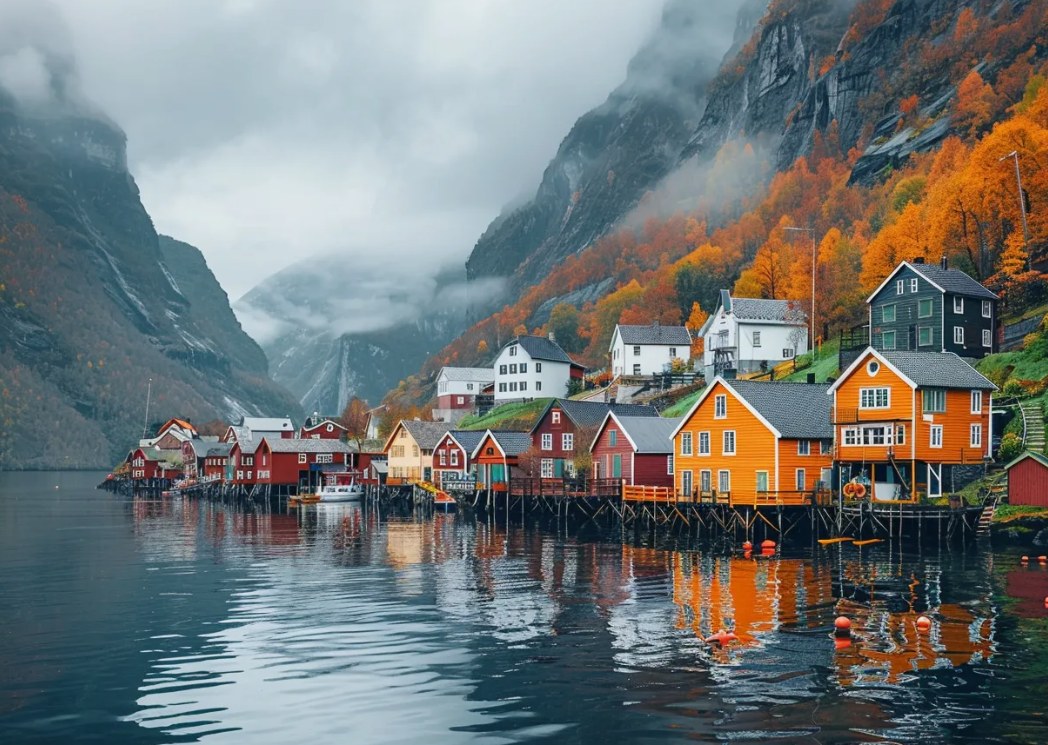
Как одна случайная остановка в Норвегии изменила мое путешествие
Я ехал по Норвегии уже несколько часов и честно мечтал только об одном – скорее добраться до гостевого дома, бросить рюкзак, принять душ и наконец перестать смотреть на дорогу, которая после очередного поворота снова обещала мне гору, водопад и очередной фьорд. Норвежские пейзажи прекрасны, спору нет, но через несколько часов за рулём я поймал себя на мысли, что мой организм уже перестал понимать разницу между «вау, как красиво» и «где бы мне выпить кофе». Погода тоже решила не церемониться: сначала пошёл мелкий дождь, потом он стал серьёзнее, а потом небо вообще выглядело так, будто кто-то сверху случайно оставил открытым кран. Я увидел небольшой съезд с дороги и решил остановиться буквально на пять минут. Никакого великого плана у меня не было, достопримечательность я не искал, маршрут менять не собирался и даже фотоаппарат не доставал, потому что в тот момент больше всего на свете мне хотелось размять ноги и найти в машине сухую куртку. Я припарковался, вышел под дождь и уже собирался возвращаться обратно, когда заметил между деревьями воду, а за ней – горы, которые почти полностью скрывались в тумане. И вот тут произошло то, ради чего, наверное, вообще стоит иногда сбиваться с маршрута. Я постоял несколько минут под дождём, смотрел на этот совершенно неожиданный пейзаж и вдруг понял, что никуда пока не хочу ехать. Пять минут превратились в час Я спустился чуть ниже по тропинке, хотя сначала собирался только посмотреть издалека. Конечно, обувь промокла практически сразу, потому что человек, который говорит себе «я только немного пройдусь», обычно заканчивает именно так – с мокрыми носками, грязными брюками и абсолютно счастливым лицом. Через несколько минут я уже стоял у воды и пытался фотографировать пейзаж, который выглядел так, будто его специально собрали для заставки к фильму о путешествиях. Самое интересное было в том, что вокруг почти никого не оказалось. Я привык, что самые известные места в путешествиях часто приходится делить с десятками людей, которые одновременно пытаются сделать одну и ту же фотографию, поэтому эта тишина показалась мне почти роскошью. Был только дождь, шум воды, ветер и горы, которые периодически исчезали в тумане, а потом снова появлялись, словно специально дразнили меня. Я просидел там гораздо дольше, чем собирался, и именно в этот момент впервые подумал, что мой тщательно составленный маршрут, возможно, не так уж и важен. Я ведь ехал в Норвегию ради впечатлений, а не ради того, чтобы поставить галочки напротив заранее выбранных точек на карте. Забавно, но иногда именно тогда, когда перестаёшь куда-то спешить, путешествие наконец начинает происходить по-настоящему. Разговор, которого не было в моих планах Когда я уже собирался возвращаться к машине, рядом остановился небольшой автомобиль. Из него вышла пожилая пара, и мужчина, заметив, что я стою у воды с фотоаппаратом, спросил, понравилось ли мне это место. Я ответил, что случайно сюда заехал, и он улыбнулся так, будто услышал именно то, что хотел услышать. Мы разговорились, и он рассказал мне о небольшой дороге неподалёку, которую я вообще не планировал включать в маршрут. По его словам, если у меня есть время, мне стоит проехать ещё немного дальше, потому что там есть место, откуда открывается совсем другой вид на фьорд. Он даже показал мне направление на карте, а я в тот момент ещё не знал, что этот короткий разговор изменит мои планы на следующие два дня. Я поблагодарил его, вернулся в машину и какое-то время просто сидел за рулём. В голове у меня было две мысли: первая – что я промок и хочу кофе, а вторая – что ехать дальше по первоначальному маршруту почему-то уже совершенно не хочется. В итоге я включил навигатор, посмотрел на предложенную им дорогу и сказал сам себе: «Ну хорошо, пять минут мы уже сегодня нарушили, почему бы не нарушить ещё пару планов». Норвегия, которую я не планировал увидеть Следующие несколько часов я ехал практически без остановок только потому, что каждые несколько километров мне хотелось остановиться снова. Дорога оказалась гораздо красивее той, по которой я собирался ехать изначально, а самое смешное заключалось в том, что ещё утром я был уверен, что мой маршрут продуман идеально. К вечеру я понял, что до запланированного гостевого дома уже не успеваю, поэтому пришлось искать другое место для ночёвки. Здесь путешествие решило окончательно проверить мой характер: свободных номеров почти не было, интернет в телефоне периодически исчезал, а я стоял на парковке под дождём и пытался одновременно найти жильё, не потерять машину из виду и не наступить в очередную лужу. В итоге я нашёл небольшой гостевой дом, который оказался гораздо уютнее того места, где собирался остановиться изначально. Хозяин поставил передо мной кружку горячего кофе, спросил, откуда я приехал, и через десять минут мы уже обсуждали дорогу, погоду и места, которые стоит посмотреть неподалёку. Я сидел у окна, смотрел, как дождь стучит по стеклу, и думал о том, что если бы я не решил остановиться возле того случайного съезда, этого вечера вообще могло бы не быть. Иногда лучший маршрут начинается с ошибки На следующий день я уже не пытался строго придерживаться своего первоначального плана. Я оставил себе только несколько обязательных точек, а всё остальное решил выбирать по дороге, и именно тогда путешествие стало совершенно другим. Я начал обращать внимание на небольшие указатели, просёлочные дороги, деревни, смотровые площадки и места, которые раньше наверняка проехал бы мимо, потому что спешил к следующей достопримечательности. Конечно, не каждая такая остановка оказывалась удачной. Один раз я свернул на дорогу, которая на карте выглядела очень перспективно, а через двадцать минут понял, что еду неизвестно куда и разворачивать машину на узком участке дороги будет отдельным приключением. Но даже такие моменты теперь воспринимались иначе, потому что я уже не злился на то, что что-то пошло не по плану. Когда поездка закончилась и я вернулся домой, фотографии из Норвегии я пересматривал несколько раз. И знаете, что оказалось самым неожиданным? Самыми ценными для меня стали вовсе не фотографии тех мест, которые я заранее отметил в маршруте, а снимки той самой случайной остановки, где я промок, испачкал обувь и совершенно неожиданно решил изменить свои планы. Теперь я вообще стараюсь не бояться таких остановок. Иногда мы слишком старательно планируем путешествие, расписание, гостиницы, дороги и достопримечательности, забывая, что самые сильные впечатления часто появляются именно там, где в нашем плане написано большое и совершенно скучное слово «ничего». И если бы меня сейчас спросили, какой момент той поездки я помню лучше всего, я бы, наверное, даже не стал долго думать. Я бы рассказал про дождь, маленький съезд с дороги, мокрые ботинки, чашку кофе и несколько часов, которые вообще не должны были случиться, потому что именно одна случайная остановка однажды показала мне Норвегию совсем с другой стороны.
1
0
No reviews yet
Nothing saved yet
No trips yet
No scheduled stories
