

Egypt's White Desert
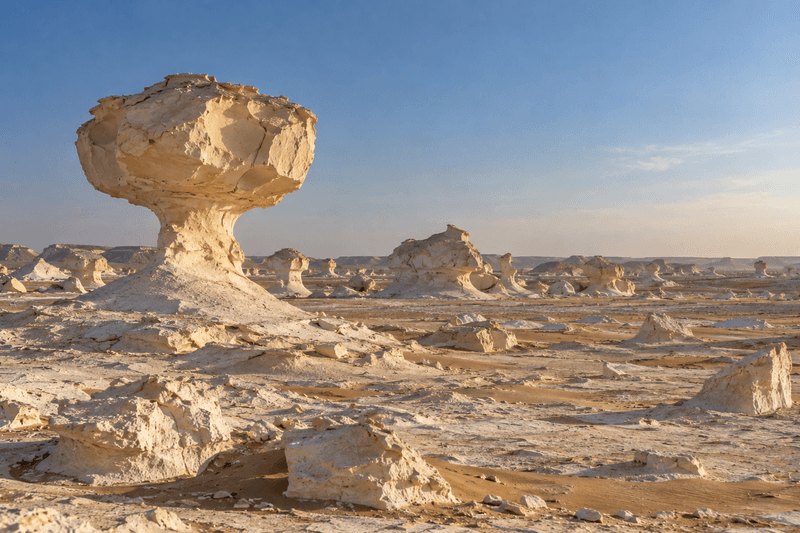
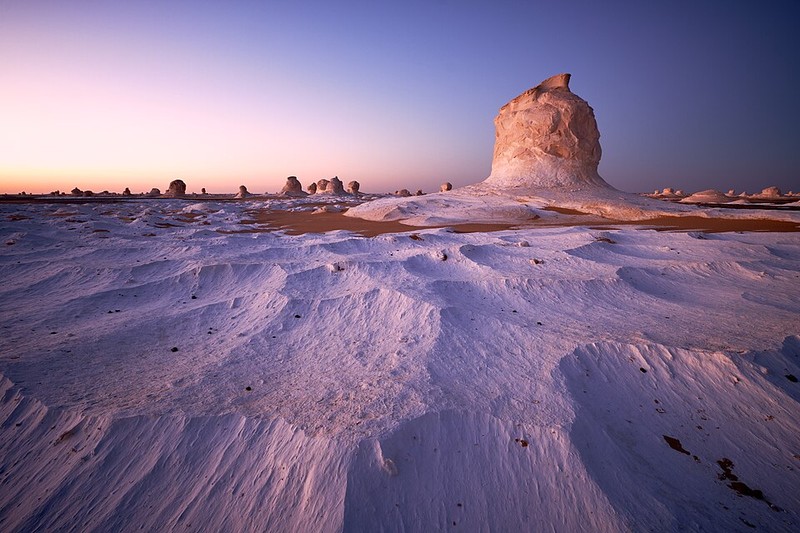
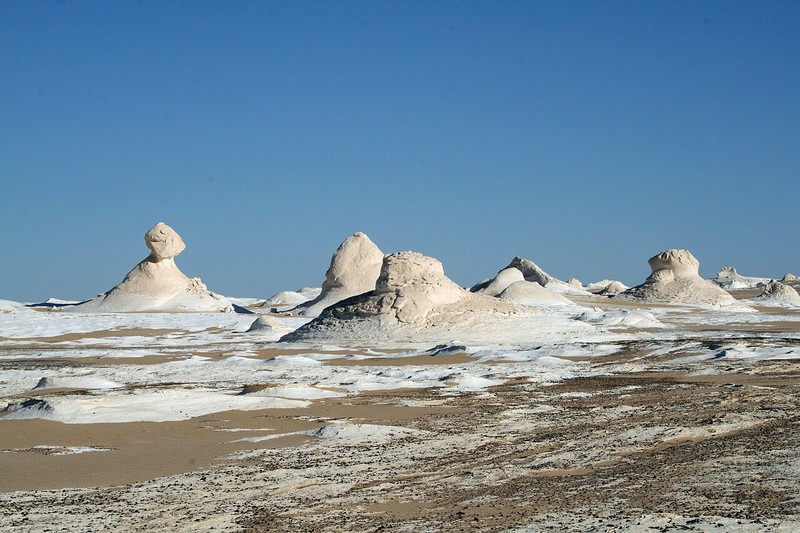
I travelled deep into the Egyptian Sahara expecting endless sand and dunes. But the White Desert was nothing like the desert I had imagined. Huge white chalk formations rise from the pale sand, resembling mushrooms, towers and fantastical figures. It feels as though giant sculptures have been left in the middle of an empty plain.
The White Desert lies in Egypt's Western Desert, near Farafra Oasis. It is one of the country's most unusual natural attractions, famous for its striking white formations shaped by wind and erosion.
Stone figures sculpted by nature
This unusual landscape formed from ancient marine deposits. Over thousands of years, wind carried sand across the surface, gradually wearing away softer rock and leaving behind strange shapes. The result is a collection of formations resembling broad-capped mushrooms, stone columns and abstract sculptures.
Some formations stand alone, while others gather in clusters. Walking around them is especially rewarding because their outlines change with every viewpoint. One rock may resemble an animal from one side and a giant flower from another. Against the sand, the white shapes stand out dramatically.
The landscape changes colour throughout the day. Under the midday sun, the rocks appear almost snow-white, while towards evening they take on cream and golden tones. Soft shadows reveal their contours and make an ordinary walk feel like a visit to a natural sculpture gallery.
Sunset and a starry sky over the Sahara
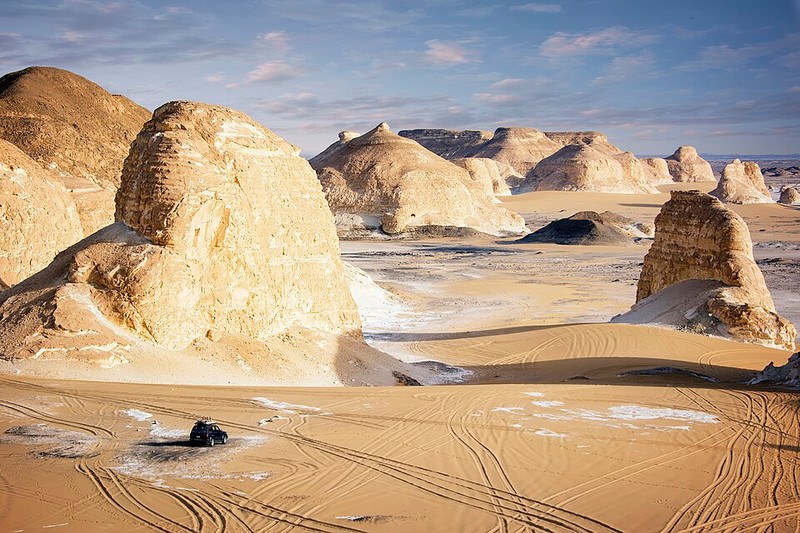
The White Desert is particularly impressive near sunset. The sun sinks towards the horizon, the sand takes on warmer colours and the pale rocks gradually turn pink and honey-gold. The surroundings become quiet, and the vastness of the landscape feels even more striking.
Some travellers stay overnight at a desert camp. After dark, the rocks become silhouettes beneath a wide starry sky. When the weather is clear and dust levels are low, the distance from city lights makes it possible to see countless stars and the Milky Way. In the morning, the first rays of sunlight transform the shapes and colours once again.
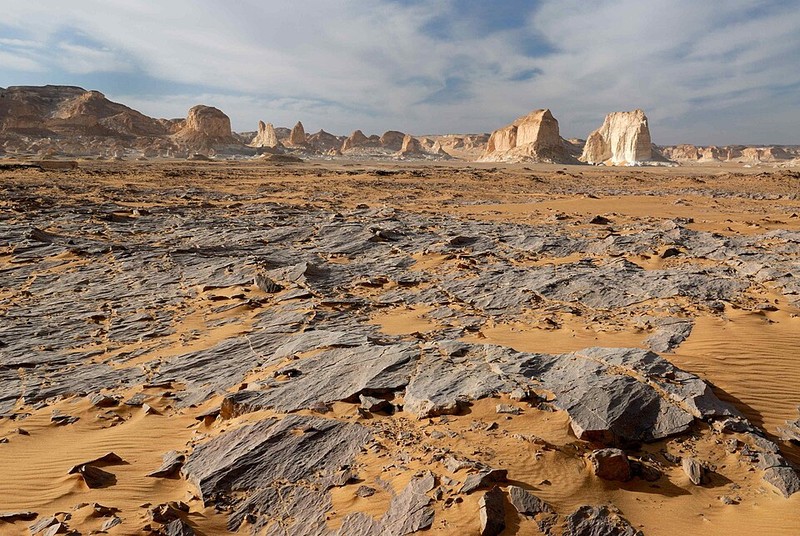
A visit to the White Desert is often combined with the Black Desert, where dark rocky hills replace the pale formations. The contrast between the two landscapes reveals the remarkable variety of Egypt's Sahara.
Tips for travellers
Excursions usually start from Bahariya Oasis, where local guides organise trips in four-wheel-drive vehicles. Allow a full day to explore the White Desert or choose an itinerary with an overnight stay. Before travelling, check the national park's current visiting rules and camping arrangements.
Bring plenty of drinking water, a hat, sun protection and comfortable shoes. Protecting yourself from the sun is essential, and warm clothing is useful for an overnight stay because temperatures can drop noticeably after sunset. Avoid climbing fragile formations, leaving rubbish or taking stones as souvenirs.
The White Desert is memorable for its unusual rock shapes, silence and sense of connection with nature. It reveals a different side of Egypt, far beyond pyramids, ancient temples and seaside resorts. Here, the Sahara itself becomes an open-air museum.



Comments