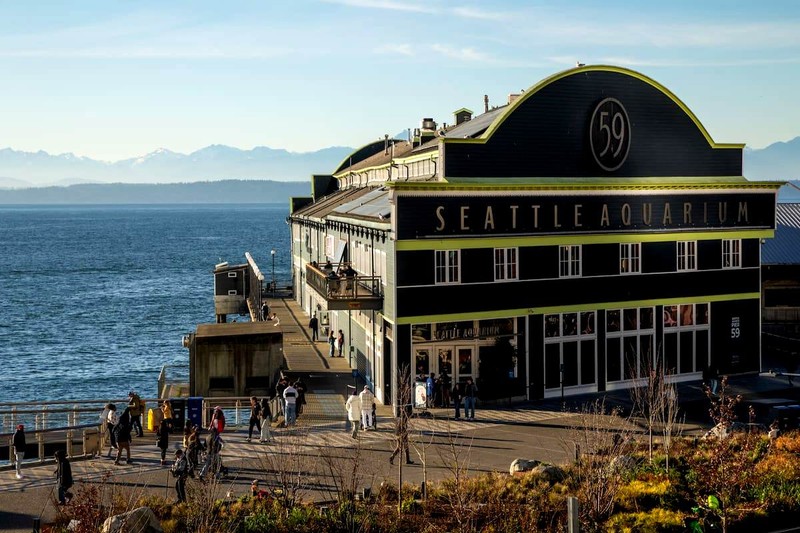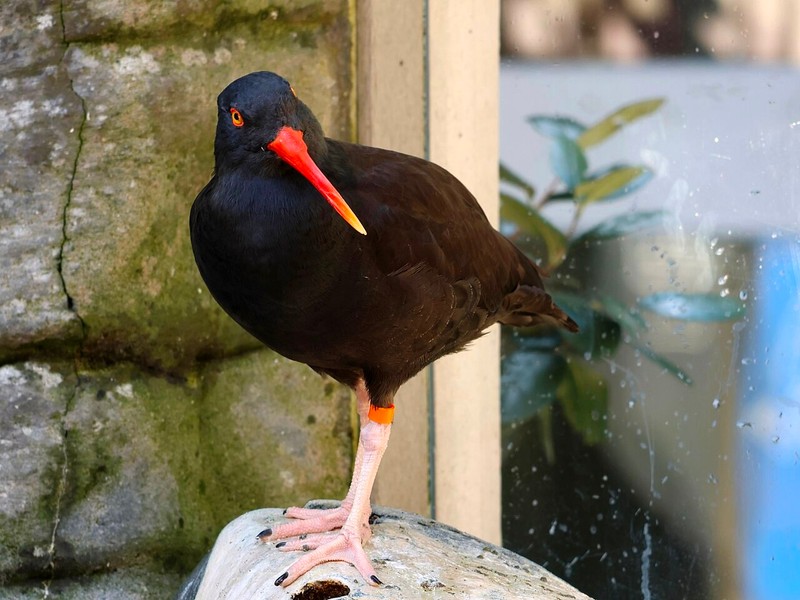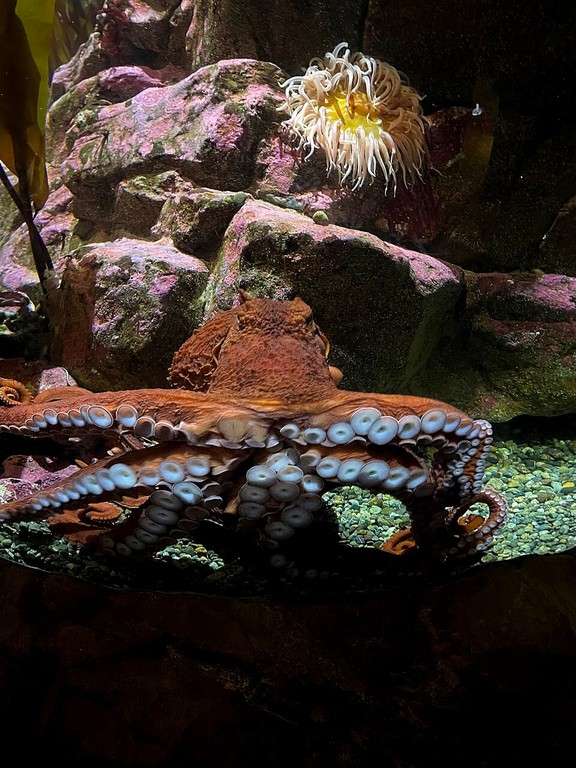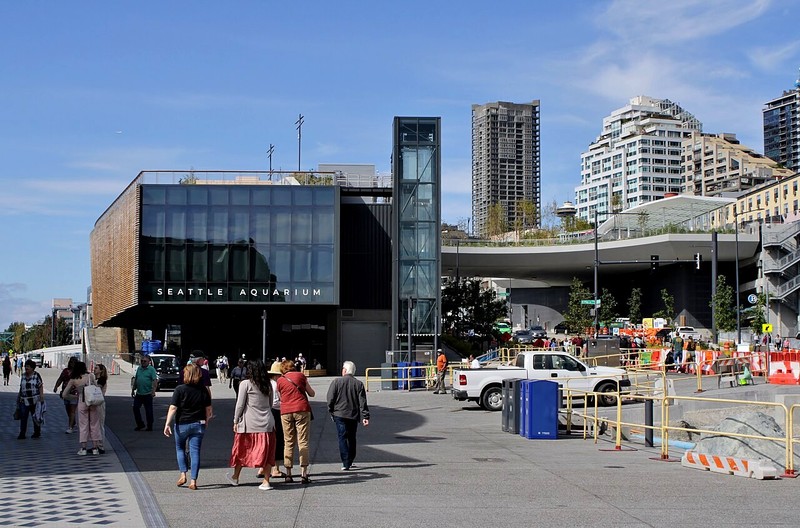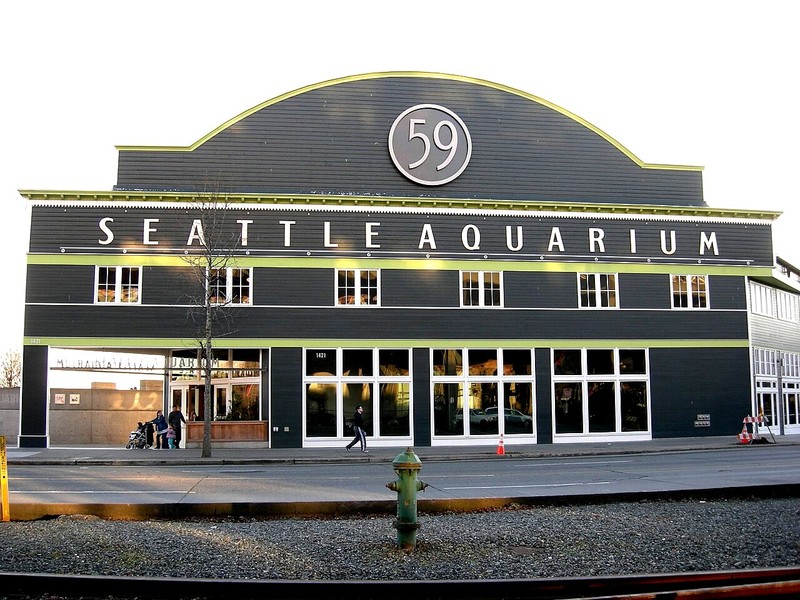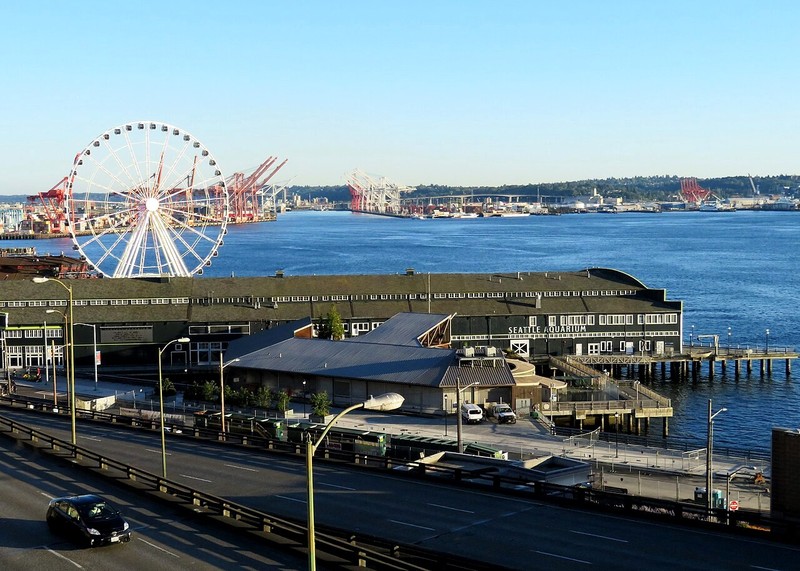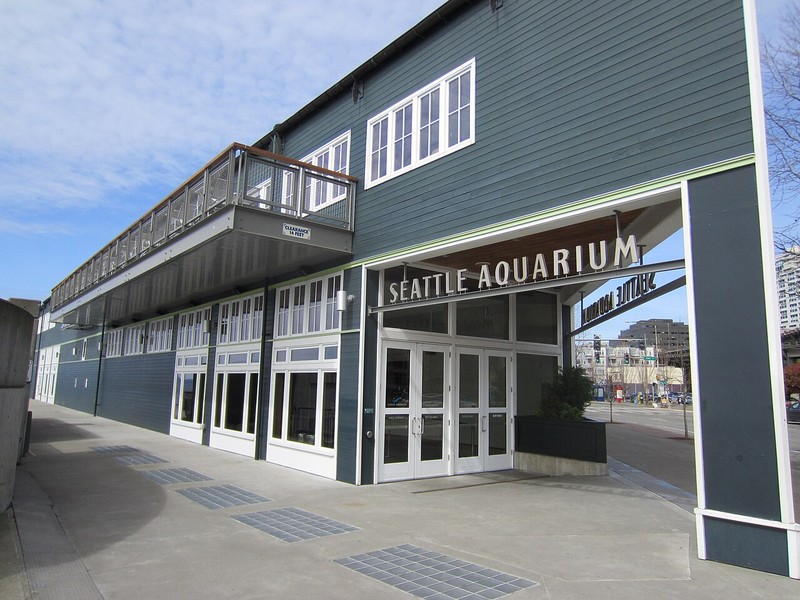

The Seattle Aquarium is called the main resource for exploring the marine environment and eco-education. The attraction is open at Piers 59 and 60, the Ocean Pavilion on the Elliot Bay waterfront. It is the largest public aquarium in Washington State.
History of creation
Plans to create an Aquarium in Seattle, which could replace the private aquatic equivalent of the zoo, were approved by voters during a vote in 1968. In 1971, the City Council allocated a plot that was located next to Golden Gardens Park, but the public did not like it. Because of this, the decision was reversed, and the construction of the new attraction was moved to the north side of the pier.
The opening of the Aquarium in Seattle was part of the reconstruction of the Alaska Way embankment. Construction work began in 1975 by driving piles into the seabed to provide reliable support for the future structure. Then the project was suspended. The public Aquarium opened on May 20, 1977, on the shoreline to teach visitors about Puget Sound and the Pacific Ocean. On this day, salmon was released into the bay, and a 3-day festival was held on the embankment.
Short description
On the first day of the opening, more than 1,500 people visited the Aquarium in Seattle. This gave hope that the place would become popular. $5.4 million was spent on its opening. The choice of exhibits demonstrating the diversity of the ecosystem of the Pacific Northwest was not accidental. They were developed with the support of scientists, including academician Dixie Lee Ray, head of the Pacific Science Center, who was elected governor of Washington in 1977.
The exhibits occupy 3 buildings of the complex. In 2007, the public aquarium expanded and new exhibits appeared. In addition, a cafe and a souvenir shop have been opened for visitors, where they can come after visiting the main sites.
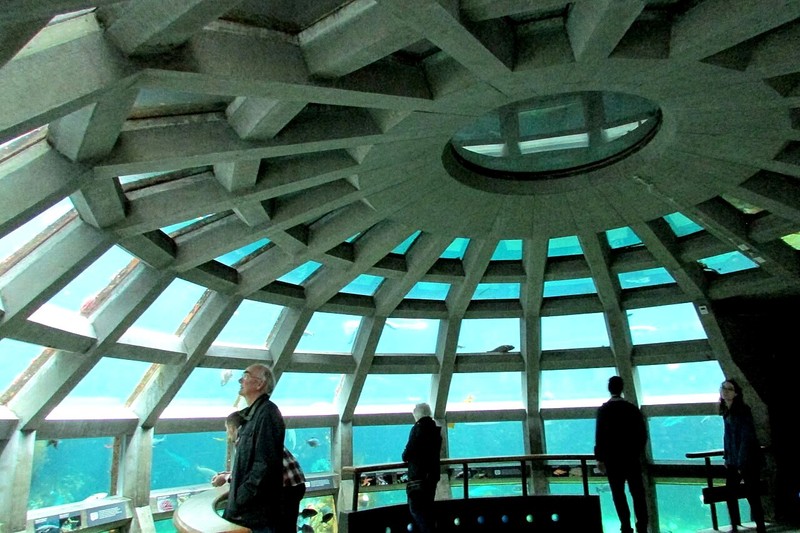
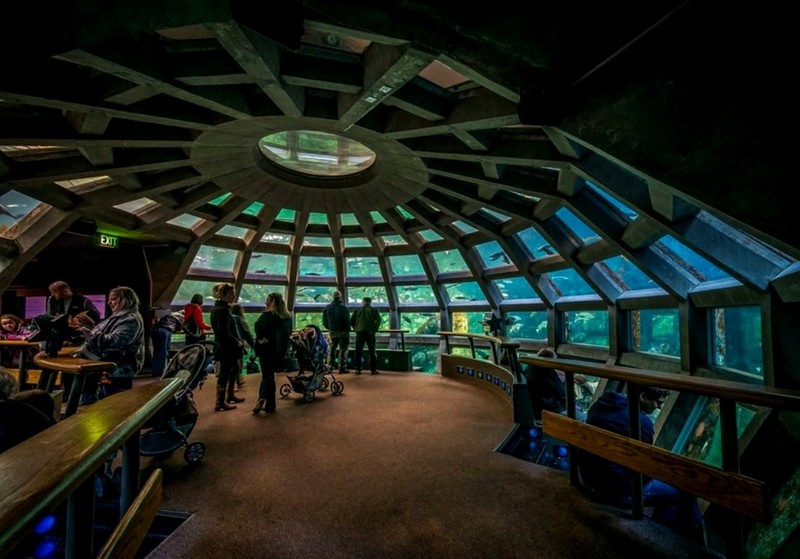
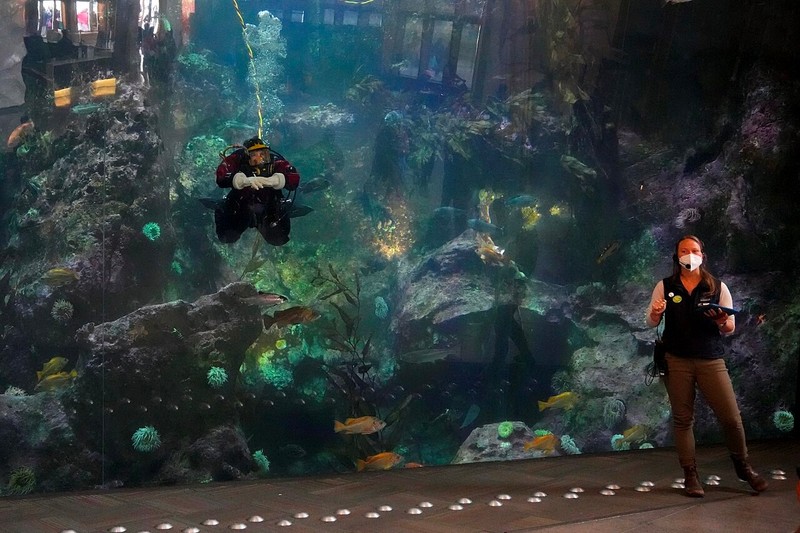
- The Underwater Dome collected the species found in Puget Sound. The exposition is an almost transparent underwater room, rotated 360 degrees. There is a 400,000 gallon tank inside. There are stingray, salmon, flounder, shark, sea bass and sturgeon.
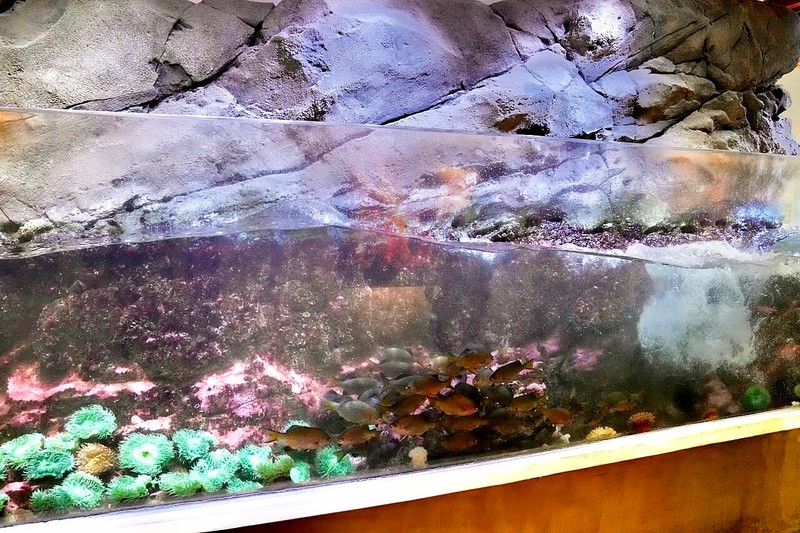
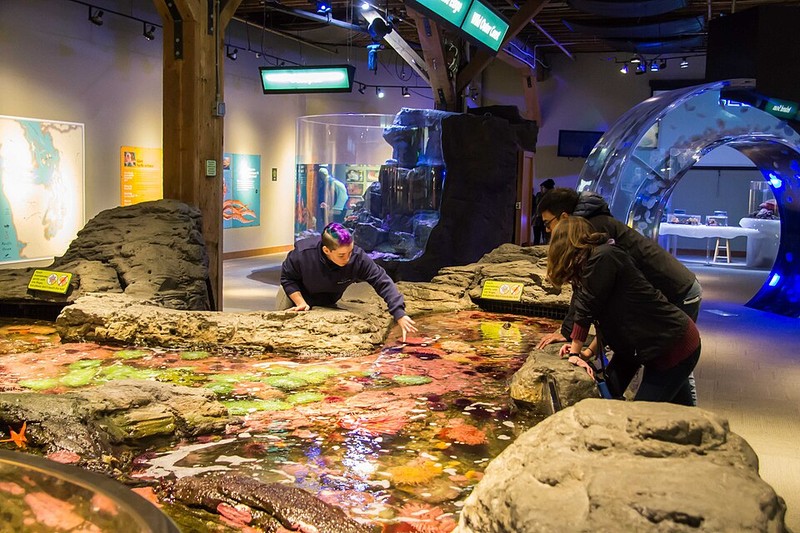
- The exhibition "Life on the Edge" consists of 2 large pools, which reflect marine life from tidal zones. You can see sea urchins and sea cucumbers.
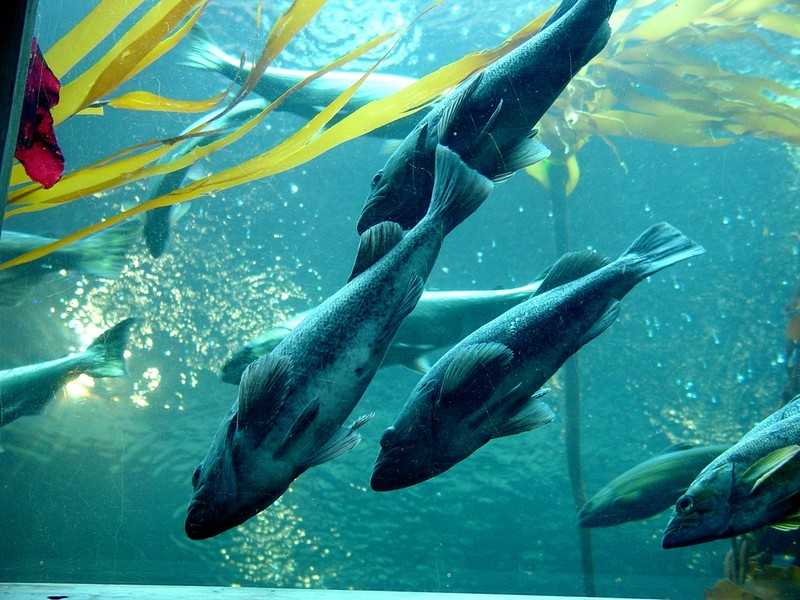
- The volume of the aquarium "Windows into the waters of Washington" is 120,000 gallons. The ecosystem of the nearby Puget Sound is reproduced here. You can study the behavior of starfish, rock fish, and salmon.
- The name "Breaking Waves" immediately indicates the essence of the exhibit. We are talking about a 12-meter breakwater that mimics the Washington coast from the tidal zone to a depth of about 1.5 meters. In such conditions, snails, sea saucers and holothurians take root well.
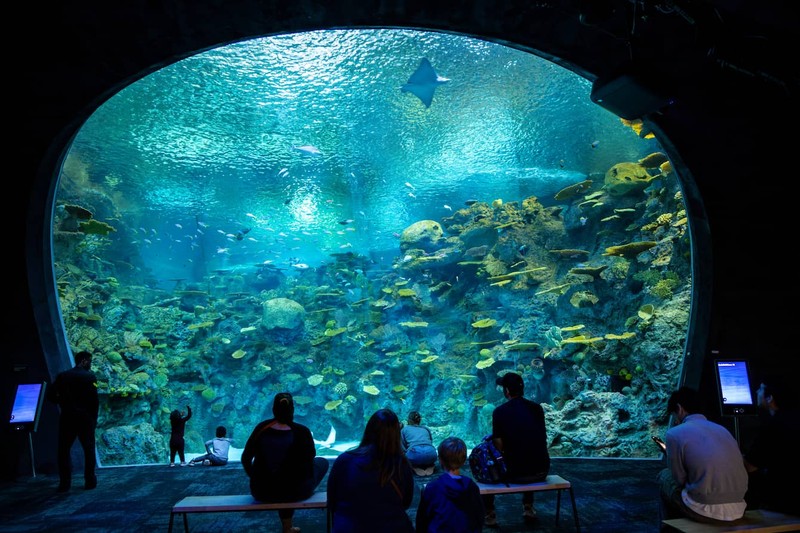
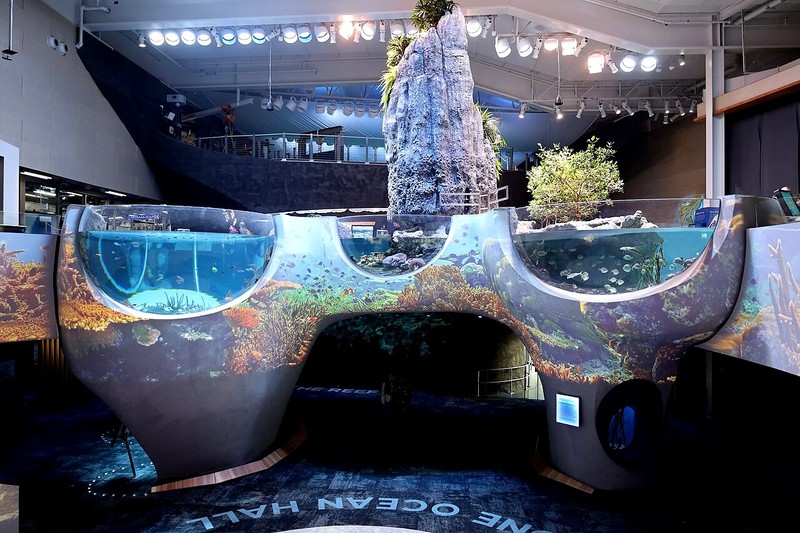
- In the Pacific Coral Reef, you can see tropical fish, coral formations, and sea anemones. Visitors say that it is especially interesting to look at the exhibition in inclement weather.
Otters are considered to be the highlight of the Seattle Aquarium collection. Schoolchildren especially loved them. The administration of the organization drew attention to this, and a live broadcast was installed on the site of the attraction, thanks to which users can watch the life of otters at any time.
In addition to viewing exhibitions, visitors can feed marine life. Employees of the city aquarium conduct research, launch educational programs, organize presentations, backstage tours, and in the summer there is a children's camp. Meetings, private parties, and even weddings can also be held in this place.
How to get
You can get to the Aquarium in Seattle by bus from No. 1,2,3,4, 5,7, 10, 11, 12, 13, 24, 33. The water amusement park is located near stop D on the shuttle route along the embankment. Alternatively, you can consider taking a taxi or a private/rented car. A garage with more than 800 parking spaces is open next to the landmark, and paid parking is available on Alaskan Way.
Gallery