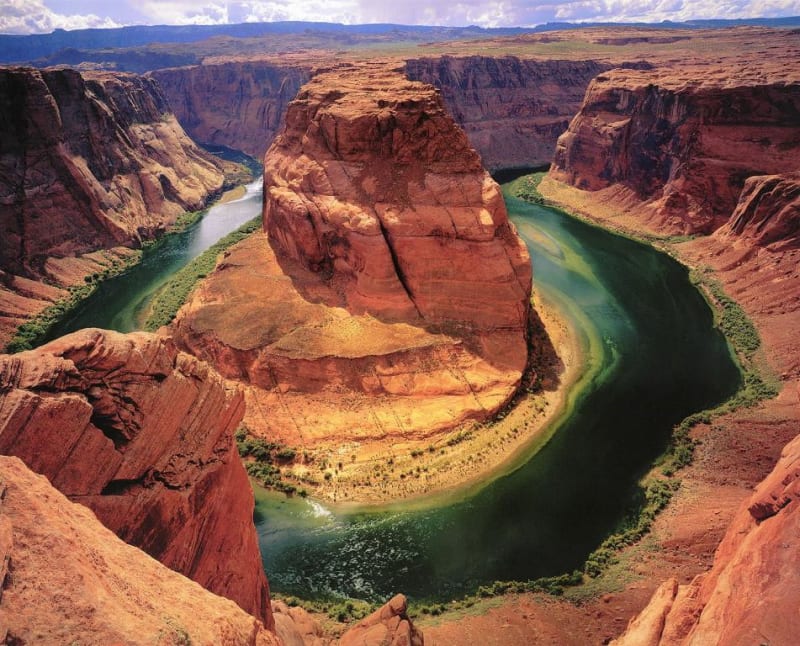
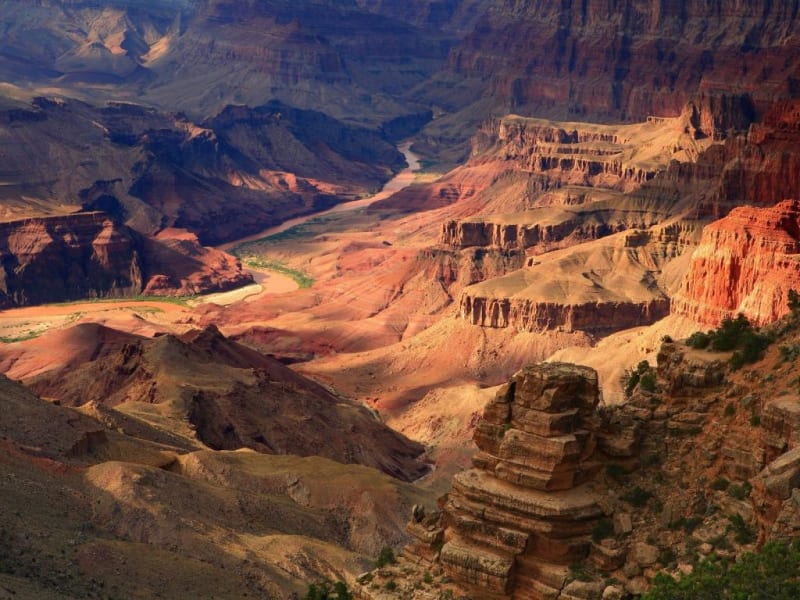
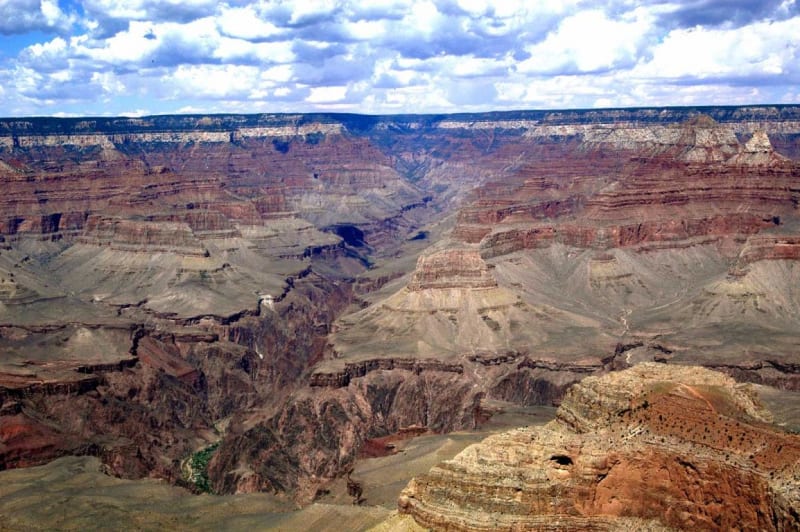
The Grand Canyon is one of the most spectacular natural landmarks in the United States, located in northern Arizona. This immense gorge cuts through the Colorado Plateau and is famous for its colourful rock walls, deep side canyons and striking geological formations. Millions of years of erosion have created a landscape whose scale is impressive even from the most popular viewpoints.
Many of the best-known panoramas lie within Grand Canyon National Park, established in 1919. The canyon was designated a UNESCO World Heritage Site in 1979 because of its exceptional geological importance and remarkable natural scenery.
Size and geography
The Grand Canyon stretches for about 446 kilometres along the Colorado River. At its widest points, the distance between the rims reaches roughly 29 kilometres, while its depth exceeds 1.6 kilometres in some places. Its appearance varies considerably depending on the viewpoint.
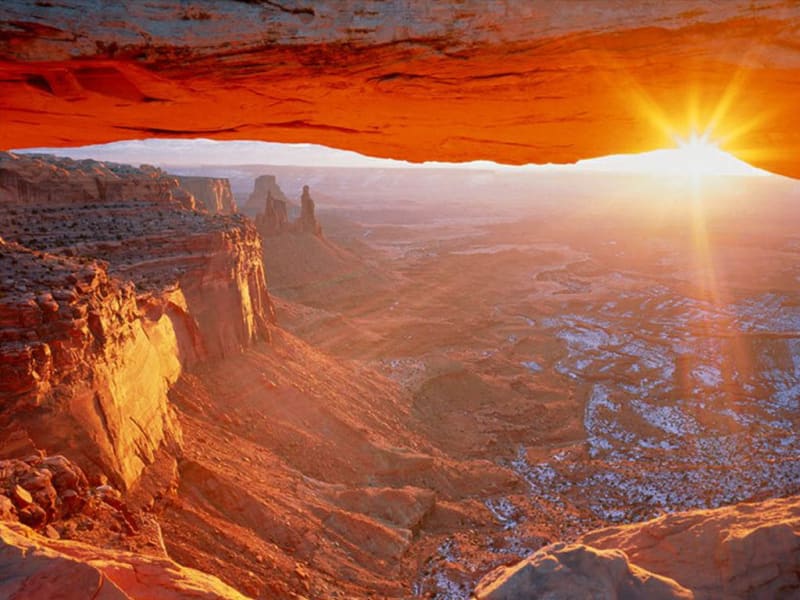
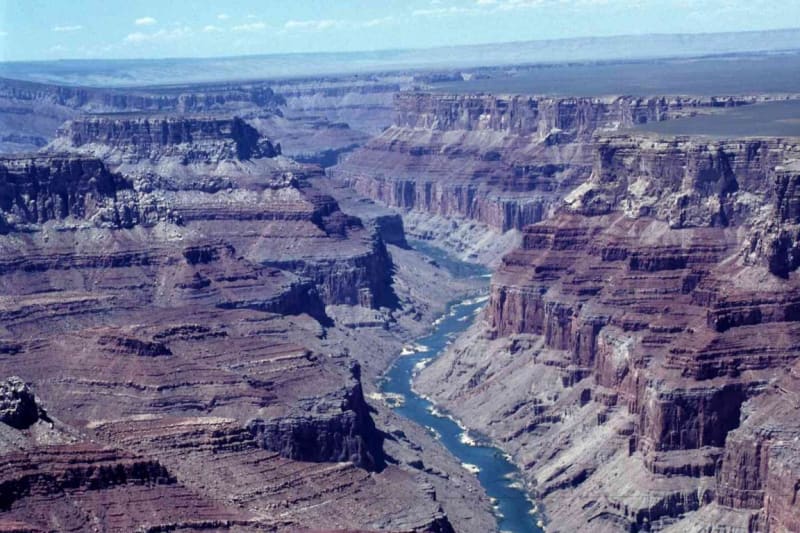
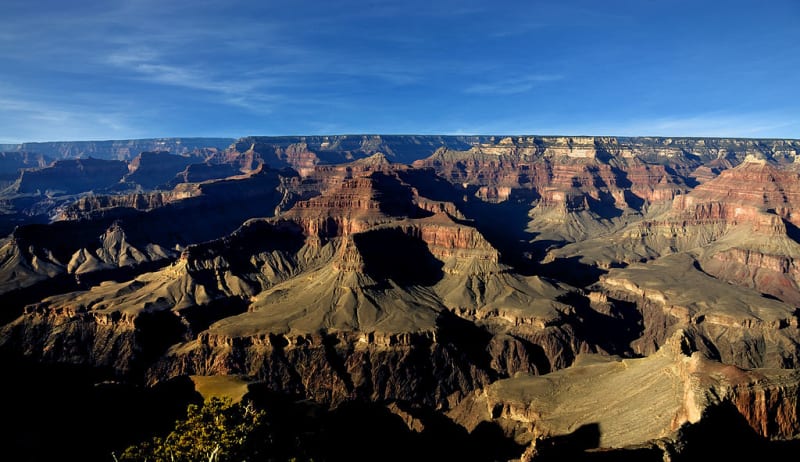
The Colorado River flows along the canyon floor, cutting through layers of rock. From above, the landscape can seem still, but erosion, sediment movement and changes in the river channel continue. Sunrise and sunset are especially beautiful, as angled light reveals the depth and texture of the cliffs.
How the Grand Canyon formed
The canyon developed through the uplift of the Colorado Plateau and the long-term action of the Colorado River. Water, wind, temperature changes and rockfalls gradually deepened and widened the gorge. The modern landscape took shape over millions of years, while some rock layers exposed in its walls are much older than the canyon itself.
Some exposed rocks are around two billion years old. They reveal clues about the early history of Earth's crust. Younger layers lie above them and display shades of red, orange, yellow, grey and brown. Together, they form a geological record of ancient seas, deserts, river systems and other environments.
South Rim
The South Rim is the most visited part of the national park. It has major visitor facilities, viewpoints, walking paths and historic buildings. It is generally accessible throughout the year, although weather and road conditions can affect particular activities.
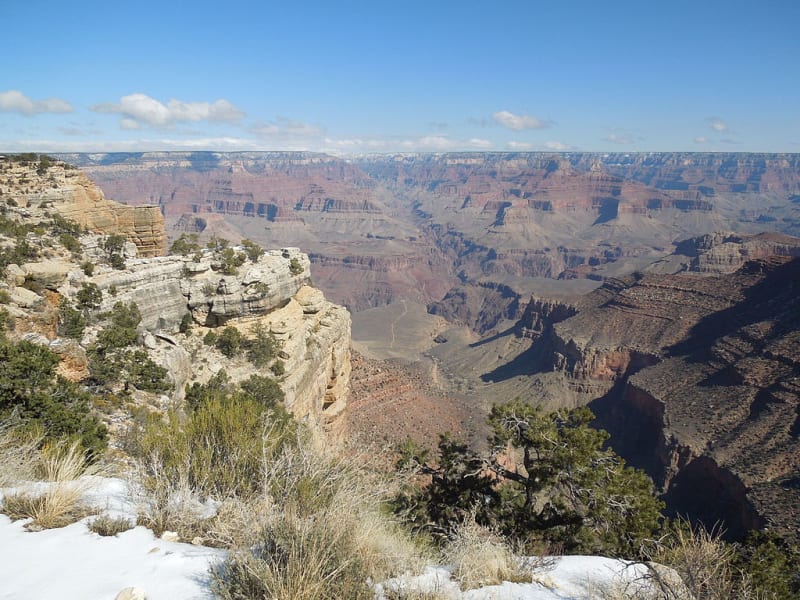
Mather Point is one of the best-known viewpoints, offering broad views across the canyon and its side gorges. At sunrise, the first rays of sunlight gradually turn the rocks pink, gold and violet. Yavapai Point is another popular stop, especially for viewing the canyon's geological layers. A geology museum nearby explains how the Colorado Plateau developed.
Desert View and the eastern canyon
Desert View lies at the eastern end of the South Rim and offers views of the Colorado River and the surrounding plateau. Its best-known landmark is Desert View Watchtower, built in the 1930s and designed by architect Mary Colter. Its design draws inspiration from historic structures of the American Southwest.
From the tower and nearby overlooks, visitors can see broad sections of the canyon and distant desert and mountain landscapes. It is a useful stop for travellers entering from eastern Arizona or following scenic roads through the region.
North Rim
The North Rim sits at a higher elevation and receives far fewer visitors than the South Rim. It has more forest, cooler summer conditions and viewpoints that can feel more secluded. Its vegetation and climate differ from the drier areas to the south.
The North Rim operates seasonally. Snowfall and winter conditions can close roads and visitor facilities, so check the current status before travelling. When open, it offers a different perspective on the canyon, with views into deep side gorges and a quieter atmosphere.
West Rim and Skywalk
Grand Canyon West is outside the national park and is managed by the Hualapai Tribe. It is a separate visitor destination with its own facilities and rules, rather than another section of the national park's South or North Rim.
Its main attraction is the Skywalk, a viewing structure with a transparent floor extending beyond the canyon rim. Visitors can look through the glass towards the cliffs below. Access is generally sold separately, and photography rules and visitor restrictions should be checked before arrival.
The Colorado River and hiking trails
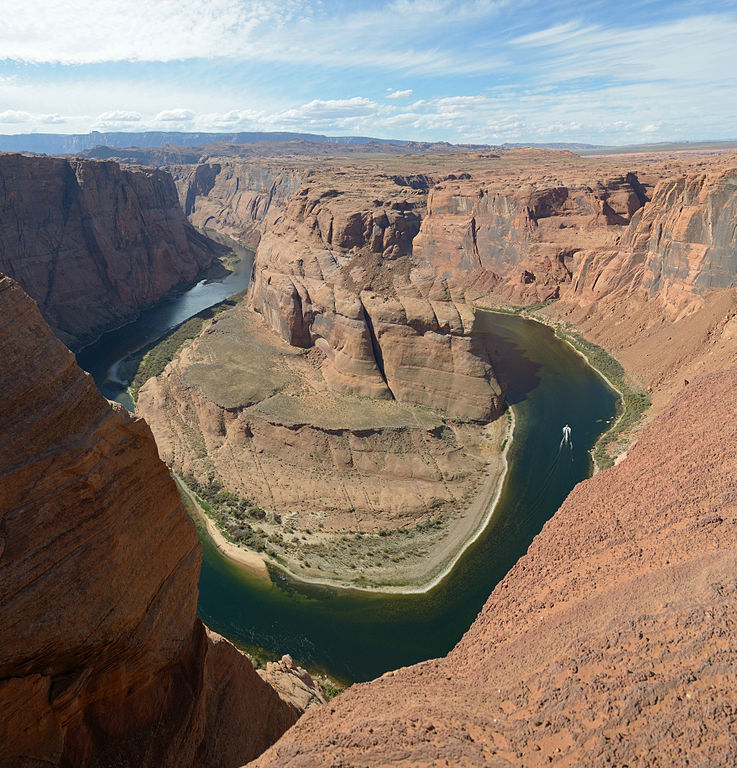
The Colorado River is the main natural force that shaped the canyon. It flows through narrow gorges, rapids and deep stretches of the valley. Organised rafting trips, including multi-day expeditions, allow visitors to experience the canyon from river level.
Trails descend from the rim into the canyon or connect different sections of the gorge. Bright Angel Trail and South Kaibab Trail are among the best known. These routes offer a very different perspective from the overlooks but require good fitness and careful planning. Going down may feel easy, while the return climb can be strenuous, especially in hot weather.
Temperatures on the canyon floor can be much higher than at the rim. Even when the rim is cool, the inner canyon may be extremely hot. Carry sufficient water, account for elevation changes and travel time, avoid strenuous activity during the hottest hours and never attempt more than your fitness and conditions allow.
Plants and wildlife
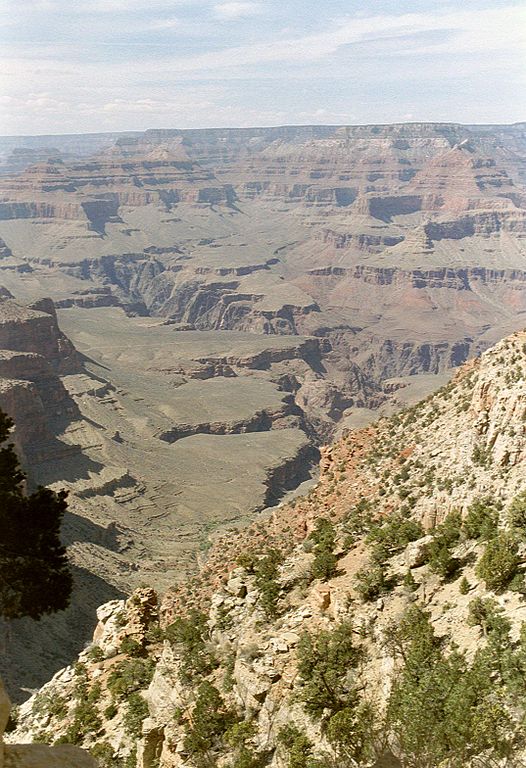
The canyon's natural environment is highly diverse because of changes in elevation, temperature and moisture. Coniferous forests, junipers and pines grow near the rims, while lower elevations support drought-tolerant shrubs and desert plants. Wetter habitats with different vegetation occur near the river.
Wildlife includes deer, squirrels, rabbits, coyotes, foxes and many bird species. One of the region's best-known birds is the California condor, among the largest flying birds in North America. Visitors may see condors soaring above the cliffs, but sightings are not guaranteed.
Rattlesnakes and other wild animals also live in the region. Do not approach, feed or try to photograph them from dangerously close range. Even animals accustomed to seeing people remain wild.
History and cultural significance
The Grand Canyon region has deep cultural and spiritual importance for Indigenous peoples, including the Havasupai, Hopi, Navajo and Hualapai. Their traditions and stories are connected to this landscape long before the development of modern tourism and the national park.
In the nineteenth century, the canyon became widely known through exploration expeditions and travellers' accounts. The area was designated a national monument in 1908 and became a national park in 1919. Today, management combines nature conservation, tourism and respect for Indigenous cultural heritage.
When to visit
Spring and autumn are often comfortable seasons for sightseeing and hiking. Summer is the busiest period on the South Rim, and temperatures inside the canyon can become dangerously high. The North Rim is open seasonally, so travel plans should account for its operating dates.
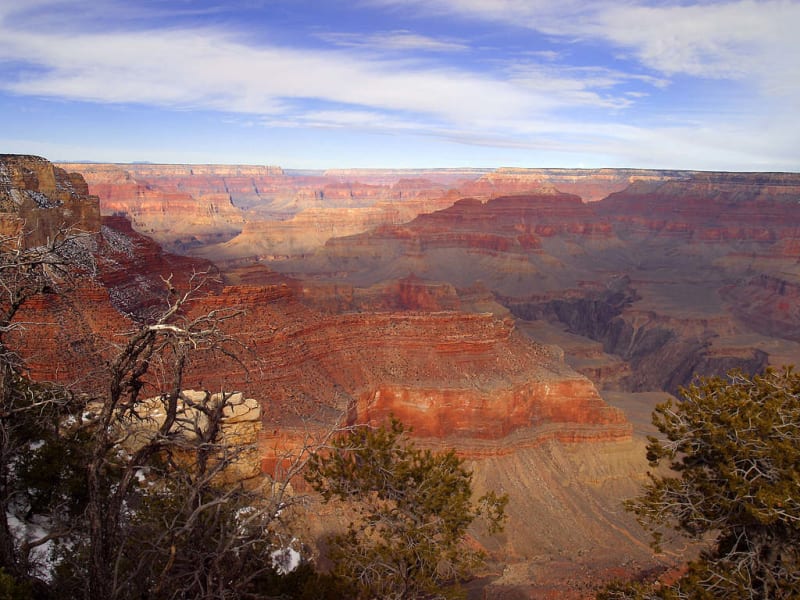
In winter, snow on the South Rim creates a striking contrast with the red and orange rocks. However, icy conditions, road closures and limited access are possible. Check the forecast and official park updates before travelling.
Practical travel tips
Many first-time visitors choose the South Rim and spend a day or several days exploring it. Decide which viewpoints you want to visit and allow enough time to travel between them. Seasonal traffic restrictions may apply in the busiest areas, and park shuttles can be useful at certain times.
Wear comfortable shoes, protect yourself from the sun and carry enough water. Never approach the edge of a cliff for a photograph or cross safety barriers. If you plan to hike into the canyon, check the route length, elevation change, trail conditions and your own fitness level.
Why visit the Grand Canyon
The Grand Canyon is remarkable not only for its immense size but also for the opportunity to see Earth's geological history exposed in layers of rock. Multicoloured cliffs, deep gorges, the Colorado River and changing light create a landscape unlike almost any other.
A visit can be a brief stop at a viewpoint or a longer adventure involving hiking, overnight stays and rafting. Whatever your plans, take time to appreciate the scenery, respect natural conditions and avoid rushing through this extraordinary place.
Gallery