Vikos-Aoos National Park is one of Greece’s most remarkable natural areas. Located in Epirus in the country’s northwest, it features deep gorges, mountain rivers, alpine lakes, forests and traditional stone villages. The region offers a different side of Greece, far from the familiar beach resorts.
Location and Protection
The park lies in the Pindus Mountains, not far from the Albanian border. Its best-known natural features include Vikos Gorge, the Aoos Gorge, the Voidomatis River and the Tymfi massif. Vikos-Aoos National Park was established in 1973 to protect the area’s landscapes and wildlife. The wider Vikos-Aoos Geopark became a UNESCO Global Geopark in 2015.
Vikos Gorge
Vikos Gorge is the region’s most famous landmark. It cuts through limestone mountains, creating a deep valley with steep rock walls. Viewpoints near Monodendri and Oxia offer sweeping panoramas. Hiking through the gorge provides a closer look at its geology, but routes require suitable footwear, good preparation and a check of current weather conditions.
Rivers and Alpine Lakes
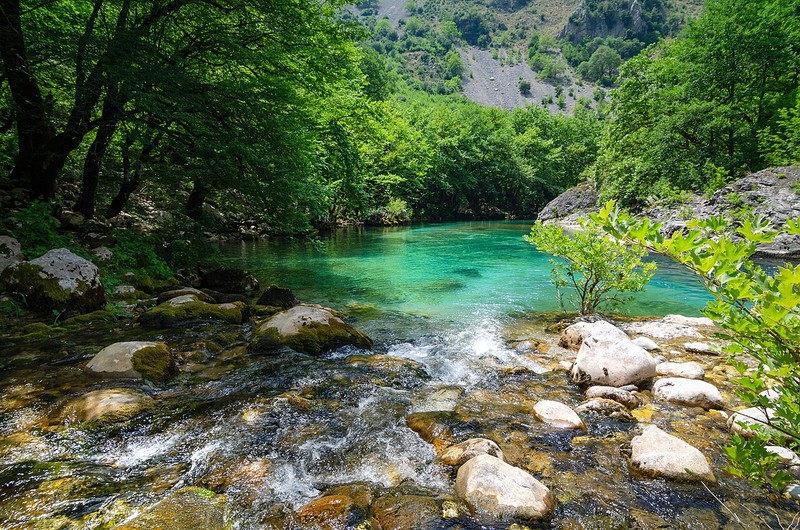
The Voidomatis River is known for its exceptionally clear water and blue-green colour. Visitors can enjoy riverside walks, photography and, where conditions permit, guided rafting. High in the Tymfi Mountains lies Dragon Lake, or Drakolimni, surrounded by rocky alpine scenery. Local folklore links its name to dragons, while the lake itself is of glacial origin. Another lake with the same name is found on Mount Smolikas.
Wildlife and Vegetation
The range of elevations creates diverse habitats, from forests and shrubs in the valleys to alpine meadows and rocky slopes higher up. Remote parts of the Pindus region are home to brown bears, wolves, roe deer, wild boar and otters. Large animals are rarely seen on ordinary walks. Do not feed wildlife or leave food waste behind, and observe animals from a safe distance.
The Stone Villages of Zagori
The region is famous for traditional villages built from local stone. Papingo, Mikro Papingo and Monodendri are popular bases for exploring the mountains. Narrow paved streets, stone houses, fountains and arched bridges reflect centuries of life in this rugged landscape. The cultural landscape of Zagori is recognised as a UNESCO World Heritage Site.
Hiking and Outdoor Activities
Visitors can choose easy walks to viewpoints or demanding hikes through the gorge and up to alpine lakes. Some routes involve significant elevation changes and rocky terrain. Bring sturdy shoes, drinking water, sun protection and weather-appropriate clothing. Mountain conditions can change quickly, so consider hiring a local guide for challenging routes. Guided rafting and nature excursions may also be available seasonally.
Best Time to Visit
Spring brings greener valleys and lively rivers. Summer is popular for hiking, although thunderstorms and sudden temperature drops are possible in the mountains. Autumn colours the forests and is excellent for photography. Winter can bring snow, ice and road or trail restrictions. Always check the forecast and route conditions before setting out.
How to Get There
The city of Ioannina is a convenient starting point. From there, visitors can drive to Zagori villages, Vikos viewpoints and the Konitsa area. Public transport in the mountains may be limited, so check schedules in advance. Download offline maps, plan realistic distances and tell someone your intended route.
Vikos-Aoos combines dramatic gorges, clear mountain rivers, alpine lakes and historic stone villages. It is an excellent destination for hikers, nature lovers and travellers interested in Greece’s mountain heritage.
Gallery