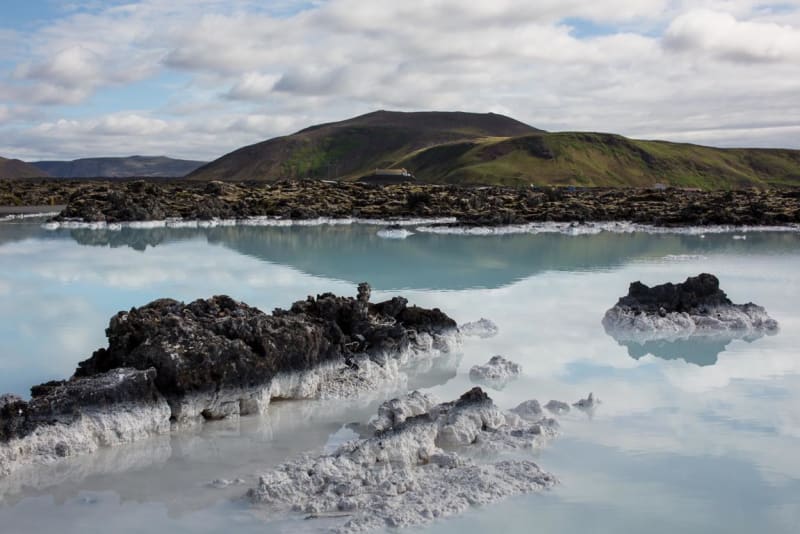
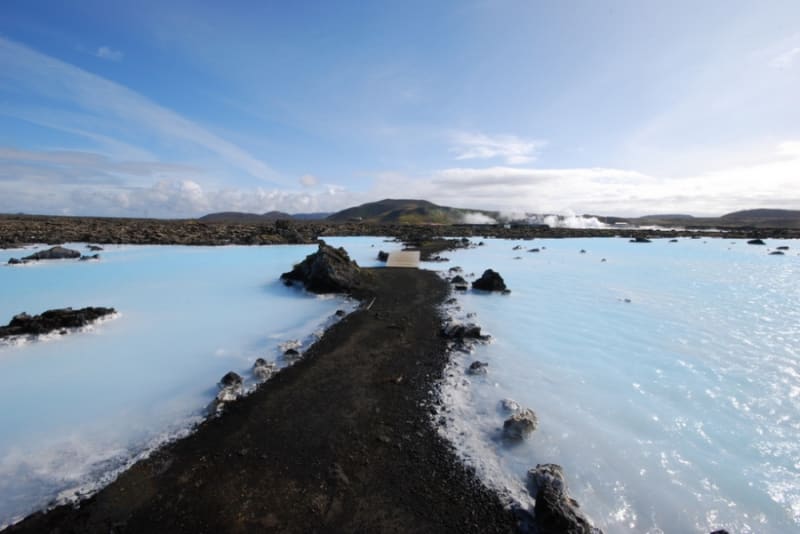
The Blue Lagoon is a famous geothermal spa in southwestern Iceland, on the Reykjanes Peninsula. It attracts visitors with milky-blue water surrounded by black lava fields, clouds of steam and rugged volcanic scenery. The contrast between warm water and dark solidified lava creates an unusual atmosphere, making the lagoon one of Iceland's most recognisable attractions.
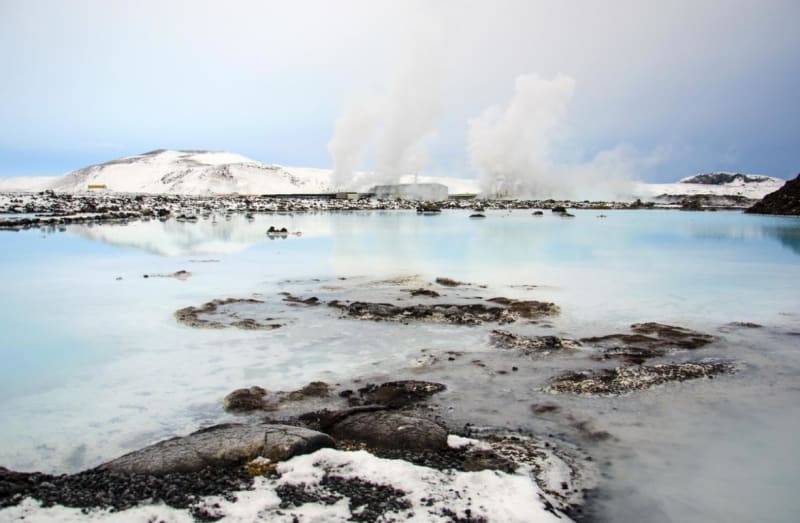
Although the geothermal water comes from natural underground sources, the lagoon itself is a man-made pool. It formed beside the Svartsengi geothermal power plant and gradually became a popular destination for bathing, relaxation and spa treatments.
How the Blue Lagoon formed
The lagoon's history is connected with the development of geothermal energy in Iceland. During the 1970s, underground heat was harnessed on the Reykjanes Peninsula and the Svartsengi power plant was built. During its operation, hot mineral-rich water flowed into the surrounding lava field, where a pool with an unusual blue appearance gradually formed.
In the early 1980s, local residents began bathing in the warm water. News of the lagoon spread beyond the region, and researchers became interested in its properties. Bathing facilities opened in 1987, and Blue Lagoon Ltd. was founded in 1992. The complex was later expanded with modern visitor facilities.
Why the water is blue
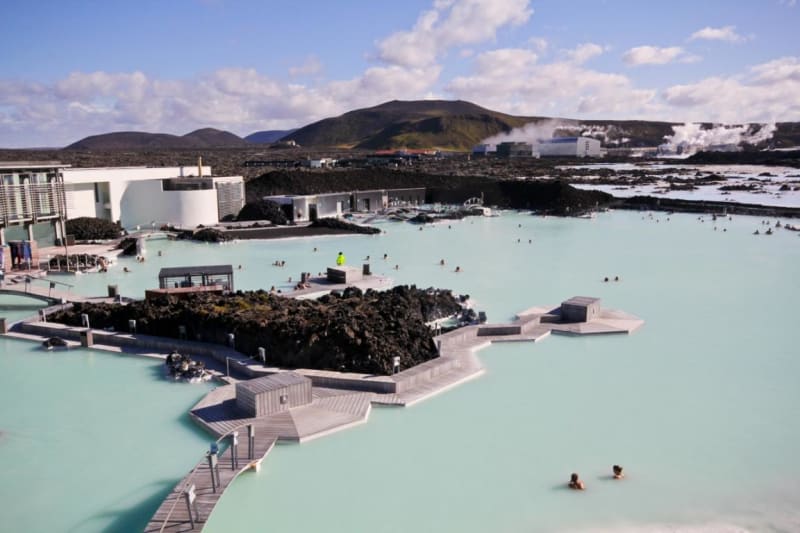
The lagoon's distinctive milky-blue colour is primarily associated with silica, a compound present in geothermal water that scatters sunlight. The water also contains minerals and microorganisms, including algae. Against the black volcanic lava, the pale surface of the lagoon appears especially striking.
The water comes from deep geothermal sources where seawater and freshwater mix under high temperatures and pressure. Before reaching the lagoon, it passes through a geothermal system connected with energy production. The bathing water is usually around 37–39°C, although the exact temperature can vary.
The water is regularly renewed and its quality is monitored. Its high silica content gives it a milky appearance rather than the transparency of an ordinary lake. The pale mineral mud used in some spa treatments has also become one of the lagoon's signature features.
Bathing among lava fields
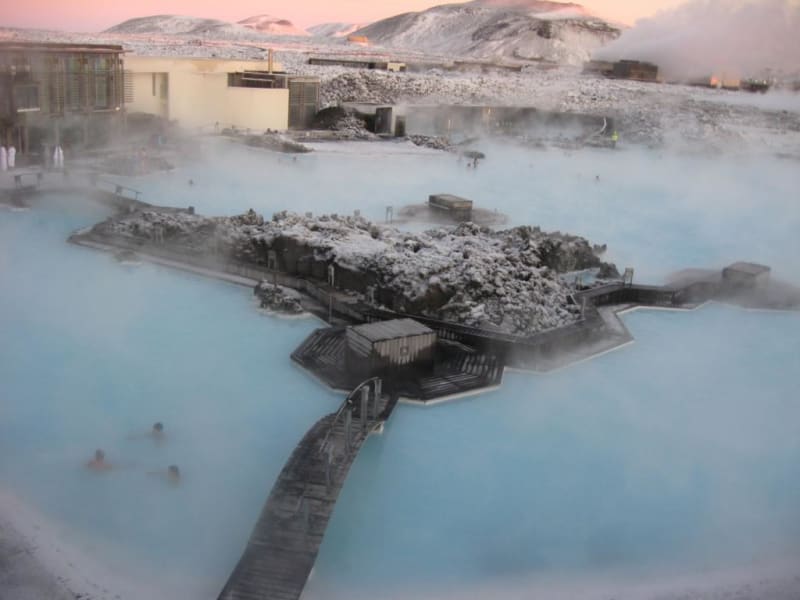
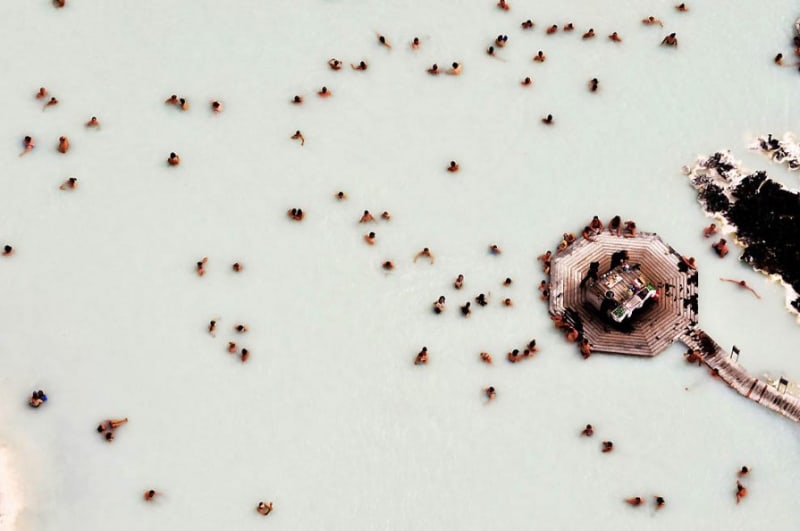
The main activity at the Blue Lagoon is bathing in warm geothermal water outdoors. Visitors can move slowly through the spacious pool, relax beside its rocky edges and watch steam rise from the surface. In cool weather, the contrast between the hot water and cold air is particularly noticeable.
The lagoon is surrounded by solidified lava formations resembling frozen waves of dark stone. Mosses and low-growing plants adapted to Iceland's harsh conditions grow in some places. Visitors can experience the atmosphere of a volcanic island without undertaking a long hike into remote terrain.
Despite its natural-looking setting, the Blue Lagoon is a developed spa complex with organised bathing areas, changing rooms, showers and visitor services. Booking ahead is generally recommended because admission capacity at specific times is limited.
Spa treatments and relaxation
In addition to bathing, the complex offers saunas, steam rooms, relaxation areas and mineral-mask treatments. The mask bar features products based on silica and other components associated with the local geothermal water. Additional services may include massages and specialised spa programmes.
Hotels and restaurants are available for visitors who wish to stay longer. Silica Hotel has its own bathing lagoon for guests, while Retreat Spa offers a more secluded experience. Restaurants serve Icelandic cuisine, including dishes prepared with local ingredients.
The Blue Lagoon also provides an opportunity to learn about Iceland's use of geothermal resources. Its wellness treatments should not be considered a substitute for medical care; they are primarily part of a leisure and personal-care experience.
The volcanic landscapes of the Reykjanes Peninsula
The Blue Lagoon lies in a geologically active part of Iceland. The Reykjanes Peninsula is known for lava fields, fissures, geothermal areas and volcanic landscapes. Tall trees are scarce in the surrounding terrain, making the dark rocks and broad expanses of lava especially prominent.
A visit can be combined with other places on the peninsula, including geothermal areas, coastal scenery and viewpoints. However, volcanic activity can affect access to roads and attractions. Before travelling, check official alerts, route conditions and advice from local authorities.
When to visit the Blue Lagoon
The complex operates throughout the year, so the best time depends on personal preference. Summer offers longer daylight hours and makes it easier to explore the peninsula. In winter, bathing in warm water surrounded by cold air creates a distinctive atmosphere. Under suitable conditions, visitors may enjoy the winter sky and sometimes the northern lights outside brightly lit areas, although sightings are never guaranteed.
Spring and autumn may suit travellers who prefer a quieter pace. In every season, consider wind, precipitation and possible changes related to volcanic activity. Bring a swimsuit, follow staff guidance and drink enough water during your visit.
Useful tips for visitors
It is advisable to book tickets in advance through the official website. When choosing an entry time, allow for travel, changing and relaxing after treatments. Check current entry rules, age restrictions and cancellation conditions before your visit.
Guests are required to shower without swimwear before entering the water, in accordance with the complex's hygiene rules. Silica can make hair stiff and tangled, so applying conditioner before bathing and leaving it in while in the water is recommended. Remove contact lenses before entering, and avoid submerging prescription glasses.
Hot water can contribute to dehydration, so drink water and take breaks. Follow staff instructions and walk carefully on wet surfaces. Visiting conditions and access to individual areas may change, so check current information before travelling.
How to get to the Blue Lagoon
The Blue Lagoon is located near Grindavík on the Reykjanes Peninsula, between Reykjavík and Keflavík International Airport. It is therefore convenient to include in an itinerary after arriving in Iceland or before departing. Driving from Reykjavík usually takes about 45–50 minutes, depending on traffic and route conditions.
Visitors can arrive by rental car, taxi or pre-booked transfer. Bus services may also be available, but schedules and conditions should be checked before travelling. Roads may close temporarily because of volcanic activity or weather.
Why visit the Blue Lagoon
The Blue Lagoon combines warm mineral-rich water, an unusual colour, black lava fields and modern spa facilities. It offers a comfortable way to experience Iceland's geothermal environment and spend several hours in a striking volcanic landscape. It is an appealing destination for relaxation and a memorable addition to a trip around the Reykjanes Peninsula.
Gallery