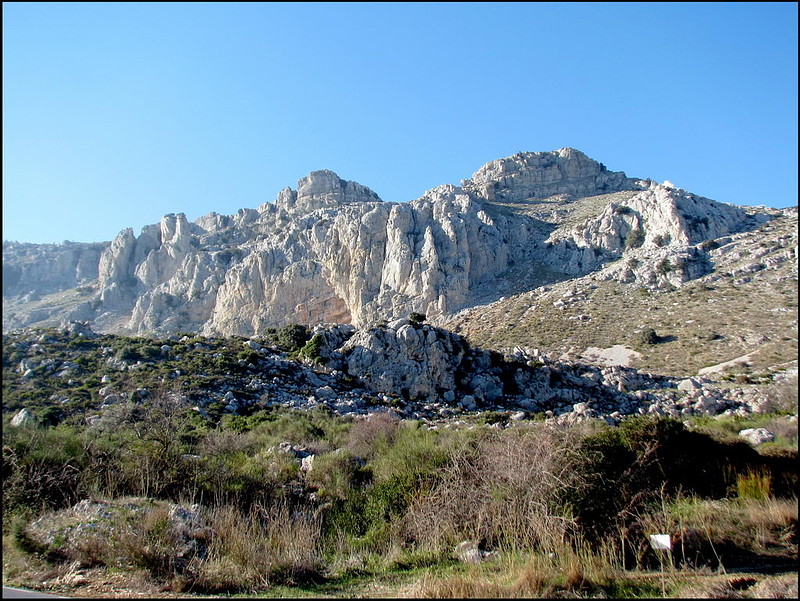
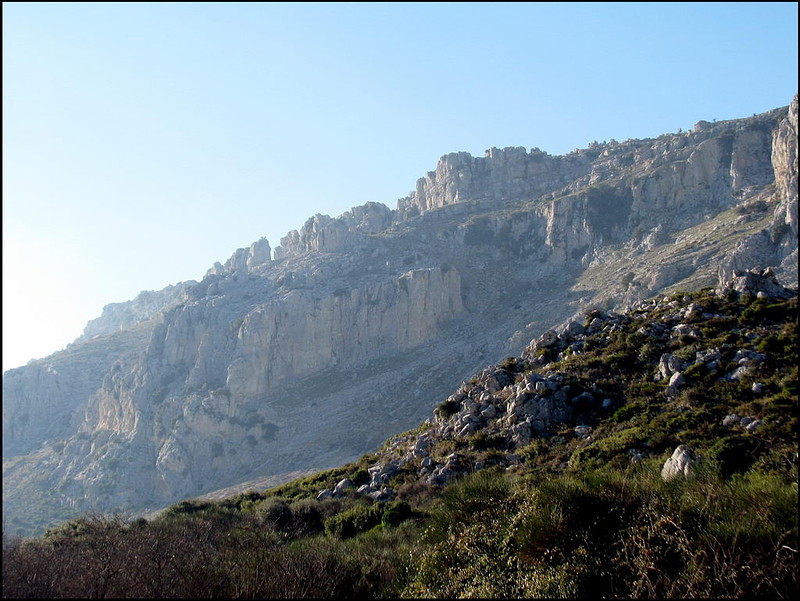
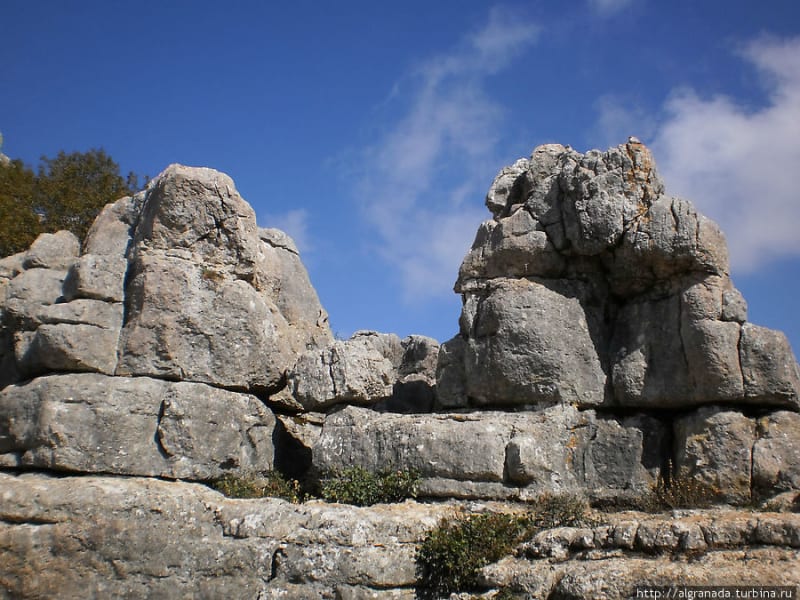
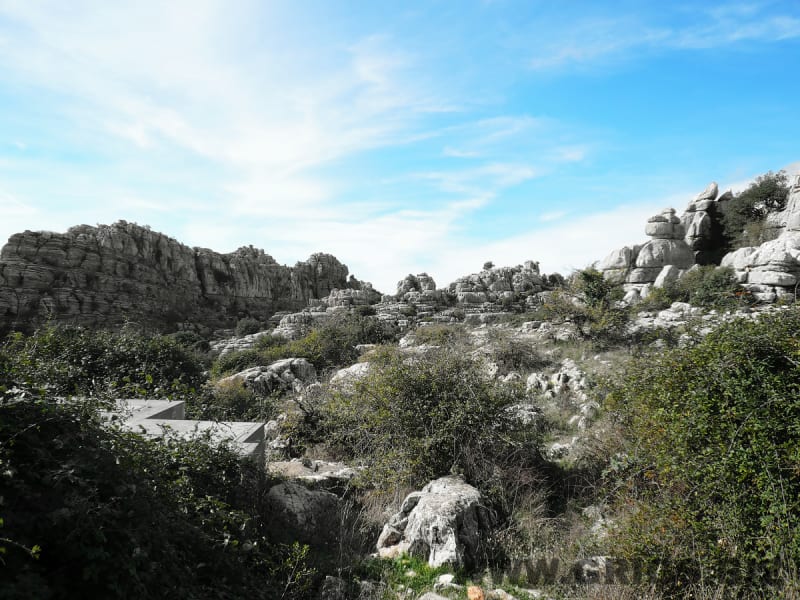
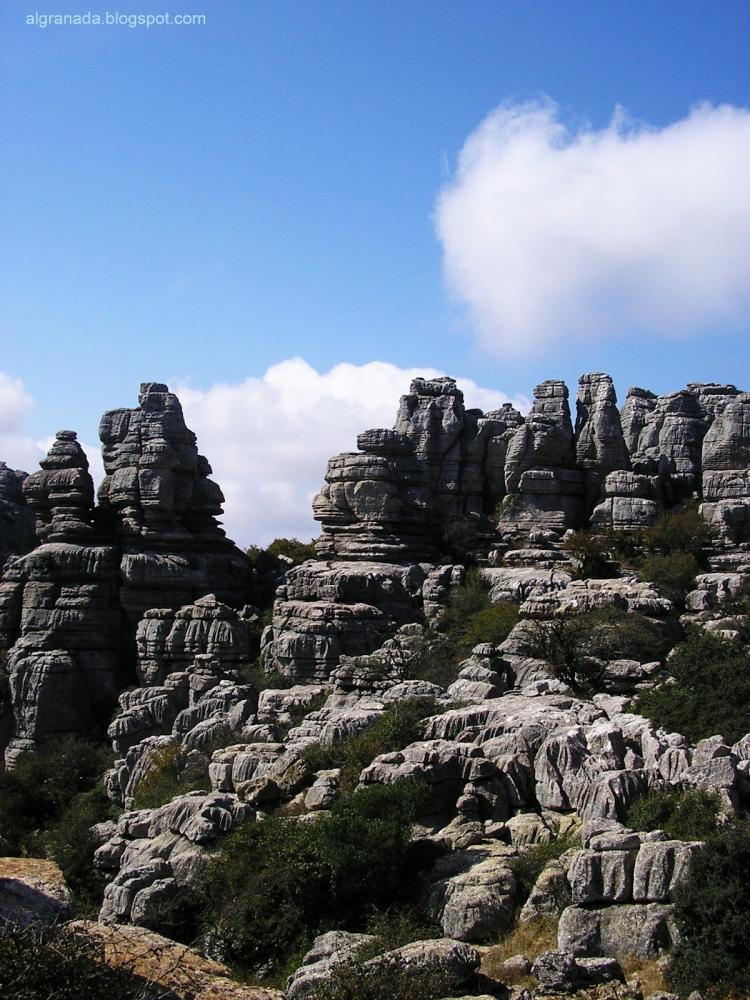
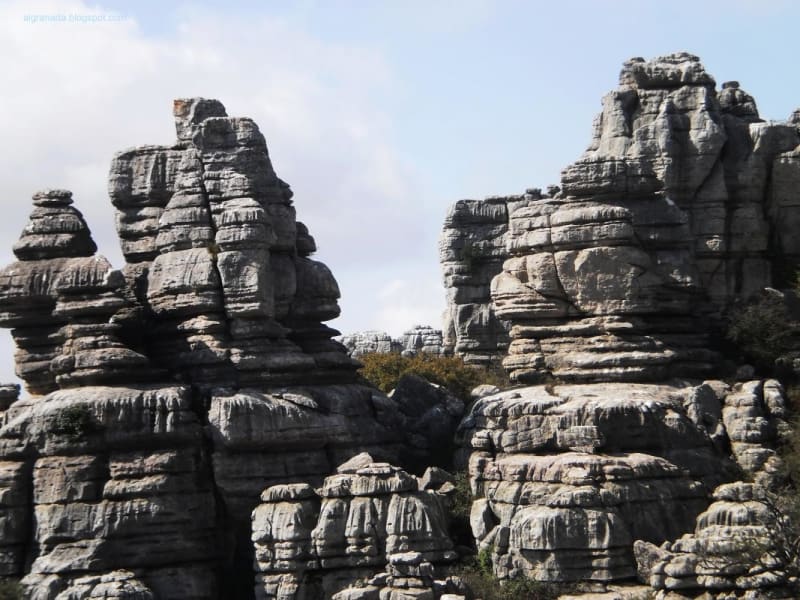
El Torcal de Antequera is a remarkable natural area in southern Spain, famous for its unusual limestone rocks, deep fissures and strangely shaped stone formations. It lies in Málaga Province, south of the town of Antequera, in Andalusia. Its landscape resembles an enormous stone labyrinth shaped by nature over millions of years. The area became a natural park in 1989 and is considered one of Europe's most impressive examples of karst terrain.
How the rocky landscape formed
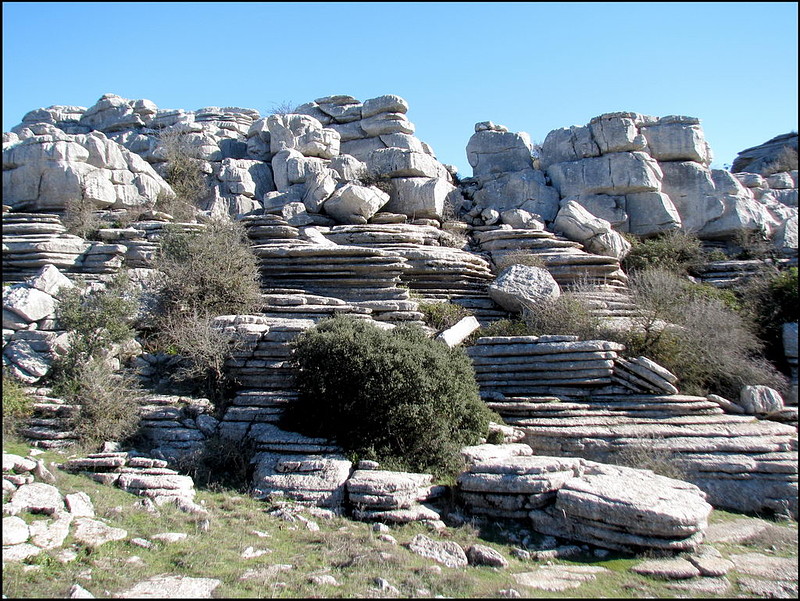
The story of El Torcal began around 150 million years ago, when the region lay beneath the sea. Limestone sediments accumulated on the seabed and gradually formed thick layers of rock. Later, tectonic movements raised these layers above sea level, while water, wind and temperature changes slowly sculpted the rocks into unusual shapes.
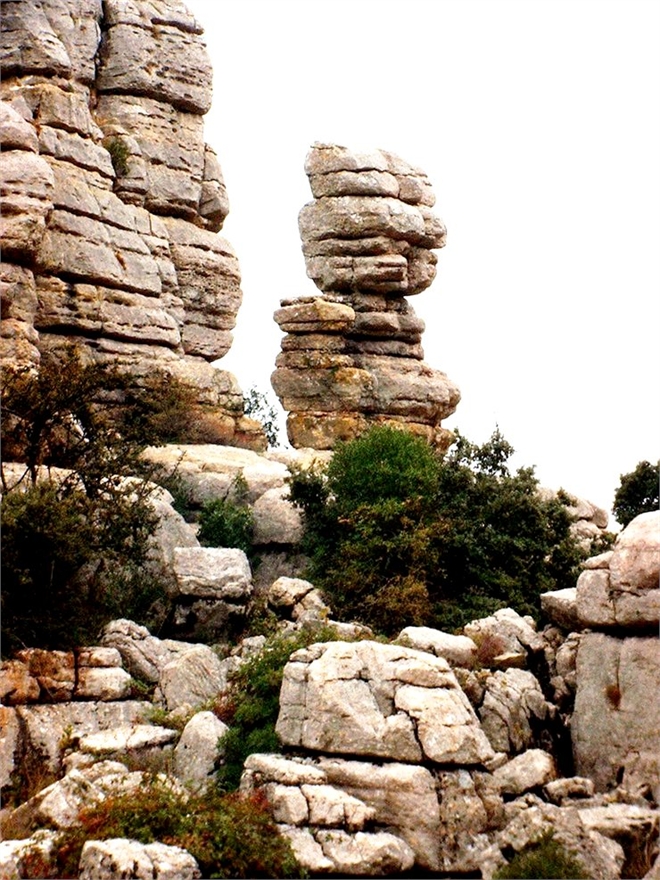
The result is a karst landscape filled with natural hollows, fissures, small caves and narrow passages between rock walls. Many formations resemble towers, mushrooms, animals or human figures. Their appearance changes with the light, so the same rocks can look very different as visitors move through the area.
Famous rock formations
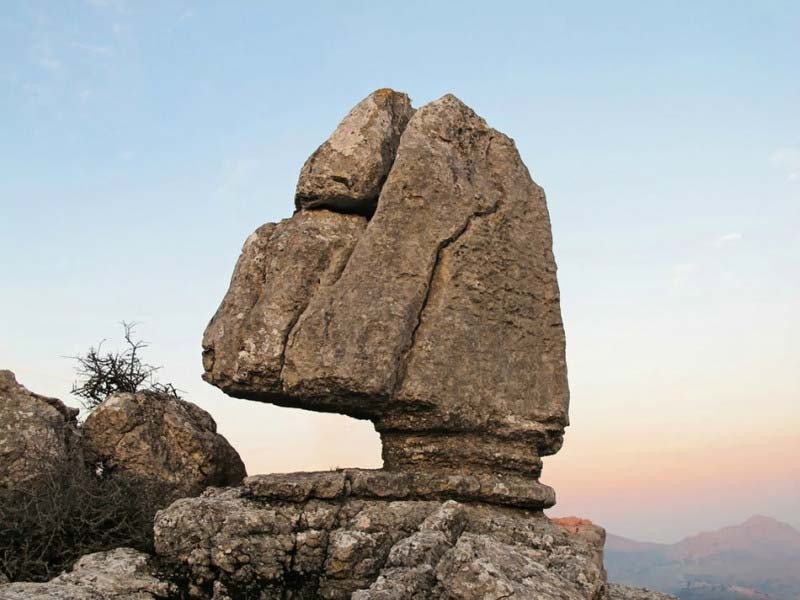
One of El Torcal's best-known symbols is the natural monument El Tornillo, whose name means “the screw.” The rock resembles a stone structure made of rounded layers stacked on top of one another. It was formed by the long-term erosion of limestone and has become one of the area's most recognisable landmarks.
Other rocks have acquired names because they resemble animals, people or everyday objects. In some places, stone walls form narrow corridors, hidden passages and small clearings. The combination of unusual shapes and intricate terrain creates the impression of a natural city built from stone.
Caves and traces of ancient history
Karst processes have created numerous cavities, caves and deep crevices in El Torcal. Some are important not only geologically: evidence of prehistoric human presence has been found in certain caves. These discoveries show that people knew this landscape long before the modern settlements of Andalusia developed.
Caves and fissures remain an important part of El Torcal's natural heritage. However, not every area is suitable for independent exploration. Organised guided tours are a better option for visiting less accessible locations, and visitors should follow the area's conservation rules.
Plants and wildlife
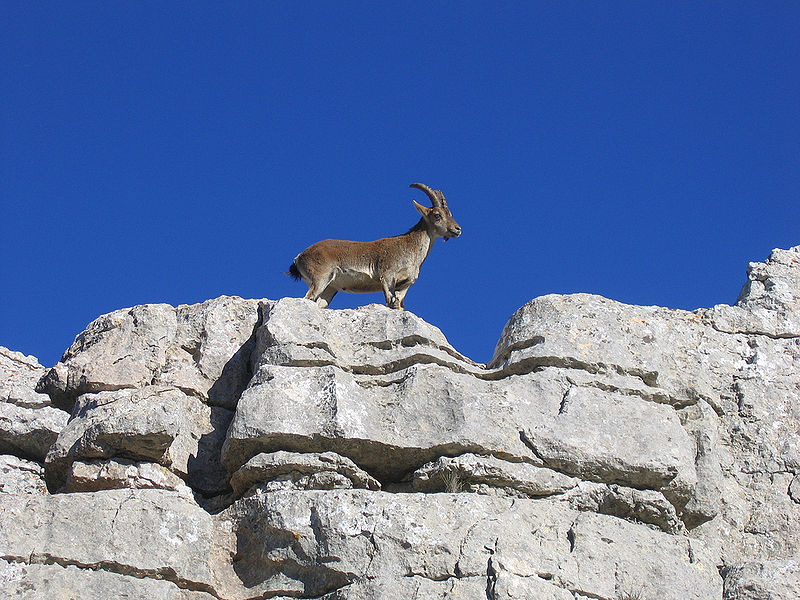
Despite its rocky terrain, El Torcal supports a variety of plant and animal life. Shrubs, grasses and other plants adapted to limestone soils and local climatic conditions grow between the rocks. In spring, flowering vegetation brings colour to the landscape, while cooler months often give it more subdued tones.
Birdlife is particularly important. The area supports resident and migratory birds, and rocky ledges provide nesting sites. Reptiles also live in the park and are especially active in spring and summer. Protecting the natural environment helps maintain the diversity of species in this unusual mountain landscape.
Hiking trails and viewpoints
The best way to explore El Torcal is to follow its marked hiking trails. The Green Route is a circular path about 1.5 kilometres long and usually takes around 45 minutes. It offers views of characteristic karst formations and trails winding between rock corridors. The Yellow Route is longer, at approximately 3 kilometres, and takes about two hours.
For a longer walk, the Orange Route connects the lower and upper car parks. It crosses rocky terrain and climbs towards the upper part of the natural area. From the Las Ventanillas viewpoint, visitors can see the surrounding valleys, the Málaga area and, on clear days, the distant coast of Africa.
Visiting El Torcal de Antequera
Before setting out, it is useful to visit the Torcal Alto Visitor Centre for information about the trails, natural features and visitor regulations. The park can be explored independently along marked paths or with a guide. Some themed excursions, including routes focused on ammonite fossils and the karst labyrinth, require advance booking.
Access to the natural area is generally free, although private vehicles may be restricted from reaching the upper car park during busy periods. The rocky trails can be uneven and slippery, especially after rain, so suitable footwear is recommended. Visitors should remain on marked routes. El Torcal de Antequera is an excellent destination for anyone interested in unusual landscapes, geology, hiking and photography.
Gallery