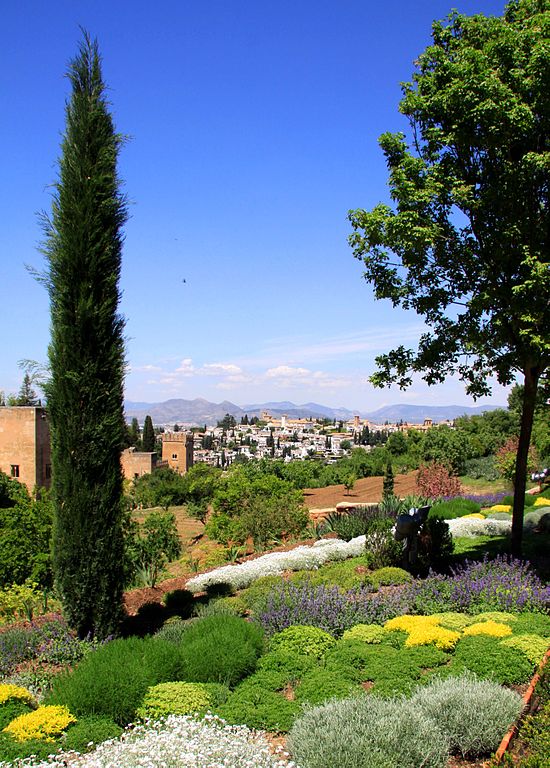
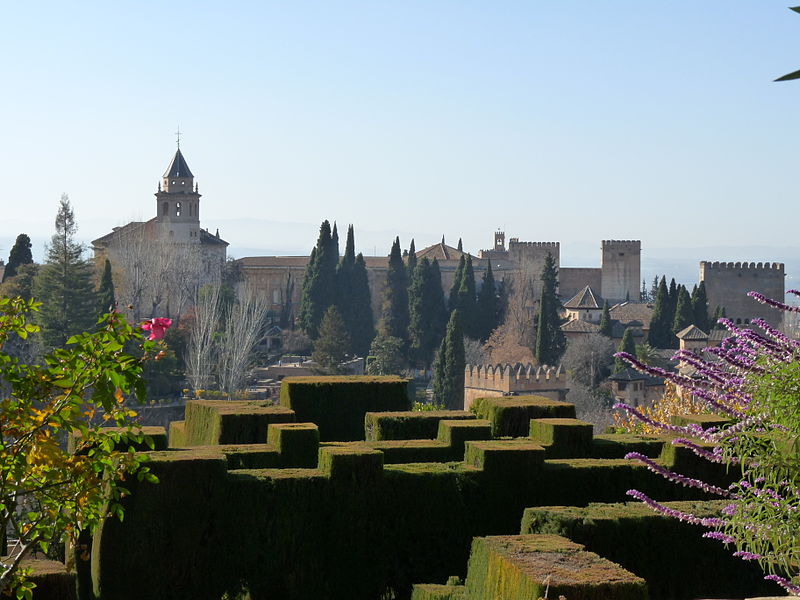
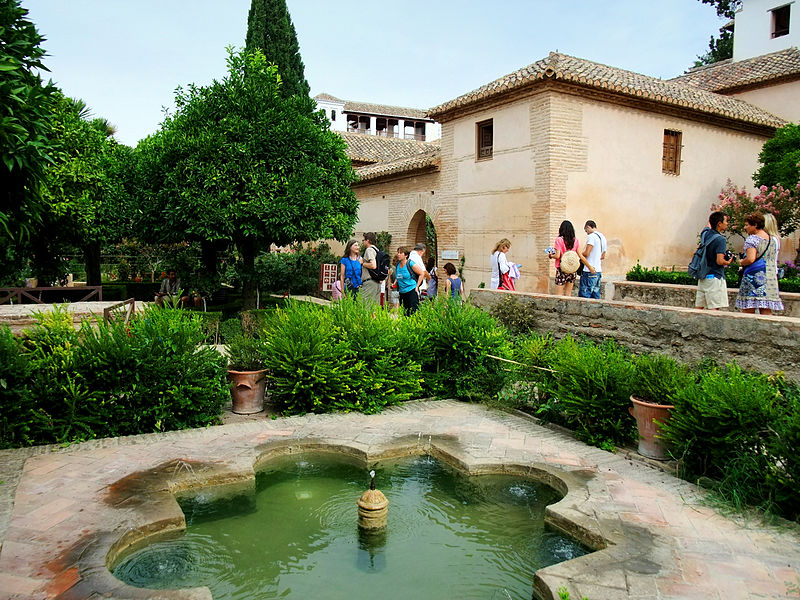
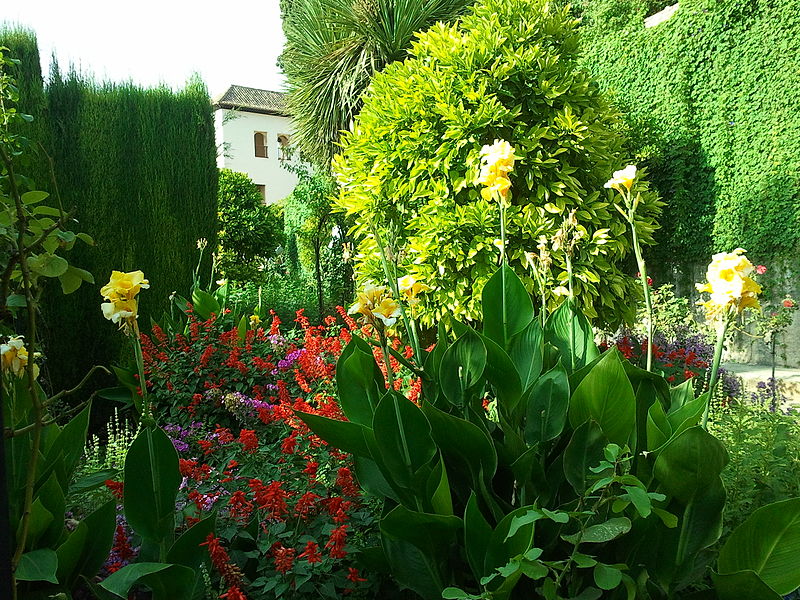
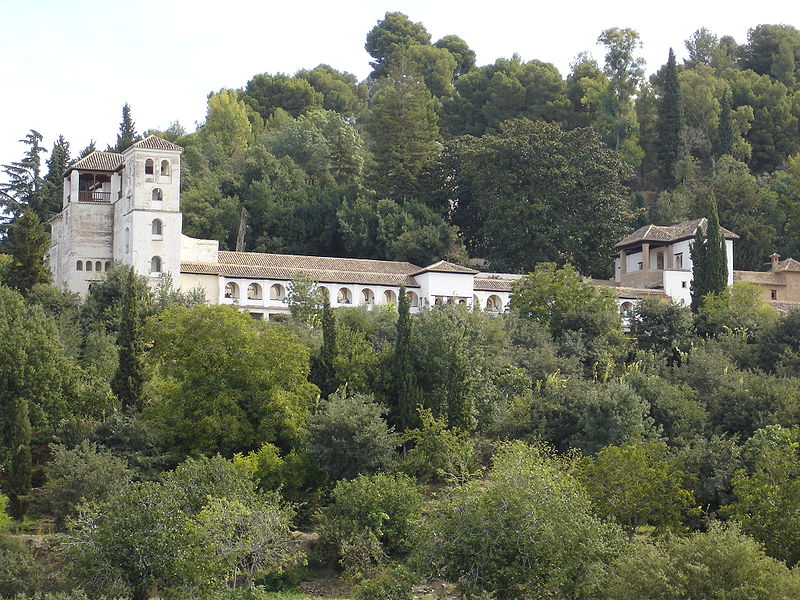
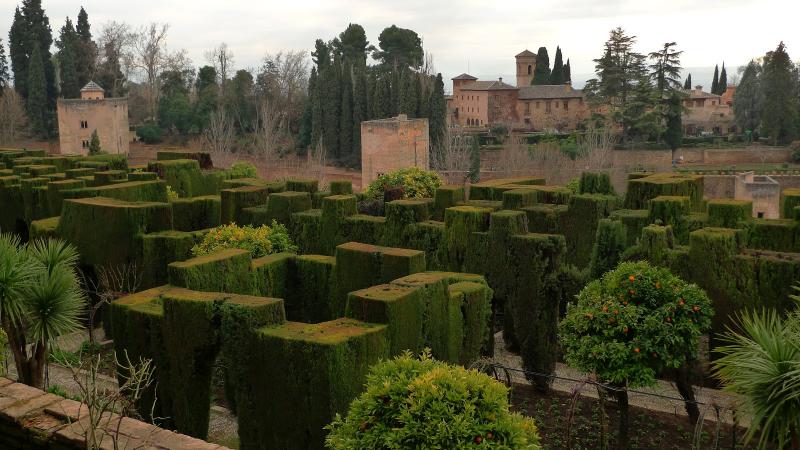
The Generalife is a historic palace and garden complex in Granada, southern Spain. Located on the slopes near the Alhambra, it is one of the finest examples of garden design from Muslim Spain. During the Middle Ages, it served as a country retreat for the rulers of the Nasrid dynasty. Today, it is known for fountains, water channels, cypress avenues, flower beds and views across Granada.
The name Generalife is often linked to Arabic expressions interpreted as “Garden of the Architect” or “the most exalted garden,” although its precise origin remains debated. The central idea of the complex is the harmonious relationship between architecture, water and vegetation.
History of the Generalife
The complex developed under the Nasrid dynasty, which ruled the Emirate of Granada from the thirteenth to the fifteenth century. Its principal historic structures date from the thirteenth and fourteenth centuries. The residence originally stood outside the fortified grounds of the Alhambra and functioned as a separate estate with a palace, gardens and agricultural land.
The Generalife was more than a place for relaxation. Its orchards and cultivated plots supplied the residence with food, while channels and irrigation systems helped sustain plants in Andalusia's hot, dry climate. After Granada was conquered by the Catholic Monarchs in 1492, the estate passed into new hands and underwent changes over subsequent centuries. In 1984, the Alhambra, Generalife and historic Albaicín district were inscribed on the UNESCO World Heritage List.
The palace and its architecture
The palace buildings are more intimate in scale than the ceremonial halls of the Alhambra. Courtyards, galleries, passages and terraces provide shade and frame views of the surrounding landscape. Arches, decorative plasterwork, columns and ornamental details reflect the artistic traditions of the Nasrid period.
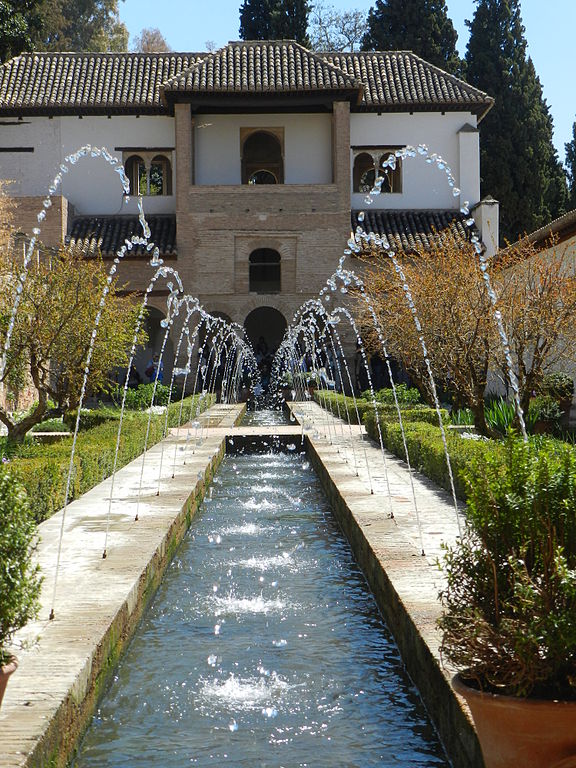
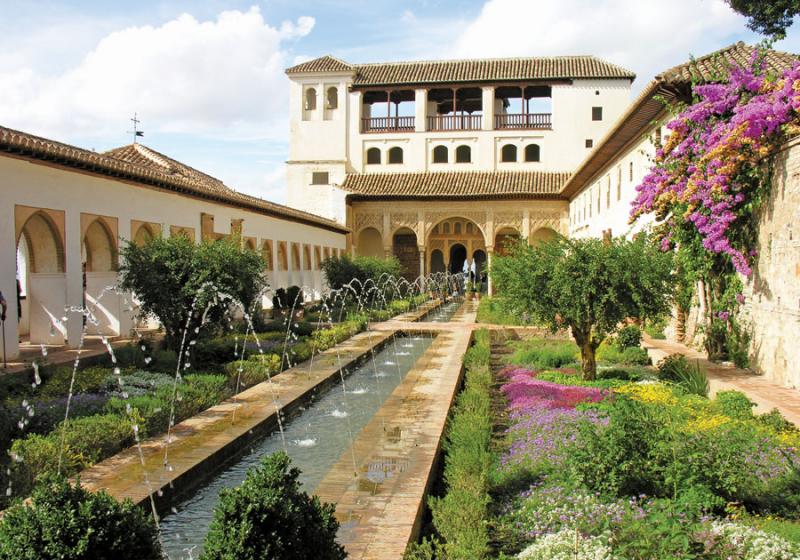
The most emblematic space is the Court of the Main Canal, or Patio de la Acequia. A water channel runs through its centre, flanked by plantings and fountains. The sound of flowing water links the architecture with the garden and creates a calm atmosphere. This courtyard is one of the most recognisable parts of the complex.
The Court of the Sultana's Cypress
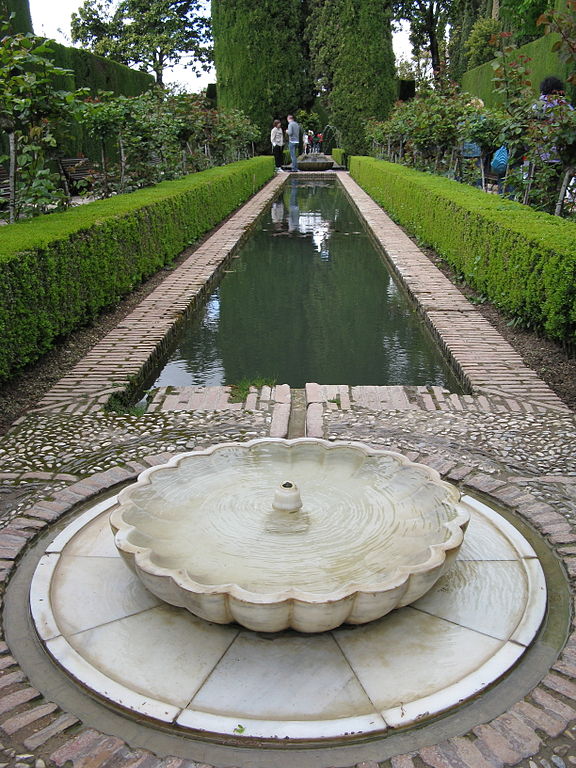
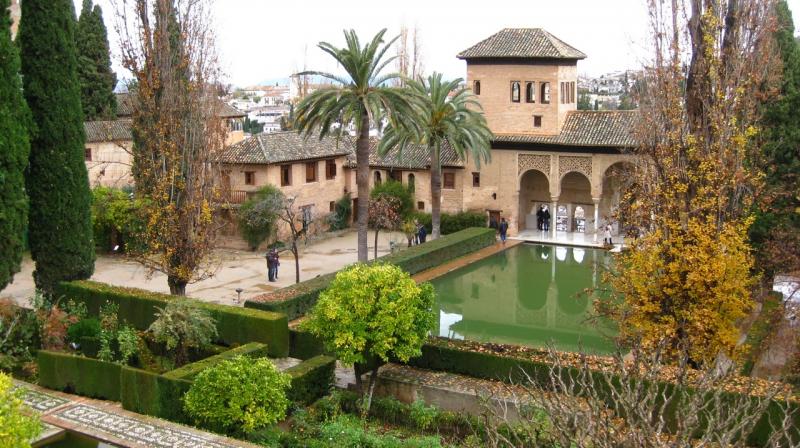
Patio del Ciprés de la Sultana takes its name from an old cypress associated with a local legend. According to the story, secret meetings took place here between a ruler's wife and a member of the Abencerraje family. The tale has no confirmed historical basis and is best understood as part of Granada's romantic folklore. The courtyard combines pools, greenery and architectural features from different periods.
The Water Stairway
Escalera del Agua, or the Water Stairway, is one of the Generalife's most unusual features. Narrow channels carrying flowing water run along its handrails. The staircase climbs the slope through greenery and connects different garden levels. It serves a practical purpose while also acting as a striking decorative feature. In hot weather, the water and shade create a refreshing microclimate.
Upper and Lower Gardens
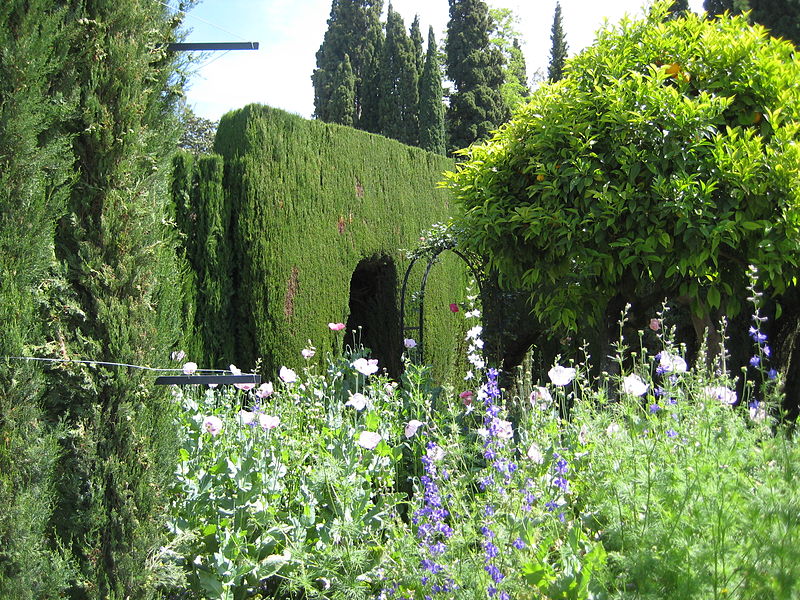
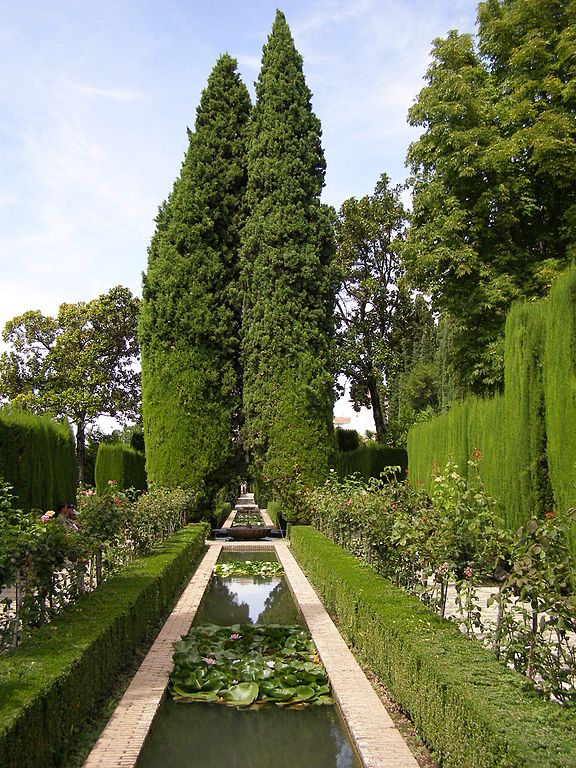
The gardens occupy several levels of the hillside. The Lower Gardens include paths, flower beds, hedges and ornamental planting. The Upper Gardens offer quieter spaces and views of the Alhambra and nearby hills. Cypress trees establish a strong vertical rhythm and create natural divisions between garden areas.
Water and Andalusian garden culture
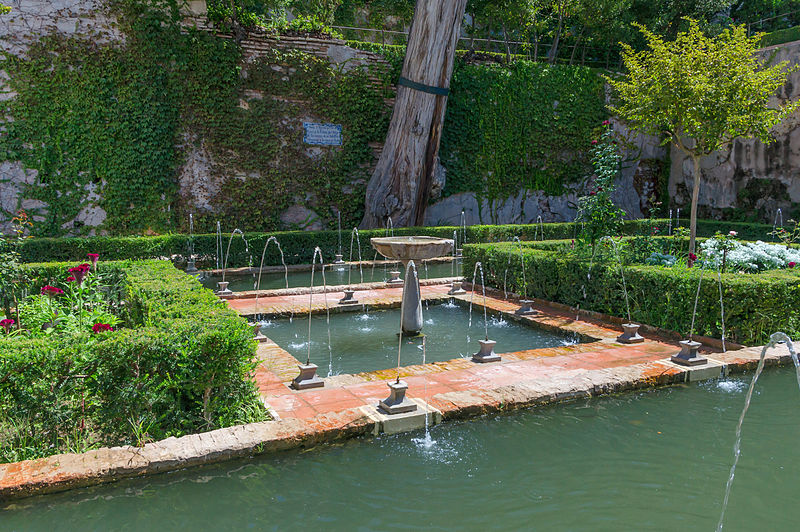
Water was essential in Granada's dry climate. Channels and irrigation systems supported both ornamental gardens and agricultural plots. Fountains helped cool the air, while the sound of water contributed to a peaceful atmosphere. The Generalife shows how engineering, everyday needs and beauty were combined in traditional Andalusian garden design.
Views of the Alhambra and Granada
Its hillside location provides views of the Alhambra, Granada and the surrounding mountains. The Alhambra was a fortified palace city and political centre of the Nasrid state, while the Generalife served as a country retreat and garden estate. Visiting both sites helps explain how Granada's medieval rulers organised their public and private lives.
Best time to visit
Spring is particularly pleasant, with fresh foliage and flowering plants. Granada can be very hot in summer, so morning or late-afternoon visits may be more comfortable, subject to the time printed on the ticket. Autumn offers softer light and a quieter atmosphere, while winter often brings fewer visitors. Bring water, sun protection and comfortable walking shoes.
Nearby attractions
The Generalife forms part of the wider Alhambra heritage complex, so visitors often combine it with the Nasrid Palaces, the Alcazaba fortress and the Palace of Charles V. Nearby, the Albaicín district is known for its narrow streets, whitewashed houses and viewpoints. The Mirador de San Nicolás offers a celebrated view of the Alhambra against the Sierra Nevada mountains.
Practical information
The Generalife is within the Alhambra monument complex in Granada, Andalusia, Spain. Admission requires a ticket, and access to individual areas depends on ticket type and schedule. Booking popular dates in advance through the official Alhambra website is advisable. Opening hours change by season and should be checked before travelling. The site has stairs and changes in elevation, so comfortable shoes are recommended. Visitors should stay on marked routes, avoid picking plants and refrain from touching historic decoration. The Generalife offers an outstanding introduction to the history, architecture and garden traditions of Andalusia.
Gallery