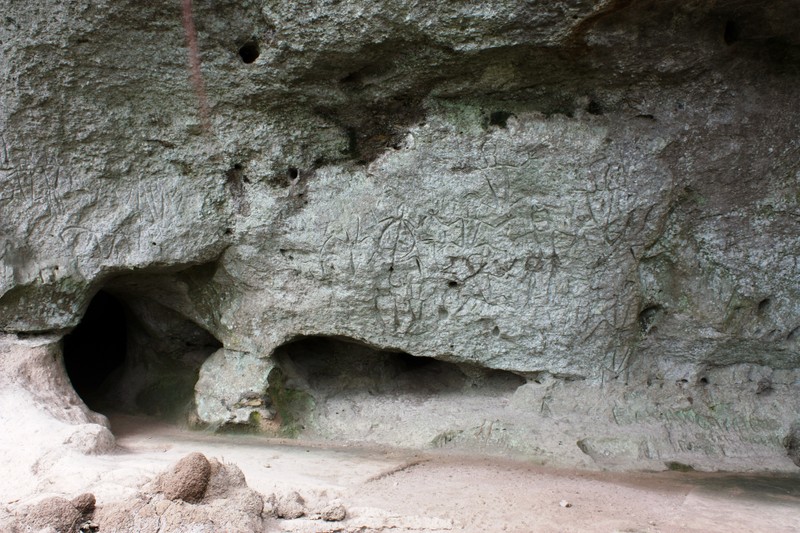
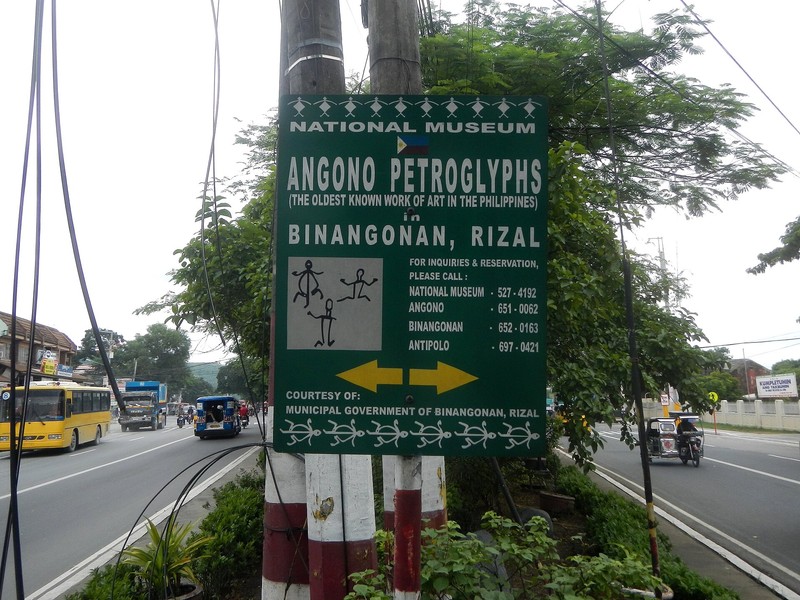
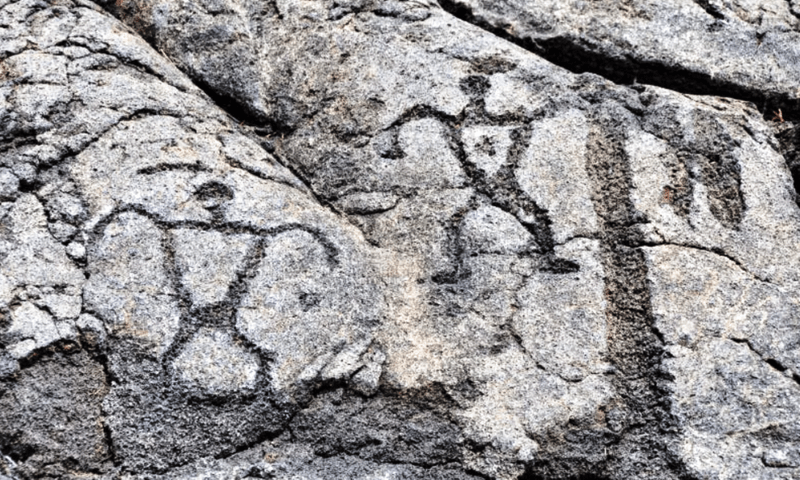
The Angono Petroglyphs are ancient rock engravings on the Philippine island of Luzon, in Rizal province. Located near the boundary between the municipalities of Angono and Binangonan, they are among the most important examples of prehistoric art in the Philippines.
Discovery of the site
The engravings came to wider attention in 1965, when Filipino artist Carlos “Botong” Francisco noticed figures carved into a rock shelter during a trip with Boy Scouts. He reported the discovery to the National Museum of the Philippines, whose specialists began studying the site that year. In 1973, the petroglyphs were declared a National Cultural Treasure, and in 1985 they were included in the World Inventory of Rock Art.
What the rock depicts
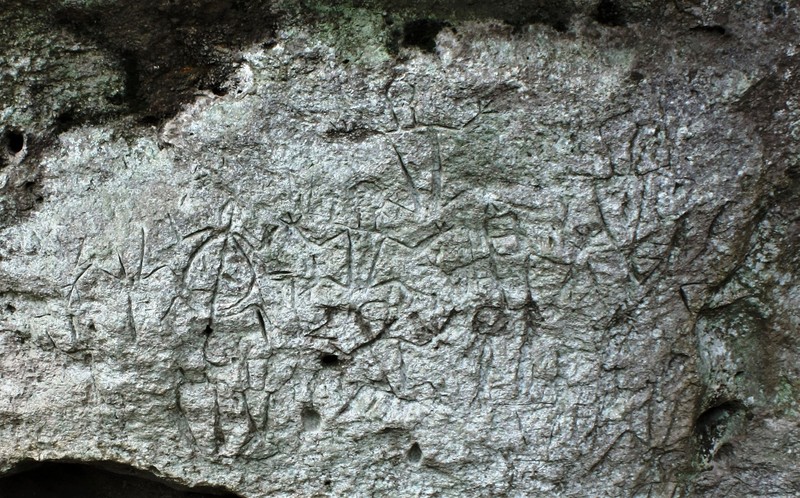
The rock surface contains stylized human figures, animal-like forms and geometric marks. Early studies recorded 127 figures. Some have rounded heads, narrow necks, simplified bodies and bent limbs. Animal-like shapes have been compared to frogs and lizards. Over time, weathering has made some of the lines harder to distinguish.
Dating and archaeological research
Popular accounts often date the petroglyphs to around 3000 BCE, but the exact age of the engravings has not been established. The National Museum of the Philippines stresses that the age of the rock formation and recovered artifacts does not by itself determine when the figures were carved. Archaeological work recovered pottery fragments and stone tools, including obsidian flakes.
The meaning of the rock art
Researchers do not know for certain who created the figures or what they meant to the people who made them. Symbolic, ritual or social interpretations have been discussed, but none is conclusively proven. The engravings remain important evidence of early artistic activity in the Philippines.
Conservation and visiting
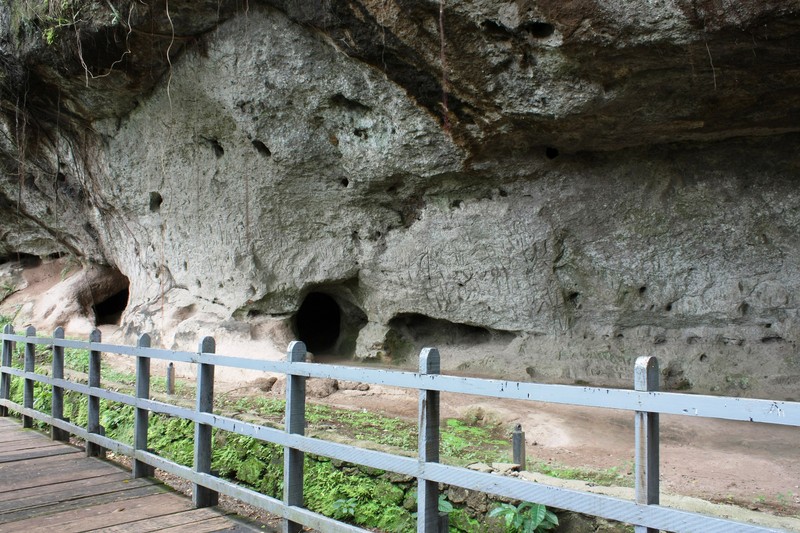
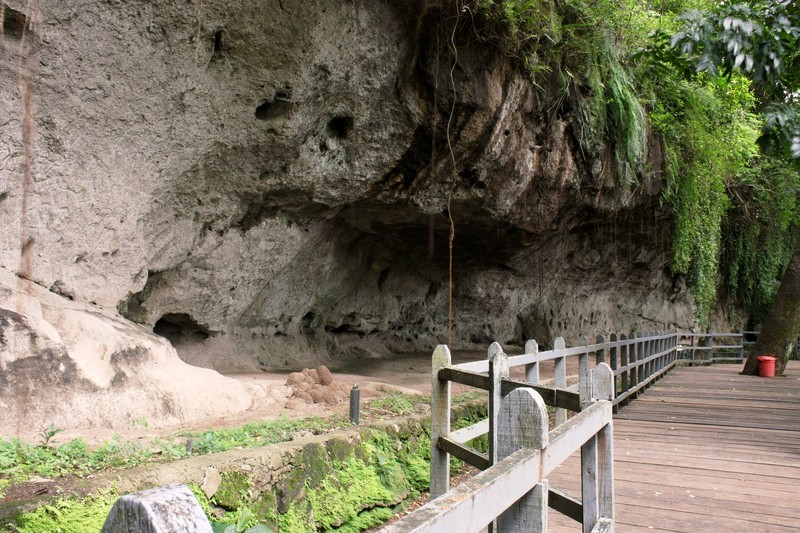
Because the rock surface is fragile, the National Museum established a viewing deck so visitors can see the engravings without touching them. Check current opening hours and access arrangements before travelling. Visitors should not touch, clean, trace or otherwise interfere with the figures.
Why visit the Angono Petroglyphs
The site offers a rare encounter with prehistoric Philippine art. Although the origin and meaning of the figures remain uncertain, the engravings are an important record of the cultural life of ancient communities near Manila.
Gallery