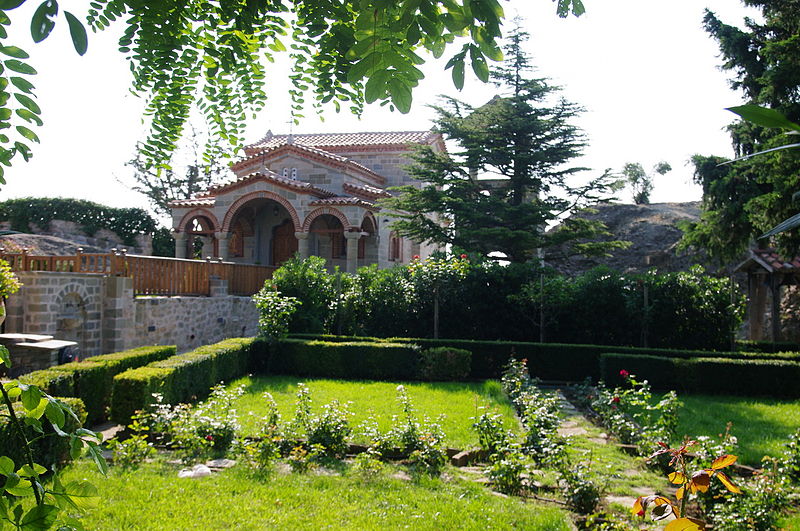
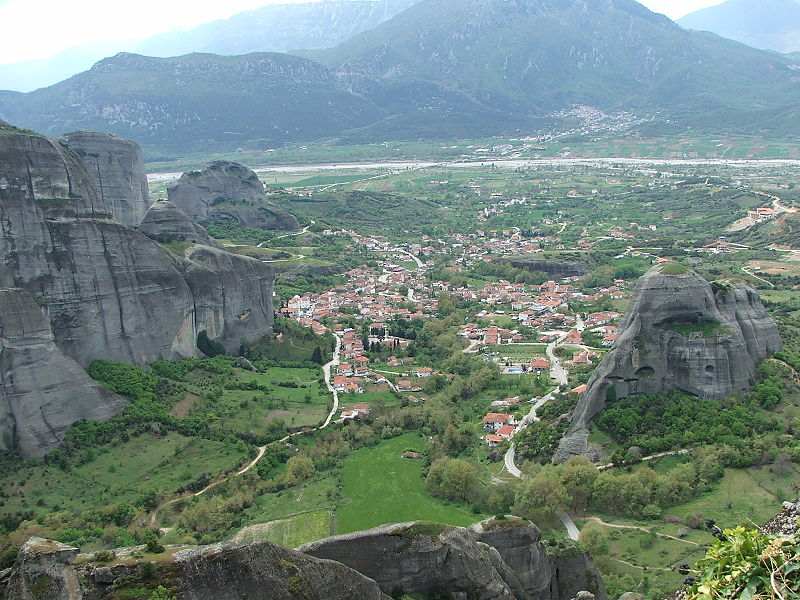
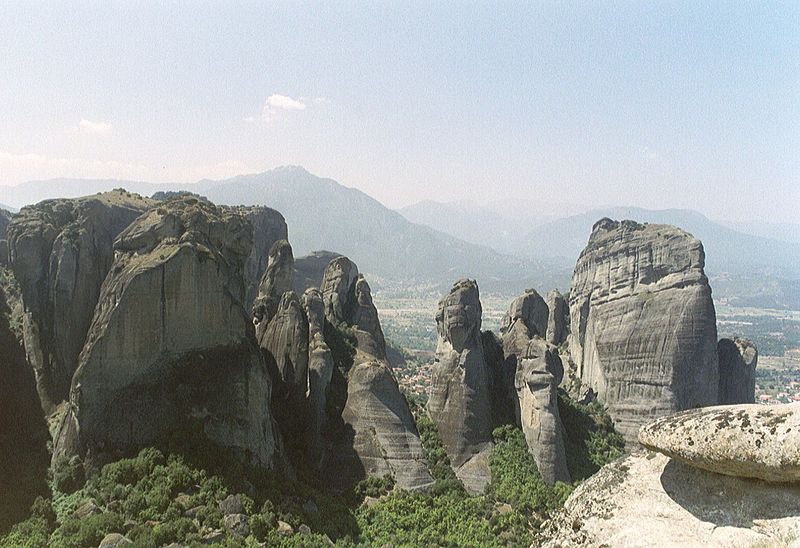
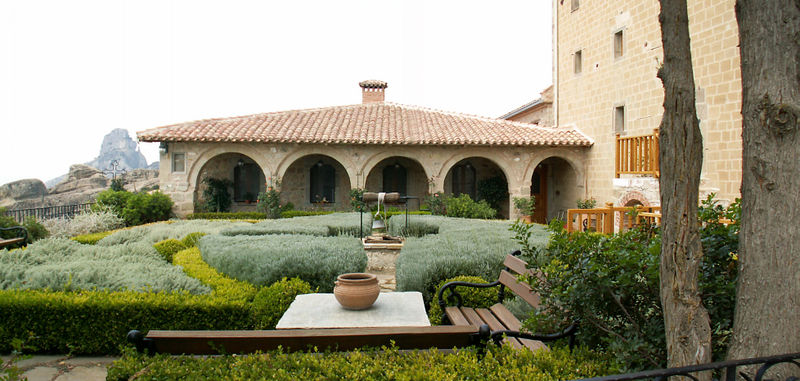
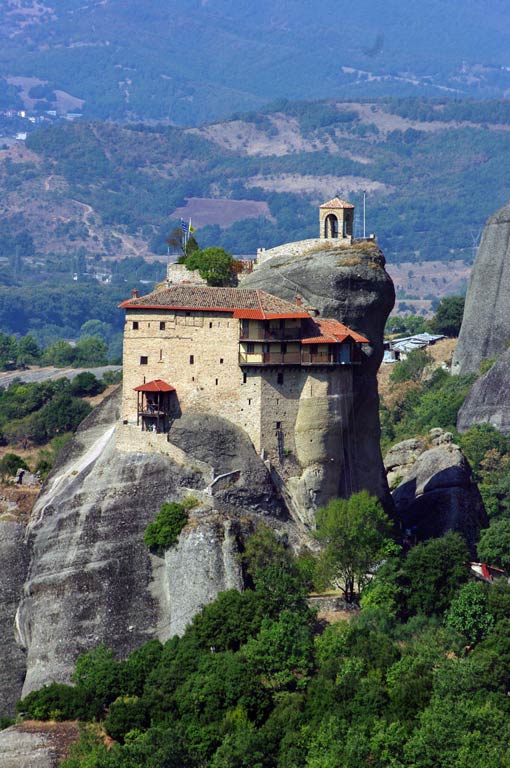
The Meteora Monasteries form a remarkable Eastern Orthodox monastic complex in central Greece, in the region of Thessaly near the town of Kalambaka. The monasteries stand on the summits of unusual sandstone rock pillars rising above the surrounding plain. Their combination of religious architecture, historic frescoes and dramatic natural scenery has made Meteora one of Greece’s best-known landmarks.
History of Meteora
Hermits began settling among the rocks around the 11th century. The isolated summits provided solitude for prayer and shelter during periods of political instability. Monastic life expanded particularly during the 14th and 15th centuries, and by the end of the 15th century around 24 monasteries existed in the area. During the 16th century, many communities expanded and decorated their churches with frescoes by leading post-Byzantine artists.
Originally, reaching the monasteries was extremely difficult. Monks and pilgrims used rope ladders, suspended nets and ropes to carry people and supplies to the summits. Later, steps were carved into the rocks, and bridges and roads were built. Today, roads and stairways provide access to the active monasteries, although some visits still require considerable physical effort.
The six monasteries
Six principal monasteries survive and welcome visitors: Great Meteoron, Varlaam, Rousanou, Saint Nicholas Anapafsas, Holy Trinity and Saint Stephen. Their complexes contain churches, chapels, courtyards, museums, libraries and collections of religious art. Opening hours and visiting conditions vary, so it is advisable to check current information before travelling.
Great Meteoron
Great Meteoron, also known as the Monastery of the Transfiguration, is the largest monastery in the complex. Its foundation is associated with Saint Athanasios of Meteora, who settled on the rock in the 14th century. The monastery flourished in the 16th century. Visitors can see the main church with its frescoes, an old refectory, museum displays, icons, manuscripts and objects from monastic life. The climb includes stairs, but the summit offers broad views of the surrounding rocks and the Thessalian plain.
Varlaam Monastery
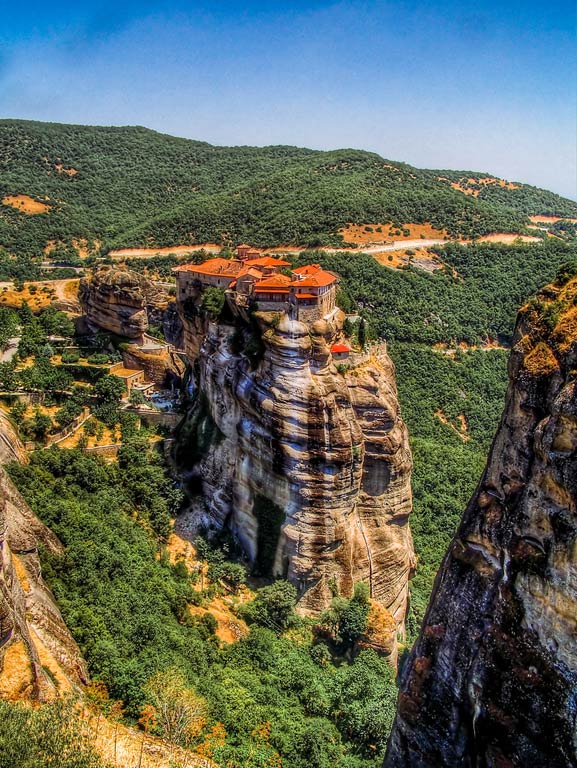
Varlaam Monastery stands on a separate high rock opposite Great Meteoron. Tradition identifies the monk Varlaam as the first hermit to settle there. In the 16th century, brothers Nektarios and Theophanes revived the monastery and built new structures and a church. Notable features include historic lifting equipment, interior rooms and wall paintings. The viewpoints offer clear views of neighbouring rock pillars and other Meteora monasteries.
Rousanou Monastery
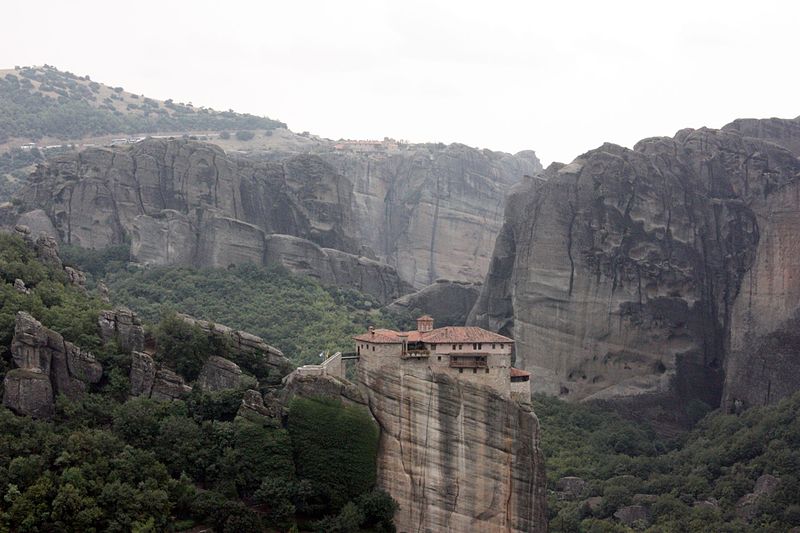
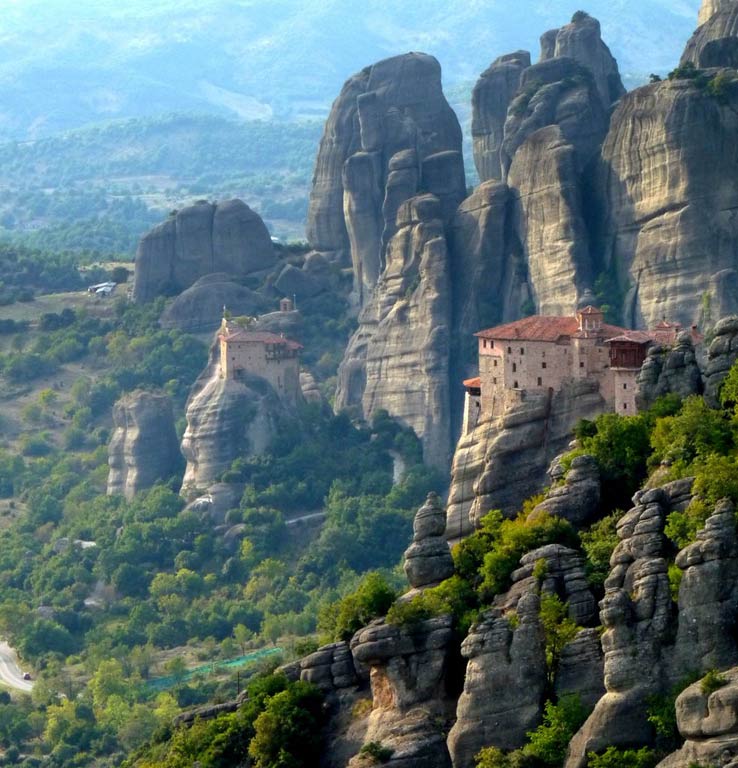
Rousanou occupies a relatively narrow rock summit, making its buildings appear to be part of the stone formation itself. The monastery is known for its churches, frescoes and peaceful atmosphere. It now houses a community of nuns. The approach involves stairways and small bridges. Its limited space and uneven terrain can make access challenging for visitors with reduced mobility.
Saint Nicholas Anapafsas Monastery
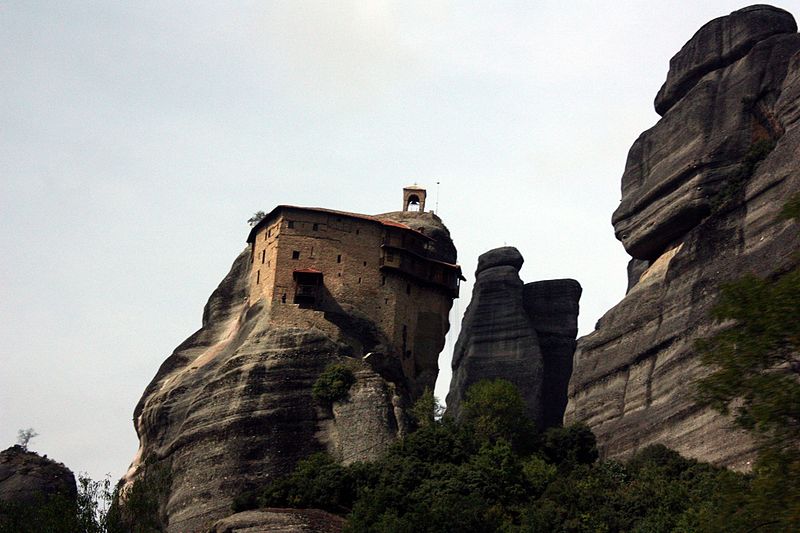
Saint Nicholas Anapafsas stands on a smaller rock and is distinguished by its compact, multi-level architecture. Its 16th-century frescoes, associated with the painter Theophanes the Cretan, are particularly valuable examples of post-Byzantine art. Because the building occupies a limited area, rooms are arranged on several levels, and the approach includes a climb up steps.
Holy Trinity Monastery
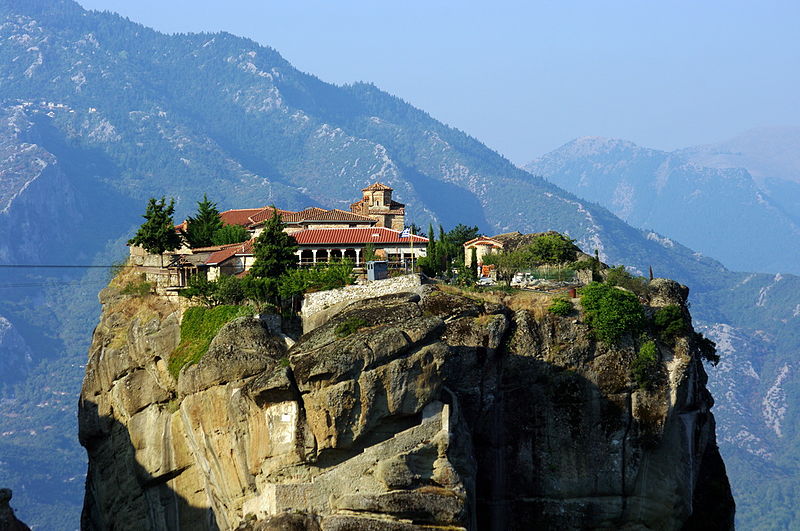
Holy Trinity Monastery occupies one of Meteora’s most dramatic rock formations above the valley near Kalambaka. Its history reaches back to the late Middle Ages, with written references dating to the 14th century. Until the 20th century, access relied mainly on ropes, ladders and lifting devices. Steps were later cut into the rock. The monastery is especially known for its isolated setting and panoramic views over the landscape.
Saint Stephen Monastery
Saint Stephen Monastery stands on a rock reached by a relatively convenient bridge. Unlike some of the other monasteries, it does not require a long ascent up steps carved into a steep cliff. It is now a convent. Its churches preserve icons, religious relics and works of ecclesiastical art. The grounds offer views over Kalambaka and the surrounding plain.
Architecture and frescoes
Meteora is exceptionally important for the study of Orthodox architecture and post-Byzantine art. The monastery churches preserve paintings depicting biblical scenes, saints, martyrs and events from church history. Some frescoes are associated with renowned 16th-century masters, including Theophanes the Cretan. Monastery museums display manuscripts, icons, vestments and objects used in the daily lives of monks.
Nature and the formation of the rocks
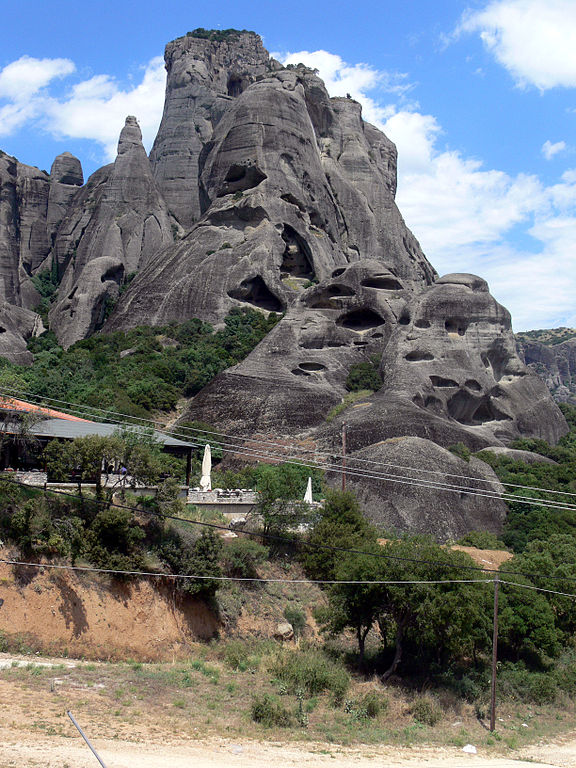
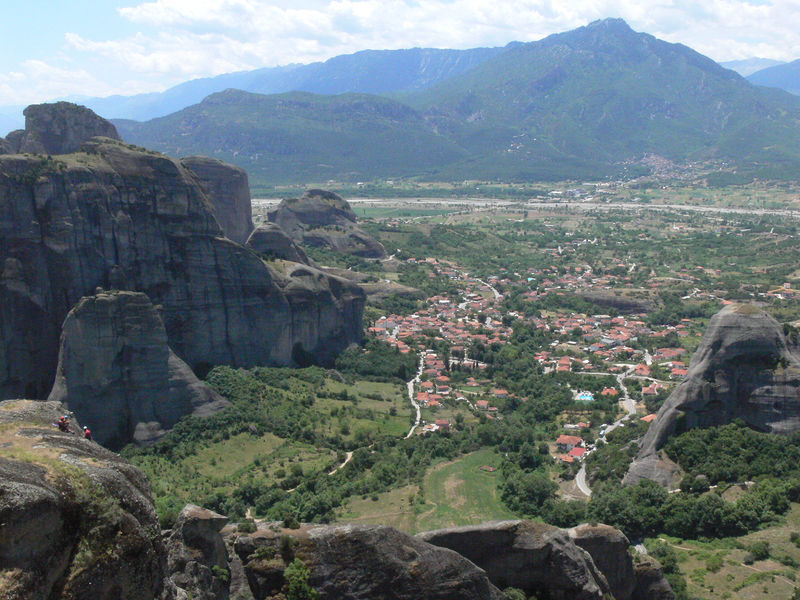
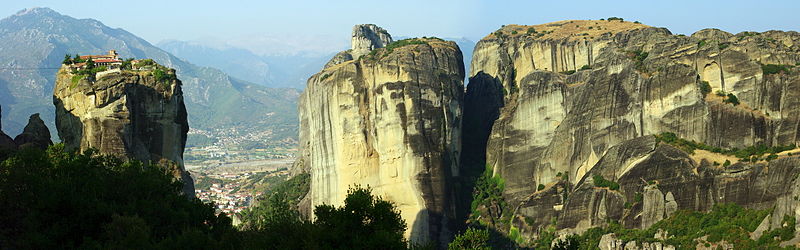
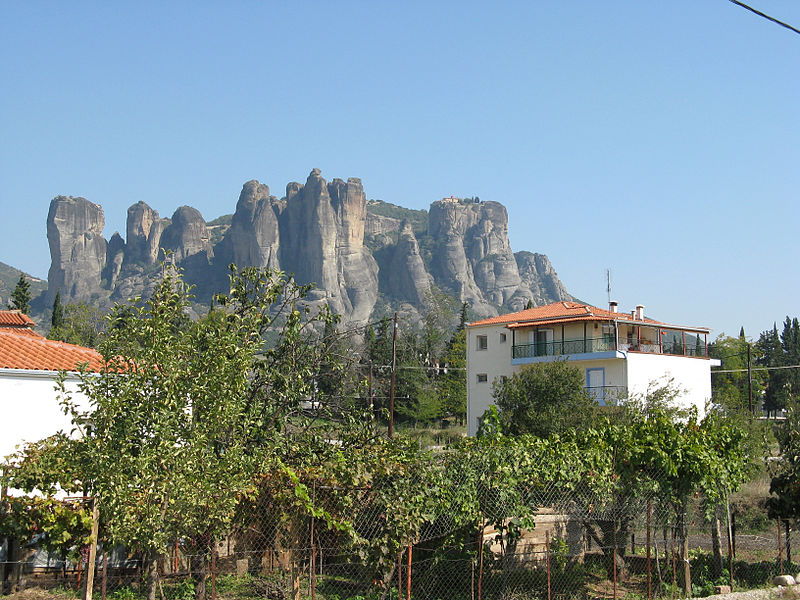
The rocks of Meteora formed from sedimentary deposits accumulated in an ancient river and delta system around 60 million years ago. Tectonic processes, weathering, rain and wind later shaped them into tall, vertical formations. Some pillars rise more than 400 metres above the surrounding land. Against the wooded slopes and Thessalian plain, they create one of Greece’s most distinctive natural landscapes.
Meteora and UNESCO
Meteora was inscribed on the UNESCO World Heritage List in 1988. Its recognition reflects both the architecture and religious history of the monasteries and the exceptional beauty of the surrounding landscape. The site demonstrates how human activity and spiritual traditions adapted to extraordinary natural conditions. The monasteries remain in religious use, making them living places of worship as well as historic monuments.
Getting there and visitor advice
The nearest towns are Kalambaka and neighbouring Kastraki. The region can be reached by train or bus from other parts of Greece, followed by local transport, a car, an organised tour or walking routes. Many travellers visit several monasteries in one day, but seeing all six interiors in a short time can be difficult because of distances, stairs and opening schedules.
The monasteries remain religious institutions. Visitors should wear modest clothing covering the shoulders and knees, keep noise to a minimum and follow photography rules. Additional restrictions may apply in particular rooms. Check closing days and opening hours before travelling. Meteora is especially striking in the morning and near sunset, when the light highlights the texture of the rocks.
Gallery