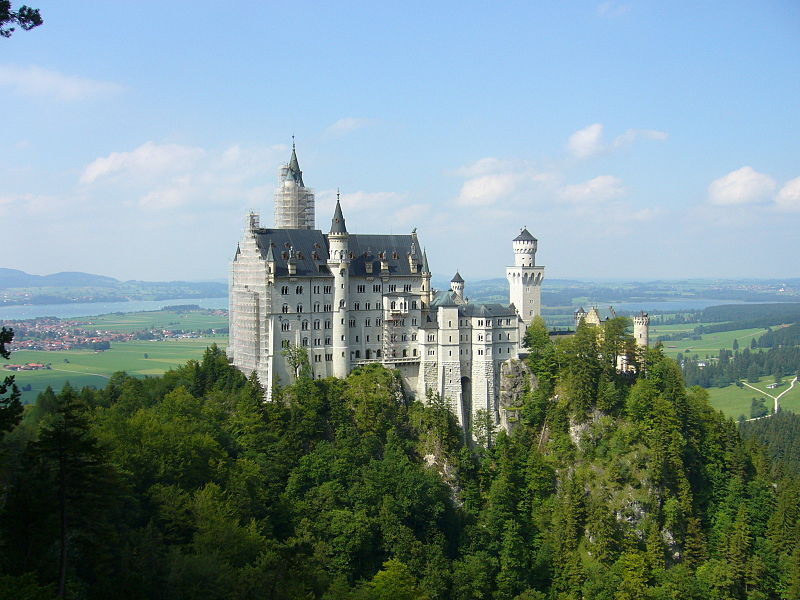
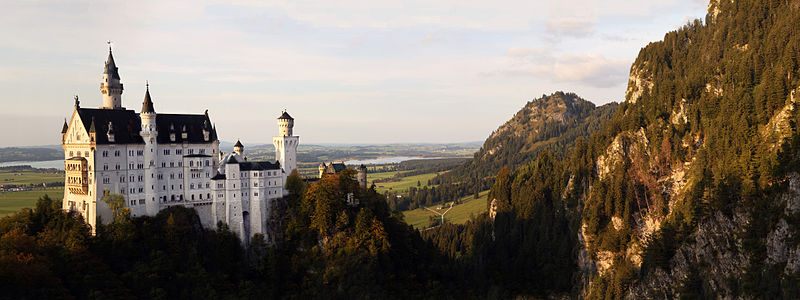
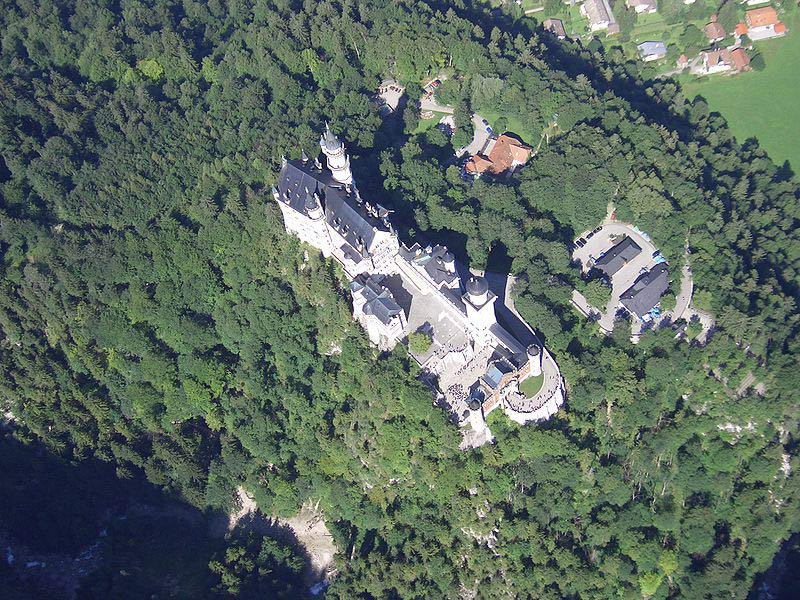
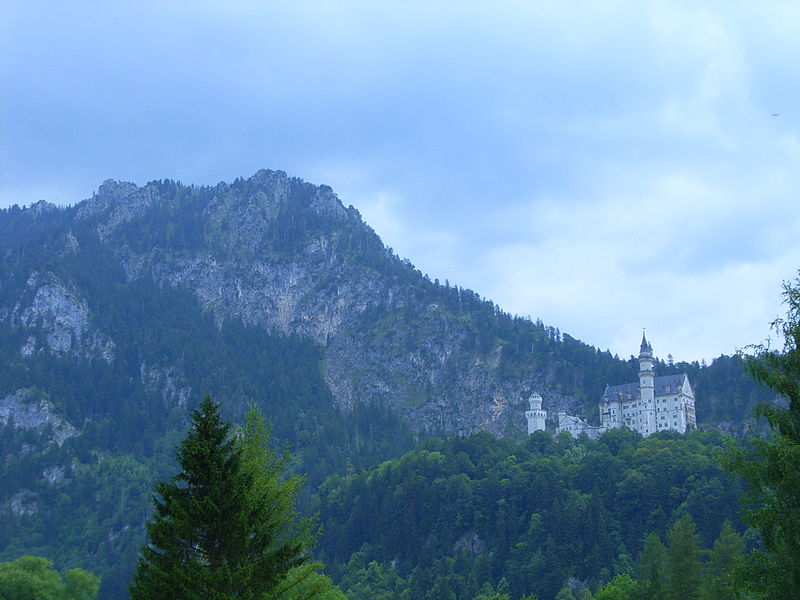
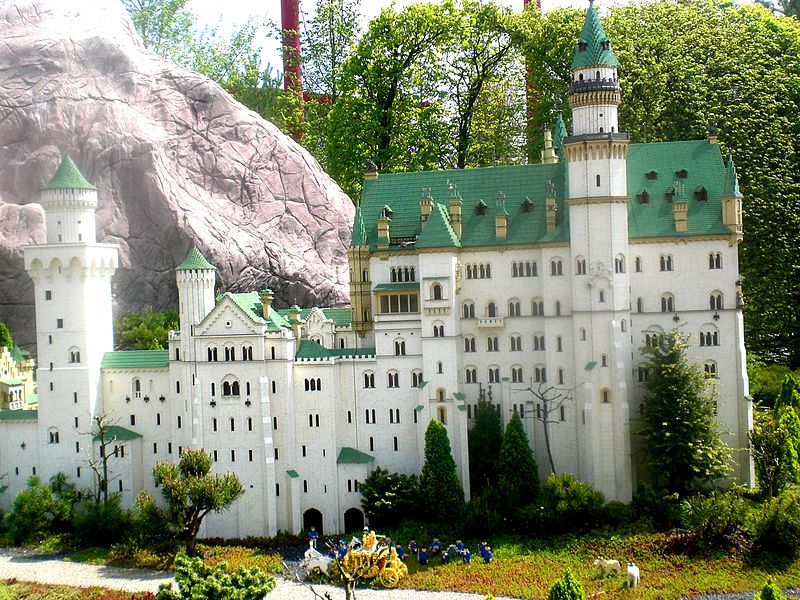
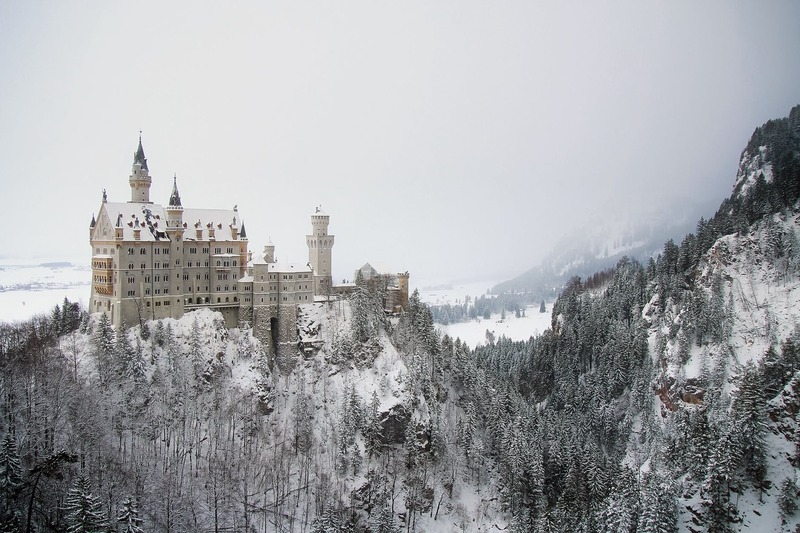
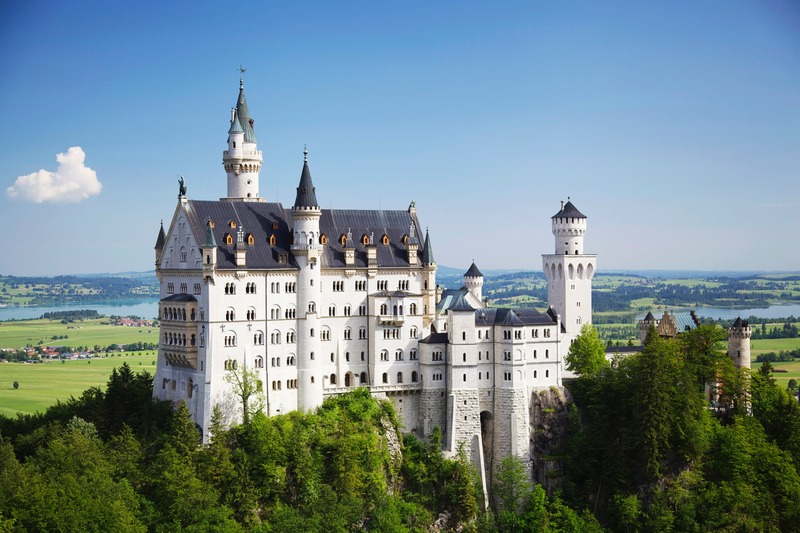
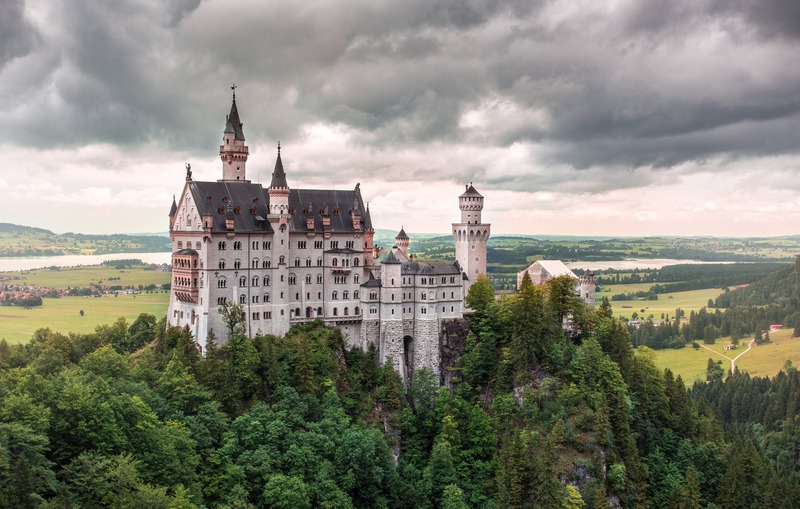
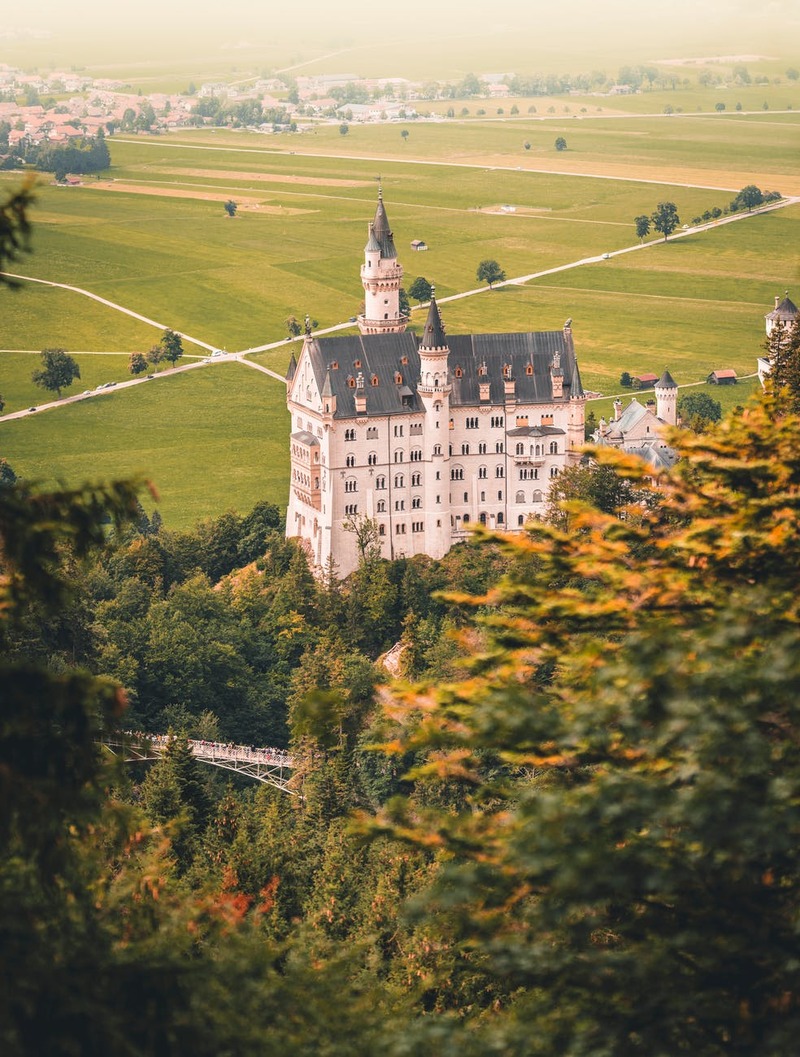
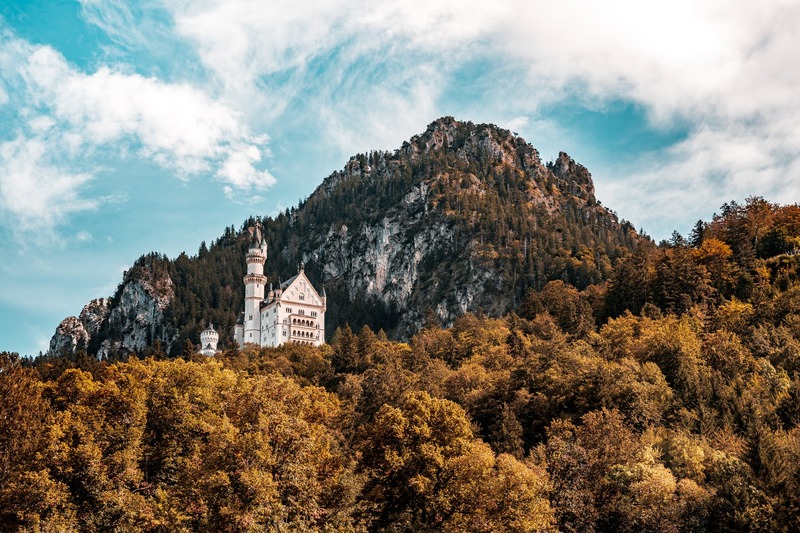
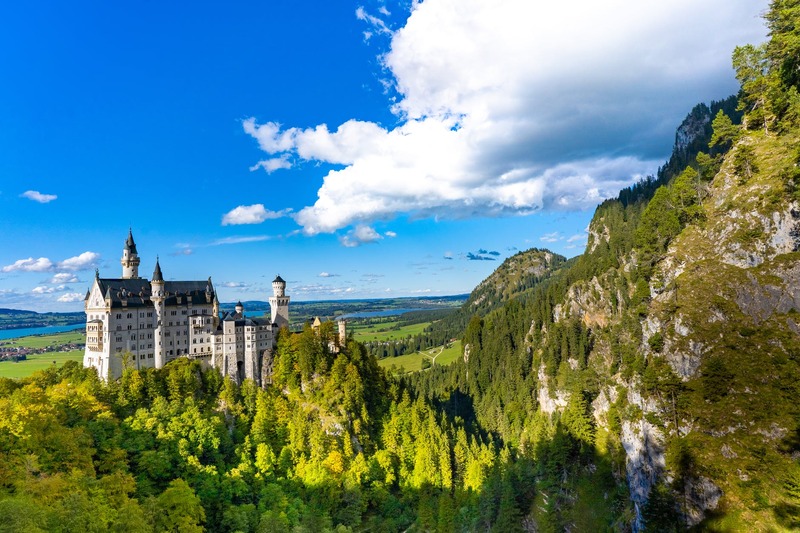
Neuschwanstein Castle is one of Germany’s most famous landmarks, located in the Bavarian Alps near Füssen and the Austrian border. It stands on a rocky ridge above the Hohenschwangau valley, surrounded by forests, lakes, and mountain slopes. Its pale walls and soaring towers have made it one of Europe’s most recognizable castles. Often described as a fairytale castle, Neuschwanstein is also the story of an ambitious vision created by King Ludwig II of Bavaria.
Construction began in 1869. Ludwig wanted a private retreat inspired by medieval legends, chivalric tales, and the operas of Richard Wagner. Rather than serving primarily as a venue for state ceremonies, the castle was conceived as a personal world of art, music, and imagination. In 2025, Neuschwanstein became part of the UNESCO World Heritage property known as the Palaces of King Ludwig II of Bavaria.
King Ludwig II and his dream
Ludwig II was born in 1845 and became King of Bavaria in 1864, aged just 18. From childhood, he was fascinated by medieval history, Germanic legends, theatre, and music. Hohenschwangau Castle, where he spent much of his youth, featured murals depicting legendary heroes and chivalric stories, shaping his imagination.
Composer Richard Wagner played a major role in Ludwig’s life. The king admired Wagner’s musical dramas, which combined mythology, heroism, love, loyalty, and tragedy. He supported the composer and sought to turn the world of legends into architecture. The name Neuschwanstein is commonly interpreted as “New Swan Stone” or “New Swan Castle,” reflecting the symbolism of the swan and medieval traditions.
Building the castle
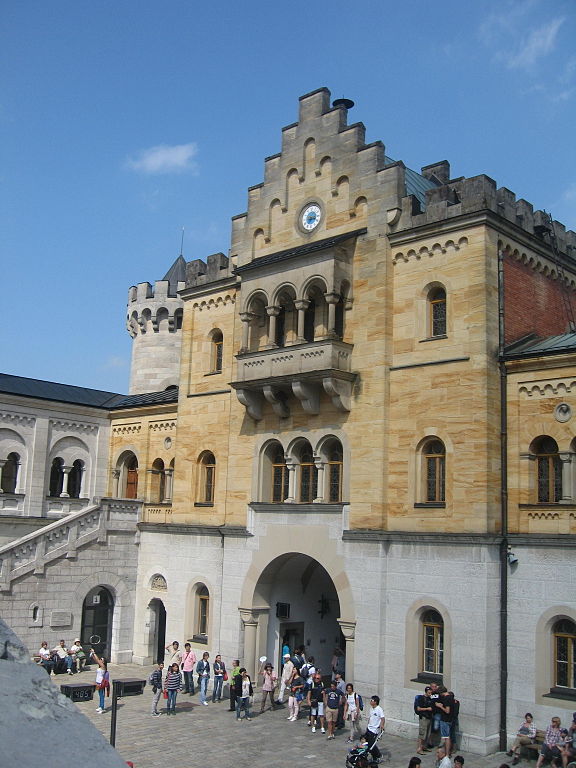
Preparations began in the summer of 1868, when part of the rocky outcrop had to be removed to make room for the foundations. The foundation stone was laid on 5 September 1869. The Gatehouse was completed first and served as Ludwig’s temporary residence during visits to the construction site. Work on the main palace building followed, and the royal apartments were ready for occupation in 1884.
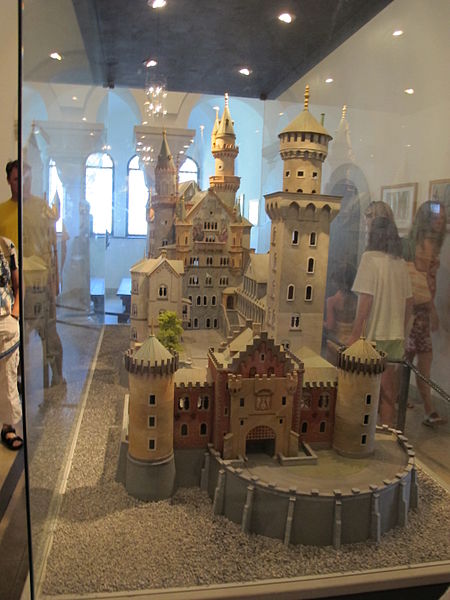
The plans changed repeatedly, and some ambitious elements were never completed. Neuschwanstein is not a genuine medieval castle but a nineteenth-century creation inspired by Romantic historicism. Parts of the complex were finished after Ludwig’s death, while the planned tall keep and chapel were never built.
Ludwig II died on 13 June 1886 near Lake Starnberg, in circumstances that remain disputed. The castle was still unfinished, and the king had spent relatively little time in its completed rooms. Shortly after his death, it opened to visitors to help cover its maintenance costs.
Architecture and nineteenth-century technology
Neuschwanstein combines Romanesque, Gothic, and Byzantine influences. Towers, arched windows, and pale façades create the appearance of a storybook fortress. Yet the building used engineering techniques that were modern for its time. Its walls were made of brick and clad in light limestone, while some structural elements, including the Throne Hall, relied on metal frameworks.
Behind the medieval-inspired decoration were modern conveniences. The palace had central hot-air heating, running water on the floors, and flush toilets. An electric bell system summoned servants, and some rooms had telephones. The castle therefore combined a romantic visual world with the technological advances of the industrial age.
The Throne Hall and Singers’ Hall
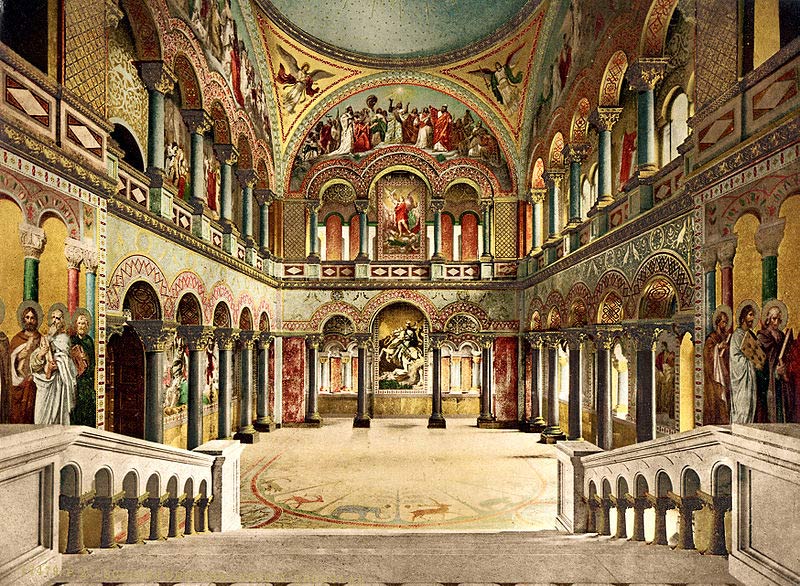
The Throne Hall is one of the castle’s most impressive rooms. Extending across two floors, it resembles a Byzantine church. Its high apse, religious and historical paintings, star-decorated cupola, and mosaic floor create a solemn atmosphere. A throne was planned for the apse but was never installed after Ludwig’s death. The hall was intended as a symbolic expression of the king’s belief in divinely sanctioned rule rather than a conventional state reception room.
The Singers’ Hall draws inspiration from medieval halls at Wartburg Castle. Its decoration refers to Parzival and other figures from Germanic legend. Other rooms feature stories associated with Tannhäuser, Lohengrin, and Parzival. The swan appears repeatedly as a decorative and symbolic motif, connecting the castle with the legend of the Swan Knight and the historical imagery of the House of Schwangau.
Royal apartments and the artificial grotto
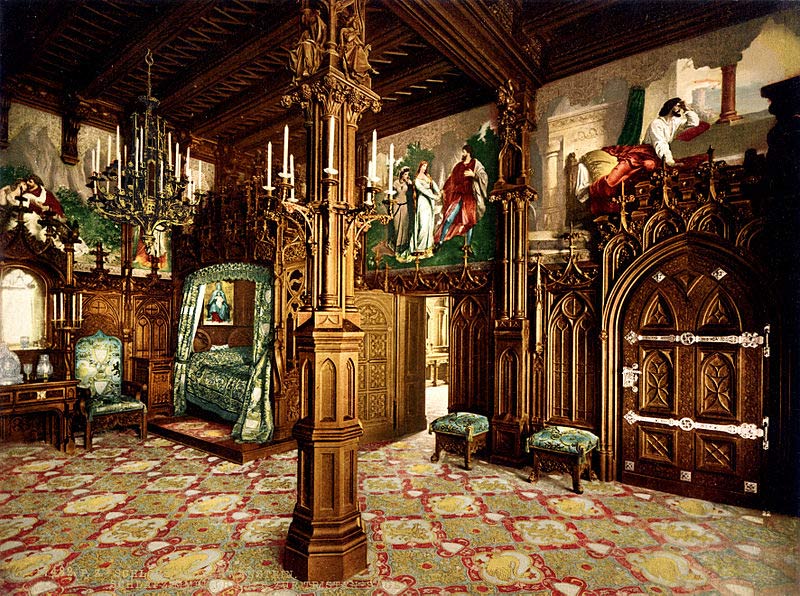
Ludwig’s private rooms reflect his interest in legends, literature, and music. The bedroom features elaborate woodcarving and paintings inspired by the story of Tristan and Isolde. In the study, an artificial grotto was created after the Venus Grotto in Wagner’s opera Tannhäuser. It included coloured electric lighting and a small waterfall, combining fantasy scenery with modern technology.
The castle was never completed according to all the original plans, so visitors see only part of the intended ensemble. Guided tours generally include the most significant royal rooms and ceremonial halls, as well as the historic kitchen, which illustrates the practical side of running the residence.
The castle and the Alpine landscape
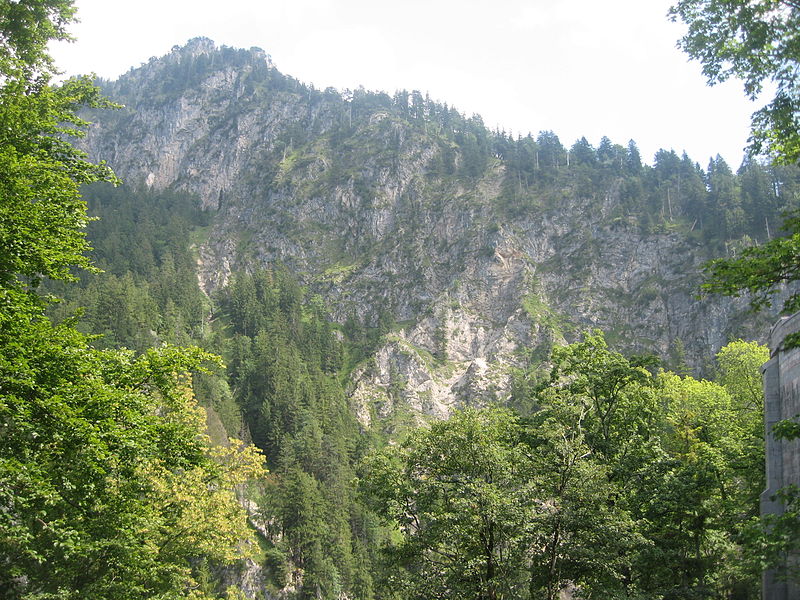
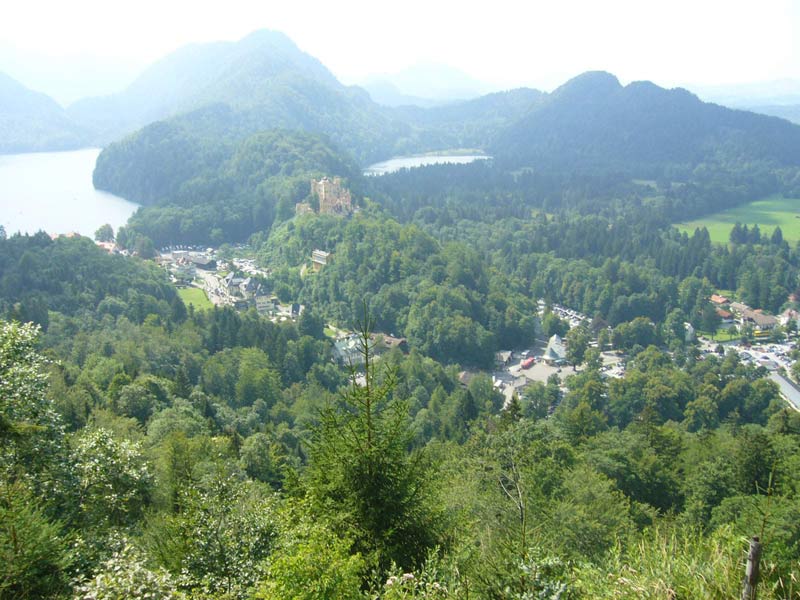
Neuschwanstein is famous as much for its setting as for its architecture. Views from the surrounding area include Lake Alpsee, nearby Hohenschwangau Castle, and forested mountain slopes. One of the best-known viewpoints is Marienbrücke, a bridge over the Pöllat Gorge that offers the classic view of the castle. Access depends on weather and safety conditions, and the bridge may close temporarily.
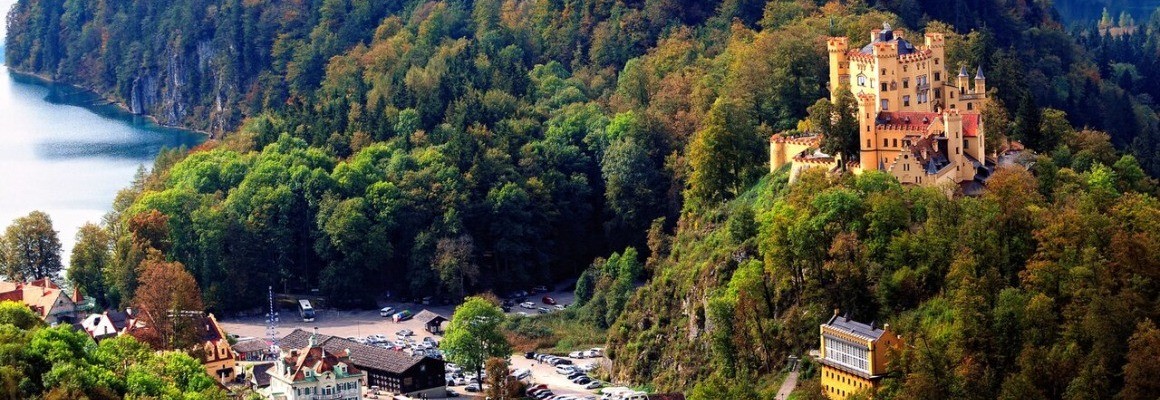
Nearby attractions include Hohenschwangau Castle, Lakes Alpsee and Schwansee, walking trails, and the historic town of Füssen. Visiting both castles provides a useful contrast between Hohenschwangau’s more historically grounded appearance and Neuschwanstein’s imaginative architecture.
UNESCO World Heritage status
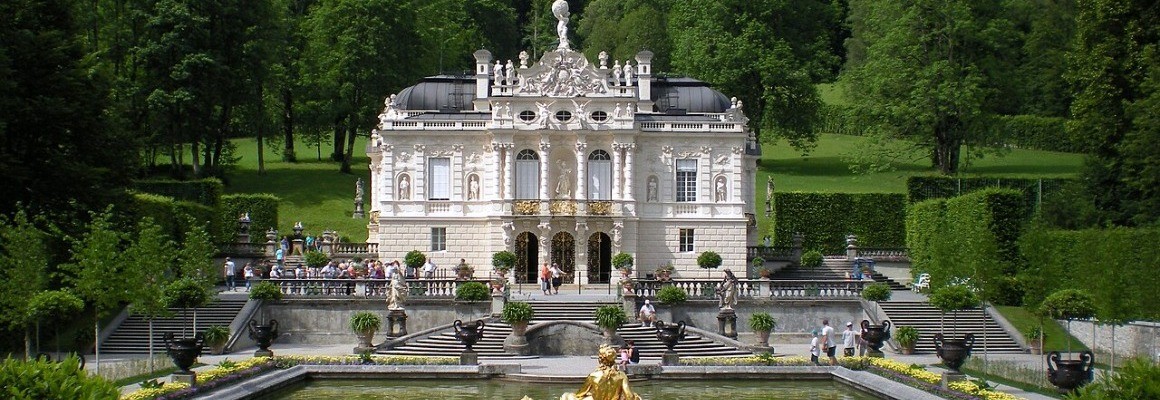
In 2025, Neuschwanstein became part of the UNESCO World Heritage property “The Palaces of King Ludwig II of Bavaria.” The property also includes Linderhof Palace, Herrenchiemsee New Palace, and the King’s House on Schachen. These places reflect Ludwig’s ambition to create private artistic worlds where Romantic visions of the past met the technical possibilities of the nineteenth century.
How to visit Neuschwanstein
The castle is near the village of Hohenschwangau, about five kilometres from Füssen. Travellers can take a train to Füssen and continue by local bus. From the ticket centre, visitors must travel uphill to the castle, either on foot or by available transport for part of the route. The final section is usually completed on foot.
The interior can only be visited on a guided tour at a specific time. Booking tickets in advance is strongly recommended, especially during summer. Arrive early at the meeting point because late arrivals may miss the tour. Large backpacks, strollers, and other bulky items are not allowed inside. Check the official website for current opening hours, ticket rules, and access to viewpoints before travelling.
Why Neuschwanstein became a fairytale icon
Neuschwanstein combines a dramatic silhouette, an Alpine setting, and the romantic story of a king who wanted to build his own world of legends. Its appeal lies not only in its façades but also in the contrast between medieval fantasy and nineteenth-century technology. It has become one of Germany’s most recognizable landmarks and an important monument to Bavarian cultural history.
Gallery