Claude Monet's Gardens are a famous garden estate in the French village of Giverny, in Normandy. The site is closely connected with the life and work of one of the founders of Impressionism. Monet settled here in 1883 and gradually transformed the grounds around his house into a work of art. Flower beds, a water lily pond, a Japanese bridge and reflections in the water inspired many of his paintings.
Today, Monet's house and gardens are open to visitors, offering a glimpse of the place where the artist lived, worked and created his celebrated landscapes. The estate is especially appealing to art lovers, garden enthusiasts and travellers interested in French heritage.
The history of Monet's gardens
Claude Monet moved to Giverny with his family in 1883. He first rented a house with grounds and later purchased the property and began reshaping it. Interested in botany, he carefully selected plants and experimented with colour combinations. For Monet, the garden was not simply a place to relax but a living studio where light, colours and compositions continually changed.
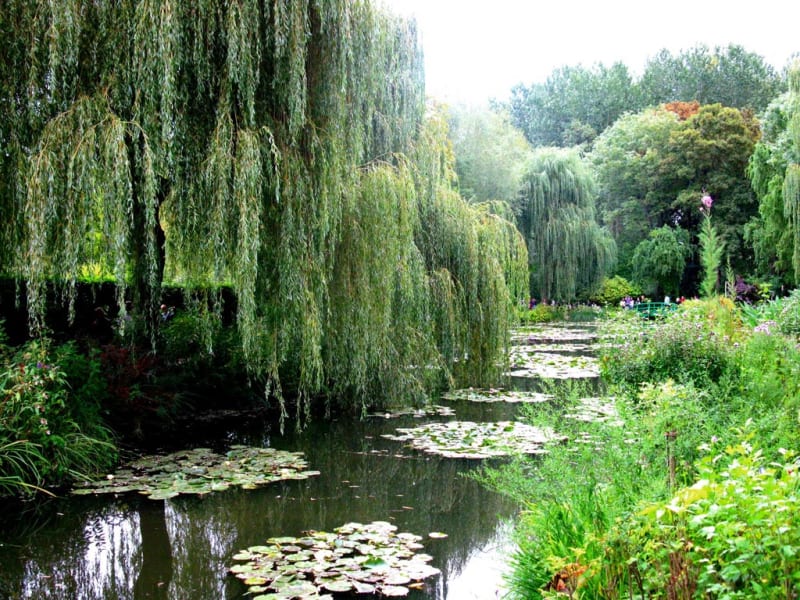
In 1893, Monet acquired land across the railway line and created a water garden. He diverted a small stream connected to the River Epte to form the pond. A Japanese bridge, weeping willows, bamboo and water lilies became central features. Monet lived in Giverny until his death in 1926. After a period of decline, the estate was restored, with major restoration work beginning in the late 1970s.
Clos Normand: the flower garden
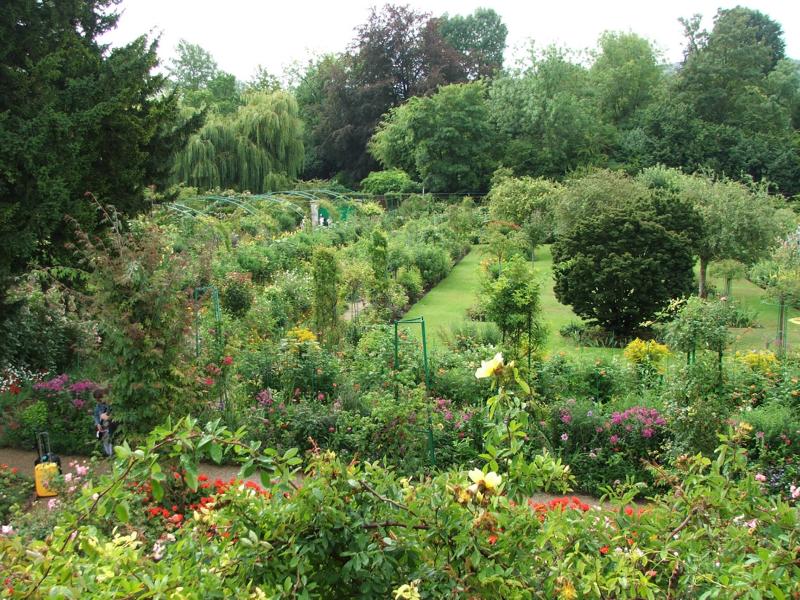
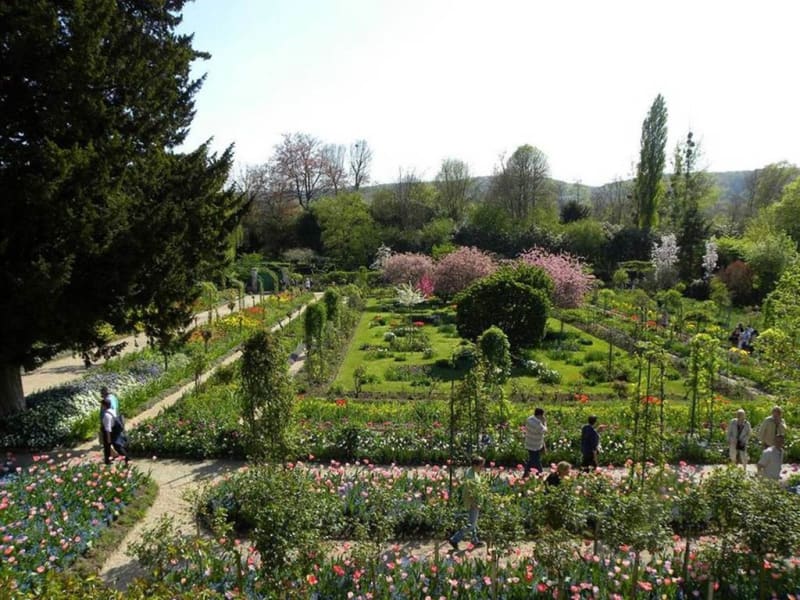
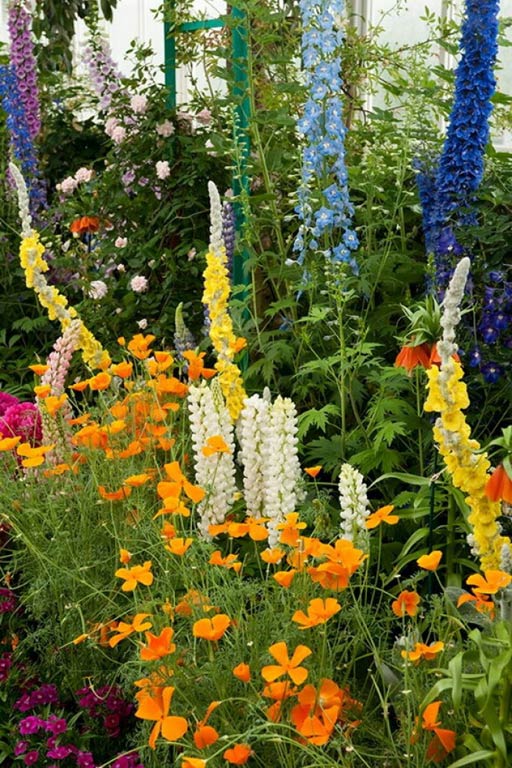
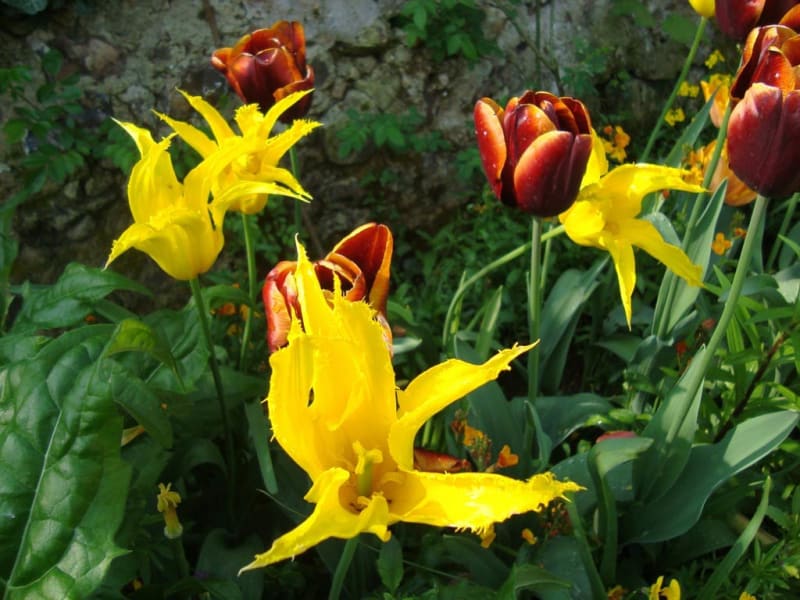
Clos Normand lies in front of the house and features straight paths, arches and abundant flower beds. Monet preferred free combinations of plants, selecting them above all for their colours. Tulips, daffodils and other bulbs bloom in spring, followed by irises, roses, poppies and summer flowers. Late-flowering plants keep the garden colourful into the end of summer and autumn.
As visitors walk along the paths, they can see how Monet used colour contrasts and the natural forms of plants. The garden resembles an artist's palette, with shades that change as the sunlight shifts.
The water garden and water lily pond
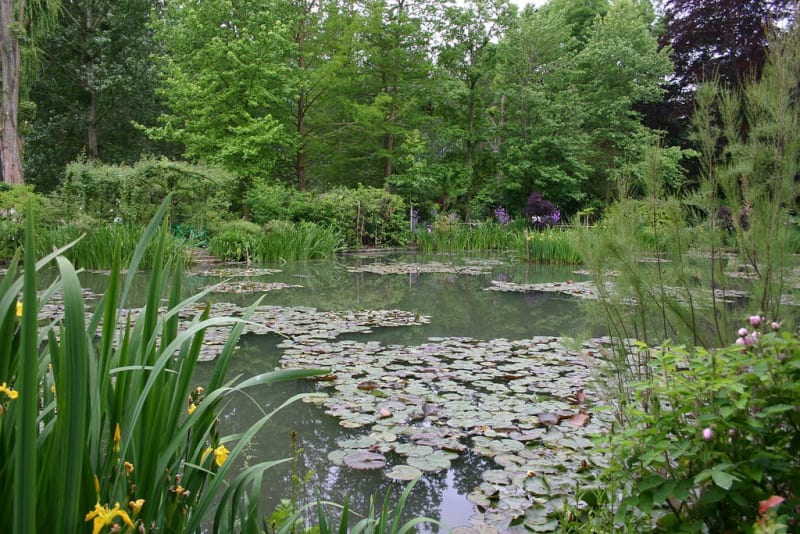
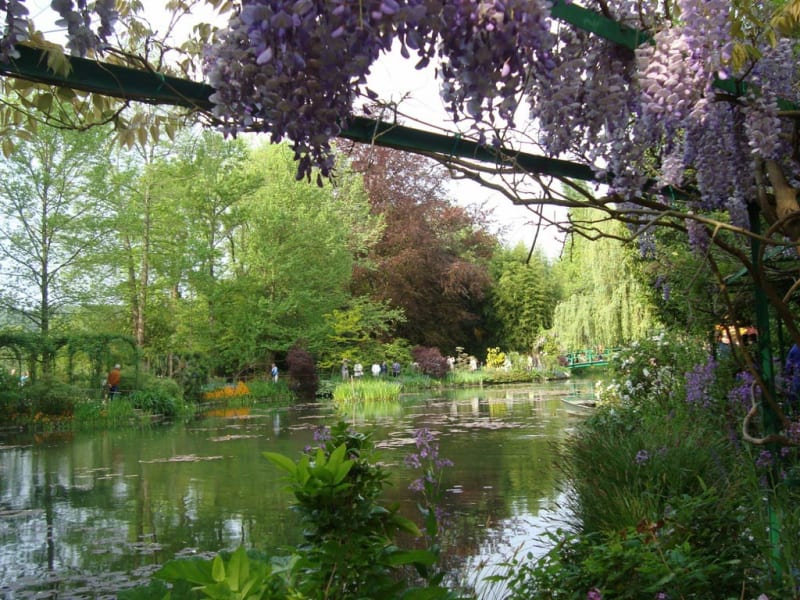
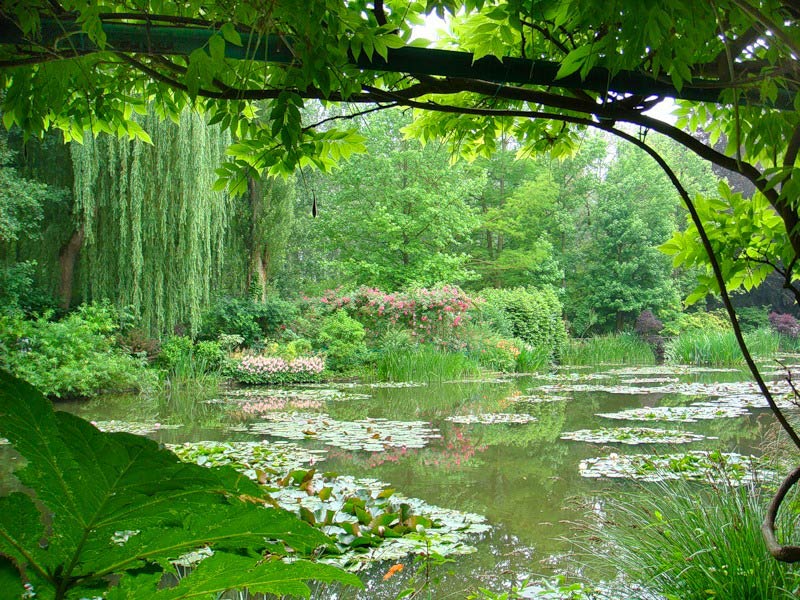
The water garden is the estate's most recognisable feature. At its centre lies a pond that reflects the sky, trees and surrounding greenery. Water lilies float on the surface, while weeping willows, bamboo, Japanese maples and other plants frame the banks. The changing reflections created the atmosphere that fascinated Monet for many years.
Monet carefully maintained the pond and its plants. The water garden became one of the main subjects of his later work. His water lily series explore light, reflections, transitions of colour and the boundary between an object and its image on the water.
The Japanese bridge
The green Japanese bridge is one of the gardens' main symbols. It crosses the pond and is surrounded by lush vegetation. Its design was inspired by Japanese artistic imagery that Monet admired and collected. Unlike the traditional red bridges often associated with Japanese gardens, this bridge is painted green so that it blends with the surrounding plants.
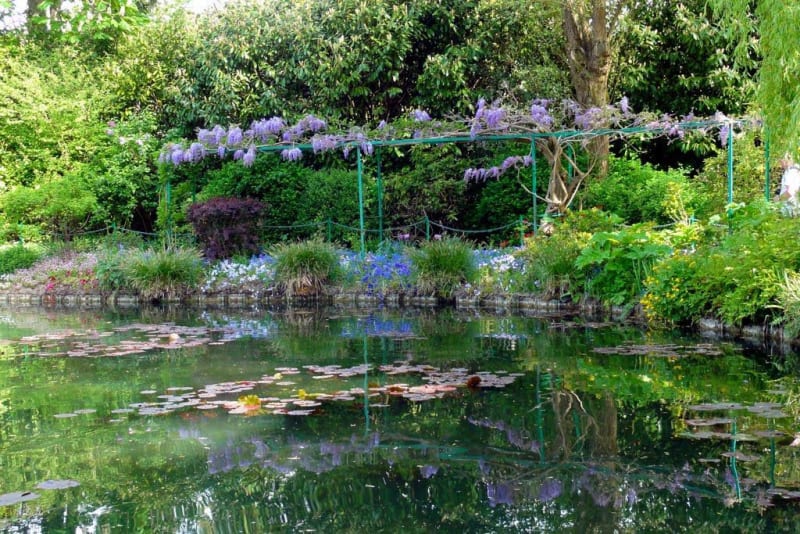
Wisteria grows around the bridge and is especially beautiful when in bloom. Its hanging flowers frame the structure, while the bridge's reflection creates an almost symmetrical composition. This motif became one of the best-known subjects in Monet's paintings.
Claude Monet's house
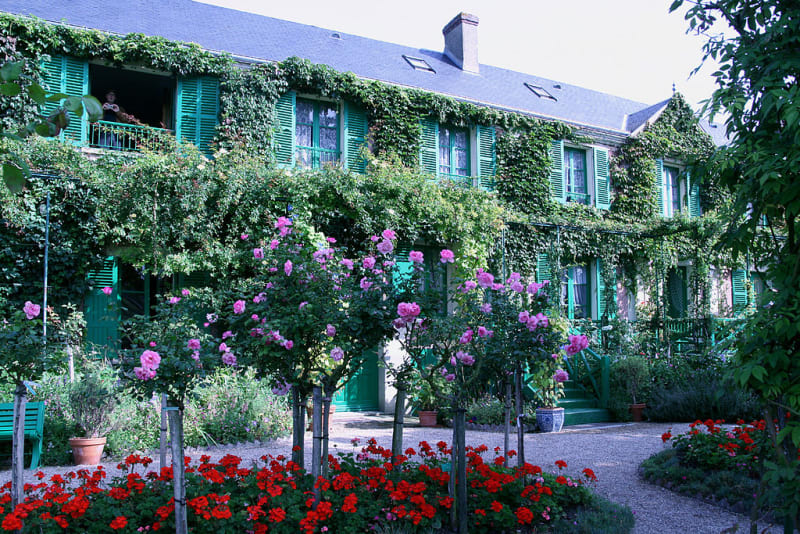
The pink house with green shutters was the artist's family home. Its restored interiors reflect Monet's everyday life. Visitors can see period furnishings, a kitchen with distinctive blue tiles, a yellow dining room and other rooms. The collection of Japanese prints that decorated Monet's walls is particularly interesting. The estate also includes a large studio associated with his later works.
Water lilies and famous paintings
The Water Lilies series became one of the most important achievements of Monet's later career. He painted the same pond repeatedly, changing his viewpoint, the time of day and the lighting. Reflections of water and vegetation gradually became subjects in their own right. In Giverny, visitors can experience the actual landscape that inspired the artist rather than a museum reconstruction.
Seasonal flowering
The gardens are generally open from early April to early November. Spring brings tulips, daffodils and flowering trees. Wisteria may bloom on the Japanese bridge in May, followed by roses and other flowers in early summer. Water lilies are usually visible from late June to September, with July and August often offering especially impressive summer views. Exact flowering times depend on the weather.
How to get to Claude Monet's Gardens
Giverny is in Normandy, approximately 75 kilometres west of Paris. Travellers usually take a train from Paris to Vernon–Giverny station and continue to the village by bus, taxi, bicycle or organised excursion. A visit can be combined with a walk around Giverny and a trip to the Museum of Impressionism.
Visitor tips
The gardens can be busy during peak flowering periods and on weekends. For a quieter visit, arrive early and consider booking tickets online in advance. Seeing the house and both gardens usually takes around one and a half to two hours, though art lovers and photographers may wish to stay longer. Follow marked paths and keep off the flower beds. Check the official website for current opening hours and visiting conditions.
Why visit Claude Monet's Gardens
Claude Monet's Gardens bring together art, history and horticulture. Visitors can see the places that inspired one of the world's best-known Impressionist painters, explore his home and discover how a garden became a source of major works of art. The water lily pond, green Japanese bridge and flower beds of Clos Normand create a landscape that feels like a living painting.
Gallery