The Château de Chambord is one of France's most famous royal palaces and an outstanding monument of Renaissance architecture. Located in the Loire Valley, amid the forests and meadows of the historic Sologne region, it is recognised worldwide for its monumental towers, numerous chimneys, decorative turrets and extraordinary roofline. Chambord was conceived less as a permanent royal residence than as a grand expression of the power and artistic ambitions of the French monarchy.
The history of construction
Construction began in 1519 at the command of King Francis I, who admired art, architecture and the culture of the Italian Renaissance. He wanted France to become one of Europe's leading cultural centres, and ambitious building projects helped communicate the prestige of the crown. The site was chosen in a wooded region suitable for royal hunting. The central structure resembles a medieval keep, while its overall design and decoration reflect new Renaissance ideas.
Leonardo da Vinci is often associated with the conception of Chambord. The Italian master worked at the French court, and some architectural features resemble ideas found in his engineering sketches. However, there is not enough documentary evidence to identify him conclusively as the author of the final design. His influence is therefore considered plausible, but not definitively proven.
An extraordinary architectural design
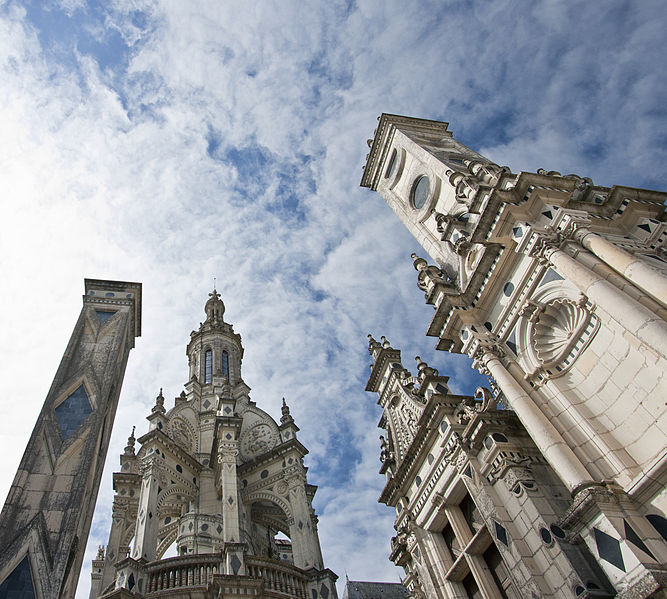
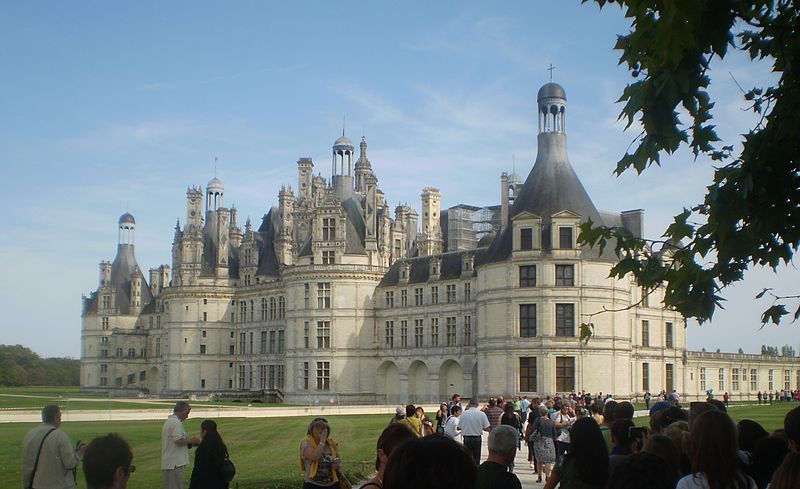
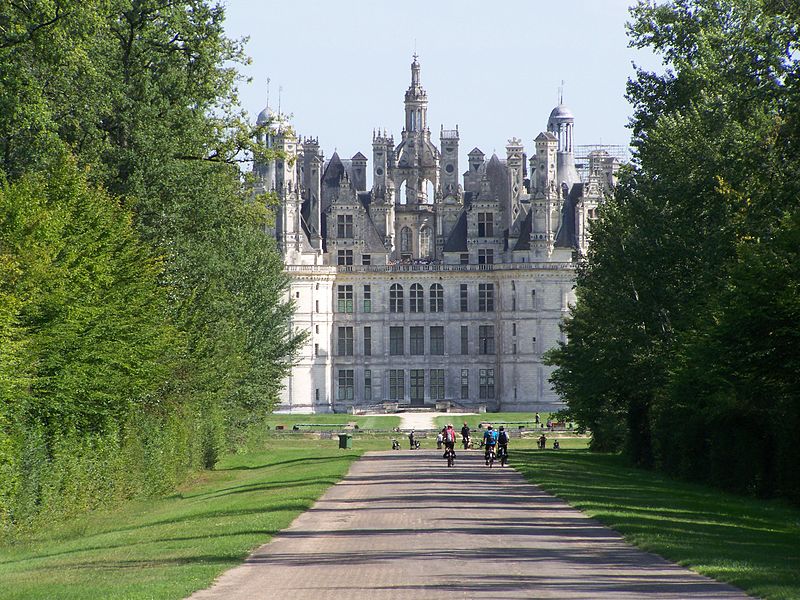
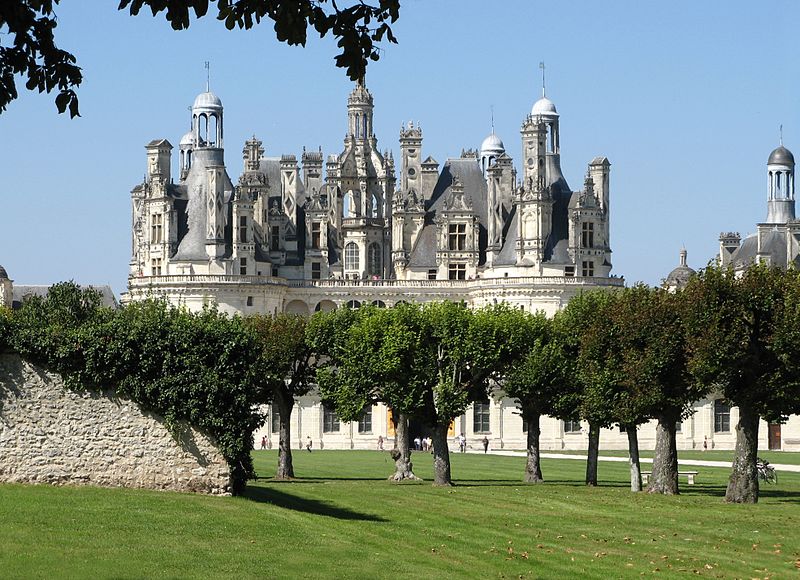
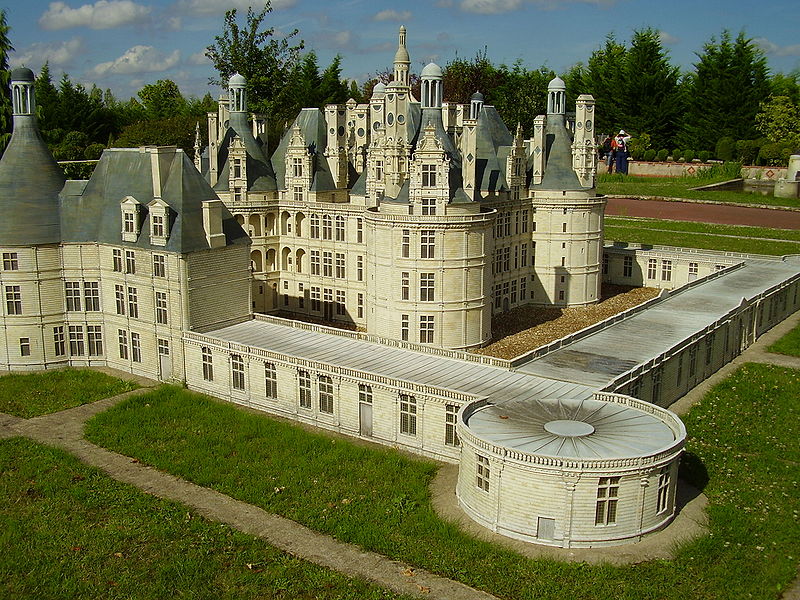
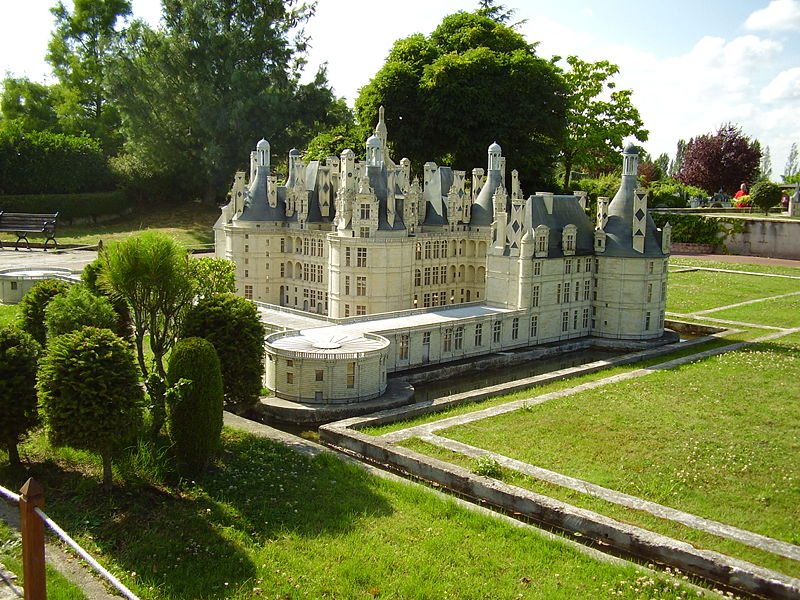
Chambord combines the forms of a medieval fortress with the refined decoration of the Renaissance. Massive corner towers surround the central building, while numerous turrets, spires and chimneys create a complex silhouette. The roof resembles a small stone city, and the terraces offer views of the symmetrical façades and the vast surrounding estate. Inside, the central keep is arranged around a cross-shaped plan, an unusual design for a French royal palace of the period.
The famous double helix staircase
Chambord's best-known architectural feature is its double helix staircase, positioned at the centre of the château. It consists of two separate spiral flights winding around a shared hollow core. Two people can climb the different flights at the same time, see each other through openings and yet never cross paths. The staircase connects the main floors with the roof terraces and demonstrates the Renaissance interest in geometry, engineering and the experience of space.
A royal hunting residence
Chambord was designed primarily for royal visits and hunting rather than permanent residence. Francis I spent relatively little time here, but used the château to receive guests and display his authority. Construction continued under later rulers, and major developments took place during the reign of Louis XIV. The king visited with his court, continued work on the estate and improved its surroundings. On 14 October 1670, Molière's comedy *The Bourgeois Gentleman* was performed here for the first time before Louis XIV and his court.
The royal estate and forest
The château stands at the centre of a vast estate of forests, meadows and waterways. A wall extending approximately 32 kilometres surrounds the property, historically helping to manage and control the royal hunting grounds. The forests provide habitats for deer, wild boar, foxes and many bird species. Today, protecting biodiversity and preserving the historic landscape are important parts of estate management.
What to see inside
Visitors usually begin with the central keep and the double helix staircase, then explore the royal apartments, spacious halls, galleries and historic rooms. Artworks, furniture and decorative details help illustrate the château's changing uses over the centuries. The decorated vaults bearing royal emblems and the roof terraces are especially rewarding. Allow several hours to explore the building, or much of a day if you also want to walk around the estate.
When to visit
Spring and summer are ideal for walking among the green forests, autumn brings golden and red foliage, and winter reveals the architecture against a quieter landscape. Opening hours, access to individual rooms and special events may vary, so it is advisable to check official visitor information before travelling. Chambord combines royal history, architectural ingenuity and natural beauty, making it one of the most remarkable destinations in the Loire Valley.
Gallery