Fundy National Park lies on the southeastern coast of New Brunswick, Canada, along the Bay of Fundy on the Atlantic Ocean. Its landscape combines rocky coves, dense forests, river valleys, waterfalls and freshwater lakes. The region is famous for some of the world's highest tides, which transform the shoreline twice a day.
The park covers approximately 206 square kilometres and protects about 20 kilometres of coastline. More than 100 kilometres of hiking and biking trails cross its forests and valleys. Visitors come to experience the tides, walk across exposed seabed at low water, discover waterfalls, camp, paddle and explore the natural landscapes of Atlantic Canada.
The Bay of Fundy and its remarkable tides
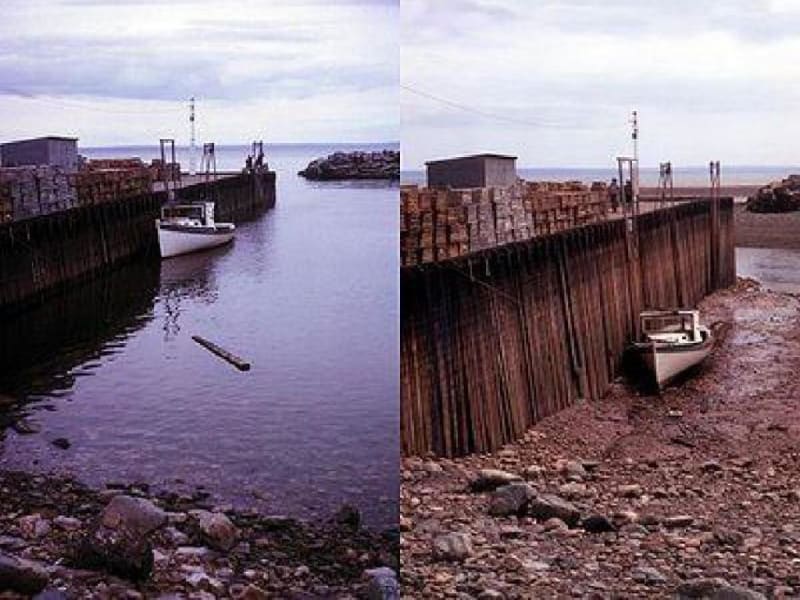
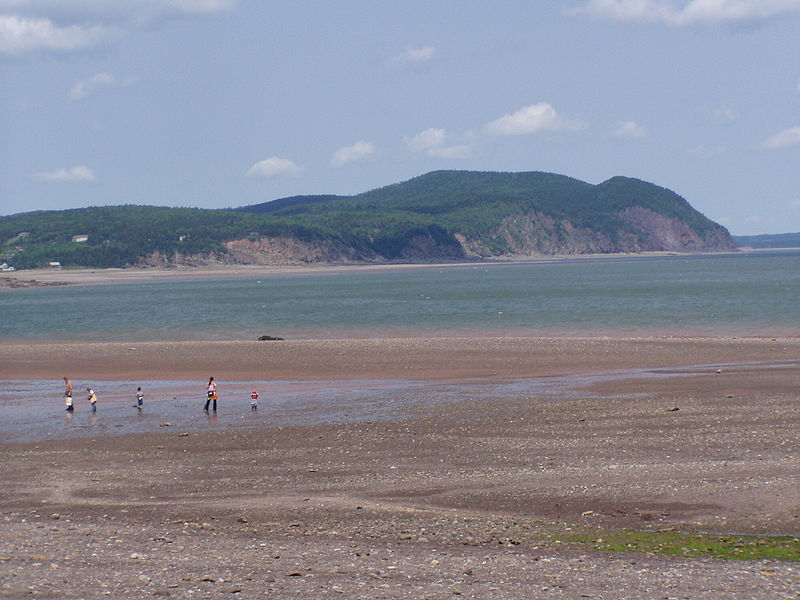
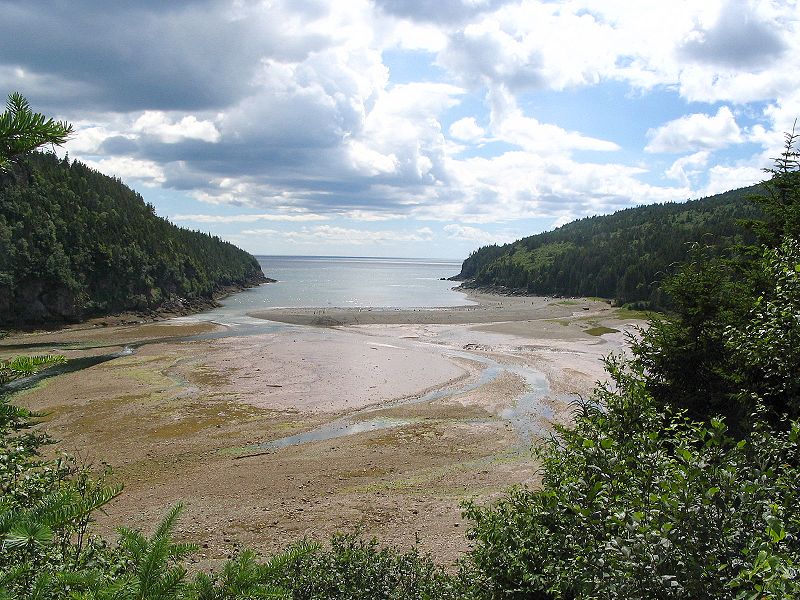
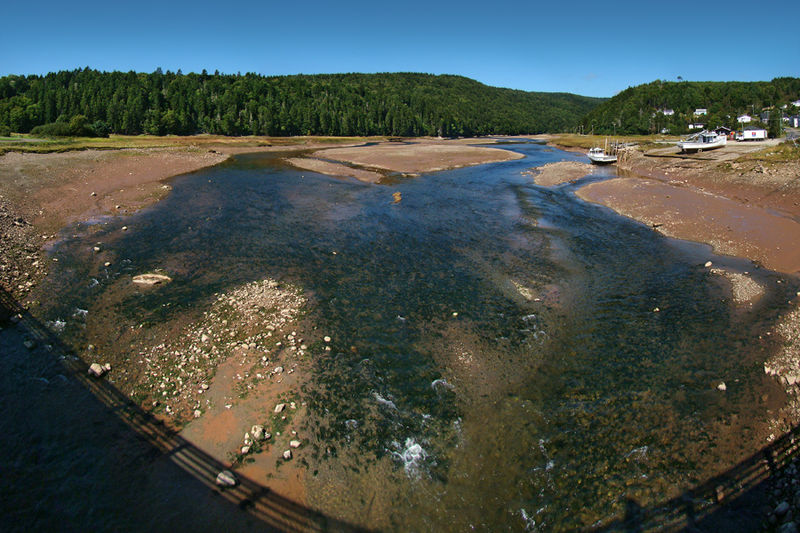
The park's best-known natural feature is the extraordinary tidal range. Water levels in the Bay of Fundy can rise and fall by more than 11 metres, reaching around 12 metres or more in some places under particular conditions. The shape and depth of the bay, together with the movement of tidal waves, contribute to this phenomenon. Twice daily, water retreats from the shore before returning to fill coves and inlets.
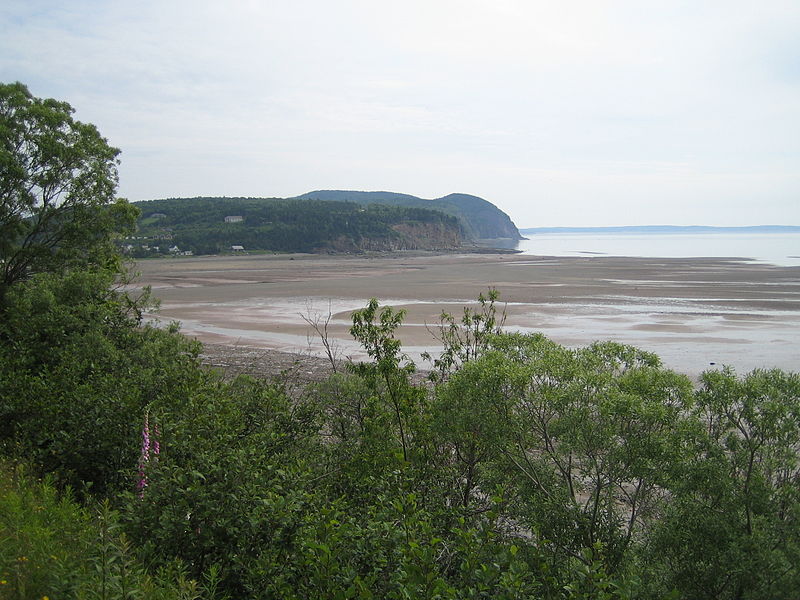
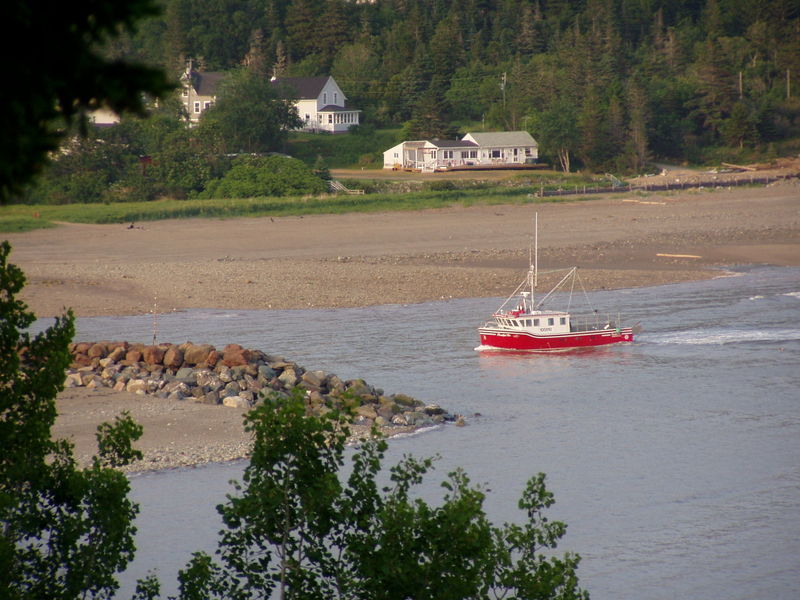
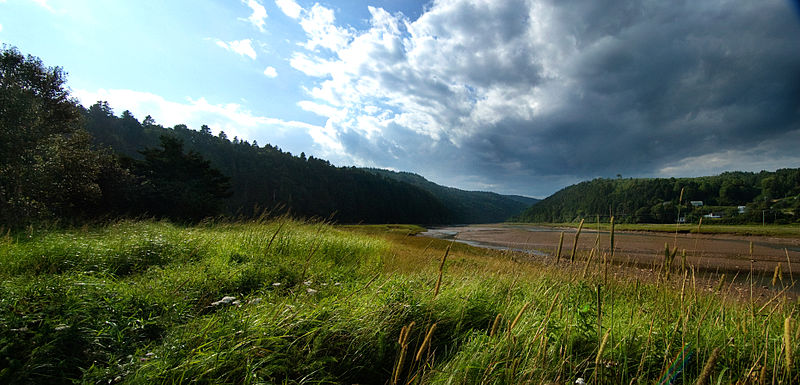
At low tide, visitors can see exposed mudflats, sand, rocks, seaweed and small tidal channels. Near the village of Alma, boats at the harbour may float at high tide and rest on the exposed seabed at low tide. Tide times change every day, so visitors should consult current tide tables and allow enough time to return from the intertidal zone before the water rises.
A rugged coastline
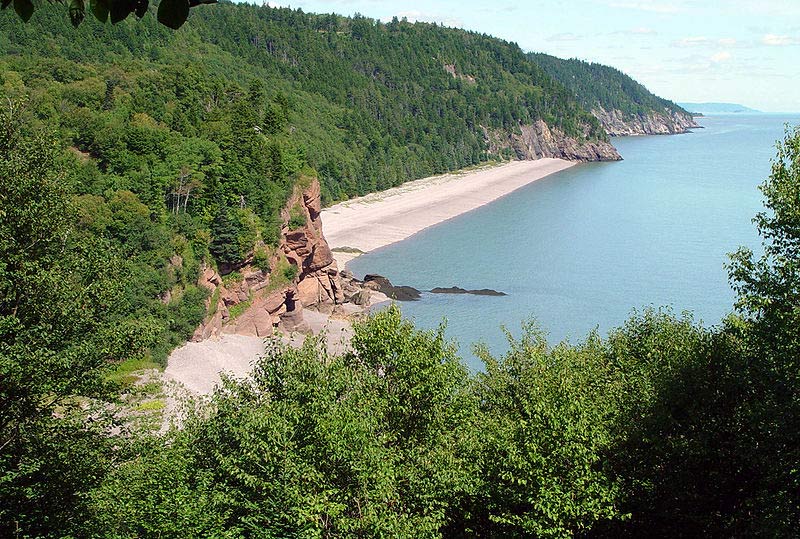
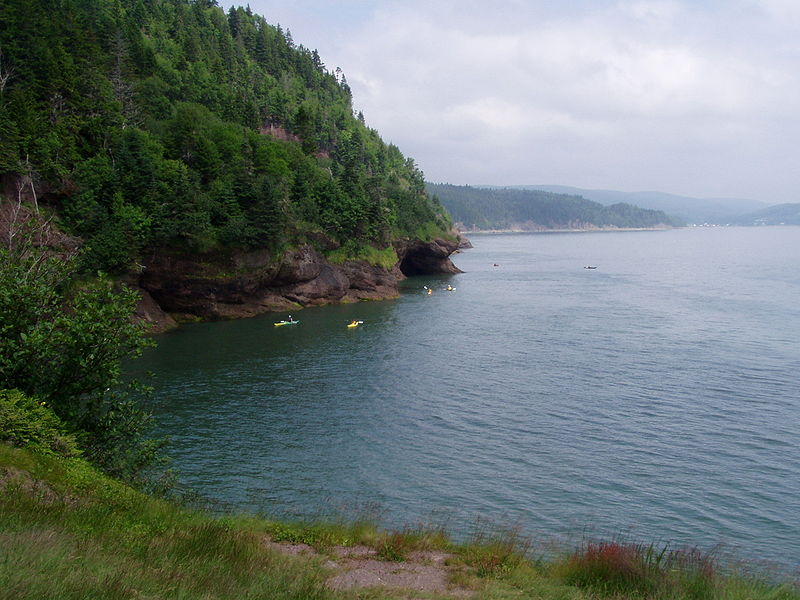
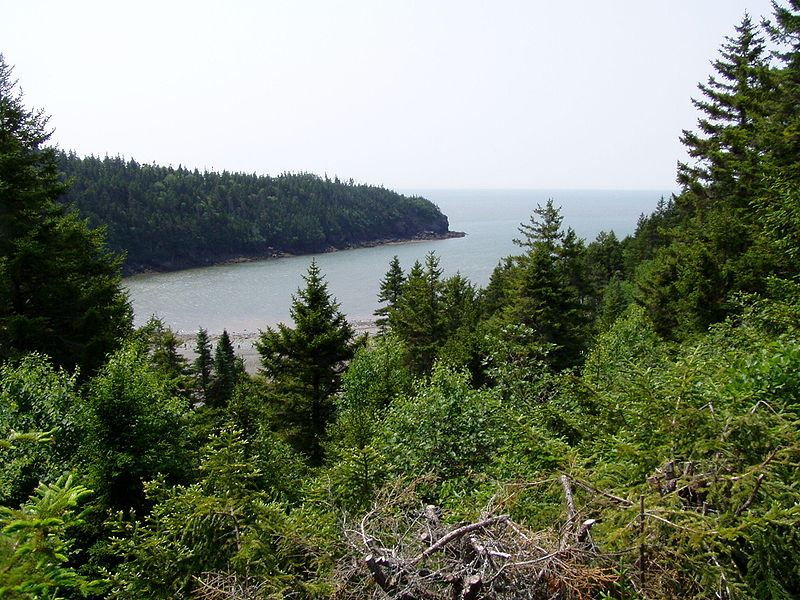
The coastline features sheltered coves, rocky beaches, cliffs and outcrops. In places, coastal slopes rise about 150 metres above the bay. Waves, rain and freeze-thaw processes continually shape the rocks. Dark cliffs, forested hillsides and open water create dramatic views across the Atlantic landscape.
Weather can change quickly, and fog sometimes hides distant sections of coast. Wear footwear with good grip, keep away from unstable cliff edges and check trail conditions before setting out. Access to the intertidal zone requires special care because the returning tide can cut off a route surprisingly quickly.
Forests, lakes and wildlife
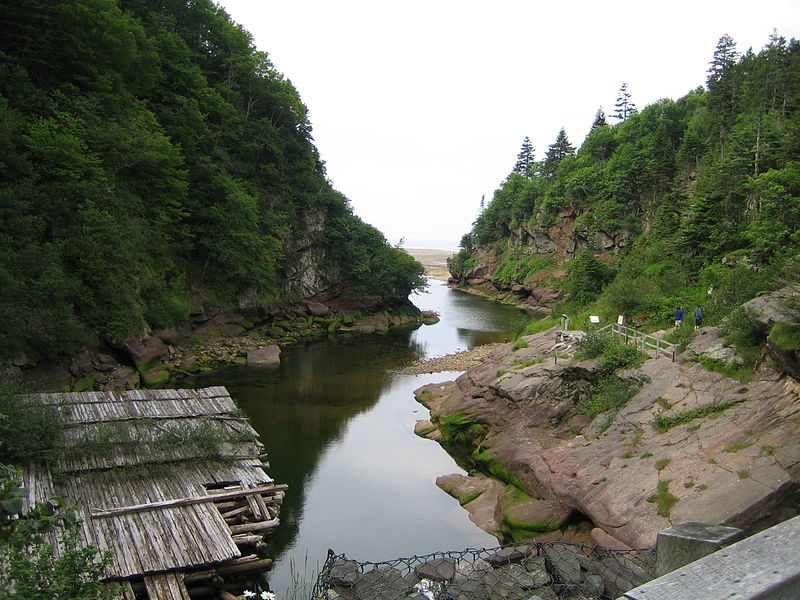
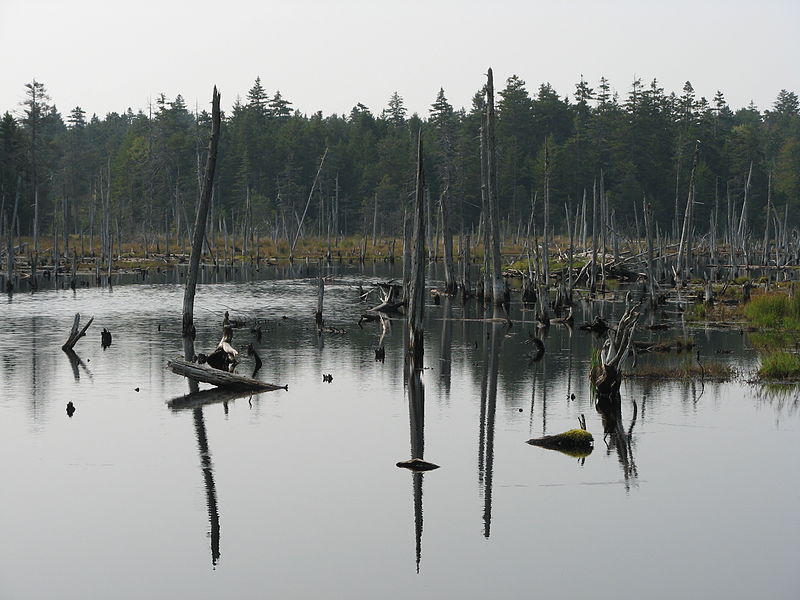
The inland part of the park belongs to the Acadian Highlands natural region. It contains mixed coniferous and deciduous forests, wetlands, freshwater lakes and deep river valleys. The land rises from the coast towards the Caledonia Highlands plateau, where some areas exceed 400 metres above sea level. Rivers cut through the rolling terrain, creating ravines, rapids and waterfalls.
Red spruce, balsam fir, maple, birch, mosses and ferns grow in the park's forests. Wildlife includes moose, white-tailed deer, black bears, foxes, beavers and many bird species. Conservation efforts pay particular attention to the endangered Inner Bay of Fundy Atlantic salmon and the restoration of river habitats.
Waterfalls and hiking trails
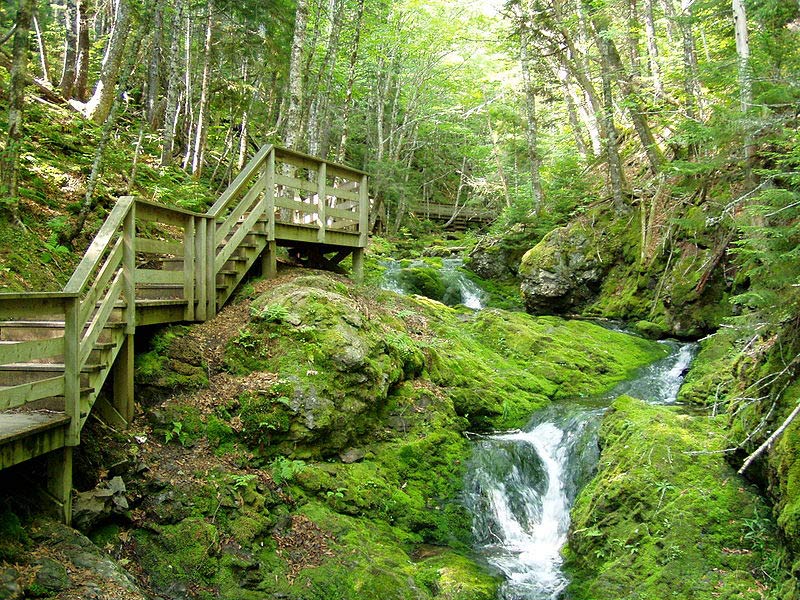
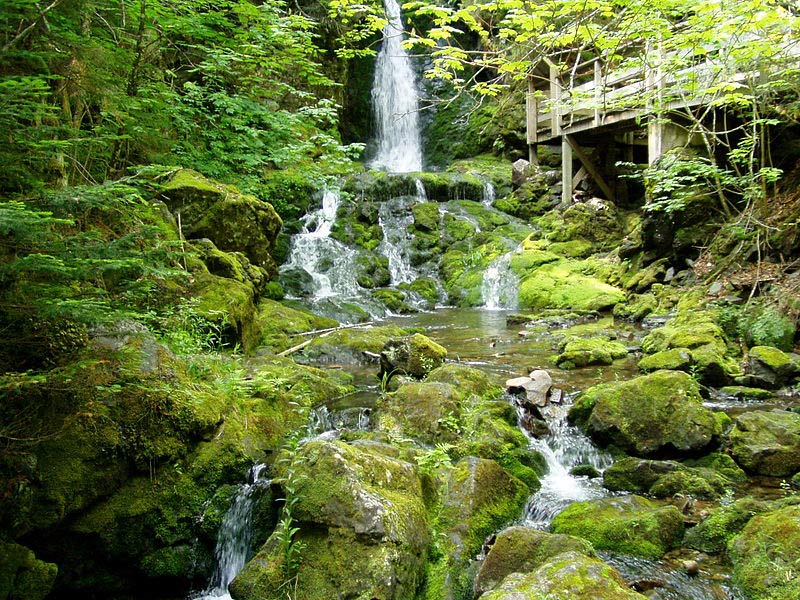
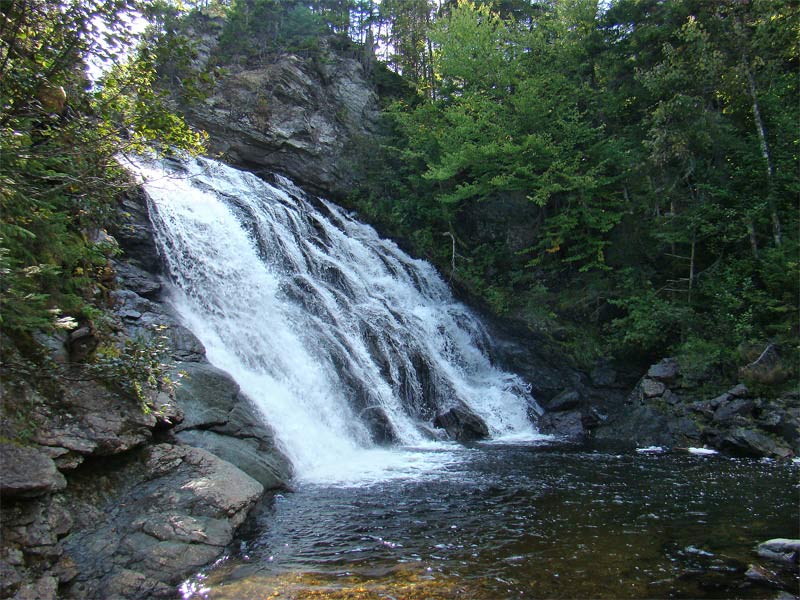
Rivers and streams descend through wooded valleys, creating cascades and small gorges. Waterfalls are often especially powerful in spring and after heavy rain. One well-known destination is Dickson Falls, reached by a forest trail through lush vegetation. Other routes lead to lakes, viewpoints, river valleys and quieter parts of the park.
More than 100 kilometres of hiking and cycling trails offer routes of different lengths and difficulty. In warmer months, visitors can hike, cycle, paddle canoes or kayaks, swim in designated areas and watch birds. Accommodation options include campgrounds, equipped tents, yurts and other seasonal stays. Some trails have steep sections or slippery surfaces, so check current conditions before departure.
Outdoor recreation and winter activities
Fundy offers opportunities for camping, picnicking, cycling, kayaking, canoeing and fishing in permitted waters. The park also has a heated saltwater swimming pool that operates seasonally. In winter, visitors may enjoy snowshoeing, cross-country skiing, fat biking and other activities when conditions allow. Services, rentals and trail access vary throughout the year.
History of the region
The lands have long-standing connections with the Mi'kmaq, Wolastoqiyik and Peskotomuhkati peoples. Inland waterways served as travel routes, while forests, rivers and coastal ecosystems supported communities over many generations. European settlement in the immediate area began around the 1820s.
During the nineteenth and early twentieth centuries, logging, sawmills, shipbuilding and fishing were important local industries. Timber was transported along rivers, and settlements grew around mills and coastal workplaces. Intensive forest use and changes to waterways affected the environment, while traditional industries gradually declined.
The area was selected in 1948 to become New Brunswick's first national park. Fundy National Park was proclaimed on 10 April 1948 and officially opened on 29 July 1950. Its creation aimed to protect the landscape while encouraging tourism and economic activity in the region.
Conservation and the Fundy Biosphere Region
Fundy National Park forms the core of the Fundy Biosphere Region, recognized by UNESCO in 2007. The broader biosphere region extends beyond the park and seeks to connect conservation with sustainable development in surrounding communities. The park is also designated as a Dark-Sky Preserve by the Royal Astronomical Society of Canada, making clear nights an opportunity for stargazing when weather conditions are favourable.
Conservation work includes restoring forest and river ecosystems, monitoring rare species, protecting aquatic habitats and reducing the impact of visitors. Improving fish passage and river health is particularly important in areas affected by historic logging and water-control structures.
How to get to Fundy National Park
The park is near the village of Alma and is most easily reached by car. The drive usually takes about one hour from Moncton, around one and a half hours from Saint John and approximately two hours from Fredericton, depending on road conditions. The main access route is provincial Highway 114. There is no direct public transport to the park, so visitors without a car should arrange a transfer in advance.
Nearby airports serve Moncton, Saint John and Fredericton. Alma offers accommodation, cafés and other visitor services. Summer and early autumn are popular for hiking, camping, cycling and paddling. Spring can bring stronger waterfalls, while autumn colours the forests in red, orange and gold.
When to visit
A single day is enough to experience the tides and a short trail, but several days allow time for waterfalls, longer hikes and camping. Weather near the bay can be cool and windy even in summer, while winter conditions can affect trail access. Before travelling, check the tide tables, trail notices, campground availability and visitor information on the official Parks Canada website.
Fundy National Park brings together extraordinary tides, rugged coastal scenery, forested highlands and waterfalls. It is one of Atlantic Canada's most distinctive natural areas and a remarkable place to observe the constant interaction between ocean and land.
Gallery