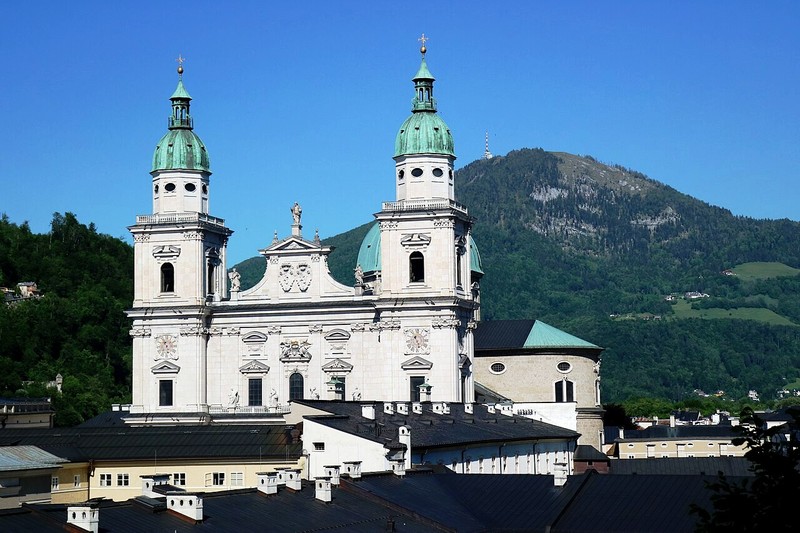
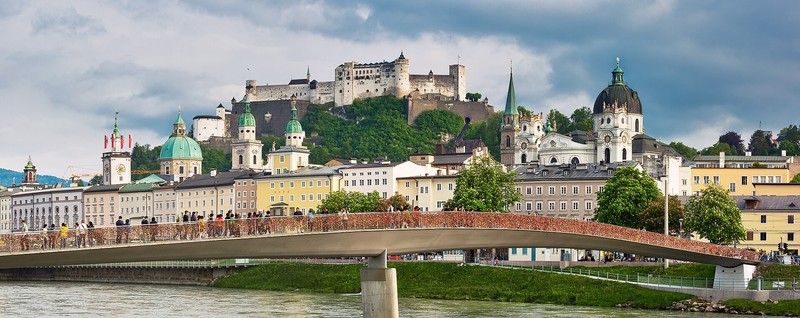
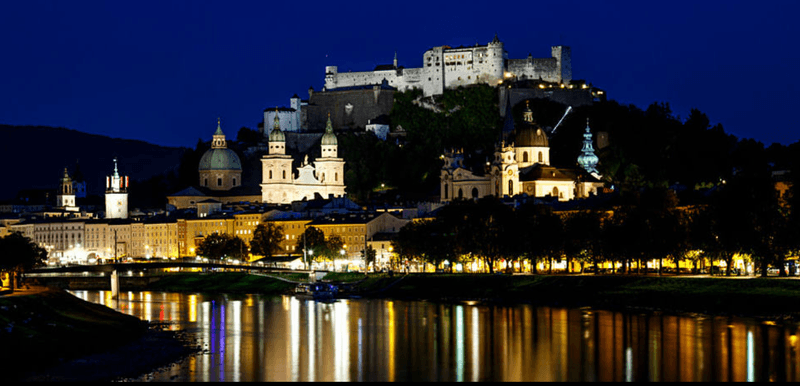
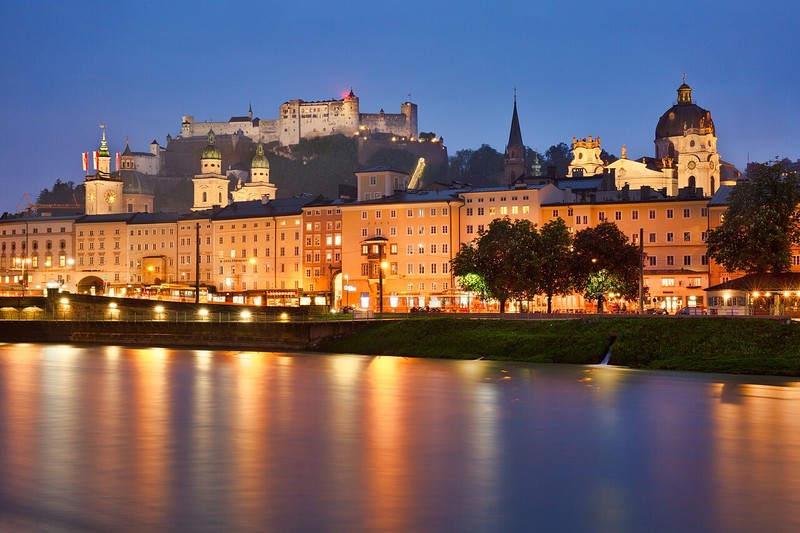
Salzburg Cathedral is one of the city’s main architectural landmarks and one of Austria’s most important Catholic churches. It stands in the historic centre, part of the UNESCO World Heritage Site, and is dedicated to Saints Rupert and Virgil, who played important roles in the spread of Christianity in the region.
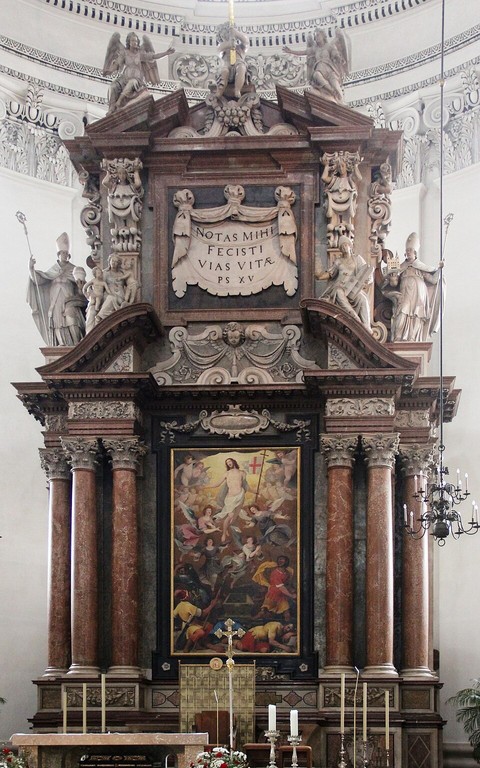
The present building is an outstanding example of early Baroque architecture north of the Alps. Its interior contains ornate altars, a bronze baptismal font associated with Wolfgang Amadeus Mozart, organs and religious artworks.
History of the cathedral
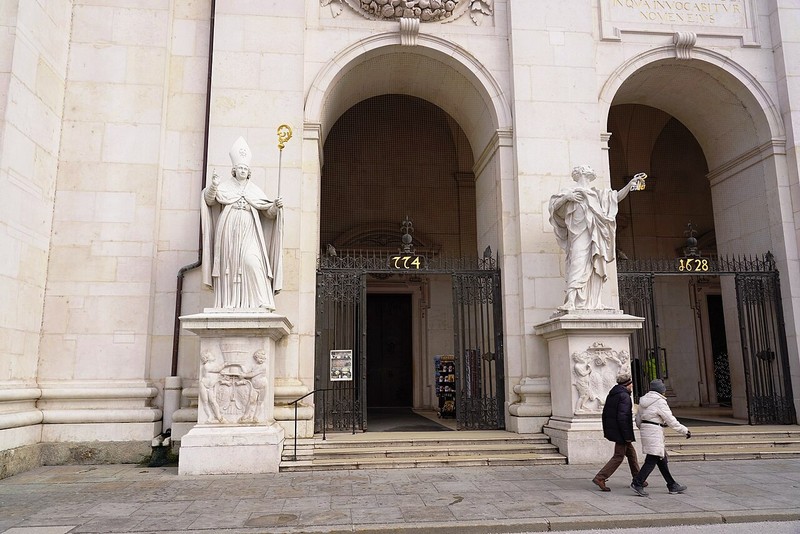
The first church on this site was built under Bishop Virgil and consecrated in 774 in honour of Saints Peter and Rupert. After a fire in 1167, Archbishop Conrad III ordered a larger Romanesque cathedral, consecrated in 1177. Another major fire damaged the building in 1598, and Archbishop Wolf Dietrich von Raitenau decided to demolish the old church.
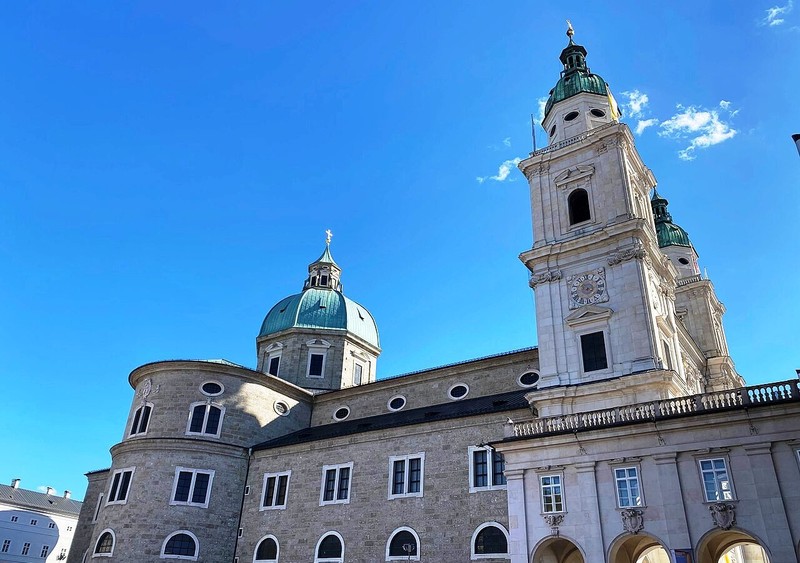
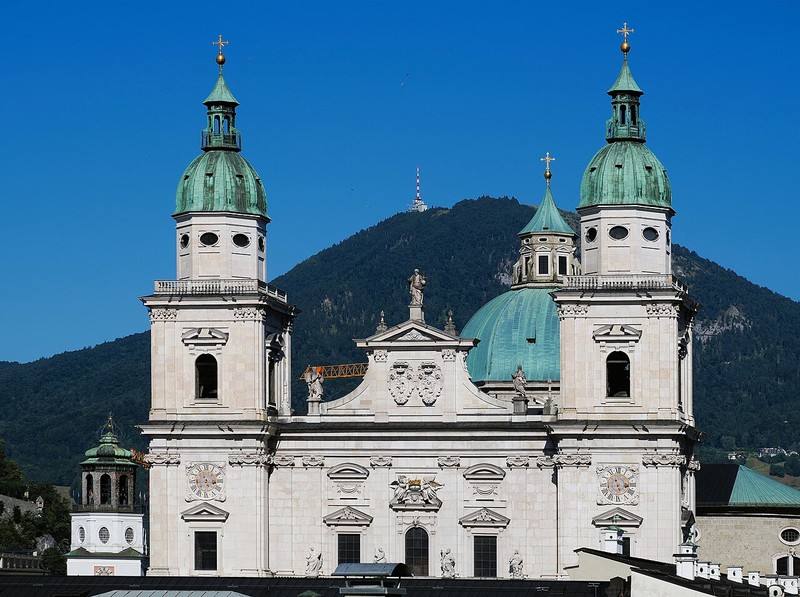
Construction of the present cathedral began in 1614 under architect Santino Solari. The new early Baroque building was consecrated in 1628 under Archbishop Paris Lodron. In 1944, an aerial bomb damaged the dome and part of the altar area. Restoration was completed with the reconsecration of the cathedral in 1959.
Architecture and interior
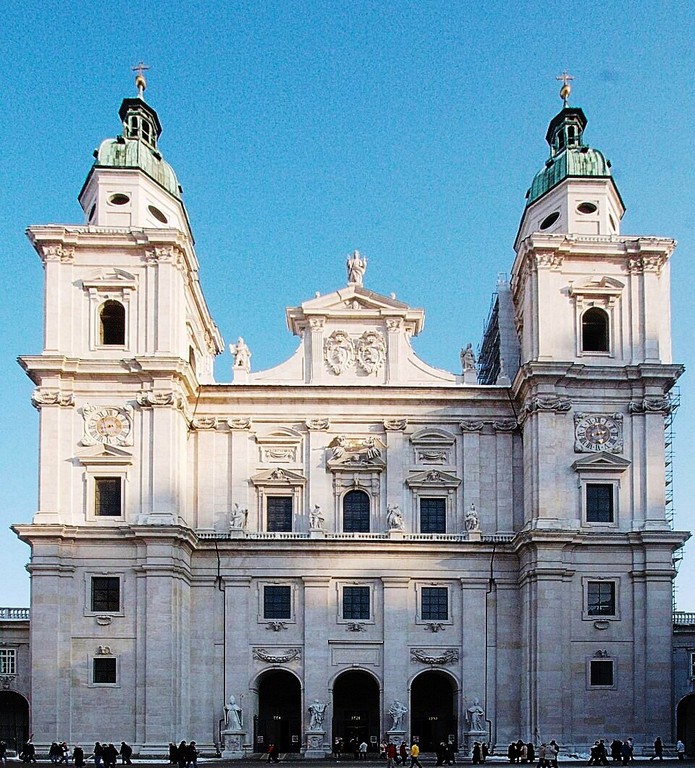
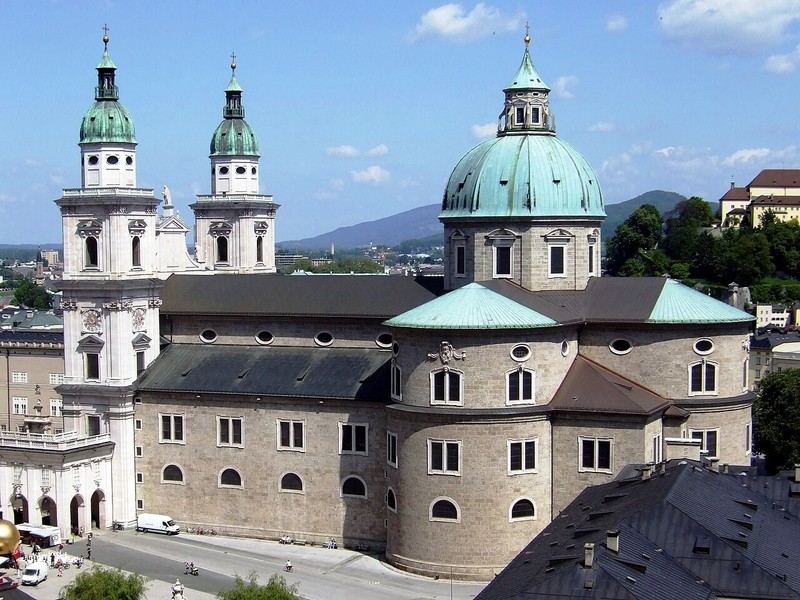
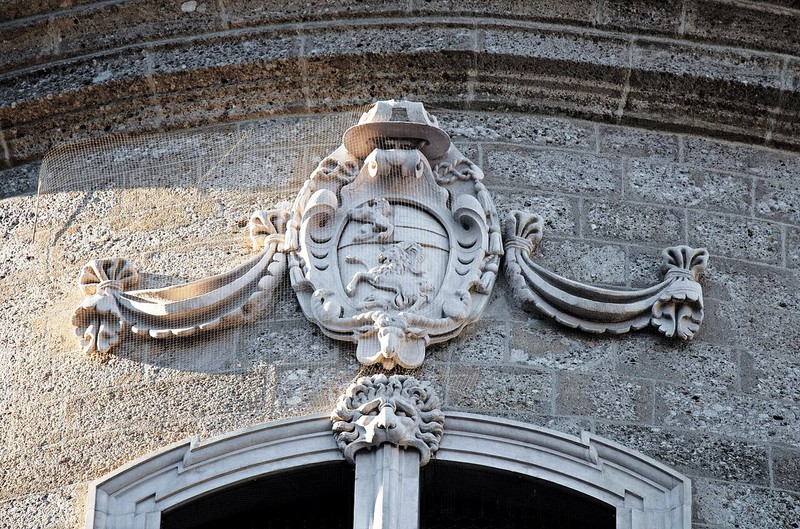
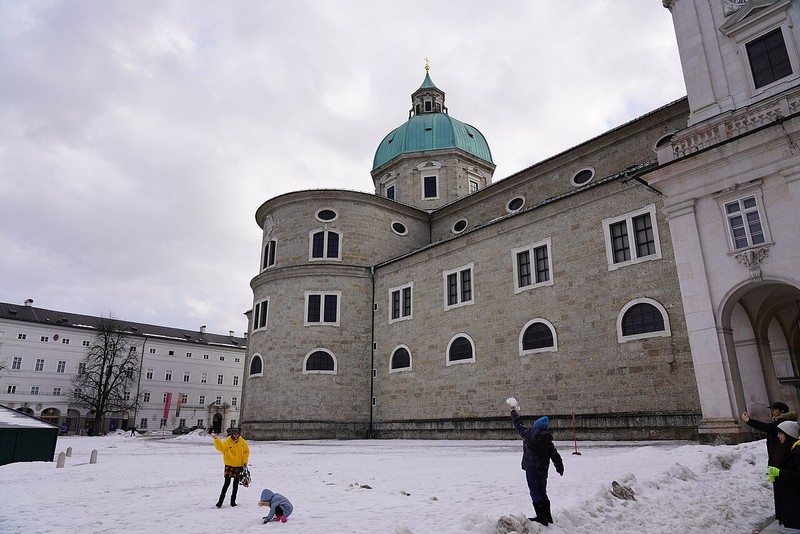
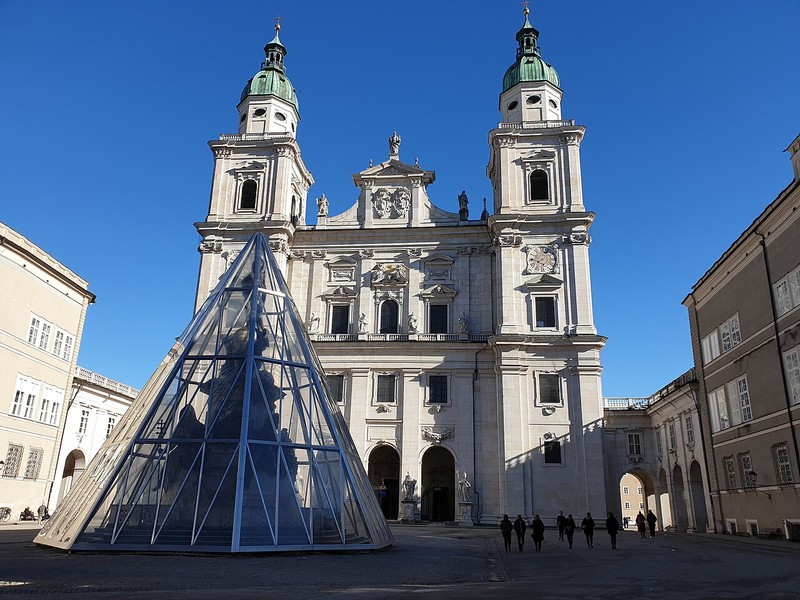
The cathedral is known for its symmetrical façade of pale Untersberg marble, monumental dome and twin towers. Cathedral Square, or Domplatz, lies in front of the main entrance and features a Marian column. The façade displays statues of the apostles Peter and Paul and the patron saints Rupert and Virgil. Coats of arms on the gable commemorate Archbishops Markus Sittikus and Paris Lodron, who oversaw the construction.
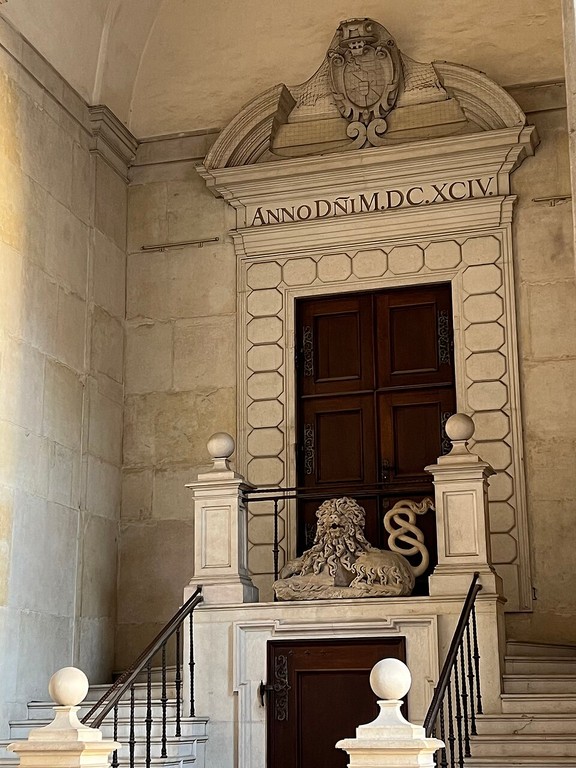
Inside, visitors can admire the spacious nave, frescoes, stucco decoration, altars and a bronze baptismal font made in 1311 and decorated with lion figures. Wolfgang Amadeus Mozart and Joseph Mohr, who wrote the lyrics to Silent Night, were baptised in this font. The cathedral is also known for its organs, used for services and concerts.
Mozart and musical traditions
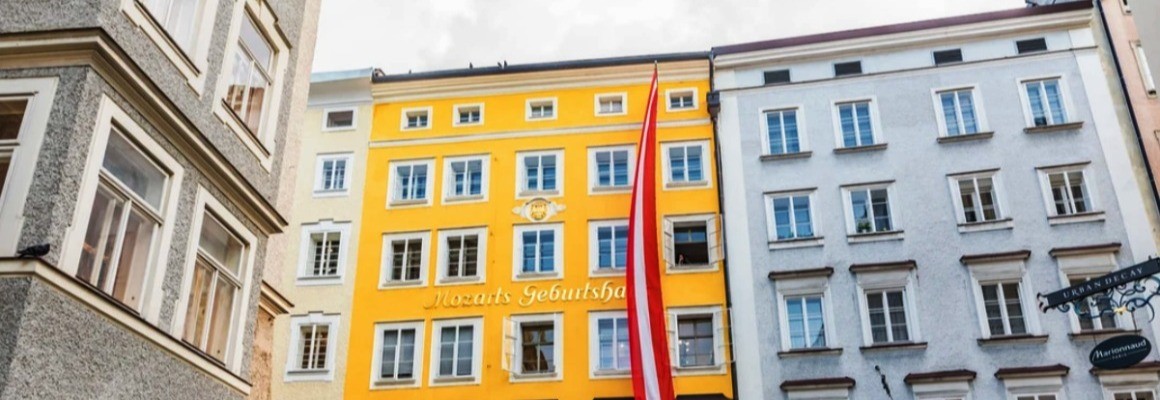
Wolfgang Amadeus Mozart was born in Salzburg in 1756. He was baptised in the cathedral’s font and later served as a court organist, composing sacred music for the city’s religious life. Music remains an important part of the cathedral’s activities, including concerts and the Music at Noon programme. Check the official website for current dates and times.
The cathedral museum and nearby sights
The Cathedral Museum is part of DomQuartier Salzburg and displays religious artworks, liturgical objects, paintings and sculptures associated with the city’s history. It should not be confused with the archaeological excavation museum beneath Cathedral Square, which is closed for modernisation and is expected to remain closed until 2028.
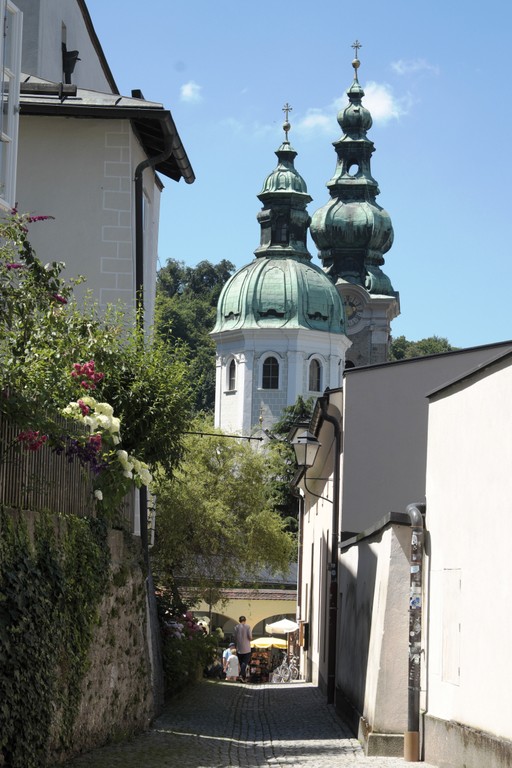
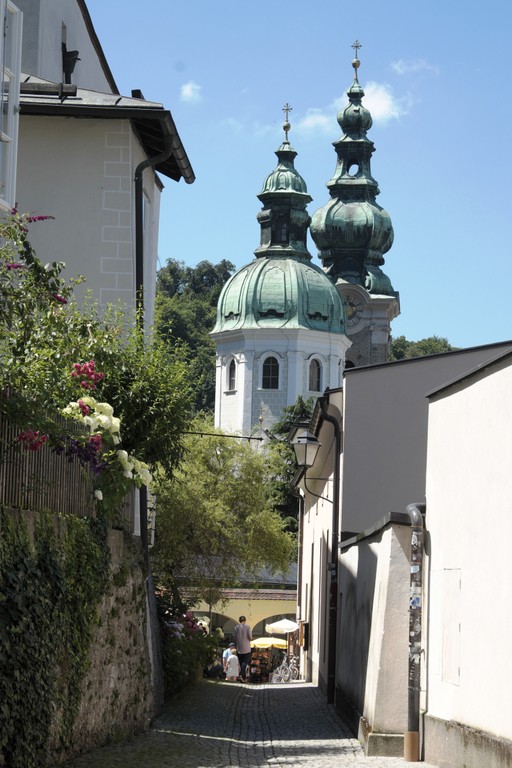
Nearby landmarks include the archbishops’ Residence, Residenzplatz and St Peter’s Abbey. Cathedral Square is also a venue for cultural events, including the Jedermann performance during the Salzburg Festival and a popular Christmas market in winter.
How to get there
The cathedral is located at Domplatz 1a, 5020 Salzburg, in the pedestrian area of the Old Town. From the main railway station, take public transport towards the historic centre and continue on foot.
Visitors are generally asked to pay a maintenance contribution. According to the official website, the standard adult contribution is €7, with a reduced rate for teenagers aged 14–18 and free entry for children up to 13. Opening hours may change because of services, concerts and the Salzburg Festival, so check the latest information before visiting.
Salzburg Cathedral is worth visiting for its early Baroque architecture, Mozart’s historic baptismal font, its organs and its connection with the history of the prince-archbishops. It is easy to include in a walking tour of the historic centre.
Gallery