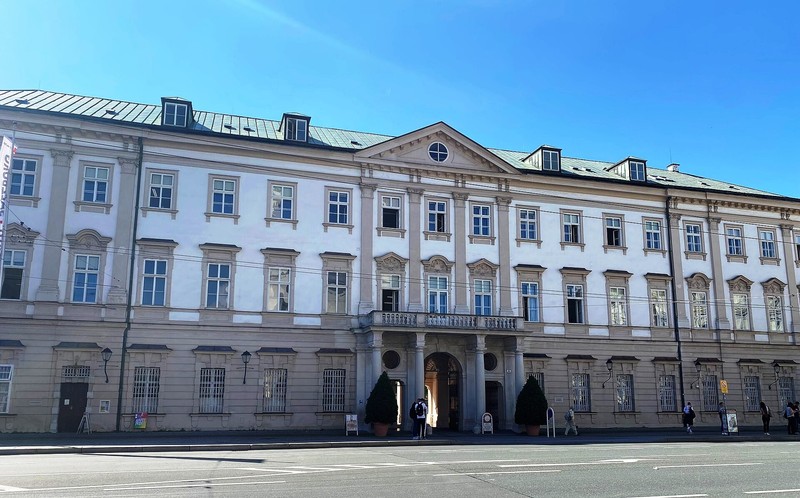
Mirabell Palace is one of Salzburg’s best-known historic landmarks in Austria. Built in the early seventeenth century, the Baroque palace is famous for its Marble Hall, grand staircase and geometrically designed gardens. The complex lies close to the Salzach River and forms part of the UNESCO World Heritage property known as the Historic Centre of the City of Salzburg.
History of Mirabell Palace
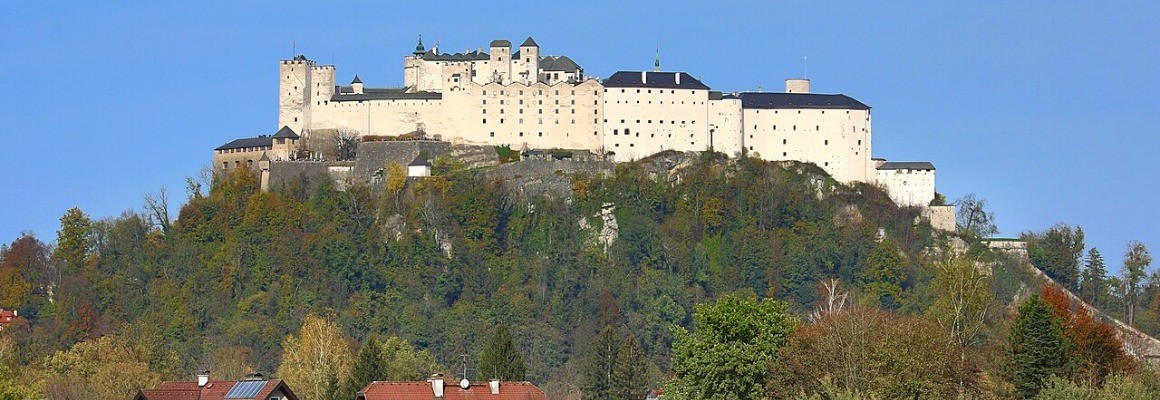
The first palace on this site was built in 1606 by order of Prince-Archbishop Wolf Dietrich von Raitenau for Salome Alt, his companion, and their family. It was originally called Altenau, after her surname. In 1612, Wolf Dietrich lost power and was imprisoned at Hohensalzburg Fortress. His successor, Markus Sittikus von Hohenems, expelled Salome Alt and her children and renamed the palace Mirabell. The name is commonly linked to Italian words meaning “wonderful” and “beautiful.”
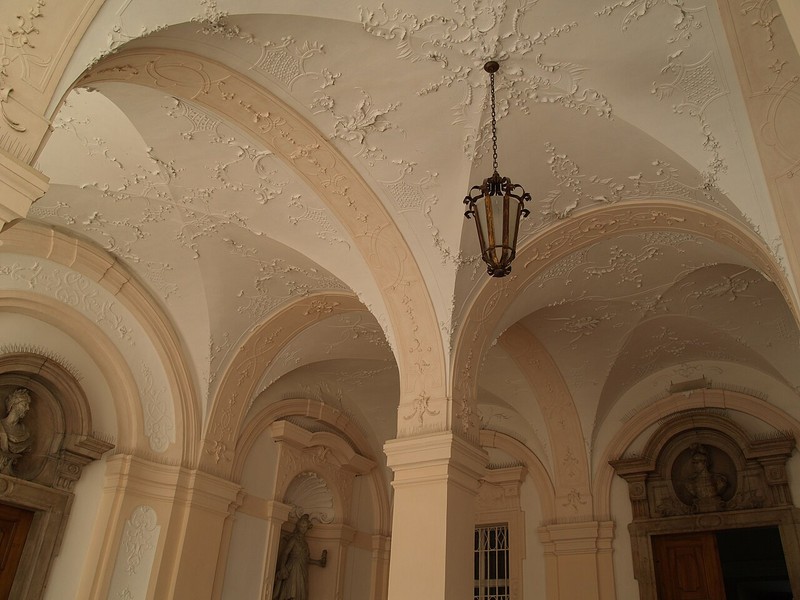
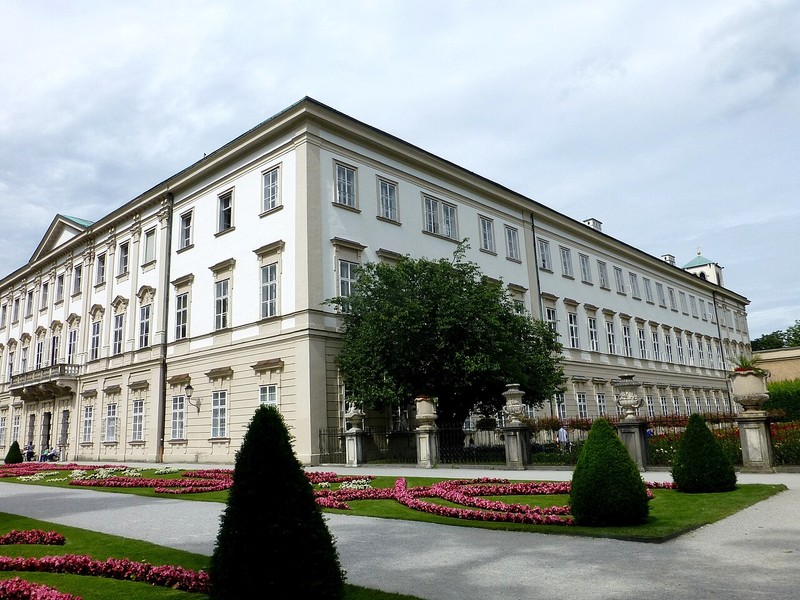
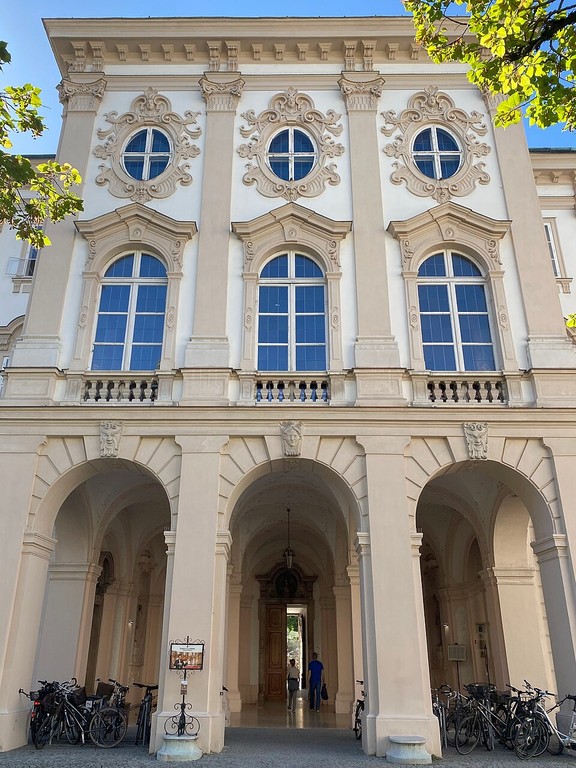
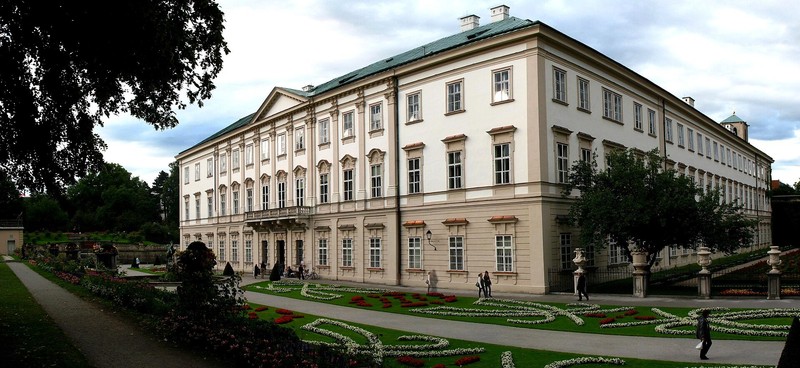
Between 1721 and 1727, the palace was extensively remodelled for Prince-Archbishop Franz Anton von Harrach under architect Johann Lukas von Hildebrandt. The complex acquired a more unified Baroque appearance, with an inner courtyard and ceremonial rooms.
The Fire of 1818 and Restoration
A major fire in 1818 damaged much of the palace and destroyed many historic interiors and decorations. The Marble Hall and the famous staircase survived. During subsequent restoration, the façades acquired Neoclassical features. In 1868, the palace became the property of the city of Salzburg and was gradually adapted for municipal administration.
The Marble Hall
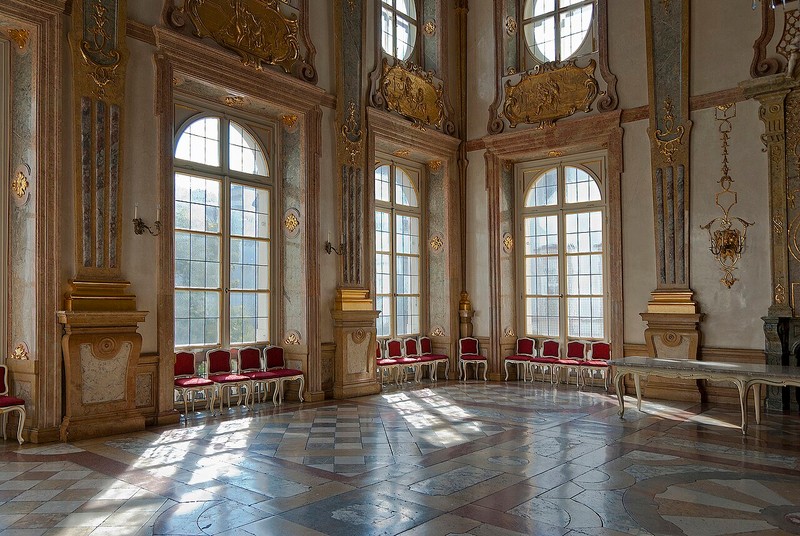
The Marble Hall is the palace’s most famous room. It once served as the ceremonial hall of the prince-archbishops. Light marble, decorative stucco and crystal chandeliers create an elegant atmosphere. Leopold Mozart and his children Wolfgang Amadeus and Maria Anna, known as Nannerl, performed here. Today, the hall hosts classical concerts, official ceremonies and weddings. Public access depends on the event schedule.
The Angel Staircase
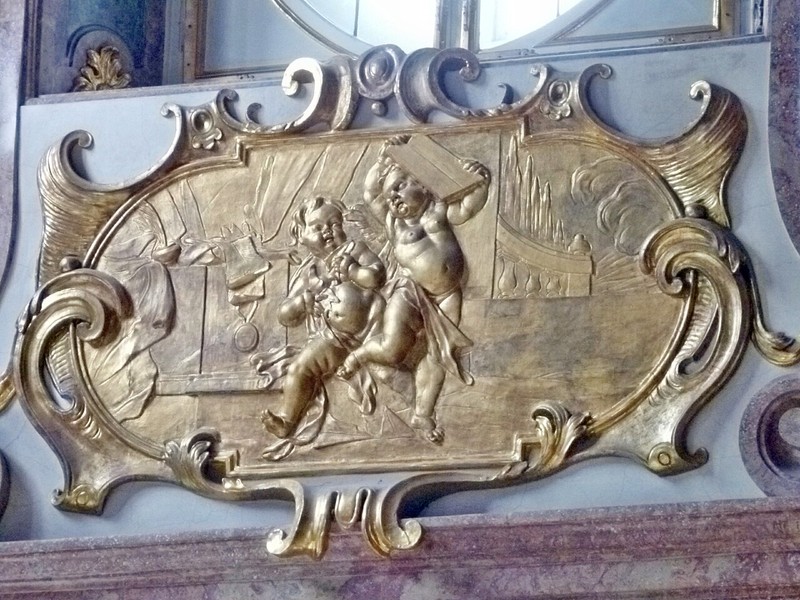
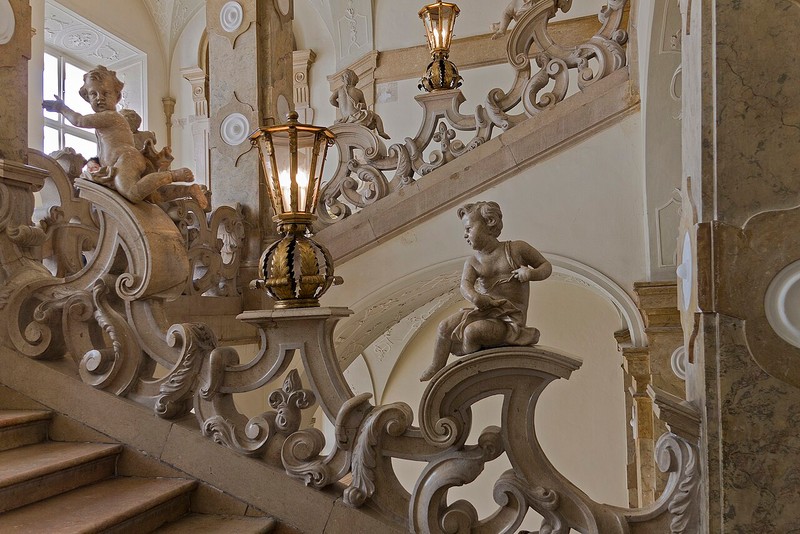
The grand staircase leading to the Marble Hall is known as the Angel Staircase. It is decorated with putti, small childlike angel figures placed along the flights and balustrades. The staircase is one of the most striking surviving historic interiors in Mirabell Palace.
Mirabell Gardens
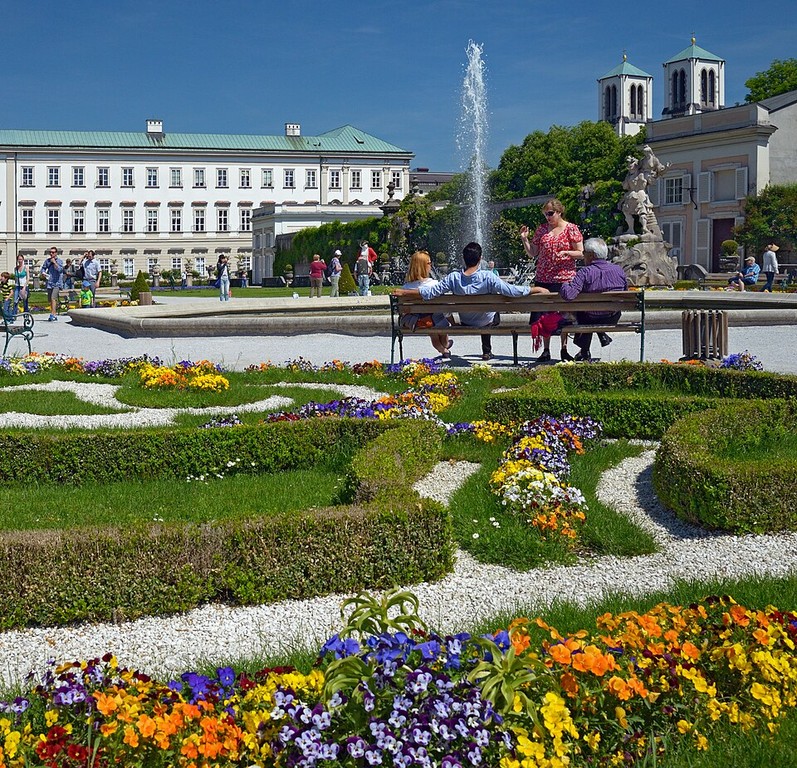
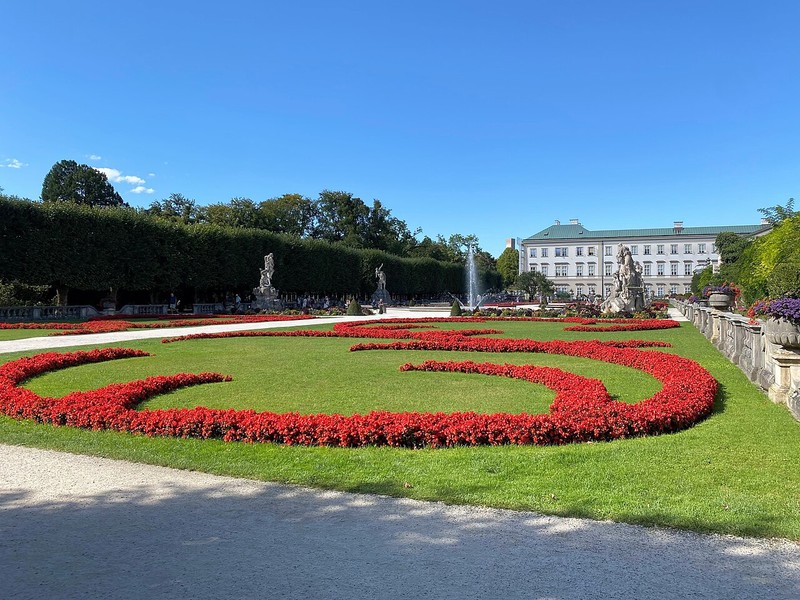
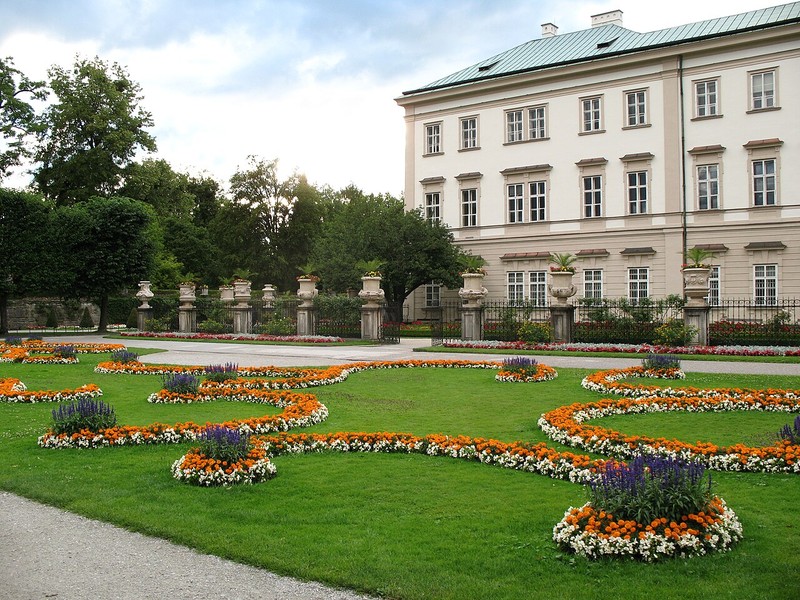
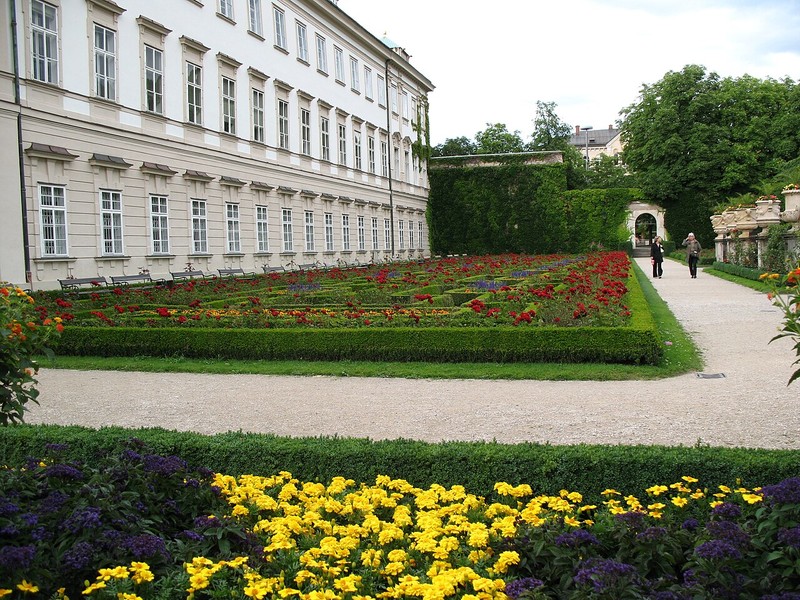
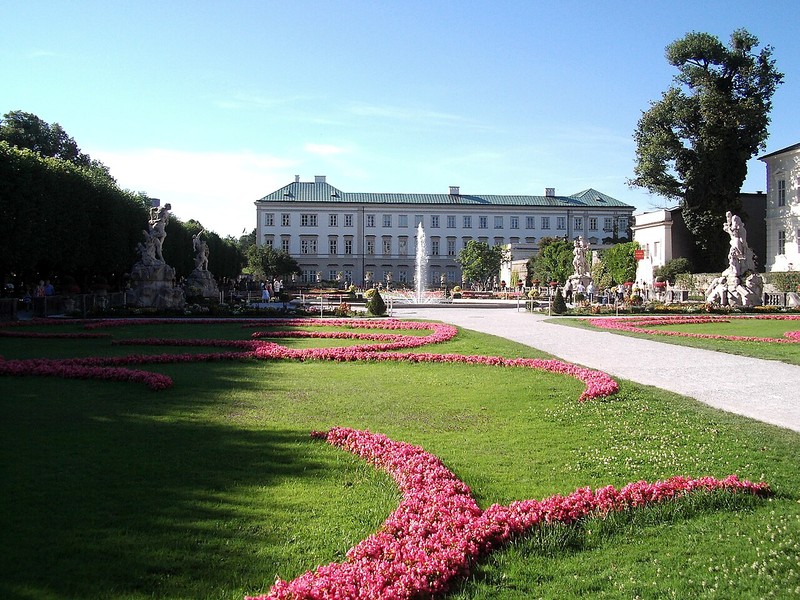
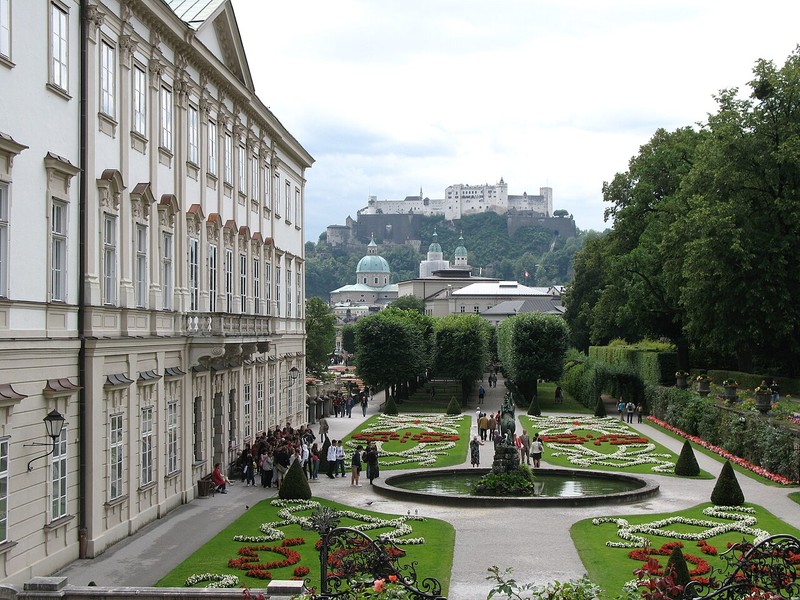
The gardens are one of the main reasons to visit the palace. Their layout reflects Baroque garden design from the late seventeenth century. Geometric flowerbeds, sculptures, fountains and views towards Hohensalzburg Fortress define the landscape. The central parterre features a fountain and sculptural groups symbolising the four elements: fire, air, earth and water.
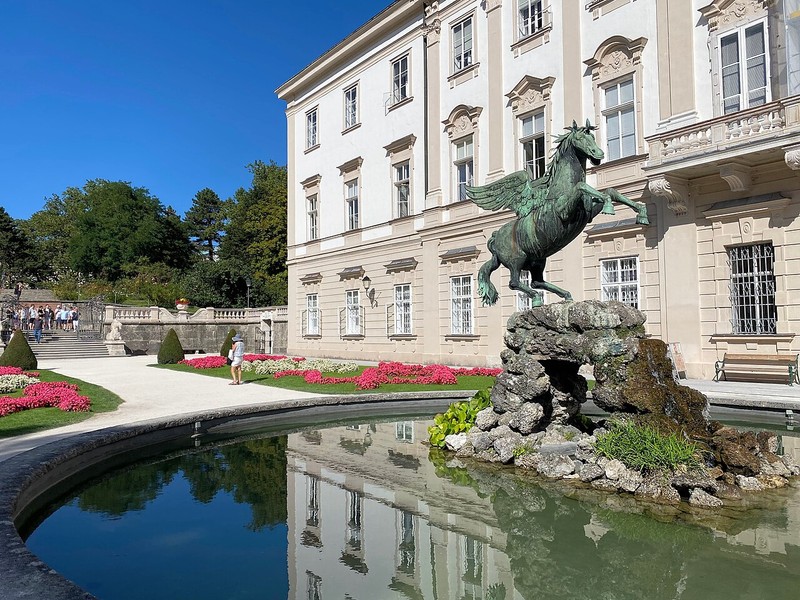
The Pegasus Fountain
One of the garden’s best-known features is the Pegasus Fountain, with its winged horse sculpture. Created by Caspar Gras in 1661, the figure was installed in Mirabell Gardens in 1913. The fountain is a popular photography spot and appears in the film The Sound of Music, in which Maria and the children dance around it while singing Do-Re-Mi.
The Hedge Theatre and Dwarf Garden
The western part of the gardens contains the Heckentheater, an open-air theatre framed by green hedges. Cultural events may take place here in summer. The Zwerglgarten, or Dwarf Garden, originally contained 28 figures carved from white Untersberg marble. Only part of the original group survives, and the sculptures are notable for their individual poses and expressive features.
UNESCO World Heritage
Mirabell Palace and Gardens form part of Salzburg’s Historic Centre, inscribed on the UNESCO World Heritage List in 1996. The gardens provide views of the Old Town, the cathedral and Hohensalzburg Fortress. The complex illustrates how Baroque architecture and garden design helped shape Salzburg’s historic townscape.
How to Get There
The address is Mirabellplatz 4, 5020 Salzburg. The nearby Mirabellplatz stop is served by city buses. Walking from the main railway station usually takes around 15–20 minutes, depending on the route. From the Old Town, cross the Salzach River using one of the pedestrian bridges. The gardens are generally free to enter, although some sections may close in winter. Check current opening arrangements for the palace and Marble Hall before visiting.
Nearby Attractions
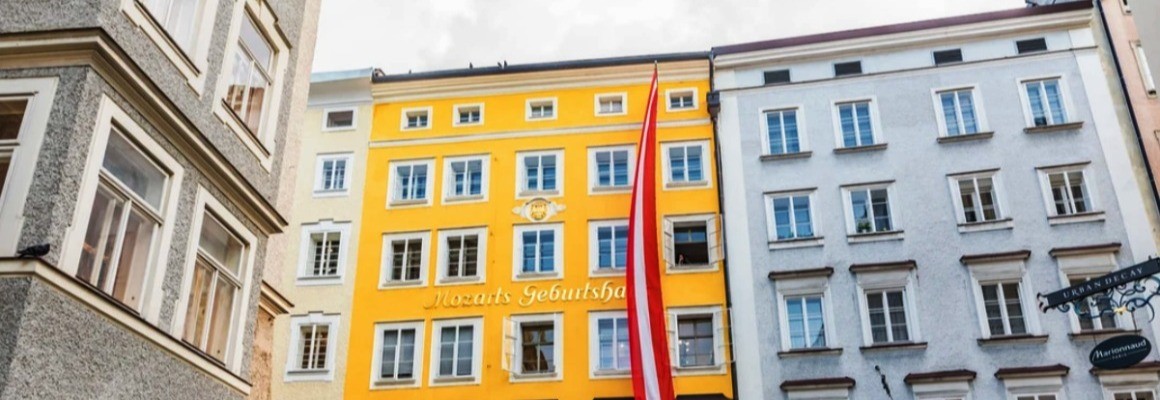
After visiting Mirabell, continue into Salzburg’s historic centre to see Getreidegasse, Mozart’s Birthplace and the cathedral. Crossing the Salzach offers views of the city and the fortress on the hill. The palace’s central location makes it easy to include in a walking tour.
Why Visit Mirabell Palace?
Mirabell combines Baroque architecture, historic interiors, musical traditions and a beautiful garden in the heart of Salzburg. Visitors can admire the Marble Hall and Angel Staircase, walk among fountains and sculptures, and discover locations featured in The Sound of Music. It is one of the most memorable expressions of Salzburg’s cultural heritage.
Gallery