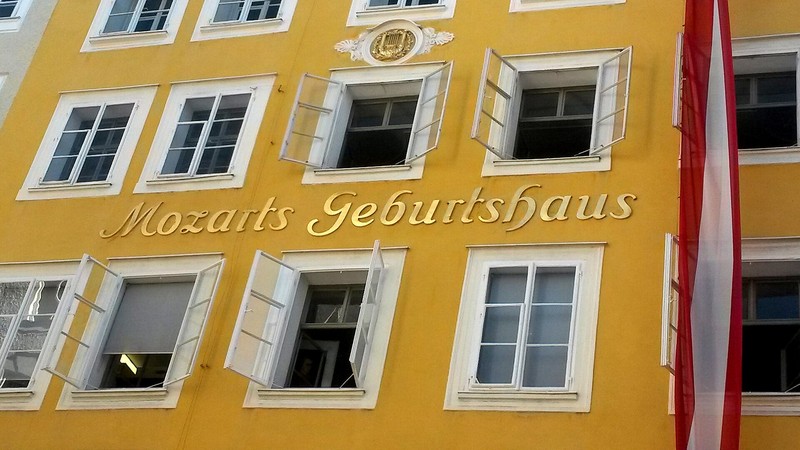
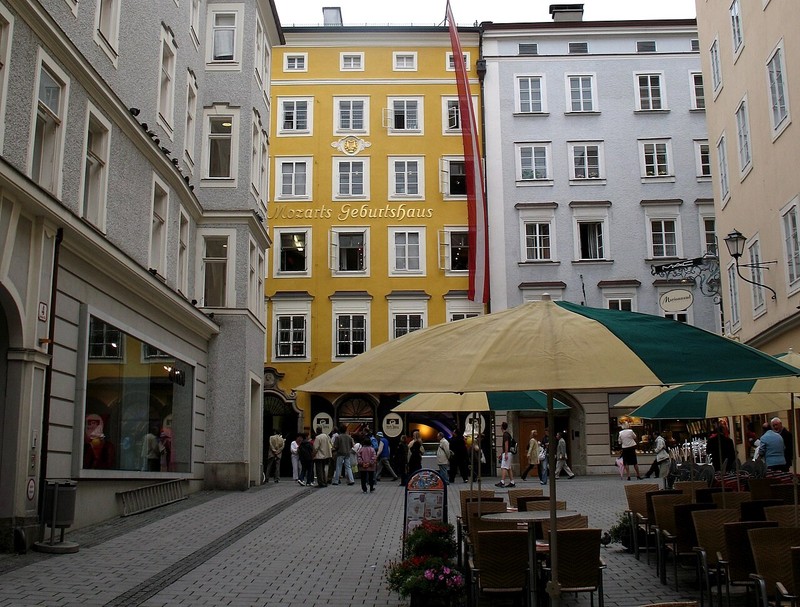
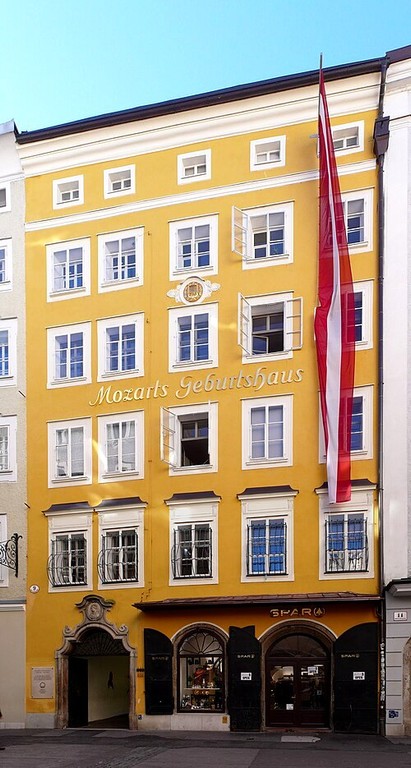
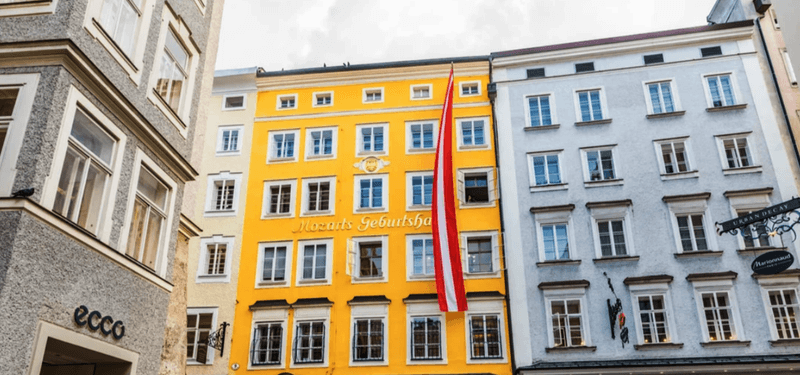
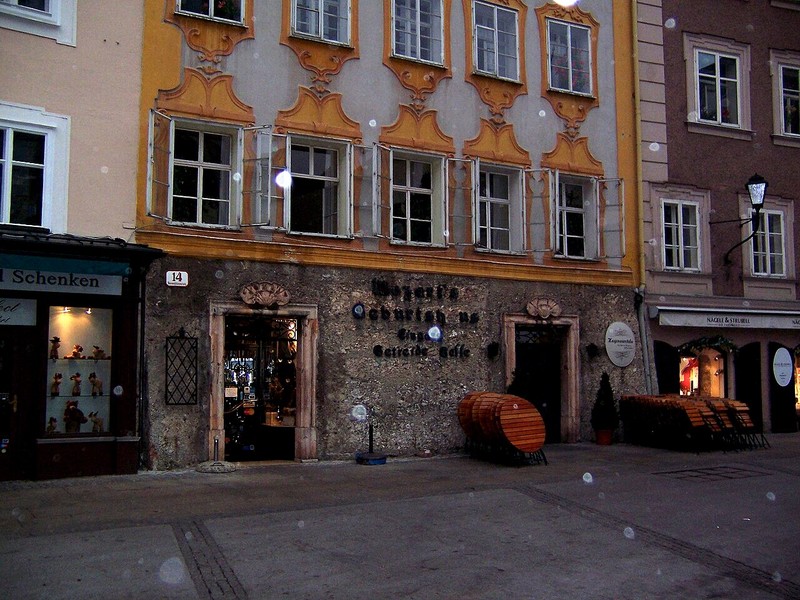
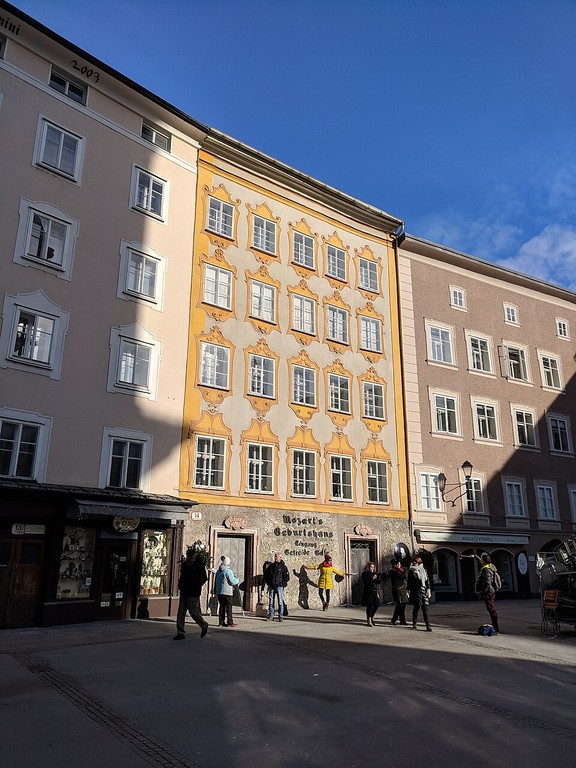
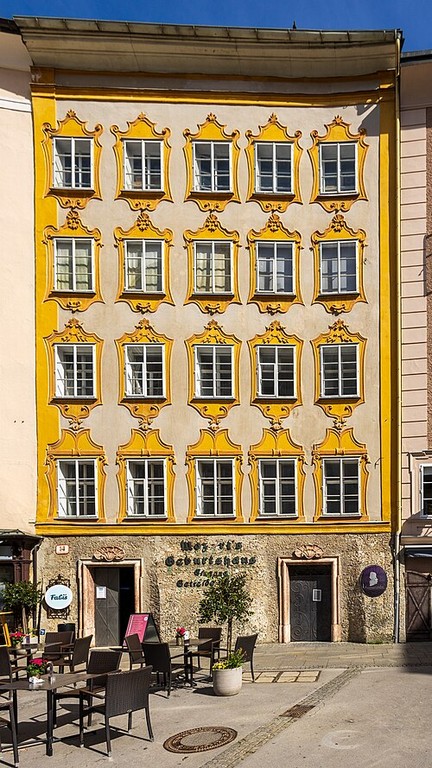
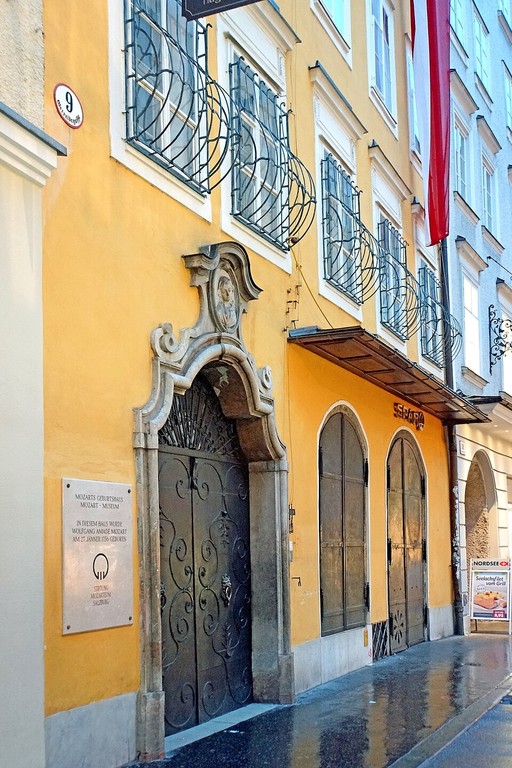
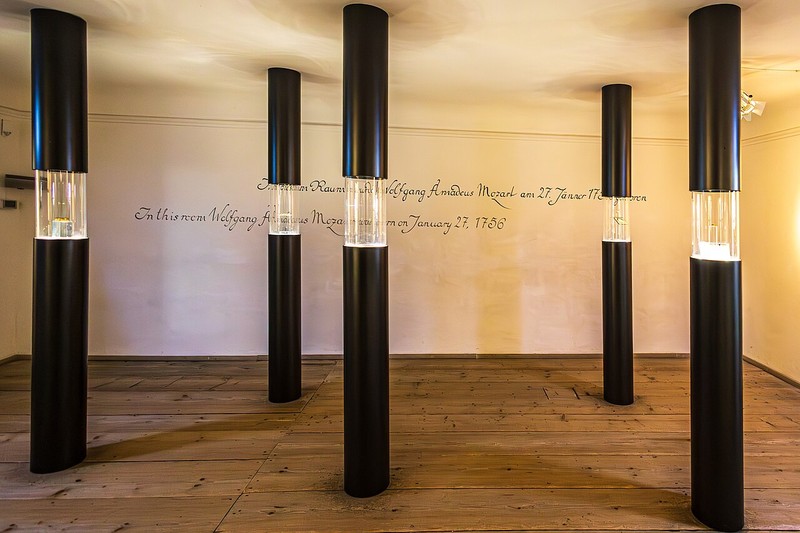
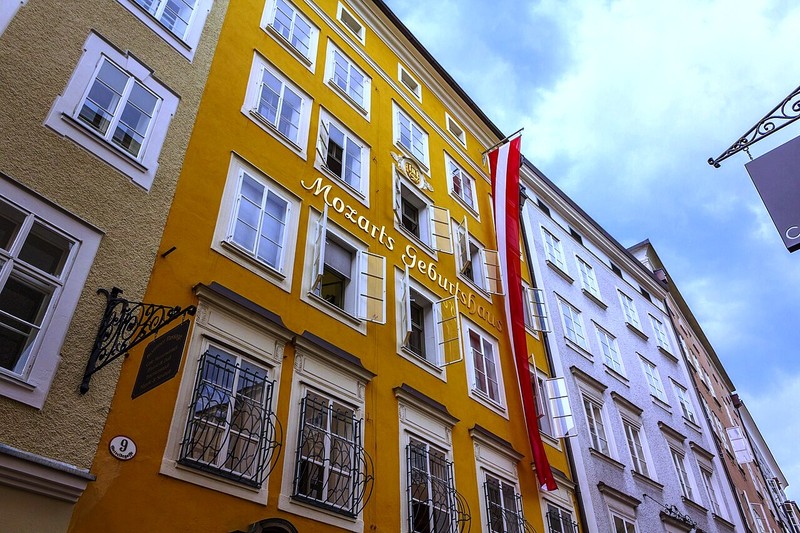
Mozart's Birthplace in Salzburg is one of Austria's best-known museums dedicated to the life and work of Wolfgang Amadeus Mozart. It stands on Getreidegasse in the city's historic center. The composer who became one of the greatest figures in classical music was born here on January 27, 1756.
Mozart spent his childhood and youth in this house. Today, the museum introduces visitors to his family life, early musical abilities, first compositions, and the cultural world of 18th-century Salzburg. The collection includes historical documents, musical instruments, household objects, and materials about the Mozart family.
History of Mozart's Birthplace
From 1747, the Mozart family lived in an apartment on the third floor of the building on Getreidegasse, known as the Hagenauer House. The household included Mozart's father Leopold, his mother Anna Maria, and their children. Wolfgang was born here and spent a substantial part of his childhood in the apartment. In 1773, the family moved to a larger home on Makartplatz, now known as the Mozart Residence.
Wolfgang's musical abilities became apparent at an early age. He learned to play keyboard instruments, remembered melodies he heard, and began composing his own music. His father taught both Wolfgang and his sister Maria Anna, known in the family as Nannerl. Leopold arranged performances and journeys that helped the young musician gain recognition beyond Salzburg.
In 1880, the International Mozarteum Foundation opened a museum in the house. The exhibition later expanded to cover the entire building and explore the composer's life and legacy in greater depth.
What to See in the Museum
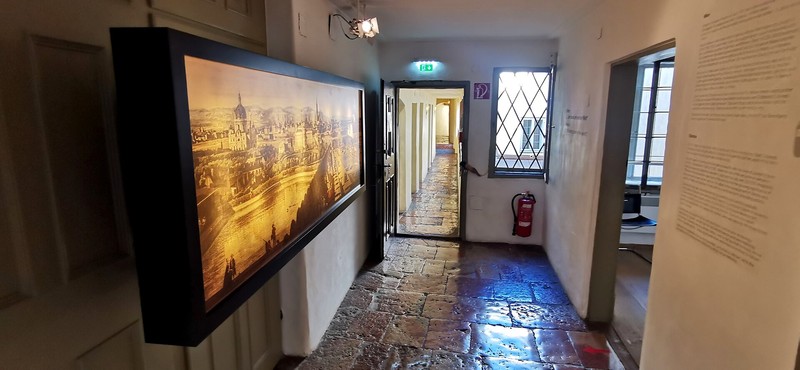
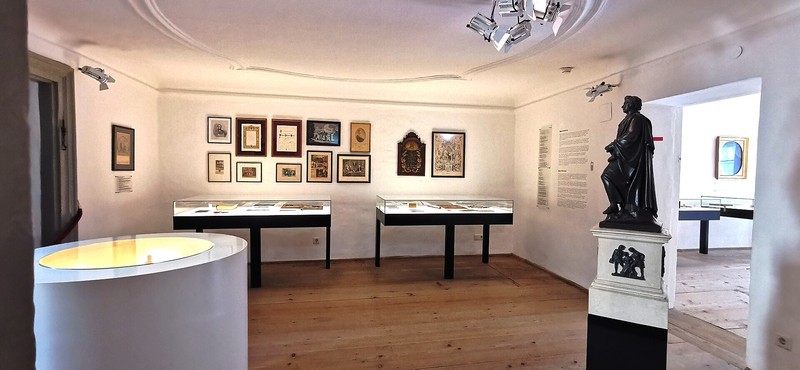
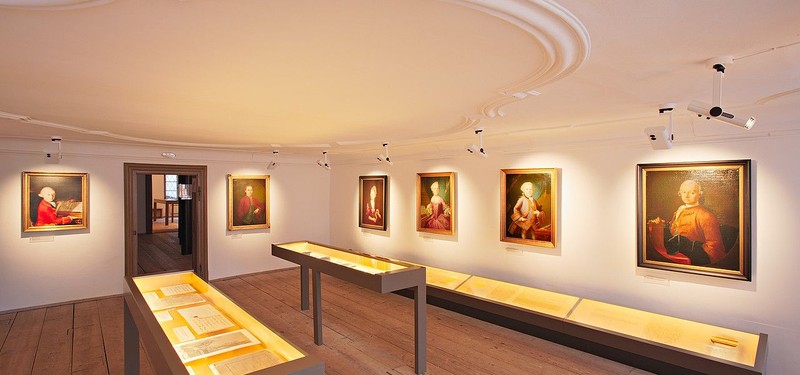
The exhibition extends across several floors and follows Mozart's life from childhood to his development as a composer. Visitors can see historical objects, documents, family portraits, and materials related to Wolfgang's musical education. Special attention is also given to his sister Maria Anna, who was a talented musician in her own right.
The Family Apartment and Everyday Objects
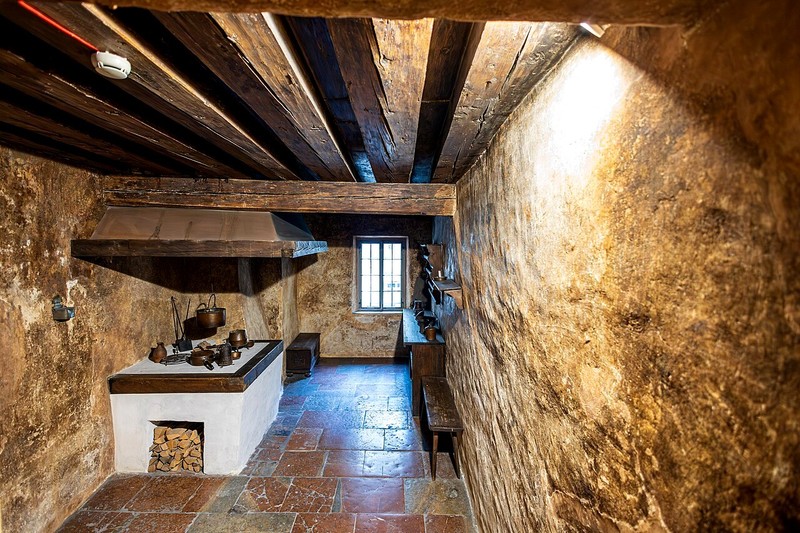
The museum evokes the atmosphere of an 18th-century home. Period furniture, household objects, and family keepsakes help visitors imagine the surroundings in which the future composer grew up. Displays explain family routines, children's education, and daily life in Salzburg at the time.
Among the exhibits are objects connected with the Mozart family, as well as furniture and personal items dating from the 18th century. They offer a glimpse of Mozart not only as a musical genius but also as a child who grew up with his parents and sister in a city apartment.
Mozart's Musical Legacy
One section focuses on Wolfgang's musical development. Visitors learn how his father taught him keyboard instruments, how his early performances took place, and how he began writing his own compositions. Some of Mozart's earliest works were short keyboard pieces written during childhood.
During his relatively short life, Mozart composed more than 600 works, including symphonies, concertos, chamber music, sacred compositions, and operas. His music profoundly influenced the development of European classical music. The museum helps visitors follow this journey and understand the importance of early education and family support.
Documents and Archive Materials
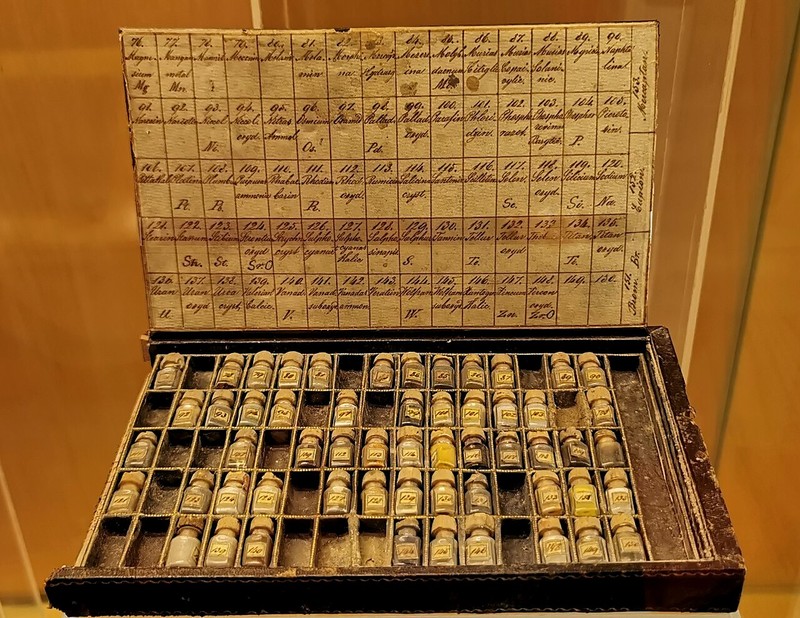
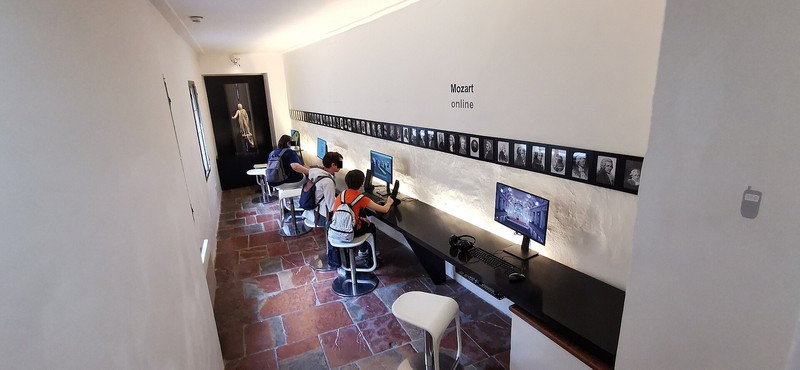
The displays include historical documents, letters, musical manuscripts, and images related to Mozart and his family. They reveal details of his childhood, family relationships, musical studies, and early travels. Audio and video materials complement the historical exhibits and introduce visitors to performances of his music.
The museum also explores the challenges Mozart faced. Despite his talent and growing reputation, his life involved financial pressures and constant work. After his death in 1791, his music gradually became a lasting symbol of classical culture and achieved worldwide recognition.
How to Get to Mozart's Birthplace
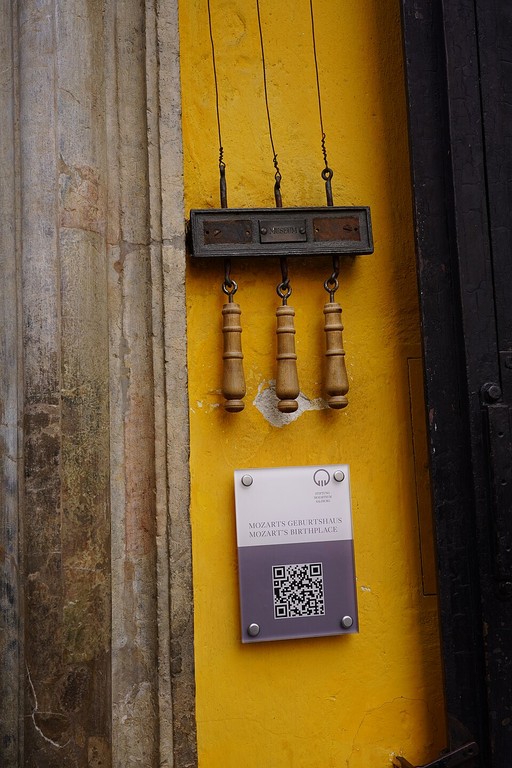
The museum is located at Getreidegasse 9, 5020 Salzburg, in the pedestrian area of the historic center. It is easy to reach on foot from the Old Town's main squares and nearby attractions. Bus stops in the area include Rathaus and Ferdinand-Hanusch-Platz. Check current routes and timetables before travelling.
A visit can be combined with a walk through the Old Town and a stop at Salzburg Cathedral. Visitors who want to learn more about Mozart's life can also visit the Mozart Residence on Makartplatz, where the family moved in 1773.
Visitor Information
The museum generally opens daily from 9 am to 5:30 pm, with last admission 30 minutes before closing. Hours may change on public holidays or during special events, so check the International Mozarteum Foundation's official website before visiting. Allow about an hour to explore the exhibition.
Mozart's Birthplace is an appealing destination for classical music lovers, history enthusiasts, and anyone interested in the childhood of the famous composer. It is one of Salzburg's most important sites associated with Mozart and a valuable stop for anyone exploring the city's cultural heritage.
Gallery