Petrified Forest National Park
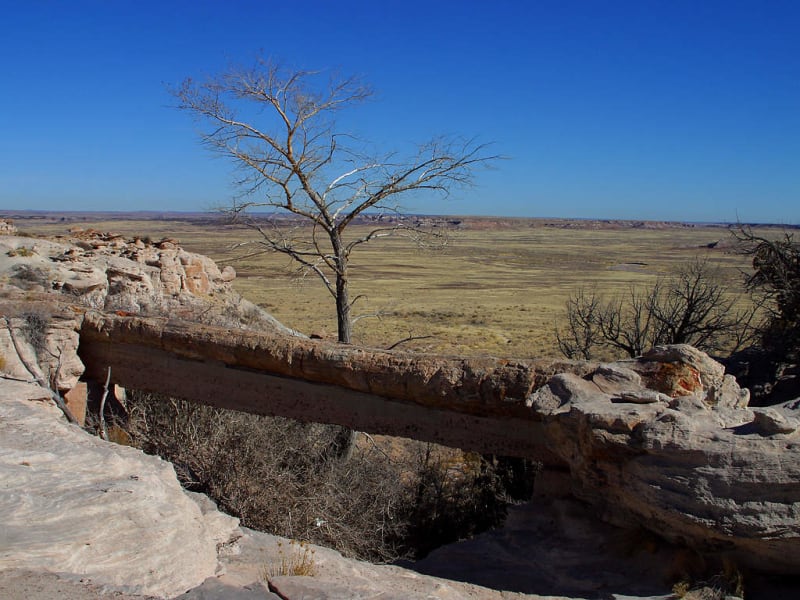
The Petrified Forest is set up as a park area in the US state of Arizona between Navajo and Holbrook. All the elements of this park are petrified trees made of semi–precious stones. In the 20th century, the park was awarded the national title. Petrified Forest got its name due to the fossils of trees.
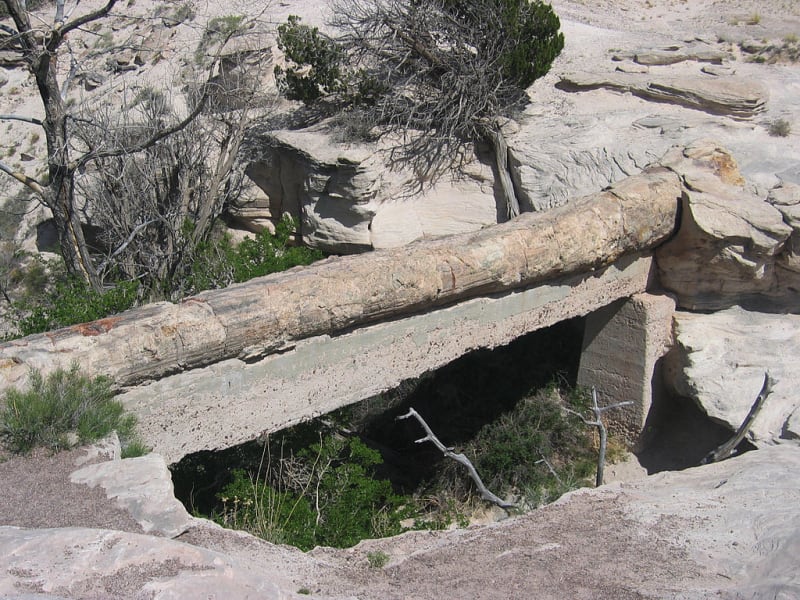
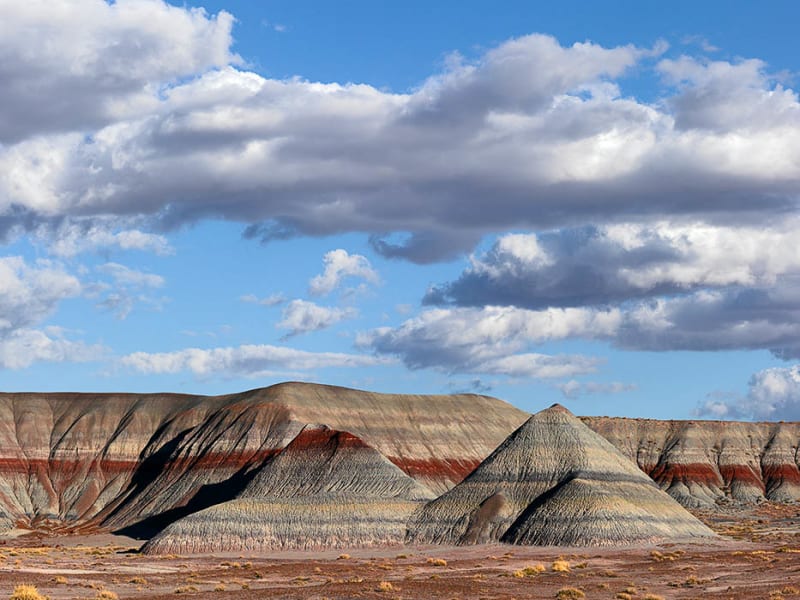
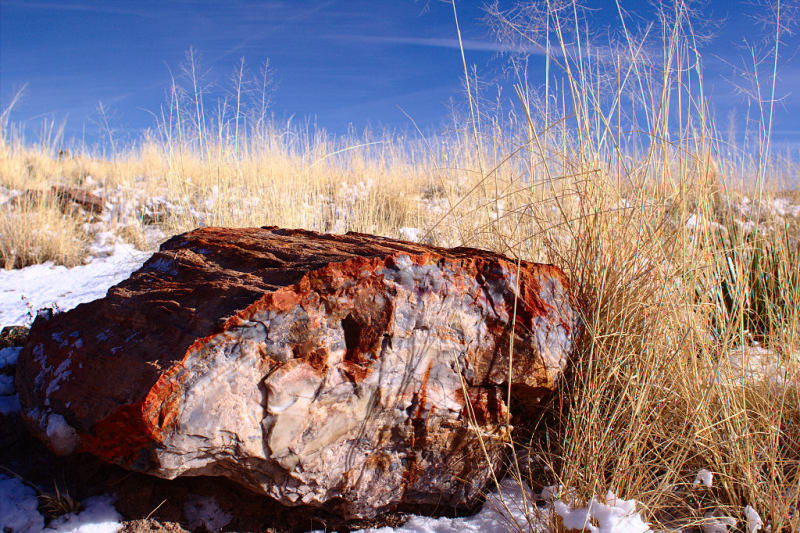
The process of fossilization has been going on for millions of years. At the end of the Triassic period, the coniferous giants were still alive, and dinosaurs roamed among them. Their destructive feature was the eruption of volcanoes together with stormy water flows. Falling trunks carried away streams of water, accumulating them in the lowlands of the swamp. The transformation of the trees was in the Chinle rock formation, consisting of various elements, including sandstone and limestone. Under the influence of natural elements, they transform into badlands. The trees were covered with silt, sand and volcanic ash. Being covered with sedimentary rocks, it helped them to preserve their appearance. Access to oxygen was blocked, preventing the wood from rotting. Quartz, which is part of the ash, together with water, penetrated into the wood and soaked it. It crystallized over time, repeating exactly the structure of tree cells. Minerals dissolved in water gave the fossils unusual different colors. Jasper gives a red hue, purple comes from amethyst, and agate is the most unpredictable, it produces all kinds of different colors.
The wood was gradually replaced by silicon salts during the petrification process. They lay covered with more and more balls of sediment. The forest giants turned into precious layers consisting of agates, jasper, carnelian, onyx and amethyst. The thickness of the ball of rock transformations reaches 240 meters.
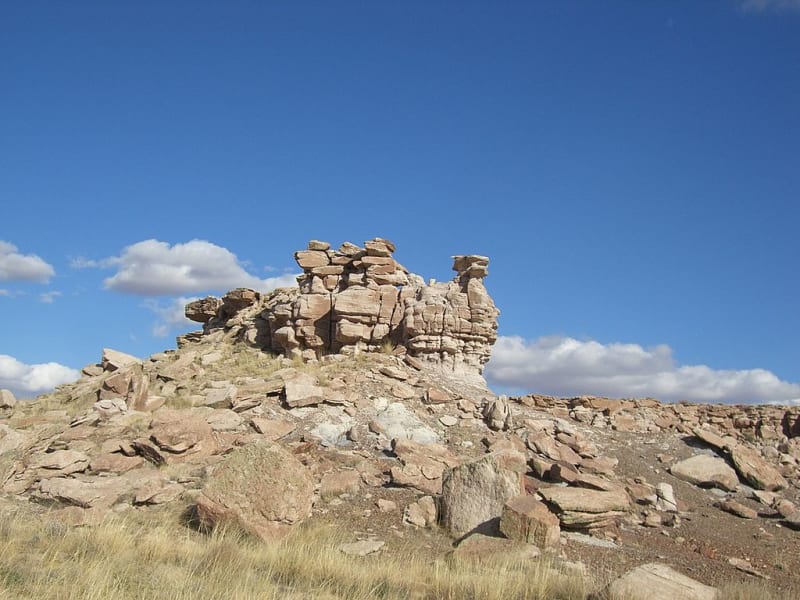
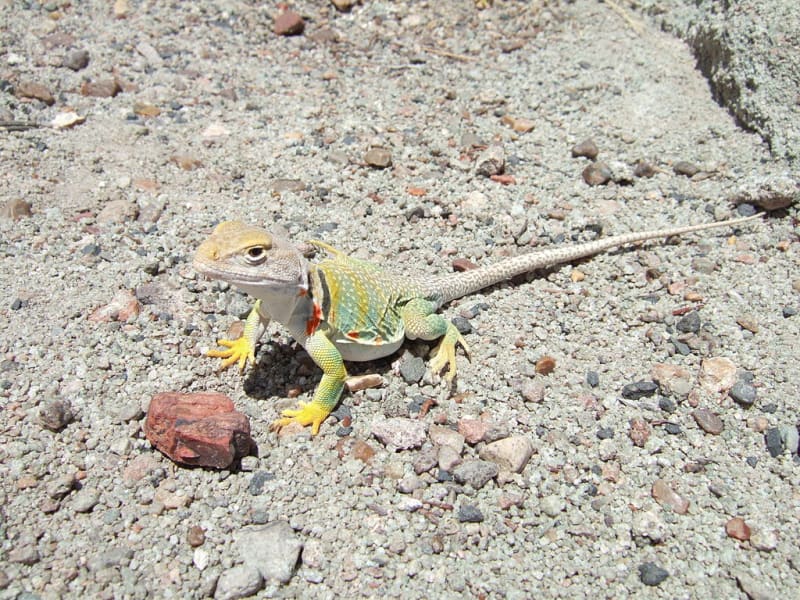
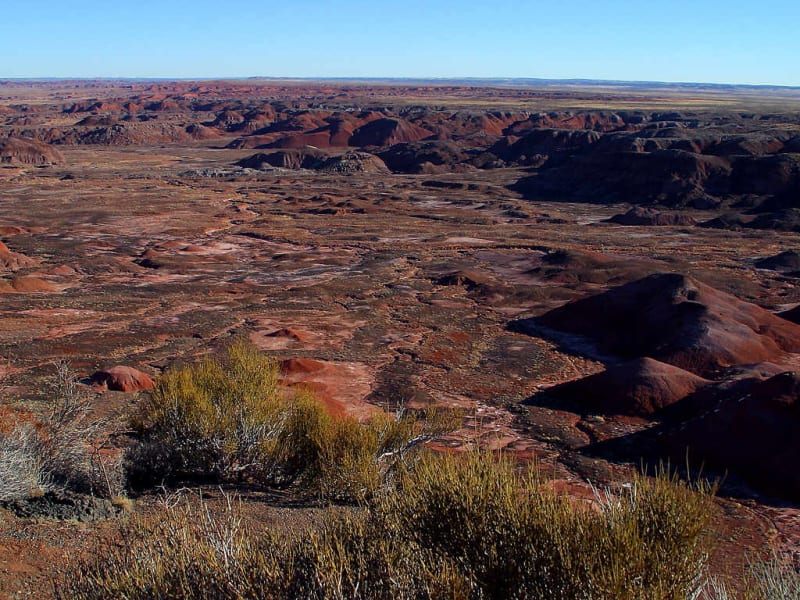
The total area of 380 square kilometers is steppes and bedlands of bright colors. The height of Petrified Forest Park averages 1.7 kilometers. The park area is divided into two zones – northern and southern. In the northern part, which borders the Colored Desert, colorful bedlands are collected, which were formed during the Triassic times. Most of this territory has been preserved in an untouched form, while remaining a haven for many animals and birds.
There are numerous piles of petrified wood with several petroglyphs on the south side.
Most of the fossils retained only general features, while losing their cellular shape. Only a few of them managed to preserve cells filled with minerals, and they were able to study the microstructure of long-extinct representatives of flora and fauna. In addition to trees, other plant species are represented, including ferns and cycads.
On the territory of the park Petrified Forest is under constant excavation and investigation. Many vertebrate fossils have been discovered, including phytosaurs and coskinocidons. Their skulls and bones were transferred to the paleontological museum.
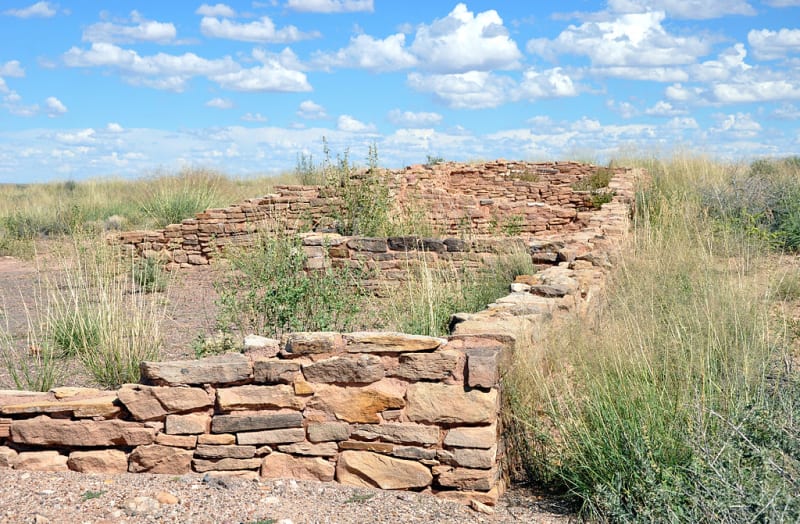
In the course of archaeological research, ancient hunting tools were found, including stone spearheads. These finds give an idea that many years ago, tribes of hunters lived in the Petrified Forest. Scientists who studied the ancient settlers found out that later the inhabitants also engaged in agriculture. They lived in large buildings called "pueblos", consisting of about a hundred rooms. There are about a hundred pueblos in the park.
Fossilized material has long been used in jewelry and decorative work. Today, the fossilized specimens are protected from potential collectors.
This is the largest open-air exhibition, which is visited by about 600,000 tourists per year. A transport connection has been established for their convenient movement, the only disadvantage is the lack of an overnight stay nearby. So it's better to visit Petrified Forest during the daytime.